

P2097 on 2013-2020 Dodge Charger: Rich Fuel Trim Causes and Fixes
P2097 on a Dodge Charger means the engine is running rich on Bank 1. The most common causes are a faulty downstream oxygen (O2) sensor or an exhaust leak near the sensor. For 2014-2015 models, a simple PCM software update from the dealer may be the required fix. Before replacing parts, owners of these specific years should check for available software updates.
- P2097 means the engine is running too rich on the passenger side (Bank 1), according to the sensor after the catalytic converter.
- For 2014-2015 models, your first step should be to check with a dealer for a required PCM software update, which is a known fix.
- The most common physical causes are a bad downstream O2 sensor or an exhaust leak.
- Do not replace the expensive catalytic converter unless all other possibilities have been thoroughly ruled out.
- Driving with this code for an extended period can lead to catalytic converter damage.
What's Unique About the 2013-2020 Dodge CHARGER
For 2013-2020 Dodge Chargers, particularly the 2014 and 2015 model years, this code is frequently linked to software issues. Multiple Technical Service Bulletins (TSBs) were issued by Chrysler (now Stellantis) to address this code with a Powertrain Control Module (PCM) software update. [Bulletin #18-073-20, Bulletin #1809416, Bulletin #18-039-15 REV-A] This makes checking for available software updates a critical and unique first step before replacing any parts, as the issue may be a calibration error rather than a hardware failure.
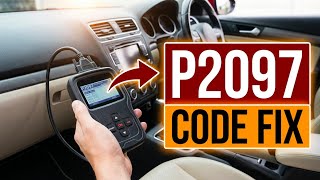
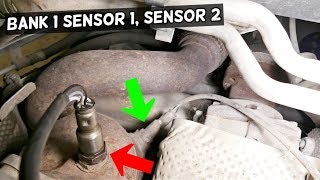
🎬 Watch: A breakdown of common causes and fixes for P2097.Diagnostic Flowchart
Tap your situation to follow the diagnostic path that matches what you're seeing on this vehicle.
Generation note: This range covers the second-generation (LD) Dodge Charger, which received a major facelift for the 2015 model year. While the underlying causes are similar, TSBs specifically point to software updates for 2014 and 2015 models, making this a key diagnostic step for those years. The location of Bank 1 differs depending on the engine installed (V6 vs V8).
Symptoms You May Notice
- Check Engine Light is on
- Reduced fuel economy
- Rough or erratic idle
- Engine hesitation or stumbling during acceleration
- Noticeable fuel odor from the exhaust
- In some cases, an engine bucking or delayed feeling at low speeds [Bulletin #18-046-15]
- Black or sooty exhaust smoke under load
- Replacing the catalytic converter first. This is an expensive part and is often not the root cause. The P2097 code is usually caused by a faulty sensor *reporting* an issue or an upstream problem like a leak or software glitch.
- Replacing the upstream O2 sensor (Sensor 1). While the upstream sensor can cause rich conditions, the P2097 code specifically relates to the reading from the *downstream* (Sensor 2) sensor. The downstream sensor and its circuit should be tested first.
Most Likely Causes
- PCM Software Update Needed 🔴 High Probability Manufacturer TSBs #18-073-20, #1809416, #18-084-16, and #18-039-15 REV-A explicitly call out a software update as a fix for this code on 2014 and 2015 models. This suggests the original factory calibration was too sensitive.
How to confirm: A Dodge dealership or a qualified shop with access to OEM software tools (like a WiTech pod) can check if your vehicle's VIN has a pending PCM update. This is the most reliable method.
Typical fix: Reprogramming or "flashing" the Powertrain Control Module (PCM) with the latest software. This service typically costs between $80 and $200 at a dealership or specialized shop.
Est. part cost: $0 - Faulty Downstream Oxygen Sensor (Bank 1, Sensor 2) 🔴 High Probability O2 sensors are wear items that operate in a harsh exhaust environment. They can fail over time, sending incorrect voltage signals to the ECM, leading to a false rich reading.
How to confirm: Use a scan tool to monitor the live data from the Bank 1 Sensor 2. A healthy downstream sensor should show a relatively steady voltage (e.g., 0.6-0.8V) when the engine is warm and at a steady RPM. If it's fluctuating wildly like the upstream sensor or is stuck high (above 0.8V), the sensor is likely bad.
Typical fix: Replace the Bank 1, Sensor 2 oxygen sensor. This sensor is located after the catalytic converter on the passenger side for the 3.6L V6 or the driver's side for the 5.7L/6.4L V8.
Est. part cost: $40-$120 - Exhaust System Leak 🟡 Medium Probability Leaks from cracked manifolds, failed gaskets (especially donut gaskets), or rusted pipes upstream of the O2 sensor can allow outside air into the exhaust. This unmetered air can trick the downstream sensor into reporting a rich condition as the PCM overcompensates.
How to confirm: Visually inspect the exhaust manifold and pipes on Bank 1 for black soot marks, which indicate a leak. A smoke test is the most effective method to pinpoint the exact location of smaller leaks. You can also listen for hissing or ticking sounds that change with engine RPM.
Typical fix: Replace the leaking gasket or repair/replace the damaged section of the exhaust. Exhaust repair putty or wraps can be a temporary fix for small holes.
Est. part cost: $10-$200 - Leaking Fuel Injector(s) on Bank 1 ⚪ Low Probability An injector can get stuck partially open or develop a poor seal, dumping excess fuel into a cylinder. This creates a true rich condition that the O2 sensor correctly reports.
How to confirm: This is more complex to diagnose. It may involve checking fuel trims for a specific bank, performing a fuel pressure leak-down test, or removing the fuel rail to observe injector spray patterns. This is often accompanied by misfire codes for a specific cylinder on Bank 1 (e.g., P0301, P0303, P0305, P0307).
Typical fix: Replace the faulty fuel injector(s). It is often recommended to replace all injectors on the affected bank at the same time.
Est. part cost: $50-$150 per injector
Rare But Worth Checking
- Failing Catalytic Converter: While possible, a failing catalytic converter is more often associated with efficiency codes like P0420. However, if it becomes clogged or contaminated, it can't properly process exhaust gases, which can contribute to a P2097 code. Do not replace the converter unless all other causes, especially O2 sensors and exhaust leaks, have been ruled out.
- High Fuel Pressure: A faulty fuel pressure regulator or a failing fuel pump can cause system-wide high pressure, leading to a rich condition. This would typically set rich codes for both banks (P2097 and P2099), not just one.
- Faulty Mass Airflow (MAF) Sensor: A dirty or failing MAF sensor can under-report the amount of air entering the engine, causing the PCM to inject too much fuel. This would typically affect both engine banks and set codes for both.
Diagnosis Steps
- Scan for Codes: Use an OBD-II scanner to confirm P2097 and check for any other related codes. Note the freeze frame data, which shows engine conditions when the code was set.
- Check for TSBs: For 2014-2015 models especially, contact a Dodge dealer with your VIN to see if a PCM software update is available. This is a crucial first step for this specific platform.
- Inspect for Exhaust Leaks: Visually and audibly inspect the exhaust system on Bank 1 (passenger side for V6, driver side for V8) from the engine manifold to the downstream O2 sensor. Look for soot, listen for hissing, and feel for escaping air (use caution, exhaust is hot). A smoke test is the most definitive way to find leaks.
- Analyze Live Data: Use a scanner to view O2 sensor data. The Bank 1 Sensor 1 (upstream) voltage should fluctuate rapidly between ~0.1V and ~0.9V. The Bank 1 Sensor 2 (downstream) voltage should be relatively stable and high (e.g., 0.6-0.8V) when the engine is warm and at a steady RPM. If the downstream sensor is stuck high or fluctuating like the upstream sensor, it points to a bad sensor or a failing catalytic converter.
- Test the O2 Sensor Circuit: If live data is inconclusive, disconnect the sensor and use a multimeter to test the wiring for continuity, shorts to ground, and proper reference voltage from the PCM.
- Investigate Fuel System: If sensors and exhaust are good, investigate potential fuel system issues. Check long-term fuel trims. If Bank 1 trims are heavily negative while Bank 2 is normal, it points to a leaking injector on Bank 1. A fuel pressure test can rule out a faulty regulator or pump.
Parts You'll Likely Need
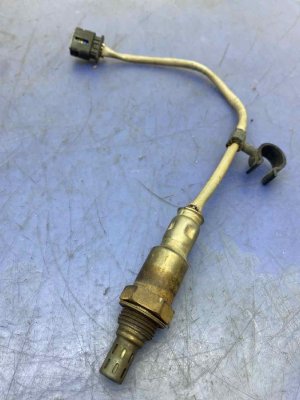
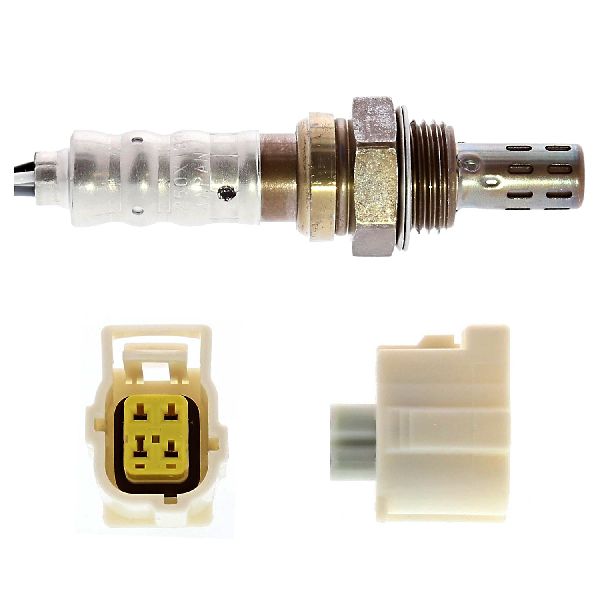
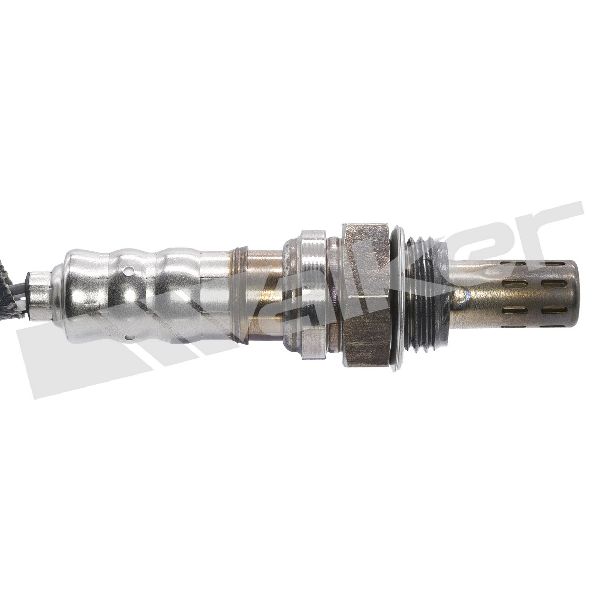
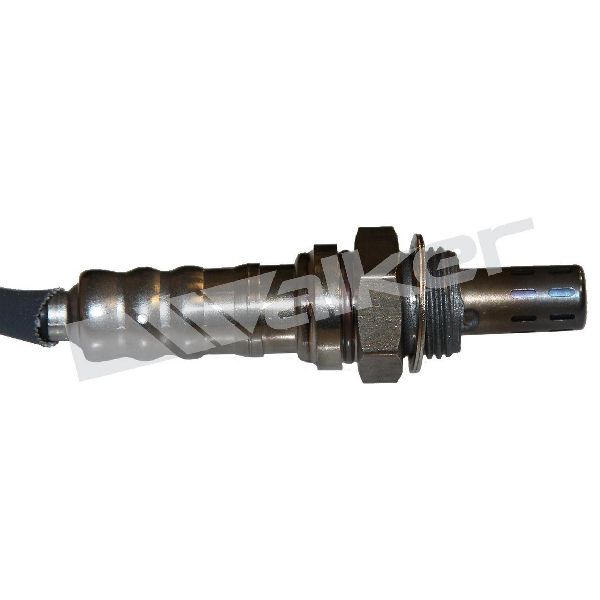
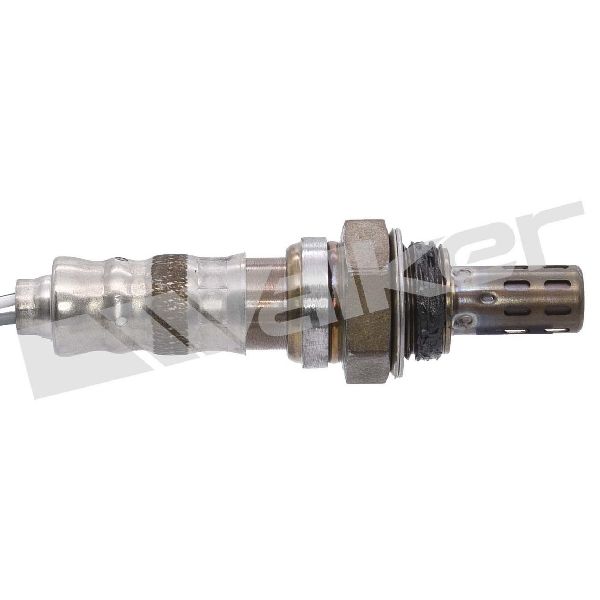
- Downstream Oxygen Sensor (Bank 1, Sensor 2)
(OEM #5149171AB)— This sensor is the primary reporter for this code and is a common failure point due to age and heat exposure. Mopar part 5149171AB is listed for many V6 and V8 applications within this generation.
Trusted brands: Mopar, NTK, Denso, Bosch
OEM price range: $80-$150
Aftermarket price range: $40-$90 - Exhaust Manifold Gasket — If an exhaust leak is found at the manifold, replacing the gasket is necessary to seal it. Leaks are a common cause of incorrect O2 sensor readings.
Related Codes That Often Appear With This One
- P2099 — This is the same 'rich' code but for Bank 2. Seeing P2097 and P2099 together strongly suggests a systemic issue like high fuel pressure or a faulty MAF sensor, rather than a component specific to Bank 1.
- P0301, P0303, P0305, P0307 — These are misfire codes for cylinders on Bank 1 (cylinders 1, 3, 5, 7). A leaking fuel injector on one of these cylinders could cause both the misfire and the rich condition reported by P2097.
- P219A — This code for 'Bank 1 Air-Fuel Ratio Imbalance' is listed alongside P2097 in manufacturer TSBs, indicating they can stem from the same root cause, often requiring a software update. [Bulletin #18-073-20]
- P0420 — This code indicates 'Catalyst System Efficiency Below Threshold (Bank 1)'. If the catalytic converter is failing, it can trigger both a P0420 and a P2097 as its ability to process exhaust gases diminishes.
Technical Service Bulletins (TSBs) & Recalls
- 18-073-20: Addresses P2097 with a software enhancement for 2015 models.
- 1809416: Notes P2097 on 2014 models and points to a software fix.
- 18-084-16: Lists P2097 as a code addressed by software updates for 2015 models.
- 18-039-15 REV-A: Mentions P2097 as a code set on 2014 models that may require a software update.
- 18-046-15: Connects P2097 with drivability symptoms like engine bucking on 2015 models.
Platform-Specific Known Issues
- A Powertrain Control Module (PCM) software update is a known fix for P2097 on 2014 and 2015 Dodge Chargers, as documented in TSBs #18-073-20, #1809416, #18-084-16, and #18-039-15 REV-A.
- The location of Bank 1, which is critical for diagnosis, is on the passenger side for 3.6L V6 models and the driver's side for 5.7L and 6.4L V8 models.
Mechanic-Grade Diagnostic Values
- Upstream O2 Sensor (Bank 1, Sensor 1) Voltage — expected: Rapidly fluctuating between 0.1V and 0.9V at steady RPM on a warm engine.. Failure: Sluggish, stuck, or no fluctuation.
- Downstream O2 Sensor (Bank 1, Sensor 2) Voltage — expected: Relatively steady between 0.6V and 0.8V on a warm engine with a healthy catalytic converter.. Failure: Stuck high (above 0.8V), stuck low, or fluctuating rapidly like the upstream sensor.
- Long Term Fuel Trim (LTFT) - Bank 1 — expected: Close to 0%, typically within +/- 10%.. Failure: Significantly negative (e.g., -15% or more) while Bank 2 is normal, suggests a leaking fuel injector on Bank 1. If both banks are highly negative, it points to a systemic issue like high fuel pressure.
- O2 Sensor Heater Circuit Resistance — expected: Varies by sensor manufacturer, but typically between 2 and 16 ohms.. Failure: An open circuit (infinite resistance) or a dead short (zero resistance) indicates a failed heater element in the sensor.
Scan Tool Commands That Help
- wiTECH (Chrysler/Dodge/Jeep OEM Tool): O2 Sensor Test — To force the system into open loop and monitor the O2 sensor's response to rich and lean commands, verifying if the sensor is responsive or biased.
- wiTECH (Chrysler/Dodge/Jeep OEM Tool): Catalytic Converter Efficiency Test — After verifying O2 sensors are working, this test can be run to confirm or deny the health of the catalytic converter, preventing unnecessary replacement.
Wiring & Ground Locations
- O2 Sensor Fuses (Underhood) — In the underhood fuse box (Power Distribution Center), check fuses F31, F34, and F37.. These fuses are related to engine management and can supply power to the O2 sensor heater circuits. A blown fuse will cause the sensor to be slow to respond or not work at all, leading to incorrect readings.
- ASD Relay (Underhood) — In the underhood fuse box, check relay #63, the Auto Shutdown (ASD) relay.. The ASD relay powers multiple engine components, including the O2 sensor heaters. A faulty relay can cause a no-power condition for the sensors.
- O2 Sensor Relays (Trunk) — In the trunk fuse box, located under the carpet behind the battery, check relay #29 and potentially relay #14.. These relays are also tied to the O2 sensor circuits on later models. Loss of power here will disable the sensor heaters.
- Engine Block/Chassis Grounds — Key grounds are located from the engine block to the K-member/chassis, and on studs on the cylinder heads. One key ground point is under the air intake box.. A poor engine ground can cause floating or incorrect voltage readings on all engine sensors, including the O2 sensors, leading to false rich or lean codes.
Real Owner Repair Stories
- Challengertalk.com forum user (2016 Challenger 5.7L (similar platform/engine to Charger)) — P2097 code appeared after installing long tube headers.
❌ Tried (didn't work) Replacing the downstream O2 sensor., Checking for exhaust leaks multiple times.
✅ What actually fixed it The owner eventually had the car professionally tuned. The tuner disabled the downstream O2 sensors in the PCM, which is a common practice after installing long tube headers that relocate the sensors and change exhaust flow characteristics, preventing the code from returning.
OEM Part Supersession History
5149171AA, 68066160AA→5149171AB— Standard part revision and consolidation.
Heads up: 5149171AB is the correct replacement for the earlier numbers. Using old stock of the previous part numbers is not recommended.
Model Year Variations Within This Range
- 2014-2015: These model years are specifically called out in multiple TSBs as potentially having a software calibration issue that causes a false P2097 code. A PCM flash is the primary recommended fix before hardware replacement. [Bulletin #18-073-20, Bulletin #1809416, Bulletin #18-039-15 REV-A]
Helpful Videos

Used OEM Parts in Stock
New Aftermarket Parts Available


The information in this article is provided for general reference and educational purposes only. Vehicle specifications, procedures, and part compatibility can vary by production date, trim level, and region. Always consult your vehicle's factory service manual and verify part numbers before purchasing or performing repairs. Safety-critical components such as airbags, seat belts, and braking systems should be installed by a qualified professional.
- Dodge CHARGER:
- 🎬 Helpful Videos
- 🛍️ Shop This Part
- What's Unique About the 2013-2020 Dodge CHARGER
- Diagnostic Flowchart
- Symptoms You May Notice
- Most Likely Causes
- Rare But Worth Checking
- Diagnosis Steps
- Parts You'll Likely Need
- Related Codes That Often Appear With This One
- Technical Service Bulletins (TSBs) & Recalls
- Platform-Specific Known Issues
- Mechanic-Grade Diagnostic Values
- Scan Tool Commands That Help
- Wiring & Ground Locations
- Real Owner Repair Stories
- OEM Part Supersession History
- Model Year Variations Within This Range
- 🎟️ Get 5% Off