

P2096 on 2011-2016 Hyundai Elantra 1.8L: Causes and Fixes for Post Catalyst Lean Code
On a 2011-2016 Elantra, P2096 is most often caused by an exhaust leak, specifically from a cracked flex pipe, or a faulty upstream O2 sensor. Before replacing any parts, thoroughly inspect the exhaust flex pipe for leaks and contact a dealer to check for a crucial ECM software update (TSB 14-01-008) which is a known fix.
- Do not immediately replace the downstream O2 sensor. P2096 on this Elantra is often a 'symptom' code.
- First, thoroughly inspect for exhaust leaks between the engine and the downstream O2 sensor. A smoke test is the most reliable method.
- If code P2196 is also present, the upstream O2 sensor is the most likely culprit.
- Before spending money on parts, call a Hyundai dealer with your VIN and ask if there are any open campaigns or TSBs for an ECM update related to code P2096.
- Only consider replacing the catalytic converter after all other potential causes have been definitively ruled out.
What's Unique About the 2011-2016 Hyundai Elantra

While P2096 can have many causes, owners of the fifth-generation Elantra (MD/UD) have found a few very common culprits. A cracked exhaust flex pipe is a frequent source of leaks that introduce unmetered air, tricking the downstream sensor. This code is also frequently triggered by a failing *upstream* O2 sensor, which sends a false 'rich' signal, causing the PCM to lean out the fuel mixture excessively. Recognizing this sensitivity, Hyundai issued a Technical Service Bulletin (TSB 14-01-008) for an ECM software update to revise the logic for P2096, which can resolve the code without replacing hardware.
Symptoms You May Notice
- Check Engine Light is on
- Reduced fuel economy
- Rough or unstable idle
- Hesitation or poor acceleration
- A ticking or hissing sound from the engine bay or under the car, especially when cold (indicates an exhaust leak)
- Immediately replacing the downstream O2 sensor (the one reporting the code) without first checking for exhaust leaks (especially the flex pipe) or a faulty *upstream* O2 sensor.
- Replacing the catalytic converter when the root cause is a simple exhaust leak, a bad sensor, or an ECM software issue.
- Replacing both O2 sensors when only an ECM software update was needed.
Most Likely Causes

- Exhaust Leak (especially the Flex Pipe) 🔴 High Probability The flexible, braided section of the front exhaust pipe is a well-documented weak point on this platform. It is prone to cracking from stress and corrosion, allowing outside air to be pulled into the exhaust stream. This creates a venturi effect, introducing unmetered oxygen that causes a false lean reading at the downstream O2 sensor.
How to confirm: Visually inspect the exhaust system, paying extremely close attention to the braided flex pipe located after the exhaust manifold. Look for black soot marks or feel for escaping air (when the engine is cool enough to touch safely). A professional smoke test is the most effective way to pinpoint small leaks.
Typical fix: Replace the entire front pipe assembly that includes the integrated flex pipe. Patching is a temporary solution at best.
Est. part cost: $80-$250 - Faulty Upstream Oxygen Sensor (Sensor 1) 🔴 High Probability This code is frequently seen with P2196 (O2 Sensor Signal Biased/Stuck Rich). The upstream sensor fails and sends a false, fixed 'rich' signal (e.g., stuck above 0.8V). The PCM reacts by aggressively reducing fuel (negative fuel trim), causing a true lean condition. The downstream sensor then correctly reports this lean state, triggering P2096.
How to confirm: Use a scan tool to monitor live data. If the upstream O2 sensor (B1S1) voltage is stuck high and not fluctuating rapidly between ~0.1V and ~0.9V on a warm, running engine, it has failed.
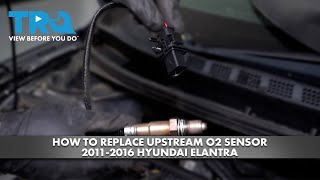
Typical fix: Replace the upstream oxygen sensor (Bank 1, Sensor 1). 🎬 See this walkthrough for replacing the upstream O2 sensor.
Est. part cost: $50-$150 - Outdated Engine Control Module (ECM) Software 🟡 Medium Probability Hyundai released TSB 14-01-008 specifically to revise the diagnostic logic for P2096 on 2013 models, as the original parameters were too sensitive. Owners of other model years have also reported success with software updates.
How to confirm: A Hyundai dealership must check your vehicle's VIN against their database for open service campaigns or applicable TSBs. They can check the current ROM ID of the ECM against the updated versions listed in the bulletin.
Typical fix: The dealer reprograms the ECM with the latest software. TSB 14-01-008 lists this as 'EVENT #306'. Some owners report this was done in conjunction with a PCV valve replacement.
Est. part cost: $0-$200 (May be free if part of a campaign) - Faulty Downstream Oxygen Sensor (Sensor 2) 🟡 Medium Probability
How to confirm: If no exhaust leaks are found, the upstream sensor is functioning correctly, and the ECM software is up to date, the downstream sensor itself may be faulty. Use a scan tool to monitor its voltage. A healthy downstream sensor on a warm engine at steady RPM should show a relatively stable voltage. If it's stuck low (e.g., below 0.2V) or not responding, it is suspect.
Typical fix: Replace the downstream oxygen sensor (Bank 1, Sensor 2). 🎬 Watch: How to replace the downstream oxygen sensor.
Est. part cost: $60-$160
Rare But Worth Checking
- Clogged or Failing Catalytic Converter: This is an expensive repair and should be considered only after all other possibilities (leaks, sensors, software) have been thoroughly ruled out. A failing converter can also be the *result* of a long-term lean condition, not the cause. It would often be accompanied by a P0420 code.
- Intake Air (Vacuum) Leak: A significant vacuum leak from a cracked hose or bad intake gasket can cause a lean condition, but it will typically set other codes first, such as P0171 (System Too Lean), before P2096 appears.
- Low Fuel Pressure or Clogged Injectors: Issues with fuel delivery (weak pump, clogged filter/injectors) can create a true lean condition. This is less common for this specific code on this car and would likely be accompanied by other drivability problems and potentially other codes.
Diagnosis Steps

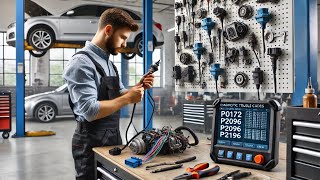
- Scan for Codes: Check for any other codes stored alongside P2096. Pay close attention to P2196, as it points directly to the upstream O2 sensor. 🎬 Watch: Diagnosing P2096 and P2196 codes on your Elantra.
- Check for TSBs: Contact a Hyundai dealer with your VIN or use a professional database to check for TSB 14-01-008 or other applicable ECM software updates. This should be a primary step.
- Inspect for Exhaust Leaks: Perform a thorough visual and auditory inspection of the exhaust system from the manifold to the tailpipe, focusing on the braided flex pipe. Look for soot, cracks, and listen for hissing/puffing sounds. A professional smoke test is the definitive method for finding hidden leaks.
- Analyze O2 Sensor Live Data: Use a scan tool to watch the voltage of the upstream (B1S1) and downstream (B1S2) O2 sensors. The upstream sensor's voltage should fluctuate rapidly between approximately 0.1V and 0.9V. The downstream sensor's voltage should be much more stable, typically holding steady above 0.5V on a healthy, warm converter.
- Isolate the Faulty Sensor: If P2196 is present and the upstream sensor voltage is stuck high (e.g., >0.8V) and unresponsive, replace the upstream sensor. If the upstream sensor is working correctly and no leaks are found, but the downstream sensor voltage is stuck low (<0.2V), suspect the downstream sensor.
- Test the Catalytic Converter: If all other causes are ruled out, test the catalytic converter. Use an infrared thermometer to measure the temperature of the pipe before and after the converter on a fully warmed-up engine. The outlet should be at least 100°F (38°C) hotter than the inlet. If it's not, the converter may be failing.
Parts You'll Likely Need
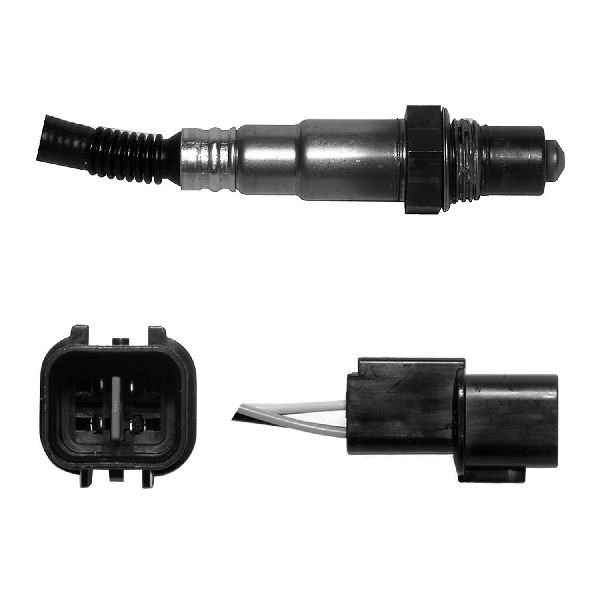
- Upstream Oxygen Sensor
(OEM #39210-2E200)— Often the true cause of the P2096 code, especially when P2196 is also present. It fails and sends incorrect data, causing the computer to create a lean condition.
Trusted brands: Hyundai (Genuine), Denso, NGK/NTK
OEM price range: $120-$180
Aftermarket price range: $50-$150 - Exhaust Front Pipe with Flex Pipe
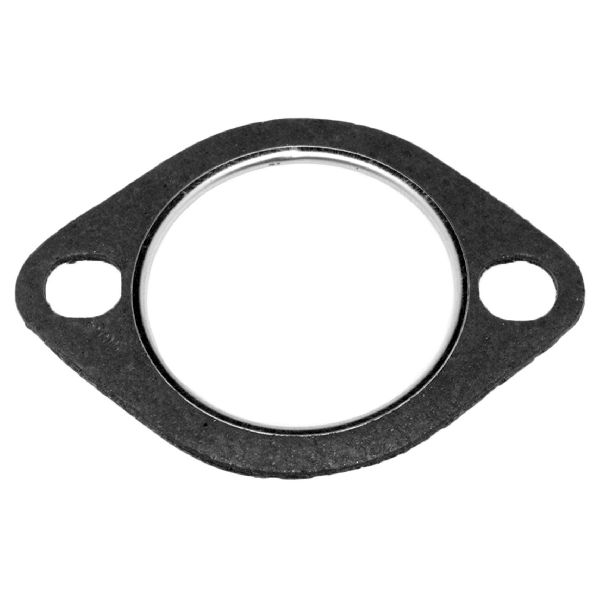
(OEM #28610-3X000 (Verify by VIN))— The integrated flex pipe is a very common failure point that causes exhaust leaks, leading directly to a P2096 code. The entire front pipe is typically replaced.
Trusted brands: Hyundai (Genuine), Walker, AP Exhaust
OEM price range: $250-$400
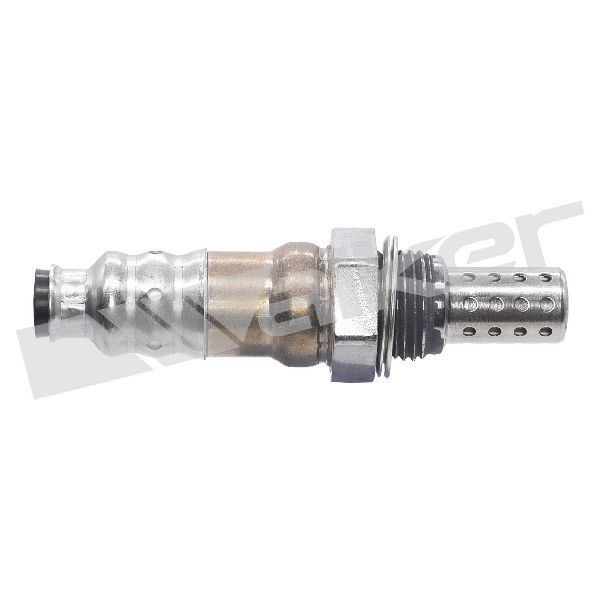
Aftermarket price range: $100-$250 - Downstream Oxygen Sensor
(OEM #39210-2E400)— This is the sensor that triggers the code. If no exhaust leaks or upstream sensor issues are found, this sensor may have failed on its own.
Trusted brands: Hyundai (Genuine), Denso, Bosch
OEM price range: $130-$200
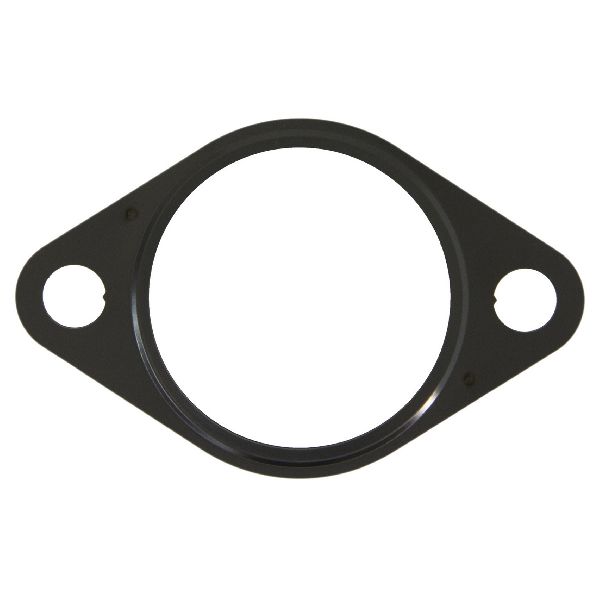
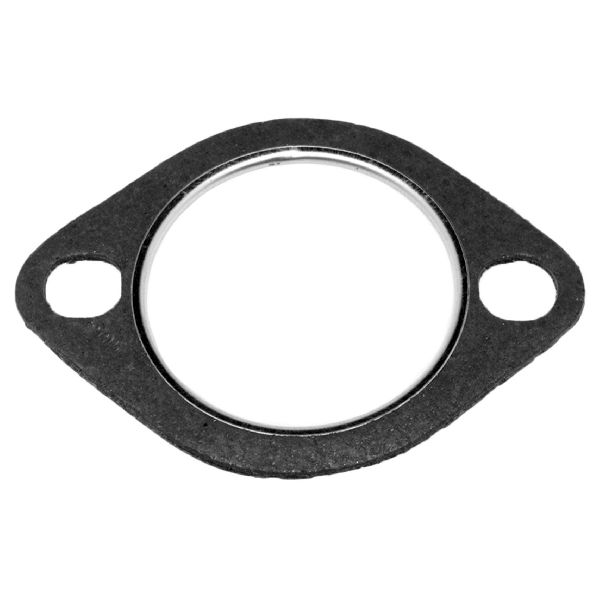
Aftermarket price range: $60-$160 - Exhaust Manifold Gasket
(OEM #28521-2E000)— A less common but possible source of exhaust leaks that allow unmetered air into the system, causing a false lean reading by the O2 sensors.
Trusted brands: Fel-Pro, Mahle, Beck/Arnley
Related Codes That Often Appear With This One
- P2196 — This code means 'O2 Sensor Signal Biased / Stuck Rich (Bank 1 Sensor 1)'. It strongly indicates the upstream O2 sensor has failed, which is the root cause of the P2096 code in many cases on this vehicle.
- P0172 — This code for 'System Too Rich (Bank 1)' can appear alongside P2196 and P2096. It reflects the PCM's confusion from the faulty upstream O2 sensor reporting a rich condition.
Technical Service Bulletins (TSBs) & Recalls

- TSB 14-01-008: 2013 MY ELANTRA (MD) ECM & TCM UPDATE (SERVICE CAMPAIGN TS4): This TSB provides a procedure to update the ECM software to revise the logic for code P2096, as the original parameters were too sensitive. It applies to 2013 Elantras produced between March 8, 2012, and August 16, 2012.
Platform-Specific Known Issues
- A Technical Service Bulletin (TSB 14-01-008) for an ECM software update exists for 2013 models to revise P2096 logic.
- The braided exhaust flex pipe is a frequent failure point, causing leaks that trigger this specific code.
- The 1.8L Nu engine was subject to a class-action lawsuit regarding engine issues (piston slap), indicating broader engine sensitivities and potential for related problems.
Mechanic-Grade Diagnostic Values
- Upstream O2 Sensor (B1S1) Voltage — expected: Rapidly fluctuating between 0.1V and 0.9V on a warm, running engine.. Failure: Stuck high (e.g., >0.8V) or low, not fluctuating. A fixed reading indicates a failed sensor.
- Downstream O2 Sensor (B1S2) Voltage — expected: Relatively stable voltage, typically between 0.4V and 0.6V at steady RPM on a warm, healthy catalytic converter.. Failure: Stuck low (e.g., <0.2V) or mirroring the fluctuations of the upstream sensor. A low reading indicates the lean condition triggering the code.
- Long Term Fuel Trim (LTFT) - Bank 1 — expected: As close to 0% as possible, ideally within +/- 5%.. Failure: P2096 is a post-catalyst code, so LTFT may not be excessively high. However, if a vacuum leak is the root cause, LTFT will be high positive (e.g., > +10%) at idle and decrease with RPM. If a faulty upstream O2 sensor is stuck rich, the PCM will command negative fuel trim to compensate.
- ECM Diagnostic Enable Conditions — expected: Engine speed: 1000-3800 RPM, Engine load: 15-80%, Battery voltage > 10.7V, No misfires present.. Failure: The P2096 diagnostic test will only run when these specific conditions are met. The code is set if the lean threshold is exceeded for more than 1 second during the test period.
Scan Tool Commands That Help
- Hyundai GDS (Global Diagnostic System): O2 Sensor Test — To actively test the response of both upstream and downstream O2 sensors. The tool can force rich/lean conditions to see if the sensors react appropriately, which is more definitive than passively watching live data.
- Hyundai GDS: EVAP System Leak Test — If a slow fueling issue occurs after other repairs, as reported by some owners. This can help diagnose a stuck-closed canister vent valve or other EVAP restriction that might indirectly affect fuel trims.
Wiring & Ground Locations
- GNG03 — Top rear of engine.. This is a primary engine ground. A loose or corroded connection here can affect various sensors, including the crankshaft position sensor and potentially the O2 sensors, leading to erratic signals and incorrect data being sent to the ECM.
- Upstream O2 Sensor Connector (B1S1) — Located on the exhaust manifold, before the catalytic converter. The connector is typically clipped to a bracket on the engine.. This is the primary connection to check for corrosion or damage when diagnosing a faulty upstream sensor, which is a very common cause of P2096.
Real Owner Repair Stories
- Reddit user in /r/MechanicAdvice (2013 Hyundai Elantra, 92,500-94,500 miles) — P2096 code, CEL on.
❌ Tried (didn't work) Replaced gas cap, Replaced all 4 spark plugs, Replaced both upstream and downstream O2 sensors
✅ What actually fixed it The user had the ECM software updated at the dealership per a TSB. After the update, the CEL did not immediately return, but the readiness monitors would not complete. A new symptom appeared: the fuel tank was very slow to fill, with the pump clicking off repeatedly. This pointed towards a potential EVAP system issue, like a faulty purge or vent valve, which was the next diagnostic step. The final resolution was not posted, but the combination of the ECM update and the new EVAP symptom is a critical diagnostic clue.
OEM Part Supersession History
28610-2T110→28610-3Q000— Part revision or consolidation. This part number is for a different model (Sonata) but shows how Hyundai manages exhaust part revisions.
Heads up: The specific front pipe for the Elantra is 28610-3X000 or 28610-3X400 depending on emissions (Federal vs. California). Always verify the correct part number by VIN. Using a superseded part for the wrong model will not fit.
Model Year Variations Within This Range
- 2013: Hyundai TSB 14-01-008 was released specifically for 2013 models to address over-sensitivity in the P2096 diagnostic logic. While the update may be available and beneficial for other years, 2013 was the primary target.
- 2011-2016: Vehicles were produced with both Federal (U-LEV) and California (SULEV/PZEV) emissions packages. This can affect the specific part number for the catalytic converter and front exhaust pipe (e.g., 28610-3X400 for California emissions). It is critical to verify the vehicle's emissions sticker before ordering exhaust components.
Diagnostic Flowchart
Real Owner Stories
Aggregated from forums and TSBs cited above. Mileages and costs reflect what owners reported in those sources.
2013 Hyundai Elantra Limited
Symptoms: Intermittent check engine light where the code is always P2096.
What fixed it: Replaced and installed the upper O2 sensor, which made the code go away for 3 months.
Source hint: Reddit r/MechanicAdvice
2013 Hyundai Elantra GLS
Symptoms: P2096 code present. Replaced both O2 sensors without success.
What fixed it: Dealer ECM update (TSB 14-01-008) and a PCV valve replacement.
Source hint: Reddit: r/Hyundai - For anyone dealing with just a p2096 on 2013 hyundai elantra gls
2011-2016 Hyundai Elantra
Symptoms: Check engine light with both P2096 and P2196 codes present.
What fixed it: Diagnosed as a failed upstream O2 sensor (stuck rich) causing the lean code downstream. Replaced the upstream O2 sensor.
Source hint: YouTube: P2096 P2196 Hyundai Elantra 2011-2016 Catalyst Fuel Trim System Too Lean O2 Sensor Signal Stuck Rich
2012 Hyundai Elantra
Symptoms: P2096 code triggered.
What fixed it: Advised to check for exhaust leaks (specifically the flex pipe) and software updates before replacing any parts to avoid common misdiagnoses.
Source hint: Reddit: r/autorepair - 2012 Hyundai Elantra Code P2096
Related OBD-II Codes
Frequently Asked Questions
Does TSB 14-01-008 apply to my 2011-2016 Hyundai Elantra?
I hear a ticking noise from under my Elantra when it's cold and have a P2096 code. What does this mean?
Can I just patch the cracked flex pipe on my 1.8L Nu engine to fix P2096?
Why do I have both P2096 and P2196 codes on my Elantra?
My 2013 Elantra GT has a P2096 code. Does it share the same issues as the standard Elantra?
How much does it cost to fix the P2096 code on a 2011-2016 Elantra?
Helpful Videos

We Have This Part in Stock


The information in this article is provided for general reference and educational purposes only. Vehicle specifications, procedures, and part compatibility can vary by production date, trim level, and region. Always consult your vehicle's factory service manual and verify part numbers before purchasing or performing repairs. Safety-critical components such as airbags, seat belts, and braking systems should be installed by a qualified professional.
- Hyundai Elantra:
- 🎬 Helpful Videos
- 🛍️ Shop This Part
- What's Unique About the 2011-2016 Hyundai Elantra
- Symptoms You May Notice
- Most Likely Causes
- Rare But Worth Checking
- Diagnosis Steps
- Parts You'll Likely Need
- Related Codes That Often Appear With This One
- Technical Service Bulletins (TSBs) & Recalls
- Platform-Specific Known Issues
- Mechanic-Grade Diagnostic Values
- Scan Tool Commands That Help
- Wiring & Ground Locations
- Real Owner Repair Stories
- OEM Part Supersession History
- Model Year Variations Within This Range
- Diagnostic Flowchart
- Real Owner Stories
- 2013 Hyundai Elantra Limited
- 2013 Hyundai Elantra GLS
- 2011-2016 Hyundai Elantra
- 2012 Hyundai Elantra
- Related OBD-II Codes
- Frequently Asked Questions
- 🎟️ Get 5% Off