

P2096 on 2014-2020 Ford Fusion 1.5L EcoBoost: Causes and Fixes for Lean Fuel Trim
On a 2014-2020 Ford Fusion with the 1.5L EcoBoost engine, the P2096 code is most commonly caused by an exhaust leak before the downstream O2 sensor or a failing downstream O2 sensor itself. An exhaust manifold leak is a known issue. Expect to pay around $80-$160 for an OEM Motorcraft sensor (part numbers include DY-1273 or DY-1268 depending on model year), with a DIY difficulty of 2/5.
- P2096 means the downstream O2 sensor is detecting a lean condition (too much oxygen).
- The most likely causes on your Fusion are an exhaust leak (especially at the manifold) or a bad downstream O2 sensor.
- Always check for exhaust leaks before replacing the O2 sensor to avoid misdiagnosis.
- If you replace the O2 sensor, make sure to perform a Key On Engine Running (KOER) reset with a capable scan tool to prevent the code from returning.
- Driving with this code can hurt your fuel economy and eventually damage your catalytic converter, so it's best to get it fixed promptly.
What's Unique About the 2013-2020 Ford Fusion
For the Ford Fusion with the 1.5L EcoBoost engine, the P2096 code is a straightforward emissions issue without the unique complications seen on other Ford engines. For example, some 2.0L Ford engines have a known TSB (16-0031) where leaking VVT solenoids contaminate the O2 sensor wiring, but this is not a common issue for the 1.5L engine. Specifically, TSB Bulletin #16-0031 notes that vehicles built between 9/1/2012 and 8/1/2013 may exhibit an illuminated MIL with DTC P2096 due to engine oil migrating from the VVT solenoids. The diagnosis for the 1.5L typically follows the standard procedure of checking for exhaust leaks and testing the downstream O2 sensor. A key step after repair is performing a KOER (Key On Engine Running) self-test with a capable scan tool to reset fuel adaptations, which is often required to permanently clear the code on these vehicles.
Symptoms You May Notice
- Check Engine Light is on
- Reduced fuel economy
- Failed emissions test
- Rough idle (less common, but possible if a vacuum leak is the cause)
- Audible ticking or puffing noise from the engine area, especially on a cold start, indicating an exhaust manifold leak.
- Replacing the upstream (pre-catalyst) O2 sensor when the code is for the downstream (post-catalyst) sensor.
- Replacing the O2 sensor without first thoroughly checking for exhaust leaks, which are a very common cause on this specific engine.
- Clearing the code with a basic scanner after replacing the O2 sensor but failing to perform the KOER self-test to reset fuel adaptations, leading to the code's return.
Most Likely Causes
- Exhaust Leak 🔴 High Probability Gaskets and flex pipes can degrade over time. More specifically, owners and Ford technicians report that exhaust manifold leaks are a common source of P2096 on this platform, sometimes accompanied by a P0420 code. The leak allows outside air to be drawn into the exhaust stream, fooling the downstream O2 sensor into reporting a false lean condition.
How to confirm: Listen for a ticking, puffing, or chirping sound from the engine bay, especially when the engine is cold. Visually inspect the exhaust manifold (near the front of the engine) for cracks or black soot trails indicating a leak. A smoke test is the most definitive way to pinpoint the exact location of a hard-to-see leak.
Typical fix: Repair the leak. This often involves replacing the exhaust manifold gasket or the entire exhaust manifold if it is cracked. An exhaust manifold leak may be covered under Ford's 5-year/60,000-mile powertrain warranty.
Est. part cost: $20-$400 - Failing Downstream Oxygen (O2) Sensor 🔴 High Probability O2 sensors are wear-and-tear items that degrade over time, typically lasting 100,000-150,000 miles. A slow, contaminated, or biased sensor can send incorrect low-voltage (lean) readings to the PCM.
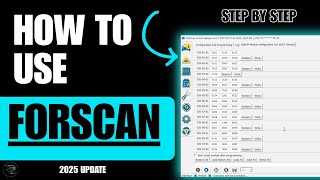
How to confirm: Use a diagnostic scan tool to monitor the live data voltage of the downstream O2 sensor 🎬 See how to use FORScan to monitor live O2 sensor data. (Bank 1, Sensor 2). A healthy downstream sensor should show a relatively steady voltage (typically between 0.5V and 0.8V) on a warm engine at steady RPM. If the voltage is stuck low (e.g., below 0.2V) or fluctuates rapidly like the upstream sensor, it is likely faulty.
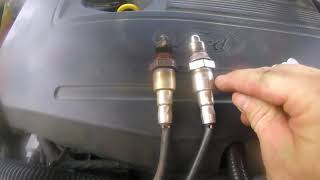
Typical fix: Replace the downstream (post-catalyst) oxygen sensor. 🎬 Watch: Step-by-step guide to replacing the Fusion's downstream O2 sensor. After replacement, it is critical to clear the codes and perform a Key On Engine Running (KOER) self-test with a capable scan tool (like FORScan or a dealer's IDS) to reset the system's fuel trim adaptations. Failure to do this reset can cause the code to return even with a new sensor.
Est. part cost: $75-$165
Rare But Worth Checking
- Clogged or Failing Catalytic Converter: A failing converter can sometimes trigger a P2096 code before a P0420 (catalyst efficiency) code appears. This happens if the converter's chemistry is altered, affecting oxygen storage. A clogged converter may also glow red after the engine has been running.
- Intake (Vacuum) Leak: A significant leak in a vacuum hose or intake manifold gasket can introduce unmetered air, creating a true lean condition. This will usually trigger a P0171 (System Too Lean Bank 1) code first or alongside the P2096.
- Low Fuel Pressure: A weak fuel pump or clogged fuel filter can cause a lean condition that is severe enough to be detected by the downstream sensor. This would likely affect overall engine performance noticeably and may be accompanied by other fuel system codes.
- Dirty or Faulty Mass Airflow (MAF) Sensor: An under-reporting MAF sensor can cause the PCM to deliver insufficient fuel, creating a lean condition detected by the O2 sensors. Cleaning the MAF sensor with a dedicated cleaner is a simple diagnostic step.
Diagnosis Steps
- Check for other stored DTCs. If codes like P0420 or P0171 are present, their diagnostic procedures should be prioritized.
- Visually inspect the entire exhaust system from the engine to the downstream O2 sensor. Look for cracks, holes, or signs of leaks like black soot, especially around the exhaust manifold and its gasket.
- Listen for an audible exhaust leak (a ticking or puffing noise) when the engine is cold and first started.
- If no obvious leaks are found, use a scan tool to observe the live data for the downstream O2 sensor (Bank 1, Sensor 2). The voltage should be relatively stable and high (above 0.5V) on a warm, running engine. If it's stuck low or fluctuating wildly, the sensor is a likely suspect.
- If an exhaust leak is suspected but not visible, perform a smoke test on the exhaust system to pinpoint the source.
- If no exhaust leaks are found and the O2 sensor appears to be functioning, investigate potential fuel delivery issues (check fuel pressure) or vacuum leaks (check intake hoses and gaskets), though these are less common causes for an isolated P2096.
Parts You'll Likely Need
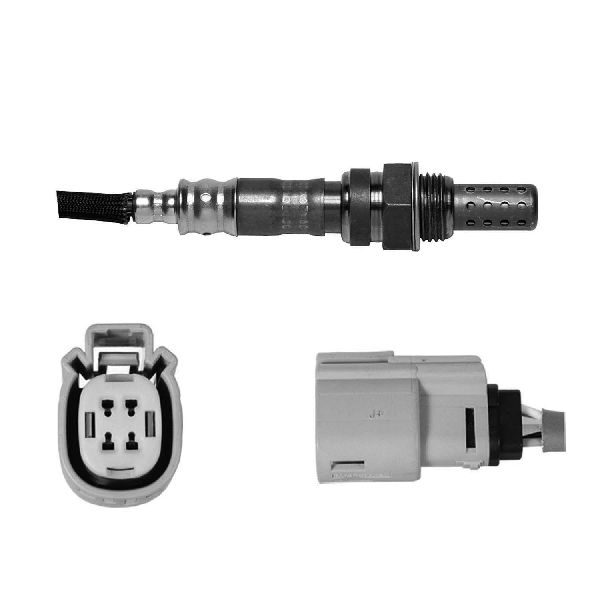
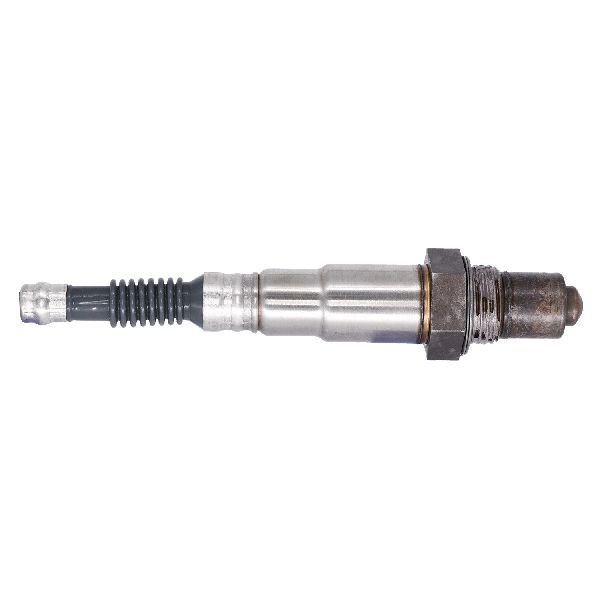
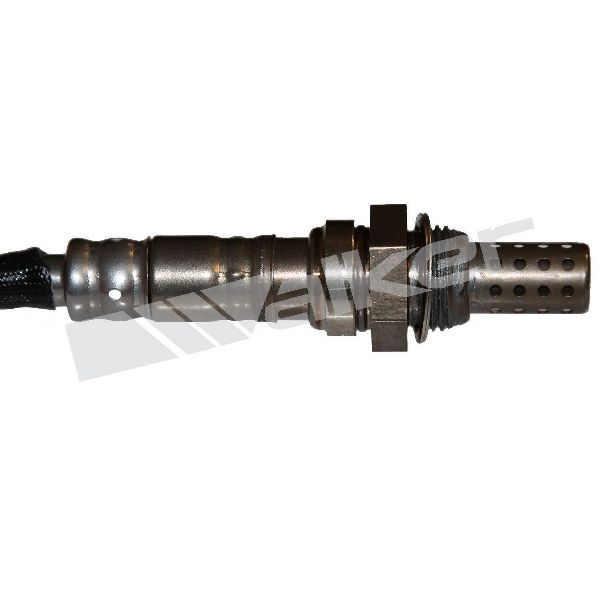
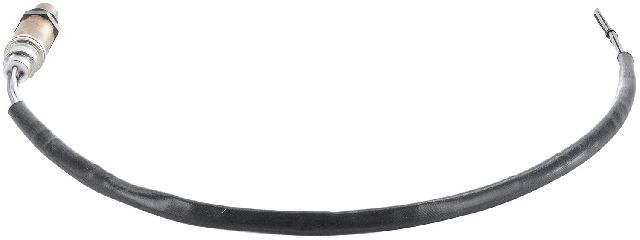
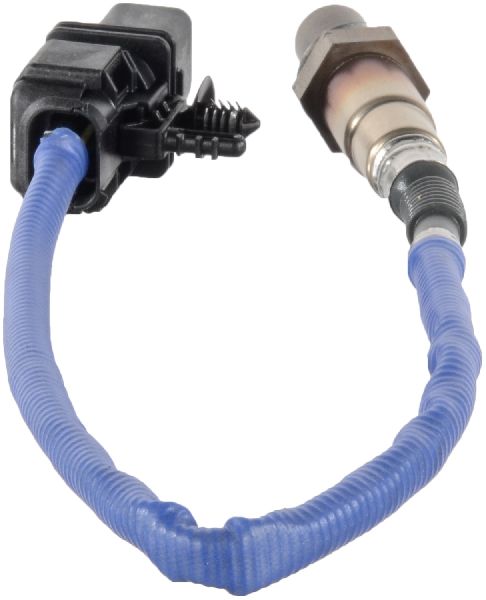
- Downstream Oxygen Sensor (Bank 1, Sensor 2)
(OEM #DY-1273 (Motorcraft), DY-1268 (Motorcraft, for earlier models like 2014-2016), DS7A-9G444-CB)— This sensor is the most common part to fail and cause an isolated P2096 code. It is a standard wear item.
Trusted brands: Motorcraft, Bosch, Denso, Walker
OEM price range: $105-$160
Aftermarket price range: $60-$120
Related Codes That Often Appear With This One
- P0420 — If P2096 is present with P0420 (Catalyst System Efficiency Below Threshold), it strongly suggests the catalytic converter is failing or a significant exhaust leak is present between the two O2 sensors. Diagnostic procedure often dictates addressing the P0420 first.
- P0171 — This code indicates a lean condition detected by the *upstream* O2 sensor. If a major vacuum leak or fuel delivery problem exists, it can be severe enough for both sensors to detect the lean mixture. If P0171 is present, the root cause is likely on the engine side (intake, fuel delivery) rather than the exhaust.
Platform-Specific Known Issues
- A known cause for P2096 on the 1.5L EcoBoost is a leak at the exhaust manifold. One owner on Reddit with a 2016 Fusion 1.5L reported that P2096 and P0420 were both caused by an exhaust manifold leak that was audible from the engine compartment and was repaired under the powertrain warranty.
- Technicians and DIYers have noted that after replacing the downstream O2 sensor on this platform (and its mate, the Ford Escape 1.5L), it is often necessary to perform a 'Key On Engine Running' (KOER) self-test with a capable scan tool to reset fuel adaptations and prevent the code from returning.
- For 2.0L GTDI engines, TSB Bulletin #TSB160031 highlights that an illuminated MIL with DTC P2096 may occur on vehicles built between September 2012 and August 2013.
Mechanic-Grade Diagnostic Values
- Downstream O2 Sensor (B1S2) Voltage - Live Data — expected: Relatively steady voltage between 0.5V and 0.8V on a warm engine at steady RPM.. Failure: Voltage is stuck low (below 0.2V) or fluctuates rapidly like the upstream sensor. A Reddit user with a 2016 1.5L noted their downstream sensor was steady at 0.4V to 0.3V before it was identified as faulty.
- Downstream O2 Sensor Heater Circuit Resistance — expected: Between 2 and 30 ohms when measured across pins 1 and 2 of the sensor connector.. Failure: An open circuit (O.L.) or resistance outside this range indicates a failed heater element within the sensor.
- Short Term Fuel Trim (STFT) Bank 1 — expected: Should fluctuate around 0% at idle and steady RPM, typically within +/- 10%.. Failure: While not a direct cause, a user noted their STFT was well within spec (1.10% at idle, 4.69% at 2100 RPM) while the P2096 code was active, helping to rule out a major vacuum or fuel delivery issue.
Scan Tool Commands That Help
- FORScan, Ford IDS, or equivalent professional scan tool: Key On Engine Running (KOER) Self-Test — This is a critical step *after* replacing the downstream O2 sensor. Standard code clearing often isn't enough. The KOER test forces the PCM to run a full system check and reset the keep-alive memory (KAM) for fuel adaptations. Failure to perform this reset is a common reason for the P2096 code to return immediately after a repair.
Wiring & Ground Locations
- G103 — Left front of engine compartment. On some model years, this is on the cowl above the brake booster.. This is a major engine compartment ground point. While not directly for the O2 sensor, a poor connection here can cause erratic behavior from various modules, including the PCM, which interprets sensor data.
- G104 — Right front of engine compartment, sometimes in front of the right strut tower.. Another primary engine compartment ground. Verifying that major grounds like G103 and G104 are clean and tight is a crucial step in diagnosing any electronic fault code to rule out a bad ground as the root cause.
- Downstream O2 Sensor Connector — The sensor is on the exhaust pipe after the catalytic converter. The wiring harness runs up into the engine bay, and the connector is often located near the back of the engine, requiring access from both above and below the vehicle.. The connector is a common failure point. It's important to check for corrosion, bent pins, or damage to the wiring harness where it might chafe against the chassis or engine components.
Real Owner Repair Stories
- YouTube channel 'My Home Garage' (2017 Ford Escape 1.5L EcoBoost (platform mate)) — P2096 code present. Fuel trims were reading fine.
❌ Tried (didn't work) Replaced the downstream O2 sensor., Cleared codes using a standard Key On Engine Off (KOEO) method.
✅ What actually fixed it The code returned after the initial repair. The final fix was performing a 'Key On Engine Running' (KOER) self-test using a scan tool, as specified by Ford's service information. This properly reset the system's fuel adaptations and cleared the code permanently.
OEM Part Supersession History
DY-1268→DY-1273— Standard part update/revision by Motorcraft.
Heads up: DY-1268 is typically listed for 2014-2016 models, while DY-1273 is listed for 2014-2020 models. While they may be physically interchangeable, it is best practice to use the part number specified for the vehicle's model year. DY-1273 is the more current and widely applicable part.
Diagnostic Flowchart
Other Known Issues on This Vehicle
Issues unrelated to this code that are worth knowing about as an owner of this generation:
- Engine Coolant Intrusion 🔴 High — A well-documented issue where coolant leaks into the cylinders due to a flawed engine block design. Can lead to misfires, white smoke, and eventual engine failure. Typically occurs between 60,000-100,000 miles. (Ref: TSB 19-2139, TSB 20-2100, Customer Satisfaction Program 21N12)
- Shifter Cable Bushing Failure 🔴 High — The bushing at the end of the transmission shifter cable degrades and can detach, causing a mismatch between the gear selected by the driver and the actual gear the transmission is in. This can lead to the vehicle rolling away when in 'Park'. (Ref: Recall 18S20, 22S43)
- Steering Gear Motor Bolt Corrosion 🔴 High — In regions with road salt use, the bolts securing the electric power steering motor can corrode and fracture, leading to a sudden loss of power steering assist. (Ref: Recall 19S26 (NHTSA 19V632000))
- Faulty EVAP Purge Valve 🟡 Low — The EVAP purge valve can stick open, causing a check engine light and difficulty starting the engine immediately after refueling.
- Turbo Overboost (P0234) 🟠 Medium — Often caused by a failed turbocharger wastegate regulating solenoid, leading to a P0234 code and the vehicle entering a reduced-power 'limp mode'. (Ref: Related to TSB 15-0162 for the similar 1.6L engine.)
Used vs. New Parts: Buying Guide for This Vehicle
When a used part is the smart pick: For this specific repair, using used parts is generally not recommended. The primary failure items are wear-and-tear parts (O2 sensor) or parts prone to stress fractures (exhaust manifold). A used part would have unknown remaining life and could fail soon after installation.
Donor-vehicle mileage cap: roughly under 50000 miles for the part to have meaningful remaining life.
What to inspect on the donor part:
- For an exhaust manifold: Inspect meticulously for any hairline cracks, especially around the flange welds and collector. Check for warping by placing a straight edge across the mating surface. Avoid parts with heavy rust or corrosion.
- For an O2 sensor: Never buy used. It is a wear item with a finite lifespan, and its condition cannot be visually verified.
OEM-only on this vehicle (don't cheap out):
- Exhaust Manifold: While aftermarket manifolds exist, OEM fitment is often better, reducing the risk of installation issues and future leaks. Given the labor involved, using a quality OEM part is a safer investment.
Aftermarket brands forum-validated for this vehicle:
- Oxygen Sensors: Denso, Bosch, NTK are widely regarded as reliable OEM-equivalent brands for oxygen sensors.
Brands owners have reported issues with on this vehicle:
- Unbranded, no-name oxygen sensors from online marketplaces should be avoided. They often use lower-quality sensing elements, leading to inaccurate readings, premature failure, and the code returning.
Real Owner Stories
Aggregated from forums and TSBs cited above. Mileages and costs reflect what owners reported in those sources.
2016 Ford Fusion SE 1.5L EcoBoost — 40000 miles
Symptoms: Check engine light with P2096 established. Later developed a pending P0420 code. A ticking noise was audible from the front of the vehicle/engine compartment.
What fixed it: Repair of an exhaust manifold leak, which was covered under the powertrain warranty.
Source hint: Reddit r/MechanicAdvice - '2016 Ford Fusion SE (1.5L) P2096 & P0420 codes'
2017 Ford Escape 1.5L EcoBoost
Symptoms: P2096 Post Catalyst Fuel Trim System Too Lean (Bank 1). The code returned even after the downstream oxygen sensor was replaced.
What fixed it: Performing a 'Key On Engine Running' (KOER) self-test with a scan tool to reset fuel adaptations as required by official service information.
Source hint: YouTube - My Home Garage - 'P2096 Post Catalyst Fuel Trim System Too Lean (bank 1). Battery, B1S2 oxygen sensor replacement'
Related OBD-II Codes
Frequently Asked Questions
Is the exhaust manifold leak on my 2016 Ford Fusion 1.5L covered under warranty?
I replaced the downstream O2 sensor on my Fusion 1.5L but the P2096 code came back. Did I buy a bad part?
My Fusion has a P2096 and a P0420 code at the same time. Which should I fix first?
What is that ticking noise I hear from my engine bay on cold starts?
Could my P2096 code be related to the coolant intrusion issue on my 1.5L EcoBoost?
Can a loose air filter cover cause a P2096 on a 2016 Fusion?
Helpful Videos


We Have This Part in Stock

The information in this article is provided for general reference and educational purposes only. Vehicle specifications, procedures, and part compatibility can vary by production date, trim level, and region. Always consult your vehicle's factory service manual and verify part numbers before purchasing or performing repairs. Safety-critical components such as airbags, seat belts, and braking systems should be installed by a qualified professional.
- Ford Fusion:
- 🎬 Helpful Videos
- 🛍️ Shop This Part
- What's Unique About the 2013-2020 Ford Fusion
- Symptoms You May Notice
- Most Likely Causes
- Rare But Worth Checking
- Diagnosis Steps
- Parts You'll Likely Need
- Related Codes That Often Appear With This One
- Platform-Specific Known Issues
- Mechanic-Grade Diagnostic Values
- Scan Tool Commands That Help
- Wiring & Ground Locations
- Real Owner Repair Stories
- OEM Part Supersession History
- Diagnostic Flowchart
- Other Known Issues on This Vehicle
- Used vs. New Parts: Buying Guide for This Vehicle
- Real Owner Stories
- 2016 Ford Fusion SE 1.5L EcoBoost — 40000 miles
- 2017 Ford Escape 1.5L EcoBoost
- Related OBD-II Codes
- Frequently Asked Questions
- 🎟️ Get 5% Off