

P2096 on 2021-2023 Dodge Charger: Post Catalyst Fuel Trim System Too Lean (Bank 1) Causes and Fixes
For a 2021-2023 Dodge Charger, P2096 most often indicates an exhaust leak before the rear oxygen sensor or the need for a PCM software update. Before replacing parts, thoroughly inspect the exhaust for leaks (especially for broken manifold bolts on HEMI engines, known as the 'Hemi tick') and check with a dealer for any applicable Technical Service Bulletins (TSBs).
- P2096 means the exhaust is too lean (too much oxygen) after the catalytic converter on Bank 1.
- For a 2021-2023 Dodge Charger, always check for PCM software updates (TSBs) with a dealer before replacing any parts, as this is a known issue.
- The most common physical cause is an exhaust leak somewhere between the engine and the rear O2 sensor.
- Do not immediately replace the O2 sensor or catalytic converter; they are often misdiagnosed when the real problem is a leak or a software glitch.
What's Unique About the 2021-2023 Dodge CHARGER
On many Dodge, Chrysler, and Jeep vehicles, including the Charger, this code can be triggered by overly sensitive software logic in the Powertrain Control Module (PCM). Dodge has issued multiple Technical Service Bulletins (TSBs) for this issue on various models and years. TSB #21-020-26 REV.A explicitly notes that codes like P2096 can be falsely set due to a "lack of robustness to the diagnostic monitor." In many cases, a simple PCM reflash at a dealership is the correct first step, especially if no obvious mechanical faults like exhaust leaks are found.
Diagnostic Flowchart
Tap your situation to follow the diagnostic path that matches what you're seeing on this vehicle.
Symptoms You May Notice
- Check Engine Light (Malfunction Indicator Lamp) is on
- Reduced fuel economy
- Rough idle or hesitation during acceleration
- A ticking or puffing sound from the passenger side engine bay or wheel well, especially when cold, indicating an exhaust leak (often called the 'Hemi tick' on V8s)
- Replacing the downstream O2 sensor when the actual problem is a small, hard-to-see exhaust leak, especially from broken HEMI manifold bolts. The code will return until the leak is fixed.
- Replacing the catalytic converter when the issue is a much cheaper fix like a software update, O2 sensor, or exhaust leak.
Most Likely Causes
- Exhaust System Leak 🔴 High Probability Leaks are the most common cause. On HEMI V8 engines, the exhaust manifold bolts are notoriously prone to rusting and breaking from heat cycles, creating a leak at the manifold gasket. On both V6 and V8 engines, leaks can also occur at gaskets, flex pipes, or welds.
How to confirm: Perform a visual and audible inspection of the exhaust system from the engine to the rear O2 sensor. Listen for a distinct ticking or puffing sound from the passenger side, which is often louder on a cold start and may quiet down as the metal expands. A smoke test is the most effective professional method to pinpoint small leaks.
Typical fix: Replace the failed gasket and any broken bolts, or repair the leaking section of the exhaust pipe. For HEMI manifold leaks, it's common to replace the gasket and all manifold bolts on that side. 🎬 Watch: How to fix broken HEMI exhaust manifold bolts.
Est. part cost: $20-$120 - PCM Software Update Needed 🟡 Medium Probability Manufacturer TSBs indicate that the PCM's sensitivity for this code can be too high, leading to false positives. TSB #21-020-26 REV.A directly states the diagnostic monitor lacks robustness, causing false codes.
How to confirm: Contact a Dodge dealership with your vehicle's VIN to see if TSBs like #21-020-26 REV.A, #1807320, or others apply. The dealer's wiTECH scan tool can verify if a newer software calibration is available.
Typical fix: The dealership performs a software update (reflash) on the Powertrain Control Module or Transmission Control Module.
Est. part cost: $0-$200 (Labor for the update, may be covered under warranty) - Faulty Downstream Oxygen (O2) Sensor 🟡 Medium Probability O2 sensors are wear items and can fail over time, sending inaccurate lean readings to the PCM. On 3.6L V6 engines, a common valve cover gasket leak on Bank 1 can drip oil directly onto the downstream O2 sensor, contaminating and damaging it.
How to confirm: Use a scan tool to monitor the live voltage data from the Bank 1 Sensor 2. A healthy downstream sensor on a warm, running engine should show a relatively stable voltage, typically between 0.6V and 0.8V. If it's stuck low (e.g., below 0.2V) or mimics the rapid switching of the upstream sensor, it's likely faulty (assuming no exhaust leaks are present).
Typical fix: Replace the Bank 1, Sensor 2 oxygen sensor. If oil contamination is found on a 3.6L, the valve cover gasket must also be replaced to prevent repeat failure. 🎬 See this walkthrough for replacing 3.6L Pentastar oxygen sensors.
Est. part cost: $50-$150 - Engine Vacuum Leak ⚪ Low Probability Intake manifold gaskets or vacuum hoses can become brittle and crack, allowing unmetered air to enter the engine. While less common, this can trigger a lean code.
How to confirm: Perform a smoke test on the intake system. Alternatively, carefully spray brake cleaner or a propane torch (unlit) around suspected leak points while monitoring for changes in engine idle RPM.
Typical fix: Replace the leaking gasket or hose.
Est. part cost: $10-$150
Rare But Worth Checking
- Low Fuel Pressure: A weak fuel pump or clogged filter can cause a true lean condition affecting the entire engine. This is more likely if codes for both banks (P2096 & P2098) are present. Check fuel pressure with a gauge if other causes are ruled out.
- Failing Catalytic Converter: While a P0420 code is more common for a bad converter, a partially clogged or inefficient converter can sometimes trigger P2096. This should be the last item to consider after all other possibilities are exhausted.
- Faulty Upstream Oxygen (O2) Sensor: A lazy or biased upstream O2 sensor can cause incorrect fuel adjustments, which the downstream sensor then reports as a lean condition. An owner on a Ram forum with a 5.7L HEMI noted that replacing lazy pre-cat sensors was the suggested fix.
Diagnosis Steps
- Check for TSBs: Before starting any repairs, contact a Dodge dealer with your VIN to see if any software updates related to P2096 are available for your vehicle. This is a known issue with a software fix.
- Scan for Other Codes: Use an OBD-II scanner to check for any other codes that could provide clues to the root cause, such as misfire codes or lean codes for the other bank.
- Inspect for Exhaust Leaks: This is a primary cause. Visually and audibly inspect the entire exhaust system on Bank 1 (passenger side) for cracks, holes, or bad gaskets, paying close attention to the exhaust manifold. Listen for the 'Hemi tick' on V8s. A smoke test is highly recommended.
- Analyze Live Sensor Data: Use a scanner to watch the voltage of the Bank 1 downstream O2 sensor (B1S2). It should be relatively steady between 0.6-0.8V on a warm engine. If it's stuck low (<0.2V) or fluctuating rapidly like the upstream sensor, it points towards a problem (assuming no leaks).
- Inspect for Vacuum Leaks: Check all vacuum hoses and the intake manifold gasket for cracks or damage. A smoke test is the most reliable method.
- Test Fuel Pressure: If a true lean condition is suspected (especially if you also have a P0171 code), test the fuel pressure to ensure the pump and regulator are working correctly.
- Test the O2 Sensor: If no leaks are found, test the O2 sensor directly to confirm it is functioning correctly before replacing it. For 3.6L V6 engines, inspect the sensor and wiring for oil contamination from the valve cover above it.
Parts You'll Likely Need
- Exhaust Manifold Gasket
(OEM #05045496AA (for 5.7L V8), 68093232AA (for 3.6L V6))— A common failure point, especially on HEMI engines, causing an exhaust leak that triggers the P2096 code. Often requires new bolts as well.
Trusted brands: Mopar, Fel-Pro, Dorman
OEM price range: $40-$80
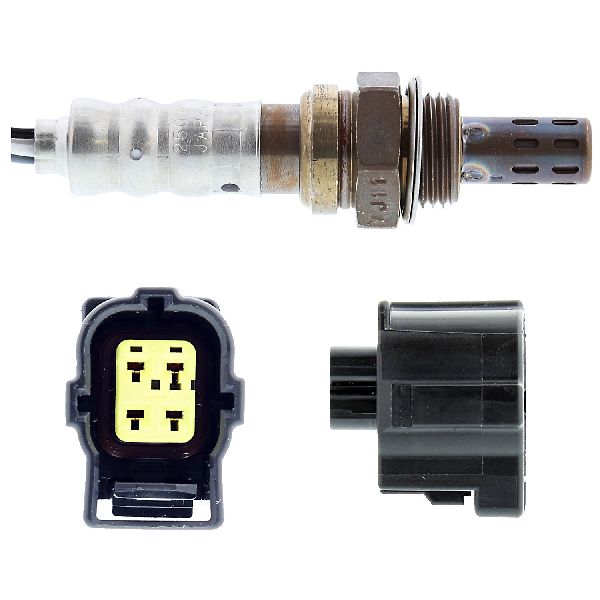
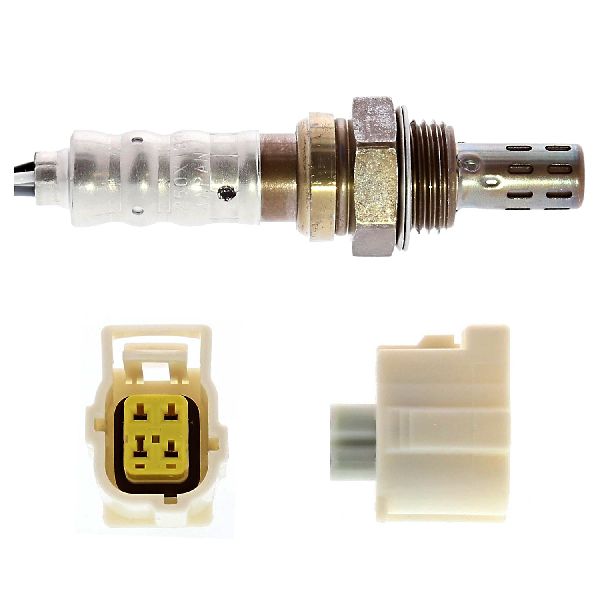
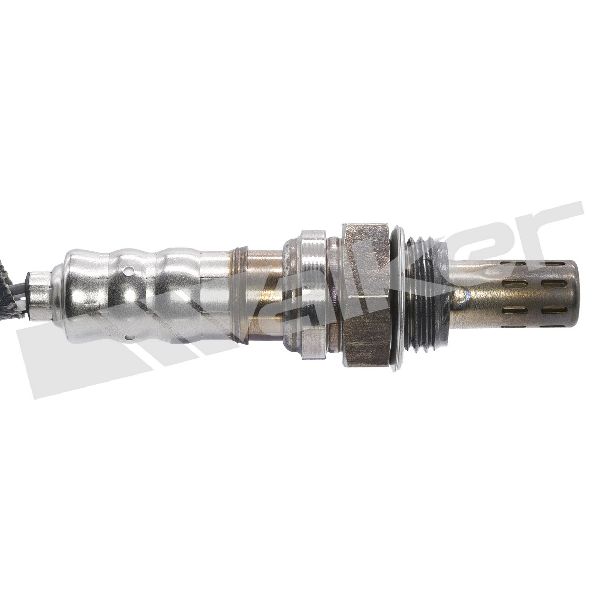
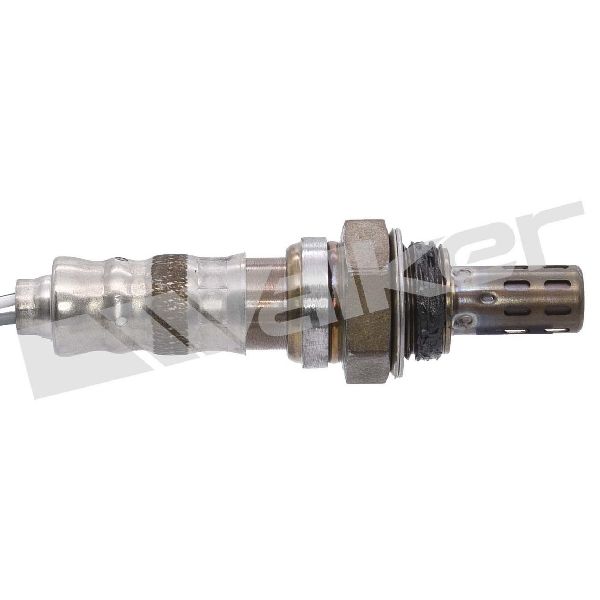
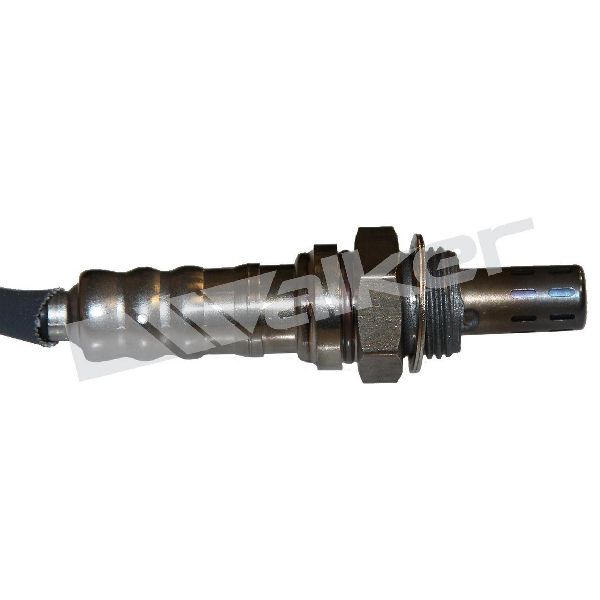
Aftermarket price range: $20-$50 - Downstream Oxygen Sensor (Bank 1, Sensor 2)
(OEM #05149171AB)— This sensor provides the reading for the P2096 code. It can fail and give false lean readings, but should only be replaced after ruling out exhaust leaks and software issues.
Trusted brands: Mopar, NTK, Denso, Bosch
OEM price range: $80-$150
Aftermarket price range: $50-$100
Related Codes That Often Appear With This One
- P2098 — This is the same 'Downstream Fuel Trim System Lean' code, but for Bank 2. Seeing both codes together points to a systemic issue like a vacuum leak, fuel delivery problem, or a PCM software issue affecting both sides of the engine.
- P0171 — This code indicates 'System Too Lean (Bank 1)' as detected by the *upstream* sensor. If both P0171 and P2096 are present, it strongly suggests a genuine lean condition from a major vacuum leak or fuel delivery issue, rather than just an exhaust leak or bad downstream sensor.
- P219A / P219B — These codes for 'Bank 1/2 Air-Fuel Ratio Imbalance' are mentioned alongside P2096 in Dodge TSBs, suggesting a related software logic or mechanical issue. [Bulletin #1807320]
- P0300-P0308 — Misfire codes can be seen with P2096. A lean condition can cause misfires, or a misfire can cause unburnt oxygen to enter the exhaust, which the O2 sensor interprets as a lean condition. [Bulletin #1807320]
Technical Service Bulletins (TSBs) & Recalls
- 21-020-26 REV.A: Mentions P2096 and other fuel trim codes, stating they can be 'falsely set due to lack of robustness to the diagnostic monitor' and recommends a software update.
- 1807320: Groups P2096 with misfire codes (P0300) and air-fuel imbalance codes (P219A/P219B), suggesting a software update can address these related issues together.
- 18-039-15 REV.A: Specifically addresses P2096 on some vehicles, pointing towards a PCM reflash as the fix.
Platform-Specific Known Issues
- Multiple Technical Service Bulletins (TSBs), including #21-020-26 REV.A, #1807320, #1809416, #18-084-16, and #18-039-15 REV-A, have been issued for P2096 on various Dodge models, often pointing to overly sensitive PCM software that requires a reflash to fix.
Mechanic-Grade Diagnostic Values
- Downstream O2 Sensor (B1S2) Voltage — expected: Relatively stable between 0.6V and 0.8V on a fully warmed-up engine at steady RPM.. Failure: Voltage is stuck low (e.g., < 0.2V) or fluctuates rapidly like the upstream sensor.
- Fuel Pressure — expected: Approximately 407 kPa (59 psi) at the fuel rail.. Failure: Pressure is significantly below specification, indicating a potential weak fuel pump or clogged filter.
- O2 Sensor Heater Element Resistance — expected: Between 3 and 25 ohms when tested across the two heater circuit wires (often the two same-colored wires). A specific 2000 Dodge 5.9L was noted to have a spec of 4.5 ohms.. Failure: An open circuit (infinite resistance) or a dead short (near zero ohms) indicates a failed heater element.
- O2 Sensor Signal Circuit Voltage (KOEO, Sensor Disconnected) — expected: Approximately 5.0 volts from the PCM.. Failure: No voltage or incorrect voltage points to a wiring or PCM issue.
Scan Tool Commands That Help
- wiTECH or equivalent professional scan tool: PCM VERIFICATION TEST — After a repair (like fixing an exhaust leak or replacing a sensor) has been performed, this test is used to confirm the fault condition is no longer present and to allow the PCM to verify the fix.
- wiTECH: PCM Reflash/Software Update — When a TSB indicates a software update is available to correct overly sensitive diagnostic logic for P2096. This should be checked before replacing hardware if no obvious mechanical faults are found.
Wiring & Ground Locations
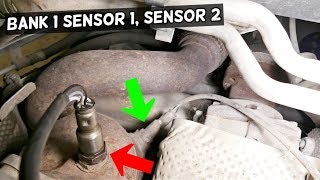
- O2 Sensor Connector (Bank 1, Sensor 2) — On the passenger side of the vehicle, in the exhaust pipe after the catalytic converter.. This is the connector for the sensor that triggers the P2096 code. The 4-wire connector and its harness are susceptible to heat damage, melting, corrosion, or damage from road debris, which can cause a circuit fault and trigger the code. A visual inspection here is critical.
"I Checked Everything" — The Actual Cause
- In a documented case on a 2011 Dodge Dakota 4.7L, a technician performed a smoke test on the exhaust system but found no leaks. The P2096 code persisted after replacing sensors and flashing the PCM. The actual root cause was a hairline crack in the catalytic converter weld that was too small to be detected by a cold smoke test but opened up when hot, allowing unmetered air to enter the exhaust and cause the lean code.
OEM Part Supersession History
5149171AA, 68066160AA→05149171AB— Standard part revision and consolidation by the manufacturer.
Helpful Videos
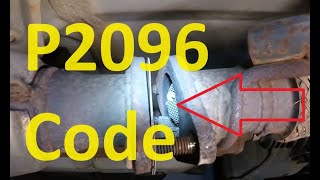
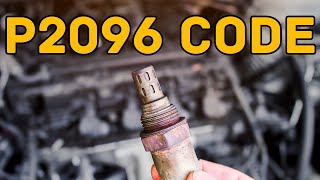
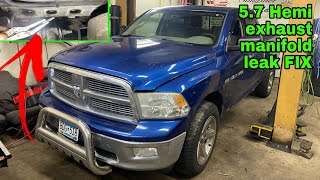
Used OEM Parts in Stock
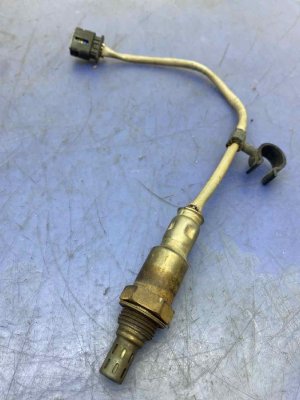
New Aftermarket Parts Available


The information in this article is provided for general reference and educational purposes only. Vehicle specifications, procedures, and part compatibility can vary by production date, trim level, and region. Always consult your vehicle's factory service manual and verify part numbers before purchasing or performing repairs. Safety-critical components such as airbags, seat belts, and braking systems should be installed by a qualified professional.
- Dodge CHARGER:
- 🎬 Helpful Videos
- 🛍️ Shop This Part
- What's Unique About the 2021-2023 Dodge CHARGER
- Diagnostic Flowchart
- Symptoms You May Notice
- Most Likely Causes
- Rare But Worth Checking
- Diagnosis Steps
- Parts You'll Likely Need
- Related Codes That Often Appear With This One
- Technical Service Bulletins (TSBs) & Recalls
- Platform-Specific Known Issues
- Mechanic-Grade Diagnostic Values
- Scan Tool Commands That Help
- Wiring & Ground Locations
- "I Checked Everything" — The Actual Cause
- OEM Part Supersession History
- 🎟️ Get 5% Off