

P2015 on 2008-2016 Chevrolet Cruze 1.8L: Intake Runner Arm and Manifold Guide
On the 1.8L Cruze, code P2015 is almost always caused by a small, broken plastic linkage arm on the intake manifold. A cheap aftermarket arm can fix it for under $20, but if the internal flaps are damaged, the entire intake manifold may need replacement.
- Before buying any parts, visually inspect the small plastic arm on the front of the intake manifold. It is likely broken or disconnected.
- If the arm is the only problem, you can perform a very cheap and easy DIY repair in minutes by snapping a new arm in place.
- This issue is also common on the Chevrolet Sonic with the same 1.8L engine.
What's Unique About the 2008-2016 Chevrolet Cruze
Unlike many vehicles where P2015 points to a bad sensor or a complex electronic issue, on the 1.8L Ecotec engine in the Cruze and Sonic, the cause is overwhelmingly mechanical and simple. A small, flimsy plastic control arm that connects the actuator motor to the internal manifold flaps is known to break or pop off its ball joints. This specific, high-failure part makes the diagnosis on this platform much more direct than on other cars where P2015 can be a frustrating diagnostic chase.
Symptoms You May Notice
- Check Engine Light is on
- Reduced engine power and sluggish acceleration
- Rough or unstable idle
- Decreased fuel economy
- A rattling noise from the intake manifold area
- Failed emissions test
- Replacing the position sensor only. The sensor is integrated into the intake manifold and is rarely the point of failure on its own. The problem is almost always the mechanical linkage (the arm) or the internal flaps.
- Replacing the actuator motor. The motor is more robust than the plastic arm it controls. People often replace the motor when the real issue is the cheap plastic arm that has popped off.
Most Likely Causes
- Broken or Disconnected Intake Manifold Tuning Valve Runner Arm 🔴 High Probability The original arm is made of a plastic material that becomes brittle and fails from constant heat cycles and mechanical stress, causing it to break or pop off its mounting points. This is the most common failure for P2015 on this engine.
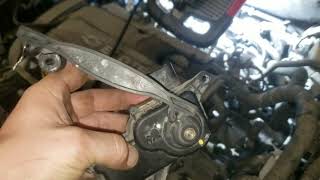
How to confirm: Visually inspect the front of the intake manifold. The small plastic arm, about 5-6 inches long, connects a black electronic actuator to a pivot point on the manifold. Check if it is cracked, broken, or disconnected from either ball stud. The repair is often described as tool-free and taking only minutes.
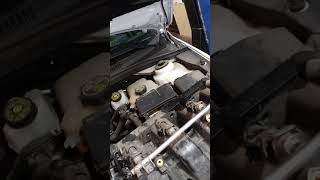
Typical fix: Replace the broken plastic arm with a new one. Many aftermarket kits are available with improved materials like metal or brass ball studs. This is a simple, tool-free repair in most cases that involves snapping the new arm into place. 🎬 Watch: A quick guide to replacing the runner arm.
Est. part cost: $10-$25 - Worn or Damaged Intake Manifold Flaps/Bushings 🟡 Medium Probability If the runner arm breaks and the system continues to be actuated, or if the internal flaps become seized from carbon buildup, the plastic bushings holding the flap rod can wear out. This creates excessive play, preventing the new arm from functioning correctly.
How to confirm: After removing the old runner arm, gently try to wiggle the plastic pivot point on the manifold that the arm connects to. If there is significant side-to-side play or it feels loose and rattles, the internal bushings are likely worn. You may also hear a rattle from the manifold.
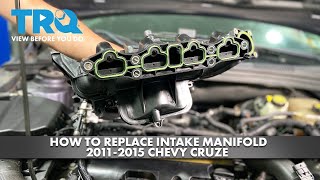
Typical fix: The entire intake manifold assembly must be replaced. The internal flaps and bushings are not serviced separately. The replacement manifold includes a new sensor, flaps, and runner arm. 🎬 See this step-by-step walkthrough for replacing the entire manifold.
Est. part cost: $150-$300
Rare But Worth Checking
- Faulty Intake Manifold Runner Control Actuator: This is the electronic motor that moves the runner arm. While it can fail, it's much less common than the arm itself. If a new arm is installed and the flaps move freely by hand, but the code returns and the arm doesn't move when the engine is running, the actuator could be the problem.
- Wiring Harness Damage: Check the wiring and connector to the actuator for any signs of damage, corrosion, or loose pins. This is a rare cause but should be checked before replacing the actuator or manifold.
Diagnosis Steps
- Scan the vehicle for codes to confirm P2015 is present.
- Open the hood and locate the intake manifold at the front of the engine.
- Visually inspect the 'Intake Manifold Tuning Valve Runner Arm,' a small plastic linkage running vertically on the driver's side of the manifold.
- Check if the arm is disconnected from its top or bottom mounting ball, or if the arm itself is physically cracked or broken. This is the most common failure.
- If the arm is broken, replace it. Aftermarket parts are readily available and often improved over the original design.
- If the arm is intact, try to move the linkage by hand (with the engine off). It should move smoothly with some spring resistance. If it's very loose and rattles, the internal manifold bushings are worn, and the manifold needs replacement.
- If the linkage is seized and won't move, the internal flaps are stuck, requiring manifold replacement.
- If the arm is good and the linkage moves, the issue could be the actuator motor or wiring. This is less likely. A bi-directional scan tool can be used to command the actuator to move to verify its operation.
Parts You'll Likely Need
- Intake Manifold Tuning Valve Runner Arm
(OEM #55570283)— This is the direct replacement for the most common point of failure. Note that the OEM part number 55570283 often refers to the entire manifold assembly, but aftermarket companies sell just the arm referencing this number.
Trusted brands: Dorman, X AUTOHAUX, APDTY, FEXON
OEM price range: N/A (Sold with manifold)
Aftermarket price range: $10-$25 - Intake Manifold Assembly
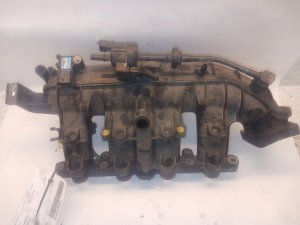
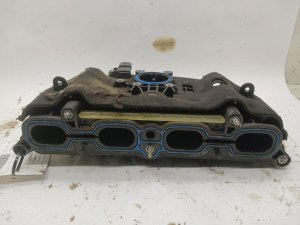
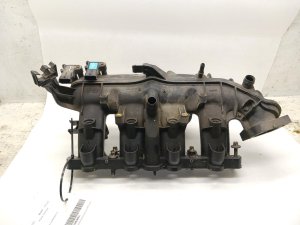
(OEM #55570283)— Required if the internal flaps or their support bushings are worn/damaged, which is the second most likely failure. This assembly includes a new arm, sensor, and internal components.
Trusted brands: GM Genuine, ACDelco, Dorman
OEM price range: $200-$300
Aftermarket price range: $150-$250
Related Codes That Often Appear With This One
- P2076 — This code, 'Intake Manifold Tuning (IMT) Valve Position Sensor/Switch Circuit Low', is often associated with the same broken runner arm failure. Many owners and parts suppliers report seeing P2076 either by itself or with P2015 for the exact same mechanical fault. 🎬 Watch: How P2076 and P2015 relate to this common failure.
Technical Service Bulletins (TSBs) & Recalls
- While no specific TSB for the P2015 code on the Cruze 1.8L was found, VW Group did issue TSB 24 15 04 for P2015 on their 2.0T engines, acknowledging a similar design flaw with their intake manifold runner system, indicating this is a common failure pattern on plastic manifolds.
Platform-Specific Known Issues
- The design of the 1.8L LUW/LWE engine's intake manifold places the actuator and linkage in a position susceptible to heat and vibration, leading to the premature failure of the plastic runner arm.
- Owner forums like cruzetalk.com are filled with threads detailing this exact failure. One user might post, 'Got a P2015 code, looked under the hood and sure enough, the little plastic arm was snapped in two. A $15 part from Amazon and 5 minutes fixed it.' Another might add, 'Mine just popped off the ball joint, snapped it back on and the code cleared.'
Scan Tool Commands That Help
- GDS2 / Tech2 or equivalent professional bidirectional scanner: Intake Manifold Runner Control (IMRC) Actuator Command — Use this command when the runner arm is intact and the linkage moves freely by hand, but the code persists. Commanding the actuator to move while observing the linkage will confirm if the actuator motor is functional or has failed.
- Scan Tool: Clear Codes / Reset ECU — After replacing the arm or manifold, the code must be cleared. Some owner experiences suggest it may take a couple of attempts to clear the code, or disconnecting the battery for 30 seconds may be required if a scan tool is not available.
Wiring & Ground Locations
- G103 — On the left front shock tower in the engine compartment.. This is a primary ground point for multiple engine compartment components, including the Engine Control Module (ECM). A poor connection here can cause a wide range of erratic engine behavior and fault codes.
- G105 — Located at the left front of the engine compartment, often behind or near cooling fan relays.. This ground serves various components in the front of the engine bay. Ensuring all major ground points are clean and secure is a crucial step in diagnosing any electronic fault code before replacing parts.
- Intake Manifold Ground Strap — A ground strap is attached to one of the upper intake manifold mounting bolts (E10 Torx).. This ground is critical and must be reinstalled correctly when replacing the intake manifold. Forgetting to reattach it can lead to various electrical issues. It is typically located on one of the driver's side bolts.
Real Owner Repair Stories
- cruzetalk.com forum posts (Multiple 2011-2016 Chevrolet Cruze 1.8L) — Check Engine Light with P2015 and/or P2076, sluggish performance.
❌ Tried (didn't work) Replacing only the runner arm when the code returned shortly after.
✅ What actually fixed it After replacing the broken arm, the owner noticed the pivot point on the manifold was extremely loose ('wobbled'). The code returned. Replacing the entire intake manifold assembly, which contains new internal flaps and bushings, permanently resolved the issue. This confirms the 'worn bushings' as the secondary failure mode. - YouTube video by 'GOAT Garage' (2012 Chevrolet Cruze 1.8L) — Check Engine Light with P2076.
❌ Tried (didn't work) Replacing the intake manifold was presented as the expensive dealer option to be avoided.
✅ What actually fixed it The user demonstrated a creative DIY fix where the broken plastic arm was reattached and secured using zip ties and wire as a low-cost, temporary repair to restore function and clear the code. While not a recommended long-term solution, it confirms the arm linkage is the direct cause.
OEM Part Supersession History
55570283→25200449— GM regularly updates service parts to integrate new materials or technologies. This is the current OEM part number for the complete intake manifold assembly for this engine.
Heads up: The part 55570283 is still widely referenced by aftermarket suppliers and for used parts, but when ordering a new GM Genuine part, 25200449 is the correct number to use.
Diagnostic Flowchart
Other Known Issues on This Vehicle
Issues unrelated to this code that are worth knowing about as an owner of this generation:
- PCV Valve/Diaphragm Failure in Valve Cover 🔴 High — Commonly occurs between 30,000 and 80,000 miles. Causes vacuum leaks, rough idle, high oil consumption, and codes like P0171. (Ref: GM issued TSBs for this issue, but the entire valve cover must be replaced as the diaphragm is integrated.)
- Leaking Oil Cooler Gaskets 🔴 High — Very common failure. Gaskets between the oil cooler and engine block degrade, causing significant oil and/or coolant leaks onto the exhaust manifold, creating a burning smell and fire risk.
- Cracked Plastic Thermostat Housing / Water Outlet 🟠 Medium — The plastic components of the cooling system, particularly the thermostat housing and water outlet, become brittle with heat cycles and can crack, leading to coolant leaks and overheating.
- Timing Belt Maintenance 🔴 High — The 1.8L engine uses a timing belt that requires replacement every 100,000 miles per the manufacturer, though many specialists recommend a shorter interval of 60,000-80,000 miles. Failure is catastrophic to the engine.
- Water Pump Failure 🟠 Medium — Water pumps can fail, typically after 60,000 miles, leading to coolant leaks from the weep hole or bearing noise. It is often replaced along with the timing belt.
Used vs. New Parts: Buying Guide for This Vehicle
When a used part is the smart pick: For the complete intake manifold assembly. Since the OEM part is expensive and the failure is often mechanical wear (loose bushings) rather than a crack, a low-mileage used manifold from a junkyard can be a cost-effective solution.
Donor-vehicle mileage cap: roughly under 80000 miles for the part to have meaningful remaining life.
What to inspect on the donor part:
- Check the runner arm pivot point (the ball stud the arm connects to) for excessive looseness or 'wobble'. It should feel firm with minimal play.
- Inspect the plastic body for any visible cracks, especially around mounting points and seams.
- Ensure the electrical connector for the internal sensor is not damaged.
- If possible, try to actuate the runner flaps by hand to ensure they are not seized inside the manifold.
Aftermarket brands forum-validated for this vehicle:
- Dorman (for the complete manifold, but inspect for quality issues like casting flash).
- X AUTOHAUX, APDTY (for the replacement runner arm, often with metal-reinforced ball studs).
Brands owners have reported issues with on this vehicle:
- Unnamed, no-brand runner arms may use weaker plastic that fails quickly. It is better to choose one with documented material improvements like brass or metal ball studs.
Real Owner Stories
Aggregated from forums and TSBs cited above. Mileages and costs reflect what owners reported in those sources.
2011 Chevrolet Cruze 1.8L
Symptoms: Got a P2015 code, looked under the hood and sure enough, the little plastic arm was snapped in two.
What fixed it: A $15 part from Amazon and 5 minutes fixed it.
Cost: $10-$20
Source hint: cruzetalk.com forum thread
2014 Chevrolet Cruze 1.8L
Symptoms: The arm just popped off the ball joint.
What fixed it: Snapped it back on and the code cleared.
Source hint: cruzetalk.com forum thread
2012 Chevrolet Cruze 1.8L
Symptoms: P2015 and P2076 codes present; visual inspection showed a broken plastic linkage on the front of the manifold.
What fixed it: Replaced the broken plastic intake runner arm with an aftermarket version.
Source hint: reddit.com/r/cruze
Related OBD-II Codes
Frequently Asked Questions
Is there a TSB for the P2015 code on my 2011 Chevrolet Cruze 1.8L?
Can I fix the P2015 code on my Cruze without replacing the entire intake manifold?
How can I tell if I need a whole new manifold or just the $15 repair kit?
Does the Chevrolet Sonic 1.8L have this same intake manifold issue?
Are there better parts than the original plastic arm that keeps breaking?
Should I buy a used intake manifold to save money on this repair?
Helpful Videos

![How To Replace Intake Manifold Chevrolet Cruze [1.8L 1st Gen 2011-2016]](https://img.youtube.com/vi/4jVRCuzPVzs/mqdefault.jpg)
We Have This Part in Stock

The information in this article is provided for general reference and educational purposes only. Vehicle specifications, procedures, and part compatibility can vary by production date, trim level, and region. Always consult your vehicle's factory service manual and verify part numbers before purchasing or performing repairs. Safety-critical components such as airbags, seat belts, and braking systems should be installed by a qualified professional.
- Chevrolet Cruze:
- 🎬 Helpful Videos
- 🛍️ Shop This Part
- What's Unique About the 2008-2016 Chevrolet Cruze
- Symptoms You May Notice
- Most Likely Causes
- Rare But Worth Checking
- Diagnosis Steps
- Parts You'll Likely Need
- Related Codes That Often Appear With This One
- Technical Service Bulletins (TSBs) & Recalls
- Platform-Specific Known Issues
- Scan Tool Commands That Help
- Wiring & Ground Locations
- Real Owner Repair Stories
- OEM Part Supersession History
- Diagnostic Flowchart
- Other Known Issues on This Vehicle
- Used vs. New Parts: Buying Guide for This Vehicle
- Real Owner Stories
- 2011 Chevrolet Cruze 1.8L
- 2014 Chevrolet Cruze 1.8L
- 2012 Chevrolet Cruze 1.8L
- Related OBD-II Codes
- Frequently Asked Questions
- 🎟️ Get 5% Off