

P1778 on 2011-2014 Kia Forte Koup: Transmission Solenoid Fault Causes and Fixes
On a 2011-2014 Kia Forte Koup, code P1778 almost always means a specific transmission solenoid has failed. This is a known issue covered by Kia TSB #TSBTRA051R1. The fix is to replace the solenoid inside the transmission, not the entire unit, costing around $50-$250 for the part.
- P1778 on a 2011-2014 Kia Forte Koup indicates a failed transmission solenoid, NOT a 'stepper motor'.
- This is a known issue, and Kia has issued a service bulletin (TSBTRA051R1) for this exact problem.
- The correct repair is to replace the faulty solenoid(s) inside the transmission pan; do NOT let a shop replace the entire transmission for this code alone.
- Symptoms include harsh shifting, poor acceleration, and the transmission getting stuck in gear.
- This repair is complex and should be performed by a qualified mechanic.
What's Unique About the 2011-2014 Kia FORTE KOUP
It is critical to know that P1778 on a Kia Forte does NOT mean a 'Stepper Motor' failure. That definition applies to other brands with CVT transmissions, like Nissan. The Forte Koup uses a conventional 6-speed automatic (from the A6 family), and Kia has acknowledged a common problem with its solenoids by issuing Technical Service Bulletin (TSB) #TSBTRA051R1. This bulletin specifically instructs technicians to replace the individual solenoids for code P1778, which is a much cheaper repair than replacing the entire transmission. The internal transmission wiring harness is also a known high-failure item and is often replaced concurrently.
Diagnostic Flowchart
Tap your situation to follow the diagnostic path that matches what you're seeing on this vehicle.
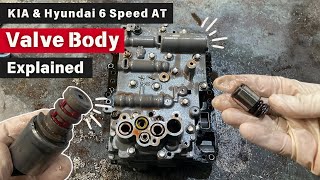
Generation note: The 2011-2014 range covers the end of the first-generation (TD, 2010-2013) and the beginning of the second-generation (YD, 2014-2018) Forte Koup. Both generations in this timeframe used a 6-speed automatic transmission from the Hyundai/Kia 'A6' family. Forte models with 1.8L and 2.0L engines typically used the A6GF1, while the 2.4L engine used the higher torque capacity A6MF1. 🎬 See a detailed breakdown of the A6-family valve body components. The solenoid failure issue is common across this entire transmission family.
Symptoms You May Notice
- Check Engine Light is on
- Harsh, erratic, or delayed shifting
- Transmission gets stuck in one gear (typically 3rd), also known as 'limp mode'
- Poor acceleration from a stop
- Vehicle shuddering at certain speeds
- A noticeable 'slip' or 'flare' in engine RPM between gear changes
- Inability to engage certain gears
- Replacing the entire transmission. The official Kia TSB #TSBTRA051R1 explicitly advises against this, stating that only the solenoid needs replacement.
- Diagnosing the issue as a 'Stepper Motor' failure. This is the correct diagnosis for a Nissan with a CVT, but is completely wrong for a Kia Forte Koup with a 6-speed automatic.
Most Likely Causes
- Failed Transmission Solenoid 🔴 High Probability This is a well-documented weak point for the 6-speed automatic transmissions used across many Kia and Hyundai models, as acknowledged by Kia's TSB #TSBTRA051R1. The P1778 code specifically points to the Damper Clutch/TCC solenoid.
How to confirm: A technician can use a professional scan tool to check for the specific code. The solenoid's resistance can be tested with a multimeter. 🎬 Watch: How to diagnose and test solenoids on most Kia models. For most Variable Force Solenoids (VFS) in the A6GF1, including the TCC solenoid, the resistance should be approximately 5.1-5.3 ohms. A reading significantly outside this range confirms failure.
Typical fix: Replace the faulty solenoid or the entire 8-solenoid pack. The internal transmission wiring harness (OEM # 46307-3B650 or similar) is often replaced at the same time as a preventative measure, as it is also a common failure point.
Est. part cost: $50-$250 - Damaged Internal Wiring Harness 🟡 Medium Probability The internal harness that connects the solenoids to the main transmission connector is known to fail at a high rate on A6-family transmissions. It can become brittle from heat and fluid exposure, causing shorts or open circuits that trigger solenoid codes.
How to confirm: A visual inspection after removing the transmission pan may reveal brittle or damaged wires. A technician can test for continuity from the solenoid connector back to the main transmission case connector.
Typical fix: Replace the internal wiring harness (e.g., OEM part #46307-3B650). This is often done whenever a solenoid is replaced.
Est. part cost: $80-$150
Rare But Worth Checking
- Low or Contaminated Transmission Fluid: While unlikely to cause an electrical fault code directly, old or dirty fluid can cause solenoids to stick and fail over time. Always check the fluid level and condition first.
- Damaged Wiring Harness or Connector: The external wiring leading to the transmission can become damaged, causing an open or short in the solenoid circuit. Inspect the main connector for corrosion or pushed-out pins.
- Faulty Powertrain Control Module (PCM): This is extremely rare. The PCM should only be considered after all other possibilities, including solenoids and all related wiring, have been definitively ruled out.
Diagnosis Steps
- Verify the code with a quality OBD-II scanner.
- Check the transmission fluid level and condition. The fluid should be at the correct level, red in color, and not smell burnt. The correct fluid is ATF SP-IV.
- Inspect the transmission's main electrical connector for any damage, corrosion, or loose pins.
- Using a professional scan tool, check the live data for the solenoid's operation and command status.
- If the problem points to an internal component, drain the transmission fluid and remove the oil pan.
- Visually inspect the internal wiring harness for any signs of brittleness, cracking, or damage.
- Locate the specific solenoid (Damper Clutch / TCC). There are 8 total solenoids; take a picture before removal to ensure correct placement. 🎬 Watch this walkthrough on removing and replacing the transmission solenoids.
- Test the solenoid's resistance with a multimeter. For the VFS solenoids (like the TCC), the reading should be ~5.1-5.3 ohms. For the on/off shift solenoids, it should be ~10-11 ohms. An open circuit (infinite resistance) or a short (zero resistance) confirms failure.
- Replace the faulty solenoid(s). It is highly recommended to replace the internal harness (e.g., 46307-3B650) at the same time.
- Reinstall the pan with a new gasket, refill with manufacturer-specified fluid (ATF SP-IV), clear the codes, and perform a transmission re-learn procedure if required.
Parts You'll Likely Need
- Transmission Solenoid Kit
(OEM #46313-3B030 (Individual VFS Solenoid))— This is the component that fails and directly causes the P1778 code, as confirmed by Kia's TSB. Often sold as a complete kit of 8 solenoids.
Trusted brands: Rostra, Sonnax, Genuine Hyundai/Kia
OEM price range: $150-$250
Aftermarket price range: $50-$150 - Internal Transmission Wiring Harness
(OEM #46307-3B650)— A very common failure point on the A6GF1/MF1 transmission that can cause various solenoid codes. It is highly recommended to replace this part during solenoid service.
Trusted brands: Genuine Hyundai/Kia
OEM price range: $80-$150
Aftermarket price range: $60-$100 - Transmission Pan Gasket
(OEM #45285-3B700)— The gasket must be replaced any time the transmission pan is removed to prevent leaks.
Trusted brands: Fel-Pro, Mahle, Genuine Hyundai/Kia
OEM price range: $20-$40
Aftermarket price range: $10-$25 - Automatic Transmission Fluid (ATF SP-IV)
(OEM #UM040-CH020 (12 qt case))— The transmission must be refilled with 4-5 quarts of the correct type of fluid after the repair.
Trusted brands: Genuine Hyundai/Kia, Idemitsu, ENEOS
OEM price range: $15-$25 per quart
Aftermarket price range: $10-$18 per quart
Related Codes That Often Appear With This One
- P0741 — Torque Converter Clutch Circuit Performance or Stuck Off
- P0743 — Torque Converter Clutch Circuit Electrical
- P0748 — Pressure Control Solenoid 'A' Electrical
- P0753 — Shift Solenoid 'A' Electrical
- P0758 — Shift Solenoid 'B' Electrical
- P0763 — Shift Solenoid 'C' Electrical
- P0768 — Shift Solenoid 'D' Electrical
- P0773 — Shift Solenoid 'E' Electrical
- P2709 — Shift Solenoid 'F' Electrical
Technical Service Bulletins (TSBs) & Recalls
- TSBTRA051R1: '6 SPD A/T SOLENOID REPLACEMENT – MULTIPLE DTCS' - This bulletin confirms P1778 is a solenoid issue on 6-speed automatics and instructs technicians to replace the solenoids, not the entire transaxle. It covers a range of codes from P0741 to P2709.
Platform-Specific Known Issues
- The 6-speed automatic transmission (A6MF1/A6GF1 family) used in this and many other Kia/Hyundai vehicles has a known pattern of solenoid failure, leading Kia to issue TSB #TSBTRA051R1.
- The internal wiring harness for the valve body is another major weak point, frequently failing and causing identical symptoms to a failed solenoid. Technicians often replace the harness and solenoids together.
Mechanic-Grade Diagnostic Values
- Variable Force Solenoid (VFS) Resistance — expected: 5.1 - 5.3 Ohms. Failure: A reading of infinity (open circuit), near-zero (short circuit), or significantly outside the expected range.
- On/Off Shift Solenoid (SSA/SSB) Resistance — expected: 10 - 11 Ohms. Failure: A reading of infinity (open circuit) or near-zero (short circuit).
- Transmission Fluid Temperature (TFT) Sensor Resistance — expected: Approx. 2.5 kΩ at 20°C (68°F) or 0.32 kΩ at 80°C (176°F).. Failure: A reading that is drastically different at a known temperature, which can cause the TCM to command incorrect line pressure.
Scan Tool Commands That Help
- Kia GDS (Global Diagnostic System): Actuation Test — To individually command a specific solenoid (like the TCC) to activate. A technician can then listen for an audible click from the valve body with a stethoscope to confirm the solenoid is mechanically functioning, helping to isolate an electrical fault from a mechanical one.
- Kia GDS (Global Diagnostic System): Special Functions > Resetting Adaptive Values — This procedure is required after replacing the transmission, valve body, solenoids, or TCM. It clears the learned shift pressure adjustments, forcing the TCM to relearn clutch application timing for smooth shifts. Failure to do this can result in persistent harsh shifting even after the repair.
Wiring & Ground Locations
- Transmission Ground Strap — A dedicated wire or braided strap that connects the transmission case directly to the vehicle's chassis/frame rail in the engine bay.. A corroded or loose transmission ground can cause erratic voltage and unstable sensor readings for all transmission electronics, including the solenoids. This can lead to intermittent and difficult-to-diagnose electrical fault codes like P1778. Part numbers include 918601M140 for 2011-2013 models and 91860-A7220 for 2014 models.
- Main Transmission Connector (20-pin) — The main electrical connector on the outside of the transmission case where the external vehicle harness connects to the internal components.. Technicians can perform tests here without dropping the pan. For example, Pin 12 is for Shift Solenoid B (SSB), and Pins 5 & 10 are power supply for the solenoids. Testing for resistance and voltage at these specific pins can quickly determine if the fault is internal or external.
When the Usual Fixes Don't Work
- While P1778 on this Kia points strongly to a failed solenoid or internal harness, a simple multimeter test showing 'good' resistance is not a definitive all-clear. The fault could be intermittent, occurring only when the transmission fluid is hot, causing the solenoid's internal coil windings to expand and create an open circuit. Furthermore, an underlying mechanical issue, such as a worn valve body bore, can cause a solenoid to work harder and eventually fail, or produce symptoms that are misdiagnosed as a primary solenoid electrical fault. If solenoids and wiring are replaced and issues persist, the valve body itself should be inspected for wear.
OEM Part Supersession History
46307-3B610, 46307-3B620→46307-3B650— Updated design for improved durability and reliability of the internal transmission wiring.
Heads up: The newest part number (46307-3B650) is the correct service replacement for the earlier versions and should be used for all repairs.
Model Year Variations Within This Range
- 2011-2013 vs 2014: The transmission-to-chassis ground strap has a different part number. First generation (TD) models use part #918601M140, while the second generation (YD) starting in 2014 uses #91860-A7220.
- All: Later versions of the A6-family transmission may not have a traditional dipstick. Fluid level is checked via a standpipe/overflow plug on the side of the transmission case, requiring the vehicle to be level and at a specific operating temperature (50-60°C).
Helpful Videos


Used OEM Parts in Stock


New Aftermarket Parts Available


The information in this article is provided for general reference and educational purposes only. Vehicle specifications, procedures, and part compatibility can vary by production date, trim level, and region. Always consult your vehicle's factory service manual and verify part numbers before purchasing or performing repairs. Safety-critical components such as airbags, seat belts, and braking systems should be installed by a qualified professional.
- Kia FORTE KOUP:
- 🎬 Helpful Videos
- 🛍️ Shop This Part
- What's Unique About the 2011-2014 Kia FORTE KOUP
- Diagnostic Flowchart
- Symptoms You May Notice
- Most Likely Causes
- Rare But Worth Checking
- Diagnosis Steps
- Parts You'll Likely Need
- Related Codes That Often Appear With This One
- Technical Service Bulletins (TSBs) & Recalls
- Platform-Specific Known Issues
- Mechanic-Grade Diagnostic Values
- Scan Tool Commands That Help
- Wiring & Ground Locations
- When the Usual Fixes Don't Work
- OEM Part Supersession History
- Model Year Variations Within This Range
- 🎟️ Get 5% Off