

P1775 on 2003-2011 Jeep Wrangler: Solenoid Switch Valve Causes and Fixes
P1775 on a 2003-2011 Wrangler usually means the transmission will not shift into 1st gear, causing sluggish take-offs. The most common cause is a faulty transmission solenoid pack inside the transmission pan, but it can also be a stuck valve in the valve body. Expect to pay $150-$300 for a new solenoid pack.
- P1775 on your Wrangler means the transmission is failing to shift into 1st gear and is starting in 2nd, causing sluggish acceleration.
- The most common fix is to replace the transmission solenoid pack, which is located inside the oil pan.
- While replacing the solenoid pack, it's wise to also inspect the valve body for any sticking valves, as this can also cause the code.
- This is a complex repair that is best left to a professional or a very experienced DIYer due to the need to work inside the transmission.
- Do not drive the vehicle extensively with this code, as it puts significant strain on the transmission and can lead to a much more expensive failure.
What's Unique About the 2003-2011 Jeep Wrangler
The 42RLE transmission was used across the end of the Wrangler TJ generation (2003-2006) and the beginning of the JK generation (2007-2011), making this a common issue for both platforms. While the engines changed from the 2.4L/4.0L to the 3.8L V6, the transmission and its control system remained largely the same. The issue is almost always internal to the transmission. A Chrysler technical document explicitly states that for P1775, the 'Solenoid Switch Valve' is located in the valve body, not the solenoid assembly, and a sticking valve is the primary cause. Forum discussions frequently point to this being a well-known, albeit frustrating, weak point of this specific transmission.
Generation note: This issue affects both the 2003-2006 Wrangler TJ (with 2.4L I4 and 4.0L I6 engines) and the 2007-2011 Wrangler JK (with the 3.8L V6). The 42RLE transmission is the common component, and the causes, symptoms, and repairs are identical across these models. A key difference is that 2007 and later models use a Variable Line Pressure (VLP) system, which adds two solenoids to the valve body, but the core P1775 issue with the Solenoid Switch Valve remains the same.
Symptoms You May Notice
- Check Engine Light is on
- Vehicle feels sluggish and lacks power when accelerating from a stop (stuck in 2nd gear).
- Transmission may shift harshly or refuse to shift properly.
- A harsh clunk or jerk may be felt when slowing to a stop, as the transmission fails to downshift from 2nd to 1st gear.
- Inability to use Overdrive or engage the Torque Converter Clutch (TCC).
- Transmission may go into 'limp mode'.
- "Hot Oil" warning on the instrument cluster if driven for extended periods in limp mode.
- Replacing only the external transmission sensors without addressing the internal components.
- Assuming the entire transmission needs to be rebuilt immediately. Often, the fix is limited to the solenoid pack and/or valve body service, which is much cheaper than a full rebuild.
- Replacing the solenoid pack when the actual root cause is a worn bore in the valve body. A Chrysler tech tip specifically warns against this.
Most Likely Causes
- Faulty Transmission Solenoid/Pressure Switch Assembly 🔴 High Probability The solenoid pack in the 42RLE is a known failure point. It contains multiple electronic solenoids and pressure switches that operate in a high-temperature fluid environment, and they are known to fail electronically or mechanically over time. Many owners successfully resolve P1775 by replacing this part.
How to confirm: After ruling out wiring issues, the most common diagnostic step is to replace the solenoid pack. A technician can test the resistance of the individual solenoids through the main harness connector. For example, the L/R solenoid should read approximately 1.7 ohms. However, failure is often intermittent and heat-related, making bench tests inconclusive.
Typical fix: Replace the entire solenoid and pressure switch assembly, which is located inside the transmission oil pan, attached to the valve body. This also requires a new filter and fluid.
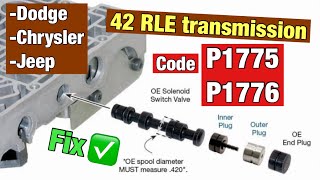
Est. part cost: $150-$300 - Sticking Solenoid Switch Valve in the Valve Body 🔴 High Probability This is considered the primary root cause by many technicians. 🎬 Watch: Understanding how the solenoid switch valve causes these codes. The steel Solenoid Switch Valve (SSV) oscillates within a softer aluminum valve body bore. Over time, the bore wears out, allowing the valve to get cocked and stuck. Debris or varnish in old transmission fluid accelerates this wear.
How to confirm: This is difficult to confirm without disassembly. A technician would remove the valve body, take it apart on a bench, and manually check for free movement of all valves, especially the SSV. A Chrysler tech tip specifically advises against just replacing the solenoid pack for this code and points to a sticking valve in the valve body as the primary cause.
Typical fix: Remove, disassemble, and thoroughly clean the valve body. If the valve bore is scored or worn, the valve body may need to be replaced or rebuilt using an aftermarket kit like the Sonnax Oversized Solenoid Switch Valve Kit (92835-18K), which reams the bore and installs a larger valve to restore hydraulic integrity.
Est. part cost: $50 for a repair kit, $300-$600 for a remanufactured valve body. - Low or Dirty Transmission Fluid ⚪ Low Probability While not specific to this vehicle, low fluid can cause pressure drops and erratic solenoid operation. Dirty, burnt, or debris-filled fluid is a major contributor to the sticking of the Solenoid Switch Valve in the valve body. It's a critical contributing factor even if not the sole cause.
How to confirm: Check the transmission fluid level and condition using the dipstick. Fluid should be at the correct level, red in color, and not smell burnt. Look for excessive metal shavings on the pan magnet during a service. One owner found significant brass flakes in the pan, indicating severe internal damage that required a full transmission replacement.
Typical fix: Perform a transmission fluid and filter change with Mopar ATF+4. If the fluid is very dark or contains clutch material, it may be a sign of more severe internal damage requiring a rebuild.
Est. part cost: $50-$100 for fluid and filter.
Rare But Worth Checking
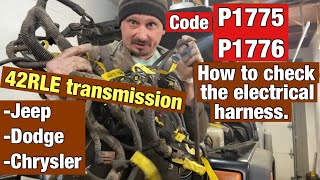
- Wiring Harness or Connector Issue: While less common than internal failures, a damaged wire or corroded connector between the TCM and the transmission can cause this code. A visual inspection of the harness where it runs near the exhaust or may rub against the chassis is worthwhile. 🎬 Watch: A detailed guide on checking the transmission wiring harness. One owner on YouTube documented a detailed process for checking the entire harness for continuity.
- Faulty Powertrain Control Module (PCM/TCM): This is extremely rare. The control module is typically the most reliable component in the system. All other possibilities, including internal transmission mechanics and wiring, should be exhausted before considering a faulty module. For 2005-2006 models, the TCM is integrated into the PCM, which was known for other issues, but still rarely the cause of P1775.
Diagnosis Steps
- Verify the code with a capable OBD-II scanner. Check for accompanying codes like P0700, P0841, or P1776.
- Check the transmission fluid level and condition. Top off or change if necessary. Burnt fluid or excessive metal suggests deeper issues.
- Inspect the transmission wiring harness and connectors for any visible damage, corrosion, or loose connections, particularly near the exhaust and where the harness may chafe.
- If fluid and wiring are okay, the issue is internal. A Chrysler tech tip advises inspecting the valve body before replacing the solenoid pack.
- Drop the transmission pan to access the internal components.
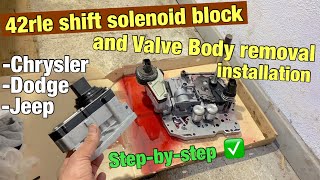
- Remove the valve body from the transmission.
- With the valve body on a bench, remove the solenoid pack. The Mopar part is often recommended.
- Disassemble the valve body and inspect the Solenoid Switch Valve (SSV) and its bore for scoring, wear, or sticking. Manually move the valve to check for smooth operation.
- If the bore is worn, consider a valve body repair kit (e.g., Sonnax) or a remanufactured valve body. If the valve is just sticking from debris, a thorough cleaning may suffice.
- Reassemble with a new solenoid pack (highly recommended while in there), a new transmission filter, pan gasket, and fresh Mopar ATF+4 fluid.
- Clear the codes and perform a test drive, including multiple stop-and-go situations, to confirm the fix. A 'Quick Learn Procedure' may be necessary.
Parts You'll Likely Need
- Transmission Solenoid Pack / Assembly
(OEM #04800171AA)— This is the most frequent failure point for code P1775. It contains the electronics that control the hydraulic functions of the transmission.
Trusted brands: Mopar, Rostra, ATP, Dorman
OEM price range: $250-$350
Aftermarket price range: $120-$200 - Transmission Filter and Pan Gasket Kit — This must be replaced anytime the transmission pan is removed for service.
Trusted brands: Mopar, ATP, Wix
OEM price range: $30-$50
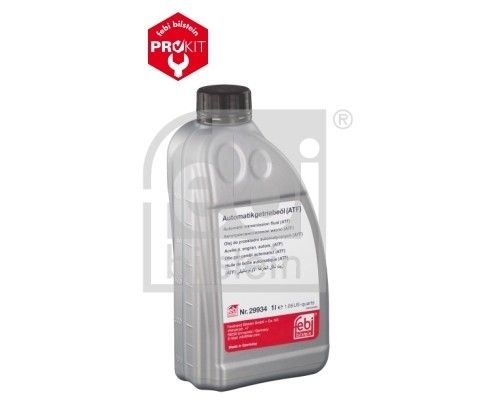
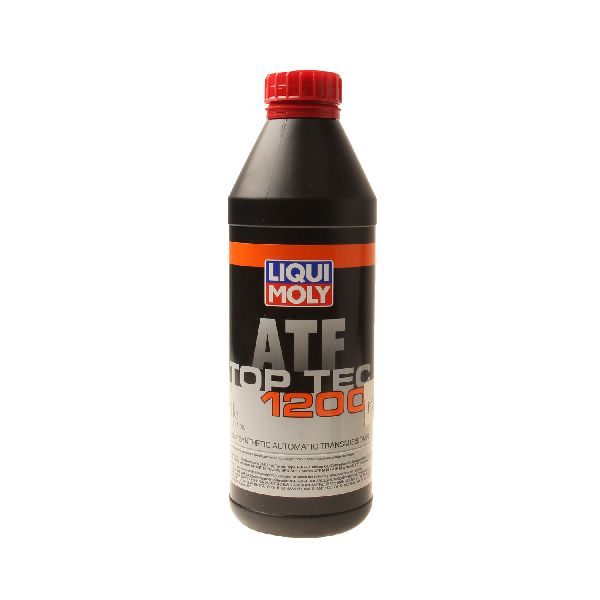
Aftermarket price range: $15-$30 - Mopar ATF+4 Transmission Fluid — This is the required fluid for the 42RLE transmission. Using incorrect fluid can cause shifting problems and damage.
Trusted brands: Mopar, Valvoline ATF+4, Castrol ATF+4
OEM price range: $10-$15 per quart
Aftermarket price range: $7-$12 per quart - Sonnax Oversized Solenoid Switch Valve Kit
(OEM #92835-18K)— If the valve body bore for the Solenoid Switch Valve is worn, simply replacing the solenoid pack will not fix the issue. This kit provides a permanent repair.
Trusted brands: Sonnax
Aftermarket price range: $50-$70
Related Codes That Often Appear With This One
- P0700 — P0700 is a generic code that simply means the Transmission Control Module (TCM) has stored a fault code. It will almost always be present alongside a more specific transmission code like P1775.
- P0841 — P0841 relates to the LR (Low/Reverse) Pressure Switch circuit. Since the TCM uses this switch to verify the position of the Solenoid Switch Valve, a fault in this circuit can be related to or accompany P1775.
- P1776 — This code is for 'Solenoid Switch Valve Latched in LR Position'. It's the sister code to P1775 and indicates the same valve is stuck, but in the opposite position. The causes and repairs are identical, and they often appear together.
Technical Service Bulletins (TSBs) & Recalls
- A Chrysler GPOP Tech Tip (referenced as TT9000197) explicitly states not to replace the solenoid assembly for a P1775/P1776 code, identifying a sticking Solenoid Switch Valve in the valve body as the primary cause. It also suggests checking shift cable adjustment if the event data shows a 'TR2' code.
Platform-Specific Known Issues
- Owner Experience: Solenoid Pack and Valve Body Cleaning: A detailed YouTube video by 'Some Guy Outside' shows the entire process of replacing the solenoid pack on a Jeep Wrangler JK. The creator notes the difficulty caused by the exhaust crossover pipe and emphasizes that it's a messy but doable DIY job. This highlights the common repair path many owners take.
- Owner Experience: Electrical Harness Check: A YouTube video from 'Problem Solver Garage' provides a step-by-step guide on how to remove and test the entire transmission wiring harness on a 2004 Wrangler TJ to rule out electrical faults before diving into the transmission itself for codes P1775 and P1776.
Mechanic-Grade Diagnostic Values
- Solenoid Coil Resistance — expected: 1.7 ohms (varies with temperature). Failure: A reading significantly higher or lower than 1.7 ohms, or an open circuit (infinite resistance), indicates a failed solenoid coil.
- Pressure Switch Resistance — expected: 299 ohms (varies with temperature). Failure: A reading significantly different from 299 ohms suggests a faulty pressure switch resistor.
- L/R Pressure Switch Sense Circuit Voltage — expected: Should change state when the transmission is commanded into 1st gear.. Failure: If the voltage does not change as expected, it could indicate a stuck valve, a bad switch, or a wiring issue. A resistance check to ground on this circuit should be above 5.0 ohms; a reading below 5.0 ohms indicates a short to ground.
Hidden / Shadow Codes Worth Checking
- TRS Code 'TR2' or 'OD': This is not a separate DTC but a piece of data stored within the P1776 event data, visible with a dealer-level scan tool (like a DRB III). A 'TR2' code indicates the manual valve was not fully in the Overdrive position, pointing to a shifter cable adjustment issue. An 'OD' code points toward the internal hydraulic issue with the Solenoid Switch Valve. (see via Dealer-level scan tool like a Chrysler DRB III or equivalent, by viewing the 'Event Data' for the P1776/P1775 fault.)
Scan Tool Commands That Help
- Chrysler DRB III or equivalent: Quick Learn Procedure — This procedure is required after the valve body or the entire transmission has been reconditioned or replaced. It allows the TCM to learn the hydraulic characteristics (clutch volume indexes or CVI) of the new or serviced components for smooth shifting.
- Generic Scan Tool with bidirectional capability: Reset PCM / TCM — After a repair, a full reset of the adaptive memory can be performed. A common method for Jeeps of this era is to disconnect both battery terminals and hold them together for at least 30 seconds. This discharges the capacitors in the PCM/TCM, clearing the adaptive memory and forcing the system to relearn shift parameters.
Wiring & Ground Locations
- Transmission Solenoid/Pressure Switch Assembly Connector — This is the main 10-pin electrical connector on the driver's side of the 42RLE transmission case.. This is the primary connection point for all solenoids and pressure switches. Checking for moisture, corrosion, or pushed-out pins here is a critical first step in diagnosing an electrical fault. All resistance checks for the solenoid pack can be performed from this connector's harness side.
- G104 — On the Jeep Wrangler TJ (2003-2006), ground G104 is located on the engine block, near the ignition coil.. A poor ground connection at this point can cause a variety of erratic electronic issues for the powertrain, including phantom transmission codes. While not a direct cause of a stuck valve, ensuring this ground is clean and tight is part of a thorough electrical diagnosis.
- PCM C4 Connector (Green) — This is one of the main connectors at the Powertrain Control Module (PCM).. The control circuits for the transmission solenoids and sensors run from the PCM to the transmission. For example, the L/R Pressure Switch Sense circuit is on Pin 30 of the C4 connector. Service manuals advise against probing these connectors directly to avoid damage.
Real Owner Repair Stories
- SWBCrawler Blog & YouTube (Jeep Wrangler LJ (TJ Unlimited)) — Vehicle felt sluggish from a stop, then threw codes P0700 and P1775. The owner continued to drive the vehicle.
❌ Tried (didn't work) The owner continued driving after the code appeared, believing it was not a critical failure based on initial research.
✅ What actually fixed it While driving on the highway, the transmission made horrible noises and failed catastrophically, losing all forward and reverse gears. Draining the fluid revealed significant brass flakes in the pan. The ultimate fix was a complete transmission replacement with a Jasper remanufactured unit. This story serves as a strong warning against continued driving with a P1775 code. - Jeep Liberty Forum (libertyjeep.net) (2006 Jeep Liberty, 42RLE, 100,000 miles) — Codes P1775 and P1776, vibration and loss of torque in 3rd gear, transmission overheating light on a hill, no overdrive.
❌ Tried (didn't work) Replaced solenoid pack, Performed a deep clean/service of the valve body, Changed transmission fluid and filter
✅ What actually fixed it The user reported that despite replacing the solenoid pack and servicing the valve body, the problems persisted. Other forum members advised that the combination of shuddering, overheating, and both codes (P1775/P1776) pointed to a mechanical failure beyond the valve body, requiring a full transmission rebuild or replacement.
OEM Part Supersession History
5143151AA→04800171AA— Standard part number update and revision by Mopar.
Heads up: The parts are interchangeable. 04800171AA is the correct current part to order.
Model Year Variations Within This Range
- 2007-2011: Starting in 2007, the 42RLE was updated to a Variable Line Pressure (VLP) system. These valve bodies have an additional pressure solenoid and transducer, with a second electrical connector on the case. Pre-2007 models are non-VLP. While the valve bodies are physically different and not interchangeable, the root cause of P1775 (the Solenoid Switch Valve and its bore) is the same across both types.
Diagnostic Flowchart
Used vs. New Parts: Buying Guide for This Vehicle
When a used part is the smart pick: For this repair, sourcing a complete, low-mileage used valve body from a reputable salvage yard can be a cost-effective alternative to rebuilding a worn original. Given that the primary failure is often wear in the aluminum valve body itself, a used unit with less wear can be a viable solution if a full rebuild is not desired.
Donor-vehicle mileage cap: roughly under 80000 miles for the part to have meaningful remaining life.
What to inspect on the donor part:
- Verify the donor vehicle's mileage if possible.
- Ask for photos of the transmission pan interior from the donor vehicle; avoid any with excessive metal shavings or burnt fluid.
- Ensure you are getting the correct type of valve body: non-VLP for 2003-2006 models and VLP for 2007-2011 models. They are not interchangeable.
- Inspect the electrical connectors for any signs of damage or corrosion.
OEM-only on this vehicle (don't cheap out):
- Transmission Solenoid Pack: While aftermarket packs are available, many professional technicians and forum users strongly recommend using a genuine Mopar solenoid pack for reliability and to avoid compatibility issues.
Aftermarket brands forum-validated for this vehicle:
- Sonnax: For repairing a worn valve body, Sonnax oversized valve kits are the industry standard and are highly regarded for providing a permanent fix for worn bores.
Brands owners have reported issues with on this vehicle:
- Unbranded, no-name solenoid packs from online marketplaces are frequently cited as being dead-on-arrival or failing shortly after installation.
Real Owner Stories
Aggregated from forums and TSBs cited above. Mileages and costs reflect what owners reported in those sources.
2006 Jeep Liberty
Symptoms: Vibration, loss of power, and codes P1775 and P1776 were present.
What fixed it: Replacing the solenoid pack and servicing the valve body did not resolve the issue, leading to the conclusion that a full transmission rebuild was necessary.
Source hint: Jeep KJ and KK Liberty Forum - 'Transmission problem error P1775 AND P1776'
Related OBD-II Codes
Frequently Asked Questions
I have a P1775 code on my Wrangler. Should I replace the solenoid pack first?
My Jeep is stuck in 2nd gear and the 'Hot Oil' light came on. Is this related to code P1775?
Is there a way to repair a worn valve body on my 42RLE transmission without replacing the whole unit?
What type of transmission fluid should I use when servicing my Wrangler's 42RLE for this issue?
How can I tell if my issue is just low fluid versus a bad part?
Is replacing the solenoid pack on my Wrangler something I can do myself?
Helpful Videos
We Have This Part in Stock


The information in this article is provided for general reference and educational purposes only. Vehicle specifications, procedures, and part compatibility can vary by production date, trim level, and region. Always consult your vehicle's factory service manual and verify part numbers before purchasing or performing repairs. Safety-critical components such as airbags, seat belts, and braking systems should be installed by a qualified professional.
- Jeep Wrangler:
- 🎬 Helpful Videos
- 🛍️ Shop This Part
- What's Unique About the 2003-2011 Jeep Wrangler
- Symptoms You May Notice
- Most Likely Causes
- Rare But Worth Checking
- Diagnosis Steps
- Parts You'll Likely Need
- Related Codes That Often Appear With This One
- Technical Service Bulletins (TSBs) & Recalls
- Platform-Specific Known Issues
- Mechanic-Grade Diagnostic Values
- Hidden / Shadow Codes Worth Checking
- Scan Tool Commands That Help
- Wiring & Ground Locations
- Real Owner Repair Stories
- OEM Part Supersession History
- Model Year Variations Within This Range
- Diagnostic Flowchart
- Used vs. New Parts: Buying Guide for This Vehicle
- Real Owner Stories
- 2006 Jeep Liberty
- Related OBD-II Codes
- Frequently Asked Questions
- 🎟️ Get 5% Off