

P1682 on 2003-2011 Saab 9-3: ECM Power Fault Causes and Fixes
On a 2003-2011 Saab 9-3, code P1682 almost always points to a failing Engine Control Module (ECM). Other causes include a bad main relay, poor ECM ground, or loose pins in a specific connector. The most common fix is replacing the ECM and cloning the original's software to the new unit.
- P1682 on a 2003-2011 Saab 9-3 indicates a power supply disagreement at the Engine Control Module (ECM).
- Do not drive the vehicle, as the engine can shut off at any time, creating a serious safety risk.
- The most likely cause is a failed ECM, not the ignition switch or relays.
- Before condemning the ECM, always check the main ECM ground (G7) and swap the main relay.
- The most cost-effective repair is to have the original ECM's software cloned to a good used unit.
What's Unique About the 2002-2011 Saab 9-3

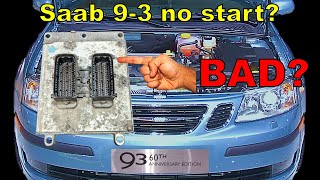
While this code on many GM vehicles points to a faulty ignition switch or underhood fuse box, on the second-generation Saab 9-3, the culprit is overwhelmingly the Trionic 8 ECM itself. The internal circuits that monitor the two voltage feeds are a known failure point, often due to heat and vibration causing solder joints on the PCB to fail over time. 🎬 Watch: A look inside the ECM at these common circuit failures. This leads to a situation where the car's computer incorrectly reports a power supply problem, even when the relays, grounds, and switches are working perfectly. For this reason, diagnosing P1682 on a 9-3 often leads directly to inspecting, testing, and ultimately replacing the ECM.
Generation note: This guide specifically covers the second-generation Saab 9-3 (chassis code 9440) from model years 2003 to 2011. The 2002 model year and 2003 convertible are first-generation carryovers with different engine management systems (Trionic 7), and this code's meaning and causes may differ significantly. The Trionic 8 ECM is the key component in this diagnosis. A key variation exists for the 2012 model year, which uses a different ECU (E39) with different diagnostic criteria for this code.
Symptoms You May Notice

- Engine will not crank or start.
- Engine stalls unexpectedly while driving.
- Check Engine Light is illuminated.
- Multiple relays clicking rapidly from the engine bay or cabin. 🎬 Watch: See how a failing ECU causes this rapid relay clicking.
- "Limited Performance" message displayed on the information display.
- Intermittent rough running, strong smell of fuel, and smoke from exhaust, often accompanied by injector fault codes (P0201-P0204).
- Replacing the ignition switch first. While it can be the cause, it is far less likely than a faulty ECM or bad ground on this specific platform.
- Replacing the throttle body. A TSB mentions that P1682 can sometimes appear alongside throttle body code P0638, but the root cause may be a wiring issue (connector H42-2), not the throttle body itself.
Most Likely Causes

- Failing Engine Control Module (ECM) 🔴 High Probability The Trionic 8 ECM used in these models has a documented history of internal component failure on the voltage monitoring circuits, making it the most common cause for P1682. The failure is often heat-related, causing the car to stall when hot and refuse to restart until it cools down.
How to confirm: After confirming all power and ground connections to the ECM are good, and swapping the main relay does not solve the issue, the ECM is the most likely failed component. Specialized testing by an ECU repair service using a Hardware-In-the-Loop (HIL) simulator can confirm the internal fault. A failure of the internal injector driver circuits, which can present with codes P0201-P0204 alongside P1682, also points directly to a faulty ECM.
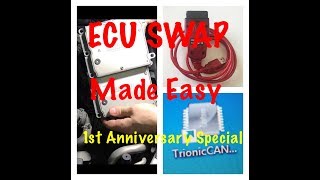
Typical fix: Replace the ECM. To avoid expensive dealer programming, the most common method is to clone the software from the original ECM to a known-good used unit. This makes the replacement plug-and-play. Many services offer this, and it can even be done by a DIYer with an OBDLinkSX cable and free TrionicCANFlasher software. 🎬 Watch: Step-by-step tutorial on how to clone your Saab ECU.
Est. part cost: $100-$250 for a used ECM plus cloning service ($100). - Poor ECM Ground Connection 🟡 Medium Probability The main engine-to-chassis ground straps can corrode or loosen over time, leading to insufficient grounding for critical components like the ECM. The primary ECM ground point for Trionic 8 is G7, located on the ECM's top right attachment lug. A bad ground here can cause a variety of unpredictable electrical issues, including P1682.
How to confirm: Use a multimeter to check for resistance between the ECM's metal casing and the negative battery terminal. The reading should be very close to zero ohms. A reading of even a few ohms (e.g., 44 ohms reported by one owner) indicates a bad ground cable or connection. Visually inspect grounding point G7 (top right ECM bolt) and the main battery-to-chassis ground (G2, on the left structural member) for corrosion or looseness.
Typical fix: Remove, clean, and securely re-fasten the ground connections at G7 and G2. A more robust fix is to add a supplementary ground wire from one of the ECM's mounting bolts directly to the negative battery terminal or a solid chassis ground point.
Est. part cost: $5-$15 for wire and connectors. - Faulty Main Relay ⚪ Low Probability
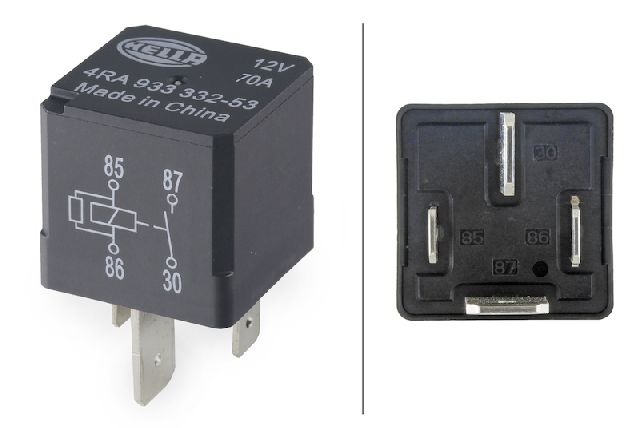
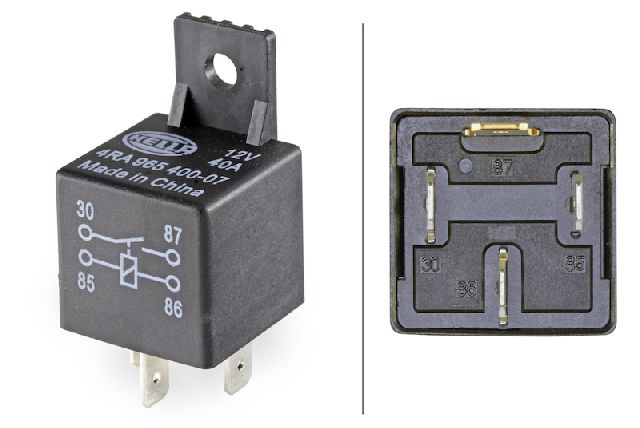
How to confirm: The main relay (often labeled K2 or 'Main Relay/Ignition') is located in the underhood fuse box (UEC). Swap it with an identical relay from a non-critical system (like the horn, K10) in the same fuse box. If the car starts and the code disappears, the relay is bad.
Typical fix: Replace the faulty relay with a new one. A common part number is a standard 4 or 5-pin '4RA' style relay.
Est. part cost: $10-$30 - Faulty Underhood Fuse Box (UEC) ⚪ Low Probability While more common on other GM platforms, the underhood fuse box can suffer from internal corrosion or cracked solder joints, leading to intermittent power delivery to relays and the ECM. Water intrusion from clogged sunroof drains is a known issue that can cause this.
How to confirm: Visually inspect the fuse box terminals for green or white corrosion. Check for stable voltage at the main relay socket and related fuses. Gently wiggling the main relay or the 'ECM throttle count 15 ampere' fuse while an assistant tries to start the car can sometimes reveal a loose internal connection if it suddenly works.
Typical fix: In some cases, the fuse box can be repaired by soldering a jumper wire. However, the more common fix is to replace the underhood fuse box.
Est. part cost: $75-$200 for a used unit.
Rare But Worth Checking
- Faulty Ignition Switch: While this is a common cause for P1682 on other GM vehicles, it is less common on the Saab 9-3. However, if all other causes have been ruled out, the electrical portion of the ignition switch could be failing and providing an unstable voltage signal to the ECM.
- Dislodged Pins in Connector H42-2: A Saab Technical Service Bulletin (TSB) notes that for M03 cars, P1682 can be falsely triggered by dislodged or corroded pins in connector H42-2, which is a large harness connector located under the battery tray. This should be checked before replacing other components.
Diagnosis Steps
- Verify the symptoms. Confirm if the car is a no-crank/no-start or if it stalls while running. Note any other symptoms like 'Limited Performance' mode.
- Check the ECM Ground. Use a multimeter to measure resistance between the ECM's metal case (at the G7 ground point on the top right bolt) and the negative battery terminal. It should be less than 1 ohm. If high, clean the ground points G7 and G2 (chassis ground near battery).
- Swap the Main Relay. Locate the main relay in the underhood fuse box. Swap it with an identical relay (e.g., horn relay) and attempt to start the vehicle.
- Inspect Fuses and the Fuse Box (UEC). Check all fuses related to the ECM and ignition system, paying special attention to the 'ECM throttle count 15 ampere' fuse. Inspect the fuse box for any signs of corrosion or water damage.
- Check Connector H42-2 (2003 models). If applicable, inspect the large connector under the battery tray for any backed-out or corroded pins, as per TSB 248-2423.
- Test ECM Power Pins. Using the Saab WIS, identify the specific ECM pins for ignition (+15) and main relay power. For a 2004-2011 model, this would be pins A2/A19 (ignition) and A48/A64 (main relay). Check for correct voltage at these pins with the key on. A discrepancy points to a wiring issue or a faulty ECM.
- Suspect the ECM. If all the above steps do not resolve the issue, the ECM is the most probable cause of failure.
- Send ECM for Testing/Cloning. Contact a reputable service to test your ECM and, if necessary, clone its data to a working replacement unit.
Parts You'll Likely Need
- Engine Control Module (Trionic 8)
(OEM #55353231, 55565020, 55352571, 55574377, 55352688, 55567225 (Varies by year/engine, but cloning allows use of any T8 ECM from a 2.0L 9-3, except 2003 convertible and XWD models))— This is the most common failure point for code P1682 on the 2003-2011 Saab 9-3 due to internal circuit faults.
Trusted brands: Bosch
OEM price range: $1000+ (New and programmed)
Aftermarket price range: $100-$250 (Used, requires cloning) - Main Relay
(OEM #GM 90494959 or equivalent 4-pin relay)— A simple and inexpensive potential fix. The relay can fail and cause the voltage discrepancy detected by the ECM.
Trusted brands: Bosch, HELLA, ACDelco
OEM price range: $20-$40
Aftermarket price range: $10-$25
Related Codes That Often Appear With This One
- P0601: Internal Control Module Malfunction - This code strongly points to a faulty ECM.
- P0685, P0687: ECM/PCM Power Relay Control Circuit Malfunction - These codes are closely related and point to issues with the main relay or its control circuit, often originating inside the ECM.
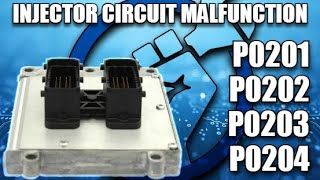
- P0201, P0202, P0203, P0204: Injector Circuit Malfunction - A failing T8 ECM can short the injector driver circuits to ground, causing these codes to appear with P1682.
Technical Service Bulletins (TSBs) & Recalls
- Saab TSB 248-2423: Notes that on 2003 models, P1682 (sometimes with P0638) can be caused by dislodged pins in connector H42-2 under the battery tray, leading to unnecessary replacement of other components.
Platform-Specific Known Issues
- Heat-Related ECM Failure: A very common failure pattern is for the car to run fine when cold, but stall and refuse to restart once the engine bay is hot. After a cool-down period of 20 minutes to 2 hours, the car may start again. This is a classic symptom of failing solder joints inside the Trionic 8 ECM.
Mechanic-Grade Diagnostic Values
- ECM Ground Resistance — expected: Close to 0 Ω. Failure: Any reading significantly above 0 Ω (e.g., one owner reported a faulty reading of 44 Ω) indicates a bad ground connection or a corroded ground cable itself.
- ECM Power Pin Voltage Check (2003-2011 Trionic 8) — expected: With ignition ON, battery voltage should be present at both the ignition feed (pins A2/A19) and the main relay feed (pins A48/A64).. Failure: P1682 is set if voltage is present on pins A2/A19 but not on A48/A64, or if voltage remains on A48/A64 for more than 6 seconds after ignition is turned off.
- ECM Power Pin Voltage Check (2012 E39 ECU) — expected: The voltage between the control module's power feed pins should be nearly identical.. Failure: P1682 is set if the voltage difference between pins A51/A70 and pin A73 is more than 3V.
Scan Tool Commands That Help
- Saab Tech2: Read Test Values: 'Ignition switch +15', 'Ignition Key Position', 'Battery Voltage' — Used to monitor the live data that the ECM uses to set code P1682. This helps verify if the ECM is receiving the correct signals from the ignition switch and main relay.
- Saab Tech2: Activation: 'Main Relay' (2012 models) — This bidirectional command allows the technician to manually command the main relay on and off to test its function and the integrity of its circuit, isolating it from the ECM's control.
- Saab Tech2 with Security Access: Add/Remove Control Module: 'ECU' — This function is required after physically replacing the ECM. It 'marries' the replacement ECM to the car's other modules (like the CIM and keys). Security access from TIS2000 or GlobalTIS software is required.
Wiring & Ground Locations

- G7 — On the top right attachment lug of the Engine Control Module (ECM) itself, secured by one of the 10mm mounting bolts.. This is the primary ground point for the ECM. High resistance here is a direct and common cause of P1682 and other erratic electrical behavior.
- G2 — The main battery-to-chassis ground point, located on the left structural member in the engine bay, near the battery.. A poor connection at this main ground point can cause system-wide voltage drops and grounding issues, affecting the ECM's reference voltage and potentially triggering P1682.
- ECM Connector A Pins — The large, multi-pin main connector for the Trionic 8 ECM.. Specific pins are used for the voltage plausibility check. For 2003-2011 models, these are A2/A19 (Ignition +15) and A48/A64 (Main Relay). For 2012 models, they are A51/A70 and A73. Testing voltage here is the definitive diagnostic step.
- H42-2 — A large, multi-harness connector located under the battery and battery tray.. A Saab TSB identifies this connector as a potential source of P1682 on 2003 models due to corroded or backed-out pins, causing an intermittent connection.
Real Owner Repair Stories
- YouTube channel 'Saab 9-3 No Crank' (Saab 9-3 (2003-2011 generation)) — No crank, no start. When turning the ignition on, all dash lights appear normal except the engine management light flickers, and multiple relays click rapidly.
❌ Tried (didn't work) Initial suspicion was a bad ECM.
✅ What actually fixed it The original ECM ground cable had high internal resistance (44 ohms). The fix was to add a new, supplementary ground wire directly from the ECM's metal casing to the negative battery terminal. This immediately resolved the no-start and clicking relay symptoms. - YouTube channel 'Robinson's Automotive' (2007 Saab 9-3 2.0T) — Intermittent rough running, strong smell of gas, and excessive smoke from the exhaust. Codes P1682, P0201, P0202, P0203, P0204 were present.
❌ Tried (didn't work) Initial diagnosis could mistakenly focus on fuel injectors or wiring due to the P020x codes.
✅ What actually fixed it Diagnosis with an oscilloscope revealed the ECM was holding the fuel injector drivers grounded, dumping fuel into the cylinders. This internal ECM fault was the root cause of all codes. The fix was to replace the ECM and clone the original data to the new unit. - Reddit user on r/saab (2009 Saab 9-3 1.8t) — Intermittent 'Limited Performance' message on startup with code P1682 as the only code.
❌ Tried (didn't work) Replacing the throttle body., Disconnecting the battery.
✅ What actually fixed it The original poster did not provide a final resolution, but another user in the thread reported that on their car, similar electrical issues (including P1682 temporarily) were resolved by finding and cleaning a corroded main positive (+) wire connection at the alternator and ensuring the main ground (-) wire was secure.
OEM Part Supersession History
Varies (e.g., 55352571, 55353231)→Varies (e.g., 55565020, 55567225)— Revisions and updates by Bosch/Saab over the production run.
Heads up: Physical part numbers are less important than the software inside. The key to compatibility is cloning the original ECM's data to a donor ECM. Any Trionic 8 ECM from a 2.0L Saab 9-3 (2003-2011) can generally be used as a donor, with the main exceptions being ECMs from the 2003 convertible (which uses Trionic 7) and XWD (all-wheel-drive) models, which have different hardware/software.
Model Year Variations Within This Range
- 2003: A Technical Service Bulletin specifically points to connector H42-2 (under the battery tray) as a potential cause for P1682 on 2003 models.
- 2012: The 2012 model uses a different ECU (designation E39). The diagnostic criteria for P1682 changes from a simple voltage presence check to detecting a voltage difference of more than 3V between specific pins (A51/A70 and A73). The available bidirectional controls in the Tech2 are also different.
Diagnostic Flowchart
Used vs. New Parts: Buying Guide for This Vehicle
When a used part is the smart pick: For this repair, a used Engine Control Module (ECM) is the standard and most cost-effective solution. New ECMs are prohibitively expensive and may no longer be available. A used part combined with cloning the original software is a reliable fix. A used Underhood Fuse Box (UEC) is also a smart choice if it is found to be faulty.
Donor-vehicle mileage cap: roughly under 120000 miles for the part to have meaningful remaining life.
What to inspect on the donor part:
- For an ECM: Ensure it comes from a compatible donor (2003-2011 2.0L FWD Saab 9-3). Visual inspection is not sufficient; confirmation that it was pulled from a running vehicle is ideal.
- For a UEC: Inspect all pins, sockets, and relay terminals for any signs of green or white corrosion. Check the plastic housing for signs of water intrusion or heat damage (discoloration/melting).
Aftermarket brands forum-validated for this vehicle:
- For Relays: Bosch, HELLA, ACDelco
- For DIY ECM Cloning: TrionicCANFlasher (software), OBDLink SX (cable)
Real Owner Stories
Aggregated from forums and TSBs cited above. Mileages and costs reflect what owners reported in those sources.
2006 Saab 9-3 2.0T
Symptoms: The car ran fine when cold, but would stall and refuse to restart once the engine bay was hot. It would only start again after a cool-down period of 20 minutes to 2 hours.
What fixed it: Replacing the faulty Trionic 8 ECM and cloning the original software to the replacement unit.
Source hint: Vehicle Specific Issues section describing heat-related ECM failure
2003 Saab 9-3
Symptoms: Check Engine Light with code P1682, sometimes accompanied by P0638, and a no-start condition.
What fixed it: Correcting dislodged pins found in the H42-2 connector located under the vehicle's battery tray.
Source hint: Saab TSB 248-2423
2005 Saab 9-3
Symptoms: Unpredictable electrical issues and a no-start condition with code P1682. A multimeter check revealed 44 ohms of resistance on the ECM ground.
What fixed it: Adding a supplementary ground wire from one of the ECM's mounting bolts directly to a solid chassis ground point to bypass the corroded original ground strap.
Source hint: Common Causes section, under 'Poor ECM Ground Connection', citing an owner's 44-ohm resistance reading.
Related OBD-II Codes
Frequently Asked Questions
My 2003 Saab 9-3 has code P1682. Is there anything specific I should check for this model year?
My car stalls when it gets hot and then won't start until it cools down. Is this related to P1682?
I have injector fault codes like P0201 and P0202 along with P1682. What does that point to?
If I need to replace the ECM, do I have to go to a dealer for expensive programming?
How can I easily check for the bad ECM ground connection mentioned as a cause for P1682?
I hear rapid clicking from the engine bay. Could this be the main relay causing my P1682 code?
Helpful Videos
Used OEM Parts in Stock


New Aftermarket Parts Available

The information in this article is provided for general reference and educational purposes only. Vehicle specifications, procedures, and part compatibility can vary by production date, trim level, and region. Always consult your vehicle's factory service manual and verify part numbers before purchasing or performing repairs. Safety-critical components such as airbags, seat belts, and braking systems should be installed by a qualified professional.
- Saab 9-3:
- 🎬 Helpful Videos
- 🛍️ Shop This Part
- What's Unique About the 2002-2011 Saab 9-3
- Symptoms You May Notice
- Most Likely Causes
- Rare But Worth Checking
- Diagnosis Steps
- Parts You'll Likely Need
- Related Codes That Often Appear With This One
- Technical Service Bulletins (TSBs) & Recalls
- Platform-Specific Known Issues
- Mechanic-Grade Diagnostic Values
- Scan Tool Commands That Help
- Wiring & Ground Locations
- Real Owner Repair Stories
- OEM Part Supersession History
- Model Year Variations Within This Range
- Diagnostic Flowchart
- Used vs. New Parts: Buying Guide for This Vehicle
- Real Owner Stories
- 2006 Saab 9-3 2.0T
- 2003 Saab 9-3
- 2005 Saab 9-3
- Related OBD-II Codes
- Frequently Asked Questions
- 🎟️ Get 5% Off