

P1682 on 2007-2014 Chevrolet Tahoe: Ignition Circuit Fault Causes and Fixes
This code usually points to a faulty ignition switch or a bad relay in the underhood fuse box. A failing ignition switch is the most common culprit, causing a no-start or start-and-stall condition. Replacing the switch is a moderately easy DIY job costing between $40 and $100 for the part. Before replacing parts, check for blown fuses and swap the RUN/CRANK relay.
- P1682 means the ECM sees a conflict between its two main ignition power sources.
- The most common cause on a 2007-2014 Tahoe is a failing ignition switch.
- Before replacing parts, always check the simple things first: inspect the relevant fuses and swap the RUN/CRANK relay with a known good one.
- Do not drive the vehicle, as it may stall unexpectedly or fail to restart, leaving you stranded.
What's Unique About the 2007-2014 Chevrolet Tahoe
On the GMT900 platform, which includes the 2007-2014 Tahoe, this code is very frequently traced back to the ignition switch itself. While wiring or fuse box issues can occur, the switch is a known failure point that can cause a variety of strange electrical symptoms beyond just the P1682 code. Owners often report a cluster of warning lights for systems like traction control ('Service Traction Control') and ABS appearing simultaneously with this code, all stemming from the faulty ignition switch or related power issue.
Symptoms You May Notice
- Engine will not crank or start.
- Engine starts and immediately stalls.
- Reduced Engine Power message on the dashboard.
- Check Engine Light is on.
- Warning lights for StabiliTrak, Traction Control, or ABS may illuminate.
- Engine continues to run even after the key is turned off.
- Key is worn and only works when inserted a certain way, leading to intermittent electrical issues.
- Vehicle may stall while driving or fail to accelerate at intersections, as noted in NHTSA ODI #11623165.
- Replacing the battery. While a weak battery (testing below 12.4V) can cause numerous electrical problems and should be tested, it is not the direct cause of the specific circuit discrepancy that sets P1682. However, a no-start symptom should always begin with a battery test.
- Replacing the Mass Airflow (MAF) Sensor. On some GM vehicles, a TSB (21-NA-032) notes that P1682 can appear with a MAF code (P0101) due to a shared wiring issue, but the MAF sensor is not the root cause.
Most Likely Causes
- Faulty Ignition Switch 🔴 High Probability The ignition switch is a common failure item on this platform due to wear and tear on its internal electrical contacts, leading to voltage drops.
How to confirm: Perform a voltage drop test on the ignition switch circuits or use a scan tool to monitor the 'Ignition 1 Signal' and 'EC Ignition Relay Feedback Signal' from the BCM/ECM while wiggling the key in the ignition. A significant voltage difference points to the switch.
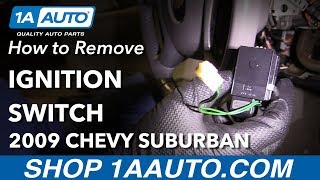
Typical fix: Replace the ignition switch. This involves removing the steering column shrouds to access and replace the switch. 🎬 Watch this step-by-step guide on replacing the ignition switch. Several owner accounts confirm this as the fix. NHTSA ODI #11354020 describes a case where a faulty ignition switch was identified alongside a transmission control module code (U0101).
Est. part cost: $40-$100 - Blown Fuse or Faulty Relay 🟡 Medium Probability Relays like the RUN/CRANK or Powertrain relay can fail over time, and fuses can blow due to intermittent shorts. A loose relay can also cause this code.
How to confirm: Inspect the fuses related to the ECM, IGN, and RUN/CRANK circuits. Pay special attention to a 2A fuse labeled DLIS (fuse 35 in some cases), which has been found to be the culprit. Swap the RUN/CRANK relay with a known good relay of the same type to see if the problem resolves.
Typical fix: Replace the blown fuse or faulty relay. Ensure relays are fully seated in the fuse block. NHTSA ODI #11442437 reports a situation where an owner had to replace the ignition relay switch multiple times due to recurring P1682 and C042-00 codes.
Est. part cost: $5-$30 - Corrosion in Underhood Fuse Block (UBEC) 🟡 Medium Probability The underhood fuse block is susceptible to moisture and environmental exposure, leading to corrosion on the internal contacts and pins where relays and connectors seat. This corrosion creates high resistance, causing a voltage drop on one of the ignition circuits.
How to confirm: Disconnect the battery. Remove the fuse block and inspect the underside connectors and the relay/fuse terminals for green or white corrosion. A user on Reddit fixed their P1682 by removing the fuse block, cleaning all contacts with contact cleaner and a file.
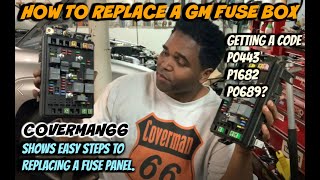
Typical fix: Thoroughly clean the contacts of the fuse block and harness connectors with electrical contact cleaner. In severe cases, the entire fuse block may need to be replaced. 🎬 See how to diagnose and replace a faulty GM fuse box.
Est. part cost: $10 (cleaner) - $300 (new fuse block) - Wiring Issue (Open or Short) ⚪ Low Probability Wires in the steering column can chafe from the tilting/telescoping action, and connections at the fuse box can become loose or corroded, causing an open or short in one of the ignition circuits.
How to confirm: Visually inspect the wiring harness between the ignition switch and the fuse block/BCM. Check for continuity and shorts to ground on the ignition signal circuits using a digital multimeter and a vehicle-specific wiring diagram.
Typical fix: Repair the damaged section of the wiring harness and secure it to prevent future damage.
Est. part cost: $5-$50
Rare But Worth Checking
- Faulty Underhood Fuse Block (UBEC): Internal connections or integrated relays within the fuse block itself can fail, causing intermittent power loss. This is more than just surface corrosion. One owner on a forum was convinced an internal relay had failed, but ultimately found a simple blown 2A DLIS fuse after obtaining a replacement block. This highlights the importance of checking all fuses before condemning the entire block.
- Failing Engine Control Module (ECM): This is the least likely cause. The ECM is generally robust, but an internal failure on one of the ignition voltage monitoring circuits can trigger P1682. Diagnostic procedures state to replace the ECM only after all other possibilities (wiring, switch, relays, fuse block) have been exhaustively ruled out. However, NHTSA ODI #11102191 notes a case where the ECM was replaced, but the P1682 failure recurred, suggesting the root cause was elsewhere in the circuit.
Diagnosis Steps
- Check for other stored DTCs. Codes like P0685 or P0689 should be diagnosed first.
- Using a scan tool, observe the 'Ignition 1 Signal' and 'EC Ignition Relay Feedback Signal' parameters. With the key on, engine off, the voltage difference should not exceed 3V. This can quickly point to which circuit is failing.
- Inspect all fuses related to the ignition system, ECM, and BCM. Pay close attention to fuses labeled IGN, ECM, BCM, RUN/CRANK, and specifically a 2A DLIS fuse if present.
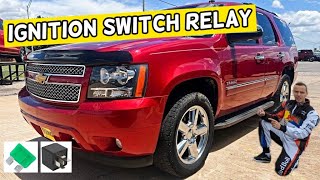
- Swap the RUN/CRANK relay and the POWERTRAIN relay in the underhood fuse box with identical relays from non-critical systems 🎬 Watch: How to locate and test the ignition switch relay. to quickly rule out a bad relay.
- If fuses and relays are good, access the ignition switch connector under the steering column.
- Using a wiring diagram, identify the two ignition voltage signal wires. With a multimeter, check for proper battery voltage on these wires in different key positions (OFF, ACC, ON, and CRANK). Wiggle the key to check for intermittent connections.
- If voltage is missing or intermittent at the switch, the ignition switch is the likely cause.
- If the switch tests good, inspect the underhood fuse block (UBEC) for signs of corrosion on the underside connectors and pins.
- If no corrosion is found, perform continuity and short-to-ground tests on the wiring between the switch, the fuse box, and the ECM.
Parts You'll Likely Need
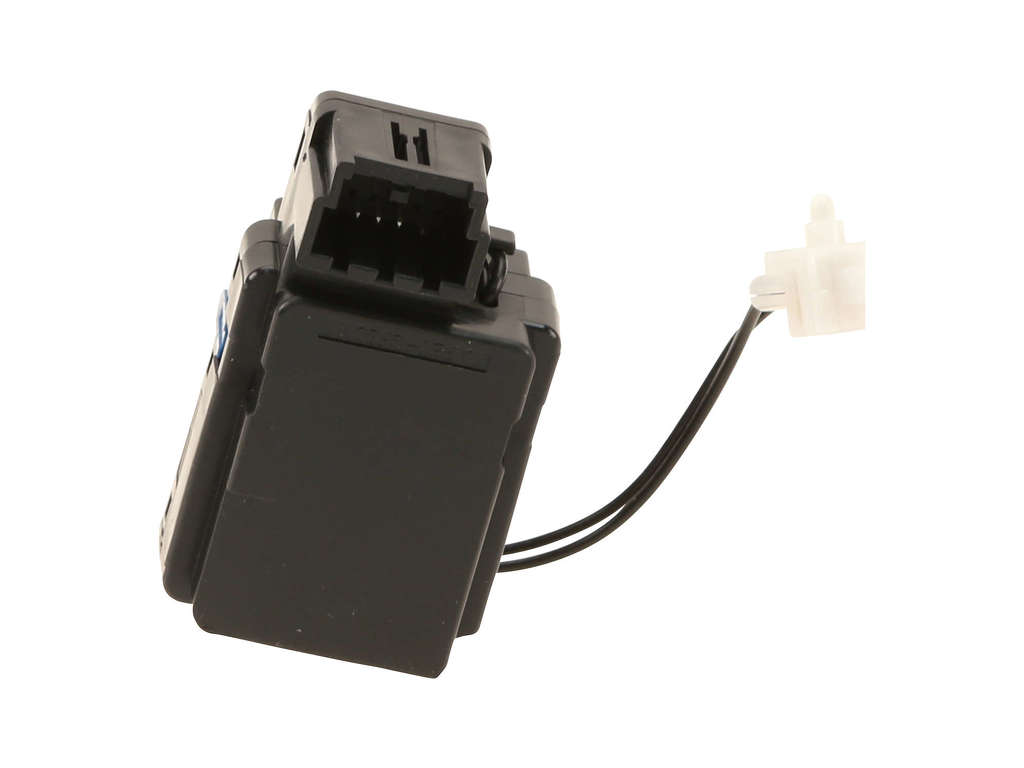
- Ignition Switch
(OEM #22887691, ACDelco D1462G)— This is the most common failure point for the P1682 code on this platform, responsible for sending the correct voltage signals based on key position. Part number 22887691 is a frequently cited replacement. D1462G is the ACDelco part number for the corresponding ignition lock housing/switch assembly.
Trusted brands: ACDelco, Standard Motor Products
OEM price range: $70-$100
Aftermarket price range: $40-$75 - Powertrain or Run/Crank Relay
(OEM #8864 (or equivalent))— A failed or loose relay can prevent power from reaching one of the ECM's ignition circuits, causing the voltage discrepancy.
Trusted brands: ACDelco, Bosch
OEM price range: $15-$30
Aftermarket price range: $10-$20
Related Codes That Often Appear With This One
- P0689 — This code relates to the ECM/PCM Power Relay Control Circuit and often appears with P1682 when there is a problem with ignition-related power delivery, such as a faulty relay or fuse block.
- U0100 — This indicates a loss of communication with the ECM. A severe ignition circuit fault that causes the ECM to lose power can trigger this code alongside P1682.
- P0685 — Similar to P0689, this code points to a fault in the ECM/PCM Power Relay Control Circuit. Diagnostic procedures recommend diagnosing P0685 before P1682 if both are present.
- P2138 — This code for the accelerator position sensor can sometimes appear simultaneously with P1682, as documented in NHTSA ODI #11623165.
Technical Service Bulletins (TSBs) & Recalls
- PIT5253B: Notes that an intermittent crank/no-start with P1682 can be caused by a faulty KR75 Engine Controls Ignition Relay.
- 21-NA-032: While for a newer generation, it highlights a known issue where a bad wire crimp in the underhood fuse block can cause P1682, which is a useful diagnostic insight for older models as well.
Platform-Specific Known Issues
- Underhood Fuse Block (UBEC) Corrosion: The contacts on the bottom of the fuse block where the main harnesses connect are known to corrode, causing high resistance and intermittent voltage drops. A user on Reddit with an '11 Sierra fixed a P1682 code by removing the block and cleaning the corroded contacts. This should be inspected before replacing more expensive components.
Mechanic-Grade Diagnostic Values
- Scan Tool Voltage Discrepancy — expected: The voltage difference between 'Ignition 1 Signal' and 'Engine Controls Ignition Relay Feedback Signal' should be less than 3.0V.. Failure: A difference greater than 3.0V for more than 1 second will set the code.
- Scan Tool Data (Key On, Engine Off) — expected: Both 'Ignition 1 Signal' and 'Engine Controls Ignition Relay Feedback Signal' should read Battery Voltage (B+).. Failure: If one circuit reads 0V or significantly lower than B+ (e.g., 1.4V vs 11.8V), it indicates an open, short to ground, or high resistance on that circuit.
- Underhood Fuse Block (UBEC) Circuit Resistance — expected: Resistance through the circuit paths within the fuse block should be very low, under 1 Ω.. Failure: A resistance of 6 Ω or greater in the circuit path within the fuse block is enough to cause DTC P1682 to set.
- Voltage at ECM Ignition Input Pins — expected: Both ignition voltage input pins at the ECM should show battery voltage with the key on.. Failure: A reading below 9 volts on one circuit while the other is at battery voltage is a definitive failure in that circuit's power delivery.
Scan Tool Commands That Help
- GDS2 / Tech2: Data Display for ECM: 'Ignition 1 Signal' and 'Engine Controls Ignition Relay Feedback Signal' — This is the primary diagnostic step. Observing these two parameters live is the fastest way to confirm the fault and identify which of the two ignition circuits is dropping out.
- GDS2 / Tech2: Relay Control (e.g., Command Powertrain Relay ON/OFF) — If available, this bidirectional control allows a technician to manually command the relays on and off to test their function and the integrity of the circuit without needing to physically access or jump the relay.
Wiring & Ground Locations
- G102 — On the rear of the left (driver's side) cylinder head.. This is a primary engine ground. A poor connection here can create voltage potential differences across the engine block and interfere with sensor and module readings, including the ECM's ground reference.
- G103 — On the front of the right (passenger's side) cylinder head.. This is another critical engine-to-chassis ground point. The main battery ground cable often attaches near here. A loose or corroded G103 can cause widespread electrical issues, including no-start conditions.
- G300 — Under the vehicle at the driver's door, on a body mount.. This is a major body ground. While less likely to be the direct cause of P1682, a bad body ground can cause feedback and erratic behavior in modules located inside the cabin.
- X109 / C109 — Large 16-pin connector located on the left side of the engine compartment, below the underhood fuse block.. This is a major pass-through connector for wiring between the engine/ECM and the body. TSB PIP3783D identifies this connector as a potential location for corrosion, water intrusion, or poor pin tension that can affect critical circuits.
- Underhood Fuse Block (UBEC) Connectors — Underneath the main fuse block in the engine bay. Requires unbolting and lifting the fuse block to access.. This is where the main vehicle harnesses plug into the fuse block. Corrosion or loose connections here are a very common cause of voltage drops that trigger P1682. The problem is often not the fuse or relay itself, but the terminal it plugs into or the main connector pin feeding that terminal.
Real Owner Repair Stories
- YouTube user 'The Lo-fi Mofo' (2008 Pontiac G6 (similar GM electrical architecture)) — Intermittent no-start, engine would stall when running if the fuse box was wiggled. Code P1682 present.
❌ Tried (didn't work) Replacing ignition circuit relays., Bench testing old relays (they tested good).
✅ What actually fixed it The female socket for the run/crank relay in the fuse block was spread open, causing a loose connection. Wiggling the relay would make or break the connection. The fix was to access the back of the fuse block and use a pick to tighten the loose terminal socket for the relay pin. - YouTube user 'DadsGarage Diagnostic Specialist' (2017 Chevrolet Express Van (similar GM electrical architecture)) — Intermittent crank, no-start. Codes P0689 and P1682.
❌ Tried (didn't work) Swapping the ignition relay., Opening and inspecting the relay for burnt contacts (none found).
✅ What actually fixed it An internal failure within the multi-layered, non-serviceable part of the underhood fuse block. Voltage was present at the fuse feeding the relay, but dropped significantly by the time it got to the relay's output fuse. The entire underhood fuse block had to be replaced. - YouTube user 'Car Faults' (GMC Truck (model year not specified, GMT900 era)) — No start, P1682 code present. Engine would start if the code was cleared, but would immediately die if a specific fuse was wiggled.
❌ Tried (didn't work) Initial internet searches for a specific 'Ignition 1 Switch Circuit 2' fuse were unsuccessful.
✅ What actually fixed it A loose connection where the 'ECM Throttle Count' 15A fuse plugged into the fuse box. The fuse itself was not blown, but the terminals in the fuse box were not making a solid connection, causing the voltage drop. The fix was to address the poor connection in the fuse box terminal. - NHTSA ODI #11712762 — An owner reported that after inspecting the fuse box, retightening components, and replacing the ignition switch, the P1682 code disappeared for months but eventually returned, leading the vehicle into limp mode.
When the Usual Fixes Don't Work
- In one documented case on a GM truck forum, a user replaced the ignition switch to fix P1682, and the problem was resolved. However, months later the same code and no-start condition returned. They replaced the switch a second time, but the problem persisted. The ability to start the truck immediately after clearing the code with a scanner suggests the issue was not the hard-part (switch) failure but rather an intermittent electrical fault in the fuse block or wiring that was temporarily reset by a code clear.
OEM Part Supersession History
25733005→22887691— Part has been updated/revised by the manufacturer. The new part is the current service replacement.
Heads up: A forum user noted the dealership provided 22887691 as the replacement for the original part on their 2011 Silverado.
Diagnostic Flowchart
Used vs. New Parts: Buying Guide for This Vehicle
When a used part is the smart pick: A used Underhood Fuse Block (UBEC) can be a cost-effective choice if the new OEM part is prohibitively expensive. It is critical to source it from a vehicle that was not in a front-end collision and ideally from a dry, non-salt-belt region to minimize the risk of pre-existing corrosion.
Donor-vehicle mileage cap: roughly under 100000 miles for the part to have meaningful remaining life.
What to inspect on the donor part:
- Inspect the donor vehicle's VIN to ensure it's from a similar model year and option package.
- Physically inspect the used fuse block before purchase. Flip it over and look for any signs of white or green corrosion on the large connector ports.
- Check for any signs of heat damage, melting plastic, or discoloration around the relay and high-amperage fuse sockets.
- Avoid parts from flood-damaged or high-humidity climate vehicles if possible.
OEM-only on this vehicle (don't cheap out):
- Ignition Switch - While aftermarket switches are available and cheaper, OEM/ACDelco parts often have better longevity for this specific high-failure item. The cost difference is minimal enough to justify the higher quality part.
Aftermarket brands forum-validated for this vehicle:
- ACDelco (OEM supplier)
- Standard Motor Products (for ignition switch)
Brands owners have reported issues with on this vehicle:
- No-name, unbranded electrical components from online marketplaces should be avoided due to inconsistent quality control.
Real Owner Stories
Aggregated from forums and TSBs cited above. Mileages and costs reflect what owners reported in those sources.
2011 GMC Sierra
Symptoms: Vehicle had an intermittent no-start condition and was storing a P1682 trouble code.
What fixed it: The owner removed the underhood fuse block (UBEC), found corrosion on the contacts on the bottom, and cleaned them thoroughly with contact cleaner and a file.
Source hint: Reddit user report mentioned in vehicle_specific_issues
2007-2014 Chevrolet Tahoe/GMC Yukon
Symptoms: Owner experienced an intermittent crank/no-start condition, which set code P1682.
What fixed it: The problem was traced to a faulty KR75 Engine Controls Ignition Relay, which was replaced.
Source hint: TSB PIT5253B
Related OBD-II Codes
Frequently Asked Questions
My 2011 Tahoe won't start and the StabiliTrak and ABS lights are on. Is this all related to the P1682 code it's showing?
How can I test the ignition switch on my Tahoe myself before buying a new one?
Are there any official GM service bulletins for code P1682 on these trucks?
I checked the fuses and they're all good. What's the next most likely cause for my P1682?
My mechanic wants to replace the whole underhood fuse box for over $300. Is cleaning it an option?
My key feels worn and only works when I jiggle it. Could this be the source of my intermittent P1682 code?
Is this P1682 problem also common on the GMC Yukon or Cadillac Escalade?
Helpful Videos
Used OEM Parts in Stock

New Aftermarket Parts Available


The information in this article is provided for general reference and educational purposes only. Vehicle specifications, procedures, and part compatibility can vary by production date, trim level, and region. Always consult your vehicle's factory service manual and verify part numbers before purchasing or performing repairs. Safety-critical components such as airbags, seat belts, and braking systems should be installed by a qualified professional.
- Chevrolet Tahoe:
- 🎬 Helpful Videos
- 🛍️ Shop This Part
- What's Unique About the 2007-2014 Chevrolet Tahoe
- Symptoms You May Notice
- Most Likely Causes
- Rare But Worth Checking
- Diagnosis Steps
- Parts You'll Likely Need
- Related Codes That Often Appear With This One
- Technical Service Bulletins (TSBs) & Recalls
- Platform-Specific Known Issues
- Mechanic-Grade Diagnostic Values
- Scan Tool Commands That Help
- Wiring & Ground Locations
- Real Owner Repair Stories
- When the Usual Fixes Don't Work
- OEM Part Supersession History
- Diagnostic Flowchart
- Used vs. New Parts: Buying Guide for This Vehicle
- Real Owner Stories
- 2011 GMC Sierra
- 2007-2014 Chevrolet Tahoe/GMC Yukon
- Related OBD-II Codes
- Frequently Asked Questions
- 🎟️ Get 5% Off