

P1682 on 2007-2014 Cadillac Escalade: Ignition Circuit Fault Causes and Fixes
P1682 on a 2007-2014 Escalade usually means a no-start or stalling condition caused by a faulty relay or a problem in the underhood fuse box. Before replacing the ignition switch, swap the powertrain relay with an identical one as a free and common first diagnostic step. Internal fuse box failure is a very common cause on this platform.
- P1682 indicates a voltage mismatch between two ignition circuits seen by the ECM.
- Do not immediately replace the ignition switch. The most common fix is a faulty powertrain relay in the underhood fuse box.
- A simple test is to swap the powertrain relay with an identical one from another system.
- If relays and fuses are good, inspect the underhood fuse box for corrosion or damage before testing wiring or replacing the ignition switch.
- This code can cause a no-start or sudden stalling, so the vehicle should not be driven until repaired.
What's Unique About the 2007-2014 Cadillac Escalade
On the GMT900 platform, which includes the 2007-2014 Escalade, Tahoe, and Yukon, this code is very frequently caused by issues in the Underhood Bussed Electrical Center (UBEC), also known as the fuse box. While the code definition points to the ignition switch, the actual failure is more often a faulty powertrain relay or an internal failure within the fuse box itself, such as corrosion, heat-related expansion breaking a circuit trace, or a poor terminal connection on the underside. Owners often solve the problem by addressing the fuse box or relays rather than the ignition switch in the steering column.
Symptoms You May Notice
- Engine cranks but will not start.
- No-crank condition, where turning the key does nothing, but lights and radio work.
- Engine stalls unexpectedly while driving, especially when hot.
- Check Engine Light is illuminated.
- Other warning lights, such as for the traction control, Stabilitrak, or ABS, may appear.
- "Reduced Engine Power" message may display.
- Engine continues to run after turning the key off.
- Replacing the ignition switch first. On this GM platform, the problem is more frequently located in the underhood fuse box or with a simple relay. Always check the relays first.
- Replacing the battery. While a weak battery can cause many electrical issues, P1682 points to a discrepancy between two specific power circuits, not a general low voltage condition. However, a failing battery with low voltage (e.g., 11.6V) can complicate diagnosis and should be charged or replaced before further troubleshooting.
Most Likely Causes
- Faulty Powertrain or Run/Crank Relay 🔴 High Probability Relays are common failure items and are directly responsible for one of the two voltage signals the ECM monitors for this code. They can fail intermittently, even when testing good with a relay tester. A GM service recommendation for a P1682 on a 2014 Silverado specifically calls for replacing the 'KR75 Engine Controls Ignition Relay #70' if no other cause is found.
How to confirm: Locate the powertrain or ignition relay (often labeled 'PWR/TRN' or 'ECM') in the underhood fuse box. Swap it with an identical relay from a non-critical system (like the horn or rear defogger) and see if the vehicle starts and the code clears. This is a quick and effective test.
Typical fix: Replace the faulty relay. Even if it tests good, replacement is a cheap and often effective step.
Est. part cost: $10-$30 - Defective Underhood Fuse Box (UBEC) 🔴 High Probability The fuse boxes on this platform are a known weak point. They can fail internally due to corrosion from water intrusion, cracked solder joints, or broken circuit traces that open up when the fuse box gets hot. This is an extremely common issue on mid-2000s GM products.
How to confirm: Inspect the fuse box for signs of corrosion or water damage. With the key on, test for battery voltage (B+) at both test points of the relevant fuses (e.g., ECM1, IGN E). If power is missing from a fuse or an entire circuit, the fuse box is the likely culprit. A more thorough test involves checking for voltage at the large connectors on the underside of the UBEC.
Typical fix: Replace the underhood fuse box assembly. In some cases, experienced technicians can disassemble the UBEC by drilling out plastic rivets and repair the specific broken internal trace with solder.
Est. part cost: $200-$400 - Faulty Ignition Switch 🟡 Medium Probability The ignition switch is a mechanical part with electrical contacts that can wear out over time, causing an inconsistent signal. While a valid cause, it's less frequent than relay or fuse box issues on this platform.
How to confirm: This requires accessing the switch wiring under the steering column and using a multimeter to verify correct voltage output on the different circuits (e.g., the Pink wire) as the key is turned. Comparing readings to a wiring diagram is necessary.
Typical fix: Replace the ignition switch. This involves removing the lower dash trim and steering column shrouds.
Est. part cost: $50-$150 - Blown Fuse or Wiring Issue ⚪ Low Probability Wiring can be damaged by heat, chafing, or improper repairs, causing an open or short circuit. A loose connection at the UBEC connectors is also possible. A resistance of 5 ohms or greater in the circuit is enough to cause the DTC to set.
How to confirm: Visually inspect all fuses labeled 'ECM', 'IGN', or 'Powertrain'. Check for voltage at the ECM connector pins corresponding to the two ignition circuits (e.g., C1-19). This requires a vehicle-specific wiring diagram. Inspect the harness for visible damage.
Typical fix: Replace the blown fuse and diagnose the underlying cause of the overcurrent. Repair the damaged section of the wiring harness.
Est. part cost: $1-$50
Rare But Worth Checking
- Faulty Engine Control Module (ECM): This is very rare. The ECM is robust and typically sets this code due to faulty inputs it receives. Before condemning the ECM, all other possibilities (relays, wiring, fuse box, ignition switch) must be exhaustively ruled out.
Diagnosis Steps
- Read the code with an OBD-II scanner and check for any other stored codes, particularly P0685 or P0689.
- As a first step, locate the Powertrain/Engine Controls Ignition Relay ('PWR/TRN') in the underhood fuse box. Swap it with an identical relay from a non-essential circuit (e.g., horn). Attempt to start the vehicle. If it starts, the relay was the issue.
- If the relay swap does not work, visually inspect all fuses related to the ignition and ECM (e.g., ECM1, IGN E). Use a multimeter to check for B+ voltage on the small test points on top of each fuse.
- Inspect the underhood fuse box for any signs of corrosion, discoloration, or moisture damage. Check that all large connectors on the bottom are fully seated and that the locking bolts are tight.
- If the problem persists, use a multimeter to check for battery voltage (B+) at the two ignition voltage input pins at the ECM connector with the key in the 'ON' position. For this platform, this often involves testing pin 19 and pin 20 on the C1 connector. This requires a vehicle-specific wiring diagram to confirm pin locations.
- If one or both circuits lack voltage, trace the circuit back from the ECM to the fuse box and from the fuse box to the ignition switch to find the open or short.
- If all wiring and power sources test normal, the ignition switch itself may be faulty. Test its output circuits with a multimeter.
- If all other components and wiring have been verified as good, the ECM may be the issue, though this is highly unlikely.
Parts You'll Likely Need
- Powertrain Relay / Ignition Relay
(OEM #13595908)— This is the most common and cheapest part to fail, causing a voltage discrepancy between the two ignition circuits.
Trusted brands: ACDelco, Bosch, Standard Motor Products
OEM price range: $20-$40
Aftermarket price range: $10-$25 - Underhood Fuse Box (UBEC)
(OEM #25883033 (Verify by VIN))— A known failure point on this platform. Internal corrosion or broken traces can interrupt one of the ignition voltage signals to the ECM.
Trusted brands: ACDelco (GM Genuine), Dorman
OEM price range: $300-$500
Aftermarket price range: $200-$400 - Ignition Switch
(OEM #22887691 (Supersedes 25733005))— The electrical contacts inside the switch can wear out, causing it to send an improper signal, though this is less common than a relay or fuse box issue for this code.
Trusted brands: ACDelco, Standard Motor Products (D1485F)
OEM price range: $80-$150
Aftermarket price range: $40-$90
Related Codes That Often Appear With This One
- P0685 — This code relates to the ECM/PCM Power Relay Control Circuit. Since P1682 involves the powertrain relay, a fault in this area can trigger both codes.
- P0689 — This code indicates a problem with the ECM/PCM Power Relay Sense Circuit. Its presence alongside P1682 strongly points to a problem with the powertrain relay or its circuit inside the fuse box.
- P0443 — This code for the EVAP Purge Control Valve Circuit can sometimes appear with P1682 and P0689 when the root cause is an internal fuse box failure affecting multiple circuits.
- P0101 — A GM Technical Service Bulletin (21-NA-032) notes that P1682 can set along with P0101 (Mass Air Flow Sensor) due to a compromised wire connection within the X3 connector of the underhood fuse block. Technicians are advised not to replace the MAF sensor if these codes appear together.
Technical Service Bulletins (TSBs) & Recalls
- TSB Bulletin #PIP5729: A manufacturer service bulletin notes that customers may comment that the SES lamp is illuminated or was illuminated and turned off. During inspection, a technician may notice DTC P1682 (Ignition 1 Switch Circuit 2) active or stored in history. Other codes such as P0101, P0689, P16A7, or P16BC may also be active or stored.
Platform-Specific Known Issues
- A user on TahoeYukonForum with a 2008 Yukon XL Denali (same 6.2L engine and platform) experienced a P1682 with a no-crank condition after initially starting with a CEL. The issue mysteriously resolved itself but highlights the intermittent nature of the fault. URL: https://www.tahoeyukonforum.com/threads/p1682.106991/
- On a 2018 Tahoe PPV (newer generation but similar issue), a user reported that a P1682 code was ultimately caused by a loose ignition relay in the fuse box, which was found after many hours of incorrect diagnosis. This reinforces the 'check simple things first' rule. URL: https://www.tahoeyukonforum.com/threads/p1682-code.141528/
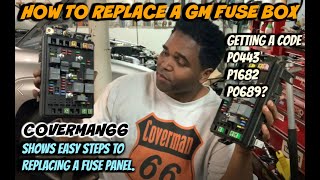
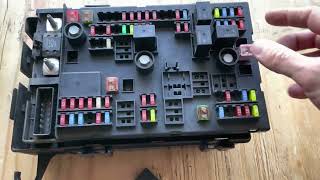
- A YouTube video demonstrates a common failure on GM trucks where an internal trace in the fuse box breaks due to heat expansion, causing intermittent stalling with codes P1682 and P0689. The fix shown is to open the fuse box and solder the broken trace.
Mechanic-Grade Diagnostic Values
- Voltage difference between 'Ignition 1 Voltage' and 'EC Ignition Relay Feedback' scan tool parameters — expected: Less than 3.0 Volts. Failure: A difference greater than 3.0 Volts for more than 1 second.
- Voltage at ECM Connector C1, Pin 19 (Ignition 1 Voltage from Powertrain Relay) — expected: Battery Positive Voltage (B+) with key ON. Failure: Voltage is 0V or significantly lower than battery voltage, indicating an open or short in the circuit from the UBEC.
- Voltage at ECM Connector C1, Pin 20 (Ignition 1 Voltage from Run/Crank Relay) — expected: Battery Positive Voltage (B+) with key ON. Failure: Voltage is 0V or significantly lower than battery voltage, indicating an open or short in the circuit from the UBEC.
- Resistance in either Ignition 1 voltage circuit — expected: Less than 5.0 Ohms. Failure: A resistance of 5.0 Ohms or greater is sufficient to cause the DTC to set.
Scan Tool Commands That Help
- Tech2 / GDS2: Observing 'Ignition 1 Voltage' and 'EC Ignition Relay Feedback' parameters — This is the primary data display to use when diagnosing P1682. With the key on, engine off, these two voltage readings should be nearly identical. A discrepancy greater than 3V confirms the fault condition the ECM is detecting.
Wiring & Ground Locations
- X50A — The Underhood Fuse Box (UBEC) assembly itself.. This is the central hub for the two ignition circuits being monitored. Internal corrosion, broken solder traces, or poor pin fitment in its connectors are the most common cause of P1682 on this platform.
- ECM Connector C1 (X1) — The main connector at the Engine Control Module (ECM).. This is the destination for the two voltage signals. Specifically, Pin 19 (from Powertrain Relay) and Pin 20 (from Run/Crank Relay) are the test points to verify if the correct voltage is reaching the ECM.
- G103 — On the front of the passenger side (right) cylinder head.. This is a primary engine block ground. While not directly for the ECM power circuits, a poor engine ground can create voltage offsets and cause various electrical issues, complicating diagnosis.
- G104 — On the rear of the driver's side (left) cylinder head.. This is another critical engine block ground. Ensuring G103 and G104 are clean and tight is a fundamental step in any electrical diagnosis on this engine.
Real Owner Repair Stories
- Reddit user u/paulyparrot (2007 GMC Yukon Denali XL (same platform/drivetrain)) — Intermittent stalling with code P1682. Later developed into a no-crank, no-start with just a click.
❌ Tried (didn't work) Replaced the ignition switch., Checked fuses.
✅ What actually fixed it The user's final post indicated the issue progressed to a no-crank after inspecting the fuse box wiring, strongly implying the fault was within the UBEC, which is a common failure mode. The thread confirms diagnosis pointed towards the fuse box being the culprit after the ignition switch replacement failed to solve the issue. - YouTube channel 'Terry's Garage' (GM Trailblazer (different platform, but identical failure mode and codes)) — Engine would stall and shut down when it got hot, accompanied by codes P1682, P0689, and P0443.
❌ Tried (didn't work) Initial diagnosis considered the ECM or relays.
✅ What actually fixed it The entire underhood fuse panel was replaced. The creator noted it's a common issue where heat causes an internal break in the fuse box circuitry, and replacement is the standard fix.
OEM Part Supersession History
25733005→22887691— Part was updated/revised by the manufacturer. The original part number is associated with failures.
Model Year Variations Within This Range
- 2009-2014: The 6.2L V8 engine became E85 ethanol-capable starting in the 2009 model year. The 6.0L V8 Hybrid was also an option. While this doesn't directly change the P1682 diagnostic, it's a key difference in the powertrain lineup.
- 2010-2014: The 6.2L V8 gained Active Fuel Management (AFM) cylinder deactivation in 2010. This adds complexity to the engine but is not directly related to the ignition circuits that cause P1682.
Diagnostic Flowchart
Used vs. New Parts: Buying Guide for This Vehicle
When a used part is the smart pick: A used Underhood Fuse Box (UBEC) from a junkyard can be a cost-effective option, as a new OEM unit is expensive. Given that the failure is often due to specific internal trace breaks, a used part from a vehicle that was not scrapped for electrical issues can be a viable repair.
Donor-vehicle mileage cap: roughly under 120000 miles for the part to have meaningful remaining life.
What to inspect on the donor part:
- Inspect the donor vehicle's windshield and cowl area for signs of water leaks, as water intrusion is a primary cause of UBEC failure.
- Choose a part from a vehicle of the same model year or newer if possible.
- Physically open the fuse box lid and look for any signs of white or green corrosion on the fuses or relay terminals.
- If possible, inspect the large connectors on the underside for any burnt pins or discoloration.
OEM-only on this vehicle (don't cheap out):
- Ignition Switch - While aftermarket switches are available, forum users often report higher satisfaction and longevity with genuine ACDelco parts for critical components like this.
Aftermarket brands forum-validated for this vehicle:
- Dorman offers a direct replacement for the UBEC and is a common choice, though some users prefer to find a good used OEM unit.
- ACDelco Professional or GM Genuine are the most recommended brands for relays and switches.
Brands owners have reported issues with on this vehicle:
- Be cautious of unbranded or suspiciously cheap electrical components (relays, switches) from online marketplaces, as their quality control can be poor. Some forum discussions mention issues with lower-tier aftermarket brands having poor fitment or premature failure.
Real Owner Stories
Aggregated from forums and TSBs cited above. Mileages and costs reflect what owners reported in those sources.
2008 GMC Yukon XL Denali 6.2L
Symptoms: A no-crank condition with a P1682 code, which appeared after the Check Engine Light came on initially.
What fixed it: The issue resolved itself without a specific repair, highlighting the intermittent nature of the fault.
Source hint: TahoeYukonForum.com thread 'p1682.106991/'
2018 Chevrolet Tahoe PPV
Symptoms: P1682 code was present after many hours of incorrect diagnosis.
What fixed it: The cause was found to be a loose ignition relay in the fuse box.
Source hint: TahoeYukonForum.com thread 'p1682-code.141528/'
GM Truck (unspecified year)
Symptoms: Intermittent stalling while driving, accompanied by codes P1682 and P0689, particularly when the engine bay gets hot.
What fixed it: The underhood fuse box was disassembled and a broken internal circuit trace was repaired with solder.
Source hint: YouTube video demonstrating fuse box repair for P1682 and P0689
Related OBD-II Codes
Frequently Asked Questions
My Escalade cranks but won't start and has a P1682 code. What is the very first thing I should check?
I'm getting a P1682 and a 'Reduced Engine Power' message. Could the underhood fuse box be the problem?
Is it common for the ignition switch to cause P1682 on these trucks?
The mechanic wants to replace the entire fuse box for P1682. Is that a normal fix?
I heard there was a GM service recommendation for a similar truck with this code. What did it say?
My Tahoe has a P1682 code. Is the diagnosis the same as for an Escalade?
Helpful Videos
Used OEM Parts in Stock


New Aftermarket Parts Available


The information in this article is provided for general reference and educational purposes only. Vehicle specifications, procedures, and part compatibility can vary by production date, trim level, and region. Always consult your vehicle's factory service manual and verify part numbers before purchasing or performing repairs. Safety-critical components such as airbags, seat belts, and braking systems should be installed by a qualified professional.
- Cadillac Escalade:
- 🎬 Helpful Videos
- 🛍️ Shop This Part
- What's Unique About the 2007-2014 Cadillac Escalade
- Symptoms You May Notice
- Most Likely Causes
- Rare But Worth Checking
- Diagnosis Steps
- Parts You'll Likely Need
- Related Codes That Often Appear With This One
- Technical Service Bulletins (TSBs) & Recalls
- Platform-Specific Known Issues
- Mechanic-Grade Diagnostic Values
- Scan Tool Commands That Help
- Wiring & Ground Locations
- Real Owner Repair Stories
- OEM Part Supersession History
- Model Year Variations Within This Range
- Diagnostic Flowchart
- Used vs. New Parts: Buying Guide for This Vehicle
- Real Owner Stories
- 2008 GMC Yukon XL Denali 6.2L
- 2018 Chevrolet Tahoe PPV
- GM Truck (unspecified year)
- Related OBD-II Codes
- Frequently Asked Questions
- 🎟️ Get 5% Off