

P1634 on 2005-2008 Dodge Magnum: TCM Internal Failure Causes and Fixes
This code means the Transmission Control Module (TCM) has failed an internal self-test. The only reliable fix is to replace the TCM and have the new one programmed to your vehicle. Expect to pay $400-$700 for a shop to replace and program the module.
- P1634 on a Dodge Magnum means the transmission computer (TCM) has failed internally.
- The vehicle will go into 'limp mode,' so you should avoid driving it.
- Unlike on some newer cars, this is almost never a software issue on a Magnum; the TCM hardware needs to be replaced.
- A new or used TCM must be professionally programmed to your car's VIN to function correctly.
- Before replacing the TCM, have a mechanic verify its power and ground connections are clean and secure.
What's Unique About the 2005-2008 Dodge Magnum
The Dodge Magnum uses a Mercedes-Benz designed 5-speed automatic transmission known as the NAG1. Unlike many newer Chrysler products where P1634 can often be fixed with a software update (reflash) as per TSBs like 21-016-15 REV-B for the 2015 Jeep Cherokee, the factory service procedure for the Magnum with a NAG1 transmission does not list a software fix. The diagnostic path points directly to checking the module's connections and then replacing the TCM if the wiring is intact. This makes it a hardware-centric problem on this specific platform.
Symptoms You May Notice
- Check Engine Light (Malfunction Indicator Lamp) is on
- Vehicle enters 'limp-in mode' (stuck in one gear)
- Harsh or failed shifts
- Inability to shift into certain gears
- Transmission may not shift out of Park
- Replacing the valve body or conductor plate. While the conductor plate is a common failure point on the NAG1 transmission, it typically sets different codes related to speed sensors or solenoids, not an internal processor fault like P1634.
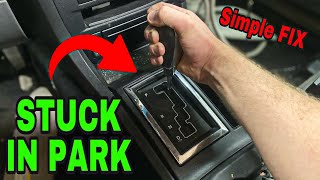
- Replacing the shifter assembly due to a 'stuck in Park' condition. A broken 'pink thingy' (shift interlock lever) is a very common issue that prevents the car from shifting out of Park, but it is a separate mechanical problem inside the shifter and does not cause TCM fault code P1634. 🎬 Watch: How to fix a Magnum stuck in Park
Most Likely Causes
- Internal Transmission Control Module (TCM) Failure 🔴 High Probability This code specifically flags an internal processor fault, making module failure the most direct cause. The service manual procedure confirms that if external wiring is good, the module itself is condemned.
How to confirm: After verifying with a scan tool that P1634 is the primary code, inspect the TCM's electrical connectors for corrosion or damage. If the wiring, power, and grounds to the module are good, the TCM is confirmed to be faulty.
Typical fix: Replace the Transmission Control Module and program the new unit to the vehicle.
Est. part cost: $100-$300 for a used or remanufactured unit, $400-$600 for a new OEM unit.
Rare But Worth Checking
- Poor Power/Ground Connection to TCM: Before replacing the expensive TCM, it's crucial to check its electrical connector and wiring. A loose pin, corrosion from water intrusion (sometimes from a known cowl leak issue), or a damaged wire can mimic an internal failure.
- Failing Battery or Alternator: Very low system voltage during startup can sometimes cause control modules to set internal performance codes. If your battery is old or you've had other electrical issues, test the battery and charging system before condemning the TCM.
Diagnosis Steps
- Connect a scan tool and confirm that P1634 is present in the TCM.
- Check for any other transmission-related or communication (U-series) codes.
- Using a multimeter, test the vehicle's battery and charging system to rule out low voltage issues. Voltage should be ~12.6V with the engine off and 13.5-14.5V with the engine running.
- Locate the TCM. On the Magnum, it is typically found inside the cabin, under the driver's side dashboard near the steering column.
- Disconnect the battery. Disconnect the TCM electrical connectors. Carefully inspect the pins and sockets on both the module and the harness for any signs of corrosion, moisture, or damage. Check for any pins that look pushed back or 'pushed out'.
- If wiring schematics are available, verify the TCM is receiving proper power and has a solid ground connection at its connector.
- If the battery, charging system, and all wiring to the TCM are confirmed to be good, the TCM has an internal hardware fault and must be replaced.
Parts You'll Likely Need
- Transmission Control Module (TCM)
(OEM #Multiple - e.g., 05150186AE, 04692392AI, P04692390AE. Must verify with VIN.)— This code indicates a fatal internal error within the module itself, making replacement the only fix.
Trusted brands: Mopar (OEM)
OEM price range: $400-$600
Aftermarket price range: $100-$300 (Remanufactured/Used)
Related Codes That Often Appear With This One
- P0605 — This code means 'Internal Control Module Read Only Memory (ROM) Error,' another type of internal processor fault that points to a failed TCM.
- U0101 — This code means 'Lost Communication With TCM.' If the TCM fails completely due to the internal error of P1634, other modules on the vehicle will post U-codes indicating they can no longer communicate with it.
Technical Service Bulletins (TSBs) & Recalls
- TSB 21-016-15 REV-B: While not for the Magnum, this TSB for the 2015 Jeep Cherokee shows how the same P1634 code is fixed with a software update on newer vehicles, highlighting why the Magnum's issue is different (hardware failure).
Platform-Specific Known Issues
- The NAG1 transmission used in this vehicle is known for a leaking 13-pin electrical connector sleeve. While this typically causes different codes, it's a critical maintenance item. If fluid wicks up the harness, it could potentially damage the TCM connector pins over time.
Mechanic-Grade Diagnostic Values
- CAN Bus Network Resistance — expected: 60 ohms (± 3.0 ohms) when measured between the CAN C Bus (+) and CAN C Bus (-) circuits with the ignition off.. Failure: A reading of 120 ohms indicates an open circuit to one of the terminating resistors (e.g., in the ABS module or TCM). A reading near 0 ohms indicates a short between the two CAN wires.
- CAN Bus Voltage (Key On) — expected: CAN High (D65) to Ground: 2.5V - 3.0V. CAN Low (D64) to Ground: 2.5V - 2.0V.. Failure: Voltages outside these ranges, or a voltage of 0V or battery voltage, indicates a short to ground or power on the respective CAN line.
- TCM Power Supply (Key On) — expected: A test light connected to ground should illuminate brightly when probing the (F942) Fused Transmission Relay Output circuit at the TCM C1 connector.. Failure: A dim or no light indicates high resistance or an open in the power supply circuit from the relay.
- TCM Ground Circuit (Key Off) — expected: A test light connected to 12V (battery positive) should illuminate brightly when probing the (Z910) or (Z912) ground circuit at the TCM C1 connector.. Failure: A dim or no light indicates a poor or open ground connection.
Scan Tool Commands That Help
- wiTECH: PROXI Configuration Alignment — This procedure is mandatory after installing a new or used TCM. It synchronizes the configuration of all modules on the vehicle's network. Failure to perform this can result in communication errors and warning lights.
- wiTECH: TCM VIN Verification — This function, found in the TCM 'Misc Functions' menu, writes the vehicle's VIN into the replacement module. It is a critical step for the module to be accepted by the vehicle's security and powertrain systems.
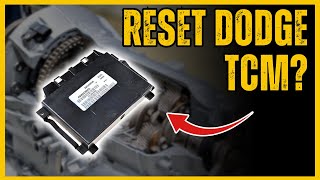
- wiTECH: Quick Learn — This is performed *after* the TCM has been successfully installed, programmed, and has no active fault codes. It resets and relearns the transmission's clutch adaptive values to ensure proper shift quality. 🎬 Watch: 5 ways to reset a Chrysler or Dodge TCM
Wiring & Ground Locations
- TCM (Transmission Control Module) — Inside the cabin, mounted to a bracket under the driver's side dashboard, near the steering column.. This is the module that has failed. Its location is required for inspection of connectors and for replacement.
- Z910 / Z912 — These are the circuit designators for the ground wires found in the TCM's C1 harness connector.. A poor ground connection at these pins can cause erratic module behavior and potentially trigger false internal fault codes. Verifying a solid ground is a critical step before condemning the TCM.
- F942 — This is the circuit designator for the fused power feed from the transmission relay, found in the TCM's C1 harness connector.. Loss of, or low voltage on, this power feed will cause the TCM to malfunction. Verifying battery voltage at this pin is essential.
- D64 / D65 — These are the circuit designators for the CAN C Bus (-) and CAN C Bus (+) wires, respectively, found in the TCM's C2 harness connector.. While P1634 is an internal fault, a short or open on the CAN bus can sometimes cause unpredictable module behavior. Checking CAN resistance and voltage at these pins can rule out a network-wide issue.
OEM Part Supersession History
P04692390AE→Unknown, this is the primary number for this model year.— N/A
Heads up: This part number is specific to 2005 models.04692392AC, 04692392AD, 04692392AF, 04692392AG→04692392AI (or remanufactured RL692392AI)— Standard part revisions for reliability or component changes.
Heads up: This family of part numbers is specific to 2006 models.05150186AA, 05150186AC, 05150240AB→05150186AE— Standard part revisions.
Heads up: This family of part numbers fits 2007-2008 models. It is critical to match the part number from the original module when sourcing a replacement.
Model Year Variations Within This Range
- 2008: The 2008 model year received a minor facelift with a revised front fascia, headlights, and some interior trim updates to more closely resemble the Dodge Charger. While functionally similar, this marks a cosmetic distinction from the 2005-2007 models.
- 2005, 2006, 2007-2008: Different TCM part numbers were used throughout the production run. 2005 models use a P04692390xx family, 2006 models use a 04692392xx family, and 2007-2008 models use a 05150186xx family. They are generally not interchangeable, so matching the part number is essential.
Diagnostic Flowchart
Other Known Issues on This Vehicle
Issues unrelated to this code that are worth knowing about as an owner of this generation:
- Shifter Stuck in Park ('Pink Thingy' Failure) 🔴 High — Extremely common. The original plastic park interlock lever becomes brittle and breaks, immobilizing the vehicle. (Ref: No recall, but it is a widely known failure. Aftermarket metal replacements (e.g., Dorman 924-706) provide a permanent fix.)
- Front Suspension Clunking Noise 🟠 Medium — Very common. Worn sway bar bushings and/or end links cause a clunking or knocking sound from the front end when driving over bumps. (Ref: No recall; this is considered a standard wear-and-tear item.)
- Water Leak at A-Pillar / Cowl 🟠 Medium — Frequently reported. Body sealer in the cowl area (under the windshield wipers) can fail, allowing water to leak into the cabin, resulting in a wet passenger or driver side floor. (Ref: A dealer procedure exists to reseal the affected body seams.)
- Takata Airbag Inflator Recall 🔴 High — Affects all model years (2005-2008). This is a critical safety recall. (Ref: NHTSA Campaign Number: 16V352000 (and others). The driver-side airbag inflator can rupture upon deployment.)
- Transmission Electrical Connector Leak 🟠 Medium — A well-known issue on the NAG1/722.6 transmission. The O-rings on the 13-pin connector sleeve fail, allowing transmission fluid to leak out and potentially wick up the wiring harness toward the TCM.
Used vs. New Parts: Buying Guide for This Vehicle
When a used part is the smart pick: A used TCM from a reputable salvage yard is a very sensible and cost-effective option for this repair, as the failure is electronic and not wear-related. The primary cost of the repair is often the programming, which is required for both new and used units.
Donor-vehicle mileage cap: roughly under 150000 miles for the part to have meaningful remaining life.
What to inspect on the donor part:
- Match the OEM part number EXACTLY. There are at least three different part number families for this vehicle range that are not interchangeable.
- Inspect the connector pins on the used module for any signs of corrosion, moisture damage, or being bent/pushed in.
- Choose a donor vehicle that was not involved in a flood or have significant front-end collision damage.
- Ensure the seller offers a warranty or return policy in case the unit is also faulty.
OEM-only on this vehicle (don't cheap out):
- Transmission Control Module (TCM) - While used OEM is fine, avoid no-name aftermarket clones. Stick to Mopar (new) or a used/remanufactured unit from a known OEM source.
Brands owners have reported issues with on this vehicle:
- Unbranded, new 'clone' modules from online marketplaces. They often have programming and longevity issues.
Related OBD-II Codes
Frequently Asked Questions
Where is the Transmission Control Module (TCM) located on my 2006 Dodge Magnum?
Is the P1634 code on my Magnum likely a software issue that can be fixed with an update?
Can I use a TCM from a Dodge Charger or Chrysler 300 for my Magnum?
My shifter is stuck in Park. Is this caused by the P1634 code?
Could the common transmission fluid leak at the 13-pin electrical connector cause code P1634?
Do I have to program a replacement TCM?
Helpful Videos

We Have This Part in Stock


The information in this article is provided for general reference and educational purposes only. Vehicle specifications, procedures, and part compatibility can vary by production date, trim level, and region. Always consult your vehicle's factory service manual and verify part numbers before purchasing or performing repairs. Safety-critical components such as airbags, seat belts, and braking systems should be installed by a qualified professional.
- Dodge Magnum:
- 🎬 Helpful Videos
- 🛍️ Shop This Part
- What's Unique About the 2005-2008 Dodge Magnum
- Symptoms You May Notice
- Most Likely Causes
- Rare But Worth Checking
- Diagnosis Steps
- Parts You'll Likely Need
- Related Codes That Often Appear With This One
- Technical Service Bulletins (TSBs) & Recalls
- Platform-Specific Known Issues
- Mechanic-Grade Diagnostic Values
- Scan Tool Commands That Help
- Wiring & Ground Locations
- OEM Part Supersession History
- Model Year Variations Within This Range
- Diagnostic Flowchart
- Other Known Issues on This Vehicle
- Used vs. New Parts: Buying Guide for This Vehicle
- Related OBD-II Codes
- Frequently Asked Questions
- 🎟️ Get 5% Off