

P1622 on 2006-2014 Suzuki SX4: ECM EEPROM Error Causes and Fixes
Code P1622 on a Suzuki SX4 means the Engine Control Module's (ECM) internal memory is corrupted. This typically causes a no-start or intermittent start condition. The only fix is to replace the ECM and have it professionally programmed to your vehicle's VIN and immobilizer system.
- P1622 on your SX4 means the engine's main computer (ECM) has an internal memory failure.
- The most common symptom is the car cranking but refusing to start.
- The official fix is to replace the ECM. A simple code clearing will not solve the problem if the code returns.
- A replacement ECM (new or used) MUST be professionally programmed to your car's VIN and security system to work.
- Before spending money on an ECM, have a mechanic verify its power and ground connections are good, as a faulty relay could mimic ECM failure.
What's Unique About the 2006-2014 Suzuki SX4
Unlike many other manufacturers where P1622 might point to immobilizer communication (Ford), thermostat circuits (BMW), or A/C relays (Hyundai), on the Suzuki SX4 and its contemporaries, this code is a direct and serious condemnation of the ECM's internal memory. The official Suzuki diagnostic procedure is blunt: if the code reappears after being cleared, the ECM itself is faulty and must be replaced. There is no intermediate component to check; the fault lies within the main computer's hardware.
Symptoms You May Notice
- Engine will not start (cranks but does not fire)
- Intermittent starting issues, such as extended cranking before firing.
- Check Engine Light is on and stays on
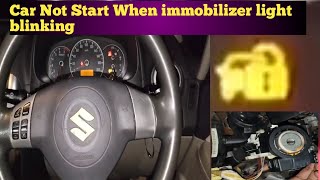
- Immobilizer or security light may be flashing 🎬 Watch: What to do when the immobilizer light is blinking
- Engine may stall unexpectedly if it does run
- Rough idling or general poor engine performance
- Replacing the battery, starter, or ignition switch. While these can cause no-start issues, they will not set the P1622 code. The code specifically points to an internal ECM memory problem, not a peripheral component.
- Replacing the ignition key. While a key issue might set other immobilizer codes like P1623 ('Unregistered Transponder'), it will not cause the P1622 EEPROM error.
Most Likely Causes
- Internal ECM Failure (Corrupted EEPROM) 🔴 High Probability This is the specific condition the code is designed to detect. The failure can be due to age, internal component degradation, voltage spikes, or repeated thermal stress over many years.
How to confirm: Use a scan tool to clear the P1622 code. Turn the ignition off, then on again. If the P1622 code immediately returns, the ECM is confirmed to be faulty according to the official service manual procedure.
Typical fix: Replace the Engine Control Module (ECM) and have the new unit programmed by a dealer or qualified independent shop with specialized tools.
Est. part cost: $50-$300 (Used/Remanufactured), $1000+ (New OEM).
Rare But Worth Checking
- Faulty Main Power Relay: A failing main relay can cause erratic voltage or intermittent power loss to the ECM. This unstable power supply can, in some cases, corrupt the EEPROM data or mimic the symptoms of a failed ECM. Before condemning an expensive ECM, checking the power and ground supply to the module is a crucial and cost-effective diagnostic step.
- Software Glitch: A TSB (TS10271R1) exists for 2010-2013 models for hard starting due to an ECM software issue, fixed by a reflash. While P1622 typically indicates a deeper hardware fault, it's theoretically possible a severe software corruption could trigger it. A reflash attempt is a low-cost diagnostic step if the equipment is available.
Diagnosis Steps
- Connect an OBD-II scanner and confirm that P1622 is the active or stored code.
- Record any other codes present, paying close attention to codes like P0601, P1621, or P1623.
- Using the scanner, attempt to clear all Diagnostic Trouble Codes.
- Turn the ignition switch completely OFF, wait at least 10 seconds, and then turn it back to the ON position (without starting the engine).
- Re-scan for codes. If P1622 immediately returns, the ECM has failed its internal self-check and is faulty. This is the definitive diagnostic step per Suzuki service literature.
- If the code does not return, the issue may have been an intermittent glitch. However, if drivability problems persist, the ECM is still the primary suspect.
- As a final due-diligence step before replacement, use a multimeter to verify stable battery voltage (12.4V+ with engine off) and check that the main power and ground connections at the ECM connector are clean, secure, and providing correct voltage.
- If the ECM is confirmed bad, it must be replaced and programmed.
Parts You'll Likely Need
- Engine Control Module (ECM)
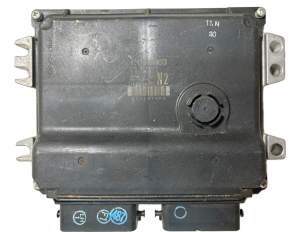
(OEM #Varies by year. Examples: 33910-51MB0 (2010-2013), 33910-75KG0 (2007-2009), 33910-54LB0 (2010). Always verify by VIN.)— This is the part that has failed when code P1622 is persistently set.
Trusted brands: Suzuki (OEM), Bosch (OEM supplier)
OEM price range: $1000-$2200.
Aftermarket price range: $50-$300 (Used or Remanufactured from sources like eBay).
Related Codes That Often Appear With This One
- P1623 — P1623 is 'Unregistered Transponder'. Service manuals often list P1622 and P1623 together, as both relate to the ECM's security functions and memory. An EEPROM failure can corrupt the stored key data, leading to both codes appearing.
- P0601 — P0601 is 'Internal Control Module Memory Check Sum Error'. This is a more generic code for the same type of fault as P1622. Seeing them together strongly confirms the ECM has an internal, non-recoverable memory failure.
- P1621 — P1621 indicates an 'Immobilizer Communication Line Error'. If the ECM's internal failure affects its ability to communicate on the bus, this code may be set alongside P1622.
Technical Service Bulletins (TSBs) & Recalls
- TS10271R1: Addresses hard-starting and extended cranking in 2010-2013 SX4 models, sometimes fixed by an ECM software update.
- 13V405000 (Recall VD): Recall for failing passenger seat OCS sensor mat on 2007-2011 models.
Platform-Specific Known Issues
- A Technical Service Bulletin (TSB No. TS10271R1) was issued for 2010-2013 Suzuki SX4 models for hard-starting or extended cranking times, which could be resolved with an ECM software update. This indicates a history of ECM software-related issues on this platform, though P1622 is typically a hardware failure.
Mechanic-Grade Diagnostic Values
- ECM Power Supply Voltage — expected: Battery voltage (approx. 12.4V+) with ignition ON. Failure: Voltage below 11V or unstable readings can indicate a problem with the main relay or wiring, not necessarily the ECM itself.
- ECM Ground Circuit Resistance — expected: Less than 1.0 Ohm between the ECM ground pins and a clean chassis ground.. Failure: High resistance indicates a corroded or loose ground connection, which can cause various electrical issues including symptoms of ECM failure.
Scan Tool Commands That Help
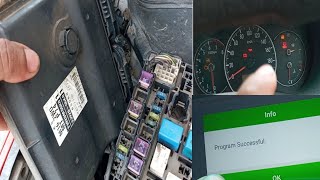
- Launch X431 series (e.g., ScanPlus X): Immobilizer Programming / All Keys Lost — This function is used after installing a replacement (new or used) ECM to program the vehicle's keys to the new module. The scanner will prompt for the security code and vehicle details to synchronize the immobilizer system, allowing the engine to start. 🎬 See how to program a Suzuki ECM using a Launch scanner
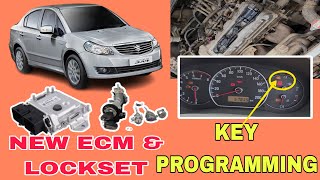
- Suzuki SDT-II (Dealer Tool): Immobilizer Key Registration — This is the official dealer procedure for programming keys to a new or replacement ECM. It ensures the VIN and security data are correctly written to the EEPROM, which is the root cause of the P1622 code. 🎬 Watch this walkthrough for programming a new ECM and lockset
Wiring & Ground Locations
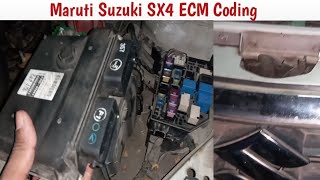
- Engine Control Module (ECM) — Located in the engine bay, typically on the passenger side firewall or near the battery.. This is the component that has failed. Physical inspection for water damage or connector corrosion is a necessary step.
- Main Relay — Located in the engine compartment fuse/relay box, typically labeled as 'MAIN'.. This relay supplies primary power to the ECM. A faulty or intermittent relay can cut power, potentially corrupting the ECM's memory or mimicking the symptoms of a failed ECM.
- Body Control Module (BCM) — Located under the driver's side dashboard, to the left of the steering column.. The BCM is part of the immobilizer system and communicates with the ECM. While not the direct cause of P1622, issues with it can cause related security codes.
- OBD-II Data Link Connector (DLC) — Under the driver's side dashboard, typically to the right of the steering column.. This is the port used to connect a scan tool to read codes and program the replacement ECM.
- Engine Compartment Fuse Box — Located on the left side of the engine bay, next to the battery, under a black cover.. Contains the Main Relay (position 26 in some layouts) and fuses critical to the ECM's operation.
Real Owner Repair Stories
- YouTube channel 'Technical Autotech' (2008 Maruti Suzuki SX4) — Security light blinking, car will not start after installing a used ECM.
❌ Tried (didn't work) Simply swapping the ECM without programming.
✅ What actually fixed it The technician used a Launch ScanPlus X scanner to perform an 'All Keys Lost' immobilizer programming function. He entered the vehicle details and security code, which successfully synchronized the used ECM with the car's immobilizer system. After the procedure, the security light went off and the car started normally.
Model Year Variations Within This Range
- 2007-2009: Common ECM part numbers for these years include 33910-75KG0 and 33920-80JC1. It is critical to match the part number exactly.
- 2010: A common ECM part number for this year is 33910-54LB0.
- 2010-2013: A common ECM part number for these years is 33910-51MB0. These models were also subject to TSB No. TS10271R1 for hard-starting issues that could be fixed with a software update.
Diagnostic Flowchart
Other Known Issues on This Vehicle
Issues unrelated to this code that are worth knowing about as an owner of this generation:
- Cracked Exhaust Manifold 🟠 Medium — Common issue, especially on earlier models. Can occur due to thermal stress cycles. Owners on Reddit and other forums report difficulty and high cost in finding replacements in North America.
- CVT Transmission Failure/Issues 🔴 High — Complaints of jerky operation, delayed engagement, and unusual noises can begin as early as 60,000 km (approx. 37,000 miles) on models equipped with the CVT automatic transmission.
- AWD System Malfunction 🟠 Medium — Owners report intermittent illumination of the 'AWD' and 'LOCK' lights, disabling the system. Causes range from corroded wiring on the rear differential temperature sensor to faulty ABS/wheel speed sensors.
- Premature Brake Wear 🟡 Low — Some owners experience rapid wear of front brake pads and discs, sometimes requiring replacement well before 40,000 km (approx. 25,000 miles), particularly with city driving.
- Passenger Airbag OCS Sensor Mat Failure 🔴 High — Widespread issue affecting 2007-2011 models where the Occupant Classification System (OCS) sensor mat in the passenger seat fails from repeated flexing, causing the airbag to be permanently enabled. (Ref: NHTSA Campaign ID: 13V405000 (Recall VD))
- Power Steering Pump Seizure (2012-2013) 🔴 High — Affects 2012-2013 models, where the power steering pump can seize, leading to a sudden loss of steering assist. (Ref: Suzuki Safety Recall)
Used vs. New Parts: Buying Guide for This Vehicle
When a used part is the smart pick: A used ECM is a very common and cost-effective solution for P1622, as the original part is simply a failed computer. Given the high cost of a new OEM unit, a used part from a reputable seller is the most practical choice for this repair.
Donor-vehicle mileage cap: roughly under 150000 miles for the part to have meaningful remaining life.
What to inspect on the donor part:
- Verify the part number on the used ECM EXACTLY matches your original module.
- Inspect photos for physical damage, dents, or a swollen case.
- Check the electrical connector pins for any signs of corrosion, water intrusion, or bent pins.
- Purchase from a seller with a warranty or return policy.
OEM-only on this vehicle (don't cheap out):
- Engine Control Module (ECM) - While used OEM is fine, avoid no-name aftermarket clones. The repair involves reprogramming, and sticking to genuine Suzuki/Bosch hardware minimizes compatibility risks.
Aftermarket brands forum-validated for this vehicle:
- ECU cloning/repair services (e.g., SIA Electronics, UpFix) can be a reliable alternative to buying a used part, as they transfer your vehicle's original data to a refurbished unit.
Brands owners have reported issues with on this vehicle:
- Unbranded, new 'plug-and-play' modules from online marketplaces should be avoided. They are unlikely to work without proper programming and may have quality issues.
Real Owner Stories
Aggregated from forums and TSBs cited above. Mileages and costs reflect what owners reported in those sources.
2010-2013 Suzuki SX4
Symptoms: The vehicle experienced hard-starting or extended cranking times before the engine would fire.
What fixed it: An ECM software update was performed by a dealer, as outlined in the Technical Service Bulletin.
Source hint: TSB No. TS10271R1
Suzuki SX4 (model year not specified)
Symptoms: The owner experienced reduced power and had error codes stored, leading them to suspect a faulty ECU.
What fixed it: The root cause was not the ECU itself, but a faulty main relay that was affecting the ECU's power supply. Replacing the relay resolved the issue.
Source hint: Carly Community
Related OBD-II Codes
Frequently Asked Questions
How can I be 100% sure the ECM is bad on my SX4 before I spend money on a replacement?
My 2011 Suzuki SX4 has extended cranking times. Does the TSB for an ECM update apply to the P1622 code?
What is the realistic cost to fix code P1622 on a 2006-2014 Suzuki SX4?
I found a used ECM online for my SX4. What should I check before buying it?
My airbag light is on and I know there was a recall. Is it related to my P1622 engine code?
Since the Fiat Sedici is a rebadged SX4, can I use an ECM from one in my Suzuki?
Helpful Videos
We Have This Part in Stock


The information in this article is provided for general reference and educational purposes only. Vehicle specifications, procedures, and part compatibility can vary by production date, trim level, and region. Always consult your vehicle's factory service manual and verify part numbers before purchasing or performing repairs. Safety-critical components such as airbags, seat belts, and braking systems should be installed by a qualified professional.
- Suzuki SX4:
- 🎬 Helpful Videos
- 🛍️ Shop This Part
- What's Unique About the 2006-2014 Suzuki SX4
- Symptoms You May Notice
- Most Likely Causes
- Rare But Worth Checking
- Diagnosis Steps
- Parts You'll Likely Need
- Related Codes That Often Appear With This One
- Technical Service Bulletins (TSBs) & Recalls
- Platform-Specific Known Issues
- Mechanic-Grade Diagnostic Values
- Scan Tool Commands That Help
- Wiring & Ground Locations
- Real Owner Repair Stories
- Model Year Variations Within This Range
- Diagnostic Flowchart
- Other Known Issues on This Vehicle
- Used vs. New Parts: Buying Guide for This Vehicle
- Real Owner Stories
- 2010-2013 Suzuki SX4
- Suzuki SX4 (model year not specified)
- Related OBD-II Codes
- Frequently Asked Questions
- 🎟️ Get 5% Off