

P1622 on 2009-2018 Ram 1500 5.7L Hemi: Immobilizer or Sensor Voltage Fault?
P1622 on a Ram 1500 is ambiguous. If your truck won't start, it's likely an immobilizer issue with the key or WIN module (a $500-$900 repair). If it runs fine, it could be a wiring or sensor fault related to the O2 sensors, which is a much cheaper fix.
- P1622 has two likely meanings on your Ram: an immobilizer failure or a sensor voltage fault.
- If your truck won't start, focus on the immobilizer system: try your spare key first, then suspect the WIN module.
- If your truck runs fine with the Check Engine Light on, inspect the O2 sensor wiring on the driver's side for heat damage or moisture.
- Fixing an immobilizer issue (WIN module, key, PCM) will require professional programming.
- Repairing damaged O2 sensor wiring is a much cheaper, more DIY-friendly fix.
What's Unique About the 2009-2018 Ram 1500
The confusion around code P1622 on this platform stems from how different diagnostic tools interpret the fault. Generic or aftermarket scanners often report the 'Immobilizer' definition, while some dealer-level tools may specify the 'O2 Sensor Reference Voltage Circuit High' fault. This leads to two distinct diagnostic paths for the same code. The immobilizer issue is often tied to the Wireless Ignition Node (WIN), a widely documented failure point on this generation of Ram trucks and other Chrysler products. The voltage issue is frequently traced to damaged O2 sensor wiring from heat or moisture, especially on the driver's side (Bank 1) sensors. FCA (Chrysler) has issued service bulletins (e.g., 18-084-16, 18-033-17 REV. A) for other vehicles with the 5.7L Hemi that list P1622 as 'O2 Sensor Reference Voltage Circuit High', suggesting a software or wiring-related cause that can be addressed with a PCM flash or wiring repair.
Symptoms You May Notice
- Check Engine Light (CEL) is on
- Engine will not start (cranks but does not fire)
- Intermittent no-start condition
- Message on dash: 'Wrong Key Fob' for a moment on startup.
- Needing to wiggle the key in the ignition to start the vehicle.
- Remote start works, but inserting the key does not.
- Ignition key is stuck and will not turn to the OFF position.
- Engine continues to run after the key is removed.
- Replacing O2 sensors when the actual problem is the wiring harness.
- Replacing the starter when the no-start is caused by the WIN module not authorizing the engine to fire.
- Replacing the battery when intermittent no-start is caused by the WIN module or key fob.
Most Likely Causes
- Failing Wireless Ignition Node (WIN) Module 🔴 High Probability The WIN module is a widely documented failure point on 2008-2020 Chrysler/Dodge/Jeep/Ram vehicles due to internal electronic component failure, leading to a variety of key and starting issues.
How to confirm: Symptoms are the best indicator: if you have to jiggle the key, the ignition feels locked, or it intermittently refuses to recognize the key, the WIN module is the prime suspect. A professional scan tool can confirm communication failures with the module. A user on Reddit also confirmed these classic symptoms before replacement.
Typical fix: Replace the WIN module and program it to the vehicle's PCM and existing keys. This typically requires a dealer or a well-equipped locksmith with tools like AutoProPad. Some companies also offer a mail-in rebuild service.
Est. part cost: $150-$350 - Damaged Oxygen (O2) Sensor Wiring or Connector 🟡 Medium Probability O2 sensor wiring is routed near the hot exhaust system. Aftermarket headers can make wires especially vulnerable to melting. Connectors are also susceptible to water intrusion from puddles or rain, which can cause a short.
How to confirm: Visually inspect the wiring harnesses for both O2 sensors on the driver's side (Bank 1, Sensor 1 and Sensor 2). Look for melted insulation, chafing, or corrosion inside the connectors. The code sets when the PCM sees voltage above 3.7V for more than 9 seconds, indicating a short or open in the return circuit.
Typical fix: Repair the damaged section of the wiring harness or replace the connector pigtail. Apply dielectric grease to the connector to prevent future moisture issues.
Est. part cost: $15-$50 - Defective Key Fob (FOBIK) 🟡 Medium Probability
How to confirm: Try starting the truck with your spare key. If the spare key works reliably and the original key does not, the original key fob is faulty. The internal transponder chip can fail.
Typical fix: Replace the faulty key fob and have the new one programmed to your truck by a dealer or locksmith.
Est. part cost: $100-$250 - Faulty Oxygen (O2) Sensor ⚪ Low Probability
How to confirm: If the wiring is confirmed to be in good condition, the sensor itself may have an internal short. A technician can use a scan tool to monitor the live voltage from the sensor to confirm it is not reading correctly. Unplugging the suspect O2 sensor and checking if the high voltage reading on the scan tool drops can help isolate the faulty sensor.
Typical fix: Replace the faulty O2 sensor. The code often points to Bank 1 (driver's side), which includes the pre-catalyst (1/1) and post-catalyst (1/2) sensors.
Est. part cost: $40-$100
Rare But Worth Checking
- Faulty Powertrain Control Module (PCM): This is a last-resort diagnosis. The PCM is responsible for both the immobilizer handshake and providing the 5V reference for sensors. A failure here can cause P1622, but it is much less common than the other causes. Some TSBs mention a PCM reflash to fix erroneous P1622 codes related to O2 sensor voltage.
Diagnosis Steps
- Analyze Symptoms: Does the truck fail to start or have key recognition issues (e.g., 'Wrong Key Fob' message, need to wiggle key)? If YES, proceed to Step 2 (Immobilizer Path). If NO, and the only symptom is a Check Engine Light, skip to Step 5 (Voltage Path).
- (Immobilizer Path) Test Spare Key: Attempt to start the vehicle with all known spare keys. If a spare key works consistently, the original key fob is the problem.
- (Immobilizer Path) Observe Ignition Behavior: When the no-start occurs, do you get a 'Wrong Key Fob' message? Does wiggling the key in the ignition help? Is the key stuck? These strongly suggest a failing WIN module.
- (Immobilizer Path) Professional Diagnosis: If the spare key doesn't work and symptoms point to the ignition switch, the issue is likely the WIN module or, rarely, the PCM. A professional with a compatible scan tool (like wiTECH) is needed to diagnose communication between these modules and program replacements.
- (Voltage Path) Inspect O2 Sensor Wiring: If the truck runs fine, carefully inspect the wiring for the O2 sensors on the driver's side (Bank 1, both upstream and downstream). Check for any signs of melting, chafing against the frame or exhaust, or corrosion in the connectors. Pay close attention if aftermarket headers are installed.
- (Voltage Path) Clean and Test Connectors: If a connector looks suspect (especially after driving in heavy rain or through puddles), unplug it, clean it with electrical contact cleaner, let it dry, add dielectric grease, and reconnect. Clear the code and see if it returns.
- (Voltage Path) Isolate with Scan Tool: Use a scan tool to monitor live O2 sensor voltage. If a high voltage reading (above 3.7V) is seen, unplug the Bank 1 O2 sensors one at a time. If the voltage drops to normal after unplugging one sensor, that sensor is the one with the internal short.
- (Voltage Path) Check for TSBs: Ask a dealer if TSBs like 18-084-16 or 18-033-17 apply to your vehicle's VIN. A PCM software update may resolve an erroneous P1622 code.
- Final Check: If all other possibilities are exhausted, the PCM may be at fault. This should be confirmed by a qualified technician before replacement.
Parts You'll Likely Need
- Wireless Ignition Node (WIN) Module
(OEM #68105738AD (superceded by 68105738AF), 5026533AG)— This is the most probable cause if you are experiencing no-start or key recognition issues along with code P1622. It is a common failure item on this platform.
Trusted brands: Mopar
OEM price range: $250-$350
Aftermarket price range: $150-$250 - Oxygen Sensor Wiring Pigtail/Connector — Often the cause for the 'O2 Sensor Reference Voltage' interpretation of the code, where the wiring is damaged by heat or moisture.
Trusted brands: Mopar, Standard Motor Products
OEM price range: $30-$50
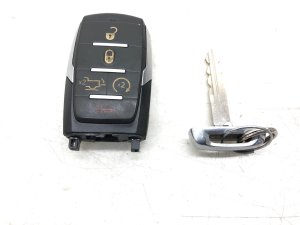
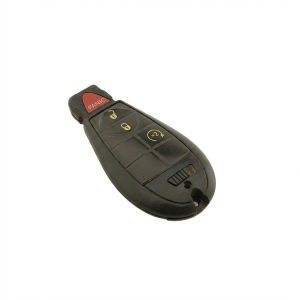
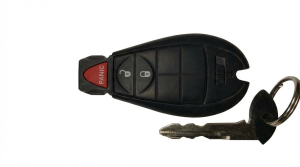
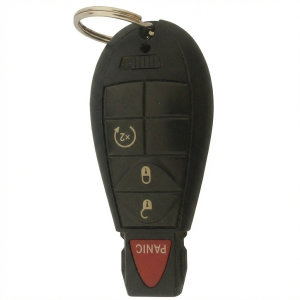
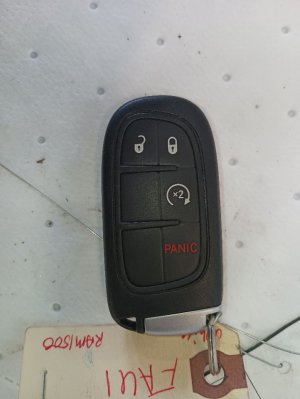
Aftermarket price range: $15-$30 - Key Fob (FOBIK) — A faulty internal transponder chip can prevent the immobilizer handshake, triggering P1622. Testing with a spare key is the easiest way to confirm.
Related Codes That Often Appear With This One
- P1621 — This code for 'Immobilizer Code Words Do Not Match' or 'O2 Sensor Reference Voltage Circuit Low' is directly related to P1622 and points strongly towards either a security system failure (Key, WIN, PCM) or the corresponding O2 sensor circuit fault.
- P1623 — This code for 'Immobilizer Code Word/ID Number Write Failure' also indicates a problem within the vehicle's anti-theft and security system.
- P0300 — A 'Random/Multiple Cylinder Misfire' code can sometimes appear alongside P1622, especially if the underlying cause is electrical interference or a failing PCM. One forum user reported P1622 along with misfire codes after a header installation.
Technical Service Bulletins (TSBs) & Recalls
- TSB 18-033-17 REV. A: Addresses P1622 'O2 Sensor Reference Voltage Circuit High' among other codes for 2013-2015 Dodge Charger/Challenger/Chrysler 300 with the 5.7L engine, fixed by a PCM software update.
- TSB 18-084-16: Also addresses P1622 'O2 Sensor Reference Voltage Circuit High' for similar 5.7L vehicles via a PCM reflash.
- TSB 18-052-15 REV. A: Superseded bulletin that also listed P1622 as 'O2 Sensor Reference Voltage Circuit High' and recommended a PCM reflash.
Platform-Specific Known Issues
- Dual-Meaning Code: The primary vehicle-specific issue is the code's ambiguity. On many other vehicles, P1622 strictly means 'Immobilizer ID Does Not Match'. On the Ram 1500 and related Chrysler products, it can also mean 'O2 Sensor Reference Voltage Circuit High', a fact confirmed by multiple TSBs for the 5.7L platform.
Mechanic-Grade Diagnostic Values
- O2 Sensor Return Voltage (to PCM) — expected: Below 3.7 Volts. Failure: The PCM will set code P1622 if it sees a voltage above 3.7V for more than 9 seconds on the shared return circuit for Bank 1 sensors.
- O2 Sensor Heater Element Resistance — expected: Typically between 2 and 30 Ohms. Failure: A reading of infinity (open circuit) or zero (short circuit) indicates a failed heater element within the sensor.
Scan Tool Commands That Help
- wiTECH: Reprogram the PCM — Used to apply software updates as specified in service bulletins like 18-052-15, which can resolve erroneously set P1622 codes related to O2 sensor voltage.
- wiTECH or AutoProPad: Read PIN Code (from original WIN) — This is the first step before replacing a WIN module. The security PIN from the old module is required to program the new one.
- wiTECH or AutoProPad: WCM/WIN Replaced — This function is used after installing a new WIN module to write the vehicle's security information (VIN, PIN) to the new module and sync it with the PCM.
- wiTECH or AutoProPad: Program Ignition Keys or Key Fob — After a new WIN module is installed and configured, this function is used to pair the existing or new keys to the newly installed module.
Wiring & Ground Locations
- Bank 1 O2 Sensors (1/1 and 1/2) — Driver's side exhaust, before and after the catalytic converter.. The 'O2 Sensor Reference Voltage High' variant of P1622 specifically points to a fault in the circuit for the Bank 1 (driver's side) sensors. The wiring for both sensors is spliced into a single return pin at the PCM.
- PCM Connector C4 (Green) — On the Powertrain Control Module (PCM), typically located on the firewall in the engine bay.. For some model year swaps or advanced diagnostics, technicians may need to access the pins on this connector. It contains wiring for the transmission control functions that were integrated into the PCM in later models.
Real Owner Repair Stories
- RamForum.com user 'UNBROKEN' (2012 Ram R/T 5.7L) — Check Engine Light with code P1622. The truck ran fine, but the code would reappear after being cleared.
❌ Tried (didn't work) Clearing the code with a scanner.
✅ What actually fixed it The user received information from a technician that the code was for the O2 sensor 1/1 and 2/1 return voltage. The problem was traced to a bad wire on one of the driver's side O2 sensors. Repairing the damaged wire resolved the issue. - RamForum.com user (2016 Ram 1500) — P1622 code appeared after driving through a large puddle during heavy rain.
❌ Tried (didn't work) Clearing the code, which would remain as a 'Permanent Code'.
✅ What actually fixed it The suspected cause was water intrusion into an O2 sensor connector. The recommended fix was to unplug the connector, clean and dry the terminals, apply dielectric grease, and reconnect it.
OEM Part Supersession History
68105738AD, 68105738AE, and others like 68066563xx→68105738AF— Component revisions to improve reliability and address common failure modes of the WIN module.
Heads up: While 68105738AF is a common replacement, some early models (e.g., 2009) used a different WIN module design (WIN 2). Upgrading to a later module may require an additional antenna module and dealer programming. Always verify fitment with VIN. The number of electrical connectors (one vs. two for remote start) is also a key difference.
Model Year Variations Within This Range
- 2013-2018: Starting in 2013, Ram made significant changes to the vehicle's electrical architecture. The Transmission Control Module (TCM) was integrated into the PCM, and wiring harnesses were updated. This can affect diagnostics and part compatibility, especially if attempting to swap modules between pre-2013 and post-2013 trucks.
- 2009-2012: These earlier models have a separate TCM and use an earlier generation of the WIN module. While the failure symptoms are the same, the specific part numbers and programming procedures may differ slightly from later models.
Diagnostic Flowchart
Other Known Issues on This Vehicle
Issues unrelated to this code that are worth knowing about as an owner of this generation:
- Hemi Tick (MDS Lifter & Camshaft Failure) 🔴 High — Common, especially on 2009-2016 models, often appearing between 70,000 and 120,000 miles. Can lead to catastrophic engine damage if ignored.
- Broken Exhaust Manifold Bolts 🟠 Medium — Very common across all years. Causes a ticking noise on cold starts that usually disappears as the engine warms up. The rear-most bolts are most prone to breaking. (Ref: TSB 11-002-11 (for 2009 models), TSB 09-011-22 (for later models))
- TIPM (Totally Integrated Power Module) Failure 🔴 High — Particularly common on 2011-2012 models. Can cause a wide range of random electrical issues, including fuel pump failure, horn going off, wipers activating, or a no-start condition. (Ref: Recall N52 for 2011-2013 Durango/Grand Cherokee fuel pump relay inside TIPM, but not specifically for Ram trucks which suffered similar issues.)
- Suspension Component Wear 🟡 Low — Ball joints and control arm bushings can wear prematurely, especially on trucks used for towing or on rough roads, leading to clunking noises or alignment issues.
Used vs. New Parts: Buying Guide for This Vehicle
When a used part is the smart pick: A used O2 sensor wiring pigtail from a junkyard is a perfectly acceptable and cost-effective fix, provided the connector and wires are in excellent condition. For major electronic modules, used parts are generally not recommended for this repair.
Donor-vehicle mileage cap: roughly under 80000 miles for the part to have meaningful remaining life.
What to inspect on the donor part:
- For a wiring pigtail, ensure there is no brittleness, cracking, or melting of the plastic connector or wire insulation.
- Check connector pins for any signs of green or white corrosion.
- Ensure the locking tab on the connector is intact and clicks firmly.
- Verify the donor vehicle was not from a region with heavy road salt use, which accelerates corrosion.
OEM-only on this vehicle (don't cheap out):
- Wireless Ignition Node (WIN) Module: Due to it being a high-failure item, a used module carries a significant risk of premature failure. Furthermore, it may be locked to the donor vehicle's VIN, complicating programming. A new OEM Mopar part is strongly advised.
- Powertrain Control Module (PCM): A used PCM is VIN-locked and requires specialized tools to 'virginize' or reprogram, making it a difficult and risky DIY part. New or professionally remanufactured units are the standard.
- Key Fob (FOBIK): While some aftermarket keys work, many locksmiths report higher success rates and fewer programming issues with new OEM Mopar key fobs.
Aftermarket brands forum-validated for this vehicle:
- NTK (for O2 Sensors): Multiple forum sources confirm NTK is the original equipment manufacturer (OEM) for Mopar O2 sensors. They are considered a reliable and equivalent alternative to the more expensive Mopar-branded part.
- Denso (for O2 Sensors): Denso is another highly-regarded brand for O2 sensors that is often recommended by technicians for Chrysler products.
Brands owners have reported issues with on this vehicle:
- Bosch (for O2 Sensors): While a major brand, numerous owners of Ram and other Chrysler vehicles report compatibility issues, incorrect readings, and premature failures when using Bosch O2 sensors, particularly for the upstream (pre-catalyst) positions.
Real Owner Stories
Aggregated from forums and TSBs cited above. Mileages and costs reflect what owners reported in those sources.
2014 Ram 1500 5.7L Hemi
Symptoms: The owner was diagnosing a '5V Output Reference Voltage 2' code and looking for the specific circuit involved.
What fixed it: Inspection of the Bank 1 O2 sensor wiring for shorts or high voltage (above 3.7V) as identified by a technician.
Source hint: RamForum.com: A thread titled 'P1622 5V Output Reference Voltage 2 code?' from 2014
2015 Ram 1500 5.7L Hemi
Symptoms: The vehicle displayed 'Wrong Key Fob' and experienced no-start symptoms related to the immobilizer system.
What fixed it: Discussion focused on replacing the key fob or the WIN module to resolve the 'Immobilizer ID Does Not Match' error.
Source hint: RamForum.com: A 2015 thread titled 'P1622 Code Immobilizer ID Does Not Match'
2009 Dodge Charger 5.7L Hemi
Symptoms: The owner of a modified vehicle experienced the code flipping definitions between an immobilizer issue and an O2 sensor voltage definition.
What fixed it: The case illustrated the platform's dual-meaning ambiguity for P1622, requiring diagnosis of both the security system and O2 sensor circuits.
Source hint: Dodge-Charger.com: In a thread titled 'p1622 Code Immobilizer ID does not match'
Related OBD-II Codes
Frequently Asked Questions
My 2014 Ram 1500 5.7L has a P1622 code; could this be fixed with a software update?
Why does my Ram 1500 dash say 'Wrong Key Fob' when I try to start it?
I have to wiggle the key in my 2010 Ram's ignition to get it to turn. Is this related to P1622?
Can aftermarket headers cause a P1622 code on my 5.7L Hemi?
My truck starts with remote start but not with the key. Is the WIN module bad?
Which O2 sensors should I check if I get a P1622 voltage code?
We Have This Part in Stock


The information in this article is provided for general reference and educational purposes only. Vehicle specifications, procedures, and part compatibility can vary by production date, trim level, and region. Always consult your vehicle's factory service manual and verify part numbers before purchasing or performing repairs. Safety-critical components such as airbags, seat belts, and braking systems should be installed by a qualified professional.
- Ram 1500:
- 🛍️ Shop This Part
- What's Unique About the 2009-2018 Ram 1500
- Symptoms You May Notice
- Most Likely Causes
- Rare But Worth Checking
- Diagnosis Steps
- Parts You'll Likely Need
- Related Codes That Often Appear With This One
- Technical Service Bulletins (TSBs) & Recalls
- Platform-Specific Known Issues
- Mechanic-Grade Diagnostic Values
- Scan Tool Commands That Help
- Wiring & Ground Locations
- Real Owner Repair Stories
- OEM Part Supersession History
- Model Year Variations Within This Range
- Diagnostic Flowchart
- Other Known Issues on This Vehicle
- Used vs. New Parts: Buying Guide for This Vehicle
- Real Owner Stories
- 2014 Ram 1500 5.7L Hemi
- 2015 Ram 1500 5.7L Hemi
- 2009 Dodge Charger 5.7L Hemi
- Related OBD-II Codes
- Frequently Asked Questions
- 🎟️ Get 5% Off