

P1621 on 2002-2009 GMC Envoy: PCM Memory Failure Causes and Fixes
On a 2002-2009 GMC Envoy, code P1621 almost always means the Powertrain Control Module (PCM) has an internal memory failure and needs to be replaced. Before replacement, thoroughly check the battery, charging system, and all major PCM power and ground connections. A replacement PCM must be programmed to your vehicle's VIN.
- P1621 on a 2002-2009 Envoy indicates a failure of the main computer (PCM), not a transmission-specific module like on newer GMs.
- Symptoms are serious and can include stalling, no-starts, and erratic shifting.
- Before spending money on a new PCM, always test the battery and check all main power and ground connections first.
- The fix is to replace the PCM. The new unit MUST be programmed to your vehicle's VIN to function correctly, which usually requires a professional.
- Do not replace sensors or transmission components hoping to fix this code until the PCM has been properly diagnosed.
What's Unique About the 2002-2009 GMC Envoy
Unlike many newer GM trucks where P1621 points to a failed Transmission Control Module (TCM) inside the transmission (a known issue on platforms with 6-speed automatics), the 2002-2009 Envoy and its platform-mates use a single Powertrain Control Module (PCM) that controls both the engine and the 4-speed transmission. Therefore, on the GMT360 platform, this code points directly to a failure of the main PCM itself, not a separate transmission computer. The common failure point seen in other GM products (a TEHCM) does not apply to this vehicle.
Symptoms You May Notice
- Check Engine Light is on
- Engine stalling or stuttering, especially when coming to a stop or at idle
- Rough or unstable idling
- Vehicle won't start or is hard to start, sometimes a 'no-crank' condition
- Harsh, erratic, or delayed transmission shifting
- Reduced Engine Power ('REP') message displayed on the instrument cluster
- Noticeable decrease in fuel economy
- Other electrical issues, like the clock or seat memory resetting
- Inability to communicate with the PCM using a scan tool
- Replacing individual sensors like the throttle position sensor or crank sensor without first addressing the P1621 code. The PCM failure can cause erratic sensor readings, but the root problem is the PCM itself.
- Assuming a major transmission mechanical failure due to harsh shifting, when it is actually the PCM failing to control the transmission correctly.
- Replacing the PCM without first performing a thorough voltage and ground circuit test. A bad ground strap is a much cheaper fix.
Most Likely Causes
- Internal Powertrain Control Module (PCM) Failure 🔴 High Probability Over many years and heat cycles in the engine bay, the internal electronic components and memory chips (EEPROM) within the PCM can degrade, leading to memory corruption and checksum failures.
How to confirm: After definitively ruling out all power and ground issues, the persistence of code P1621, especially when accompanied by P0601, is the primary confirmation. A professional scan tool may also show a complete inability to communicate with the PCM.
Typical fix: Replace the Powertrain Control Module (PCM). The new or remanufactured module must be programmed with the vehicle's specific VIN and software calibration.
Est. part cost: $200-$500 - Low Battery Voltage or Poor Electrical Connections 🟡 Medium Probability Battery terminals and ground straps are susceptible to corrosion over the life of the vehicle, which can lead to intermittent voltage drops that can corrupt the PCM's self-test during startup. The GMT360 platform is known for being sensitive to ground issues.
How to confirm: Test the battery's health with a load tester, not just a voltmeter. Inspect and clean the battery terminals. Check the main engine and chassis ground straps for corrosion, looseness, or damage. Key ground locations to inspect on the GMT360 platform include G103/G104 on the engine block and G107 on the frame rail in the engine bay. Inspect the PCM connectors for any green corrosion or backed-out pins.
Typical fix: Replace the battery if it fails a load test. Clean or replace corroded battery terminals and ground straps. Disconnect, clean, and apply dielectric grease to the PCM connectors.
Est. part cost: $10-$250 - Corrupted Software from an Aftermarket Tuner ⚪ Low Probability Improperly flashing the PCM with a performance tuner, or an interruption during the flashing process, can corrupt the factory programming and trigger a P1621.
How to confirm: If an aftermarket programmer (e.g., Bully Dog) was used, this is a possible cause. The issue would typically appear immediately after the tune was installed.
Typical fix: Attempt to flash the PCM back to its original factory stock program. If this resolves the code, the tune was the issue. If the PCM is 'bricked' and won't accept the stock tune, it may need to be replaced.
Est. part cost: $0
Rare But Worth Checking
- Wiring Harness Issues: Chafed wires in the main engine harness or other harnesses (like the liftgate harness) can short the Class 2 Serial Data line, causing widespread communication errors between modules that can mimic a failed PCM.
Diagnosis Steps
- Read all stored trouble codes from all modules. Note if P1621 is accompanied by P0601 or communication codes (U-codes).
- Thoroughly test the battery's health using a load tester. A weak battery can cause numerous electrical and memory-related codes. Ensure voltage is stable (above 12.4V engine off, 13.7-14.7V engine on).
- Inspect the battery terminals and cables for corrosion or looseness. Clean and tighten as necessary.
- Trace and inspect the main power and ground connections for the PCM. Specifically check the chassis ground straps for integrity, such as G103/G104 on the engine block.
- Inspect the electrical connectors at the PCM. Disconnect them and look for any signs of corrosion (green crust), moisture, or bent/backed-out pins. Clean with electrical contact cleaner and apply dielectric grease before reconnecting.
- If an aftermarket performance tuner was used on the vehicle, attempt to flash the PCM back to the stock factory tune.
- If the battery, connections, and grounds are all verified to be in excellent condition and the code persists (especially if P0601 is also present), the PCM is almost certainly faulty and needs to be replaced.
Parts You'll Likely Need
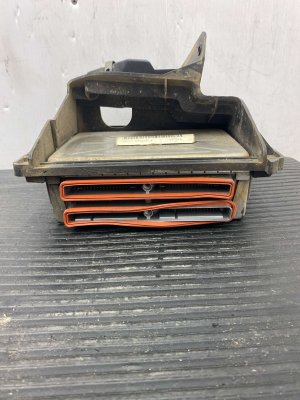
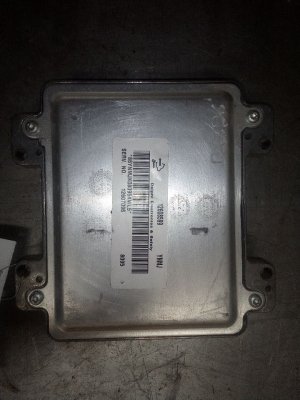
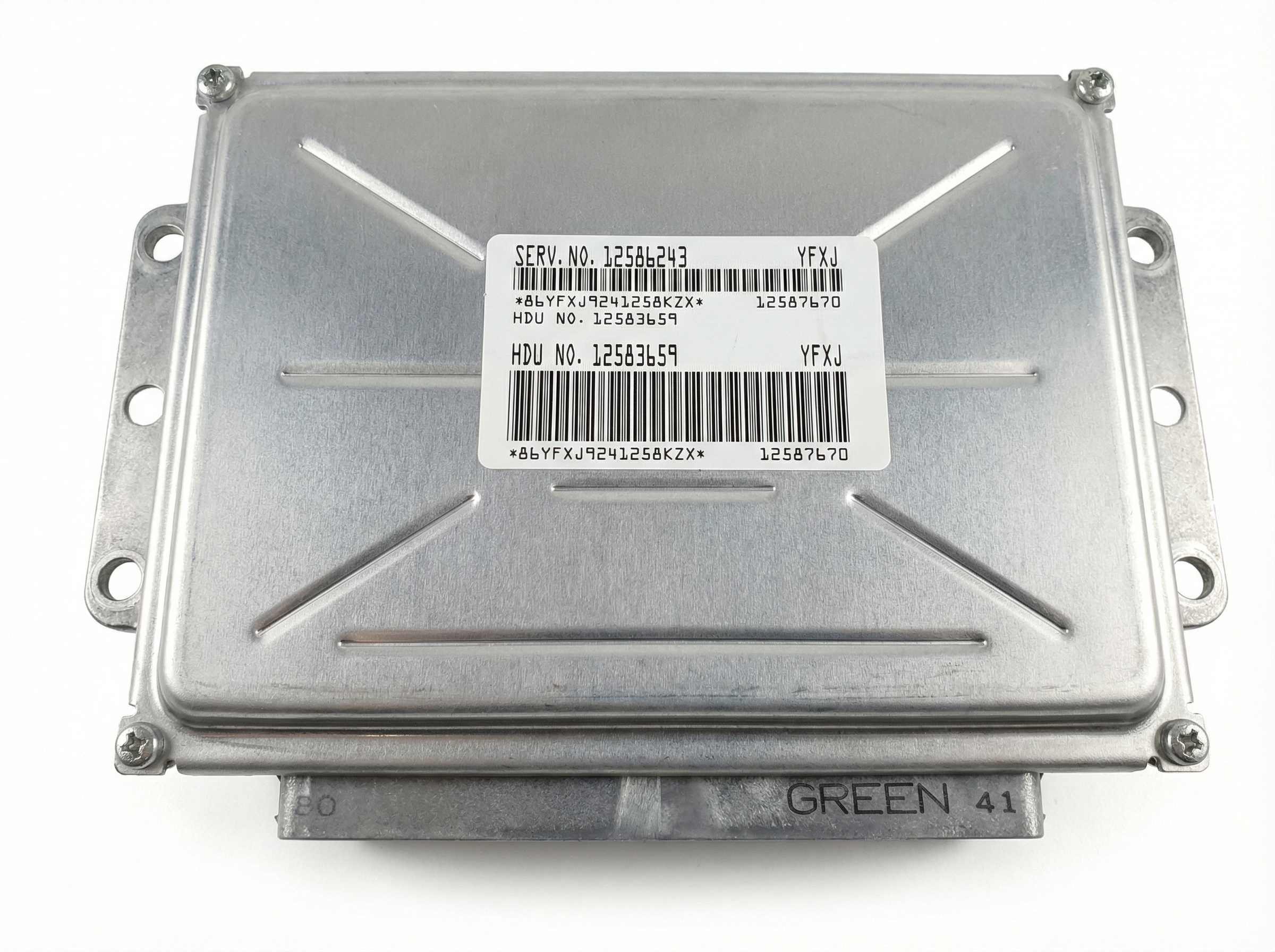
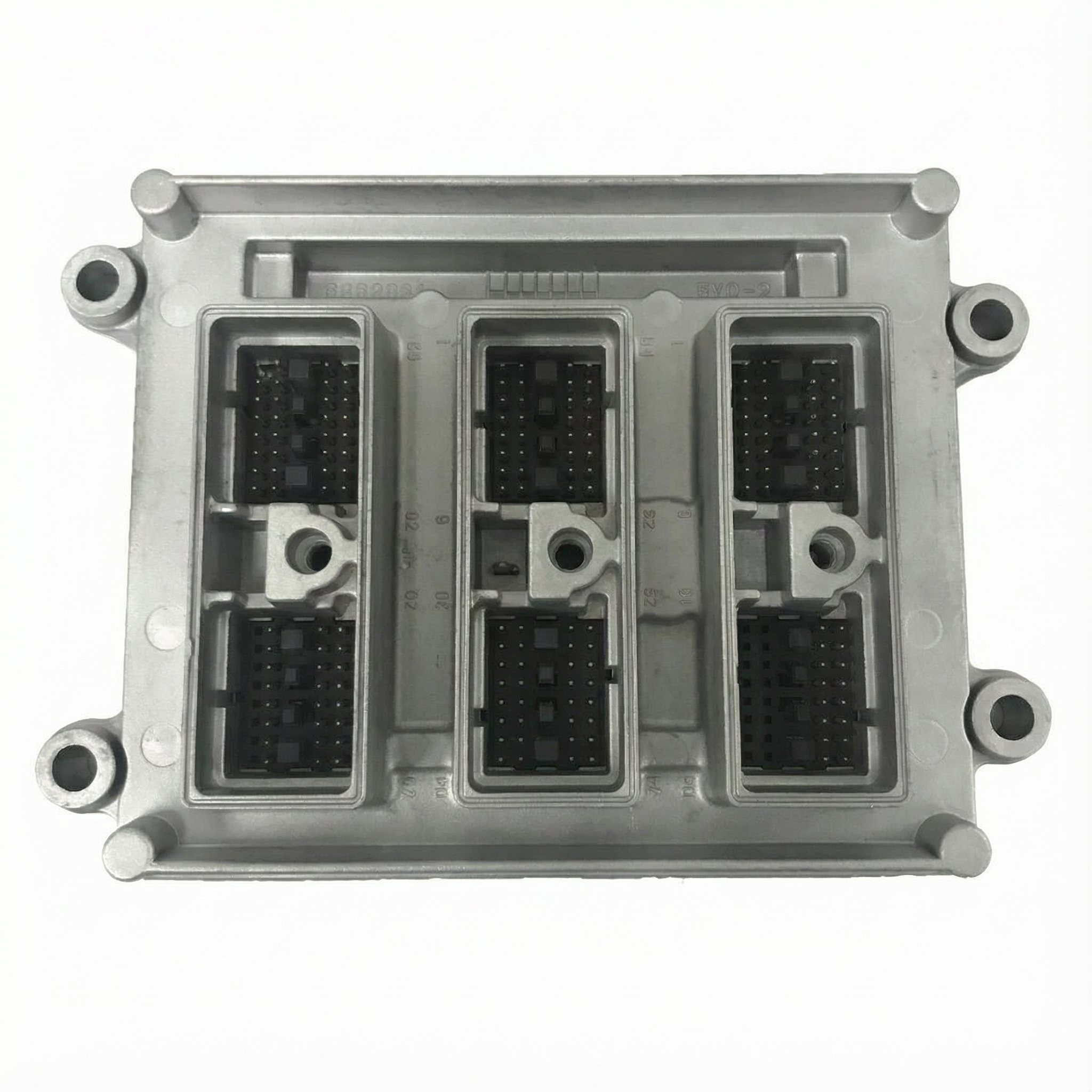
- Powertrain Control Module (PCM)
(OEM #12577955 (This is one example; part number is specific to year and calibration and must be verified with VIN))— This is the root cause of the P1621 code in the vast majority of cases after electrical issues are ruled out. The internal memory of the original module has failed its integrity check.
Trusted brands: ACDelco (Remanufactured), Cardone (Remanufactured), FS1 (Flashmasters), ARES Technologies
OEM price range: $350-$500
Aftermarket price range: $200-$350
Related Codes That Often Appear With This One
- P0601 — This code means 'Internal Control Module Memory Check Sum Error' and is another direct indicator of an internal PCM failure. Seeing it with P1621 strongly confirms the PCM is bad.
- P0700 — This code is a 'Transmission Control System (MIL Request)'. It means the PCM has detected a fault related to the transmission's operation—in this case, its own inability to properly control it—and has requested the Check Engine Light.
Technical Service Bulletins (TSBs) & Recalls
- GM TSB #05-06-04-060A: A general bulletin that discusses various control module memory DTCs, including P1621, and notes they can be set by different modules.
- Note on TSB PIP4653E: This TSB is frequently associated with P1621 but primarily addresses internal *TCM* failures on newer GM vehicles with 6-speed transmissions. It is not directly applicable to the 2002-2009 Envoy's PCM-based issue but confirms P1621 is a known code for internal module failure within GM.
Platform-Specific Known Issues
- GMT360 Platform Electrical Sensitivity: The GMT360 platform (Envoy, Trailblazer, etc.) is known for developing electrical issues as it ages. Intermittent no-start conditions can sometimes be traced to faults in seemingly unrelated modules shorting the Class 2 data bus. For example, broken wires in the flexible harness for the liftgate have been documented to cause a total loss of communication and a no-start, which could be misdiagnosed as a primary PCM failure.
Mechanic-Grade Diagnostic Values
- Battery Voltage, Engine Off — expected: 12.4V - 12.8V. Failure: Below 12.4V indicates a weak or discharged battery that can cause false memory codes.
- Charging System Voltage, Engine Running — expected: 13.7V - 14.7V. Failure: Voltage outside this range indicates a faulty alternator or voltage regulator, leading to electrical instability.
- Cranking Voltage — expected: Above 9.6V. Failure: Voltage dropping below 9.6V during cranking can corrupt the PCM's startup self-test and trigger a false P1621.
- PCM Ground Circuit Voltage Drop — expected: Less than 0.1V (100mV). Failure: A reading higher than 0.1V between the PCM ground pins and the negative battery terminal indicates high resistance in the ground circuit, which can starve the PCM of a clean ground.
Scan Tool Commands That Help
- GM Tech 2 / GDS2: Service Programming System (SPS) — This function is mandatory after installing a new or used PCM. It is used to 'Replace and Reprogram' the module, which flashes the vehicle's correct VIN and software calibration file to the PCM.
- GM Tech 2 / GDS2: Module Diagnostics -> PCM -> Vehicle DTC Information — This is the primary function to confirm that the P1621 code is specifically stored in the Powertrain Control Module (PCM) and not another module, which is a critical first step in diagnosis.
- GM Tech 2 / GDS2: Crankshaft Position Variation Learn (CASE Relearn) — After a new PCM is installed and programmed, a CASE relearn procedure is often required. This procedure synchronizes the new PCM with the crankshaft position sensor's signal to ensure accurate misfire detection. Failure to perform this can result in a separate misfire-related code.
Wiring & Ground Locations
- PCM Connectors — Located in the engine bay, typically on the driver's side, mounted to the inner fender or firewall.. The main PCM connectors are the entry point for all power, ground, and sensor data. Corrosion (green crust), moisture, or backed-out pins at these connectors can cause intermittent power loss or high resistance, mimicking an internal PCM failure.
- G103 / G104 — Main engine-to-chassis ground straps, typically located on the engine block (side or rear).. These are critical ground points for the entire engine management system. Corrosion or looseness here can cause a host of electrical issues, including setting false memory codes like P1621.
- Fuse Block Power Feeds — Underhood fuse block.. The PCM receives constant battery power and ignition-switched power via several fuses (often labeled PCM B, IGN, etc.). A corroded fuse holder or a faulty fuse can cut power to the PCM, leading to no-start conditions or memory codes.
Real Owner Repair Stories
- ChevroletForum.com user 'treetop' (2002 Chevrolet Silverado (similar GM platform and PCM logic)) — P1621 code appeared, clock, seat memory, and radio presets would reset on startup.
❌ Tried (didn't work) Returning the aftermarket tune back to the factory stock setting did not fix the problem once the corruption had occurred.
✅ What actually fixed it The problem started immediately after installing a Bully Dog aftermarket programmer. The user concluded the programmer had corrupted the PCM's memory. The final fix, though not explicitly stated as completed by the user, would be PCM replacement. - YouTube video by 'Best Car Fixes' (2002 GMC Envoy) — Needed to replace a faulty PCM and program a used one.
❌ Tried (didn't work) Attempting to program the PCM without removing specific fuses. The video explicitly states that for programming to work, fuses #6 and #51 (related to the brake system) had to be removed first.
✅ What actually fixed it Successfully programmed a used (junkyard) PCM to the vehicle using a Tech 2 scanner and GM's TIS software. The key steps were removing specific fuses before starting, connecting the Tech 2, and using the 'Service Programming System (SPS)' to write the vehicle's VIN to the replacement module.
OEM Part Supersession History
Multiple, including 12573576, 12574976, 12577955→Multiple, including 19210065, 19260789, 89017739— Standard part revisions and consolidation by the manufacturer over the vehicle's lifespan.
Heads up: It is critical to match the Service Number on the PCM and verify VIN compatibility. While many numbers are superseded, the calibration inside must match the vehicle's engine, transmission, and emissions equipment. Using a PCM with the wrong calibration can cause running issues even if it physically fits.
Model Year Variations Within This Range
- 2002-2009: While the fundamental cause (PCM failure) is the same, the specific OEM part number for the PCM will vary by model year, engine (4.2L I6 vs 5.3L V8), and emissions package. A PCM from a 2003 4.2L will not work in a 2008 5.3L without being the correct part number and being programmed specifically for that VIN.
Diagnostic Flowchart
Used vs. New Parts: Buying Guide for This Vehicle
When a used part is the smart pick: A used PCM from a junkyard is a very sensible and cost-effective option for this repair, but ONLY if you have a confirmed method to reprogram it. The hardware is generally reliable, and failure is often random rather than strictly mileage-based. The key is the programming, not the used part itself.
Donor-vehicle mileage cap: roughly under 150000 miles for the part to have meaningful remaining life.
What to inspect on the donor part:
- Ensure the service number on the donor PCM matches your original PCM.
- Inspect the connectors on the donor PCM for any signs of corrosion, bent pins, or physical damage.
- If possible, get the VIN of the donor vehicle to help the programmer verify compatibility.
- Avoid PCMs from vehicles with obvious signs of flood or fire damage.
OEM-only on this vehicle (don't cheap out):
- For this specific repair, there is no functional difference between a new OEM part and a properly reprogrammed used OEM part. The critical component is the software programming.
Aftermarket brands forum-validated for this vehicle:
- ACDelco (Remanufactured)
- Specialized programming services like Solo PCMS, FS1 (Flashmasters), and PCM of NC are well-regarded for providing pre-programmed or cloned PCMs.
Brands owners have reported issues with on this vehicle:
- Be cautious of generic, no-name sellers on auction sites that do not offer a warranty or clear programming information. The value is in the programming service, not just the hardware.
Real Owner Stories
Aggregated from forums and TSBs cited above. Mileages and costs reflect what owners reported in those sources.
2006 Chevrolet Trailblazer
Symptoms: A no-crank/no-start condition accompanied by code P0601.
What fixed it: After checking all connections, the community consensus was that the PCM was faulty and needed replacement.
Source hint: gmtnation.com: A user with a 2006 Trailblazer experiencing a no-crank/no-start and code P0601 was told by the community that the 'PCM is likely toast' after checking connections, a common scenario that also applies to P1621.
2002 GMC Envoy
Symptoms: An intermittent no-start condition where the vehicle would not communicate with a scan tool, mimicking a dead PCM.
What fixed it: The problem was traced to a fault in the Class 2 data line caused by broken wires in the liftgate harness. Repairing the wires resolved the issue.
Source hint: youtube.com: A diagnostic video on a 2002 GMC Envoy with an intermittent no-start demonstrates how a fault in the Class 2 data line, caused by broken wires in the liftgate, can bring down the entire network and prevent starting, mimicking a dead PCM.
Related OBD-II Codes
Frequently Asked Questions
My 2005 Envoy has a P1621 and a P0601 code at the same time. What does this combination usually mean?
I'm getting a P1621 code but my Envoy also has weird electrical issues like the clock resetting. Could this be a battery problem instead of the PCM?
Where are the most important ground straps to check on my GMC Envoy for an electrical issue causing a false P1621?
Can a problem with my Envoy's liftgate wiring really cause a no-start condition and make me think the PCM is bad?
I used an aftermarket tuner on my Trailblazer and immediately got a P1621 code. What's the fix?
Does TSB PIP4653E apply to the P1621 code on my 2002-2009 Envoy?
My Envoy has this P1621 issue. Do other GM trucks like the Trailblazer or Rainier have the same problem?
We Have This Part in Stock



The information in this article is provided for general reference and educational purposes only. Vehicle specifications, procedures, and part compatibility can vary by production date, trim level, and region. Always consult your vehicle's factory service manual and verify part numbers before purchasing or performing repairs. Safety-critical components such as airbags, seat belts, and braking systems should be installed by a qualified professional.
- GMC Envoy:
- 🛍️ Shop This Part
- What's Unique About the 2002-2009 GMC Envoy
- Symptoms You May Notice
- Most Likely Causes
- Rare But Worth Checking
- Diagnosis Steps
- Parts You'll Likely Need
- Related Codes That Often Appear With This One
- Technical Service Bulletins (TSBs) & Recalls
- Platform-Specific Known Issues
- Mechanic-Grade Diagnostic Values
- Scan Tool Commands That Help
- Wiring & Ground Locations
- Real Owner Repair Stories
- OEM Part Supersession History
- Model Year Variations Within This Range
- Diagnostic Flowchart
- Used vs. New Parts: Buying Guide for This Vehicle
- Real Owner Stories
- 2006 Chevrolet Trailblazer
- 2002 GMC Envoy
- Related OBD-II Codes
- Frequently Asked Questions
- 🎟️ Get 5% Off