

P1621 on 2011-2015 Dodge Challenger 5.7L: O2 Sensor Voltage Fixes & Causes
On a 2011-2015 Challenger 5.7L, P1621 is almost always caused by a software glitch in the engine computer (PCM). The fix is typically a software update from a Dodge dealer, not new oxygen sensors. This is confirmed by TSBs 18-084-16 and 18-052-15 REV A. Expect to pay for about one hour of shop labor for the update.
- Do NOT replace the oxygen sensors first. This code is almost never caused by a bad sensor on this vehicle.
- The most likely fix is a PCM software update from a Dodge dealer per TSB 18-084-16. Call them with your VIN to check for eligibility.
- This code is often accompanied by P1622, P0606, or U0140; they are all symptoms of the same software issue.
- If a software update doesn't fix it, the problem is likely a short-to-ground in the O2 sensor wiring harness where it runs close to the exhaust.
What's Unique About the 2011-2015 Dodge Challenger
For this specific generation of Challenger and its platform mates (Dodge Charger, Chrysler 300), code P1621 is exceptionally well-documented as a software anomaly. Chrysler (FCA) released multiple Technical Service Bulletins (TSBs), with TSB 18-084-16 being the most comprehensive, acknowledging that the PCM's software calibration was flawed, causing it to set this code erroneously. As a result, the first step is always a software check, a unique situation compared to other vehicles where this code might immediately point to a wiring short or failed sensor.
Symptoms You May Notice
- Check Engine Light (Malfunction Indicator Lamp or MIL) is on
- Reduced fuel economy
- Vehicle may fail an emissions test
- Occasional rough idle or engine hesitation
- Engine buck or delay feeling during low speed driving
- Replacing one or more oxygen (O2) sensors. The search results and TSBs are clear that on this platform, the O2 sensors themselves are almost never the cause of a P1621 code. Owners on forums frequently report that replacing sensors does not fix the issue, while the dealer reflash does.
Most Likely Causes
- Powertrain Control Module (PCM) Software Requires Update 🔴 High Probability Manufacturer TSBs #18-084-16, #18-052-15 REV A, and #18-073-20 explicitly state this code can be resolved by a PCM software update for these vehicles with the 5.7L engine (sales codes EZC or EZH).
How to confirm: Contact a Dodge dealership and provide your Vehicle Identification Number (VIN). They can check their system to see if your vehicle's software is outdated and if TSB #18-084-16 is open for your specific vehicle.
Typical fix: A dealership technician will connect a wiTECH scan tool, install a battery charger to maintain stable voltage (13.2-13.5V), and reprogram (reflash) the PCM with the latest software version. The process typically takes less than an hour.
Est. part cost: $0 - Wiring Harness or Connector Issue 🟡 Medium Probability The O2 sensor wiring harness is routed near hot exhaust components. Over time, clips can break or heat shielding can degrade, allowing wires to touch the exhaust manifold or pipe and melt, causing a short to ground. Wires can also chafe against the engine block or crossmembers.
How to confirm: Visually inspect the entire length of the O2 sensor wiring harnesses for all four sensors. Look for any signs of melting, chafing, or corrosion on the wires and connectors. A multimeter can be used to test for a short to ground in the reference voltage wire. With the sensor unplugged and key on, the reference wire should have approximately 5.0 volts; a reading near zero indicates a short.
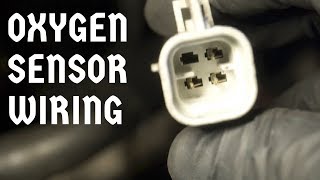
Typical fix: Repair the damaged section of the wiring harness by splicing in a new piece of wire with heat-shrink butt connectors. Secure the repaired harness away from the heat source using high-temperature zip ties. 🎬 See how to fix an O2 sensor wiring short If a connector is damaged, it will need to be replaced with a new pigtail.
Est. part cost: $10-$50
Rare But Worth Checking
- Faulty Powertrain Control Module (PCM): While rare, if a software update has been performed and the wiring is confirmed to be in good condition, the PCM's internal voltage regulator may have failed. This is a last-resort diagnosis and requires replacing the PCM.
Diagnosis Steps
- Check for TSBs: The first and most important step. Call a Dodge dealer with your VIN and ask if TSB #18-084-16 or #18-073-20 is open for your vehicle to address code P1621.
- Perform Software Update: If an update is available, have the dealer perform the PCM reflash. This is the most likely solution and resolves a large cluster of potential codes.
- Inspect Wiring: If the code returns after the update, or if no update is available, perform a thorough visual inspection of all O2 sensor wiring harnesses. Pay close attention to areas near the exhaust manifolds and where the harness may rub against the engine or frame.
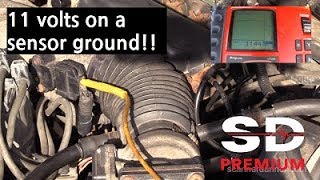
- Test for Shorts: If visual inspection is inconclusive, use a multimeter to check the O2 sensor reference voltage circuit for a short to ground. This is a more advanced step and may require a wiring diagram. A reading significantly below 5V on the reference wire (with sensor unplugged, key on) points to a short. 🎬 Watch: How to properly test a 5V reference circuit
- Diagnose PCM: If the wiring is confirmed to be good and the software is up-to-date, the PCM itself may be faulty. This should be diagnosed by a qualified professional before replacement.
Parts You'll Likely Need
- PCM Software Update — This is not a physical part, but a service performed by a dealer using a wiTECH tool. It is the most common and manufacturer-documented fix for this code on this specific vehicle.
OEM price range: $150-$250
Aftermarket price range: $0 - Wiring Repair Supplies
(OEM #Example: Mopar 68250763AA (Overlay harness for a different but related issue))— If the cause is a melted or chafed wire, you will need butt connectors, heat shrink tubing, and high-temp zip ties to perform a durable repair. In some severe cases on other platforms, Mopar has issued entire overlay harnesses.
Trusted brands: Dorman, 3M
OEM price range: $10-$40
Aftermarket price range: $5-$25
Related Codes That Often Appear With This One
- P1622 — This code for 'O2 Sensor Reference Voltage Circuit High' is listed in the same TSBs and is caused by the same PCM software glitch.
- P0606 — This code for 'Internal Control Processor' failure also points directly to an internal PCM logic or software problem that is addressed by the same software update.
- U0140 — This code for 'Lost Communication With Body Control Module' is also listed in the TSBs, suggesting the software issue can cause multiple, seemingly unrelated communication errors.
- P0300 — This code for 'Multiple Cylinder Misfire' is another symptom listed in TSB 18-084-16 that is corrected by the PCM reflash.
- P219A / P219B — These codes for 'Bank 1/2 Air-Fuel Ratio Imbalance' are also listed in TSB 18-084-16, indicating the software glitch can affect fuel trim calculations.
- P2096 / P2097 — These codes for 'Downstream Fuel Trim System Lean/Rich' are also mentioned in TSB 18-084-16 as being resolved by the PCM reflash.
Technical Service Bulletins (TSBs) & Recalls
- 18-084-16: This is the most important and comprehensive TSB. It supersedes previous bulletins and applies to 2013-2014 and 2015 (LA) Challengers with the 5.7L engine (EZC, EZH). It lists P1621, P1622, P0606, U0140, P0300, and many others as being fixed by a PCM software update.
- 18-052-15 REV A: An earlier bulletin for 2013-2014 Challengers (and 2014 Charger/300) with the 5.7L engine. It also lists P1621, P1622, and U0140 as being resolved by a PCM software reflash.
- 18-052-15: This manufacturer bulletin specifically identifies P1621 (O2 Sensor Reference Voltage Circuit Low) and U0140 (Lost Communication With Body Control Module) as codes stored in the Engine Control Module (ECM) memory that require attention.
- 18-073-20: A later TSB that also includes the P1621 fix and covers up to 2015 models for the Charger and 300, confirming the issue persists across the platform. It also addresses P0335 (Crankshaft Position Sensor Circuit) for certain model years.
- Bulletin #1807320: This record confirms that P1621 and P1622 (O2 Sensor Reference Voltage Circuit High) are part of a broader set of electrical system issues, including internal control processor faults (P0606), that are addressed by manufacturer software updates.
Platform-Specific Known Issues
- Owner Confirms TSB Fix: A forum user with a 2014 Challenger R/T reported experiencing code P1621. After taking it to the dealership, the technician performed the PCM reflash as specified in the TSB, which permanently resolved the check engine light and associated symptoms.
- Misdiagnosis with Aftermarket Tuners: On the MHH Auto forum, a user with a 2014 Challenger 5.7L encountered a P1621 code and a 'bricked' PCM after a failed flash attempt with aftermarket tuning software. This highlights the sensitivity of the PCM and the importance of using proper tools like the dealer's wiTECH, especially when software issues are the known cause.
Mechanic-Grade Diagnostic Values
- O2 Sensor Reference Voltage (at sensor connector) — expected: Approximately 5.0 Volts DC with the sensor unplugged and key on, engine off.. Failure: A reading significantly below 5.0V points to a short to ground in the wiring harness or an internal PCM fault.
- O2 Sensor Return Circuit (jumpered to signal circuit) — expected: Voltage should drop from 5.0V to approximately 2.5V when the signal and return circuits are jumpered at the sensor connector.. Failure: If the voltage does not drop, it indicates an open or high resistance in the return circuit back to the PCM.
- O2 Sensor Bias Voltage (Scan Tool Live Data) — expected: On a warm engine in closed loop, the voltage should cycle between approximately 2.5V and 3.5V.. Failure: If a short occurs on the shared return circuit, all four sensor bias voltages will drop and cycle between 0V and 1V.
- PCM Ground Pins Resistance — expected: Less than 0.1 Ohms between the PCM ground pins at the connector and a clean chassis ground.. Failure: High resistance indicates a poor ground connection, which can cause erratic sensor readings.
- O2 Sensor Signal Wire Short to Ground (Live Data) — expected: All O2 sensor voltages should cycle normally.. Failure: If one sensor's signal wire is shorted, its raw voltage will read 0V, while the other three sensors may continue to switch normally. However, this can bleed into the return circuit and set a P1621.
Scan Tool Commands That Help
- wiTECH: Reprogram PCM with latest software — This is the primary repair procedure for P1621 on this platform, as specified by multiple TSBs, to correct a known software anomaly.
- wiTECH: 'PCM Replaced' function — After successfully flashing or replacing the PCM, this function (found under the WCM/WIN module's miscellaneous functions tab) must be performed to transfer the vehicle's Secret Key (immobilizer) information to the new or updated PCM.
- Professional Scan Tool: Live Data Monitoring of all O2 Sensor Voltages — Used to diagnose the nature of the circuit fault. Viewing all four sensors' raw and bias voltages simultaneously can help determine if the short is on a shared return circuit (affecting all sensors) or a single sensor's signal wire.
Wiring & Ground Locations
- PCM Connector C4 (Green) — At the Powertrain Control Module (PCM), typically located in the engine bay, passenger side near the firewall.. This connector contains the pins for the O2 sensor return circuits. A technician can back-probe these pins to test for voltage directly at the PCM. Specifically, Pin 32 (Dark Blue/Dark Green wire) is often the O2 Downstream Return.
- O2 Return Circuit (UP) — Wiring harness between the two upstream O2 sensors and the PCM.. According to wiring diagrams, the two upstream sensor return wires are tied together before going to the PCM. A short on either sensor's harness can affect both. For an '05 Ram 5.7L, this was Pin 32 (Brown/Dark Green wire) on the C1 connector.
- G905A (or similar) — Main engine-to-chassis ground, typically a braided strap located on the engine block (often near the alternator or starter) and connected to the frame rail or firewall.. The PCM and its sensors rely on a clean ground reference. A loose, corroded, or broken main engine ground can introduce voltage offsets and electrical noise, causing the PCM to see an incorrect low voltage from the O2 sensor reference circuit.
- O2 Sensor Harness Routing — The harnesses run from the sensors in the exhaust pipes up along the transmission and engine block to the main engine harness.. This is the most common location for a physical short to ground. The harness can easily come into contact with hot exhaust manifolds or pipes, melting the insulation and causing the reference wire to ground out. It can also chafe against the transmission case or engine block.
OEM Part Supersession History
Example: P05150786AB (2014 Challenger 5.7L AT PCM)→Later revisions may exist (e.g., ending in AC, AD, etc.).— PCMs are often updated to fix hardware vulnerabilities or accommodate software changes.
Heads up: A major PCM change occurred in 2015. Pre-2015 models use a GPEC2 PCM with different connector keying (e.g., gray and brown) than 2015+ models (GPEC2A, gray and tan). While harnesses can be re-pinned, it is not a direct swap.
Model Year Variations Within This Range
- 2011-2014 vs 2015: The PCM was revised for the 2015 model year (to GPEC2A), featuring different connector keyways (tan instead of brown). While the 5.7L engine is similar, the electronics are not directly cross-compatible without modification. The 2015+ PCMs also have enhanced security ('locked'), requiring a special service to unlock before aftermarket tuning is possible.
- 2011-2012 vs 2013-2015: The primary TSBs (18-084-16, 18-052-15) for the P1621 software fix specifically list 2013, 2014, and 2015 model years. While the 2011-2012 models may experience similar wiring-related failures, they are not officially covered by this specific software update campaign, suggesting a potential difference in the base software or PCM calibration.
Diagnostic Flowchart
Used vs. New Parts: Buying Guide for This Vehicle
When a used part is the smart pick: A used PCM from a junkyard is a viable option if the original PCM has a confirmed hardware failure and is out of warranty. It is significantly cheaper than a new OEM unit. A used engine wiring harness is also a smart choice if the original has localized, hard-to-repair damage (e.g., melted connector block).
Donor-vehicle mileage cap: roughly under 120000 miles for the part to have meaningful remaining life.
What to inspect on the donor part:
- For a PCM, ensure the part number matches exactly, including the final two letters (e.g., AB, AC) if possible, and verify the donor vehicle had the same engine and transmission.
- For a wiring harness, inspect thoroughly for any cuts, melted sections, or brittle connectors. Ensure all connector locks and tabs are intact.
- Check the donor vehicle's history for flood or fire damage, which would render all electronics unusable.
OEM-only on this vehicle (don't cheap out):
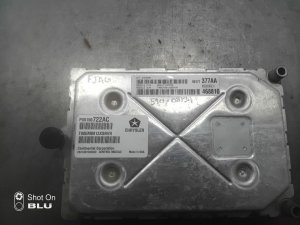
- Powertrain Control Module (PCM): While a used OEM unit is acceptable, avoid unbranded 'rebuilt' or 'remanufactured' PCMs from unknown online vendors. Programming issues are common. Stick with a new Mopar unit or a used, tested Mopar unit from a reputable salvage yard.
Brands owners have reported issues with on this vehicle:
- Generic, unbranded oxygen sensors from online marketplaces. While the sensor is rarely the cause of P1621, using a low-quality replacement can cause other performance and fuel trim issues. If a sensor must be replaced, stick with NTK or Denso.
Real Owner Stories
Aggregated from forums and TSBs cited above. Mileages and costs reflect what owners reported in those sources.
2014 Dodge Challenger R/T 5.7L
Symptoms: Check engine light was on with code P1621.
What fixed it: A dealership technician performed a PCM reflash as specified in the TSB, which permanently resolved the check engine light.
Source hint: vehicle_specific_issues: Owner Confirms TSB Fix (from forum user report)
2014 Dodge Challenger 5.7L
Symptoms: Encountered a P1621 code and a 'bricked' PCM.
What fixed it: This was a cautionary tale, not a fix. The problem was caused by a failed flash attempt with aftermarket tuning software, highlighting the sensitivity of the PCM.
Source hint: vehicle_specific_issues: Misdiagnosis with Aftermarket Tuners (from MHH Auto forum)
Related OBD-II Codes
Frequently Asked Questions
Does TSB #18-084-16 apply to my 2014 Dodge Challenger 5.7L?
What is the very first step I should take if my Challenger shows a P1621 code?
I already had the PCM software updated, but the P1621 code came back. What should I check next?
Can I use an aftermarket tuner to update the software and fix the P1621 code?
Is the P1621 software issue also found on other Mopar vehicles with the 5.7L HEMI?
How can I test the O2 sensor wiring if I don't see any visible damage?
Helpful Videos
We Have This Part in Stock




The information in this article is provided for general reference and educational purposes only. Vehicle specifications, procedures, and part compatibility can vary by production date, trim level, and region. Always consult your vehicle's factory service manual and verify part numbers before purchasing or performing repairs. Safety-critical components such as airbags, seat belts, and braking systems should be installed by a qualified professional.
- Dodge Challenger:
- 🎬 Helpful Videos
- 🛍️ Shop This Part
- What's Unique About the 2011-2015 Dodge Challenger
- Symptoms You May Notice
- Most Likely Causes
- Rare But Worth Checking
- Diagnosis Steps
- Parts You'll Likely Need
- Related Codes That Often Appear With This One
- Technical Service Bulletins (TSBs) & Recalls
- Platform-Specific Known Issues
- Mechanic-Grade Diagnostic Values
- Scan Tool Commands That Help
- Wiring & Ground Locations
- OEM Part Supersession History
- Model Year Variations Within This Range
- Diagnostic Flowchart
- Used vs. New Parts: Buying Guide for This Vehicle
- Real Owner Stories
- 2014 Dodge Challenger R/T 5.7L
- 2014 Dodge Challenger 5.7L
- Related OBD-II Codes
- Frequently Asked Questions
- 🎟️ Get 5% Off