

OBD-II Code P1622: Manufacturer-Specific Malfunction Guide
What P1622 means, why it triggers, and how to fix it on your specific vehicle
- OBD-II code P1622 has no universal definition; you must identify your vehicle's make first to determine if it affects the immobilizer, thermostat, or O2 sensors.
- On 2013-2015 Chrysler, Dodge, and Jeep vehicles, P1622 is almost always a software glitch requiring a $150-$250 dealer PCM reflash (TSB #18-084-16), not new O2 sensors.
- Ford vehicles logging P1622 suffer from a Passive Anti-Theft System (PATS) failure, causing an immediate no-start condition that often requires a new $150-$300 programmed key.
- BMW models trigger P1622 when the map-controlled thermostat's internal heater fails, requiring a $380-$650 complete thermostat assembly replacement to prevent engine overheating.
What Does P1622 Mean?

P1622 is a manufacturer-specific code, meaning its definition changes based on the brand of your vehicle. For Chrysler, Dodge, and Jeep, it points to a software glitch or an oxygen sensor 5-volt reference circuit fault. For Ford, it signals a failure in the anti-theft immobilizer system. For many BMW models, it indicates an electrical failure inside the engine's map-controlled thermostat. For Nissan diesels, it means replacement fuel injectors were not programmed into the engine computer.
Technical definition: There is no universal SAE/ISO definition for P1622. The formal definition varies by manufacturer: - **Chrysler/Dodge/Ram:** O2 Sensor Reference Voltage Circuit High / 5V Output Reference Voltage 2 - **Ford:** Immobilizer ID Does Not Match - **BMW:** Map Cooling Thermostat Control Circuit Electrical - **GM/Chevrolet:** Cylinder Select Malfunction - **Nissan (Diesel):** Injector Adjustment Value Unregistered - **Hyundai:** A/C Control Relay Circuit Malfunction - **Volkswagen/Audi:** Engine Coolant Temperature Signal - Implausible Signal - **Suzuki:** Lost Communication With Vehicle Dynamics Control Module
Can I Drive With P1622?
Yes, But With Caution. Drivability depends entirely on your vehicle's make. If the engine will not start (common with Ford's anti-theft system), you cannot drive and risk being stranded. If you experience reduced performance or poor fuel economy (common with Chrysler/Dodge), you can drive to a repair shop, but address the issue within a few weeks to prevent $800-$2500 in catalytic converter damage. For BMW thermostat issues, driving is highly discouraged; a thermostat stuck closed causes rapid overheating and catastrophic engine failure.
Common Causes

- Outdated Powertrain Control Module (PCM) Software (Chrysler/Dodge) (Very Common) — On 2013-2015 Chrysler, Dodge, and Jeep vehicles with 3.6L and 5.7L engines, a known software glitch triggers this code. The definitive fix is a dealer software update, not hardware replacement.
- Faulty Electronically-Controlled Thermostat (BMW) (Very Common) — On BMW vehicles, P1622 points directly to a failed internal heater control element inside the 'mapped' thermostat. The internal electronics fail, preventing the engine computer from regulating coolant temperature.
- Faulty Key or Immobilizer System Component (Ford) (Very Common) — For Ford vehicles, the code indicates the Passive Anti-Theft System (PATS) does not recognize the key. This is caused by a damaged key transponder chip, a faulty ignition antenna ring, or a communication failure between the instrument cluster and PCM.
- Damaged or Corroded Wiring/Connectors (Common) — A short, open, or corroded wire in the circuit related to the specific fault triggers the code. Water intrusion into O2 sensor connectors is a documented cause on Ram trucks after heavy rain.
- Faulty Cylinder Deactivation Solenoid (GM) (Common) — On GM vehicles with Active Fuel Management (AFM), P1622 is caused by a failed cylinder deactivation solenoid, low engine oil pressure, or damaged wiring to the solenoid block.
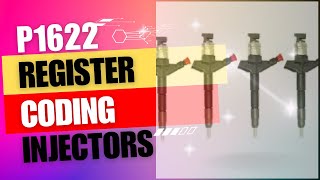
- Unregistered Fuel Injectors (Nissan) (Less Common) — On Nissan diesel engines (like the YD25), this code appears immediately if a technician replaces fuel injectors but fails to program their unique 30-digit calibration codes into the Engine Control Module. 🎬 Watch: How to program and register your new diesel injectors.
- Low Battery Voltage (Uncommon) — A weak battery causes severe voltage drops during engine cranking. This disrupts CAN bus communication between modules, logging false P1622 codes for Ford immobilizers or BMW thermostat circuits.
Symptoms

- Engine cranks but fails to start — The primary symptom for Ford immobilizer faults. The anti-theft system actively cuts fuel or spark, preventing ignition.
- Check Engine Light illuminates — The universal symptom across all manufacturers once the control module detects the specific circuit or software fault.
- Security or Anti-Theft light flashes — On vehicles where P1622 relates to the immobilizer (Ford), the dashboard security light flashes rapidly to indicate an unrecognized key.
- Engine overheating or running too cool — Specific to BMW models. A failed map-controlled thermostat causes the engine to take excessively long to warm up or overheat dangerously.
- Reduced fuel economy and poor performance — For Chrysler O2 sensor faults, Nissan injector coding errors, or GM cylinder deactivation failures, the engine runs inefficiently, causing hesitation and poor mileage.
- Air Conditioning (A/C) blows warm air — On Hyundai vehicles, P1622 indicates a fault in the A/C compressor relay circuit, preventing the compressor clutch from engaging.
Diagnostic Flowchart
Tap your situation to follow the diagnostic path that matches what you're seeing on this code.
Common Fixes & Costs
- PCM Software Update (Reflash) — Parts: $0, Labor: $150-$250, ~1.0 hr book time (Professional)
- Replace Electronically-Controlled Thermostat (BMW) — Parts: $80-$150, Labor: $300-$500, ~2.5 hr book time (DIY)
- Program/Replace Ignition Key (Ford) — Parts: $50-$250, Labor: $100-$200, ~1.0 hr book time (Professional)
- Replace Oxygen (O2) Sensor — Parts: $50-$150, Labor: $100-$200, ~0.8 hr book time (DIY)
- Repair Damaged Wiring or Connector — Parts: $10-$50, Labor: $150-$300, ~2.0 hr book time (Intermediate)
- Replace Cylinder Deactivation Solenoid (GM) — Parts: $40-$120, Labor: $350-$600, ~3.5 hr book time (Intermediate)
DIY vs Professional
- PCM Software Update (Reflash) — Beginner:
- Replace Electronically-Controlled Thermostat (BMW) — Beginner:
- Replace Oxygen (O2) Sensor — Beginner:
- Program/Replace Ignition Key (Ford) — Beginner:
Used vs. New Parts: Buying Guide
When a used part is worth it: Used parts are only recommended if diagnosing a rare, complete PCM failure on an older vehicle. Never buy used wear items like thermostats, O2 sensors, or pre-cut transponder keys.
Donor-vehicle mileage cap: roughly under 50000 miles for the part to have meaningful remaining life.
Donor quality checklist:
- Verify the part number on electronic modules matches your original exactly.
- Avoid parts from vehicles scrapped due to flood or fire damage.
Decision logic:
- If The part is an O2 sensor, thermostat, or key transponder. → Buy new. These are wear items where reliability is critical and labor costs outweigh part savings.
- If The part is a rare control module (PCM) and the vehicle is low-value. → A used part from a reputable salvage yard is cost-effective, provided you secure professional programming.
Warranty tradeoff: Salvage yard parts carry a 30-90 day warranty on the part only. New OEM parts offer a 1-2 year warranty covering both parts and dealer labor.
Worst-case if a used part fails: $300-$600 in repeated labor costs if a used part fails shortly after installation.
What Happens If You Wait — Timeline
- 0-1 month: Check Engine Light illuminates. Chrysler O2 faults or BMW 'stuck open' thermostats cause a 5-10% drop in fuel economy. Ford immobilizer faults cause an immediate no-start. (MPG impact: 5-10%% · Added cost: $20-$60 in wasted fuel)
- 1-3 months: On Chrysler/Dodge, the incorrect air-fuel ratio stresses the catalytic converter, causing it to run hotter than designed. (MPG impact: 10-15%% · Added cost: $50-$150 in wasted fuel)
- 3-6 months: The catalytic converter substrate suffers permanent damage from the sustained rich fuel mixture, guaranteeing an emissions test failure. (MPG impact: 10-20%% · Added cost: $800-$2500 for catalytic converter replacement.)
Cost of Not Fixing It
- 0-1 month: For O2 sensor or thermostat issues, expect a 5-15% drop in fuel economy. For Ford immobilizer issues, the car will not start, incurring immediate towing costs. (Added cost: $20-$60 in extra fuel costs; $100-$250 for a tow.)
- 1-6 months: On Chrysler/Dodge, a persistent rich fuel condition from a bad O2 circuit overheats and damages the catalytic converter. On a BMW, a thermostat stuck closed causes catastrophic engine overheating. (Added cost: $800-$2500 for catalytic converter replacement; $3000-$7000+ for engine replacement.)
Diagnosis Steps

- Identify Vehicle Manufacturer and Code Definition
Identify your vehicle's exact make and year. Search for the manufacturer-specific definition of P1622 (e.g., 'Ford P1622 definition'). This dictates your entire diagnostic path.
Tools: OBD-II Scanner (Beginner) - Check for Technical Service Bulletins (TSBs)
For Chrysler, Dodge, Jeep, and Ram vehicles, search for TSB #18-084-16. If your vehicle is covered, stop diagnosing hardware and schedule a dealer PCM software update.
Tools: Internet access or phone (Beginner) - Scan for Accompanying Trouble Codes
Check for other stored codes. On a Chrysler, seeing P1622 alongside P1621 or P0606 confirms a software issue. On a Ford, seeing it with P1600 confirms a PATS communication failure.
Tools: OBD-II Scanner (Beginner) - Inspect the Ignition Key and Immobilizer (Ford)
If dealing with a Ford immobilizer code, attempt to start the car with your spare key. If the spare works, the primary key's transponder chip is dead. If neither works, inspect the plastic antenna ring around the ignition cylinder for damage.
Tools: Spare ignition key (Beginner) - Inspect Wiring Harness and Connectors
Visually inspect the wiring related to your specific definition. For Ram trucks, unplug the Bank 1 O2 sensor connectors and check for water intrusion. Dry them and apply dielectric grease. For BMWs, check the thermostat housing connector for brittle, broken plastic.
Tools: Flashlight, electrical contact cleaner, dielectric grease (Intermediate) - [PRO TIP] Test the Map-Controlled Thermostat (BMW)
Remove the BMW thermostat and apply 12V directly to its two electrical pins using jumper wires. Within 30 seconds, the internal heater must force the thermostat to begin opening. If it does not move, the internal heating element is dead and the assembly requires replacement.
Tools: 12V power source (battery), jumper wires, basic hand tools (Advanced) - [PRO TIP] Test the 5V Reference Circuit (Chrysler/Dodge)
If a software update does not resolve the issue, back-probe the 5V reference wire at the O2 sensor connector with the ignition ON. You must see a steady 5.0V. If voltage is missing, unplug sensors on that circuit one by one. If 5.0V returns after unplugging a specific sensor, that sensor is internally shorted.
Tools: Multimeter with back-probe pins, wiring diagram (Advanced) - [PRO TIP] Test the PATS Transceiver Circuit (Ford)
Disconnect the PCM and the PATS transceiver. Measure the resistance between the PATS transceiver signal wires (TX and RX) and a known good chassis ground. Resistance must be greater than 10,000 ohms. A lower reading indicates a short to ground in the harness.
Tools: Multimeter, wiring diagram, basic hand tools (Advanced) - Verify Fuel Injector Coding (Nissan Diesel)
If injectors were recently replaced on a Nissan YD25 engine, use a professional bidirectional scan tool to manually enter each injector's unique 30-digit calibration code into the ECM.
Tools: Advanced Bi-directional Scan Tool (Professional)
When This Code Triggers (Freeze-Frame Conditions)
- Engine Coolant Temp: 180-200°F (82-93°C) (The fault often sets when the engine reaches normal operating temperature. For BMW thermostat faults, it triggers if the engine fails to reach this temperature within an expected timeframe.)
- Vehicle Speed: 35-65 mph (56-105 km/h) (Circuit-related faults (Chrysler O2, BMW Thermostat) frequently trigger during steady highway cruising when the system actively monitors sensor feedback.)
Related Codes
- P1621 — On Chrysler/Dodge vehicles, P1621 means 'O2 Sensor Reference Voltage Circuit Low.' When it appears alongside P1622 (Circuit High), it definitively points to the software glitch described in TSB 18-084-16 rather than a hardware failure.
- P0606 — Means 'Internal Control Processor Failure.' When seen with P1622 on a Chrysler/Dodge, it confirms the software glitch. It does NOT mean the PCM needs replacement; the software update resolves both codes.
- P1600 — For Ford vehicles, P1600 indicates a general loss of communication with the immobilizer. Seeing it with P1622 confirms the fault lies entirely within the anti-theft system's communication chain.
- P0300 — A 'Random/Multiple Cylinder Misfire' code. On a Chrysler, incorrect O2 sensor voltage disrupts the air-fuel mixture, causing misfires. On a GM, a failing cylinder deactivation solenoid causes rough running perceived as misfires.
Climate & Environmental Factors
- High Humidity / Heavy Rain: On Ram 1500 trucks, driving through deep puddles forces water into the O2 sensor wiring connectors. This shorts the 5V reference circuit and triggers P1622. Drying the connectors and applying dielectric grease prevents recurrence.
- Extreme Cold Weather: Freezing temperatures severely reduce battery cranking amperage. The resulting voltage drop during startup disrupts module communication, logging false P1622 immobilizer or thermostat codes.
How to Talk to a Mechanic About This Code
Say this: "{'chrysler_dodge_ram': 'I have a P1622, sometimes with P1621 and P0606. Before we diagnose O2 sensors, please check if my VIN has TSB 18-084-16 or a similar software update available.', 'ford': "I have a P1622 and a no-start condition. I've already tried my spare key. I need a diagnostic on the PATS immobilizer system, specifically checking communication between the cluster and PCM.", 'bmw': 'I have a P1622 for the map-controlled thermostat circuit. I need a quote to replace the complete thermostat assembly and bleed the coolant.', 'nissan_diesel': 'I have a P1622 that appeared after replacing fuel injectors. I need a quote to perform the injector registration procedure to code them to the ECM.'}"
This language proves you understand the manufacturer-specific nature of the code. It prevents shops from starting with expensive, generic diagnostics or replacing O2 sensors for a Chrysler software bug.
Avoid saying:
- 'My check engine light is on, can you look at it?' (Invites a lengthy, expensive diagnostic process).
- 'Just fix whatever's wrong.' (Gives the shop a blank check to replace parts without approval).
- 'My friend said it's probably the O2 sensor.' (Leads them down the wrong path; state the code and manufacturer context instead).
Questions to ask before authorizing the repair:
- Can you confirm you checked for software TSBs before recommending hardware replacement? (Chrysler/Dodge)
- What was the result of the PATS transceiver communication test? (Ford)
- Will you provide a written, itemized estimate with a breakdown of parts and labor costs?
Where to Take It: Dealer vs Independent vs Chain
- Dealer:
Best for: Chrysler/Dodge/Ram vehicles requiring a PCM software update (reflash)., Ford vehicles where all keys are lost and the immobilizer requires reprogramming from scratch.
Downsides: Highest labor rates, typically 1.5-2x more than independent shops., May default to replacing entire assemblies rather than performing targeted repairs. (Typical cost: +50% vs. baseline) - Independent Shop:
Highly recommended for hardware fixes. For Chrysler software issues or complex key programming, the dealer is unavoidable. For BMW thermostats or GM solenoids, a well-vetted independent specialist offers the best value.
Best for: Hardware replacements like a BMW thermostat, Ford PATS transceiver, or GM AFM solenoid., Out-of-warranty vehicles where cost is a primary concern.
Downsides: May lack the expensive, subscription-based tools required to perform Chrysler/Dodge software updates. (Typical cost: +0% vs. baseline) - Chain Shop:
AVOID. The complexity and manufacturer-specific nature of P1622 guarantees a high risk of misdiagnosis and unnecessary parts replacement at chain shops.
Best for: Simple, unrelated maintenance like oil changes or tires.
Downsides: Technicians lack the expertise for manufacturer-specific codes like P1622., High risk of misdiagnosing the root cause (e.g., recommending O2 sensors for a Chrysler software bug). (Typical cost: -10% vs. baseline)
When to Walk Away From the Repair
If the estimated repair cost exceeds 40-50% of the car's private-party value, seriously consider selling or trading in the vehicle.
- Car worth $4500, fix is $2100: Walk away. The repair cost is nearly 50% of the car's value. The money is better put toward a replacement vehicle.
- Car worth $15000, fix is $700: Fix it. The repair cost is a small fraction of the vehicle's value and restores its reliability.
- Car worth $3000, fix is $250: Fix it. This is a low-cost repair (likely a software flash or simple part) that keeps the car on the road.
What Scan Tool You Need for This Code
Minimum: A tool capable of reading manufacturer-specific P1XXX codes and their definitions. A basic $20 reader that only displays 'P1622' is useless without the brand-specific context.
Because P1622 means entirely different things across brands, you need a scanner that identifies whether you are dealing with a Ford immobilizer, a Chrysler software bug, or a BMW thermostat.
Budget: BlueDriver Pro (~$100) — Reads manufacturer-specific codes and definitions for all makes. Displays live O2 sensor voltage data, helpful for diagnosing Chrysler/Dodge circuit faults.
Mid-range: Foxwell NT510 Elite (~$180) — Provides dealer-level diagnostics for a single brand. Communicates with the BMW thermostat control module, Ford PATS system, or performs GM cylinder deactivation bidirectional tests.
Professional: Autel MaxiCOM MK808S (~$450) — Offers full bidirectional control and programming capabilities. Required for the Nissan Diesel P1622 fix to perform injector coding.
How to Clear the Code After You Fix It
- Use an OBD-II scan tool to clear the Diagnostic Trouble Code (DTC).
- Perform a complete drive cycle to allow the vehicle's readiness monitors to run.
- Re-scan the vehicle to confirm the code has not returned and monitors are set.
Drive cycle (~30 minutes): A standard drive cycle requires a cold start (engine sits for 8+ hours), 3 minutes of idling, 15 minutes of mixed city/highway driving including steady cruising at 55 mph, followed by another idle period.
Readiness monitors affected: Catalyst Monitor, O2 Sensor Monitor, Comprehensive Component Monitor
Before emissions retest: drive at least 100 miles to fully set monitors.
Watch out for:
- Disconnecting the battery does not clear the code from permanent memory and resets all readiness monitors, causing an automatic emissions test failure.
- Failing to complete a full drive cycle leaves readiness monitors 'Not Ready', preventing the vehicle from passing state inspections.
Will This Fail Emissions / State Inspection?
Yes — this code typically fails an OBD-II emissions inspection.
- California: An illuminated Check Engine Light is an automatic failure of the Smog Check. After repairs, a full drive cycle must be completed to set all readiness monitors before re-testing.
- New York: An active P1622 code causes an automatic failure. Clearing the code right before the test results in failure due to 'Not Ready' monitors.
- Texas: In emissions-testing counties, an illuminated Check Engine Light results in an automatic failure. The vehicle cannot be registered until repaired.
Most Commonly Affected Vehicles
- Chrysler/Dodge 300, Challenger, Charger (2013-2015) — Models with 3.6L and 5.7L engines are highly prone to a PCM software glitch causing P1622. TSB #18-084-16 is the primary reference for the dealer reflash fix.
- Ford Focus, C-Max (2006-2009) — Frequently report P1622 for an 'Immobilizer ID Does Not Match' error due to a CAN bus communication breakdown between the instrument cluster and the PCM.
- Ram 1500 (2014-2016) — Sets P1622 for O2 sensor reference voltage issues, almost exclusively caused by water intrusion into the Bank 1 (driver's side) O2 sensor wiring connectors.
- BMW 3-Series (E46, E90), 5-Series (E39, E60), X3, X5 (2000-2010) — P1622 indicates a failed map-controlled thermostat assembly. The plastic connector for the heater element also becomes brittle and snaps off, requiring full replacement.
- Chevrolet/GMC Silverado, Sierra, Tahoe, Suburban (2007-2013) — P1622 is defined as 'Cylinder Select Malfunction,' pointing to a failure in the Active Fuel Management (AFM) oil control solenoid block.
- Nissan Navara (D40), NP300 (2005-2015) — On YD25 diesel engines, the code indicates new fuel injectors were installed without being electronically coded to the ECM.
Manufacturer-Specific Notes

- Chrysler / Dodge / Jeep / Ram: For 2013-2015 models, P1622 is almost always a PCM software bug. The official fix is a dealer software update per TSB #18-084-16. Replacing O2 sensors first is a common, costly misdiagnosis.
- Ford: This code exclusively relates to the Passive Anti-Theft System (PATS). The instrument cluster acts as the PATS module on many models; a communication breakdown between the cluster and PCM is a frequent culprit.
- BMW: The 'Map Cooling Thermostat' contains an internal electric heater controlled by the engine computer to adjust temperatures based on performance maps. P1622 means this internal heater has died, requiring replacement of the entire thermostat housing.
- Nissan (Diesel): This code is strictly a procedural error. It triggers when a technician replaces fuel injectors but skips the mandatory step of programming the new 30-digit calibration codes into the engine computer.
Real Owner Stories
2014 Dodge Challenger 5.7L - The Misdiagnosis
Check Engine Light illuminated with codes P1622, P1621, and P0606. The car drove normally.
What they tried:
- An independent shop replaced both upstream O2 sensors for $550.
- The codes returned the next day.
Outcome: The owner found TSB #18-084-16 online and visited a Dodge dealer. The dealer performed a PCM reflash for $210, permanently resolving all codes.
Lesson: For 2013-2015 Chrysler/Dodge products, P1622 accompanied by P1621/P0606 is a software bug. Never replace hardware until a dealer confirms the PCM software is updated.
2008 Ford Focus 1.6L - The Intermittent No-Start
Car intermittently failed to start, displaying an 'Engine Malfunction' message. A scan revealed P1622 'Immobilizer ID Does Not Match'.
What they tried:
- Owner paid $200 for a new programmed key, but the problem persisted.
Outcome: A mechanic traced the issue to a poor CAN bus connection at the instrument cluster, which acts as the PATS module. Reflowing the solder on the cluster's main connector restored communication and fixed the no-start.
Lesson: On Fords, P1622 points to a communication failure. While the key is the most common culprit, wiring faults at the instrument cluster or transceiver ring are equally capable of causing the code.
2006 BMW 325i (E90) - The Brittle Plastic Fix
While performing unrelated maintenance, the owner bumped the electrical connector on the thermostat housing, snapping the brittle plastic. Code P1622 appeared immediately.
What they tried:
- Attempted to glue the connector back on, but the fault remained.
Outcome: The owner purchased a new OEM thermostat assembly for $150 and replaced it themselves, draining and refilling the coolant. The repair cleared the code.
Lesson: BMW cooling system plastics become extremely brittle with age. P1622 triggers if the thermostat's internal heater fails or if its external connector is physically broken. Both require full assembly replacement.
How to Prevent This Code From Triggering
- Apply Dielectric Grease to Vulnerable Connectors (Once, or whenever connectors are disconnected) — Applying dielectric grease to O2 sensor connector seals prevents water intrusion, eliminating the primary cause of P1622 on Ram trucks.
- Handle Ignition Keys with Care (Daily habit) — Avoiding drops, moisture, and strong magnetic fields prevents damage to the delicate transponder chip inside Ford keys, saving a $200 replacement.
- Check for PCM Software Updates During Service (During any dealer visit) — Asking the service advisor to check for open TSBs ensures your Chrysler/Dodge receives preventative software patches before glitches trigger codes.
Frequently Asked Questions
Why does the definition for P1622 change depending on my car?
Codes in the P1XXX range are manufacturer-specific, meaning automakers assign their own definitions to them. This is why P1622 means an immobilizer failure on a Ford, but an O2 sensor circuit fault on a Dodge.
What is the most common misdiagnosis for P1622?
The most common mistake is replacing hardware before checking for software updates. On 2013-2015 Chrysler/Dodge vehicles, mechanics often replace expensive O2 sensors when the true fix is a $150 PCM software reflash.
Can I fix P1622 myself?
It depends entirely on your vehicle's make. Replacing a BMW thermostat or cleaning a Ram O2 sensor connector are straightforward DIY jobs. However, Chrysler PCM software updates and Nissan injector coding require professional dealership tools.
My Ford won't start and has code P1622. What should I do first?
Attempt to start the vehicle using your spare key. If the engine starts with the spare, the transponder chip inside your primary key has failed and must be replaced.
My Ram threw a P1622 after driving in the rain. What is wrong?
Water has likely entered the wiring connectors for the Bank 1 (driver's side) oxygen sensors. Disconnect them, dry them thoroughly with compressed air, apply dielectric grease, and reconnect them securely.
What is a 'map controlled thermostat' on a BMW?
It is a thermostat containing an internal electric heater that the engine computer activates to open the valve precisely based on engine load and speed. P1622 indicates this internal heater circuit has failed.
Can a bad battery cause P1622?
Yes. A weak battery causes severe voltage drops during engine cranking, which disrupts communication between control modules. This frequently triggers false P1622 codes related to Ford immobilizers or BMW thermostat circuits.
How much does it cost to fix code P1622?
Costs vary widely by manufacturer. A Chrysler PCM software update costs $150-$250, while a BMW thermostat replacement ranges from $380-$650. A new programmed Ford key typically costs $150-$450.
Will clearing the code make it go away?
You can clear the code with a scanner, but it returns immediately if the underlying electrical fault or software bug is not repaired. Clearing the code does not fix the vehicle.
Key Takeaways
- OBD-II code P1622 has no universal definition; you must identify your vehicle's make first to determine if it affects the immobilizer, thermostat, or O2 sensors.
- On 2013-2015 Chrysler, Dodge, and Jeep vehicles, P1622 is almost always a software glitch requiring a $150-$250 dealer PCM reflash (TSB #18-084-16), not new O2 sensors.
- Ford vehicles logging P1622 suffer from a Passive Anti-Theft System (PATS) failure, causing an immediate no-start condition that often requires a new $150-$300 programmed key.
- BMW models trigger P1622 when the map-controlled thermostat's internal heater fails, requiring a $380-$650 complete thermostat assembly replacement to prevent engine overheating.
Helpful Videos

The information in this article is provided for general reference and educational purposes only. Vehicle specifications, procedures, and part compatibility can vary by production date, trim level, and region. Always consult your vehicle's factory service manual and verify part numbers before purchasing or performing repairs. Safety-critical components such as airbags, seat belts, and braking systems should be installed by a qualified professional.
- 🎬 Helpful Videos
- What Does P1622 Mean?
- Can I Drive With P1622?
- Common Causes
- Symptoms
- Diagnostic Flowchart
- Common Fixes & Costs
- DIY vs Professional
- Used vs. New Parts: Buying Guide
- What Happens If You Wait — Timeline
- Cost of Not Fixing It
- Diagnosis Steps
- When This Code Triggers (Freeze-Frame Conditions)
- Related Codes
- Climate & Environmental Factors
- How to Talk to a Mechanic About This Code
- Where to Take It: Dealer vs Independent vs Chain
- When to Walk Away From the Repair
- What Scan Tool You Need for This Code
- How to Clear the Code After You Fix It
- Will This Fail Emissions / State Inspection?
- Most Commonly Affected Vehicles
- Manufacturer-Specific Notes
- Real Owner Stories
- 2014 Dodge Challenger 5.7L - The Misdiagnosis
- 2008 Ford Focus 1.6L - The Intermittent No-Start
- 2006 BMW 325i (E90) - The Brittle Plastic Fix
- How to Prevent This Code From Triggering
- Frequently Asked Questions
- Why does the definition for P1622 change depending on my car?
- What is the most common misdiagnosis for P1622?
- Can I fix P1622 myself?
- My Ford won't start and has code P1622. What should I do first?
- My Ram threw a P1622 after driving in the rain. What is wrong?
- What is a 'map controlled thermostat' on a BMW?
- Can a bad battery cause P1622?
- How much does it cost to fix code P1622?
- Will clearing the code make it go away?
- Key Takeaways
- 🎟️ Get 5% Off