

P1614 on 2000-2016 Hyundai Elantra: Immobilizer Fault Causes and Fixes
P1614 on a Hyundai Elantra means the car's anti-theft system can't recognize the key, causing a 'crank but no start' issue. The most likely fix is trying a spare key or replacing the immobilizer antenna coil around the ignition switch, which is a relatively inexpensive part.
- P1614 means your car's anti-theft system is activated, which is why it cranks but won't start.
- Before spending any money, always try your spare key first. This simple step can quickly identify a bad key.
- The second most likely culprit is the immobilizer antenna coil around the ignition switch, which is an affordable and often DIY-friendly part to replace.
- Do not immediately assume a bad starter or fuel pump. The presence of code P1614 strongly points to the anti-theft system.
- If you need a new key, it MUST be professionally programmed to your car's computer to work.
What's Unique About the 2000-2016 Hyundai Elantra

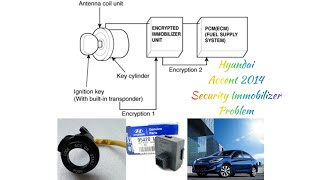
For this era of Hyundai Elantra, the immobilizer system is a common source of no-start issues that can be mistaken for a bad starter or fuel pump. While some manufacturers have complex, integrated security modules, the Elantra's system is relatively straightforward, often failing at one of two main points: the key itself or the antenna coil that reads it. This makes diagnosis more direct than on vehicles where the immobilizer is deeply tied into other modules like the instrument cluster. The SMARTRA unit is a separate module that communicates with the key and the ECM.
Generation note: This guide covers the third (XD, 2000-2006), fourth (HD, 2007-2010), and fifth (MD/UD, 2011-2016) generations of the Hyundai Elantra. The fundamental cause and diagnostic principles for P1614 are the same across these generations, as they use a similar SMARTRA immobilizer architecture. However, specific part numbers for keys and the immobilizer antenna coil will differ. Always verify parts using your vehicle's VIN.
Symptoms You May Notice

- Engine cranks but does not start.
- Flashing immobilizer warning light on the dashboard (often looks like a car with a key inside).
- Intermittent starting issues, where it may start after multiple attempts.
- Engine starts and then immediately stalls within a few seconds.
- No response from starter at all (less common, but possible if system is in a fault mode).
- Replacing the starter motor when the engine is cranking normally.
- Replacing the fuel pump before verifying the immobilizer system is functioning (a flashing immobilizer light is a key clue 🎬 Watch: A real-world diagnosis of an Elantra no-start issue.).
- Replacing the crankshaft or camshaft position sensors, which are common no-start causes but typically set different trouble codes like P0335.
Most Likely Causes

- Defective or Unprogrammed Ignition Key 🔴 High Probability The transponder chip inside the key fob can be damaged if the key is dropped, exposed to moisture, or if the key's battery is dead. Aftermarket keys may also not be programmed correctly or lose their programming.
How to confirm: Try starting the vehicle with all available spare keys. If a spare key works, the original key is faulty. Also, ensure no other transponder keys or large metal objects are on the same keychain, as this can cause radio frequency interference.
Typical fix: The faulty key needs to be replaced and the new key must be programmed to the vehicle by a dealership or an automotive locksmith with the proper scan tool.
Est. part cost: $70-$200 for a new key and programming. - Faulty Immobilizer Antenna Coil 🟡 Medium Probability The antenna coil is a fine wire winding located around the ignition lock cylinder. Over time, this coil can develop internal breaks or suffer from connection issues, preventing it from powering and reading the key's transponder chip. This is a well-documented failure point on many Hyundai/Kia models of this era.
How to confirm: After ruling out the key, this is the next most likely component. A mechanic can test the coil's resistance and signal output. A common DIY test involves wiggling the key in the ignition or holding it at different angles to see if a connection can be made. Visually inspect the coil and its connector for damage.
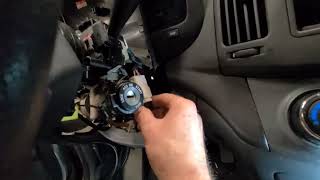
Typical fix: Replace the immobilizer antenna coil. This part is located under the steering column shroud and is often a simple plug-and-play replacement that does not require reprogramming. 🎬 See how to diagnose a faulty antenna coil without a scanner.
Est. part cost: $40-$80 - Low Vehicle Battery Voltage ⚪ Low Probability Like many modern cars, low system voltage during cranking can cause communication glitches between various electronic modules, including the immobilizer system. An intermittent starting issue that began after a battery replacement can sometimes point to a faulty new battery or poor connections.
How to confirm: Test the 12V battery with a multimeter. A healthy, fully charged battery should read approximately 12.6 volts with the engine off. If it's below 12.2 volts, it may not have enough power to operate all modules correctly during startup.
Typical fix: Recharge or replace the vehicle's 12V battery.
Est. part cost: $150-$250 - Wiring or Connector Issue ⚪ Low Probability
How to confirm: Visually inspect the wiring harness and connector going to the immobilizer antenna coil and the SMARTRA module. Check for any signs of damage, corrosion, or loose pins. A multimeter can be used to check for continuity between the antenna coil connector and the immobilizer module or ECM. In some cases, a single bad wire in the harness can cause an intermittent P1614.
Typical fix: Repair the damaged section of the wiring harness or clean/replace the faulty connector.
Est. part cost: $5-$100 depending on the extent of the damage.
Rare But Worth Checking
- Faulty SMARTRA Unit or ECM: The SMARTRA (Smart Transponder Antenna) module or the Engine Control Module (ECM) can fail internally, but this is uncommon. This should only be considered after all other possibilities (key, antenna, wiring) have been thoroughly ruled out, as it is the most expensive repair. Diagnosis requires advanced tools to check communication lines between modules.
- Radio Frequency Interference (RFI): Having other transponder keys (from other vehicles) or certain electronic devices on the same keychain can sometimes interfere with the signal between the key and the antenna. Try starting the car with only the single Elantra key near the ignition.
Diagnosis Steps
- Check for a flashing immobilizer light on the dashboard when the key is in the 'ON' position. This is a primary indicator of an anti-theft issue.
- Try to start the vehicle with a known-good spare key. If it starts, the problem is your primary key.
- Remove all other keys and electronic fobs from the keychain to eliminate Radio Frequency Interference (RFI) and try again.
- If the spare key also fails, check the vehicle's main 12V battery. Ensure it is fully charged and the terminals are clean and tight.
- Scan the immobilizer system with a capable OBD-II scanner to confirm P1614 is the only code present. Some advanced scanners can read key status data and the number of learned keys. 🎬 Watch: Understanding how the Hyundai immobilizer system communicates.
- Inspect the wiring and connector for the immobilizer antenna coil, located around the ignition cylinder. Look for any visible damage or loose connections.
- If wiring appears intact, the next logical step is to replace the immobilizer antenna coil. This is a common failure point and is relatively inexpensive and typically does not require programming.
- If the problem persists after replacing the antenna coil, the issue may lie with the SMARTRA module or the ECM itself. This step requires professional diagnosis with advanced tools to verify communication signals.
- If a new key is needed, it must be programmed to the vehicle by a dealer or a qualified automotive locksmith using a 'key teaching' procedure.
Parts You'll Likely Need
- Immobilizer Antenna Coil
(OEM #95401-2H100 (for 2007-2010 Elantra HD Sedan). Part numbers vary significantly by generation and trim. Other examples include 95401-C1000 and 95401-C1010 for other Hyundai models.)— This component is responsible for reading the key's transponder chip and is a frequent failure point that leads to code P1614.
Trusted brands: Hyundai (Genuine OE)
OEM price range: $40-$80
Aftermarket price range: $30-$60 - Transponder Ignition Key — The chip inside the key can fail, making it unrecognizable to the car. This is a very common cause for P1614.
Trusted brands: Hyundai (Genuine OE)
OEM price range: $70-$150 (plus programming)
Aftermarket price range: $30-$80 (plus programming)
Platform-Specific Known Issues
- For the Elantra HD (2007-2010), the immobilizer antenna coil is part number 95401-2H100 for the sedan, and it is explicitly noted as not being compatible with the Elantra Touring (hatchback) model.
Mechanic-Grade Diagnostic Values
- Voltage at SMARTRA module harness connector — expected: 9 - 16 Volts. Failure: Voltage below 9V or 0V indicates an open or short in the power supply harness from the engine control relay.
- SMARTRA, ECU, and Key Status on Scan Tool — expected: All parameters should display 'LEARNT'.. Failure: If any parameter shows 'VIRGIN' or does not show 'LEARNT', it indicates a programming or component mismatch issue.
Hidden / Shadow Codes Worth Checking
- P1690: SMARTRA No Response. This indicates a total communication loss with the SMARTRA module, potentially due to power loss, ground issue, or a faulty module. (see via Hyundai GDS (Global Diagnostic System) or equivalent advanced professional scan tool.)
- P1691: Antenna Coil Error. This points specifically to an open or short circuit in the antenna coil itself. (see via Hyundai GDS or equivalent advanced professional scan tool.)
- P1693: Transponder No Response / Invalid Response. This code is set when the antenna coil powers the key but receives no signal or a corrupted signal back from the transponder chip. (see via Hyundai GDS or equivalent advanced professional scan tool.)
- P169A: SMARTRA Authentication Fail. This occurs when the SMARTRA module and the ECM can communicate, but the security handshake between them fails. (see via Hyundai GDS or equivalent advanced professional scan tool.)
Scan Tool Commands That Help

- Hyundai GDS (or advanced aftermarket equivalent): Key Teaching — Used to program new or existing keys to the vehicle's immobilizer system. This is required when replacing a key, the SMARTRA module, or the ECM. A 6-digit vehicle-specific PIN code is required.
- Hyundai GDS (or advanced aftermarket equivalent): ECM Neutralization / Virgin Mode — This function erases the stored immobilizer data from a used ECM, making it 'virgin' so it can be programmed to a different vehicle. This is necessary when installing a used ECM to resolve an immobilizer fault.
- Hyundai GDS (or advanced aftermarket equivalent): SMARTRA Teaching — On later models with SMARTRA3 systems, this function is used to teach a new or neutralized SMARTRA module to the ECM.
- Hyundai GDS (or advanced aftermarket equivalent): Reset Adaptive Values — After certain repairs, resetting the ECM's adaptive values can help resolve lingering communication issues. This is a general function but can be useful in a comprehensive diagnostic approach.
Wiring & Ground Locations
- Immobilizer Module (SMARTRA) — Located behind the instrument cluster, often mounted to a support bracket on the left side of the dash.. This is the central control unit for the immobilizer system. Checking for power, ground, and communication signals at its connector is a critical diagnostic step. A poor connection or power loss here will cause a P1614.
- GM02 Ground Point — Located at the right center of the dash panel.. A poor ground connection at this point can cause various electrical issues, including intermittent communication failures for modules located in the dashboard, such as the immobilizer.
- Antenna Coil Connector — On the steering column, connected to the ring antenna around the ignition lock cylinder.. The two wires leading to this connector are a known failure point for internal breaks. Wiggling this harness while attempting to start the car can help identify an intermittent connection.
- SMARTRA Connector Pinout (Typical) — At the SMARTRA module itself.. A typical pinout includes: Pin 1 - ECM Communication (W-Line), Pin 2 - Ground, Pin 3 & 5 - Antenna Coil, Pin 4 - Main Power (12V+). Verifying power and ground here is essential.
Real Owner Repair Stories
- YouTube channel 'JL's Auto Solution' (Hyundai Elantra (year not specified, but likely 2011-2016 generation)) — Crank no start, no immobilizer light on dash.
❌ Tried (didn't work) The previous mechanic had swapped the entire steering column from another car., Attempting to read the PIN code and reprogram keys with multiple professional scan tools failed.
✅ What actually fixed it The technician retrieved the original immobilizer control module from the old steering column and plugged it back into the vehicle. This restored the matched set of components (Key, Immobilizer Module, ECM), allowing the car to start immediately. - YouTube channel 'D&D Garage' (Hyundai (model not specified, but demonstrates a common Hyundai immobilizer issue)) — Intermittent crank no start, immobilizer light flashes then goes out, indicating a communication error.
❌ Tried (didn't work) Holding the key/transponder directly on the antenna coil did not work consistently.
✅ What actually fixed it The technician found an internal break in the wiring harness leading to the antenna coil connector. By manipulating the wire, he could make the car start. The final fix was to cut out the bad section of wire and splice in a new piece, resolving the intermittent connection without replacing the antenna coil itself.
When the Usual Fixes Don't Work
- In one documented case, a technician was unable to resolve a key mismatch issue using standard reprogramming procedures with multiple scan tools. The problem arose after a steering column swap. The final, successful repair was not reprogramming, but physically swapping the original immobilizer module back into the car to match the existing ECM and keys, highlighting that sometimes a matched set of hardware is the only solution when programming fails.
Model Year Variations Within This Range
- Approx. 2006-2010 (HD Generation and others): These vehicles typically use the SMARTRA2 system. In this system, the key data is primarily stored in the ECM. The SMARTRA module acts more as a simple interface or amplifier between the key and the ECM.
- Approx. 2011-2016 (MD/UD Generation and others): These vehicles often use the more advanced SMARTRA3 system. A key difference is that the transponder information is stored within the SMARTRA3 unit itself, as well as the ECM. This means that if you replace the SMARTRA3 module, it must be taught to the vehicle using a specific procedure, which may involve putting it in a 'neutral' state first.
Diagnostic Flowchart
Other Known Issues on This Vehicle
Issues unrelated to this code that are worth knowing about as an owner of this generation:
- Worn MDPS Steering Coupler 🟠 Medium — Very common on 2007-2015 models, typically manifests as a clicking or clunking noise in the steering column when turning. Usually occurs after 50,000 miles. (Ref: Hyundai issued TSB 17-ST-001 and extended the warranty for this part to 10 years/100,000 miles.)
- Peeling White Paint 🟡 Low — Widespread on white-painted models, particularly from 2010-2018. Paint can bubble and peel in large sheets, often starting on the roof and hood. (Ref: Hyundai offered a warranty extension (internal document Z05) for this issue on certain models and years.)
- Engine Ticking / Piston Slap (1.8L Nu Engine) 🔴 High — Common on 2011-2016 Elantras with the 1.8L Nu engine. A ticking noise can develop, potentially leading to excessive oil consumption or engine failure. (Ref: This issue was the subject of class-action lawsuits and related engine replacement campaigns/recalls for connecting rod bearing wear (e.g., TSB 22-01-023H-2).)
- Timing Belt Failure (XD Generation) 🔴 High — The 2000-2006 Elantra uses a timing belt that must be replaced every 60,000 miles. Failure to do so can result in catastrophic engine damage due to the interference engine design.
- Faulty Crankshaft Position Sensor 🟠 Medium — A failing crankshaft position sensor is a common cause for intermittent crank-no-start or stalling issues across multiple Elantra generations.
Used vs. New Parts: Buying Guide for This Vehicle
When a used part is the smart pick: A used Immobilizer Antenna Coil is an excellent choice. It is a simple, non-programmed part, and a working unit from a salvage yard is a cost-effective repair. Swapping a complete, matched set of parts (ECM, SMARTRA module, and the original key(s) from the donor vehicle) is also a viable, though labor-intensive, strategy if programming is not an option.
Donor-vehicle mileage cap: roughly under 150000 miles for the part to have meaningful remaining life.
What to inspect on the donor part:
- For an antenna coil, ensure the plastic housing is not cracked and the connector pins are clean and straight.
- For a matched set (ECM/SMARTRA/Key), verify all parts come from the exact same vehicle. Get the VIN of the donor car if possible.
- Check for any signs of water damage or corrosion on the electronic modules (ECM/SMARTRA).
OEM-only on this vehicle (don't cheap out):
- Engine Control Module (ECM)
- SMARTRA Module
Aftermarket brands forum-validated for this vehicle:
- Aftermarket Immobilizer Emulators (various brands available online) are a known-good alternative to replacing a faulty SMARTRA module. These devices are programmed to the vehicle once and bypass the need for the SMARTRA module, providing a permanent fix for a failed module.
Brands owners have reported issues with on this vehicle:
- Unbranded, extremely cheap transponder keys from online marketplaces may have poor quality chips that fail to program or lose their programming over time.
Real Owner Stories
Aggregated from forums and TSBs cited above. Mileages and costs reflect what owners reported in those sources.
2013 Hyundai Elantra
Symptoms: Unique intermittent starting issue where the car experienced a crank-no-start condition specifically after a battery replacement.
What fixed it: The context suggests this scenario triggers immobilizer communication faults due to voltage fluctuations, requiring verification of battery voltage and module communication.
Source hint: Reddit r/MechanicAdvice: 'Unique Starting Issue No One Can Figure Out and Makes No Sense'
2012 Hyundai Elantra GLS
Symptoms: No crank, no start condition.
What fixed it: Diagnostic evaluation of the starting system to differentiate between a standard starting failure and an immobilizer-related lockout.
Source hint: Reddit r/AskMechanics: '2012 Hyundai Elantra gls No crank no start'
Related OBD-II Codes
Frequently Asked Questions
I have a 2007-2010 Elantra sedan; can I use the antenna coil from an Elantra Touring model to fix my P1614 code?
My 2013 Elantra won't start after I replaced the battery. Could this be related to P1614?
Is there a TSB for the clicking noise in my 2014 Elantra's steering column?
My 2012 Elantra has a ticking engine and P1614; are these related?
Do I need to program the new immobilizer antenna coil if I replace it myself?
Can other items on my keychain cause the P1614 code on my Elantra?
Helpful Videos

We Have This Part in Stock




The information in this article is provided for general reference and educational purposes only. Vehicle specifications, procedures, and part compatibility can vary by production date, trim level, and region. Always consult your vehicle's factory service manual and verify part numbers before purchasing or performing repairs. Safety-critical components such as airbags, seat belts, and braking systems should be installed by a qualified professional.
- Hyundai Elantra:
- 🎬 Helpful Videos
- 🛍️ Shop This Part
- What's Unique About the 2000-2016 Hyundai Elantra
- Symptoms You May Notice
- Most Likely Causes
- Rare But Worth Checking
- Diagnosis Steps
- Parts You'll Likely Need
- Platform-Specific Known Issues
- Mechanic-Grade Diagnostic Values
- Hidden / Shadow Codes Worth Checking
- Scan Tool Commands That Help
- Wiring & Ground Locations
- Real Owner Repair Stories
- When the Usual Fixes Don't Work
- Model Year Variations Within This Range
- Diagnostic Flowchart
- Other Known Issues on This Vehicle
- Used vs. New Parts: Buying Guide for This Vehicle
- Real Owner Stories
- 2013 Hyundai Elantra
- 2012 Hyundai Elantra GLS
- Related OBD-II Codes
- Frequently Asked Questions
- 🎟️ Get 5% Off