

P1604 on 2011-2014 Hyundai Sonata: TCM Communication Error & No-Start Fixes
On a 2011-2014 Sonata, P1604 means the Engine Control Module (ECM) has lost communication with the Transmission Control Module (TCM). This is not a 'startability malfunction' as on other brands. The most common cause is a bad transmission ground wire or a faulty power supply, leading to a crank-no-start condition. The integrated nature of the TCM within the PCM makes external wiring and grounds the primary suspects.
- P1604 on your Sonata is a network code, not a mechanical starting problem. It means the transmission computer is offline.
- Do not replace the starter or fuel pump. Start by checking the easiest and most common electrical issues.
- The most likely fix is simple and cheap: inspect, clean, and tighten the transmission ground wire.
- Check all fuses labeled for the transmission (TCM/AT) and engine computer (ECU).
- If you are not comfortable diagnosing electrical circuits with a multimeter, this is a job for a professional, as it can involve tracing wires and testing the CAN network.
What's Unique About the 2011-2014 Hyundai Sonata

The 2011-2014 (YF generation) Sonata integrates the Transmission Control Module (TCM) into the main Powertrain Control Module (PCM), which is located in the engine bay. This means a communication failure is often an internal PCM fault or, more commonly, an issue with the external wiring providing power, ground, or data signals to the PCM/TCM unit. Unlike Toyotas where P1604 is a symptom-based code for a long crank time, on this Sonata it is a specific network code pointing to a communication breakdown with the transmission control portion of the computer.
Symptoms You May Notice
- Engine cranks but does not start (most common symptom) 🎬 Watch: Troubleshooting a Sonata that cranks but won't start
- Check Engine Light is on
- Gear position indicator on the dashboard may be blank or incorrect
- Transmission may be stuck in 'limp mode' (a single gear, often 3rd) if the fault occurs while driving
- Inability to communicate with the TCM using a scan tool
- ABS and Traction Control lights may illuminate simultaneously
- No response from the gear shifter (stuck in Park)
- Replacing the starter motor: A crank-no-start condition might lead someone to blame the starter, but if the engine is cranking, the starter is working. The issue is the lack of a signal to enable fuel and spark.
- Replacing the fuel pump: While a no-start can be a fuel pump issue, P1604 specifically points to a communication problem, which should be diagnosed first.
- Diagnosing it as a 'Startability Malfunction': Mechanics unfamiliar with Hyundai-specific codes may misinterpret P1604 based on its generic definition and waste time looking for mechanical starting issues instead of the true electrical/network cause.
Most Likely Causes

- Poor or broken transmission ground connection 🔴 High Probability Corrosion or vibration can weaken the ground strap/wire connection from the transmission to the chassis, which is a common failure point for module communication. The ground point is often a single 6mm bolt on a painted surface, which provides a poor long-term connection.
How to confirm: Locate the ground wire assembly, typically bolted to the transmission case near the starter and running to the chassis frame rail under the battery tray. Inspect for corrosion, looseness, or breaks. Perform a voltage drop test on the ground circuit; it should be less than 0.2 volts.
Typical fix: Clean the contact points on the chassis and the wire's terminal lug with a wire brush until shiny. It is recommended to grind the paint off the chassis contact point for a bare metal connection. 🎬 See how to properly clean and fix ground connections Re-secure it tightly, applying dielectric grease to prevent future corrosion. If the wire or terminal is damaged, replace the ground wire assembly (Part No. 91860-3S510).
Est. part cost: $15-$40 - Blown fuse or faulty TCM power relay 🟡 Medium Probability Electrical surges or component age can cause fuses or relays to fail, cutting power to the transmission control circuits within the PCM.
How to confirm: Check the vehicle's fuse boxes (both in the cabin and engine bay) for any fuses labeled 'TCM', 'TRANS', 'AT', 'ECU', or 'ECU/IGN.1'. Visually inspect and test for continuity. Swap the TCM/PCM relay with an identical one from a non-critical system (like the horn) to see if the problem resolves.
Typical fix: Replace the blown fuse or faulty relay.
Est. part cost: $5-$30 - Damaged wiring harness or corroded connectors 🟡 Medium Probability The wiring harness to the transmission and PCM is exposed to heat and vibration, which can cause wires to chafe or break over time. A specific area of concern is the harness in the trunk, where wires can rub and break, causing CAN network failures. 🎬 Watch: Fixing no communication with the PCM and ABS Connectors can also suffer from moisture intrusion.
How to confirm: Visually inspect the wiring harness leading to the transmission and the main PCM connectors. Look for signs of chafing, melting, or green/white corrosion on the pins. Disconnect connectors and check for bent or pushed-out pins. Pay special attention to the harness routing in the trunk area.
Typical fix: Repair the damaged section of wire. Clean corroded connectors with an electrical contact cleaner. In severe cases, the entire harness may need replacement.
Est. part cost: $20-$800
Rare But Worth Checking
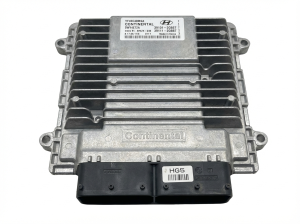
- Faulty Powertrain Control Module (PCM): Since the TCM is integrated into the PCM on this model, an internal failure of the PCM can cause this code. This should only be considered after all wiring, power, and ground issues have been definitively ruled out, as it is the most expensive and least likely cause.
- Weak or Failing Battery: While less common for this specific code on a Hyundai, a battery with low voltage can sometimes cause communication errors between modules during startup. A Reddit thread noted that a P1604 code preceded battery failure on two separate vehicles. Ensure the battery holds a charge above 12.4V with the engine off.
Diagnosis Steps
- Scan for all DTCs in all modules. Note any U-series codes (e.g., U0101) or other powertrain codes, as they can provide crucial clues.
- Check battery voltage. Ensure the battery is fully charged (12.4V+ with engine off) and connections are clean and tight. A weak battery can cause various communication faults.
- Inspect all fuses related to the transmission and engine control modules in both the interior and engine bay fuse panels. Pay close attention to fuses labeled 'ECU', 'TCU', and 'SNSR'.
- Locate, inspect, and clean the main transmission ground wire. It typically runs from the transmission case to the chassis frame rail, often under the battery tray. Ensure the connection is clean (bare metal is best) and tight at both ends. Perform a voltage drop test on this ground.
- Inspect the main wiring harness connectors at the PCM/TCM and the transmission for damage, corrosion, or pushed-out pins.
- With the battery disconnected, measure the resistance between Pin 6 (CAN High) and Pin 14 (CAN Low) at the OBD-II port. A healthy network should read approximately 60 ohms. A reading of 120 ohms indicates an open in the circuit or a missing terminating resistor. A reading near 0 ohms indicates a short between the two CAN wires.
- Inspect the wiring harness that runs into the trunk for any chafing or breaks, as this has been identified as a failure point causing CAN bus issues on Sonatas.
- If all wiring, power, and grounds are confirmed to be good, the PCM/TCM unit itself is the likely point of failure and may require professional diagnosis or replacement.
Parts You'll Likely Need

- Transmission Ground Wire Assembly
(OEM #91860-3S510)— This is a very common point of failure due to corrosion or vibration, leading to a loss of ground for the transmission control circuits and causing communication errors.
Trusted brands: Hyundai (Genuine OE)
OEM price range: $20-$40
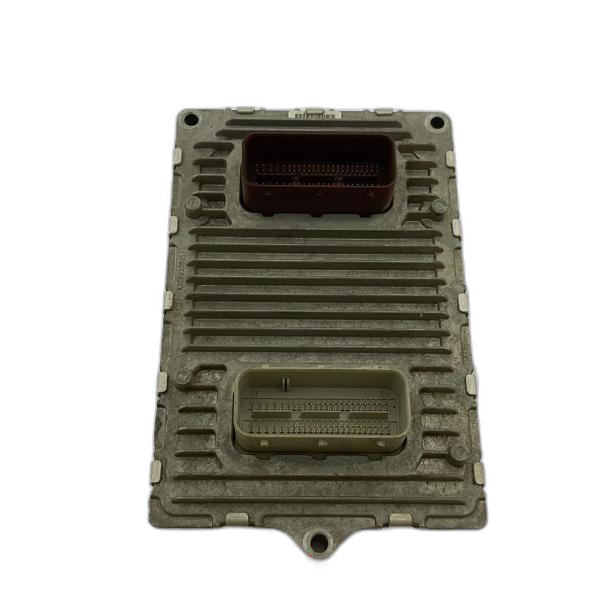
Aftermarket price range: $15-$30 - Powertrain Control Module (PCM) — As a last resort, if all wiring and connections are good, the integrated PCM/TCM has likely failed. This part will require programming by a dealer or qualified shop.
Trusted brands: Hyundai (Genuine OE), Bosch (OEM supplier), Remanufactured (e.g., from Flagship One, Inc.)
OEM price range: $1500-$1600
Aftermarket price range: $300-$700 (Remanufactured)
Related Codes That Often Appear With This One
- U0100 — This code means 'Lost Communication With ECM/PCM'. It can appear with P1604 if other modules on the network also lose communication with the main computer.
- U0101 — This is the generic SAE code for 'Lost Communication with TCM'. P1604 is Hyundai's manufacturer-specific equivalent. Seeing both strongly confirms the diagnosis.
- P0880 — This code indicates a 'TCM Power Signal Error'. If the power supply to the TCM circuit is faulty, it can cause both a power error (P0880) and a subsequent communication loss (P1604).
Technical Service Bulletins (TSBs) & Recalls
- TSB 20-AT-017H: While for code P0880, this TSB advises checking electrical circuits (fuses, relays, wiring) before replacing major components, a diagnostic strategy that is directly applicable to P1604.
- TSB 14-AT-003 / 13-AT-008: These bulletins address troubleshooting for various transmission solenoid DTCs. They advise against replacing the entire transmission and instead provide procedures for replacing specific solenoids or wiring, reinforcing the 'diagnose and repair wiring first' approach relevant to P1604.
Platform-Specific Known Issues
- Poor Factory Grounding Point: A known issue discussed by technicians is that Hyundai sometimes bolts ground cables to painted surfaces on the frame rail. The official repair involves drilling and tapping a larger hole and using a star washer, but a common field repair is to grind the paint away to ensure a solid metal-to-metal connection before reattaching the ground wire. This applies directly to the transmission ground wire that causes P1604.
- Trunk Wiring Harness Chafing: In a documented case on a similar platform, a no-communication issue that was misdiagnosed by a dealer as a $4000 PCM failure was ultimately traced to a single broken CAN bus wire in the wiring harness located in the trunk. The constant opening and closing of the trunk lid caused the wire to chafe and break over time, taking down the communication network.
Mechanic-Grade Diagnostic Values
- CAN Bus Network Resistance — expected: Approximately 60 Ω. Failure: A reading of ~120 Ω indicates an open circuit or a missing terminating resistor. A reading near 0 Ω indicates a short between the CAN High and CAN Low wires.
- CAN Bus Voltage (Key On, Engine Off) — expected: CAN High (Pin 6 to Ground): ~2.5V - 3.5V. CAN Low (Pin 14 to Ground): ~1.5V - 2.5V.. Failure: Voltages outside these ranges, or voltages that are stuck high or low, indicate a short to power or ground on the network.
- TCM/Solenoid Power Supply Voltage — expected: 9V - 22V. Failure: Voltage dropping below 7V or exceeding 22V will trigger a related power fault (P0880) and can lead to communication loss (P1604).
- TCM Ground Circuit Voltage Drop — expected: Less than 0.2V (200mV). Failure: A reading higher than 0.2V indicates excessive resistance in the ground circuit, which is a primary cause of this code.
Scan Tool Commands That Help

- Hyundai GDS (Global Diagnostic System): Resetting Auto T/A values — This function is mandatory after replacing the PCM/TCM or reprogramming the module. It erases the old adaptive shift data. Failure to perform this reset can result in poor shift quality or other transmission faults.
- Hyundai GDS (Global Diagnostic System): AT Adaptation Mode / Relearn Procedure — This must be performed immediately after using the 'Resetting Auto T/A values' function. It involves a specific drive cycle (e.g., accelerating steadily through all gears multiple times) to allow the TCM to learn the transmission's characteristics.
Wiring & Ground Locations

- PCM/TCM Module — In the engine bay, typically located near the battery and firewall.. This is the integrated control unit. All power, ground, and communication lines for the transmission terminate here.
- GHG01 / GHTG01 — Main engine compartment ground, located on the left side of the engine compartment.. This is a primary grounding point for multiple components in the engine bay. A poor connection here can cause widespread electrical issues, including the loss of communication with the TCM.
- Transmission Ground Strap Connection — Bolted directly to the transmission case, with the other end connected to the chassis frame rail, often under or near the battery tray.. This is the most common failure point for P1604. It provides the direct ground path for the transmission's electronic controls. Corrosion or looseness here directly interrupts the TCM's ability to function and communicate.
- OBD-II Port Pins 6 & 14 — Under the driver's side dashboard.. These are the CAN High and CAN Low pins, respectively. They provide the most direct and standardized access point for testing the entire CAN bus network's resistance and voltage.
Real Owner Repair Stories
- Go-Parts.com Diagnostic Guide (2012 Hyundai Sonata) — Vehicle would not start and displayed a P1604 code.
❌ Tried (didn't work) Initial diagnosis was confused by the generic 'Startability Malfunction' definition.
✅ What actually fixed it The actual problem was a faulty ground wire for the Transmission Control Module. Repairing or replacing this ground restored communication and allowed the vehicle to start.
OEM Part Supersession History
39111-2G666 (2011 PZEV models)→39111-2G667 (2012), 39111-2G668 (2013-14), 39111-2G669 (2014)— Model year updates and internal revisions.
Heads up: It is critical to match the OEM part number exactly when replacing the PCM. Using a PCM from a different year or emissions type (PZEV vs ULEV) will result in incompatibility, even if it physically fits.91860-3K010→N/A (Discontinued)— Part for older 2005-2010 Sonata generation.
Heads up: This part for the previous generation will not fit the 2011-2014 Sonata. The correct part for the YF generation is 91860-3S510.
Model Year Variations Within This Range
- 2011-2014: The specific part number for the Powertrain Control Module (PCM) changed several times during this period, particularly for California Emissions (PZEV) models. For example, a 2011 PZEV model may use PN 39111-2G666, while a 2014 may use 39111-2G669. Always verify the exact part number on the original unit before ordering a replacement.
- 2011 (Early Models): Early models of the YF generation are frequently cited as having the main ground strap bolted directly to a painted surface on the frame rail, creating a high-resistance connection from the factory. While possible on all years, it was a more pronounced issue on initial production runs.
Diagnostic Flowchart
Other Known Issues on This Vehicle
Issues unrelated to this code that are worth knowing about as an owner of this generation:
- Theta II Engine Failure (Rod Bearing Wear) 🔴 High — Widespread across 2.0L Turbo and 2.4L GDI engines. Failures can occur at various mileages, often starting with a knocking noise. Subject to multiple recalls and a class-action lawsuit. (Ref: NHTSA Recalls 15V568000, 17V226000; Hyundai Campaign 953 (Knock Sensor Detection System update).)
- MDPS Steering Coupler Degradation 🟠 Medium — Extremely common. A flexible rubber coupler in the electronic power steering column wears out, causing a distinct clicking or clunking noise when turning the steering wheel. Typically occurs after 50,000 miles. (Ref: Hyundai TSB 17-ST-002-1 extended the warranty for this part to 10 years/100,000 miles.)
- Transmission Temperature Sensor Failure 🟠 Medium — A common issue where the internal transmission temperature sensor fails, causing harsh shifting, delayed engagement, and potential limp mode. The sensor is part of the internal valve body wiring harness. (Ref: TSB 12-AT-008 addresses related diagnostic procedures.)
- Front Coil Spring Fracture 🔴 High — More common in regions that use road salt ('Salt Belt'). The front coil springs can corrode and fracture, sometimes puncturing the front tire, leading to a sudden loss of control.
- Seat Belt Linkage Failure 🔴 High — Subject of a major recall. The connector and linkage for the front seat belts may not have been properly assembled, potentially causing the seat belt to detach in a collision. (Ref: NHTSA Recall 17V152000)
Used vs. New Parts: Buying Guide for This Vehicle
When a used part is the smart pick: A used Transmission Ground Wire Assembly is a perfectly acceptable and cost-effective repair, as it is a simple cable. A used wiring harness section for a repair can also be a good choice. A used PCM is only a viable option if you have pre-confirmed that a local shop or dealer has the capability and willingness to program a customer-supplied used module to your vehicle's VIN and immobilizer.
Donor-vehicle mileage cap: roughly under 120000 miles for the part to have meaningful remaining life.
What to inspect on the donor part:
- For a ground wire: Check for any signs of corrosion (green or white powder), frayed wires, or damage to the terminal ends.
- For a PCM: Inspect the module for any signs of water damage, physical impact (dents, cracks), or burnt/corroded connector pins. Ask the seller if the donor vehicle had any electrical or engine issues.
OEM-only on this vehicle (don't cheap out):
- Powertrain Control Module (PCM): While remanufactured units exist, a new Genuine Hyundai part from a dealer is the most reliable (though most expensive) way to ensure compatibility and successful programming. Avoid no-name, unverified used modules from online marketplaces unless you accept a high risk of failure.
Aftermarket brands forum-validated for this vehicle:
- For PCM replacement, services like Flagship One, Inc. offer pre-programmed or remanufactured units that are a common alternative to the dealer.
Brands owners have reported issues with on this vehicle:
- Be cautious of generic, unbranded PCMs from platforms like eBay or Amazon that do not offer programming services or a warranty. These are often non-functional without proper programming.
Real Owner Stories
Aggregated from forums and TSBs cited above. Mileages and costs reflect what owners reported in those sources.
2011 Hyundai Sonata
Symptoms: The transmission ground cable was bolted to a painted surface, causing poor contact and communication issues.
What fixed it: Grinding the paint off the chassis contact point to ensure a bare metal-to-metal connection for the ground wire.
Source hint: Hyundai-Forums: 'Check your ground on your 2011 Sonata'
2011-2014 Hyundai Sonata
Symptoms: The vehicle was misdiagnosed by a dealer as having a failed PCM (quoted at $4000). The communication network was down.
What fixed it: Repairing a single broken CAN bus wire in the wiring harness located in the trunk that had chafed over time.
Cost: $30-$30
Source hint: YouTube: 'Hyundai sonata “PCM failure”...fixed after few hours of diag and only $30 in parts'
Related OBD-II Codes
Frequently Asked Questions
My 2011 Sonata won't start and the gear indicator on the dash is blank. Is this related to P1604?
The dealer says I need a $4,000 PCM replacement for my Sonata. Are there cheaper things to check first?
Does TSB 20-AT-017H apply to my P1604 code?
Where is the transmission ground wire located on the 2011-2014 Sonata?
Why is the factory ground point on the Sonata considered a failure point?
Can a weak battery cause a P1604 code on my Hyundai?
Helpful Videos
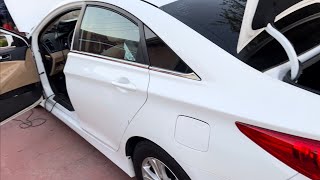
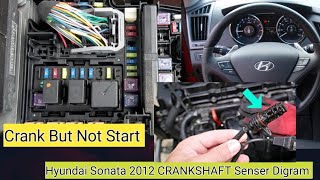

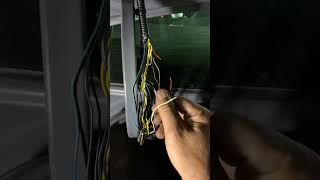
Used OEM Parts in Stock



New Aftermarket Parts Available



The information in this article is provided for general reference and educational purposes only. Vehicle specifications, procedures, and part compatibility can vary by production date, trim level, and region. Always consult your vehicle's factory service manual and verify part numbers before purchasing or performing repairs. Safety-critical components such as airbags, seat belts, and braking systems should be installed by a qualified professional.
- Hyundai Sonata:
- 🎬 Helpful Videos
- 🛍️ Shop This Part
- What's Unique About the 2011-2014 Hyundai Sonata
- Symptoms You May Notice
- Most Likely Causes
- Rare But Worth Checking
- Diagnosis Steps
- Parts You'll Likely Need
- Related Codes That Often Appear With This One
- Technical Service Bulletins (TSBs) & Recalls
- Platform-Specific Known Issues
- Mechanic-Grade Diagnostic Values
- Scan Tool Commands That Help
- Wiring & Ground Locations
- Real Owner Repair Stories
- OEM Part Supersession History
- Model Year Variations Within This Range
- Diagnostic Flowchart
- Other Known Issues on This Vehicle
- Used vs. New Parts: Buying Guide for This Vehicle
- Real Owner Stories
- 2011 Hyundai Sonata
- 2011-2014 Hyundai Sonata
- Related OBD-II Codes
- Frequently Asked Questions
- 🎟️ Get 5% Off