

P1571 on 1997-2003 Pontiac Grand Prix: Traction Control Fault Causes & Fixes
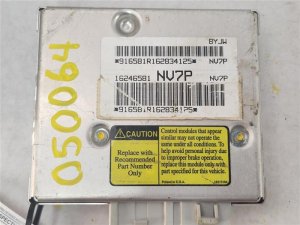
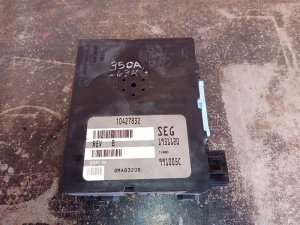
This code usually means the Electronic Brake Control Module (EBCM) has failed internally or the wiring to it is damaged, causing the 'TRAC OFF' light to come on. The EBCM on this platform is a notorious failure point. A replacement or, more commonly, a rebuilt EBCM is the most frequent fix, with rebuild services costing around $150-$250.
- P1571 on your Grand Prix means the traction control is off because of a communication error between the brake and engine computers.
- The most likely cause is a failed Electronic Brake Control Module (EBCM), a very common problem for this car.
- Before replacing anything, check the EBCM's large electrical connector for corrosion and ensure its main ground wire is clean and tight.
- You can replace just the electronic module (EBCM) with a T-20 Torx bit without touching the brake lines, making it a DIY-friendly job.
- If you also have code C1277, it further confirms the problem is with the EBCM or its direct wiring.
- Sending your original module for a rebuild is typically the most cost-effective and reliable solution.
What's Unique About the 1997-2003 Pontiac Grand Prix
On this generation of Pontiac Grand Prix (and its W-Body platform mates), the Delphi DBC-7 Electronic Brake Control Module (EBCM) is a well-documented, common failure point. While wiring issues can cause this code, an internal EBCM failure is a very high-probability cause when P1571 appears, often accompanied by an ABS light and sometimes causing a scan tool to be unable to communicate with the module. The failure is often due to cracked solder joints or other internal electronic faults on the module's circuit board from heat and vibration cycles. Unlike some other ABS faults on this car, P1571 points directly at a module-level communication breakdown rather than an issue with a specific wheel speed sensor.
Symptoms You May Notice
- "TRAC OFF" light is illuminated on the dashboard.
- Traction Control System (TCS) is inoperative.
- ABS warning light may also be illuminated.
- Cruise control may be disabled, as it often relies on a functional traction control system.
- Steering may feel heavy at low speeds due to the deactivation of Magnasteer variable-effort steering, which uses the EBCM for input.
- Scan tool may fail to communicate with the EBCM/ABS module.
- Replacing a wheel speed sensor or hub bearing. A faulty wheel speed sensor will typically set a specific C-code related to that sensor's circuit (e.g., C1221-C1228) and will not, by itself, cause P1571.
- Replacing the entire ABS pump and modulator assembly (BPMV). The EBCM is the electronic controller that can be replaced separately from the hydraulic block. Replacing the whole unit is far more expensive, labor-intensive, and requires bleeding the entire brake system.
Most Likely Causes
- Failed Electronic Brake Control Module (EBCM) 🔴 High Probability The Delphi DBC-7 EBCM used on this platform is a known high-failure part due to internal electronic faults, often related to heat and vibration causing solder joint failure. This is the most common cause for P1571.
How to confirm: Use a scan tool capable of reading ABS codes. If the tool cannot communicate with the EBCM, or if it reports an 'internal malfunction' code, the module has almost certainly failed. This is also the likely cause if wiring and grounds are confirmed to be good. A common owner experience is taking the car to a shop where their scanner fails to connect, which strongly points to a bad module.
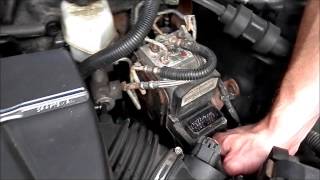
Typical fix: Replace or rebuild the EBCM. The module can be unbolted from the ABS hydraulic unit (BPMV) with a T-20 Torx bit without opening any brake lines. 🎬 Watch: How to remove the ABS module Sending the original module to a specialist like ModuleMaster for rebuilding is a popular, reliable, and cost-effective option that avoids the need for reprogramming.
Est. part cost: $150-$250 for a rebuilt module service; $700-$1000+ for a new OEM part, if available. - Damaged Wiring or Connector Between EBCM and PCM 🟡 Medium Probability The large EBCM connector is exposed to the elements in the engine bay and can suffer from water intrusion, leading to corrosion (green crust) on the pins. The wiring harness can also chafe against nearby components.
How to confirm: Visually inspect the large electrical connector and wiring harness at the EBCM for corrosion, damage, or loose pins. Unplug the connector (with the ignition off) and check for bent pins or green/white corrosion. Test the 'torque request' signal wire (typically an orange/black wire on related GM platforms) for continuity between the EBCM and PCM connectors and check for any shorts to ground or power.
Typical fix: Clean the connector pins meticulously with electrical contact cleaner and a small brush. Repair any damaged sections of the wire or replace the affected connector pins. Ensure the connector's weather seal is intact upon reassembly.
Est. part cost: $5-$50 for wiring supplies and contact cleaner. - Poor EBCM Ground Connection ⚪ Low Probability Engine bay grounds are susceptible to corrosion over time, which can create resistance and electrical problems.
How to confirm: Locate the main ground wire for the EBCM. On many W-body cars, a key ground point is located on the frame rail or strut tower on the driver's side of the engine bay. Disconnect the ground, clean the terminal and the chassis contact point with a wire brush or sandpaper until shiny, and re-secure it tightly. Check for resistance between the EBCM ground pins and the chassis; it should be less than 0.1 Ω.
Typical fix: Clean or repair the ground connection point.
Est. part cost: $0-$5
Rare But Worth Checking
- Failed Powertrain Control Module (PCM): While the PCM is part of the circuit, it is far less likely to fail than the EBCM. This should only be considered after the EBCM and all wiring have been definitively ruled out as the cause. A replacement PCM would require programming to the vehicle's VIN.
Diagnosis Steps
- Connect an OBD-II scanner capable of reading ABS/EBCM codes.
- Check for codes in both the PCM (for P1571) and the EBCM (for C1277 or other codes).
- Verify that the scan tool can establish communication with the EBCM. If it cannot, this is a strong indicator of a failed EBCM or a loss of its main power or ground.
- Turn the ignition OFF. Disconnect the large electrical harness from the EBCM, which is mounted to the ABS hydraulic block on the driver's side of the engine bay. Inspect the connector and the module's pins for green corrosion, chafed wires, or bent pins.
- Locate and inspect the main ground wire for the EBCM, often found on the driver-side strut tower or frame rail. Ensure it is clean, tight, and free of corrosion.
- If a wiring diagram is available, identify the 'torque request' signal wire. With the modules disconnected, use a multimeter to test this wire for continuity from end to end. Also test it for a short to ground and a short to voltage.
- If all wiring and grounds are confirmed to be good, the EBCM is faulty. The most common and recommended repair is to remove the module (6x T-20 Torx screws) and send it to a reputable rebuilding service. 🎬 See this step-by-step ABS module replacement walkthrough
Parts You'll Likely Need
- Electronic Brake Control Module (EBCM)
(OEM #88894774 (Supersedes multiple numbers, specific to GTP models 99-03). Other numbers include 19302001, 88894775. It is critical to match the part number or use a rebuild service for your original unit.)— This module is the most common failure point on this platform that causes a P1571 code.
Trusted brands: ACDelco (OEM Remanufactured), Dorman (Aftermarket), ModuleMaster (Rebuilding Service), Cheap-ABS.com (Rebuilding Service), XeMODeX (Rebuilding Service), ABS Fixer (Rebuilding Service)
OEM price range: $700-$1000 (New/Reman, if available)
Aftermarket price range: $150-$400 (Rebuilt or Remanufactured)
Related Codes That Often Appear With This One
- C1277 — This is the companion code set by the EBCM, meaning 'Requested Torque Signal Circuit Malfunction'. P1571 is the PCM reporting the fault, and C1277 is the EBCM reporting the same fault. Their presence together strongly confirms the communication breakdown between the two modules.
- U-series codes (e.g., U1040) — U-series codes indicate a loss of communication on the Class 2 serial data bus. If you see a code like U1040 (Loss of Communication with EBCM), it further confirms that other modules cannot talk to the EBCM, pointing to a failed module or a major wiring/power issue.
Technical Service Bulletins (TSBs) & Recalls
- GM Safety Recall 09041 (related, not direct): Addresses engine oil leaking from the front valve cover gasket onto the hot exhaust manifold, a potential fire risk. This highlights a common source of engine bay contamination that could potentially affect EBCM wiring over time.
Platform-Specific Known Issues
- The EBCM on 1997-2003 Grand Prix models is a known high-failure item, often leading to a P1571 code. 🎬 Watch: How this common ABS light problem was solved The electronic module can fail internally while the attached hydraulic pump remains functional.
- Owners often choose to have their original EBCM rebuilt by a specialist service, which is often more reliable and cost-effective than sourcing a used part that may have the same inherent flaws.
- The EBCM for a supercharged GTP model is different from the one used in a non-supercharged GT or SE model and they are not interchangeable. You must use a GTP-specific module.
Mechanic-Grade Diagnostic Values
- TCS Torque Request PWM Signal Duty Cycle — expected: 10% - 90%. Failure: Less than 5% or greater than 95%. A signal stuck at 0V or 5V is also a failure.
- TCS Torque Request PWM Signal Frequency — expected: 50 - 250 Hz (generic range, varies by model). Failure: No frequency detected when the system should be active.
- EBCM Ground Circuit Resistance — expected: ≤0.1 Ω. Failure: Higher resistance indicates a poor ground connection.
- Class 2 Serial Data Bus Voltage — expected: Bus is active at ~7.0 volts nominal, toggling to ground.. Failure: Bus stuck at 0V, stuck high (e.g. >10V), or no activity.
- EBCM Mounting Screw Torque — expected: 2.9 Nm (26 in. lbs.). Failure: Over-tightening can damage the module housing; under-tightening can allow moisture intrusion.
Scan Tool Commands That Help
- GM Tech 2: Automated Bleed Procedure — This function is required after replacing the ABS hydraulic modulator (BPMV) or if there has been an extreme loss of brake fluid. It cycles the internal solenoids and pump to purge trapped air that cannot be removed with a manual bleed. Note: This procedure is for the Delphi DBC-7 system (1998+), not the earlier Bosch unit.
- GM Tech 2: View Live Data / Read All Module DTCs — A professional scan tool like the Tech 2 is essential to read codes from the EBCM (C-codes) and other modules, not just the PCM (P-codes). It can also display the live PWM duty cycle from the torque request signal to see if it's in the valid 10-90% range.
Wiring & Ground Locations
- EBCM Connector — Bolted to the front of the ABS hydraulic block, driver's side of the engine bay, below the master cylinder (1998-2003 models).. This is the main connection point for all EBCM power, ground, and signal wires. It is exposed to engine heat and moisture, making it a prime location for corrosion and pin damage that can cause P1571.
- EBCM Ground Pins (at connector) — On related GM platforms (Corvette C5), Pins B & G on the large EBCM connector are the main grounds for the module.. A continuity check from these specific pins to a clean chassis ground point confirms the integrity of the ground wiring itself, ruling out a break in the wire.
- Torque Request Signal Wire — On similar GM platforms, this is an Orange/Black wire. On a 1997 Corvette TSB, it is referenced as circuit 463. The wire runs between a pin on the EBCM connector and a corresponding pin on the PCM connector.. This specific wire carries the PWM signal that this code monitors. Testing this wire for opens, shorts to ground, or shorts to voltage is a key diagnostic step.
- Main EBCM Ground (e.g., G103) — Typically located on the driver's side strut tower or frame rail in the engine bay.. This is the final connection point for the EBCM's ground circuit to the vehicle chassis. Corrosion here creates high resistance, leading to intermittent module operation and communication faults like P1571.
- 1997 Model EBCM Location — Under the driver's side dash, near the parking brake assembly.. This location is unique to the 1997 model year. While less exposed to engine bay elements, it can still be subject to connector issues. Diagnostics for a '97 must be performed inside the cabin.
Real Owner Repair Stories
- CorvetteForum user '1KLRTOY' (2001 Chevrolet Corvette (Note: Different vehicle, but same GM electrical architecture and codes)) — Chasing intermittent P1571 and C1277 codes for weeks.
❌ Tried (didn't work) Clearing codes repeatedly.
✅ What actually fixed it Replacing the ignition switch. A faulty ignition switch can cause momentary voltage drops to critical modules like the EBCM during startup or operation, triggering communication fault codes. - GrandPrixForums.net user discussion (2001 Pontiac Grand Prix GTP) — ABS and Trac Off lights, P1571 code.
❌ Tried (didn't work) Replacing the EBCM module., Replacing the wheel hub.
✅ What actually fixed it The user concluded there must be a broken wire between the wheel hub connector and the EBCM, as replacing the two major components did not solve the issue. This highlights the importance of thorough wiring checks.
OEM Part Supersession History
Multiple older part numbers→88894774— GM consolidates part numbers over time as designs are updated or remanufacturing programs change.
Heads up: Part number 88894774 is specific to 1999-2003 GTP (supercharged) models. It is not interchangeable with modules from GT or SE (non-supercharged) models. Using the wrong module will result in system malfunction.
Model Year Variations Within This Range
- 1997: The EBCM is a different design and is located under the driver's side dash, not in the engine bay. The ABS system was a Delco Delphi unit, and Traction Control was disabled from the factory on GTP models for this year only.
- 1998: The EBCM was moved to the ABS pump assembly in the engine bay. This year used a Bosch 5.3 ABS unit. While serviceable at the pump, it's a different unit than the 1999+ models. Some early '98 models may share characteristics with '97.
- 1999-2003: These years used the common Delphi DBC-7 ABS unit, where the EBCM is a serviceable module attached to the hydraulic pump. The part number 88894774 is the primary replacement for GTP models in this range.
Diagnostic Flowchart
Other Known Issues on This Vehicle
Issues unrelated to this code that are worth knowing about as an owner of this generation:
- Lower Intake Manifold (LIM) Gasket Failure 🔴 High — Very common on all 3800 Series II engines. Gaskets degrade, causing coolant to leak externally or, more dangerously, internally into the engine oil. (Ref: While no specific recall, it's a widely documented failure. Upgraded metal-frame gaskets are the standard fix.)
- Plastic Coolant Elbow Failure 🟠 Medium — Extremely common. Two plastic elbows located in the serpentine belt tensioner assembly become brittle and crack, causing a sudden and significant coolant leak. (Ref: null)
- Supercharger Coupler Wear 🟠 Medium — Common. The coupler connecting the supercharger's snout to its rotors wears out, causing a distinct rattling or 'marbles in a can' sound at idle. (Ref: null)
- 4T65E-HD Transmission Wear 🟠 Medium — Common at higher mileage. Issues include failure of the Pressure Control Solenoid (PCS) causing harsh shifts, and wear on the 4th gear clutch hub. (Ref: null)
- Valve Cover Gasket Oil Leaks (Fire Risk) 🔴 High — Common enough to warrant a safety recall. The front valve cover gasket can leak oil onto the hot exhaust manifold, creating a fire hazard. (Ref: GM Safety Recall 09041)
- Failing Wheel Hub / Bearing Assemblies 🟠 Medium — Common failure item. A worn hub bearing will produce a loud humming or grinding noise that changes with vehicle speed and when turning. It contains the wheel speed sensor, but failure typically sets a specific wheel speed sensor code, not P1571.
Used vs. New Parts: Buying Guide for This Vehicle
When a used part is the smart pick: For the EBCM on this vehicle, buying a used part from a junkyard is generally NOT recommended. The Delphi DBC-7 module has a very high failure rate due to its original design. A used part is likely to have the same internal flaws and may fail soon after installation.
What to inspect on the donor part:
- If buying used is the only option, try to source a part from a vehicle with the lowest possible mileage.
- Inspect the connector pins for any signs of corrosion, which would indicate it has been exposed to moisture.
- Ask the salvage yard for any warranty; even 30 days is better than none.
OEM-only on this vehicle (don't cheap out):
- Electronic Brake Control Module (EBCM): While not strictly 'OEM-only', the best practice is to have your original OEM module professionally rebuilt. This preserves the vehicle's original programming and provides a more robust repair by upgrading known weak components.
Aftermarket brands forum-validated for this vehicle:
- ModuleMaster: Frequently cited in forums as a reliable and high-quality rebuilder for these EBCMs.
- ABS Fixer: Another rebuilder with a positive reputation for repairing these modules.
- Cheap-ABS.com: Mentioned in forums as a viable rebuilding service.
- Dorman: Offers remanufactured units, but rebuilding your original module is often preferred to avoid potential programming issues.
Brands owners have reported issues with on this vehicle:
- Unbranded, no-name eBay rebuild services without a significant history of positive reviews can be a gamble.
Real Owner Stories
Aggregated from forums and TSBs cited above. Mileages and costs reflect what owners reported in those sources.
1999-2003 Pontiac Grand Prix GTP 3.8L L67
Symptoms: The ABS and Trac Light were on. When taken to a shop, their scan tool failed to connect or communicate with the ABS module.
What fixed it: Replacing the EBCM (Electronic Brake Control Module).
Source hint: GrandPrixForums.net - 'EBCM (Electronic Brake Control Module) Replacement, ABS Light/TCS Off Solution'
1997-2003 Pontiac Grand Prix 3.8L L67
Symptoms: Intermittent P1571 code accompanied by the ABS and Traction Control lights illuminating on the dashboard.
What fixed it: Diagnosis confirmed the EBCM was the culprit after verifying the scanner could not communicate with the ABS module.
Source hint: GrandPrixForums.net - 'Intermittent P1571 and ABS/Trac Light On'
Related OBD-II Codes
Frequently Asked Questions
Can I use an EBCM from a non-supercharged Grand Prix GT to fix the P1571 on my GTP?
Does GM Safety Recall 09041 directly address the P1571 traction control issue?
Why does my steering feel heavy at low speeds when the TRAC OFF light is on?
Is there a specific part number for the EBCM on a 1999-2003 Pontiac Grand Prix GTP?
What is the most cost-effective way to fix a failed Delphi DBC-7 EBCM?
Where is the main ground point for the EBCM located on the W-body platform?
Helpful Videos
![Replacing an ABS Control Module [1999 Pontiac Grand Prix]](https://img.youtube.com/vi/HwgFeebHqIk/mqdefault.jpg)
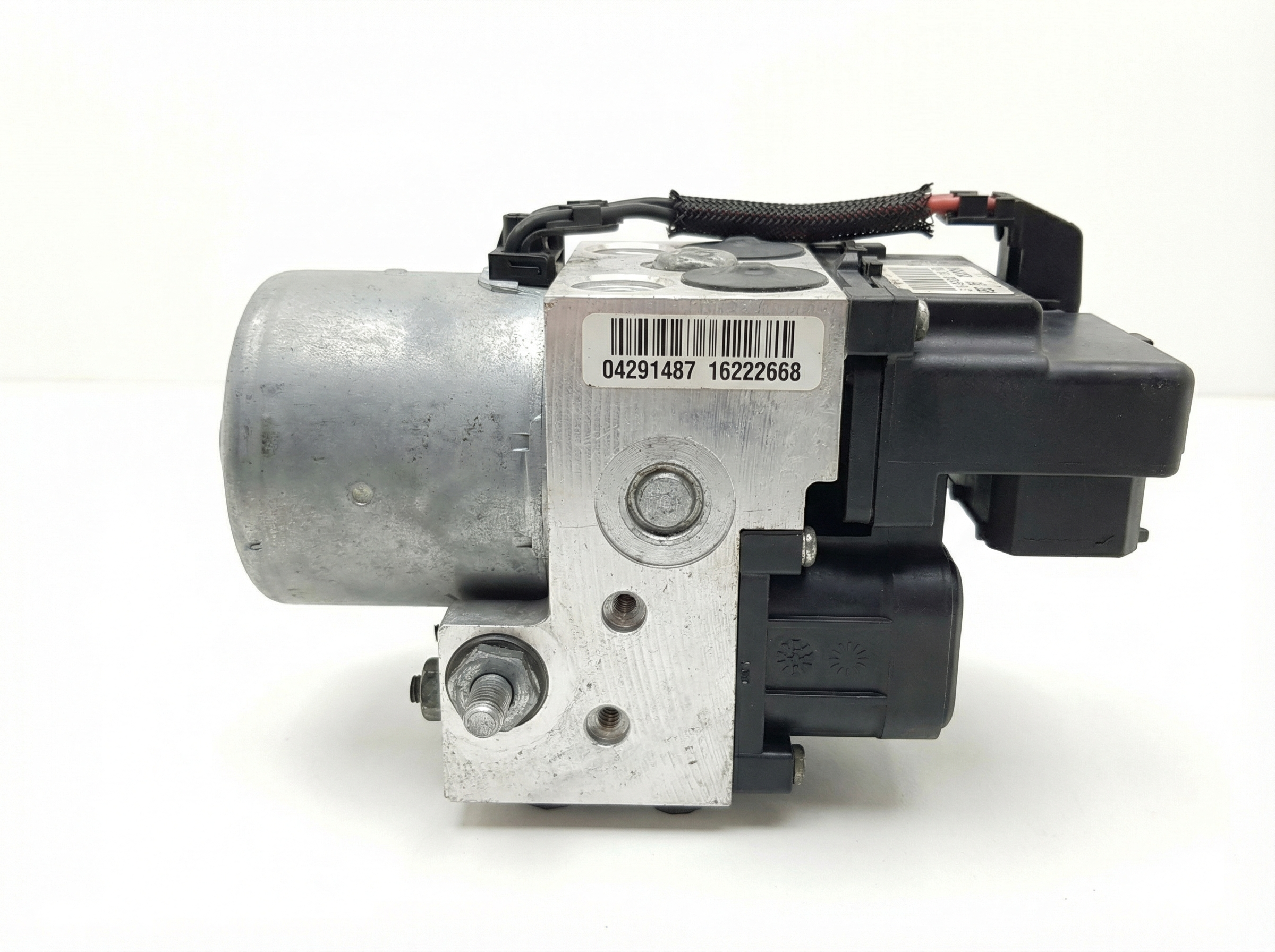
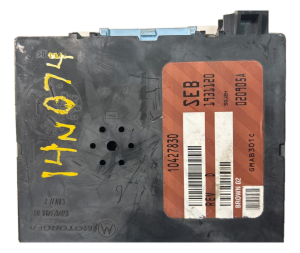
We Have This Part in Stock



The information in this article is provided for general reference and educational purposes only. Vehicle specifications, procedures, and part compatibility can vary by production date, trim level, and region. Always consult your vehicle's factory service manual and verify part numbers before purchasing or performing repairs. Safety-critical components such as airbags, seat belts, and braking systems should be installed by a qualified professional.
- Pontiac Grand Prix:
- 🎬 Helpful Videos
- 🛍️ Shop This Part
- What's Unique About the 1997-2003 Pontiac Grand Prix
- Symptoms You May Notice
- Most Likely Causes
- Rare But Worth Checking
- Diagnosis Steps
- Parts You'll Likely Need
- Related Codes That Often Appear With This One
- Technical Service Bulletins (TSBs) & Recalls
- Platform-Specific Known Issues
- Mechanic-Grade Diagnostic Values
- Scan Tool Commands That Help
- Wiring & Ground Locations
- Real Owner Repair Stories
- OEM Part Supersession History
- Model Year Variations Within This Range
- Diagnostic Flowchart
- Other Known Issues on This Vehicle
- Used vs. New Parts: Buying Guide for This Vehicle
- Real Owner Stories
- 1999-2003 Pontiac Grand Prix GTP 3.8L L67
- 1997-2003 Pontiac Grand Prix 3.8L L67
- Related OBD-II Codes
- Frequently Asked Questions
- 🎟️ Get 5% Off