

P1530 on 2005-2010 Chevrolet Cobalt: A/C Clutch Circuit Fault Causes and Fixes
On a 2005-2010 Cobalt, P1530 almost always means there's an electrical problem with the A/C compressor clutch circuit, causing the A/C to not blow cold. The most likely causes are a bad A/C clutch relay, a failed clutch coil, or damaged wiring. Start by swapping the A/C relay in the under-hood fuse box.
- P1530 on a Cobalt means your A/C isn't working due to an electrical fault in the compressor clutch circuit.
- Ignore any scan tool definition that mentions "Ignition Timing"; this is incorrect for your car.
- Always start diagnosis by swapping the A/C relay in the fuse box; it's a cheap and easy potential fix.
- If the relay is good, the A/C clutch coil is the next most likely culprit. It can be tested with a multimeter at the compressor connector.
- You can likely replace just the A/C clutch assembly without replacing the entire compressor or evacuating the refrigerant, saving significant money.
What's Unique About the 2005-2010 Chevrolet Cobalt

The main confusion with P1530 is that generic code readers often provide an incorrect definition of "Ignition Timing Adjustment Switch Circuit." This definition is for older GM vehicles with distributors and is not applicable to the modern, distributorless Ecotec engine in the Cobalt. On this platform, the code is definitively related to the A/C system. The issue is almost always electrical, involving the relay, the clutch coil itself, or the wiring, rather than a mechanical compressor failure. The PCM will also inhibit the A/C relay if other conditions are present, such as an engine misfire or a critical refrigerant pressure issue, but P1530 specifically points to a fault in the final command circuit itself.
Symptoms You May Notice

- Air conditioning (A/C) does not blow cold air
- The A/C button light may illuminate, but the compressor clutch does not engage (no 'click' sound from the engine bay)
- Check Engine Light is on
- Replacing the entire A/C compressor when only the clutch coil has failed. The clutch is a separate, replaceable part.
- Adding refrigerant to the system. While low refrigerant will prevent the clutch from engaging via a pressure switch, code P1530 specifically points to an electrical circuit fault, not a pressure issue.
- Diagnosing an "Ignition Timing Adjustment Switch" problem. This part does not exist on the Cobalt, and this definition is an error from generic scan tools.
Most Likely Causes

- Faulty A/C Compressor Clutch Relay 🔴 High Probability Relays are common failure items due to constant cycling and electrical stress. This is the most frequently reported and easiest fix for P1530 on these vehicles.
How to confirm: Locate the A/C clutch relay in the under-hood fuse box. 🎬 Watch: Locate and test your Cobalt's AC relay and fuse. On the Cobalt, this is typically a black, four-pin relay. Swap it with an identical relay from a non-critical system (like the horn or fuel pump). If the A/C clutch now engages, the relay is bad.
Typical fix: Replace the faulty relay.
Est. part cost: $10-$25 - Failed A/C Compressor Clutch Coil 🟡 Medium Probability The electromagnetic coil is exposed to heat and vibration at the front of the engine and can fail electrically over time by developing an open or short circuit.
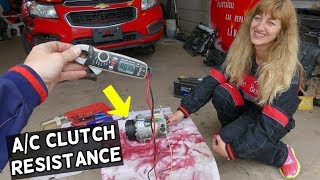
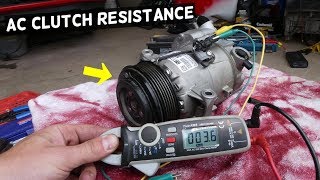
How to confirm: Disconnect the electrical connector at the A/C compressor. Use a multimeter to measure the resistance between the two pins of the clutch coil. A good coil should read between 2 and 5 ohms, with many sources citing a tighter range of 3 to 5 ohms. A reading of infinity (OL) indicates an open circuit, while a reading near zero indicates a short.
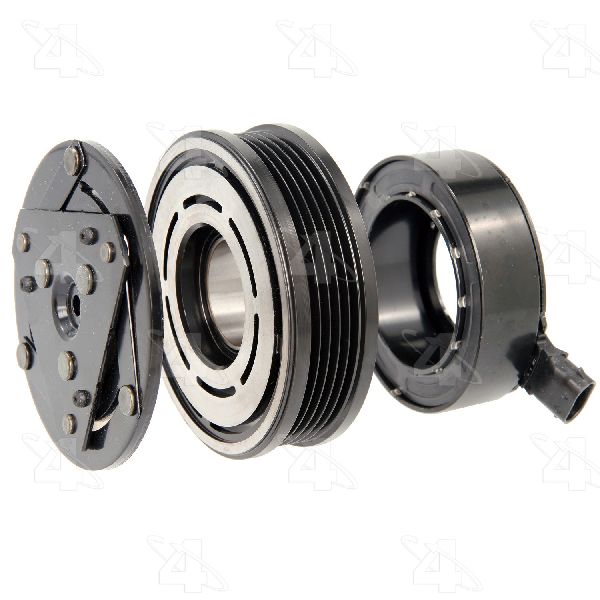
Typical fix: Replace the A/C compressor clutch assembly, which includes the coil, pulley, and plate. This can often be done without discharging the A/C system.
Est. part cost: $50-$120 - Damaged Wiring or Connector ⚪ Low Probability The wiring harness leading to the A/C compressor is located low in the engine bay and can be damaged by road debris, heat, or oil contamination. The two-pin connector itself can also become corroded or loose.
How to confirm: Visually inspect the wiring from the fuse box to the A/C compressor connector for any signs of fraying, melting, or corrosion. With the key on and A/C commanded on, check for 12V at the harness-side connector. If voltage is present but the clutch doesn't engage (and the coil resistance is good), the connection is poor. If no voltage is present, there's a break in the wire from the relay.
Typical fix: Repair the damaged section of the wiring harness or replace the connector pigtail.
Est. part cost: $5-$50
Rare But Worth Checking
- Faulty Powertrain Control Module (PCM): This is very rare. The PCM's internal driver for the A/C clutch relay could fail. This should only be considered after all other possibilities (relay, coil, wiring) have been definitively ruled out.
Diagnosis Steps

- Verify the A/C system is not working and the Check Engine Light is on with code P1530.
- Check the 10-amp A/C fuse in the under-hood fuse box. If it's blown, suspect a short circuit in the clutch coil or wiring.
- Locate the A/C clutch relay in the fuse box. Swap it with a known-good, identical relay (e.g., from the horn or fuel pump) to see if the A/C clutch engages. If it does, the relay is faulty.
- If the relay is good, inspect the wiring and two-pin connector at the A/C compressor for visible damage, corrosion, or looseness.
- Disconnect the compressor clutch connector. Use a multimeter set to Ohms to check for resistance across the two pins on the compressor side. The reading should be between 2-5 ohms. If it's OL (infinity) or near 0, the clutch coil has failed.
- If the coil resistance is good, reconnect it. Back-probe the harness-side connector with a multimeter set to DC Volts. Have a helper turn the A/C on and off. You should see 12V+ appear and disappear with the command. If there is no voltage, there is a break in the wiring between the relay and the compressor.
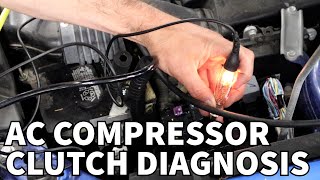
- As a final verification, you can use a jumper wire to briefly apply 12V directly to the clutch coil's power pin. If the clutch engages with direct power, the coil is good and the problem is in the control circuit (wiring, relay, or PCM).
- If all wiring, the relay, and the clutch coil test good, the issue may be with the PCM, but this is extremely unlikely.
Parts You'll Likely Need

- A/C Compressor Clutch Relay
(OEM #13500114 (Supersedes 19116057, 15328866))— This is the most common and easiest part to fail in the circuit. It's a simple electro-mechanical switch that wears out over time. It is a standard 4-pin relay used in many GM applications.
Trusted brands: ACDelco, Standard Motor Products, Four Seasons
OEM price range: $15-$30
Aftermarket price range: $10-$20 - A/C Compressor Clutch Assembly Kit
(OEM #15923803 (For 2.2L L61 Engine))— If the electromagnetic coil inside the clutch fails (open or short circuit), the entire clutch assembly must be replaced. This is the second most likely failure point. Part number varies by engine.
Trusted brands: ACDelco, Four Seasons, Santech, Global Parts Distributors
OEM price range: $90-$150
Aftermarket price range: $50-$120 - A/C Compressor Clutch Connector Pigtail — The connector at the compressor is exposed to the elements and can break or corrode, causing an open circuit. Replacing the pigtail is often necessary if the connector is damaged.
Trusted brands: Dorman, ACDelco
OEM price range: $20-$40
Aftermarket price range: $10-$25
Platform-Specific Known Issues
- The A/C relay and fuse are located in the under-hood fuse box, which is on the driver's side of the engine bay. The cover has a diagram indicating the positions.
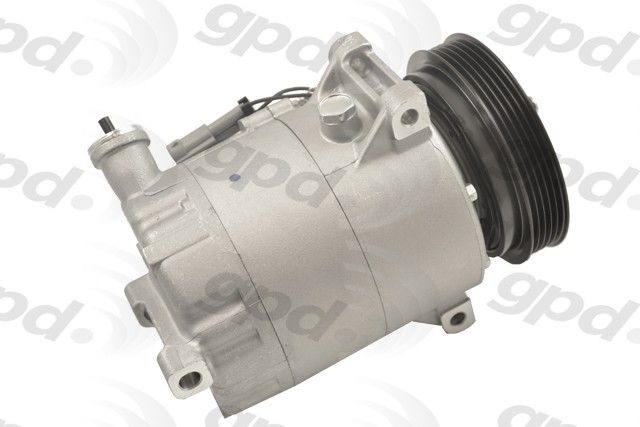
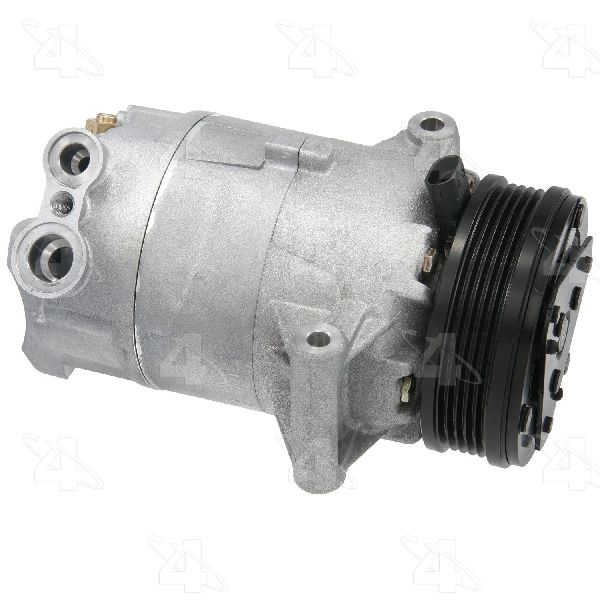
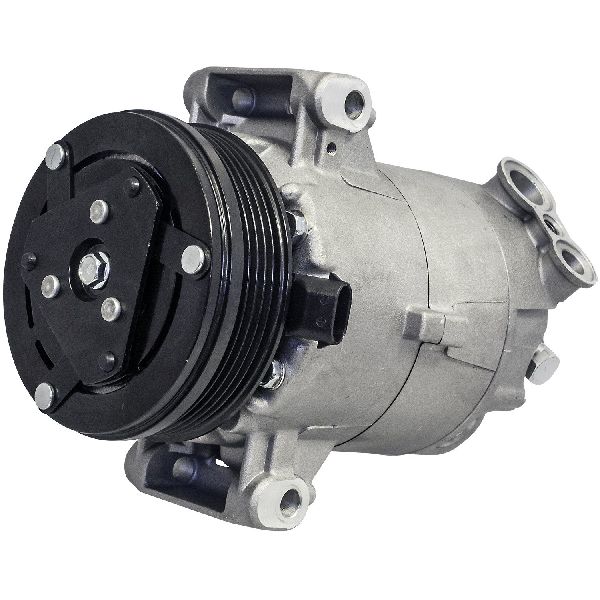
- The A/C compressor is a Delphi CVC6 model on many of these vehicles. The clutch assembly is serviceable on the car without needing to recover the refrigerant.
Mechanic-Grade Diagnostic Values
- A/C Compressor Clutch Coil Resistance — expected: 3.0 to 5.0 Ohms. 🎬 Watch: How to test GM AC clutch coil resistance. Failure: A reading of OL (infinity) indicates an open circuit. A reading near 0 Ohms indicates a shorted coil. Readings outside the 2-5 Ohm range are suspect.
- A/C Compressor Clutch Air Gap (Delphi CVC6) — expected: 0.012 to 0.024 inches (0.3mm to 0.6mm). Failure: An incorrect air gap can cause the clutch to not engage or to drag continuously. This is set with shims during clutch installation.
- A/C Request Signal (Scan Tool) — expected: Parameter should change from 'No' to 'Yes' when the A/C button is pressed inside the cabin.. Failure: If the parameter does not change to 'Yes', the problem is upstream of the PCM (e.g., the HVAC control module, A/C button, or BCM). If it says 'Yes' but the clutch doesn't engage, the problem is in the output circuit (PCM, relay, wiring, clutch).
Scan Tool Commands That Help
- Tech2 / GDS2 or equivalent professional scanner: Observe 'A/C Request' signal in PCM/ECM live data. — This is a critical first step to determine if the PCM is receiving the command to turn the A/C on from the Body Control Module (BCM) and HVAC controls. If the 'A/C Request' parameter doesn't switch to 'Yes' when the A/C button is pressed, the fault is not in the P1530 circuit itself, but in the input to the PCM.
- Tech2 / GDS2 or equivalent professional scanner: Observe 'A/C Relay' command status in PCM/ECM live data. — After confirming the 'A/C Request' is 'Yes', this parameter shows if the PCM is actually trying to command the relay on. If the request is 'Yes' but the relay command is 'No', the PCM is inhibiting engagement due to another condition (e.g., high engine temp, wide open throttle, refrigerant pressure issue). If the command is 'Yes' and the clutch doesn't engage, P1530 is valid and the fault is in the relay, wiring, or clutch coil.
Wiring & Ground Locations

- PCM Connector C1, Pin 6 — At the Powertrain Control Module (PCM/ECM) located on the driver's side of the engine bay, near the fuse box.. This pin, typically a Dark Green/White wire, is the specific output from the PCM that controls (grounds) the A/C compressor clutch relay. A break in this wire between the PCM and the fuse box will prevent the relay from ever activating.
- G105 / G107 — Ground points located on the transmission case, below the main engine harness.. These are the primary grounds for the Engine Control Module (ECM) and other critical engine components. While not directly in the A/C clutch power circuit, a poor ECM ground can cause erratic behavior, including false codes and failure to properly operate output drivers like the one for the A/C relay.
- G101 — Located on the driver's side of the engine compartment, under the coolant reservoir.. This ground point serves multiple systems, including the Body Control Module (BCM). A poor connection here can interfere with the 'A/C Request' signal being sent from the BCM to the PCM, preventing the A/C from being commanded on in the first place.
- Underhood Fuse Block — Driver's side of the engine bay.. This is the central hub for the P1530 circuit. It contains both the 10A A/C fuse and the A/C Clutch Relay. Power flows from the fuse, through the relay's switched contacts, and out to the A/C compressor. The PCM's control wire (C1, Pin 6) activates the relay's coil within this block.
Real Owner Repair Stories
- Cobalt SS Network forum user (2010 Cobalt LT 2.2L) — Sputtering, multiple codes including P0223 (Throttle Position Sensor), and intermittent electrical issues.
❌ Tried (didn't work) Replacing the throttle body., Checking fuses.
✅ What actually fixed it The user found a ground on the back top side of the engine with high resistance. Cleaning and tightening this ground resolved the multiple electronic issues. While not directly a P1530 story, it highlights how a bad engine ground on this platform can cause a cascade of seemingly unrelated electrical faults, which could include A/C circuit issues.
OEM Part Supersession History
19116057, 15328866→13500114— Standard part consolidation and revision by GM.N/A→N/A— A/C Clutch Kit part numbers are engine-specific due to pulley differences.
Heads up: GM 15923803 is for the 2.2L (L61). GM 15923804 is for the 2.0L SC (LSJ). GM 25886926 is for the 2.4L (LE5). Using the wrong kit will result in incorrect belt fitment.
Model Year Variations Within This Range
- 2005-2010: The Cobalt was available with multiple Ecotec engines: 2.2L (L61), 2.4L (LE5), 2.0L Supercharged (LSJ), and 2.0L Turbocharged (LNF). The A/C compressor and clutch assembly part numbers are different across these engines, primarily due to different pulley diameters and rib counts. It is critical to order the correct clutch kit for the specific engine in the vehicle.
- 2009-2010: In 2009, the base 2.2L engine was updated to the LAP version, which included variable valve timing and a slight power increase. While the core A/C system function is the same, wiring diagram references may show different engine VIN codes (e.g., VIN H for the LAP vs VIN F for the L61).
Diagnostic Flowchart
Other Known Issues on This Vehicle
Issues unrelated to this code that are worth knowing about as an owner of this generation:
- Faulty Ignition Switch 🔴 High — Extremely widespread, subject of a massive recall. The switch can move out of the 'Run' position, shutting off the engine and disabling airbags. (Ref: NHTSA Campaign: 14V047000.)
- Electric Power Steering (EPS) Motor Failure 🔴 High — Very common, leading to a sudden loss of power steering assist. Covered by a major recall. (Ref: NHTSA Campaign: 10V073000.)
- Fuel Leaks from Fuel Pump Module or Lines 🔴 High — Common, especially in warmer climates. Plastic ports on the fuel pump module can crack, or steel fuel lines can corrode, causing fuel leaks and strong fuel odors. (Ref: NHTSA Campaigns: 09V419000, 12V459000.)
- Front Lower Control Arm Bushing Failure 🟠 Medium — Widespread failure item, typically after 30,000-60,000 miles. Causes a clunking or rattling noise from the front suspension over bumps. (Ref: No recall, but a very common repair discussed in owner forums.)
- Shift Cable Adjustment Clip Failure 🟠 Medium — Affected a large number of 2009 models. The clip may not be fully engaged, causing a mismatch between the gear shifter position and the actual transmission gear. (Ref: NHTSA Campaign: 09V073000.)
Used vs. New Parts: Buying Guide for This Vehicle
When a used part is the smart pick: A used A/C clutch relay from a junkyard is a perfectly acceptable and cost-effective diagnostic step or permanent fix, as it's a standard, non-wear-critical component. A complete used compressor might be considered if the price is very low and you can verify the clutch engages, but the risk of seal failure is higher.
Donor-vehicle mileage cap: roughly under 80000 miles for the part to have meaningful remaining life.
What to inspect on the donor part:
- For a clutch assembly: check for excessive rust on the clutch plate, ensure the pulley spins freely without noise (indicating a good bearing), and if possible, test the coil resistance with a multimeter before purchase.
- For a relay: look for non-corroded pins and no signs of melting or heat damage on the casing.
- Check the donor vehicle's front end for collision damage; an impact could have damaged the compressor or clutch.
Aftermarket brands forum-validated for this vehicle:
- ACDelco (OEM supplier)
- Four Seasons
- Santech
- Global Parts Distributors (GPD)
Brands owners have reported issues with on this vehicle:
- Unbranded, no-name clutch kits from online marketplaces often have poor quality bearings and coil windings that fail prematurely.
Real Owner Stories
Aggregated from forums and TSBs cited above. Mileages and costs reflect what owners reported in those sources.
2005-2010 Chevrolet Cobalt
Symptoms: AC not working, code p1530
What fixed it: The faulty A/C relay was identified by swapping it with the fuel pump relay. Replacing the bad relay resolved the issue.
Source hint: yourcobalt.com - 'AC not working, code p1530'
2005-2010 Chevrolet Cobalt SS
Symptoms: P1530 Code, A/C clutch not engaging
What fixed it: Swapping the A/C relay with a known-good one fixed the problem.
Source hint: cobaltss.net - 'P1530 Code, A/C clutch not engaging'
Related OBD-II Codes
Frequently Asked Questions
Where is the A/C relay for code P1530 located on my 2005-2010 Cobalt?
What is the easiest way to test the A/C relay without any special tools?
Do I need to have the refrigerant evacuated to fix the P1530 code?
How can I test the A/C compressor clutch coil myself?
What part should I check or replace first for a P1530 code?
Does this P1530 issue also affect the Pontiac G5 or Chevy HHR?
Is there a fuse I should check before diagnosing the P1530 code?
Helpful Videos
Used OEM Parts in Stock


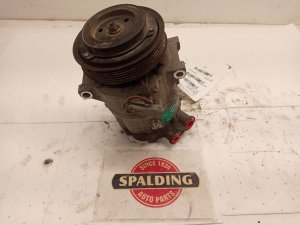

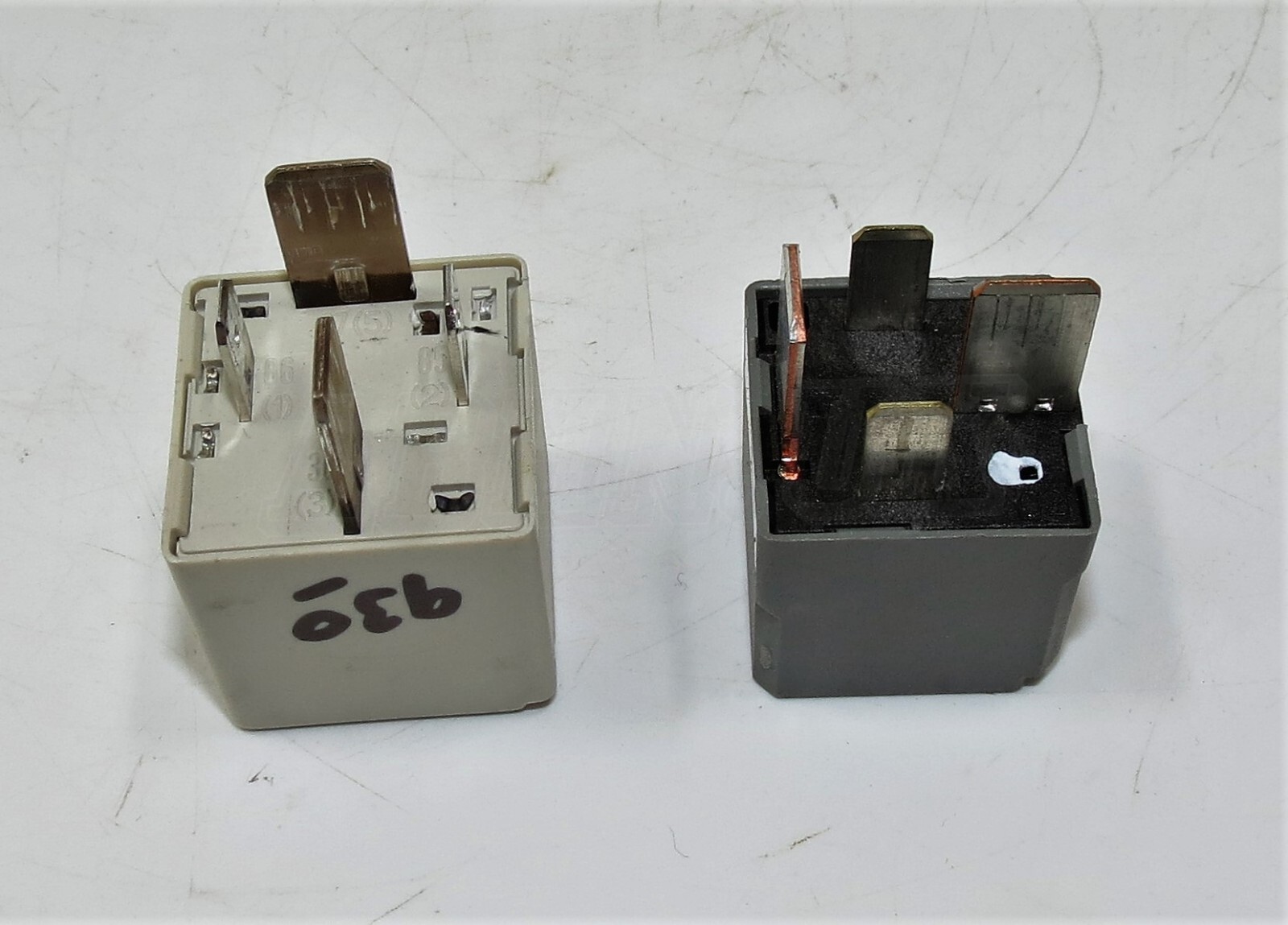
New Aftermarket Parts Available
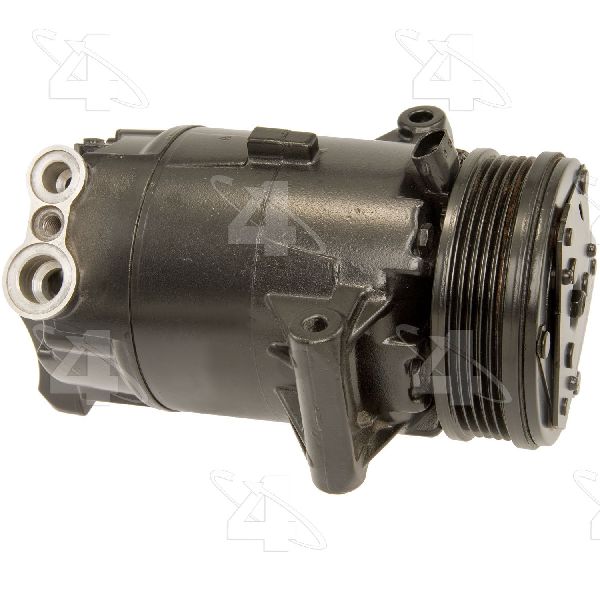
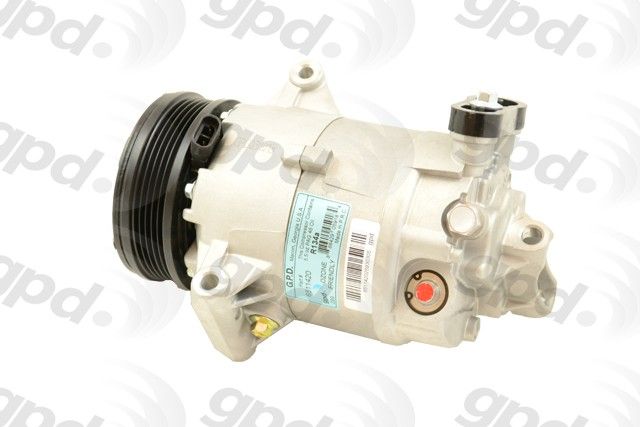

The information in this article is provided for general reference and educational purposes only. Vehicle specifications, procedures, and part compatibility can vary by production date, trim level, and region. Always consult your vehicle's factory service manual and verify part numbers before purchasing or performing repairs. Safety-critical components such as airbags, seat belts, and braking systems should be installed by a qualified professional.
- Chevrolet Cobalt:
- 🎬 Helpful Videos
- 🛍️ Shop This Part
- What's Unique About the 2005-2010 Chevrolet Cobalt
- Symptoms You May Notice
- Most Likely Causes
- Rare But Worth Checking
- Diagnosis Steps
- Parts You'll Likely Need
- Platform-Specific Known Issues
- Mechanic-Grade Diagnostic Values
- Scan Tool Commands That Help
- Wiring & Ground Locations
- Real Owner Repair Stories
- OEM Part Supersession History
- Model Year Variations Within This Range
- Diagnostic Flowchart
- Other Known Issues on This Vehicle
- Used vs. New Parts: Buying Guide for This Vehicle
- Real Owner Stories
- 2005-2010 Chevrolet Cobalt
- 2005-2010 Chevrolet Cobalt SS
- Related OBD-II Codes
- Frequently Asked Questions
- 🎟️ Get 5% Off