

BMW P1524 Fault Code (2000-2015): 'A' Camshaft Position Actuator Signal High Fixes
P1524 on a BMW indicates an electrical fault, specifically a high voltage signal, from the Bank 1 (intake) VANOS solenoid. The most common fix is to replace the faulty VANOS solenoid. Before replacing, a definitive diagnostic step is to swap the intake and exhaust solenoids. If the fault code moves to the exhaust bank (e.g., P0014, 2A87), the solenoid is confirmed to be the problem.
- P1524 on a BMW is an electrical fault for the intake VANOS solenoid, not a generic oil pressure code.
- The easiest and most definitive way to diagnose the solenoid is to swap it with the exhaust solenoid and see if the fault code follows it.
- This is a very DIY-friendly repair, typically requiring only basic hand tools and about an hour of time.
- Always use a high-quality OEM or Genuine BMW replacement solenoid, as cheap aftermarket parts are known to cause repeat failures.
- Before starting the repair, ensure the area around the solenoids is clean to prevent debris from falling into the engine.
What's Unique About the 2000-2015 BMW Various
Unlike some other manufacturers where P1524 can indicate general oil pressure issues, on a BMW, it's a very specific electrical fault code for the VANOS system. BMW's VANOS (Variable Nockenwellensteuerung) technology uses engine oil pressure, metered by these electronic solenoids, to adjust camshaft timing for optimal performance and efficiency. These solenoids are a known failure point across many BMW engines from this era, often due to internal electronic failure or becoming clogged with oil sludge over time, which can lead to overheating and electrical faults.
Generation note: This code applies to a wide range of BMW models and engines from roughly 2000-2015, including but not limited to the M54, N52, N54, and N55 engines. These are found in popular chassis like the 3-Series (E46, E90), 5-Series (E39, E60), X3 (E83), X5 (E70), and Z4 (E85, E89). While the principle is the same, the exact location and part number of the VANOS solenoid may vary slightly between engine families. However, the diagnostic and replacement process is very similar across all of them.
Symptoms You May Notice
- Check Engine Light (MIL) illuminated
- Rough, unstable, or lumpy idle, especially on cold starts
- Loss of power and torque, particularly in the lower RPM range (<3000 RPM)
- Hesitation or inconsistent acceleration
- Reduced fuel efficiency
- Engine may enter 'limp mode' with significantly reduced power
- In some cases, rattling or buzzing noises from the front of the engine where the solenoids are located
- Replacing the camshaft position sensor. While related, the camshaft position sensor *reports* the camshaft's position; it does not control it. A P1524 code points to the *actuator* (solenoid), not the position sensor.
Most Likely Causes
- Failed Intake (Bank 1) VANOS Solenoid 🔴 High Probability The internal electronics of the solenoid can short out over time due to heat cycles and vibration, leading to a 'signal high' fault. They are also susceptible to clogging from oil debris and sludge, which can cause them to stick, work harder, and eventually fail electrically.
How to confirm: The most effective method is to swap the intake solenoid with the exhaust solenoid. Clear the codes and run the engine. If the fault code changes to one for the exhaust solenoid (like 2A87, P0014, or P0015), the solenoid is confirmed bad.
Typical fix: Replace the faulty VANOS solenoid. It is highly recommended to replace both the intake and exhaust solenoids at the same time as a preventative measure, using Genuine BMW or a trusted OEM supplier like Pierburg.
Est. part cost: $40-$180 - Wiring Harness or Connector Issue ⚪ Low Probability Engine heat and vibration can cause wiring insulation to become brittle and crack over time. The harness connector can also become contaminated with oil, leading to poor contact or a short circuit to power.
How to confirm: Disconnect the harness from the solenoid and the DME. Visually inspect the wiring for any visible damage, chafing, or melted insulation. Check the connector for oil contamination or corrosion. Use a multimeter to check for a short to power on the signal wire.
Typical fix: Repair the damaged section of the wiring harness or clean the connector terminals with electrical contact cleaner. If the connector is damaged, it may need to be replaced.
Est. part cost: $5-$50 - Dirty/Low Engine Oil or Incorrect Oil Filter ⚪ Low Probability While not a direct cause of an electrical 'signal high' fault, incorrect oil viscosity, low oil level, or a clogged/improperly installed oil filter can restrict oil flow. This forces the solenoids to work harder, potentially leading to overheating and eventual electrical failure. A missing or broken center cage on the oil filter cap is a known issue that allows unfiltered oil to circulate, clogging the solenoids.
How to confirm: Check the engine oil level and condition. Inspect the oil filter and the oil filter cap to ensure the center support cage is intact. Using a non-OEM filter has been linked to VANOS issues in forum discussions.
Typical fix: Perform an oil and filter change using a high-quality, BMW-approved oil and an OEM-spec filter. This is crucial maintenance but may not clear an existing P1524 code if the solenoid has already failed electrically.
Est. part cost: $70-$150
Rare But Worth Checking
- Failed Engine Computer (DME): This is extremely rare, but a failure in the DME's internal driver circuit for the VANOS solenoid could theoretically cause a 'signal high' fault. This should only be considered after all other possibilities, especially the solenoid and wiring, have been exhaustively ruled out.
- Worn Camshaft Bearing Ledge: More commonly associated with mechanical VANOS codes like 2A82 and 2A87, severe wear on the camshaft bearing ledges can cause a loss of oil pressure to the VANOS unit. While this typically causes a 'jammed' or 'slow response' fault, it's a severe underlying condition that stresses the entire system and could contribute to solenoid failure. This is a major repair and should be investigated only if new solenoids do not fix recurring VANOS-related codes.
Diagnosis Steps
- Read the fault codes with a BMW-compatible scanner to confirm P1524 is present and note any other codes, such as 2A82 or 3100.
- Check the engine oil level and condition. Ensure the oil is full and clean. Critically, inspect the oil filter cap to ensure the plastic center cage is present and not broken.
- Locate the two VANOS solenoids at the front of the engine on the cylinder head. The top one is typically the intake (Bank 1), and the bottom is the exhaust.
- Disconnect the electrical connectors. Clean any oil from the connectors. Unbolt each solenoid (usually a single 10mm bolt).
- Carefully wiggle and pull the solenoids out. They may be snug. Be prepared for a small amount of oil to spill.
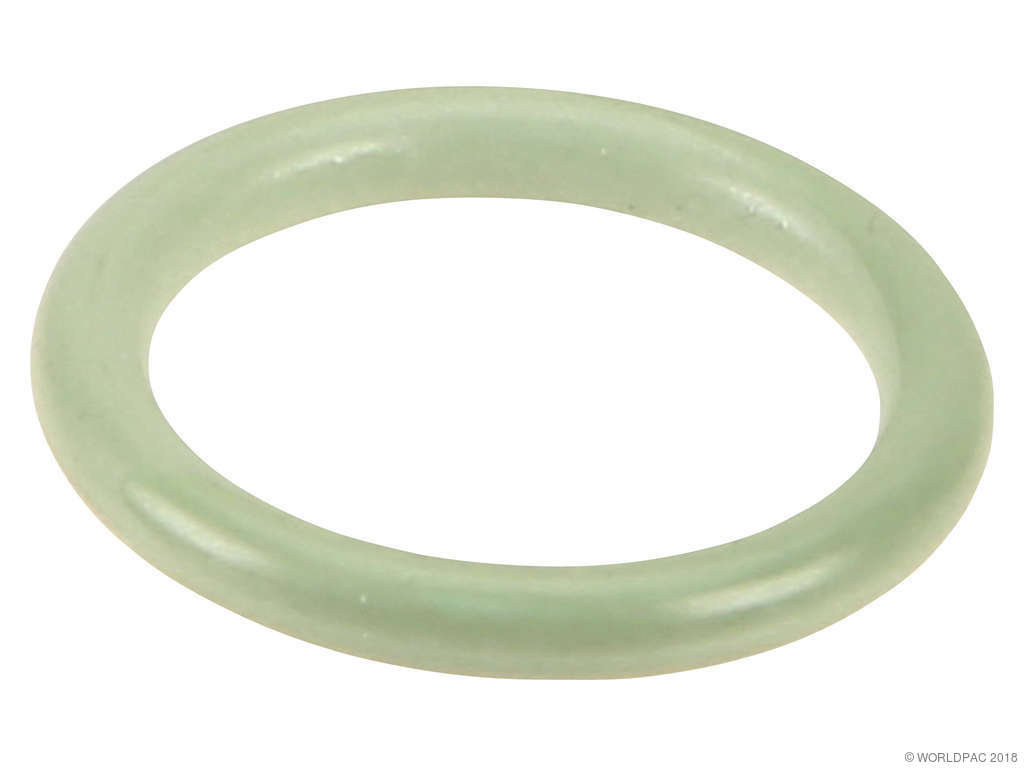
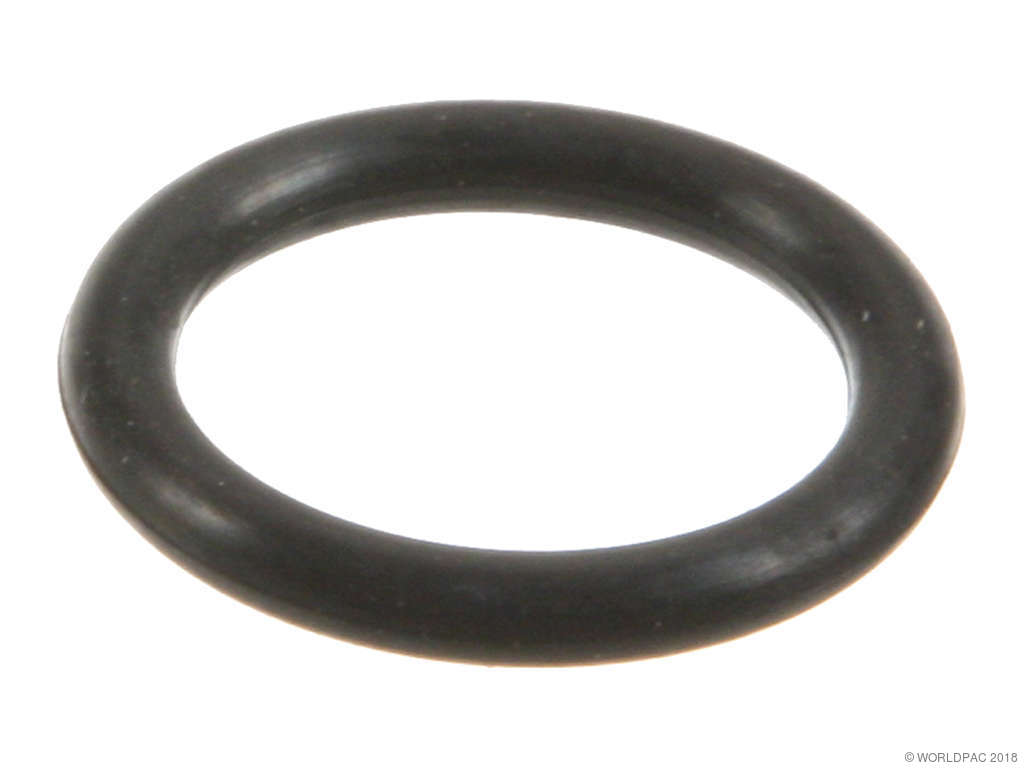
- Swap their positions: install the original intake solenoid into the exhaust slot, and the original exhaust solenoid into the intake slot. Ensure the O-rings are properly seated. A helpful tip is to place the O-ring into the port in the cylinder head first, then insert the solenoid.
- Reconnect the electrical connectors, ensuring the correct harness goes to the correct solenoid in its new position.
- Clear all fault codes with the scanner and start the engine. Let it run for a few minutes and rev it gently.
- Re-scan for codes. If the code has changed to an exhaust-related fault (like 2A87 or P0014), you have confirmed the solenoid you moved to the exhaust position is faulty and needs replacement.
- If the P1524 code returns, the problem is not the solenoid. The issue lies in the wiring harness for the intake solenoid or, rarely, the DME. Proceed with inspecting the wiring for shorts or damage.
- (Optional) You can test the suspected faulty solenoid's resistance with a multimeter; a healthy one should read between 10-12 ohms. You can also carefully apply 12V to its pins to see if the internal piston clicks, indicating mechanical function, though this does not test for electrical shorts under load.
Parts You'll Likely Need
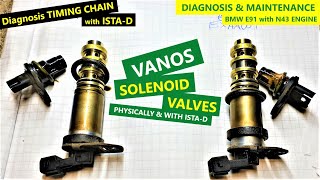
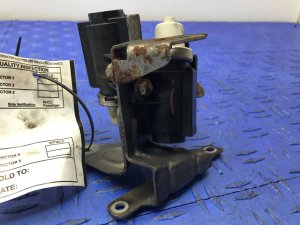
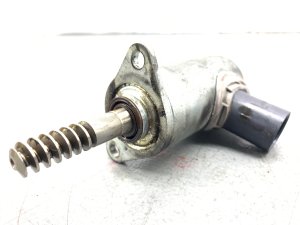
- VANOS Solenoid (Camshaft Position Actuator)
(OEM #11367585425 (supersedes 11367516293))— This is the component directly identified by the fault code. It is the most common point of failure for this issue. Part number 11367585425 is a widely used updated part for many N-series engines.
Trusted brands: BMW (Genuine), Pierburg (OEM supplier), VDO, Febi Bilstein
OEM price range: $120-$180
Aftermarket price range: $40-$90
Related Codes That Often Appear With This One
- 2A82 — This is a BMW-specific code for 'VANOS intake solenoid jammed mechanically'. It can appear alongside P1524 if the solenoid is both electrically faulty and physically stuck, or if there are underlying oil pressure issues.
- 2A87 — This is the exhaust-side equivalent of 2A82 ('VANOS exhaust solenoid jammed mechanically'). It will often appear after swapping a faulty intake solenoid to the exhaust position during diagnosis, confirming the solenoid is the problem.
- P1397 — This code relates to the Camshaft Position Sensor 'B' (Exhaust). It can sometimes appear if the VANOS system's malfunction on the intake side causes a timing discrepancy that the exhaust sensor also flags as an issue.
- 3100 — A BMW-specific code for 'Boost-pressure control, deactivation'. This is a consequential fault that the DME sets when a VANOS problem is detected, putting the engine into a reduced power mode to protect it.
Technical Service Bulletins (TSBs) & Recalls
- BMW SI B11 02 08: This Service Information Bulletin addresses VANOS faults (like 2A82, 2A87) and consequential limp mode (3100). It notes that faults can be caused by insufficient oil pressure supply. The procedure advises checking for mechanical/electrical solenoid failure, ensuring the oil filter cap insert isn't missing, and inspecting for camshaft bearing ledge wear as a deeper potential cause. If tests are inconclusive, the recommended fix is to replace both VANOS solenoids and perform an oil service.
Platform-Specific Known Issues
- On N52 and N54 engines, it is highly recommended to use only Genuine BMW
Mechanic-Grade Diagnostic Values
- VANOS Solenoid Coil Resistance — expected: Approximately 10-12 Ohms. Failure: A reading significantly higher or lower than the expected range, or an open circuit (infinite resistance), indicates a failed coil. A reading of ~1 Ohm has also been observed on some solenoids.
- VANOS Solenoid Activation Voltage — expected: 12V (pulsed, PWM signal from DME). Failure: Applying a direct 12V source should cause the solenoid's internal piston to audibly 'click' and move. A lack of movement indicates a mechanical jam. This test does not confirm the absence of an electrical short under load, which is the cause of P1524.
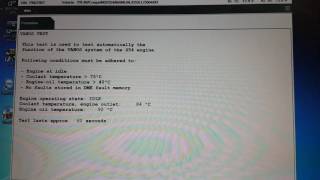
- ISTA VANOS Test - Valve Quality — expected: A value of 0.5 or 0.6 is considered within specification.. Failure: A value significantly lower than the spec, or a status of 'not okay' on the adjustment time spread, points to a failing solenoid or mechanical issue.
Scan Tool Commands That Help
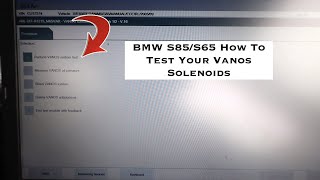
- ISTA: Perform VANOS System Test — This function runs the engine and actuates the solenoids through their range to test their response time and function. It provides an 'OK' or 'Not OK' status for adjustment time, which is a key indicator of solenoid health.
- ISTA: Delete VANOS Adaptations — This should be performed after replacing VANOS solenoids. It clears the learned adjustments the DME made to compensate for the old, failing parts, allowing it to learn the characteristics of the new solenoids.
- ISTA: Learn Valvetronic Limit Positions — After replacing solenoids and clearing adaptations, this function helps the system relearn the maximum and minimum travel stops for the camshaft adjusters, ensuring proper timing control.
Wiring & Ground Locations
- VANOS Solenoid Connector — Front of the cylinder head. On inline-6 engines, they are typically stacked vertically or side-by-side. The intake solenoid is usually the top or front-most one.. The connector is the primary interface for testing. The signal wire from the DME can be tested here for a short to power. Oil contamination in the connector can also cause issues.
- DME (Engine Computer) Ground — Varies by chassis, but on an E90, for example, major ground points are located on the chassis rails in the engine bay. The DME itself is housed in a white plastic box in the engine bay, typically on the passenger side.. A poor ground for the DME can cause a floating voltage reference, leading to incorrect sensor and actuator readings, although this is a very rare cause for a specific code like P1524.
Real Owner Repair Stories
- Bimmerpost user (2006 BMW 320i (E90) with N46 engine) — Fault codes for VANOS solenoids.
❌ Tried (didn't work) Scanning the car after disconnecting the top (intake) solenoid connector showed a fault for the *exhaust* solenoid.
✅ What actually fixed it The user discovered the wiring harnesses for the intake and exhaust solenoids had been accidentally swapped at some point. When the top cable was disconnected, it triggered an exhaust fault, and vice-versa. Correcting the harness connections resolved the diagnostic confusion.
OEM Part Supersession History
11367516293→11367585425— Updated design for improved reliability and performance.
Heads up: The newer part (11367585425) is generally backward compatible with vehicles that used the older part number.
Model Year Variations Within This Range
- 2000-2006 (e.g., M54 engine): Early generation VANOS systems on engines like the M54 may have different solenoid designs and are often more susceptible to seal failure causing related issues. However, the electrical failure mode leading to P1524 is similar.
- 2006-2015 (e.g., N52, N54, N55 engines): These later engines use an updated VANOS solenoid (e.g., 11367585425) which is the most commonly discussed part in relation to this code. While physically different from M54 parts, the diagnostic principle of swapping them remains the same.
Diagnostic Flowchart
Other Known Issues on This Vehicle
Issues unrelated to this code that are worth knowing about as an owner of this generation:
- Electric Water Pump and Thermostat Failure 🔴 High — Commonly fails between 60,000-100,000 miles on N52/N54/N55 engines, often without warning, leading to rapid overheating.
- Oil Filter Housing Gasket (OFHG) and Valve Cover Gasket (VCG) Leaks 🟠 Medium — Extremely common across all N-series engines. Gaskets become hard and brittle with heat and age, typically starting to leak around 50,000-80,000 miles. An OFHG leak can drip oil onto the serpentine belt, causing it to slip or shred.
- N54 High-Pressure Fuel Pump (HPFP) Failure 🔴 High — A notorious issue on the N54 engine, leading to long cranks, stuttering, and sudden limp mode. So common that BMW extended the warranty to 10 years/120,000 miles for this part. (Ref: NHTSA Action Number: PE10021 (Warranty Extension))
- N54 Turbocharger Wastegate Rattle 🟠 Medium — Caused by wear in the wastegate actuator rod/bushing. Presents as a metallic rattling sound on deceleration. While not an immediate failure, it eventually requires expensive turbocharger replacement.
- N52 Hydraulic Valve Lifter (HVA) Ticking 🟡 Low — Common on earlier N52 engines, especially in cold weather. A ticking noise comes from the top of the engine due to insufficient oil flow to the lifters. It is generally considered an annoyance and not mechanically harmful.
- N55 Plastic Charge Pipe Failure 🟠 Medium — The stock plastic charge pipe becomes brittle with heat and age and can crack or break under boost pressure, causing a sudden loss of power. It is a very common failure, especially on tuned vehicles.
Used vs. New Parts: Buying Guide for This Vehicle
When a used part is the smart pick: A used part makes sense only as a temporary diagnostic tool. For example, buying a single used OEM solenoid from a junkyard to swap in and confirm the diagnosis before purchasing new parts. Given the high failure rate and the low cost of aftermarket options, installing a used solenoid as a permanent fix is not recommended.
Donor-vehicle mileage cap: roughly under 80000 miles for the part to have meaningful remaining life.
What to inspect on the donor part:
- Ensure the part is from a reputable recycler that lists the donor vehicle's mileage.
- Inspect the fine mesh screens on the solenoid for tears or heavy, caked-on sludge that can't be cleaned.
- Look for a Genuine BMW logo on the plastic connector; avoid parts with no branding.
- Check that the O-rings are present, though they should always be replaced with new ones before installation.
OEM-only on this vehicle (don't cheap out):
- While not strictly 'OEM-only', forum consensus strongly favors using Genuine BMW or the OEM supplier (Pierburg) for VANOS solenoids to avoid compatibility and premature failure issues.
Aftermarket brands forum-validated for this vehicle:
- Pierburg (often the original equipment manufacturer)
- NTK
Brands owners have reported issues with on this vehicle:
- Unbranded 'eBay specials' or 'Amazon' solenoids are frequently reported to fail quickly or be dead on arrival.
- Dorman (mixed reviews, some report success, others failure)
- Vaico (some users have reported receiving defective parts)
Real Owner Stories
Aggregated from forums and TSBs cited above. Mileages and costs reflect what owners reported in those sources.
BMW E90/E92 N52
Symptoms: The owner found dirty, fuel-contaminated oil and experienced VANOS-related fault codes.
What fixed it: The dealer diagnosed bad VANOS solenoids due to the contaminated oil.
Source hint: Bimmerpost (E90 E92) Forum: Just got back from the dealer and they said my Vanos Solenoids were bad..
BMW E90/E92 N52
Symptoms: Immediate hesitation and running issues after installing aftermarket Vaico solenoids as preventative maintenance.
What fixed it: Replacing the off-brand solenoids with Genuine BMW parts resolved the issue.
Source hint: Bimmerpost (E90 E92) Forum: Hesitation after changing vanos solenoids
BMW F30/F32 N55
Symptoms: Sudden drivetrain malfunction and limp mode.
What fixed it: Replacing a single faulty VANOS solenoid.
Source hint: Bimmerpost (F30 F32) Forum: Vanos and Vanos solenoid failure beware!
Related OBD-II Codes
Frequently Asked Questions
Does BMW SI B11 02 08 apply to my car if I have a limp mode code 3100?
Can I use aftermarket Vaico solenoids to fix the P1524 code on my E90/E92?
Is it true that a broken oil filter cap can cause VANOS codes like P1524?
Should I replace both solenoids if only the intake one is showing a fault?
What is the correct resistance for a healthy VANOS solenoid on an N52 engine?
Will a low oil level trigger the P1524 code?
Helpful Videos

Used OEM Parts in Stock
New Aftermarket Parts Available

The information in this article is provided for general reference and educational purposes only. Vehicle specifications, procedures, and part compatibility can vary by production date, trim level, and region. Always consult your vehicle's factory service manual and verify part numbers before purchasing or performing repairs. Safety-critical components such as airbags, seat belts, and braking systems should be installed by a qualified professional.
- BMW Various:
- 🎬 Helpful Videos
- 🛍️ Shop This Part
- What's Unique About the 2000-2015 BMW Various
- Symptoms You May Notice
- Most Likely Causes
- Rare But Worth Checking
- Diagnosis Steps
- Parts You'll Likely Need
- Related Codes That Often Appear With This One
- Technical Service Bulletins (TSBs) & Recalls
- Platform-Specific Known Issues
- Mechanic-Grade Diagnostic Values
- Scan Tool Commands That Help
- Wiring & Ground Locations
- Real Owner Repair Stories
- OEM Part Supersession History
- Model Year Variations Within This Range
- Diagnostic Flowchart
- Other Known Issues on This Vehicle
- Used vs. New Parts: Buying Guide for This Vehicle
- Real Owner Stories
- BMW E90/E92 N52
- BMW E90/E92 N52
- BMW F30/F32 N55
- Related OBD-II Codes
- Frequently Asked Questions
- 🎟️ Get 5% Off