

P1523 on 2005-2007 Mercury Mariner 3.0L V6: Intake Manifold Runner Control Fixes
On a 2005-2007 Mariner 3.0L, P1523 almost always means the Intake Manifold Runner Control (IMRC) actuator has failed, usually due to broken plastic linkage clips or a failed internal motor. The actuator is located on the driver's side of the intake manifold, is relatively easy to access, and is a common, inexpensive DIY fix.
- P1523 on this Mariner points directly to a problem with the Intake Manifold Runner Control (IMRC) system, not other engine components.
- The most likely cause is a failed IMRC actuator, which is a plastic part on the driver's side of the intake manifold that gets brittle from engine heat.
- Before buying parts, visually inspect the actuator's linkage arm and clips for breaks. Then, have a helper rev the engine past 3,500 RPM to see if the arm moves.
- This is a DIY-friendly repair that can be done with basic hand tools in about an hour, restor
What's Unique About the 2005-2007 Mercury Mariner
The 3.0L Duratec V6 in the Mariner and its twins, the Ford Escape and Mazda Tribute, relies on a plastic-bodied IMRC actuator with small plastic linkage clips. These components are mounted on the side of the engine and are highly susceptible to becoming brittle and failing from constant heat cycles. While other Ford engines may use P1523 for different systems like variable camshaft timing, on this specific platform, the code almost exclusively points to the failure of this IMRC actuator or its linkage.
Symptoms You May Notice
- Check Engine Light is on
- Noticeable hesitation or 'flat spot' in power during acceleration, especially around 3,000-3,500 RPM.
- Reduced engine power, particularly at low or high RPMs
- Slightly rough or unstable idle
- Audible buzzing or rattling from the driver's side of the intake manifold if the linkage is broken or the actuator motor is struggling.
- A feeling that the engine is sluggish or 'bogging down' when accelerating from a stop.
- Replacing spark plugs or ignition coils hoping to fix the hesitation, when the issue is mechanical/actuator-related.
- Confusing the IMRC system with the throttle body or EGR system.
- Replacing the Idle Air Control (IAC) valve, which can cause idle issues but typically won't set a P1523 code.
Most Likely Causes
- Failed IMRC Actuator / Broken Linkage Clips 🔴 High Probability The actuator assembly and its connecting clips are made of plastic that becomes brittle over time due to engine heat, leading to cracks and breakage. The internal motor can also fail from fatigue.
How to confirm: Locate the actuator on the driver's side of the upper intake manifold. Visually inspect the plastic arm and clips for breaks. Have a helper rev the engine past 3,500 RPM; the arm should move. If it's broken or doesn't move, it has failed. If no movement is seen, you can test the solenoid with a multimeter for resistance or by applying 12V directly to its pins to listen for a 'click'.
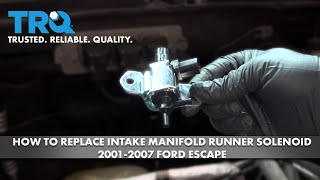
Typical fix: Replace the entire IMRC actuator assembly. While replacing just the clips is possible, the actuator motor itself is also a common failure point, so replacing the whole unit is the recommended and more reliable repair. 🎬 Watch: Step-by-step guide to replacing the IMRC actuator
Est. part cost: $50-$150 - Binding Intake Runner Flaps ⚪ Low Probability Over many miles, carbon can build up inside the intake manifold, causing the metal flaps to stick. This can strain and burn out the actuator motor.
How to confirm: If a new actuator fails quickly or if the linkage moves but seems strained, the intake manifold may need to be removed to inspect and clean the internal runner flaps. Manually try to move the runner linkage on the manifold (with the actuator disconnected) to feel for binding.
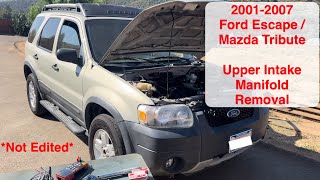
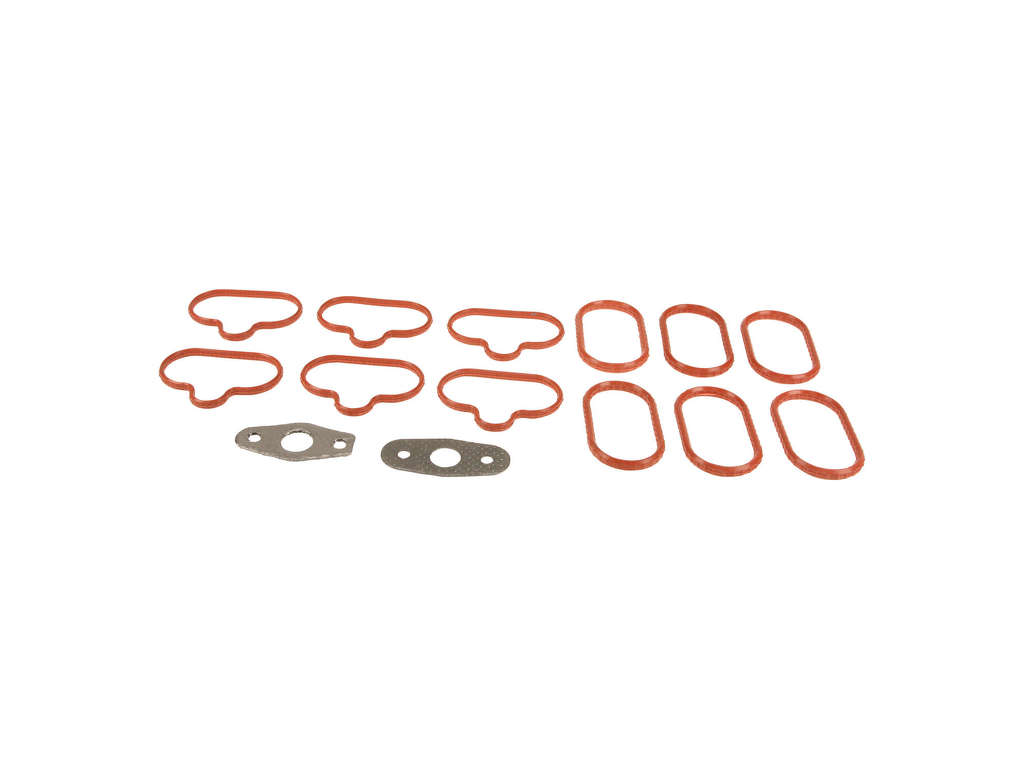
Typical fix: Remove the upper intake manifold and clean the carbon deposits from the runner flaps and bores. This is a more involved repair that also requires replacing the intake manifold gaskets. 🎬 See how to remove the upper intake manifold
Est. part cost: $30-$60 for gaskets
Rare But Worth Checking
- Damaged Wiring or Connector: The wiring harness to the IMRC actuator can be damaged by heat or chafing against the engine. It's worth a quick visual inspection and check with a multimeter for 12V power and a good ground at the connector before ordering parts.
- Powertrain Control Module (PCM) Fault: This is extremely rare. A common cause for PCM failure on this platform is a shorted ignition coil, which can damage the module's internal drivers. This should only be considered after all other possibilities have been exhaustively ruled out by a professional.
Diagnosis Steps
- Scan the vehicle's computer to confirm P1523 is the active code.
- Locate the IMRC actuator. It is a small black plastic box on the driver's side end of the upper intake manifold.
- Visually inspect the actuator's linkage arm and the small plastic connecting clips connecting it to the metal rods on the manifold. Look for obvious cracks, breaks, or disconnection.
- Start the engine. Have an assistant briefly rev the engine to 3,500-4,000 RPM while you watch the actuator arm. You should see it move decisively.
- If the linkage is broken, the actuator assembly and/or clips need replacement.
- If the linkage is intact but does not move, disconnect the electrical connector. Use a multimeter to check for 12V power and a good ground at the connector with the key on. If power and ground are present, the actuator is faulty.
- If power or ground is missing, inspect the wiring harness for damage. The harness runs near hot engine components and can become brittle or chafe through.
- As a final check of the actuator, you can apply 12V and ground directly to the two pins on the actuator. You should hear an audible 'click' as the solenoid engages. If there is no click, the internal coil is open, and the part has failed.
Parts You'll Likely Need
- Intake Manifold Runner Control (IMRC) Actuator
(OEM #3S4Z-9J559-AA)— This is the complete assembly that contains the motor and linkage arm. The plastic components and internal motor are the primary failure points for this code.
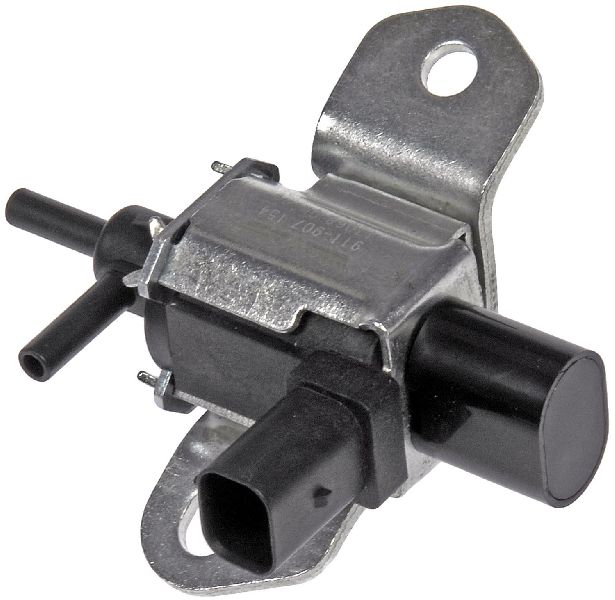
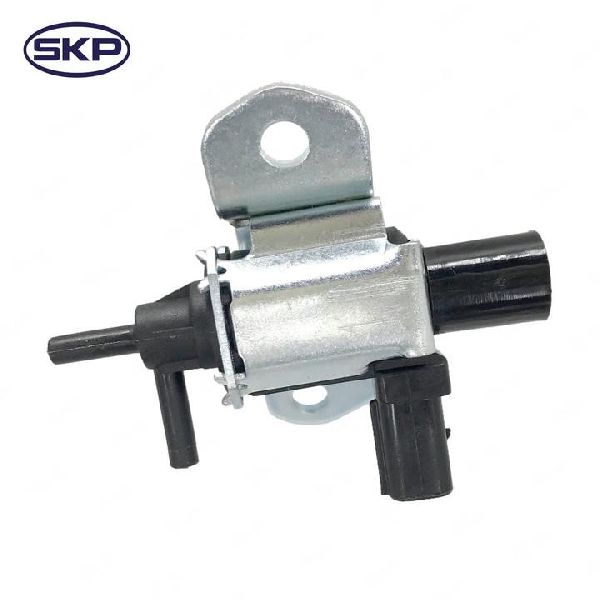
Trusted brands: Motorcraft (OEM), Dorman (911-907), Standard Motor Products (RCS102)
OEM price range: $100-$150
Aftermarket price range: $40-$90 - Intake Manifold Runner Control Linkage Clips/Bushings
(OEM #F5RZ9F955AB)— If only the small plastic connecting clips are broken and the actuator motor is still functional, replacing just the clips can be a very low-cost repair. However, given the high failure rate of the actuator motor, this is often a temporary fix.
Trusted brands: Dorman, Various aftermarket kits
OEM price range: $15-$25
Aftermarket price range: $10-$20
Related Codes That Often Appear With This One
- P2004 — This code means 'Intake Manifold Runner Control Stuck Open'. An electrical fault (P1523) can prevent the actuator from moving, causing the runners to be stuck in one position.
- P2006 — This code means 'Intake Manifold Runner Control Stuck Closed'. Similar to P2004, a circuit fault can cause the runners to fail in the closed position.
- P2008 — This code indicates an 'Intake Manifold Runner Control Circuit/Open'. It is another electrical fault code pointing to the same system and often the same root cause: a failed actuator solenoid.
Platform-Specific Known Issues
- The IMRC actuator is located directly next to the upper radiator hose, making access slightly tight but still manageable with basic hand tools.
- Owners on forums like Escape-City.com frequently discuss this exact failure, with many successful DIY repairs confirming the high failure rate of the Dorman 911-907 and OEM actuators.
Mechanic-Grade Diagnostic Values
- IMRC Actuator/Solenoid Coil Resistance — expected: 20-40 Ohms. Failure: A reading of 0 Ohms (shorted) or infinite/OL (open circuit) indicates a failed internal coil in the actuator.
- IMRC Actuator Connector - Power Supply Pin (Red/Yellow Wire) — expected: ~12V (Battery Voltage) with Key On, Engine Off.. Failure: 0V or significantly low voltage points to a problem with the power supply from the PCM power relay or a wiring issue.
- IMRC Actuator Connector - Ground Pin (Black Wire) — expected: Near 0 Ohms continuity to a known good chassis ground.. Failure: High resistance or an Open Loop (OL) reading indicates a bad ground connection, likely at ground point G101.
- IMRC Actuator Connector - PCM Command Pin (Brown Wire) — expected: Voltage should be ~12V when inactive (low RPM) and drop to 0V (grounded by PCM) to activate the actuator above ~3500 RPM.. Failure: Voltage that never changes when the engine is revved, or is always at 0V, points to a PCM or wiring issue.
- IMRC Actuator Connector - Position Feedback Pin (Orange/White Wire) — expected: This wire sends a signal back to the PCM indicating the actuator's position. The voltage should change as the actuator moves.. Failure: No change in voltage when the actuator is commanded to move (either by revving or with a scan tool) can indicate a fault within the actuator's position sensor.
Scan Tool Commands That Help
- Ford IDS, FORScan, or equivalent professional scanner: IMRC Actuator Active Command / On-Board System Test — This bidirectional command manually cycles the IMRC actuator with the engine off (key on). It is the most definitive way to test the actuator's motor, linkage, and electrical circuit, separating it from engine RPM inputs. If the actuator moves with the scan tool but not while driving, the problem is likely related to PCM logic or its inputs rather than the actuator itself.
Wiring & Ground Locations
- IMRC Actuator Connector — On the IMRC actuator itself, a black plastic box on the driver's side of the intake manifold, near the upper radiator hose.. This 4-pin connector is where all electrical tests (power, ground, command signal, feedback) are performed to diagnose the circuit.
- G101 — For the 3.0L engine, this primary engine ground point is located near the battery.. This is the likely termination point for the IMRC actuator's ground circuit (Black wire). A loose or corroded connection at G101 can cause an open or high-resistance ground path, leading to a P1523 circuit code even if the actuator itself is good.
OEM Part Supersession History
1S7Z-9J559-BA→3S4Z-9J559-AA— Part revision by Ford.
Diagnostic Flowchart
Other Known Issues on This Vehicle
Issues unrelated to this code that are worth knowing about as an owner of this generation:
- Premature Alternator Failure 🔴 High — Common around 100,000-150,000 miles. The alternator is in a difficult-to-access location, making replacement labor-intensive.
- CD4E Automatic Transmission Problems 🔴 High — This transmission is known to be a weak point, with issues like hard shifting, slipping, or complete failure being common. (Ref: Recall 15V606000 for certain remanufactured replacement units, but no general recall for original units.)
- Rusted Rear Wheelhouse / Shock Towers 🔴 High — Very common in salt-belt regions. The seam where the inner fender panels are spot-welded rusts through, compromising the upper rear shock mount.
- Oil Leaks (Oil Pan & Timing Cover Gaskets) 🟠 Medium — The Duratec 3.0L is well-known for developing oil leaks from the oil pan gasket and timing cover gasket as it ages.
- Failed Ignition Coils Causing PCM Damage 🟠 Medium — While not extremely common, a failing ignition coil can short and send a voltage spike to the Powertrain Control Module (PCM), damaging the driver circuit for that coil and requiring a PCM repair or replacement.
Used vs. New Parts: Buying Guide for This Vehicle
When a used part is the smart pick: For this specific repair, purchasing a used IMRC actuator from a junkyard is strongly discouraged. The part is a known high-failure item due to heat-induced plastic degradation and motor fatigue. A used part is likely to have the same brittleness and wear as the part being replaced, offering a very short service life.
What to inspect on the donor part:
- Not applicable, as used parts are not recommended for this component.
Aftermarket brands forum-validated for this vehicle:
- Dorman (p/n 911-907) is a widely available and commonly used aftermarket replacement that is reported by owners to be a reliable alternative to the OEM part.
- Standard Motor Products (p/n RCS102) is another reputable aftermarket brand for this component.
Brands owners have reported issues with on this vehicle:
- Unbranded, 'white-box' parts from online marketplaces should be avoided. While cheaper, they often have a higher failure rate and may not perform to OE specifications, leading to a repeat repair.
Real Owner Stories
Aggregated from forums and TSBs cited above. Mileages and costs reflect what owners reported in those sources.
2006 Mercury Mariner — 140000 miles
Symptoms: Check Engine Light (P1523), audible vacuum leak from the back of the engine.
What fixed it: The owner found the actuator rod had come out of its grommet. The fix was to put the rod back in the grommet and secure it with a small zip tie.
Source hint: Ford Truck Enthusiasts Forums thread titled 'P1523 code - Ford Truck Enthusiasts Forums'
2005 Ford Escape 3.0L V6
Symptoms: Check Engine Light with code P1523; owner could see the lever moving when revved but code persisted.
What fixed it: Owner fabricated a new clip out of a small piece of metal to replace the broken plastic clip that holds the IMRC cable to the bracket.
Source hint: Escape-City.com forum citation
Related OBD-II Codes
Frequently Asked Questions
Is there a specific replacement part recommended for the IMRC actuator on my 2005-2007 Mercury Mariner?
Where exactly is the IMRC actuator located on the Duratec 3.0L V6 engine?
Can I just replace the plastic clips if they are broken, or do I need the whole assembly?
My Mariner is hesitating around 3,000 RPM; could this be related to P1523?
Is there a recall for the transmission issues I'm having alongside this engine code?
Could carbon buildup cause my new IMRC actuator to fail prematurely?
Helpful Videos
Used OEM Parts in Stock

New Aftermarket Parts Available


The information in this article is provided for general reference and educational purposes only. Vehicle specifications, procedures, and part compatibility can vary by production date, trim level, and region. Always consult your vehicle's factory service manual and verify part numbers before purchasing or performing repairs. Safety-critical components such as airbags, seat belts, and braking systems should be installed by a qualified professional.
- Mercury Mariner:
- 🎬 Helpful Videos
- 🛍️ Shop This Part
- What's Unique About the 2005-2007 Mercury Mariner
- Symptoms You May Notice
- Most Likely Causes
- Rare But Worth Checking
- Diagnosis Steps
- Parts You'll Likely Need
- Related Codes That Often Appear With This One
- Platform-Specific Known Issues
- Mechanic-Grade Diagnostic Values
- Scan Tool Commands That Help
- Wiring & Ground Locations
- OEM Part Supersession History
- Diagnostic Flowchart
- Other Known Issues on This Vehicle
- Used vs. New Parts: Buying Guide for This Vehicle
- Real Owner Stories
- 2006 Mercury Mariner — 140000 miles
- 2005 Ford Escape 3.0L V6
- Related OBD-II Codes
- Frequently Asked Questions
- 🎟️ Get 5% Off