

OBD-II Code P1518: A Multifaceted Fault - IMRC, TAC Module, or Starter Circuit Error
The ultimate guide to what P1518 means, why it triggers, and how to fix it on your Ford, GM, Subaru, and more.
- P1518 has three distinct definitions: an Intake Manifold Runner Control (IMRC) stuck open on Fords, a Throttle Actuator Control (TAC) communication loss on GMs, and a starter circuit fault on Subarus.
- On Ford 4.2L V6 and Mustang engines, visually inspect the rear of the intake manifold for broken plastic linkage clips (Dorman #47099) before buying a $150 replacement actuator.
- On Chevrolet and GMC trucks, never replace the $300 TAC module without first load-testing the battery and cleaning the G103/G104 ground straps on the back of the cylinder heads.
- Driving a GM vehicle with P1518 triggers a 'Reduced Engine Power' safety mode that limits speed to 25 mph, while ignoring a Ford P1518 for over 6 months will destroy the catalytic converter, costing upwards of $1,500.
What Does P1518 Mean?

P1518 is a manufacturer-specific trouble code with three distinct meanings. For Ford, Mazda, Lincoln, and BMW, the Intake Manifold Runner Control (IMRC) is stuck open, harming low-RPM torque and fuel efficiency. For GM vehicles, it indicates a critical communication failure between the Powertrain Control Module (PCM) and the Throttle Actuator Control (TAC) module, triggering 'Reduced Engine Power' mode. For Subaru, it points to a 'Starter Switch Circuit Low Input 🎬 Watch: A short explanation of the Subaru starter circuit fault.', preventing the vehicle from starting.
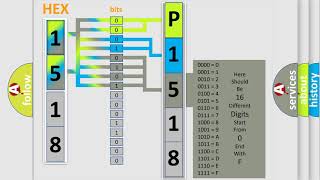
Technical definition: The official SAE/OBD-II definition varies by manufacturer. For Ford, Lincoln, Mercury, and BMW, it is "Intake Manifold Runner Control (IMRC) Stuck Open". For General Motors vehicles, it is "Throttle Actuator Control (TAC) Module Serial Data Circuit". For Subaru, it is "Starter Switch Circuit Low Input".
Can I Drive With P1518?
Yes, But With Caution. For Ford and BMW, you can drive, but expect reduced power and lower fuel economy. On GM vehicles, this code forces 'Reduced Engine Power' mode, severely limiting speed and creating a safety risk in traffic. Prolonged driving with an incorrect air-fuel mixture damages the catalytic converter, a repair costing $800-$2500+. Do not drive more than 100 miles before diagnosing.
Common Causes

- Broken IMRC linkage clips or bushings (Ford/Mazda) (Very Common) — Small plastic clips connecting the IMRC actuator to the runner flaps become brittle and break. This inexpensive part failure detaches the linkage.
- Wiring and Connector Issues (GM) (Common) — Damaged, chafed, or corroded wires between the TAC module and PCM disrupt communication. Water intrusion into the TAC module connector and rodent damage are frequent culprits.
- Low Battery Voltage or Bad Grounds (GM) (Common) — A weak battery or poor ground connection (especially G103/G104) triggers a false P1518 during startup. The TAC module fails to initialize correctly. Always check voltage before replacing parts.
- Faulty or sticking IMRC actuator/solenoid (Ford/BMW) (Common) — The actuator motor fails electrically, or the linkage it controls seizes.
- Failing Starter Switch / Circuit (Subaru) (Less Common) — Indicates low voltage input from the starter signal circuit to the ECU. Causes include a failing ignition switch, faulty clutch safety switch, or damaged wiring.
- Heavy carbon buildup on intake runner flaps (Less Common) — Carbon deposits inside the intake manifold physically prevent the runner flaps from moving, causing them to stick open.
- Vacuum leaks (Less Common) — On vacuum-controlled IMRC systems, a cracked or disconnected hose causes a loss of control.
- Faulty Throttle Actuator Control (TAC) module (GM) (Rare) — The TAC module fails internally, preventing PCM communication and forcing reduced power mode.
- Improper Starting Procedure (Subaru) (Rare) — Multiple failed start attempts without fully depressing the clutch pedal, or a floor mat obstructing the pedal, sends an unexpected signal to the ECU.
- Recent PCM Reprogramming (GM) (Rare) — Reprogramming a GM PCM sometimes causes a temporary TAC communication error. Clear the DTC after programming to see if it returns.
- Faulty Powertrain Control Module (PCM) (Very Rare) — The engine's main computer fails. Consider this only after eliminating all other possibilities.
Symptoms

- Check Engine Light is on — The Malfunction Indicator Lamp (MIL) illuminates on the dashboard.
- Reduced Engine Power / Limp Mode (GM) — The vehicle accelerates poorly. GM vehicles display a 'Reduced Engine Power' message and severely limit speed as a safety precaution.
- Poor fuel economy (Ford/BMW) — With intake runners stuck open on Ford/BMW models, the air-fuel mixture is incorrect for low-speed driving, increasing fuel consumption.
- Rough idle or engine hesitation — The engine runs unevenly, stutters, or hesitates at lower RPMs due to an IMRC fault.
- Engine fails to start or cranks slowly (Subaru) — Subarus experience a no-start, intermittent start, or slow cranking condition due to starter circuit faults.
- Unusual engine noises (Ford) — A rattling or clicking noise from the intake manifold indicates a loose or broken IMRC linkage rod 🎬 Watch: How to diagnose and fix Ford IMRC linkage issues. on Ford vehicles.
- Engine Stalling (GM) — Complete loss of communication between the TAC and PCM causes the engine to start and immediately shut off.
Diagnostic Flowchart
Tap your situation to follow the diagnostic path that matches what you're seeing on this code.
Common Fixes & Costs
- Replace IMRC linkage bushings/clips (Ford) — Parts: $5-$15, Labor: $300-$450, ~2.5 hr book time (Intermediate)
- Repair wiring/ground for TAC module (GM) — Parts: $10-$50, Labor: $225-$450, ~2.5 hr book time (Professional)
- Replace IMRC actuator/solenoid — Parts: $100-$150, Labor: $200-$400, ~2.5 hr book time (Intermediate)
- Replace Throttle Actuator Control (TAC) Module (GM) — Parts: $150-$300, Labor: $100-$200, ~1 hr book time (Intermediate)
- Replace Ignition Switch or Clutch Switch (Subaru) — Parts: $30-$80, Labor: $100-$250, ~1.5 hr book time (Intermediate)
- Clean carbon buildup from intake manifold — Parts: $20-$50, Labor: $400-$700, ~5 hr book time (Professional)
Used vs. New Parts: Buying Guide
When a used part is worth it: Buying a used GM TAC module is risky due to multiple design revisions and pre-existing electrical failures. Buy new OEM or high-quality remanufactured units. For Ford IMRC actuators, buy new inexpensive plastic bushings rather than a complete used assembly.
Donor-vehicle mileage cap: roughly under 60000 miles for the part to have meaningful remaining life.
Donor quality checklist:
- Match part numbers exactly.
- Avoid parts from high-mileage vehicles or harsh climates.
- Ensure donor vehicle lacked electrical problems.
Decision logic:
- If The part is an electronic module with known reliability issues or multiple revisions (e.g., GM TAC module) → Buy new OEM or a high-quality remanufactured unit to ensure compatibility and longevity.
- If The failure is a small, inexpensive component of a larger assembly (e.g., Ford IMRC bushings) → Buy the new component (bushings) instead of a complete used assembly.
- If The vehicle is old (>150k miles) and the budget is extremely tight → A used part is a viable short-term option, but accept the risk of a shorter lifespan and a part-only warranty.
Warranty tradeoff: Used parts carry 30-90 day part-only warranties, excluding labor. New aftermarket parts offer one-year warranties.
Worst-case if a used part fails: $300-$600 if a used electronic module fails, requiring repeat labor and a second replacement part.
What Happens If You Wait — Timeline
- 0-1 month: Code appears. Ford experiences rough idle. GM enters 'Reduced Engine Power' mode, limiting speed to 25 mph. (MPG impact: 5-10%% · Added cost: $0-50 in wasted fuel)
- 1-4 months (Ford/IMRC Fault): Engine runs with sub-optimal air-fuel mixture. Fuel economy drops. Thermal stress builds on the catalytic converter. (MPG impact: 10-15%% · Added cost: $50-150 in wasted fuel)
- 4-8 months (Ford/IMRC Fault): Catalytic converter substrate degrades and melts. P0420 code appears. Vehicle fails emissions testing. (MPG impact: 15-20%% · Added cost: $800-$2500 (catalytic converter replacement is now likely required))
- 8+ months (Ford/IMRC Fault): Complete catalytic converter failure. Broken substrate clogs exhaust, causing severe power loss and potential engine damage. (MPG impact: >20%% · Added cost: $1500-$4000+ (cost of cat replacement plus potential for engine or exhaust system damage))
Cost of Not Fixing It
- 0-1 month: Drop in fuel economy (5-15%) and poor acceleration. GM vehicles become unsafe for highway driving due to limp mode. (Added cost: Increased fuel costs.)
- 1-6 months: Prolonged incorrect air-fuel mixture overheats and degrades the catalytic converter. (Added cost: $800-$2500)
- 6+ months: Complete catalytic converter failure triggers P0420 and guarantees emissions test failure. Potential engine damage from ingested debris. (Added cost: $1500-$4000+)
Diagnosis Steps

- Verify the Code and Definition
Use an OBD-II scanner to confirm P1518. Identify the manufacturer-specific definition (IMRC for Ford, TAC for GM, Starter Circuit for Subaru) to dictate the diagnostic path.
Tools: OBD-II Scanner (Beginner) - Visual Inspection & Battery Check
For Ford/BMW, inspect the IMRC actuator, linkage rods, and clips for breaks. For GM, inspect TAC module wiring for chafing or loose connections. For all makes, fully charge and load-test the battery; voltage below 5.23V triggers false codes.
Tools: Flashlight, Inspection Mirror, Digital Multimeter, Battery Load Tester (Beginner) - Test IMRC Mechanical Operation (Ford)
With the engine off, move the IMRC linkage by hand. It must move smoothly without binding. On Ford 4.2L V6 engines, rotate the actuator motor shaft vertically with a screwdriver to reconnect a dropped rod.
Tools: Hand tools, Screwdriver (Intermediate) - Command IMRC Actuator with Scan Tool (Ford)
Use a bi-directional scan tool to command the IMRC actuator open and closed. Watch the linkage for smooth movement and listen for the motor. This confirms the actuator receives commands and functions.
Tools: Bi-directional scan tool (Intermediate) - Check for Vacuum Leaks
If the IMRC system is vacuum-operated, inspect all connected vacuum lines for cracks or disconnections. A hissing sound near the intake manifold at idle indicates a leak.
Tools: Flashlight, Stethoscope (Intermediate) - Test Starter Switch Circuit (Subaru)
For Subaru, use a multimeter to check voltage at the clutch interlock switch and starter solenoid signal wire while cranking. A voltage drop below 10.5V indicates high resistance or a failing ignition switch.
Tools: Digital Multimeter, Wiring diagram (Advanced) - Advanced: GM TAC Module Voltage Drop Test
For GM, perform a loaded voltage drop test. Back-probe the TAC module ground wire and connect the other lead to the battery negative. The reading must be under 0.2 volts. Repeat for the power feed wire. Higher readings indicate a poor connection.
Tools: Digital Multimeter with back-probes, Wiring diagram (Professional) - Advanced: Ford IMRC Monitor Circuit Test
For Ford, command the IMRC flaps open and closed while back-probing the monitor signal wire at the actuator connector. Voltage must switch (e.g., >4.5V open to <1.5V closed). If voltage remains static while the actuator moves, the internal position sensor is dead.
Tools: Bi-directional scan tool, Digital Multimeter with back-probes (Professional)
When This Code Triggers (Freeze-Frame Conditions)
- Ignition Voltage: > 5.23V (On GM vehicles, the PCM logs this code upon losing communication with the TAC module while ignition voltage is above 5.23V. Low voltage during cranking also triggers it.)
- Engine RPM: 0 - 3000 RPM (The fault logs with the key on, engine off (0 RPM), during cranking, or while driving. On GM vehicles, raise engine speed to 3,000 RPM to locate intermittent shorts.)
- Engine State: Key On, Engine Off or Running (The PCM-TAC communication check (GM) or IMRC monitor test (Ford) runs whenever the ignition is on. The fault logs in under one second.)
- Engine Coolant Temp: Any (The code is independent of engine temperature. However, cold weather exacerbates low voltage issues in Subaru starter circuits, triggering the code during cold starts.)
Related Codes
- P1519 — Ford IMRC stuck closed. Shares hardware and diagnostic steps with P1518 (stuck open).
- P1516 — GM TAC Module Performance. Appearing with P1518, it strongly points to a fault in the TAC module, wiring, or power supply.
- P2004 — Generic OBD-II code for IMRC Stuck Open. The standardized version of Ford's P1518.
- P2135 — GM Throttle Position Sensor Correlation Error. Prioritize diagnosing the P1518 communication fault first, as a failing TAC module causes erratic TPS data.
Climate & Environmental Factors
- Low Temperatures: Reduces battery cranking amperage. On GM vehicles, voltage dropping below 5.23V during startup triggers a false P1518. On Subarus, it causes temporary low voltage in the starter circuit.
- High Humidity / Water Exposure: Moisture enters the GM TAC module connector (especially on C5 Corvettes), creating an electrolyte that corrodes pins and severs communication.
- Road Salt / Corrosive Environments: Accelerates degradation of wiring and ground connections. Compromised GM ground straps (G103/G104) lead directly to P1518.
How to Talk to a Mechanic About This Code
Say this: "I have a P1518 code. For a Ford, please visually inspect the IMRC linkage clips before quoting a full actuator. For a GM, please load-test the battery and check TAC module grounds before quoting a new module. For a Subaru, focus on the starter circuit and ignition switch."
This signals you understand specific common failures for your vehicle. It directs the shop toward the most likely, cheapest fixes first, preventing expensive and unnecessary part replacements.
Avoid saying:
- 'My check engine light is on, just fix it.'
- 'The internet said to replace the TAC module.'
- 'My car is in limp mode, I don't know why.'
Questions to ask before authorizing the repair:
- For a Ford: Did you visually confirm the linkage is broken, or did you test the actuator with a scan tool?
- For a GM: What was the result of the battery load test and the voltage drop test on the TAC module ground wire?
- For a Subaru: What was the voltage reading at the starter signal wire when cranking?
- Can you provide a detailed breakdown of parts versus labor costs?
- What is the warranty on this specific repair, including both parts and labor?
Where to Take It: Dealer vs Independent vs Chain
- Dealer:
Best for: Vehicles under warranty., Complex electrical issues on newer models requiring OEM diagnostic tools.
Downsides: Significantly higher labor rates., Quicker to replace whole assemblies rather than repairing small components. (Typical cost: +40% vs. baseline) - Independent Shop:
Best fit. Experienced independent technicians know the common mechanical (Ford) and electrical (GM) causes of P1518 and provide cost-effective repairs.
Best for: Out-of-warranty vehicles., Diagnosing well-documented problems like P1518 on Ford and GM.
Downsides: Diagnostic capabilities vary; seek ASE-certified technicians specializing in electrical issues. (Typical cost: +0% vs. baseline) - Chain Shop:
Avoid. The diagnostic complexity of P1518 is not a good fit for chain shops.
Best for: Simple, routine maintenance.
Downsides: Technician skill varies., Lacks advanced diagnostic tools for make-specific electrical codes, leading to misdiagnosis. (Typical cost: -10% vs. baseline)
When to Walk Away From the Repair
If the estimated repair cost exceeds 50% of your car's private-party value, seriously consider replacing the vehicle.
- Car worth $4000, fix is $2100: Walk away. The repair cost exceeds 50% of the car's value.
- Car worth $12000, fix is $750: Fix it. This repair is well below the threshold and keeps a valuable car running.
- Car worth $2500, fix is $1500: Walk away. A $1,500 repair on a $2,500 car is a poor financial decision; other age-related failures will follow.
What Scan Tool You Need for This Code
Minimum: A code reader that displays manufacturer-specific codes and live data PIDs, especially system voltage.
A $20 reader only gives the 'P1518' number. It cannot display live voltage data for GM diagnosis or command the Ford IMRC actuator to test its function, leading to guesswork.
Budget: BlueDriver Pro (~$100) — Pairs with a smartphone to read specific definitions and view live data like charging voltage. Great starting point for DIYers.
Mid-range: Innova 5610 / Foxwell NT510 Elite (~$300) — Adds bi-directional control. Critical for Ford P1518 to command the IMRC actuator open and closed without disassembly.
Professional: Autel MaxiCOM MK808S / XTOOL D7 (~$450-650) — Provides full bi-directional control and topology mapping. Instantly highlights the source of data loss on GM vehicles.
How to Clear the Code After You Fix It
- Reconnect battery if disconnected.
- Use an OBD-II scan tool to clear codes.
- Perform a complete drive cycle to run readiness monitors.
Drive cycle (~20 minutes): Cold start and idle for 3 minutes with A/C on. Accelerate to 55 mph and hold steady for 5 minutes. Coast down to 20 mph without braking. Accelerate back to 55 mph and hold for 5 minutes.
Readiness monitors affected: Catalyst monitor, Oxygen (O2) sensor monitor, Evaporative (EVAP) system monitor, Heated Oxygen Sensor (HO2S) monitor
Before emissions retest: drive at least 50 miles to fully set monitors.
Watch out for:
- Clearing the code does not fix the problem; it will return.
- Clearing codes resets readiness monitors to 'Not Ready,' causing automatic emissions test failures until a 50-mile drive cycle is completed.
Will This Fail Emissions / State Inspection?
Yes — this code typically fails an OBD-II emissions inspection.
- California: An active P1518 code causes an automatic smog check failure. A full drive cycle is required after repairs to set readiness monitors.
- New York: The presence of P1518 and an illuminated MIL automatically fails the OBD-II emissions inspection.
- Texas: Vehicles with an active P1518 code fail inspection in emissions-testing counties.
Most Commonly Affected Vehicles

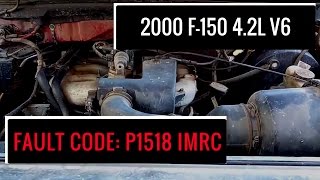
- Ford F-150 (1997-2003) — Extremely common on the 4.2L V6 due to failing IMRC bushings (Dorman #47099). Actuator is difficult to access at the rear of the engine.
- Chevrolet Silverado (2000-2006) — Prone to TAC module communication failures. Check for bad grounds (G103/G104) and water intrusion in the TAC connector.
- Ford Mustang (1999-2004) — V6 and V8 models suffer broken plastic IMRC linkage clips, requiring intake manifold removal.
- GMC Sierra (2000-2006) — Shares the Silverado's electrical system and identical TAC module communication problems.
- Chevrolet Corvette (1997-2004) — C5 Corvettes experience P1518 due to TAC module communication loss from intermittent wiring, low voltage, and water intrusion.
- Subaru Outback / Legacy (2005-2012) — P1518 means 'Starter Switch Circuit Low Input'. Check for floor mat obstruction or a failing clutch interlock switch.
- BMW 3-Series (E46) (1998-2006) — Indicates a DISA valve (IMRC) failure. Broken plastic flaps or pivot pins can be ingested by the engine.
- Mazda MPV (2000-2006) — Uses a Ford-derived V6 engine susceptible to IMRC actuator and linkage failures.
Manufacturer-Specific Notes
- Ford / Lincoln / Mazda: Almost always a mechanical linkage or actuator failure. Focus on plastic clips at the rear of the manifold.
- General Motors (Chevrolet / GMC): Strictly an electrical code. Always load-test the battery and inspect main ground straps (G103/G104) before replacing the TAC module.
- Subaru: Unrelated to the intake manifold. Points directly to the starter circuit. Check the upper clutch interlock switch on manual models.
Real Owner Stories
2000 Ford F-150 4.2L V6 with 185K miles - Easy Fix
Check Engine Light came on with code P1518. The truck had a high idle, poor fuel mileage, and felt sluggish.
What they tried:
- Googled the code and found it was for IMRC stuck open.
- Used a flashlight and mirror to inspect the back of the engine and found a control rod hanging down, disconnected from the butterfly valve linkage.
Outcome: Owner found a disconnected control rod using a mirror. Replaced broken IMRC bushings (Dorman #47099) for $5, restoring normal idle and performance.
Lesson: On Ford 4.2L V6 engines, inexpensive plastic bushings are the primary cause. Visual inspection saves buying a costly actuator.
2003 Chevy Suburban 6.0L - Misdiagnosis Story
Vehicle would enter 'Reduced Engine Power' mode when climbing a steep hill under load, triggering code P1518.
What they tried:
- Replaced the throttle pedal assembly.
- Replaced the throttle body assembly, gasket, and plug.
Outcome: Owner replaced throttle pedal and body to fix 'Reduced Engine Power'. A mechanic later found an intermittent wiring harness connection.
Lesson: Never replace expensive GM parts for P1518 without diagnosing wiring, connectors, and battery voltage first.
1998 C5 Corvette - Intermittent Electrical Gremlin
Car would randomly enter 'Reduced Engine Power' and 'Service Traction Control' mode while driving on the highway. Clearing code P1518 would temporarily restore normal operation.
What they tried:
- Cleared the codes, which worked for a while but the issue returned randomly over several months.
- Checked battery voltage, which seemed okay.
- Wiggled ignition switch connectors while monitoring voltage at the TAC module fuse (#17), suspecting a loose connection.
Outcome: Car randomly entered limp mode. Traced to a known TSB for 1997-98 Corvettes regarding overly sensitive TAC module software. Replaced TAC module with updated part.
Lesson: Always check Technical Service Bulletins (TSBs) for intermittent electrical issues to avoid chasing phantom wiring problems.
2005 Subaru Outback (Manual) - Unusual Cause
Car intermittently failed to crank, and when it did, it threw code P1518 'Starter Switch Circuit Low Input'.
What they tried:
- Initially suspected a bad neutral safety switch, but that's for automatic transmissions.
- Jumped the upper clutch pedal switch with a wire, which seemed to work temporarily but the problem returned.
Outcome: Car intermittently failed to crank. Owner traced high resistance to the ignition switch contacts using a voltmeter. Replacing the switch fixed the no-start and the code.
Lesson: Subaru P1518 is an electrical code for the starter circuit. Trace voltage drops from the fuse box to find high resistance.
How to Prevent This Code From Triggering
- Clean Engine & Battery Ground Connections (Every 30,000 miles or 2 years) — Corroded ground straps cause GM TAC module errors. Clean and re-secure main ground points to prevent voltage drops.
- Use Top Tier Fuel and Occasional Fuel System Cleaner (Every fill-up / Every 5,000 miles) — Prevents carbon deposit formation on Ford IMRC runner flaps, stopping them from physically sticking.
- Apply Dielectric Grease to TAC Module Connector (GM) (Once, or whenever connector is serviced) — Apply to GM TAC module connectors exposed to moisture to prevent water intrusion and pin corrosion.
- Perform an 'Italian Tune-Up' (spirited driving) (Periodically) — Running the engine through its full RPM range actuates IMRC flaps, burning off light carbon deposits.
- Install an Oil Catch Can (Once) — Intercepts oil vapors on direct-injection engines, reducing carbon buildup that causes IMRC flaps to stick.
Frequently Asked Questions
What are the most common mistakes when diagnosing P1518?
For GM, replacing the expensive TAC module without load-testing the battery or checking grounds. For Ford, replacing the entire IMRC actuator when only a $5 plastic linkage clip is broken. Always perform a visual inspection first.
Can a bad ground wire really cause P1518 on my Chevy truck?
Yes. The TAC module requires stable voltage and ground to communicate with the PCM. A loose or corroded ground strap (G103/G104) is a primary cause, especially after engine repairs.
My Subaru P1518 came on in the cold and then went away. Should I worry?
Cold weather lowers battery voltage, causing a momentary low input on the starter circuit. It also signals an early failure of the ignition or clutch switch. If the car starts normally, monitor it; if starting issues persist, diagnose the circuit.
What is the Dorman part number for the Ford IMRC clips?
Dorman part number 47099 is the standard replacement for broken plastic bushings on many Ford engines. Verify fitment for your specific vehicle. This inexpensive kit solves the issue for most owners.
What does 'Intake Manifold Runner' mean?
Runners are passages delivering air to the engine cylinders. Butterfly flaps inside change the air's path length to optimize torque at low RPMs and horsepower at high RPMs. The IMRC system controls these flaps.
Why does my GM truck say 'Reduced Engine Power' with code P1518?
This is a critical safety feature. P1518 means the main computer lost communication with the electronic throttle control module. The computer defaults to a limp mode restricting speed to prevent unintended acceleration.
Is it expensive to fix code P1518?
Costs vary by manufacturer. A broken Ford clip costs $5 in parts but up to $500 in labor if the manifold requires removal. GM wiring repairs average $200-$450, while a new TAC module costs $150-$300.
Key Takeaways
- P1518 has three distinct definitions: an Intake Manifold Runner Control (IMRC) stuck open on Fords, a Throttle Actuator Control (TAC) communication loss on GMs, and a starter circuit fault on Subarus.
- On Ford 4.2L V6 and Mustang engines, visually inspect the rear of the intake manifold for broken plastic linkage clips (Dorman #47099) before buying a $150 replacement actuator.
- On Chevrolet and GMC trucks, never replace the $300 TAC module without first load-testing the battery and cleaning the G103/G104 ground straps on the back of the cylinder heads.
- Driving a GM vehicle with P1518 triggers a 'Reduced Engine Power' safety mode that limits speed to 25 mph, while ignoring a Ford P1518 for over 6 months will destroy the catalytic converter, costing upwards of $1,500.
Helpful Videos

The information in this article is provided for general reference and educational purposes only. Vehicle specifications, procedures, and part compatibility can vary by production date, trim level, and region. Always consult your vehicle's factory service manual and verify part numbers before purchasing or performing repairs. Safety-critical components such as airbags, seat belts, and braking systems should be installed by a qualified professional.
- 🎬 Helpful Videos
- What Does P1518 Mean?
- Can I Drive With P1518?
- Common Causes
- Symptoms
- Diagnostic Flowchart
- Common Fixes & Costs
- Used vs. New Parts: Buying Guide
- What Happens If You Wait — Timeline
- Cost of Not Fixing It
- Diagnosis Steps
- When This Code Triggers (Freeze-Frame Conditions)
- Related Codes
- Climate & Environmental Factors
- How to Talk to a Mechanic About This Code
- Where to Take It: Dealer vs Independent vs Chain
- When to Walk Away From the Repair
- What Scan Tool You Need for This Code
- How to Clear the Code After You Fix It
- Will This Fail Emissions / State Inspection?
- Most Commonly Affected Vehicles
- Manufacturer-Specific Notes
- Real Owner Stories
- 2000 Ford F-150 4.2L V6 with 185K miles - Easy Fix
- 2003 Chevy Suburban 6.0L - Misdiagnosis Story
- 1998 C5 Corvette - Intermittent Electrical Gremlin
- 2005 Subaru Outback (Manual) - Unusual Cause
- How to Prevent This Code From Triggering
- Frequently Asked Questions
- What are the most common mistakes when diagnosing P1518?
- Can a bad ground wire really cause P1518 on my Chevy truck?
- My Subaru P1518 came on in the cold and then went away. Should I worry?
- What is the Dorman part number for the Ford IMRC clips?
- What does 'Intake Manifold Runner' mean?
- Why does my GM truck say 'Reduced Engine Power' with code P1518?
- Is it expensive to fix code P1518?
- Key Takeaways
- 🎟️ Get 5% Off