

P1516 on 2003-2012 Saab 9-3: Throttle Performance, Limp Mode Causes, and Fixes
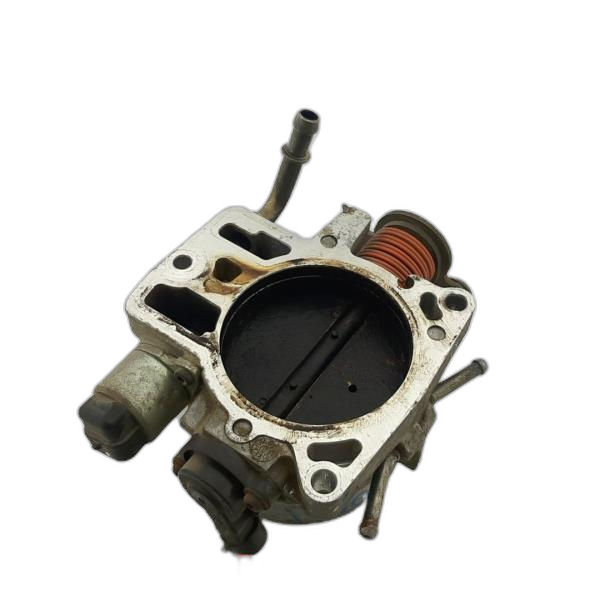
On a 2003-2012 Saab 9-3, code P1516 almost always means the electronic throttle body is failing or dirty, causing the car to enter 'Reduced Engine Power' (limp mode). The most common fix is to replace the entire throttle body assembly, a common GM part. Before replacing, thoroughly clean the unit and check wiring and grounds. Expect to pay $150-$400 for the part.
- P1516 on a Saab 9-3 will cause a 'Reduced Engine Power' state, making the car unsafe to drive normally.
- The most likely cause is a faulty electronic throttle body assembly.
- A simple cleaning of the throttle body is a worthwhile first step and may solve the problem if it's caused by carbon buildup.
- Ensure you get the correct part number for your model year, as it changed around 2007.
- A throttle relearn procedure is required after cleaning or replacing the throttle body for the repair to be successful.
What's Unique About the 2003-2012 Saab 9-3
The 2003-2012 Saab 9-3 uses an electronic throttle control system heavily based on General Motors technology from its time under GM ownership. While Saab's Trionic engine management system is unique, the hardware for the throttle body is a common GM-style component, often a Bosch unit shared with other vehicles on the Epsilon platform. This means that failures are very similar to those seen on other GM vehicles of the era, with the entire throttle body assembly being the most common point of failure, rather than just a single sensor.
Generation note: The 2003-2012 Saab 9-3 covers the second generation (YS3F). There is a critical part change for the throttle body around the 2006-2007 model year. It is crucial to verify the correct part number for your specific vehicle year and engine before ordering a replacement. Part number 93176028 (supersedes 12791257) is cited for 2003-2006 2.0L B207 models. Part number 93189207 is commonly used for 2007-2011 models. Using the wrong part will result in incompatibility due to a different wiring connector.
Symptoms You May Notice
- Vehicle enters 'Reduced Engine Power' or 'Limp Home Mode'
- Check Engine Light is illuminated
- Little to no throttle response; pressing the gas pedal does very little
- Unstable or rough idle
- Engine may stall
- Message on SID (Saab Information Display) like 'Limp Home Mode'
- Poor fuel economy
- Replacing the accelerator pedal position (APP) sensor. While part of the same system, the APP sensor has its own specific trouble codes (like P2138). P1516 points specifically to a problem at the throttle body itself.
Most Likely Causes
- Failing Electronic Throttle Body Assembly 🔴 High Probability The internal components of the Bosch-made throttle body, including the electric motor, plastic gears, and integrated position sensors, wear out over time. This is a common failure point on many GM-platform vehicles from this era that use the same hardware.
How to confirm: With a capable scan tool (like a Tech 2 for Saabs), monitor the commanded throttle position vs. the actual throttle position sensors (TPS1 and TPS2). If the actual values do not track the commanded value, or if they are erratic, the throttle body is likely faulty. A key test is to check that the sum of the two TPS sensor voltages is always approximately 5V; a deviation indicates sensor failure. A 'wiggle test' on the connector while the engine is running can also sometimes trigger the fault if there's an internal short or failing sensor.
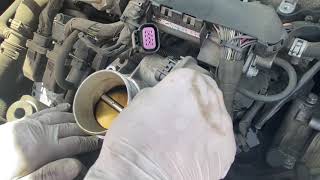
Typical fix: Replacement of the entire throttle body assembly is the standard repair. After replacement, 🎬 Watch this step-by-step guide on replacing the throttle body assembly. a throttle relearn procedure is required.
Est. part cost: $150 - $450 - Dirty or Sticking Throttle Body 🟡 Medium Probability Over time, carbon and oil residue from the crankcase ventilation system can build up around the throttle plate and in the throttle bore. This buildup can cause the plate to stick, preventing it from moving smoothly as commanded by the ECM.
How to confirm: Remove the intake ducting and visually inspect the throttle plate and bore for significant black carbon buildup. The plate should move freely (when manipulated according to safe procedures) and close completely.
Typical fix: Thoroughly clean the throttle plate and bore using a dedicated throttle body cleaner and a soft cloth or brush. Do not spray cleaner directly into the electronic components. A throttle relearn procedure is recommended after cleaning.
Est. part cost: $5 - $15 - Wiring or Connector Issues ⚪ Low Probability The wiring harness connector (pigtail) at the throttle body is exposed to engine heat and vibration, which can lead to corrosion on the pins, broken wires, or pushed-out pins over time. Wires can break internally a few inches from the connector while the outer insulation appears intact.
How to confirm: Visually inspect the throttle body connector for signs of corrosion, pushed-out pins, or damaged wires. Perform a 'wiggle test' on the harness with the engine running to see if it induces the fault. Check for continuity and resistance on the wires between the ECM and the throttle body connector using the specific pinouts for your model year.
Typical fix: Repair the damaged section of wiring or replace the connector pigtail. 🎬 See how to identify and repair common wiring harness damage. Apply dielectric grease to the new connector to prevent future corrosion.
Est. part cost: $20 - $60
Rare But Worth Checking
- Faulty Engine Control Module (ECM): This is rare. The Trionic 8 ECM should only be considered after all other possibilities (throttle body, wiring, grounds) have been definitively ruled out. ECM failure on these Saabs can also present with other codes like P0606 or cause a no-start condition.
- Poor Ground Connections: A corroded or loose engine or chassis ground can cause a variety of electrical issues, including this code. It's a cheap and easy check. Ensure the main ground straps are clean and tight. Key locations to check are G2 (on the left structural member) and G25 (at the left engine or gearbox mounting). Some owners have added redundant ground wires as a permanent fix for intermittent issues.
Technical Service Bulletins (TSBs) & Recalls
Manufacturer records for related Saab platforms highlight specific environmental and mileage-related factors for this code. TSB Bulletin #PIP4573B notes that technicians may find DTC P1516 when cold starting the engine in ambient temperatures of approximately -10 Fahrenheit (-23 Celsius). Additionally, TSB Bulletin #PIP4578B indicates that P1516, along with idle surge and reduced engine power mode, may be experienced more frequently on high mileage vehicles.
Diagnosis Steps
- Check for other stored DTCs. Codes like P2135, P2101, or P0638 strongly suggest a faulty throttle body.
- With a scan tool, observe the live data for Commanded Throttle Position and the two actual Throttle Position Sensor (TPS) voltages/percentages. Command throttle changes with the pedal and see if the TPS values follow smoothly. Verify that the sum of TPS1 and TPS2 voltages is consistently ~5V.
- Perform a 'Wiggle Test': With the engine idling, carefully wiggle the wiring harness and connector at the throttle body. If this causes the engine to stumble or the code to set, a wiring fault is present.
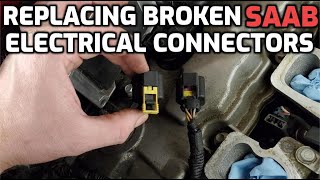
- Inspect the wiring and connector at the throttle body for any visible damage, corrosion, or loose pins. 🎬 Learn how to properly de-pin and re-pin electrical connectors.
- Remove the intake boot and inspect the throttle body bore and plate for heavy carbon buildup. Check if the plate is physically sticking.
- If the throttle body is dirty, clean it thoroughly with appropriate cleaner and a soft brush/rag. Perform a throttle relearn procedure and test drive.
- Inspect and clean main engine ground connections, particularly G2 (left inner fender) and G25 (engine/gearbox mount). A voltage drop test on the grounds can confirm high resistance.
- If the problem persists after cleaning and verifying the wiring/grounds, the throttle body assembly is the most likely culprit and should be replaced.
- After replacement, perform the mandatory throttle relearn procedure. This can be done with a Tech 2 scan tool or via a manual procedure.
- If the code still returns, perform a detailed check of the wiring continuity back to the ECM using the correct pinout for your model year before suspecting a faulty ECM.
Parts You'll Likely Need
- Electronic Throttle Body Assembly
(OEM #93176028 (for 2003-2006), 93189207 (for 2007-2011))— This is the most common failure for code P1516, as the internal motor or sensors wear out, causing the position mismatch.
Trusted brands: Bosch (Often the OEM supplier), Pierburg, ACDelco, Standard Motor Products, Pro Parts
OEM price range: $300-$450
Aftermarket price range: $150-$300
Related Codes That Often Appear With This One
- P2135 — This code for 'Throttle/Pedal Position Sensor/Switch A/B Voltage Correlation' indicates a conflict between the two position sensors within the throttle body. It is often set alongside P1516 when the throttle body is failing internally.
- P2101 — This code for 'Throttle Actuator Control Motor Circuit Range/Performance' points to a problem with the electric motor that moves the throttle plate. It frequently appears with P1516 and P2135, confirming a fault within the throttle body assembly.
- P0638 — This code for 'Throttle Actuator Control Range/Performance' is another common code that points directly to a fault in the electronic throttle body's operation and frequently accompanies P1516.
Platform-Specific Known Issues
- Manual Throttle Relearn Procedure (No Scan Tool): After cleaning or replacing the throttle body, a relearn may be possible without a Tech 2 scanner. A common procedure is: 1. Turn the ignition to ON (do not start) for 30 seconds. 2. Fully depress and release the accelerator pedal 5 times quickly. 3. Wait 10 seconds. 4. Start the engine and let it idle for 3-5 minutes as it stabilizes. This allows the ECM to recalibrate the throttle's home and range positions.
- Owner Experience: Intermittent Limp Mode: On forums like SaabCentral.com, owners report experiencing intermittent limp mode with P1516 for weeks. Sometimes, simply turning the car off and on again temporarily resolves it. One user noted that after cleaning the throttle body didn't work, a replacement unit immediately and permanently fixed the issue. Another owner had the fault return after a reset, indicating the throttle body was beyond cleaning and required replacement.
- Owner Experience: Wiring Harness Failure: A thread on Reddit's r/saab detailed a P1516 issue that persisted after a throttle body replacement. The ultimate cause was found to be a corroded wire in the harness near the throttle body connector. The owner repaired the wire, and the code did not return.
Mechanic-Grade Diagnostic Values
- TPS1 and TPS2 Sensor Voltage Sum — expected: Approximately 5.0V at all times (KOEO and running). Failure: If the sum deviates from 5.0V, it indicates a failure in one or both of the internal throttle position sensors.
- TPS Sensor Voltage (General) — expected: Closed throttle: ≈0.4–1.0 V, Wide-open throttle: ≈4.0–4.8 V. One sensor voltage increases while the other decreases.. Failure: Voltage that is stuck, erratic, or does not change smoothly with throttle plate movement.
- ECM to Throttle Body Connector Pinout (2003-2006, 8-pin) — expected: TPS1 Signal: Pin 10(A), TPS2 Signal: Pin 26(A), TPS1 +5V Supply: Pin 20(A), TPS2 +5V Supply: Pin 3(A), TPS1 Ground: Pin 58(A), TPS2 Ground: Pin 42(A), Motor Control: Pins 13(A), 30(A), 45(A), 62(A).. Failure: Incorrect voltage, no continuity, or short to ground on any of these pins.
- ECM to Throttle Body Connector Pinout (2007-2012, 6-pin) — expected: TPS1 Signal: Pin 28(B), TPS2 Signal: Pin 25(B), TPS +5V Supply: Pins 30(B), 31(B), TPS Ground: Pins 34(B), 35(B), Motor Control: Pins 46(B), 47(B), 63(B), 64(B).. Failure: Incorrect voltage, no continuity, or short to ground on any of these pins.
Scan Tool Commands That Help
- Saab Tech 2: Live Data Monitoring (Throttle Position) — This is the primary diagnostic function. Use it to monitor 'Commanded Throttle Position' vs. 'Actual Throttle Position' (TPS1 and TPS2). While depressing the accelerator pedal (engine off or running), observe if the actual values track the commanded value smoothly and without glitches. This directly tests the functionality of the throttle body in response to ECM commands.
Wiring & Ground Locations
- G2 — On the side of the left-hand structural member/strut in the engine bay, near the main connector bracket and battery.. This is a primary chassis ground point for the battery. High resistance here can cause widespread electrical issues, including insufficient or unstable voltage for the ECM and throttle control system.
- G25 — On the left-hand engine mounting or directly on the gearbox.. This is the main engine/drivetrain ground strap from the battery. A poor connection here can cause the ECM and its sensors, which are grounded to the engine, to have a floating or high-resistance ground path, leading to erratic sensor readings.
- G7 — On the engine control module's top right attachment lug (early models) or on the side of the intake manifold (later models).. This is a direct ground point related to the engine management system. Corrosion or looseness here can directly impact the ECM's reference voltage and sensor ground integrity.
- Throttle Body Connector — Directly on the electronic throttle body assembly, where the engine wiring harness connects.. This connector is the single point of failure for all signals and power to the throttle body. It is prone to heat damage, corrosion, and vibration, leading to intermittent connections that directly cause P1516.
Real Owner Repair Stories
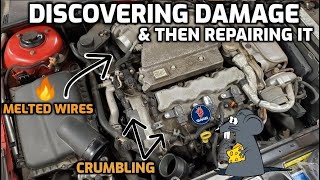
- YouTube user 'Weakest of Weeks' (Saab 9-3 (second generation)) — Not specified as a code, but found during other maintenance. The wiring harness sheathing under the throttle body had disintegrated from heat.
✅ What actually fixed it The owner removed the throttle body to access the harness and discovered a wire with exposed copper due to melted insulation. The wire was repaired, covered in cloth electrical tape, and protected with new split loom tubing. This preventative repair fixed a likely source of future intermittent electrical faults like P1516. - General mechanic knowledge for GM drive-by-wire systems (Applies to GM vehicles of the era, including the Saab 9-3) — Intermittent 'Reduced Engine Power' message and P1516 code that comes and goes.
❌ Tried (didn't work) Replacing the throttle body assembly., Cleaning the throttle body.
✅ What actually fixed it The fault was an internal break in a wire within the harness, typically a few inches from the throttle body connector. A visual inspection showed nothing, but a 'wiggle test' or continuity test under load revealed the open circuit. Splicing in a new section of wire or replacing the connector pigtail resolved the issue.
OEM Part Supersession History
12791257→93176028— Standard part revision by the manufacturer.
Heads up: These parts are for 2003-2006 models with the 8-pin electrical connector.93189207→55354710 (equivalent)— Alternative part number for the same component.
Heads up: These parts are for 2007-2011 models with the 6-pin electrical connector. They are not compatible with pre-2007 vehicles.
Model Year Variations Within This Range
- 2003-2006 vs 2007-2012: The electronic throttle body and its connector changed for the 2007 model year. Pre-2007 models use an 8-pin connector, while 2007 and later models use a 6-pin connector. This was due to Saab eliminating two redundant wires in the harness. The ECM pinouts for the throttle body are also different between these year ranges. It is critical to use the correct part and wiring diagram for your specific year.
Diagnostic Flowchart
Other Known Issues on This Vehicle
Issues unrelated to this code that are worth knowing about as an owner of this generation:
- Column Integrated Module (CIM) Failure 🔴 High — Common across all years. Symptoms include horn/steering wheel controls not working, airbag light, and 'Steering Lock Malfunction' leading to a no-start condition.
- Convertible Top Hydraulic Leaks & Sensor Failures 🟠 Medium — Very common on convertible models. Hydraulic cylinders and hoses leak, and position sensors fail, causing the top to get stuck or operate incorrectly.
- Broken Front/Rear Coil Springs 🟠 Medium — A frequent issue, especially in regions with harsh weather/road salt. Springs corrode and snap, causing a sudden drop in ride height and a clunking noise. (Ref: There was a service campaign for front coil springs.)
- Intake Valve Carbon Buildup (Direct Injection models) 🟠 Medium — Affects later direct-injection engines. Buildup on the back of intake valves can cause misfires, rough idle, and power loss over time as fuel does not wash over them.
- EGR and MAP Sensor Clogging (Diesel models) 🟠 Medium — Common on TiD and TTiD diesel engines. Soot buildup clogs the EGR valve and MAP sensor, leading to poor performance, reduced fuel economy, and fault codes.
Used vs. New Parts: Buying Guide for This Vehicle
When a used part is the smart pick: A used throttle body from a reputable salvage yard is a very cost-effective and viable option for this repair, as the part is common and failures are well-understood. Given the high cost of a new OEM unit, a tested used part can save hundreds of dollars.
Donor-vehicle mileage cap: roughly under 100000 miles for the part to have meaningful remaining life.
What to inspect on the donor part:
- Check for a clean butterfly valve and bore; excessive carbon may suggest a poorly maintained engine.
- Inspect the electrical connector pins for any signs of corrosion (green or white powder) or damage.
- Ensure the plastic housing of the electronic module is not cracked or damaged.
- If possible, ask if the part was tested or came from a running vehicle.
Aftermarket brands forum-validated for this vehicle:
- Bosch (OEM supplier)
- ACDelco
- Pro Parts
- PFS
Real Owner Stories
Aggregated from forums and TSBs cited above. Mileages and costs reflect what owners reported in those sources.
2003-2012 Saab 9-3
Symptoms: Intermittent limp mode with P1516 for weeks. Sometimes, simply turning the car off and on again temporarily resolves it.
What fixed it: After cleaning the throttle body didn't work, a replacement throttle body unit immediately and permanently fixed the issue.
Source hint: vehicle_specific_issues: Owner Experience: Intermittent Limp Mode (from SaabCentral.com)
2003-2012 Saab 9-3
Symptoms: P1516 code persisted even after a new throttle body was installed.
What fixed it: The ultimate cause was a corroded wire in the harness near the throttle body connector. Repairing the wire resolved the code.
Source hint: vehicle_specific_issues: Owner Experience: Wiring Harness Failure (from Reddit's r/saab)
2003-2012 Saab 9-3
Symptoms: Vehicle was stuck in limp home mode.
What fixed it: An independent mechanic performed a throttle body reset. This was a temporary fix that lasted for 12,000 miles before needing another reset, indicating the failure was gradual.
Source hint: forum_citations: SaabTechTalk.com
Related OBD-II Codes
Frequently Asked Questions
My 2005 Saab 9-3 went into 'Limp Home Mode' but the light went off after restarting. Is the problem fixed?
I cleaned the throttle body on my 9-3, but the P1516 code and limp mode came back. What's the next step?
Can I perform the throttle relearn procedure on my Saab 9-3 myself without a Tech 2 scanner?
I replaced the throttle body on my 9-3 and the P1516 code is still present. What else could it be?
Is this P1516 throttle body issue common on other GM cars from the same era?
How can I use a scan tool to confirm my Saab's throttle body is failing?
Helpful Videos
We Have This Part in Stock



The information in this article is provided for general reference and educational purposes only. Vehicle specifications, procedures, and part compatibility can vary by production date, trim level, and region. Always consult your vehicle's factory service manual and verify part numbers before purchasing or performing repairs. Safety-critical components such as airbags, seat belts, and braking systems should be installed by a qualified professional.
- Saab 9-3:
- 🎬 Helpful Videos
- 🛍️ Shop This Part
- What's Unique About the 2003-2012 Saab 9-3
- Symptoms You May Notice
- Most Likely Causes
- Rare But Worth Checking
- Technical Service Bulletins (TSBs) & Recalls
- Diagnosis Steps
- Parts You'll Likely Need
- Related Codes That Often Appear With This One
- Platform-Specific Known Issues
- Mechanic-Grade Diagnostic Values
- Scan Tool Commands That Help
- Wiring & Ground Locations
- Real Owner Repair Stories
- OEM Part Supersession History
- Model Year Variations Within This Range
- Diagnostic Flowchart
- Other Known Issues on This Vehicle
- Used vs. New Parts: Buying Guide for This Vehicle
- Real Owner Stories
- 2003-2012 Saab 9-3
- 2003-2012 Saab 9-3
- 2003-2012 Saab 9-3
- Related OBD-II Codes
- Frequently Asked Questions
- 🎟️ Get 5% Off