

P1507 on 1998-2002 Toyota Corolla: Idle Control Malfunction Causes and Fixes
On a 1998-2002 Toyota Corolla with the 1ZZ-FE engine, code P1507 almost always means the Idle Air Control (IAC) valve is stuck with carbon buildup. Cleaning the IAC valve and throttle body often fixes it for under $20 in supplies. If cleaning fails, replacing the IAC valve is the next step. The issue is extremely common on this platform and its relatives.
- P1507 on your Corolla means the idle is too low, and the most likely cause is a dirty Idle Air Control (IAC) valve.
- The most cost-effective first step is to remove and thoroughly clean the IAC valve and throttle body passages.
- Always use a new gasket when reinstalling the IAC valve to prevent creating a vacuum leak.
- If cleaning doesn't work, the IAC valve itself likely needs to be replaced.
- While checking for the main issue, take a moment to inspect all visible vacuum hoses for cracks, as they are a common secondary cause.
What's Unique About the 1998-2002 Toyota Corolla
The 8th generation Corolla (E110 chassis) and its 1.8L 1ZZ-FE engine use a mechanical throttle cable and a separate, coolant-heated Idle Air Control (IAC) valve to manage idle. This design is highly susceptible to carbon and oil vapor buildup over time, which causes the valve's small, motor-driven rotary shutter to stick. While many cars use this setup, issues with the IAC valve are a well-documented and extremely common maintenance item on this specific generation of Corolla and its direct platform-mate, the Chevrolet Prizm.
Symptoms You May Notice
- Engine stalls when coming to a stop or taking your foot off the gas
- Rough, low, or unstable idle, sometimes fluctuating wildly.
- Check Engine Light is on
- Difficulty starting the engine without giving it some gas
- Idle drops or engine stalls when electrical loads are applied (like turning on A/C or headlights)
- Replacing the throttle position sensor (TPS). The TPS reports the throttle plate angle and does not control idle air. A faulty TPS will cause different symptoms and codes.
- Replacing spark plugs and wires. While important for maintenance, they will not fix a mechanical or airflow-related idle control problem like P1507.
Most Likely Causes
- Dirty or Sticking Idle Air Control (IAC) Valve 🔴 High Probability The design of the intake and PCV systems on the 1ZZ-FE engine allows for carbon and oil vapor to build up in the throttle body and IAC valve over many miles, causing the valve's moving parts to bind and stick.
How to confirm: Remove the IAC valve from the bottom of the throttle body. Inspect the rotary valve and air passages for heavy black carbon deposits. The valve should rotate smoothly; if it's sticky, seized, or gritty when moved, it's the culprit. Tapping the body of the IAC valve with a screwdriver handle while the engine is idling may cause a change in RPM, indicating it is stuck.
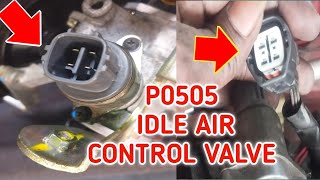
Typical fix: Thoroughly clean the IAC valve and all associated passages in the throttle body with throttle body cleaner and a small brush. Ensure the valve moves freely after cleaning. If cleaning doesn't restore function, the IAC valve must be replaced. 🎬 Watch: How to test and replace your IAC valve
Est. part cost: $15-$25 (for cleaners and gaskets) - Vacuum Leak 🟡 Medium Probability After 20+ years, the rubber vacuum hoses in the engine bay become brittle and prone to cracking, especially the PCV hose and intake manifold gaskets. This creates unmetered air leaks that disrupt the idle air-fuel mixture.
How to confirm: With the engine running, listen for a hissing sound around the intake manifold. You can also carefully spray short bursts of brake cleaner or a propane torch (unlit) around vacuum lines and gaskets; a change in idle RPM indicates you've found the leak. A professional smoke test is the most reliable method.
Typical fix: Replace the cracked vacuum hose or faulty gasket.
Est. part cost: $5-$30
Rare But Worth Checking
- Failed IAC Valve Motor: Sometimes, the valve isn't just dirty; the internal electric motor has failed. You can test this by checking the resistance between the terminals on the IAC valve with a multimeter. Check for resistance between the center pin (power) and each of the outer pins (control coils). An open circuit (infinite resistance) or a short (near-zero resistance) indicates a failed coil. Expected values are typically in the 17-29 Ohm range, but can vary based on temperature.
- Faulty Engine Coolant Temperature (ECT) Sensor: The ECM uses the ECT sensor reading to determine the target idle speed (higher when cold, lower when warm). If the sensor is sending an incorrect reading (e.g., telling the ECM the engine is warm when it's cold), the ECM may target the wrong idle speed, contributing to the problem. This will usually set its own code, like P0115, P0117, or P0118.
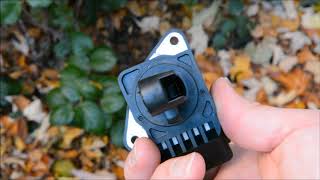
- Dirty or Faulty Mass Air Flow (MAF) Sensor: A dirty MAF sensor can under-report the amount of air entering the engine, leading the ECM to provide insufficient fuel for a stable idle. Cleaning the MAF sensor with a dedicated MAF sensor cleaner is a common maintenance item that can resolve various idle and hesitation issues. 🎬 See how to clean the MAF sensor and throttle body
- Faulty Engine Control Module (ECM): This is extremely rare. Before condemning the ECM, all other possibilities, including wiring issues between the IAC and ECM, must be exhaustively ruled out. Some 1ZZ-FE engines were subject to recalls for ECM circuit board issues, but this is less common for the P1507 code.
Diagnosis Steps
- Verify the code with an OBD-II scanner.
- With the engine running, listen for audible hissing noises from the engine bay that could indicate a large vacuum leak.
- While the engine is idling, gently tap the body of the IAC valve with the handle of a screwdriver. If the idle speed changes or stumbles, the valve is almost certainly sticking.
- Turn off the engine. Visually inspect all vacuum hoses connected to the intake manifold and throttle body for cracks, brittleness, or loose connections.
- Remove the air intake hose from the throttle body. Inspect the throttle body bore and plate for heavy carbon buildup.
- Locate the IAC valve, which is bolted to the bottom of the throttle body. It will have an electrical connector and two small coolant hoses attached.
- To avoid a coolant mess, use hose clamps to pinch off the two small coolant hoses leading to the IAC valve before disconnecting them.
- Disconnect the electrical connector and coolant hoses, then unbolt and remove the IAC valve.
- Inspect the IAC valve's rotary shutter and the air passages for thick, black carbon deposits.
- If dirty, clean the valve and throttle body passages thoroughly with throttle body cleaner, a toothbrush, and rags. Ensure the valve rotates smoothly by hand after cleaning.
- If cleaning does not solve the problem, test the IAC valve's electrical coils with a multimeter. Check resistance between the center pin and each outer pin. Readings should be roughly similar and within a range of approximately 17-29 ohms, depending on temperature. An open (OL) or short (0 ohms) indicates a bad valve.
- If the valve tests bad, replace it. If the valve and wiring are good, perform a smoke test to find any hidden vacuum leaks.
Parts You'll Likely Need
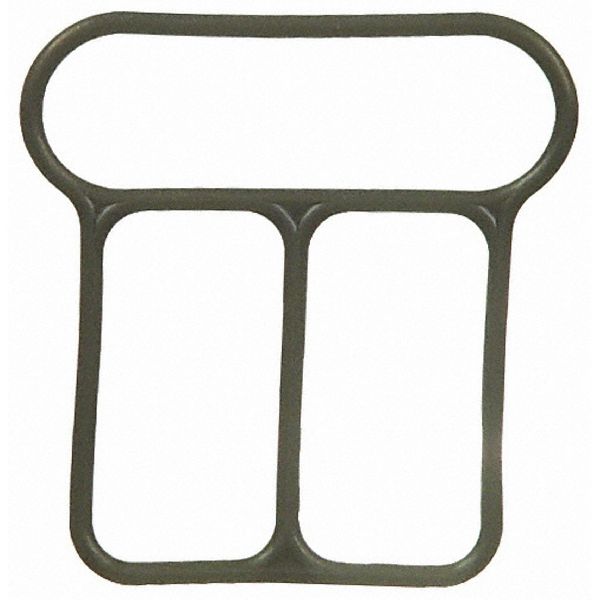
- Idle Air Control Valve Gasket
(OEM #22215-74400)— The original gasket is often brittle or a simple paper type and must be replaced anytime the IAC valve is removed to prevent vacuum leaks. This part number is widely used across many Toyota models of the era.
Trusted brands: Fel-Pro, Victor Reinz, Toyota Genuine Parts
OEM price range: $8-$15
Aftermarket price range: $3-$10 - Idle Air Control Valve
(OEM #22270-0D010)— If cleaning the original valve does not fix the stalling, or if its internal motor has failed the resistance test, the entire unit must be replaced. This part number supersedes 22270-22010.
Trusted brands: Denso (OEM Manufacturer), Aisin, Standard Motor Products (SMP), Walker
OEM price range: $280-$400
Aftermarket price range: $40-$150
Related Codes That Often Appear With This One
- P0505 — P0505 is the generic SAE code for 'Idle Air Control System Malfunction'. P1507 is Toyota's more specific version for an underspeed error, but they point to the exact same problem on this vehicle.
- P0171 — This code means 'System Too Lean'. A vacuum leak is a common cause for both a lean condition and a P1507, as unmetered air enters the engine, disrupting both the air/fuel mixture and the idle speed.
Technical Service Bulletins (TSBs) & Recalls
- T-TT-0362-15: While not for P1507 specifically, this Toyota Tech Tip from 2015 addresses 'Hard Start or Poor Idle after 12 Volt Power Interruption' for many models including the 2000-2002 Corolla. It recommends cleaning the throttle body of excessive deposits, which is a core part of the P1507 repair.
Platform-Specific Known Issues
- IAC Valve Location: The IAC valve is mounted on the underside of the throttle body, making it somewhat difficult to access without removing the entire throttle body assembly from the intake manifold. This adds a few extra steps compared to vehicles where it's mounted on the top or side.
- Coolant Line Nuisance: The IAC valve has two small coolant lines running to it to prevent icing in cold climates. These must be clamped and removed to service the valve, which can be messy if not done carefully. Some owners in warmer climates have bypassed this feature, but it is not generally recommended.
Mechanic-Grade Diagnostic Values
- IAC Valve Coil Resistance — expected: Cold (14°F to 122°F): 17.0 - 24.5 Ohms. Hot (122°F to 212°F): 21.5 - 28.5 Ohms. Test between the center pin (+B) and each of the outer pins (RSO/RSC).. Failure: A reading of near-zero ohms indicates a shorted coil. A very high or infinite (OL) reading indicates an open coil.
- IAC Valve Connector Voltage — expected: With the ignition ON, engine OFF, you should have battery voltage at the center pin (Pin 2) of the connector.. Failure: No voltage indicates a problem with the power supply from the EFI relay or fuse.
Scan Tool Commands That Help
- Toyota Techstream or equivalent professional scanner: Active Test for IAC Valve — This function allows the technician to command the IAC valve to open or close, verifying the valve's mechanical operation and the integrity of the wiring and ECM driver circuit without removing the part. If the RPM changes as commanded, the valve and wiring are likely good.
- Manual Procedure (No Scan Tool): Idle Relearn / ECU Memory Reset — After cleaning the throttle body/IAC or replacing the battery, the ECU's learned idle values may be incorrect, causing a high or low idle. A manual relearn can be performed by letting the engine idle for several minutes from a cold start to operating temperature with all accessories off. Some sources suggest a sequence of turning the key to 'ON' and 'OFF' twice before starting the engine to initiate the relearn mode.
Wiring & Ground Locations
- IAC Valve Connector — Connected to the Idle Air Control Valve on the bottom of the throttle body.. This 3-pin connector provides power and control signals. Pin 2 is 12V+ power from the EFI relay. Pins 1 (RSO - Rotary Solenoid Open) and 3 (RSC - Rotary Solenoid Close) are the ground-side control wires from the ECM. A bad connection or damaged wire here is a direct cause of P1507.
- EC (Ground Point) — On the cylinder head, often near the VVT-i solenoid area.. This is a primary ground point for the engine control harness. A loose or corroded 'EC' ground can cause erratic behavior from multiple sensors and actuators, including the IAC valve, leading to various driveability codes.
- EB (Ground Point) — On the front side of the left (driver's side) fender in the engine compartment.. This is another critical engine bay ground point. While less directly tied to the IAC circuit than the 'EC' ground on the head, poor grounding here can introduce electrical noise and voltage drop issues affecting the entire engine management system.
Real Owner Repair Stories
- Reddit user in r/COROLLA (Toyota Corolla, year not specified but consistent with 8th gen symptoms.) — Very high idle at 2000+ RPM.
❌ Tried (didn't work) A full tune-up was performed.
✅ What actually fixed it The user replaced the original IAC valve with a new aftermarket unit, which initially fixed the high idle, dropping it to a perfect 800 RPM. However, the car would then stall completely once it reached operating temperature. Unplugging the new IAC valve made the car run again (with a high idle), confirming the new part was faulty. The ultimate fix was likely replacing the faulty new part with a known-good (likely OEM) IAC valve.
OEM Part Supersession History
22270-22010→22270-0D010— Standard part number update and consolidation by Toyota.
Heads up: The parts are interchangeable for the 1998-2002 Corolla. 22270-0D010 is the correct service part to order.
Model Year Variations Within This Range
- 2000-2002: For the 2000 model year, the 1.8L 1ZZ-FE engine was updated with Toyota's VVT-i (Variable Valve Timing with intelligence) system. While the fundamental IAC valve design and P1507 cause remain the same, the ECU and engine operating parameters are slightly different from the 1998-1999 models.
Diagnostic Flowchart
Other Known Issues on This Vehicle
Issues unrelated to this code that are worth knowing about as an owner of this generation:
- Excessive Oil Consumption 🔴 High — Extremely common on 1998-2002 models with the 1ZZ-FE engine. Often starts around 60,000-100,000 miles and worsens over time. (Ref: No official recall, but Toyota addressed the issue in later engine revisions (post-2005) with redesigned pistons and rings.)
- Piston Ring Land/Oil Return Hole Clogging 🔴 High — This is the root cause of the excessive oil consumption. An insufficient number of oil return holes in the original piston design allows carbonized oil to clog the passages and cause the oil control rings to stick.
- Timing Chain Tensioner O-Ring Leak 🟡 Low — A very common and minor oil leak develops from the small O-ring that seals the timing chain tensioner on the side of the engine. It's an easy and inexpensive part to replace.
Used vs. New Parts: Buying Guide for This Vehicle
When a used part is the smart pick: A used OEM (Denso/Aisin) IAC valve from a low-mileage donor car can be a cost-effective alternative to a new aftermarket part. Since the failure mode is almost always carbon buildup, a used part that is thoroughly cleaned can function as well as a new one. Given the high cost of a new OEM valve, this is a reasonable gamble.
Donor-vehicle mileage cap: roughly under 120000 miles for the part to have meaningful remaining life.
What to inspect on the donor part:
- Check the donor vehicle's mileage if possible.
- Inspect the valve for physical damage to the housing or connector.
- Manually rotate the shutter mechanism; it should move smoothly without binding or gritty feeling.
- Test the coil resistance with a multimeter before purchase if possible, ensuring it's within the 17-29 Ohm range.
OEM-only on this vehicle (don't cheap out):
- While not strictly 'OEM-only', a genuine Toyota/Denso/Aisin part is highly recommended for the Idle Air Control Valve. Some aftermarket units have been reported to be faulty out of the box or fail prematurely.
Aftermarket brands forum-validated for this vehicle:
- Standard Motor Products (SMP) is often cited as a reliable aftermarket alternative that may be a re-boxed OEM part.
- Denso (Original Equipment Manufacturer)
- Aisin (Original Equipment Manufacturer)
Brands owners have reported issues with on this vehicle:
- Unnamed, low-cost 'white box' brands from online marketplaces can be a risk, with reports of out-of-box failures.
Real Owner Stories
Aggregated from forums and TSBs cited above. Mileages and costs reflect what owners reported in those sources.
2001 Toyota Corolla
Symptoms: The RPMs would jump up and down by a few hundred, and the idle would get low enough that it felt like it would stall, causing serious vibrations in the car. Accelerating from a stop was also very hesitant.
What fixed it: A commenter suggested that cleaning the throttle body would resolve the issue.
Source hint: Reddit r/MechanicAdvice
1998-2002 Toyota Corolla — ~95000 miles
Symptoms: The car was suffering from the common excessive oil consumption issue, which led to heavy carbon buildup that eventually seized the Idle Air Control valve, causing stalling and a rough idle.
What fixed it: The direct fix for the P1507 code was a thorough cleaning of the IAC valve and throttle body passages. The underlying oil consumption issue required a more involved engine repair.
Source hint: ToyotaNation Forum: 'DIY Oil Consumption Fix'
Related OBD-II Codes
Frequently Asked Questions
Where is the Idle Air Control (IAC) valve located on my 1998-2002 Corolla?
Do I have to drain my coolant to clean or replace the IAC valve?
Is the excessive oil consumption my 1ZZ-FE engine has related to this P1507 code?
Does Toyota's TSB T-TT-0362-15 specifically address the P1507 code?
Why is my Corolla so prone to this IAC valve problem?
What resistance reading should I get when testing the IAC valve's coils?
My friend has a 1999 Chevy Prizm with the same stalling issue. Is it the same problem?
Helpful Videos
We Have This Part in Stock



The information in this article is provided for general reference and educational purposes only. Vehicle specifications, procedures, and part compatibility can vary by production date, trim level, and region. Always consult your vehicle's factory service manual and verify part numbers before purchasing or performing repairs. Safety-critical components such as airbags, seat belts, and braking systems should be installed by a qualified professional.
- Toyota Corolla:
- 🎬 Helpful Videos
- 🛍️ Shop This Part
- What's Unique About the 1998-2002 Toyota Corolla
- Symptoms You May Notice
- Most Likely Causes
- Rare But Worth Checking
- Diagnosis Steps
- Parts You'll Likely Need
- Related Codes That Often Appear With This One
- Technical Service Bulletins (TSBs) & Recalls
- Platform-Specific Known Issues
- Mechanic-Grade Diagnostic Values
- Scan Tool Commands That Help
- Wiring & Ground Locations
- Real Owner Repair Stories
- OEM Part Supersession History
- Model Year Variations Within This Range
- Diagnostic Flowchart
- Other Known Issues on This Vehicle
- Used vs. New Parts: Buying Guide for This Vehicle
- Real Owner Stories
- 2001 Toyota Corolla
- 1998-2002 Toyota Corolla — ~95000 miles
- Related OBD-II Codes
- Frequently Asked Questions
- 🎟️ Get 5% Off