

P1457 on 2009-2018 Ram 1500: Fuel Tank Pressure Sensor Circuit High Fixes
On a 2009-2018 Ram 1500, code P1457 is almost always caused by a wiring problem at the Fuel Tank Pressure (FTP) sensor, not a leak. Check for corroded or broken wires at the sensor's connector pigtail, located on the fuel filler neck under the truck, before replacing the sensor itself. This is a low-cost fix if you can repair the wiring.
- P1457 on a Ram is an ELECTRICAL code, not a leak code.
- Before buying any parts, inspect the wiring and connector at the Fuel Tank Pressure (FTP) sensor, located near the fuel filler neck, for corrosion or damage.
- Repairing the wiring pigtail is the most common and cheapest fix.
- Do not confuse the Fuel Tank Pressure sensor with the Fuel Rail Pressure sensor.
What's Unique About the 2009-2018 Ram 1500

While P1457 is famously an EVAP leak code on Honda vehicles, it means something completely different for Ram trucks. On the 2009-2018 Ram 1500, this code points specifically to an electrical circuit problem, not a physical leak in the canister or gas cap. Owners frequently find the cause to be corroded or broken wires at the FTP sensor connector, which is exposed to the elements under the truck. A user on RamForum.com even triggered the code by accidentally bumping the connector while installing new rear shocks, highlighting its vulnerable location.
Generation note: The 2009-2018 year range primarily covers the fourth generation of the Ram 1500 (DS/DJ). The issue and its causes, particularly the wiring vulnerability, are consistent across this generation.
Symptoms You May Notice
- Check Engine Light is on
- No noticeable change in vehicle performance or fuel economy
- May be accompanied by other EVAP codes like P0441 (Incorrect Purge Flow). 🎬 Watch: Diagnosing P1457 and P0441 codes on a Ram truck
- Replacing the gas cap. This code is not for a leak, so a gas cap will not fix it. A user on RamForum.com confirmed replacing the cap did not solve the issue.
- Replacing the EVAP canister or purge solenoid. While P0441 may appear with P1457, the P1457 definition points to an electrical circuit issue with the FTP sensor, which should be diagnosed first.
- Replacing the fuel rail pressure sensor. There are multiple pressure sensors on a vehicle. P1457 refers specifically to the Fuel *Tank* Pressure sensor, not the sensor on the engine's fuel rail.
Most Likely Causes

- Corroded or Damaged FTP Sensor Wiring/Connector 🔴 High Probability The FTP sensor and its wiring harness are located on the fuel filler neck, under the truck bed, making them highly susceptible to moisture, road salt, and physical damage. This leads to corrosion (often called 'green crusties') and broken wires right at the connector. A forum user on DodgeForum.com found the wires completely pulled out of the plug on a recently purchased 2012 Ram.
How to confirm: Visually inspect the wiring and connector pigtail going to the Fuel Tank Pressure sensor. Look for green or white corrosion, chafed insulation, or broken wires right at the connector. Use a multimeter to check for voltage on the signal wire with the sensor disconnected and key on; a reading above 5.2V indicates a short to voltage in the harness. A DodgeForum.com thread identified the wire colors as yellow/red tracer, blue/orange tracer, and brown/tan tracer for a 2012 model.
Typical fix: Repair the damaged section of the wiring harness or replace the connector pigtail. This often involves cutting out the corroded section, splicing in new wire, and using heat-shrink tubing to seal the repair. Ensure a solid connection and proper weatherproofing.
Est. part cost: $10-$40 for a new pigtail connector and wiring repair supplies. - Faulty Fuel Tank Pressure (FTP) Sensor 🟡 Medium Probability The sensor itself can fail internally, causing it to send an incorrect high voltage signal to the PCM. This is less common than the wiring issue but is the next logical failure point.
How to confirm: If the wiring and connector are confirmed to be in good condition with no shorts or opens, the sensor is the next most likely cause. A scan tool can be used to monitor the FTP voltage; if it's stuck at a high value (e.g., near 5 volts) even with good wiring, the sensor is likely bad. The service manual procedure suggests replacing the sensor if no wiring faults are found.
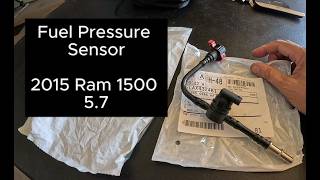
Typical fix: Replace the Fuel Tank Pressure sensor. The sensor is typically located on the fuel tank filler neck and is relatively easy to access and replace. 🎬 Watch: Step-by-step walkthrough for replacing the pressure sensor
Est. part cost: $40-$100 for an aftermarket sensor, $70+ for OEM.
Rare But Worth Checking
- Powertrain Control Module (PCM) Fault: This is very rare. All other possibilities, especially wiring and the sensor itself, should be exhaustively ruled out before considering PCM replacement. A PCM fault would likely cause other issues and codes as well.
Diagnosis Steps

- Verify the code with a scan tool. Note if P0441 or other codes are also present.
- Using the scan tool's live data function, monitor the voltage from the Fuel Tank Pressure (FTP) sensor. A reading stuck high (e.g., above 4.5V) points to the issue.
- Locate the FTP sensor on the fuel filler neck, under the driver's side of the truck bed.
- Thoroughly inspect the sensor's electrical connector and the first few inches of wiring for any signs of corrosion ('green crusties'), damage, or breaks. This is the most common cause.
- If corrosion or damage is found, repair the wiring or replace the connector pigtail.
- If the wiring appears perfect, disconnect the sensor and check the signal wire for voltage with the key on. According to the service manual, if voltage is present above 5.2 volts, there is a short to power in the harness that must be traced.
- If the wiring is confirmed to be good (no shorts or opens), replace the Fuel Tank Pressure (FTP) sensor.
- After the repair, clear the codes and drive the vehicle, performing multiple key cycles to confirm the fix.
Parts You'll Likely Need

- Fuel Tank Pressure Sensor Connector Pigtail — This is the most common failure point. The connector itself corrodes, requiring replacement. Aftermarket pigtails are widely available.
Trusted brands: Mopar, Dorman, Standard Motor Products
OEM price range: $25-$40
Aftermarket price range: $10-$30 - Fuel Tank Pressure Sensor
(OEM #4593949AB (also referred to as Natural Vacuum Leak Detector in some contexts))— If the wiring is intact, the sensor itself is the next most likely part to have failed, causing the high voltage reading.
Trusted brands: Mopar, GPD, Wells, Standard Motor Products
OEM price range: $70-$120
Aftermarket price range: $33-$60
Related Codes That Often Appear With This One
- P0441 — P0441 (Evaporative Emission System Incorrect Purge Flow) is often logged alongside P1457. The PCM may set the P0441 code because it cannot properly test the purge system when it's receiving an invalid, high-voltage reading from the FTP sensor, which is a required input for the EVAP monitor.
Platform-Specific Known Issues
- The location of the FTP sensor on the filler neck makes it especially vulnerable on trucks used in the 'Salt Belt' or in wet climates, accelerating corrosion of the connector and wiring.
Mechanic-Grade Diagnostic Values
- FTP Signal Circuit Voltage (at sensor connector, key on, sensor disconnected) — expected: 0 Volts. Failure: Any voltage reading above 5.2 volts indicates a short to voltage in the harness.
- FTP Signal Circuit Resistance to Ground (at sensor connector, key off, PCM disconnected) — expected: Below 5.0 Ohms. Failure: Resistance above 5.0 Ohms indicates an open or high resistance in the ground circuit.
- FTP Signal Circuit to 5V Supply Resistance (at sensor connector, key off) — expected: Above 10k Ohms. Failure: Resistance below 10k Ohms (or 100 Ohms depending on year) indicates a short between the signal and supply circuits.
- FTP Voltage with Signal and Ground Jumpered (scan tool reading, key on) — expected: Approximately 0.0 volts (+/- 0.1 volts). Failure: A voltage reading higher than ~0.1V suggests a problem with the PCM or the wiring between the jumper and the PCM.
Scan Tool Commands That Help
- Professional Scan Tool (e.g., WiTech): Read FTP Sensor Voltage — This is the primary live data PID to monitor. A value stuck high (near 5V) confirms the 'Circuit High' condition reported by the code.
- Professional Scan Tool (e.g., WiTech): EVAP System Test — While P1457 is an electrical fault, running the system test after repair can help verify the overall health of the EVAP system, especially if code P0441 was also present.
Wiring & Ground Locations
- FTP Sensor Connector — On the fuel filler neck, accessible from under the driver's side of the truck bed, near the frame rail.. This is the primary failure point due to its exposure to road debris, moisture, and salt, leading to corrosion and broken wires.
- (N7) FTP Signal Circuit — Wire running from the FTP sensor connector to the PCM C2 harness connector.. This wire carries the voltage signal. A short to power or an open in this wire will directly cause the P1457 code.
- (N10) or (K917) Sensor Ground Circuit — Wire running from the FTP sensor connector to the PCM.. A poor or open ground can cause the sensor's signal voltage to float high, triggering the code. Resistance should be checked between the sensor connector and the PCM connector.
- (N8) or (F856) 5-Volt Supply Circuit — Wire running from the PCM to the FTP sensor connector.. If the signal wire shorts to this 5V supply, it will cause a constant high voltage reading, setting the P1457 code.
Real Owner Repair Stories
- DodgeForum.com user 'Milburn Drysdale' (2012 Ram 1500 ST) — Check Engine Light with code P1457.
✅ What actually fixed it The user found the wires had been completely torn out of the connector for the FTP sensor (also called the 'natural vacuum leak detector'). The fix was to re-insert the wires into the plug according to a wiring diagram provided by another forum member.
OEM Part Supersession History
4593949AA→4593949AB, which was later superseded by 68525698AA.— Standard part revision and update process by the manufacturer.
Heads up: The newest part number, 68525698AA, may be a physically different, more robust sensor that requires rewiring the connector, whereas some aftermarket replacements are plug-and-play with the original harness. Always verify fitment and connector style before purchasing.
Model Year Variations Within This Range
- 2012 vs 2013: The service manual for 2012 models refers to the sensor ground circuit as (K917), while the 2013 manual calls it (N10). The diagnostic principles remain identical, but the specific circuit identifiers in wiring diagrams may vary slightly by year.
- 2009-2012 vs 2013-2018: Some documentation for aftermarket parts indicates a wiring change occurred around 2013, affecting trigger wires for certain accessories, which may also be reflected in minor changes to the EVAP system wiring harness.
Diagnostic Flowchart
Other Known Issues on This Vehicle
Issues unrelated to this code that are worth knowing about as an owner of this generation:
- 5.7L Hemi Lifter/Camshaft Failure ('Hemi Tick') 🔴 High — Widespread issue, can occur at any mileage but often reported between 50k-100k miles. Associated with prolonged idling and MDS (Multi-Displacement System) lifters.
- Broken Exhaust Manifold Bolts 🟠 Medium — Very common, especially on the rear-most bolts. Causes a ticking noise that is often mistaken for the 'Hemi Tick' but usually quiets down as the engine warms up. (Ref: TSB 09-011-22 (for 2019+ but describes the same issue) and earlier TSBs address this, involving updated bolts and sometimes manifold replacement.)
- Totally Integrated Power Module (TIPM) Failure 🔴 High — Common on 2009-2012 models. Can cause a wide range of bizarre electrical issues, including fuel pump staying on, no-start conditions, and erratic operation of lights or wipers. (Ref: While recalls existed for other Chrysler vehicles, the Ram 1500 did not have a specific TIPM recall, but it is a well-documented failure point.)
- Air Suspension System Faults 🟠 Medium — Common on models equipped with the optional air suspension, particularly in cold weather. Issues include compressor failure, leaks, and the truck being unable to adjust ride height.
- Cracked Dashboard 🟡 Low — Prevalent on earlier models of this generation (approx. 2009-2012), especially in hot climates. The plastic dash develops large cracks over time.
Used vs. New Parts: Buying Guide for This Vehicle
When a used part is the smart pick: A used FTP sensor is generally not recommended. The failure is electrical and often caused by environmental exposure (corrosion). A used part from a junkyard, especially in the Salt Belt, is likely to have similar wear and offers no guarantee of remaining life. The cost of a new aftermarket sensor is low enough that it's a much smarter investment.
Donor-vehicle mileage cap: roughly under 30000 miles for the part to have meaningful remaining life.
What to inspect on the donor part:
- If you must buy used, source it from a dry, southern or western state to minimize corrosion risk.
- Inspect the connector pins on the used sensor for any signs of green or white corrosion.
- Ask for the donor vehicle's mileage; lower is always better.
- A much better used part to get is a wiring pigtail. If you find a clean donor vehicle, cutting off the connector with 6-8 inches of wire is a great way to get an OEM-quality connector for repair.
Aftermarket brands forum-validated for this vehicle:
- Dorman
- Standard Motor Products (SMP)
- Wells
Brands owners have reported issues with on this vehicle:
- No-name, unbranded sensors from online marketplaces should be avoided as their quality control and accuracy can be questionable.
Real Owner Stories
Aggregated from forums and TSBs cited above. Mileages and costs reflect what owners reported in those sources.
2015 Ram 1500
Symptoms: Check engine light with P1457 appeared immediately after installing rear shocks.
What fixed it: The FTP sensor connection right behind the rear driver side shock had been bumped loose. Plugging it back in and clearing the code resolved the issue.
Source hint: RamForum.com (Jun 2015): Thread 'P1457 after shock install?'
2012 Ram
Symptoms: Owner found code P1457 and discovered the wires were completely torn out of the FTP sensor connector.
What fixed it: The owner needed to repair the torn wires, which typically involves splicing in a new connector pigtail.
Source hint: DodgeForum.com (Jun 2023): Thread 'Code P1457'
Related OBD-II Codes
Frequently Asked Questions
Where is the Fuel Tank Pressure (FTP) sensor located on my 2009-2018 Ram 1500?
I live in a snowy or wet climate. Is my truck more prone to the P1457 code?
I just installed new rear shocks and immediately got a P1457 code. Are these events related?
What are the wire colors for the FTP sensor connector on a 2012 Ram?
My scanner is showing both P1457 and P0441. Is this a common issue?
What is the most common fix for P1457 on these trucks?
Helpful Videos

The information in this article is provided for general reference and educational purposes only. Vehicle specifications, procedures, and part compatibility can vary by production date, trim level, and region. Always consult your vehicle's factory service manual and verify part numbers before purchasing or performing repairs. Safety-critical components such as airbags, seat belts, and braking systems should be installed by a qualified professional.
- Ram 1500:
- 🎬 Helpful Videos
- What's Unique About the 2009-2018 Ram 1500
- Symptoms You May Notice
- Most Likely Causes
- Rare But Worth Checking
- Diagnosis Steps
- Parts You'll Likely Need
- Related Codes That Often Appear With This One
- Platform-Specific Known Issues
- Mechanic-Grade Diagnostic Values
- Scan Tool Commands That Help
- Wiring & Ground Locations
- Real Owner Repair Stories
- OEM Part Supersession History
- Model Year Variations Within This Range
- Diagnostic Flowchart
- Other Known Issues on This Vehicle
- Used vs. New Parts: Buying Guide for This Vehicle
- Real Owner Stories
- 2015 Ram 1500
- 2012 Ram
- Related OBD-II Codes
- Frequently Asked Questions
- 🎟️ Get 5% Off