

P1450 on 2007-2009 Saturn Aura: Causes and Fixes for an Unable to Bleed Vacuum Code
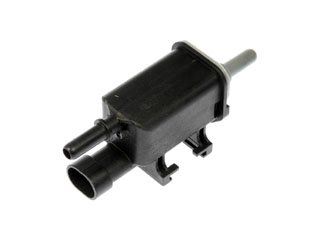
On a 2007-2009 Saturn Aura, code P1450 is most often caused by a faulty EVAP purge solenoid valve located on the engine. This is an inexpensive part (around $25-$50) and is very easy to replace, making it a great starting point for diagnosis. This issue is extremely common on GM vehicles of this era.
- P1450 on a Saturn Aura means the EVAP system has a restriction and cannot vent vacuum properly.
- The most likely cause by far is a stuck-open EVAP purge solenoid, which is located on top of the engine and is easy to test and replace.
- Start your diagnosis by checking the purge solenoid for vacuum at idle; if it has suction, you've found the problem.
- The second most likely cause is a blocked EVAP vent solenoid, located under the car near the gas tank.
- Do not replace the gas cap for this code; it is designed to fix leak issues, not restriction issues.
What's Unique About the 2007-2009 Saturn Aura
The Saturn Aura, along with its GM Epsilon platform siblings like the 2004-2012 Chevrolet Malibu and 2006-2010 Pontiac G6, is known for EVAP system faults. While many vehicles can get this code from various issues, on this specific platform, the EVAP purge solenoid valve is a very common failure point. This part is known to stick open, constantly applying engine vacuum to the fuel tank, which directly causes the P1450 condition. The other primary component, the vent solenoid, is located near the fuel tank and is susceptible to dirt and debris clogging the vent path, preventing fresh air from entering to relieve the vacuum.
Symptoms You May Notice
- Check Engine Light is on.
- A loud 'whoosh' or hissing sound may be heard when removing the gas cap as vacuum is released.
- Difficulty starting the engine immediately after refueling. 🎬 Watch: Why your car struggles to start after getting gas. This happens because the stuck-open purge valve allows raw fuel vapors to flood the intake manifold, creating a rich condition that makes starting difficult.
- Slightly reduced fuel economy.
- Rough or unstable idle, especially after refueling.
- In rare cases, a faint fuel odor near the rear of the vehicle.
- Replacing the gas cap. A loose or faulty gas cap typically causes a large leak code (like P0455) or a small leak code (P0442), not a restriction/vacuum code like P1450.
Most Likely Causes
- EVAP Purge Solenoid Valve Stuck Open 🔴 High Probability This is a very common failure item on many GM vehicles of this era, including the Saturn Aura. The internal valve mechanism fails and no longer seals, allowing engine vacuum to constantly pull on the EVAP system when it should be closed.
How to confirm: With the engine running, locate the purge valve on top of the engine. Disconnect its electrical connector and the hose that runs towards the rear of the vehicle. Place your finger over the port on the valve itself. If you feel any suction, the valve is stuck open and is faulty. There should be no vacuum flow when the valve is unplugged. You can also remove the valve and try to blow through it; if air passes, it has failed. 🎬 See a mechanic demonstrate how to diagnose GM EVAP problems.
Typical fix: Replace the EVAP purge solenoid valve. It is typically held on by one or two bolts and has one electrical connector and two hoses. 🎬 Watch: Step-by-step purge valve replacement on a GM Epsilon engine.
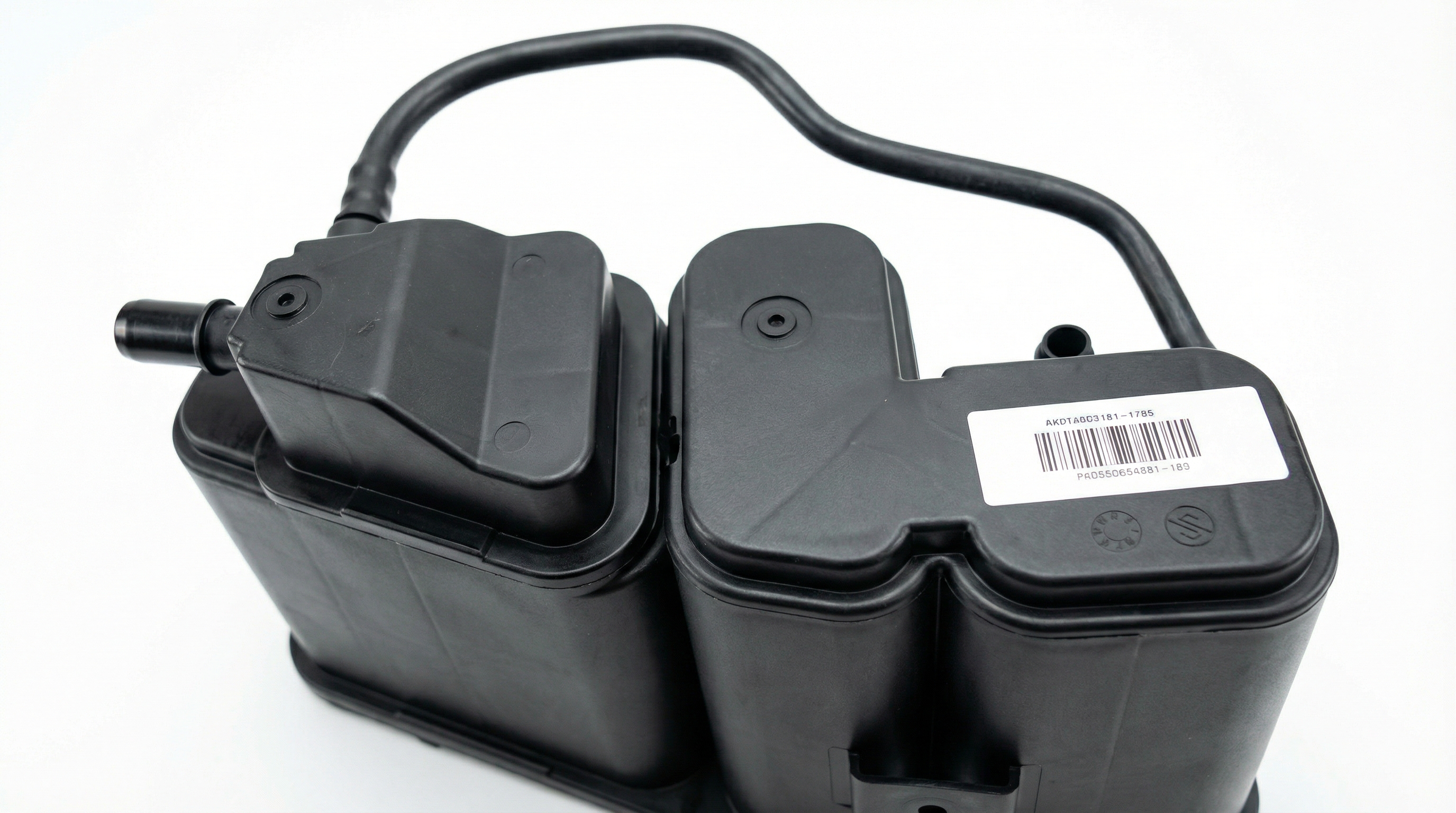
Est. part cost: $25-$60 - EVAP Vent Solenoid Stuck Closed or Blocked 🟡 Medium Probability The vent solenoid is located under the vehicle near the charcoal canister, making it vulnerable to road dirt, mud, and even spider webs which can clog the filter or cause the valve to stick closed.
How to confirm: Visually inspect the vent solenoid and its filter for heavy dirt or mud contamination. The valve is normally open. A more definitive test requires a bi-directional scan tool to command the valve closed and see if it responds. A smoke test is also effective; if smoke cannot exit the vent when the valve should be open, there is a restriction.
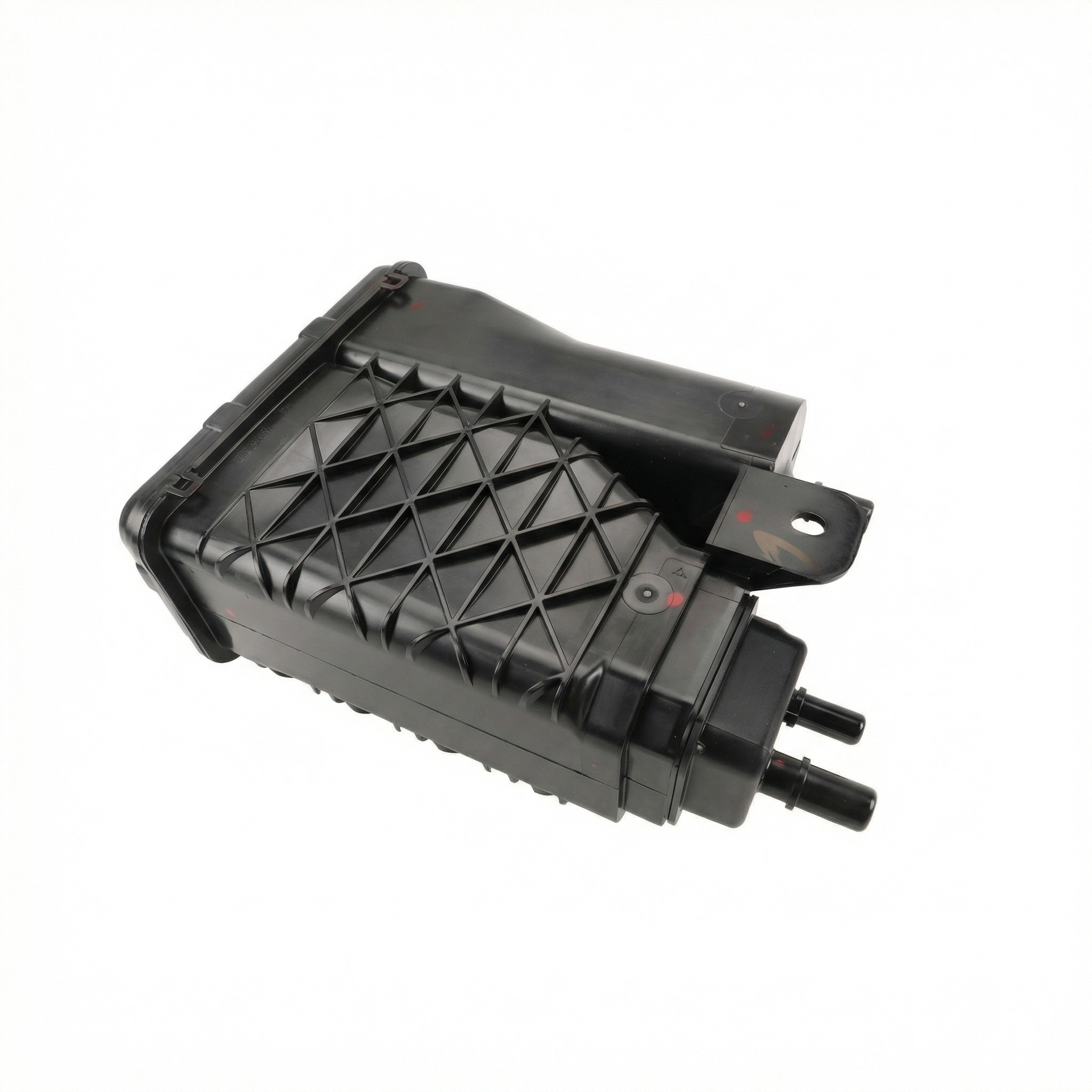
Typical fix: Replace the EVAP vent solenoid. It is usually mounted on or next to the charcoal canister under the car.
Est. part cost: $35-$70 - Blocked or Kinked EVAP Hose ⚪ Low Probability Over time, rubber hoses can become brittle and collapse, or they can be pinched during other repairs. This is less common than component failure but should be checked.
How to confirm: Visually inspect all accessible EVAP lines between the engine, the fuel tank, and the charcoal canister for any obvious kinks, collapses, or damage. A smoke test is the most effective way to find a hidden blockage.
Typical fix: Replace the damaged section of the hose.
Est. part cost: $10-$30
Rare But Worth Checking
- Clogged Charcoal Canister: This can happen if the fuel tank is consistently overfilled ('topped off'), which forces liquid gasoline into the canister, saturating the charcoal and turning it into a solid, non-breathable block. This blocks the vent path, preventing vacuum release. On the Aura, replacing this may require significant work near the fuel tank.
- Faulty Fuel Tank Pressure (FTP) Sensor: While it's possible for the sensor to fail and send incorrect vacuum readings, it is much less common than the solenoids failing. This is usually diagnosed with a scan tool by observing the pressure readings to see if they are stuck or irrational after confirming the mechanical parts of the EVAP system are working correctly.
Diagnosis Steps
- Read the code with an OBD-II scanner to confirm P1450 is present. Note any other codes, especially P0496.
- Listen for a 'whoosh' of air when opening the gas cap. This is a strong indicator of excessive vacuum and points away from a bad cap.
- Test the EVAP Purge Solenoid (Most Likely Cause):
- a. Locate the EVAP purge solenoid on top of the engine.
- b. Start the engine and let it idle.
- c. Disconnect the electrical connector from the purge solenoid.
- d. Carefully disconnect the EVAP line that leads from the solenoid back towards the fuel tank.
- e. Place your finger over the port on the solenoid itself. If you feel any vacuum/suction, the solenoid is stuck open and must be replaced. This is the most common fix.
- If no vacuum is felt at the purge solenoid, proceed to inspect the vent system.
- Inspect the EVAP Vent Solenoid:
- a. Raise the vehicle safely. Locate the charcoal canister and vent solenoid near the fuel tank, often on the passenger side.
- b. Visually inspect the vent solenoid, its filter, and the attached hoses for any obvious blockages from dirt, mud, or debris. The vent path must be clear for air to enter the system.
- c. If the vent path is visibly blocked, clean it or replace the vent solenoid assembly.
- If the cause is still not found, a professional smoke test is recommended to identify any blockages in the canister or hoses.
- A scan tool with live data can also be used to monitor the Fuel Tank Pressure (FTP) sensor to confirm vacuum is being held when it should be venting.
Parts You'll Likely Need
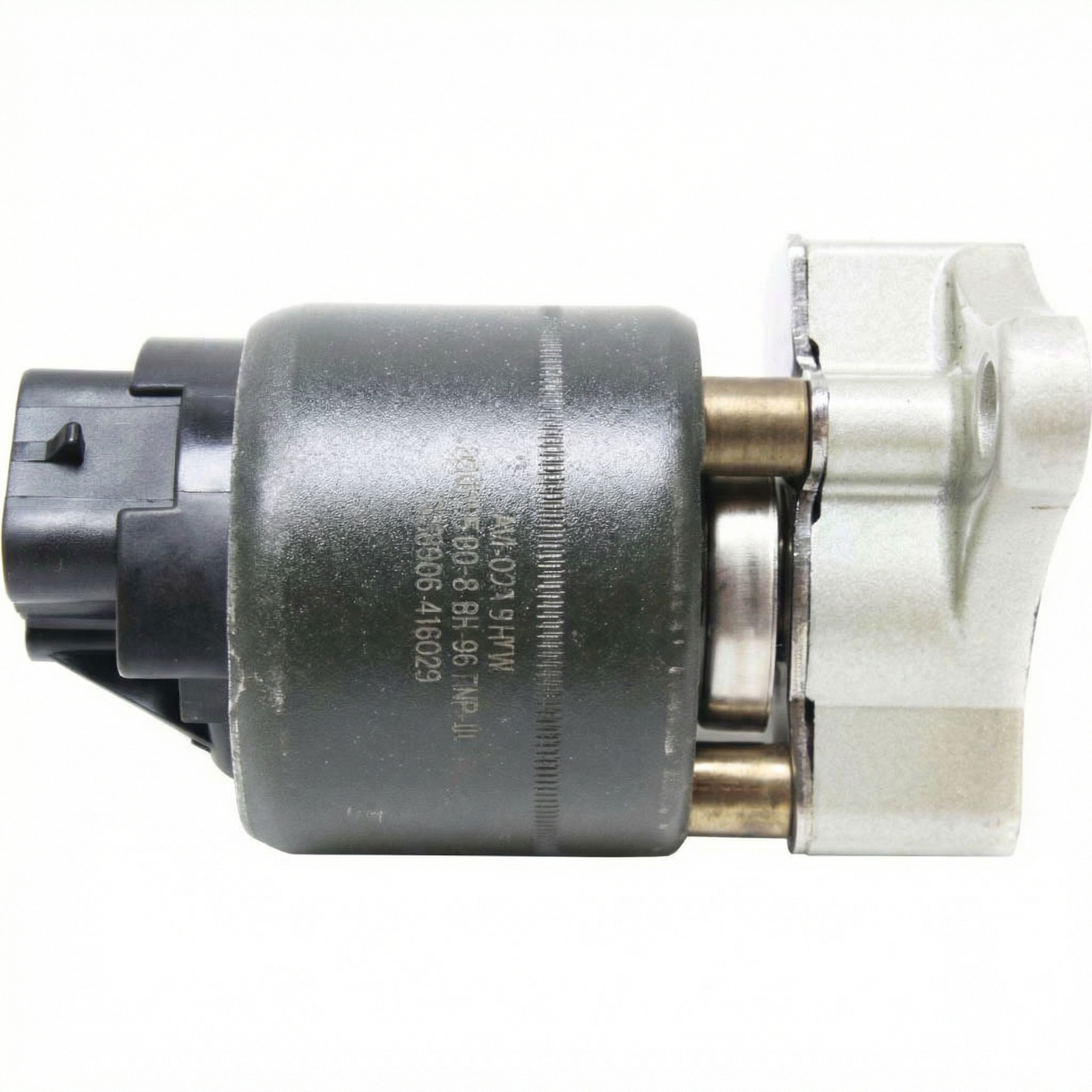
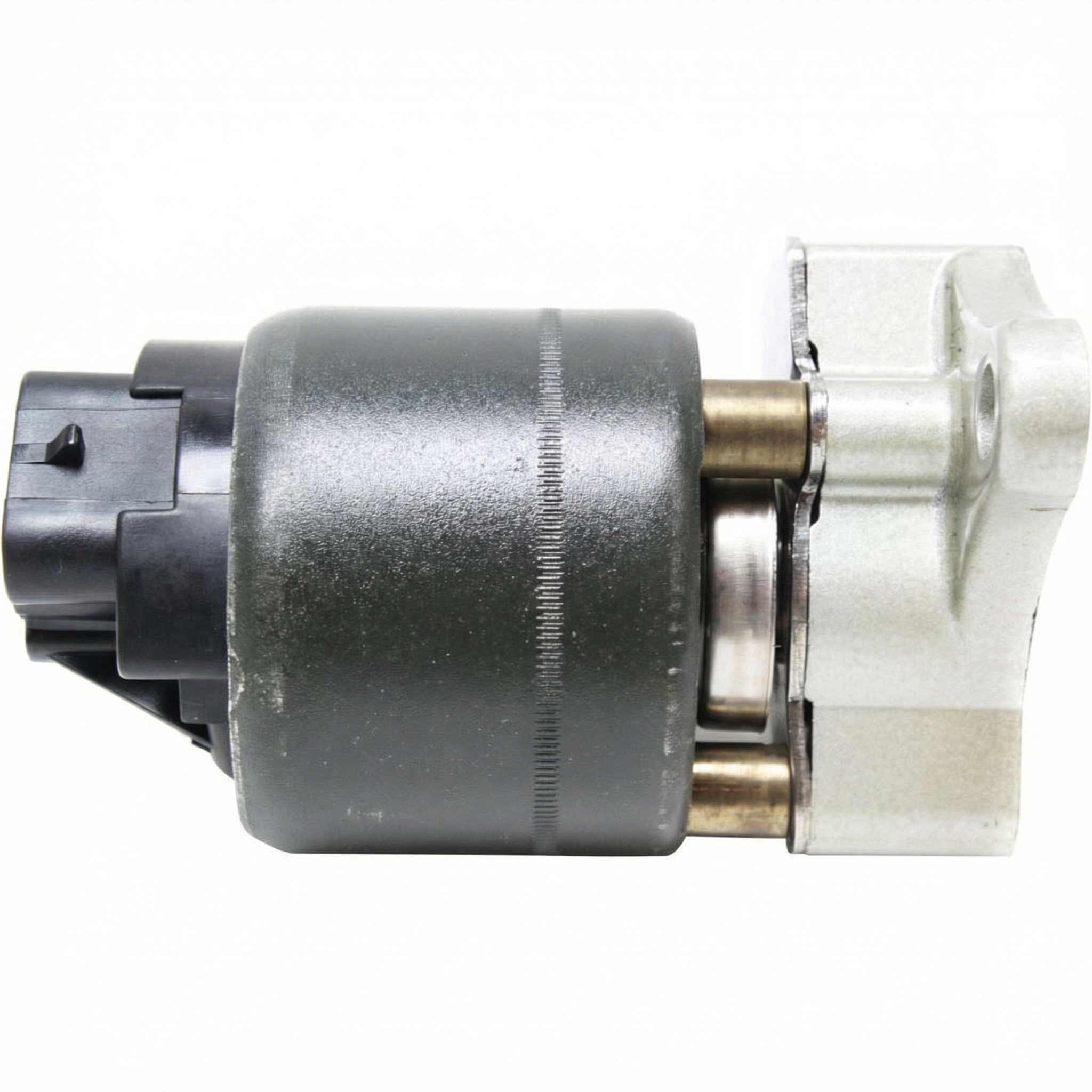
- EVAP Canister Purge Solenoid Valve
(OEM #12638819)— This is the most frequent cause of P1450 on this vehicle. It sticks open, applying constant engine vacuum to the system.
Trusted brands: ACDelco, Standard Motor Products (SMP), Dorman
OEM price range: $40-$60
Aftermarket price range: $25-$45 - EVAP Canister Vent Solenoid — This is the second most likely cause, typically due to being stuck closed or clogged with road debris, preventing the system from venting.
Trusted brands: ACDelco, Dorman, Standard Motor Products
OEM price range: $50-$80
Aftermarket price range: $35-$70
Related Codes That Often Appear With This One
- P0496 — P0496 (EVAP Flow During Non-Purge) is often caused by the exact same failure: a stuck-open purge solenoid. P1450 describes the result (can't bleed vacuum) while P0496 describes the cause (flow when there shouldn't be). They frequently appear together on GM vehicles.
Technical Service Bulletins (TSBs) & Recalls
- Ford TSB 19-2207: While for Ford vehicles, this TSB is highly relevant as it addresses P1450 caused by a faulty canister purge valve, confirming the same failure mode on a different manufacturer's vehicles and recommending replacement.
Mechanic-Grade Diagnostic Values
- EVAP Canister Purge Solenoid Coil Resistance — expected: 30 - 38 Ohms. Failure: A reading significantly outside this range, or an open circuit (infinite resistance), indicates a failed solenoid coil.
- EVAP Canister Vent Solenoid Coil Resistance — expected: 48 - 65 Ohms. Failure: A reading outside this range, or an open circuit (infinite resistance), points to a faulty solenoid coil.
- Fuel Tank Pressure (FTP) Sensor Voltage at Atmospheric Pressure — expected: ~2.5 Volts (Key On, Engine Off, Gas Cap Open). Failure: A reading stuck at 0V, 5V, or a value that doesn't change when a slight vacuum is applied indicates a faulty sensor or wiring issue.
- Fuel Tank Pressure (FTP) Sensor Voltage Under Light Vacuum — expected: Voltage should drop from the ~2.5V baseline (e.g., to 1.6V - 2.2V). Failure: Voltage does not change when a hand vacuum pump applies a slight vacuum to the sensor.
Scan Tool Commands That Help
- Tech2 / GDS2 (or equivalent professional scanner): EVAP System Seal / Vent Solenoid CLOSE — This command closes the normally-open vent solenoid to seal the entire EVAP system. This is a required first step before performing a smoke test or a vacuum decay test to check for leaks or restrictions.
- Tech2 / GDS2 (or equivalent professional scanner): Purge Solenoid Duty Cycle Control (e.g., 0% to 50%) — This allows a technician to manually command the purge solenoid open by a specific percentage. It verifies the solenoid is not stuck and is responding to the ECM's command. When commanding from 0% to 50%, an audible click should be heard from the valve.
Wiring & Ground Locations
- G105 — 2007: Under left intake manifold, on rear of cylinder head. 2009 (2.4L): Left front of engine.. This is a primary engine ground. A poor connection here can cause erratic behavior from various engine sensors and the ECM, which controls the EVAP system.
- G106 — Rear of engine, near the Park/Neutral Position (PNP) switch or above the oil filter, depending on engine.. This ground is used by the Engine Control Module (ECM) and Transmission Control Module (TCM). A fault could lead to incorrect ECM operation and faulty diagnostic tests.
- G201 — Under the dash, on the right side of the center console, near the floor.. This is a major interior ground point for the Body Control Module (BCM) and Data Link Connector (DLC). While not a direct cause, a poor ground here can interfere with scanner communication during diagnosis.
- EVAP Purge Solenoid Connector — On the purge solenoid itself, top of the engine.. Terminal A is the voltage supply circuit from a fuse, and Terminal B is the control circuit grounded by the ECM to activate the solenoid. Testing for voltage at Terminal A is a key step in diagnosing a non-responsive valve.
Real Owner Repair Stories
- YouTube user comment on 'P1450 Ford Code Solved, Easy Fix' (Ford (platform not specified, but failure is identical to GM)) — P1450 code present.
❌ Tried (didn't work) Not specified, went straight to testing the purge valve.
✅ What actually fixed it Replacing the EVAP purge valve. The user confirmed in a comment that three weeks after the repair, the P1450 code had not returned.
Model Year Variations Within This Range
- 2007 vs. 2009: The physical location of engine ground G105 changes. On the 2007 model, it is located under the left intake manifold on the rear of the cylinder head. On the 2009 model with the 2.4L engine, it is located at the left front of the engine.
Diagnostic Flowchart
Used vs. New Parts: Buying Guide for This Vehicle
When a used part is the smart pick: Used parts are generally not recommended for the electronic solenoids (purge or vent) as their failure is common and their remaining lifespan is unknown. A used charcoal canister can be a good value if you can verify the donor vehicle did not have EVAP codes and the canister is not saturated with fuel. Used EVAP hoses are acceptable if they are pliable and free of cracks.
Donor-vehicle mileage cap: roughly under 80000 miles for the part to have meaningful remaining life.
What to inspect on the donor part:
- For a charcoal canister, ensure there is no liquid fuel sloshing inside and no strong raw gas smell.
- For hoses, bend them to check for brittleness or hidden cracks.
- Avoid parts from vehicles in the salt belt, as corrosion can damage the vent solenoid and its electrical connector.
OEM-only on this vehicle (don't cheap out):
- Fuel Tank Pressure (FTP) Sensor: It is strongly recommended to use an OEM (ACDelco) or top-tier OE-equivalent brand. Cheaper aftermarket sensors may have slightly different voltage outputs that can fail to resolve the code or cause it to return.
Aftermarket brands forum-validated for this vehicle:
- Standard Motor Products (SMP): Often cited as a high-quality aftermarket alternative for EVAP solenoids and sensors.
Brands owners have reported issues with on this vehicle:
- Dorman: While widely available, some professional technicians and DIYers report inconsistent quality and higher failure rates for their electronic components compared to OEM or other premium aftermarket brands.
Real Owner Stories
Aggregated from forums and TSBs cited above. Mileages and costs reflect what owners reported in those sources.
2008 Pontiac G6
Symptoms: The owner reported the classic symptom of having trouble starting the engine right after refueling.
What fixed it: The issue was identified as a stuck-open EVAP purge solenoid. The diagnostic was to check for suction on the valve with the engine running, and the implied fix is to replace the faulty valve.
Source hint: Reddit r/Cartalk - '08 Pontiac G6 having trouble starting after fueling'
Related OBD-II Codes
Frequently Asked Questions
What is the most likely part I need to fix for a P1450 code on my Saturn Aura?
My Aura is hard to start right after I get gas. Is this related to the P1450 code?
I hear a loud 'whoosh' sound when I open my gas cap. Does this mean the cap is bad?
My mechanic wants to do a smoke test. Is that necessary for this code?
I have a P0496 code along with P1450. Are they related?
Are there any specific aftermarket brands I should use or avoid for the EVAP parts on my Aura?
My Saturn Aura is similar to a Chevy Malibu. Do they have this same P1450 problem?
Helpful Videos

Used OEM Parts in Stock
New Aftermarket Parts Available


The information in this article is provided for general reference and educational purposes only. Vehicle specifications, procedures, and part compatibility can vary by production date, trim level, and region. Always consult your vehicle's factory service manual and verify part numbers before purchasing or performing repairs. Safety-critical components such as airbags, seat belts, and braking systems should be installed by a qualified professional.
- Saturn Aura:
- 🎬 Helpful Videos
- 🛍️ Shop This Part
- What's Unique About the 2007-2009 Saturn Aura
- Symptoms You May Notice
- Most Likely Causes
- Rare But Worth Checking
- Diagnosis Steps
- Parts You'll Likely Need
- Related Codes That Often Appear With This One
- Technical Service Bulletins (TSBs) & Recalls
- Mechanic-Grade Diagnostic Values
- Scan Tool Commands That Help
- Wiring & Ground Locations
- Real Owner Repair Stories
- Model Year Variations Within This Range
- Diagnostic Flowchart
- Used vs. New Parts: Buying Guide for This Vehicle
- Real Owner Stories
- 2008 Pontiac G6
- Related OBD-II Codes
- Frequently Asked Questions
- 🎟️ Get 5% Off