

P1450 on 2015-2024 Ford Mustang: Causes and Fixes for "Unable to Bleed Up Fuel Tank Vacuum"
For 2015-2024 Ford Mustangs, code P1450 is almost always caused by a faulty engine-mounted canister purge valve that gets stuck open. This is a very common, well-documented failure. Replacing the valve is a simple, 15-minute DIY fix that costs between $30 and $70 for the part.
- P1450 on a 2015-2024 Mustang means the EVAP system can't release vacuum, almost always due to a stuck-open purge valve.
- The most common cause by a wide margin is a faulty canister purge valve located on the engine.
- Symptoms include a check engine light and a classic hard start or rough idle right after getting gas.
- You can definitively diagnose the bad valve in 5 minutes: unplug it, start the engine, and check for suction on the valve's port. If there's suction, it's bad.
- Replacing the purge valve is a very easy, 15-minute DIY job that requires only an 8mm socket or wrench.
- Don't start by replacing the gas cap; it is not the likely cause for this specific code.
What's Unique About the 2015-2024 Ford Mustang

The S550 generation Mustang (2015-2024) is well-documented for having this issue across all engine types (EcoBoost, V6, and GT 5.0L). The canister purge valve, located on the engine, is a known weak point and is the cause of the P1450 code in the vast majority of cases. While other EVAP system issues can cause this code on other Ford vehicles, on the S550 Mustang, the purge valve is so frequently the culprit that it should be the first and primary part you inspect and test.
Generation note: The 2015-2024 year range covers the S550 generation of the Ford Mustang. This includes the 2015-2017 pre-facelift and 2018-2024 facelift models. The cause and fix for P1450 are consistent across this entire generation for all engine options, though the specific part number for the purge valve may differ between the EcoBoost and GT models.
Symptoms You May Notice
- Check Engine Light is on.
- Difficulty starting the engine or rough, sputtering idle immediately after refueling. The car may crank but fail to start on the first try, requiring you to rev the engine to keep it running.
- A loud 'whoosh' sound from the gas cap area when opening it (or inserting the nozzle into the capless filler), indicating excessive vacuum is being released.
- In rare cases, difficulty filling the fuel tank (gas pump nozzle clicks off repeatedly).
- Slightly reduced fuel economy or a feeling of rough running at idle.
- Replacing the gas cap or cleaning the capless filler neck. While a faulty cap/seal can cause other EVAP codes (like for leaks), it is not a typical cause for P1450. This code relates to an inability to *release* vacuum, not an inability to *hold* it.
Most Likely Causes

- Faulty Canister Purge Valve 🔴 High Probability This specific part is a very common failure point on the S550 Mustang platform and many other Ford vehicles. It gets stuck internally in the open position, allowing un-commanded engine vacuum to constantly pull on the fuel tank.
How to confirm: Locate the purge valve on the engine. Disconnect the electrical connector and the EVAP line running towards the rear of the car. Start the engine. With the valve electrically disconnected, it should be closed by default. If you can feel any suction from the port on the valve with your finger, it is stuck open and has failed. This is the definitive test. 🎬 Watch: A quick way to test for a stuck valve without tools.
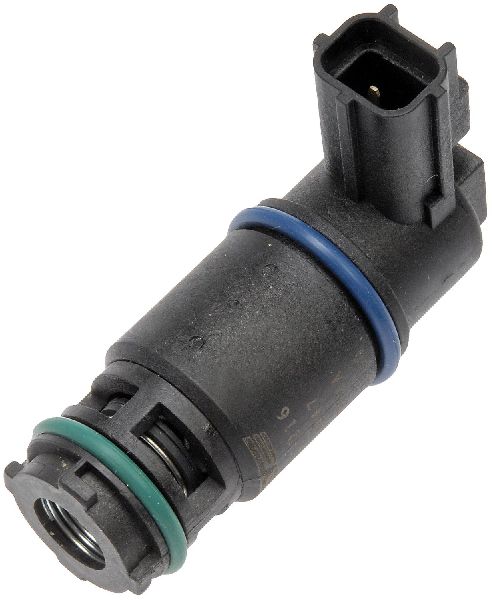
Typical fix: Replace the canister purge valve assembly. This is a straightforward repair that involves removing two 8mm bolts and disconnecting two hoses and one electrical connector. The job typically takes less than 15 minutes.
Est. part cost: $30-$70
Rare But Worth Checking
- Blocked EVAP Canister Vent Solenoid/Hose: The vent solenoid (usually near the fuel tank) is designed to let fresh air into the system to relieve vacuum. If it's stuck closed or its hose is blocked by dirt, spider webs, or debris, the system can't bleed off vacuum, triggering P1450. This is less common than the purge valve failure on this platform. A cross-manufacturer reference in TSB Bulletin #TSB 21-2106 notes that a P1450 may be due to a kinked evaporator emissions fresh air vent line, which can be corrected by using a zip tie to secure the line properly.
- Kinked or Collapsed EVAP Hose: A restriction in the hoses connecting the fuel tank, charcoal canister, and purge valve can trap vacuum. A visual inspection of the lines is necessary, though this is an uncommon cause.
- Faulty Fuel Tank Pressure (FTP) Sensor: The FTP sensor reports the vacuum/pressure level to the computer. If it provides an incorrect reading, the computer may set a P1450 code. A rare but documented cause is the sensor's reference port becoming clogged by oily undercoating spray, leading to erroneous readings. In one forum case, a dealer cleaned the sensor with brake cleaner to resolve the code.
Diagnosis Steps

- Confirm the code P1450 with an OBD-II scanner.
- Locate the canister purge valve on the engine. On the 5.0L GT, it's on the driver's side of the intake manifold. On the 2.3L EcoBoost, it's in a similar location, easily accessible after removing the plastic engine cover.
- Disconnect the electrical connector from the purge valve.
- Disconnect the EVAP line that runs from the purge valve toward the back of the car (this is often the one with a green or white clip).
- Start the engine.
- Place your finger over the port on the purge valve where you just removed the hose.
- If you feel any vacuum/suction, the valve is stuck open and has failed. It must be replaced. This simple test confirms the most common failure in over 90% of cases.
- If there is no vacuum, the valve is likely functioning correctly. The issue may then be a blocked vent valve, a clogged charcoal canister, or a kinked line near the fuel tank, which will require more advanced inspection, possibly with a smoke machine.
Parts You'll Likely Need

- Canister Purge Valve (or Vapor Canister Purge Solenoid/Hose Assembly)
(OEM #FR3Z-9G297-H (common for 2.3L EcoBoost), AU5Z-9C915-B (common for 5.0L GT))— This is the overwhelmingly common cause of code P1450 on this specific vehicle. It gets stuck and cannot properly regulate vacuum in the EVAP system. Part numbers have been revised over the years; always verify fitment with your VIN.
Trusted brands: Motorcraft (OEM), Duralast, Standard Motor Products (SMP)
OEM price range: $40-$85
Aftermarket price range: $30-$50
Related Codes That Often Appear With This One
- P144C — This code, 'Evaporative Emission System Purge Check Valve Performance,' is also directly related to the function of the canister purge valve. TSB 19-2323 (which supersedes 17-0019) specifically addresses this code alongside P1450.
- P0456 — This code indicates a 'very small leak' in the EVAP system. A purge valve that isn't sealing correctly can sometimes be interpreted by the PCM as a small leak. TSBs have been issued for this combination.
- P2196 — This code for 'O2 Sensor Signal Stuck Rich' can sometimes accompany P1450. A stuck-open purge valve allows un-metered fuel vapors to enter the intake manifold, which can create a rich running condition that the O2 sensor detects.
Technical Service Bulletins (TSBs) & Recalls

- TSB 19-2323 (Supersedes TSB 17-0019): Addresses DTCs P1450 and/or P144C on some 2015-2017 models, often related to the purge valve and sometimes requiring a PCM update.
- TSB 17-0019: The original TSB addressing DTCs P0456, P1450, and/or P144C on some 2015-2017 models, pointing to the purge valve. Now superseded. Manufacturer TSB Bulletin #TSB 17-0019 specifically notes that 2.3L engines built on or before 13-Jan-2017 may exhibit an illuminated MIL with these codes.
Platform-Specific Known Issues
- A Technical Service Bulletin (TSB 19-2323) was issued by Ford, superseding a previous TSB. It addresses DTCs P1450 and P144C on some 2015-2017 models, pointing toward a purge valve issue that may also require a PCM reflash in some cases.
- Owner experiences on forums like Mustang6G.com are extensive, with dozens of threads confirming the purge valve as the fix. One user notes, 'That P1450 is the most common S550 error related to the purge valve.'
- For the EcoBoost model specifically, an early part number (FR3C-9D188-AC) became obsolete and was replaced by a revised assembly, FR3Z-9G297-C, and later FR3Z-9G297-H. 🎬 Watch: How to replace the purge valve assembly on an EcoBoost Mustang.
Mechanic-Grade Diagnostic Values
- Fuel Tank Pressure (FTP) Sensor Voltage (Key On, Engine Off) — expected: 2.6V - 2.65V. Failure: A significant drop in voltage immediately after starting the engine (with purge valve disconnected) can indicate a stuck-open purge valve. A reading biased high or low at rest can indicate a faulty sensor.
- Fuel Tank Pressure (FTP) Sensor (Live Data) — expected: Approx. 0 PSI or 0 inH2O at rest with the system vented.. Failure: If the pressure reading shows a vacuum (negative value) when the purge valve is commanded closed (0% duty cycle), it indicates an un-commanded vacuum source, likely a stuck-open purge valve.
Hidden / Shadow Codes Worth Checking
- Mode 6, Test ID $3D, Comp ID $88: This specific monitor test checks for the Purge Flow Monitor and has an excessive vacuum limit. A failure here is directly related to the condition that sets the P1450 DTC. (see via A professional scan tool capable of reading Ford-specific Mode 6 data.)
Scan Tool Commands That Help
- Ford IDS (Integrated Diagnostic Software): EVAP System Test (Manual) — This is a guided, comprehensive test that allows a technician to manually command the canister purge and vent solenoids and monitor the FTP sensor response to verify the integrity and function of the entire system. It can be used to confirm if the system can hold vacuum and bleed it off correctly, which is the core of the P1450 fault.
- Professional Scan Tool (e.g., Xtool D8, Autel): Actuation Test: Evaporative Emission Canister Purge Valve — This bidirectional control allows you to command the purge valve to open and close while the engine is off. You should be able to hear the valve clicking. This confirms the electrical circuit and the solenoid's coil are functional, but it does not confirm if the valve is mechanically stuck.
Real Owner Repair Stories
- Mustang6G.com forum user (2015+ S550 Mustang (specific year not stated)) — P1450 Check Engine Light returned even after replacing the canister purge solenoid.
❌ Tried (didn't work) Replacing the canister purge valve.
✅ What actually fixed it The user reported that their dealer had previously resolved the code by cleaning the Fuel Tank Pressure (FTP) sensor with brake cleaner. The issue was caused by oily undercoating (Krown) clogging the sensor's atmospheric reference port. The code returned a year later, and the user planned to clean the sensor again. - Mustang6G.com forum user (2016 Mustang GT) — P1450 Check Engine Light.
✅ What actually fixed it Owner purchased a new canister purge valve from an auto parts store for $30 and replaced it in approximately 15 minutes. The code did not clear immediately but went away on its own after a few drive cycles. - Ford Owner Complaint (NHTSA ODI #11343783) — An owner reported a stuck canister purge valve that triggered the P1450 "unable to bleed up fuel tank vacuum" code specifically after filling up at a gas station, which could also cause the vehicle to stall.
- Ford Owner Complaint (NHTSA ODI #11467127) — A diagnosis for a check engine lamp revealed codes P0300, P0316, and P1450; the technician found a sticking canister purge valve was pulling a constant vacuum.
- Ford Owner Complaint (NHTSA ODI #11321251) — One owner experienced stalling and trouble starting with code P1450. Despite replacing the fuel tank pressure solenoid, the problem persisted, highlighting the complexity of the EVAP system.
OEM Part Supersession History
AU5Z-9C915-A→AU5Z-9C915-B, and later AU5Z-9C915-E— Part revision by Ford to improve reliability.
Heads up: These parts are generally interchangeable for the specified applications (primarily 5.0L GT).FR3C-9D188-AC (part of an older assembly)→FR3Z-9G297-C, and later FR3Z-9G297-H (hose/valve assembly)— Part revision by Ford for the 2.3L EcoBoost engine.
Heads up: The replacement is an entire hose and valve assembly, not just the valve. Ensure you are purchasing the correct assembly for the EcoBoost.
Model Year Variations Within This Range
- 2015-2017: TSB 19-2323 specifically calls out these model years for the P1450/P144C codes. In addition to replacing the purge valve, a PCM reflash to the latest software calibration may be required to fully resolve the issue. This is less commonly required on 2018+ models.
- 2018-2024: The 2018 model year marked a significant refresh for the Mustang, including changes to the front fascia and engine updates (Gen 3 Coyote 5.0L). While the fundamental cause of P1450 (purge valve) remains the same, part numbers and locations may have slight variations compared to the 2015-2017 models. Always verify the part number with the vehicle's VIN.
Diagnostic Flowchart
Used vs. New Parts: Buying Guide for This Vehicle
When a used part is the smart pick: For this specific repair, buying a used canister purge valve is generally not recommended. The part is a known high-failure item, and its internal diaphragm fails with use and age. A used part from a junkyard carries a high risk of failing again in a short period. Given the low cost of a new aftermarket or OEM part ($30-$70), purchasing new is the most sensible and cost-effective choice.
Donor-vehicle mileage cap: roughly under 20000 miles for the part to have meaningful remaining life.
What to inspect on the donor part:
- If buying used is unavoidable, source from the lowest-mileage donor vehicle possible.
- Visually inspect for cracks in the plastic housing or connectors.
- Ensure the part is from a vehicle of the same model year range and engine type.
OEM-only on this vehicle (don't cheap out):
- No parts for this specific P1450 repair are strictly OEM-only. The canister purge valve is widely available from reputable aftermarket manufacturers.
Aftermarket brands forum-validated for this vehicle:
- Duralast
- Standard Motor Products (SMP)
Brands owners have reported issues with on this vehicle:
- No specific brands are consistently reported as problematic on forums, but ultra-low-cost, unbranded parts from online marketplaces may have questionable quality control.
Real Owner Stories
Aggregated from forums and TSBs cited above. Mileages and costs reflect what owners reported in those sources.
2015 Mustang GT — 44000 miles
Symptoms: Check engine light came on with code P1450. After clearing the code, it returned after driving 235.2 miles.
What fixed it: Another user in the thread suggested the purge valve is the most common cause for this error on the S550.
Source hint: P1450 Fuel Pressure Sensor? | 2015+ S550 Mustang Forum - Mustang6G.com
2015 Mustang GT
Symptoms: The check engine light with code P1450 would come on a day or two after filling up with gas.
What fixed it: The owner ordered and replaced the purge valve with Ford part AU5Z-9C915-B.
Source hint: P1450 Code - Purge valve | 2015+ S550 Mustang Forum - Mustang6G.com
2016 Mustang GT
Symptoms: The P1450 code appeared, was reset, and then came back.
What fixed it: The owner purchased the replacement part from the dealership and installed it in about 15 minutes, which erased the code.
Cost: $32-$32
Source hint: Mustang6G.com forum report
EcoBoost Mustang
Symptoms: Rough idling and needing to rev the engine to keep it running right after refueling.
What fixed it: Replacing the EVAP purge canister completely resolved the rough idling and hard start issues after refueling.
Source hint: Reddit r/ecoboostmustang - 'Have any of you had to replace the fuel sensor (check engine code : P1450)'
Related OBD-II Codes
Frequently Asked Questions
Is the P1450 code a common problem on the 2015-2024 Ford Mustang?
Is there a Ford TSB for the P1450 code on my Mustang?
How can I test the canister purge valve myself to confirm it's the problem?
What are the most obvious symptoms of a P1450 code besides the check engine light?
How difficult is it to replace the purge valve on a Mustang?
Are there updated part numbers for the purge valve on the EcoBoost Mustang?
Helpful Videos
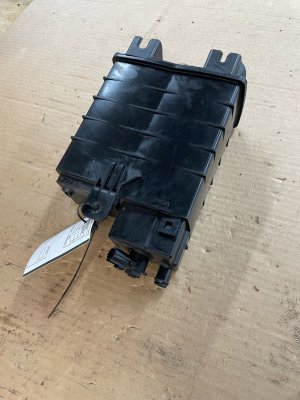
Used OEM Parts in Stock
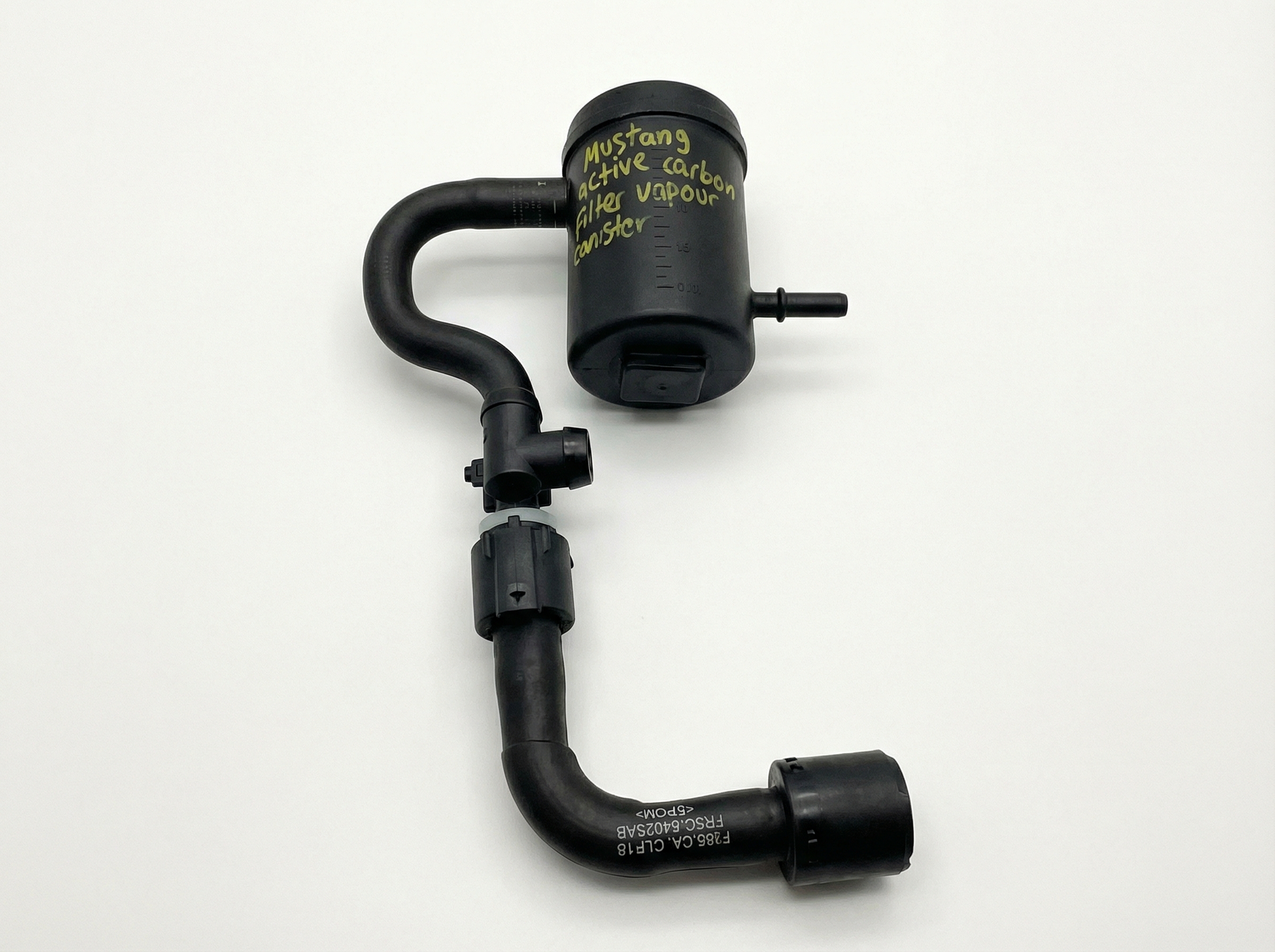
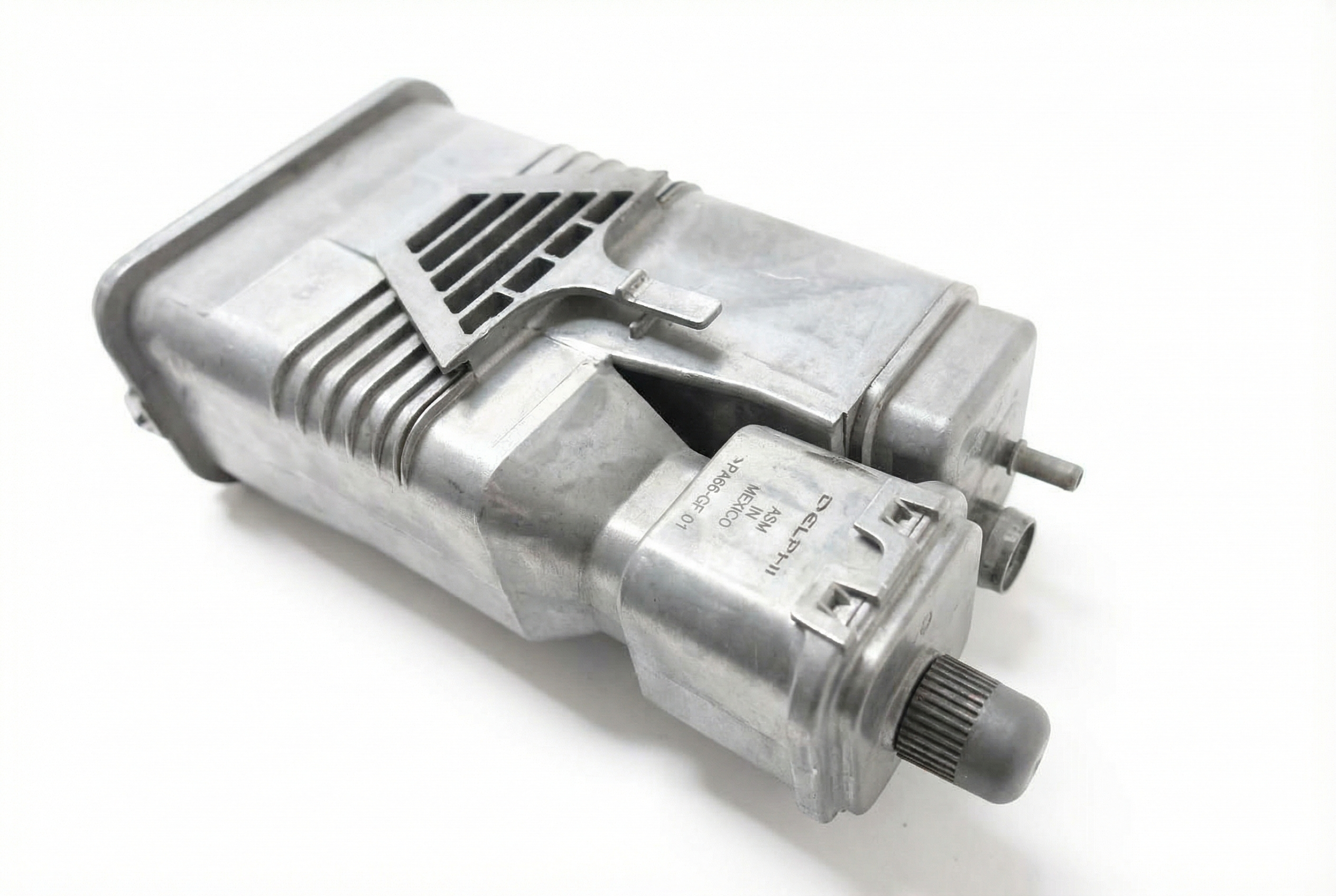
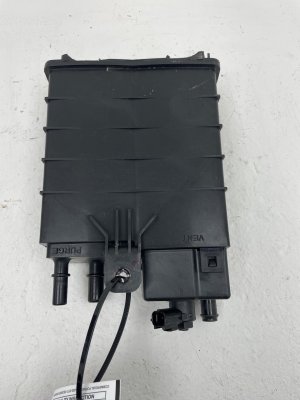
New Aftermarket Parts Available


The information in this article is provided for general reference and educational purposes only. Vehicle specifications, procedures, and part compatibility can vary by production date, trim level, and region. Always consult your vehicle's factory service manual and verify part numbers before purchasing or performing repairs. Safety-critical components such as airbags, seat belts, and braking systems should be installed by a qualified professional.
- Ford Mustang:
- 🎬 Helpful Videos
- 🛍️ Shop This Part
- What's Unique About the 2015-2024 Ford Mustang
- Symptoms You May Notice
- Most Likely Causes
- Rare But Worth Checking
- Diagnosis Steps
- Parts You'll Likely Need
- Related Codes That Often Appear With This One
- Technical Service Bulletins (TSBs) & Recalls
- Platform-Specific Known Issues
- Mechanic-Grade Diagnostic Values
- Hidden / Shadow Codes Worth Checking
- Scan Tool Commands That Help
- Real Owner Repair Stories
- OEM Part Supersession History
- Model Year Variations Within This Range
- Diagnostic Flowchart
- Used vs. New Parts: Buying Guide for This Vehicle
- Real Owner Stories
- 2015 Mustang GT — 44000 miles
- 2015 Mustang GT
- 2016 Mustang GT
- EcoBoost Mustang
- Related OBD-II Codes
- Frequently Asked Questions
- 🎟️ Get 5% Off