

P1440 on 2015-2018 Ford Edge 2.7L: EVAP Purge Valve and Leak Causes & Fixes
On a 2015-2018 Ford Edge with the 2.7L EcoBoost, code P1440 almost always indicates a faulty EVAP canister purge valve or a leak in an EVAP hose. The purge valve is the most likely culprit, often getting stuck open. It is a relatively easy DIY replacement, with genuine Motorcraft parts costing between $40 and $85. This issue is common across many Ford models using this engine.
- P1440 on your 2.7L Edge most likely means the canister purge valve has failed or an EVAP hose is loose.
- Before buying parts, remove the engine cover and physically check that all EVAP hose connectors are pushed in and locked.
- Replacing the purge valve is a beginner-friendly DIY job that takes less than 30 minutes and can save hundreds in labor costs.
- This code will cause an automatic failure on an emissions test, so it cannot be ignored if inspections are required in your area.
What's Unique About the 2015-2018 Ford Edge
The 2.7L EcoBoost engine, like other modern direct-injection and turbocharged engines, has a complex vacuum and vapor management system. While P1440 is a general Ford EVAP code, the closely related code P144C is very common on this platform and is specifically addressed by Technical Service Bulletins (TSBs) that point to loose or improperly seated EVAP vapor line connections. TSB 19-2132, later superseded by TSB 21-2280 for newer models, explicitly instructs technicians to physically check the security of these quick-connect fittings before replacing parts, suggesting they are a known weak point from the factory. The 2.7L EcoBoost also has a check valve between the intake manifold and the canister purge valve to prevent boost pressure from entering the EVAP system.
Symptoms You May Notice
- Check Engine Light (MIL) is on
- Rough or unstable idle
- Difficulty starting the engine, especially right after getting gas. This is due to an overly rich mixture from the raw fuel vapors being sucked into the intake.
- A noticeable smell of fuel around the vehicle
- Slightly increased fuel consumption
- Extended engine cranking before it starts
- Replacing oxygen (O2) sensors. A faulty purge valve can cause rich or lean conditions that may trigger O2 sensor codes, but the root cause is the EVAP system, not the sensors themselves.
- Replacing the fuel tank pressure (FTP) sensor. While an FTP sensor can fail, it is much less common than the purge valve or a simple hose leak. Always test the purge valve first.
- Confusing the P1440 emissions code with the C1440 ABS code. On some Ford platforms, C1440 refers to a 'Pressure Difference Transducer Circuit Failure' in the ABS module and is completely unrelated.
Most Likely Causes
- Faulty EVAP Canister Purge Valve 🔴 High Probability This is a very common failure item across many Ford models, including the Edge and its platform mates like the F-150 and Lincoln MKX. The valve's internal diaphragm fails, causing it to get stuck open and create a constant vacuum leak of fuel vapors into the engine.
How to confirm: With the engine off, disconnect the EVAP line from the purge valve that leads to the intake manifold. Use a hand vacuum pump to apply vacuum to the valve's inlet port. If it doesn't hold vacuum, it's stuck open and bad. Alternatively, with the engine running, disconnect the electrical connector; if you can still feel vacuum on the inlet port with your finger, the valve is stuck open. A properly functioning valve should be closed with the engine off.
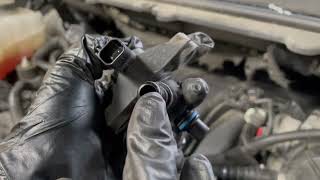
Typical fix: Replace the canister purge valve assembly. It is located on top of the engine and is easily accessible after removing the plastic engine cover. The repair takes less than 15 minutes for most DIYers.
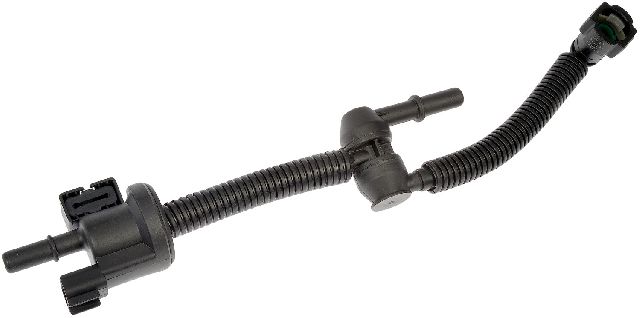
Est. part cost: $40-$85 - Loose or Cracked EVAP Hoses/Lines 🟡 Medium Probability Ford has issued TSBs for the 2.7L engine (TSB 19-2132, TSB 21-2280) for the related code P144C, which point directly to EVAP vapor lines not being fully seated at their quick-connect fittings. The plastic connectors and rubber hoses can become brittle over time or may not have been properly installed at the factory.
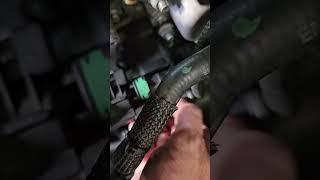
How to confirm: Visually inspect all EVAP lines running from the charcoal canister (near the fuel tank) to the purge valve on the engine. Physically push and pull on each connector to ensure it is fully seated and locked, listening for an audible 'click'. A smoke test is the most effective professional method to find small, hard-to-see leaks.
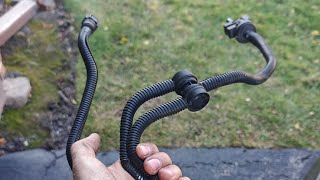
Typical fix: Reseat any loose connectors until they click into place. Replace any cracked hoses or broken connector clips. The entire hose assembly may need to be replaced if the connectors are damaged.
Est. part cost: $10-$70 - Issue with Capless Fuel Filler Neck ⚪ Low Probability The spring-loaded door on the capless system must create a perfect seal for the EVAP system to hold pressure. Debris, corrosion, or damage can prevent this, causing a leak that the system may interpret as an improper flow.
How to confirm: Inspect the fuel filler opening for any debris, dirt, or damage that could prevent the inner flap from sealing. Clean the opening carefully with a rag and solvent. The special funnel that comes with the vehicle can be used to open and close the flap to check its operation and help dislodge debris.
Typical fix: Clean the fuel filler neck opening. If the sealing flap is damaged or corroded, the entire fuel filler neck assembly must be replaced.
Est. part cost: $70-$150
Rare But Worth Checking
- Failed EVAP Canister Vent Solenoid: This valve, located near the charcoal canister by the fuel tank, can get stuck closed, preventing the system from venting properly. It's less common than the purge valve failure for this code but is a core part of the EVAP system.
- Damaged Wiring to EVAP Components: A short or open in the wiring to the purge valve or vent solenoid can prevent it from operating correctly, triggering a flow code. Check for corroded connectors or damaged wires, especially near the components themselves.
- Failed Fuel Tank Pressure (FTP) Sensor: If the FTP sensor provides incorrect data to the PCM, the computer may believe there is a flow problem when there isn't one. This is less common than a mechanical failure of a valve or hose.
Diagnosis Steps
- Read the code with an OBD-II scanner and check for any other related codes.
- Inspect the capless fuel filler neck for debris or damage and ensure it seals properly.
- Remove the plastic engine cover. Locate the EVAP canister purge valve on top of the engine.
- Visually inspect the purge valve and its associated hoses and electrical connector for any obvious cracks, damage, or loose connections.
- Physically push and pull on the EVAP hose connectors at the purge valve and where they connect to the intake to ensure they are fully seated, as per Ford TSB 19-2132. Listen for a 'click'.
- Test the purge valve itself. With the engine off and electrical connector unplugged, it should be closed and hold vacuum. If you can blow through it or it fails a hand vacuum pump test, it is faulty and needs to be replaced.
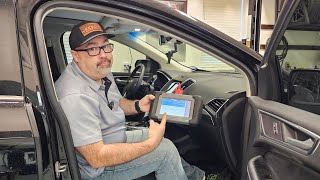
- If the purge valve tests good, use a capable scan tool to command the purge valve open and closed while monitoring the Fuel Tank Pressure (FTP) sensor to see if the system responds.
- If the purge valve and its operation seem correct, the next step is a full EVAP system smoke test to find the source of the improper flow or leak.
- If no leaks are found, inspect the wiring to the purge valve for power and ground, and check the operation of the canister vent solenoid near the fuel tank.
Parts You'll Likely Need
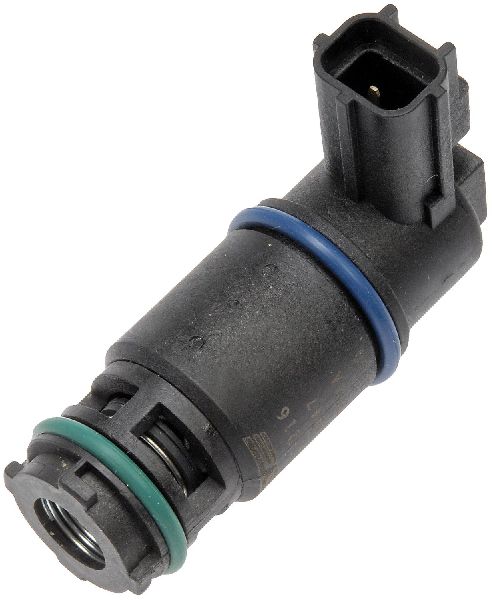
- Vapor Canister Purge Valve
(OEM #AU5Z-9C915-B)— This is the most frequent failure point for code P1440 on Ford vehicles. It gets stuck open, causing incorrect vapor flow. The part number has been superseded multiple times, with the latest version being AU5Z-9C915-E.
Trusted brands: Motorcraft (OEM), Dorman, Standard Motor Products, Wells
OEM price range: $60-$85
Aftermarket price range: $30-$55
Related Codes That Often Appear With This One
- P144C — This code is for 'EVAP System Purge Check Valve Performance' and is very closely related. TSBs for the 2.7L engine specifically address this code, often pointing to the same loose hose connections.
- P0456 — This code indicates a 'Small EVAP System Leak.' A stuck-open purge valve or a cracked hose that triggers P1440 can also be interpreted by the system as a small leak.
- P2196 / P2198 — These codes mean 'O2 Sensor Signal Stuck Rich.' A stuck-open purge valve allows un-metered fuel vapors into the engine, which can cause a rich condition, leading the oxygen sensors to report this issue.
- P1450 — This code means 'Unable to Bleed Up Fuel Tank Vacuum' and is another very common code caused by a stuck-open purge valve on Ford vehicles.
Technical Service Bulletins (TSBs) & Recalls
- TSB 19-2132: Addresses illuminated MIL with DTC P04F0 and/or P144C on 2018-2019 Edge/F-150 with 2.7L/3.5L engines, advising to check for loose EVAP connections.
- TSB 21-2280: Supersedes TSB 19-2132, updating the model years and engines affected by the loose EVAP connection issue causing P144C and P04F0.
- TSB 23-2338: Addresses oil pan leaks on 2015-2017 Edge 2.7L models, recommending replacement with an updated pan design.
- TSB 19-2387: Addresses oil pan leaks on 2018-2019 Edge 2.7L models.
Platform-Specific Known Issues
- A Technical Service Bulletin (TSB 19-2132) exists for the 2018-2019 F-150 and other models with the 2.7L engine for code P144C, which instructs technicians to inspect for and re-secure loose EVAP vapor line connections. This TSB was later superseded by TSB 21-2280 which expanded the model years. This indicates a known issue with these connections on this platform and is highly relevant to diagnosing P1440.
- The 2.7L EcoBoost in the Edge Sport/ST is known for its impressive performance but also for a well-documented oil pan leak from the factory RTV
Mechanic-Grade Diagnostic Values
- EVAP Canister Purge Valve Solenoid Coil Resistance — expected: 15 - 50 Ohms. Failure: A reading of 0 Ohms indicates a short, while an infinite (OL) reading indicates an open circuit. Either requires replacement.
- EVAP Purge Valve Supply Voltage (Key On, Engine Off) — expected: ~12V (Battery Voltage). Failure: Significantly lower or no voltage suggests a wiring issue, blown fuse, or problem with the power supply from the PCM.
- Fuel Tank Pressure (FTP) Sensor Voltage (Key On, Engine Off, system at atmospheric pressure) — expected: ~2.6V. Failure: A voltage that is significantly different, or drops immediately upon starting the engine without the purge valve being commanded, points to a stuck-open purge valve or a leak between the valve and the sensor.
- Short-Term Fuel Trim (STFT) during commanded purge — expected: Should go negative (e.g., -10% to -25%). Failure: If you command the purge valve open with a scan tool and the short-term fuel trims do not go negative, it indicates no fuel vapor is being drawn into the engine, suggesting a blockage or a non-functioning valve. Conversely, if trims are already very negative at idle with the valve commanded closed, it suggests the valve is stuck open.
Hidden / Shadow Codes Worth Checking
- Mode 6, Test ID $81, Component ID $11: This is the non-continuous monitor for the EVAP system leak test. It tracks the pressure decay value during the test. A failing value here can precede a full-blown trouble code. (see via A scan tool capable of reading Mode 6 data, such as Forscan or a professional-grade scanner like Snap-on or Autel.)
Scan Tool Commands That Help
- Ford IDS (or equivalent like Forscan): Powertrain > DataLogger > EVAP PIDs (FTP, CPV, CVV) — This is used to monitor the Fuel Tank Pressure (FTP) sensor voltage in real-time while commanding the Canister Purge Valve (CPV) and Canister Vent Valve (CVV) open and closed to verify their function. For P1440, you would command the CPV closed and watch if the FTP voltage remains stable; if it drops, the valve is leaking.
- Ford IDS (or equivalent): EVAP System Test — This is an automated test that commands the vent and purge valves to seal the system, pull a vacuum, and monitor for leaks. It's a comprehensive check of the entire system's integrity. For P1440, if the system fails to pull a vacuum, it can point to a stuck-open purge valve.
Wiring & Ground Locations
- G104 / G106 — G104 is often on the left front of the engine compartment, while G106 is on the right front.. These are main engine compartment ground points. A poor ground connection for a sensor's return circuit, including the FTP sensor, can cause incorrect voltage readings and lead the PCM to misinterpret the EVAP system's status.
- Under-hood Fuse Box — Located on the driver's side of the engine bay, next to the battery.. This box contains fuses and relays that provide power to EVAP system components. A blown fuse for the purge valve or vent solenoid circuit would cause a loss of function and trigger codes.
Real Owner Repair Stories
- Ford Edge Forum (2015 Ford Edge Sport 2.7L EcoBoost) — Check Engine Light with code P1450 (Unable to Bleed Up Fuel Tank Vacuum)
❌ Tried (didn't work) Initial diagnosis was uncertain.
✅ What actually fixed it The user referenced a similar issue on a Mustang with an EcoBoost engine where replacing the EVAP purge valve resolved the code. This is noted as a very common problem on Ford EcoBoost vehicles.
OEM Part Supersession History
AU5Z-9C915-A, AU5Z-9C915-B, AU5Z-9C915-C, AU5Z-9C915-D→AU5Z-9C915-E— Ford periodically updates parts to improve reliability and address known failure modes. These supersessions reflect design improvements to the purge valve.
Heads up: All previous versions are replaced by AU5Z-9C915-E, which is the current recommended OEM replacement and is fully compatible.
Diagnostic Flowchart
Other Known Issues on This Vehicle
Issues unrelated to this code that are worth knowing about as an owner of this generation:
- Leaking Composite/Plastic Oil Pan 🔴 High — Very common on 2015-2017 models with the RTV-sealed pan. Less common on 2018+ models which use an updated pan with a gasket. Leaks can start as early as 30,000-60,000 miles. (Ref: TSB 23-2338 (for 2015-2017 Edge), TSB 19-2387 (for 2018-2019 Edge). These TSBs instruct technicians to replace the original RTV-sealed pan with an updated version that uses a press-in-place gasket.)
- Carbon Buildup on Intake Valves 🟠 Medium — A common issue for all direct-injection (GDI) engines, including the first-generation 2.7L (2015-2017). Symptoms like rough idle or misfires may appear after 70,000-100,000 miles. The 2018+ second-gen 2.7L added port injection, which largely mitigates this issue by washing the valves with fuel.
- Front Brake Hose Rupture 🔴 High — Affects all 2015-2018 Edge models regardless of engine. A recall was issued because the hoses could rupture, leading to a sudden loss of brake fluid and braking ability. (Ref: NHTSA Recall 20V-191)
- Torque Converter / Transmission Issues 🟠 Medium — Some owners of 2015-2018 models with the 6F55 6-speed transmission have reported shudder, hesitation, or premature failure. Not as widespread as the 2.0L engine's transmission problems, but notable.
Used vs. New Parts: Buying Guide for This Vehicle
When a used part is the smart pick: For this specific repair, using used parts is generally not recommended. The primary failure part, the EVAP purge valve, is an electronic solenoid with a known failure rate due to internal wear. A used part carries a high risk of failing again shortly after installation. Plastic EVAP hoses and connectors from a junkyard are also likely to be brittle and prone to cracking.
Donor-vehicle mileage cap: roughly under 40000 miles for the part to have meaningful remaining life.
What to inspect on the donor part:
- If considering a used hose assembly, inspect for any signs of cracking, especially at the connector ends.
- Ensure all quick-connect clips are present and not broken.
- Avoid parts from vehicles in regions with extreme heat or cold, which accelerates plastic and rubber degradation.
OEM-only on this vehicle (don't cheap out):
- Vapor Canister Purge Valve: Given the high failure rate and critical function, using an OEM Motorcraft part (AU5Z-9C915-E) is strongly advised to ensure longevity and proper operation. Aftermarket versions can be hit-or-miss.
Aftermarket brands forum-validated for this vehicle:
- Dorman
- Standard Motor Products (SMP)
Brands owners have reported issues with on this vehicle:
- No-name, unbranded parts from online marketplaces should be avoided as their quality control and material specifications are often unknown and can lead to premature failure.
Real Owner Stories
Aggregated from forums and TSBs cited above. Mileages and costs reflect what owners reported in those sources.
2015 Ford Edge 2.7L
Symptoms: Check engine light was on; dealer provided a high repair estimate for the purge valve.
What fixed it: Replacement of the purge valve.
Cost: $623-$623
Source hint: fordedgeforum.com thread titled '2015 Edge Purge Valve Replacement $623'
2020 Ford Edge
Symptoms: The engine would not crank/start immediately after refueling.
What fixed it: Replacement of the stuck-open purge valve which was flooding the engine with vapor.
Source hint: Reddit r/FordEdge thread '2020 ford edge wont crank after refueling'
2018 Ford Edge 2.7L
Symptoms: Illuminated MIL with EVAP system codes.
What fixed it: Inspecting and re-securing loose EVAP vapor line connections at their quick-connect fittings.
Source hint: TSB 19-2132
Related OBD-II Codes
Frequently Asked Questions
Does TSB 19-2132 apply to my 2018 Ford Edge with the 2.7L engine?
Why does my Edge have trouble starting only after I fill up the gas tank?
How much should I expect to pay a dealer to replace the purge valve on a 2015 Edge?
Is there a specific way to check if the EVAP lines are connected properly on the 2.7L EcoBoost?
Can a dirty fuel filler neck cause P1440 on the Ford Edge?
I see a code C1440 on my scanner; is that the same as P1440?
Helpful Videos

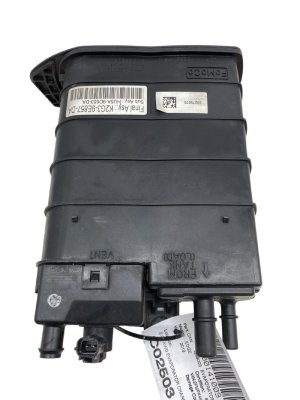
Used OEM Parts in Stock

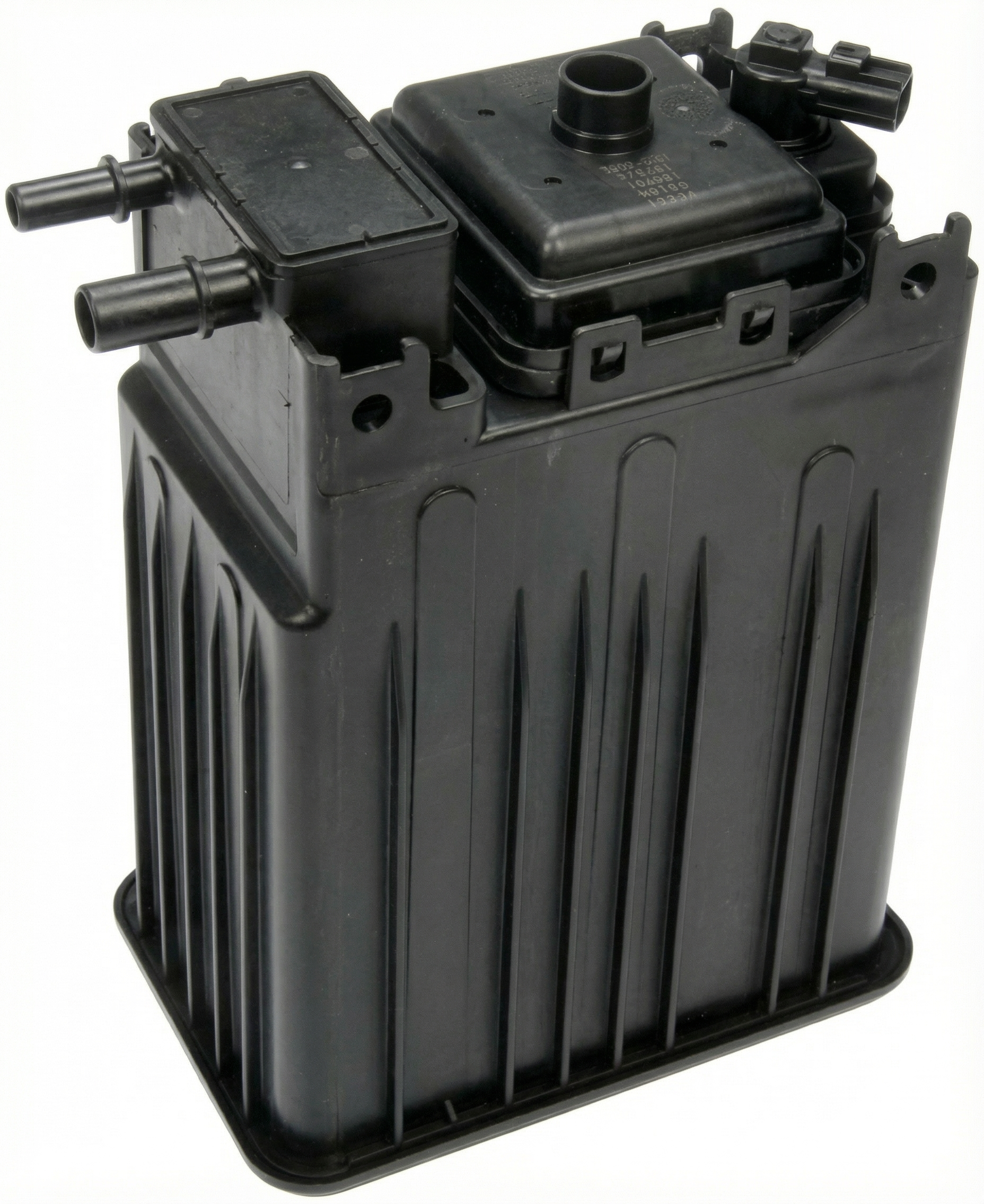
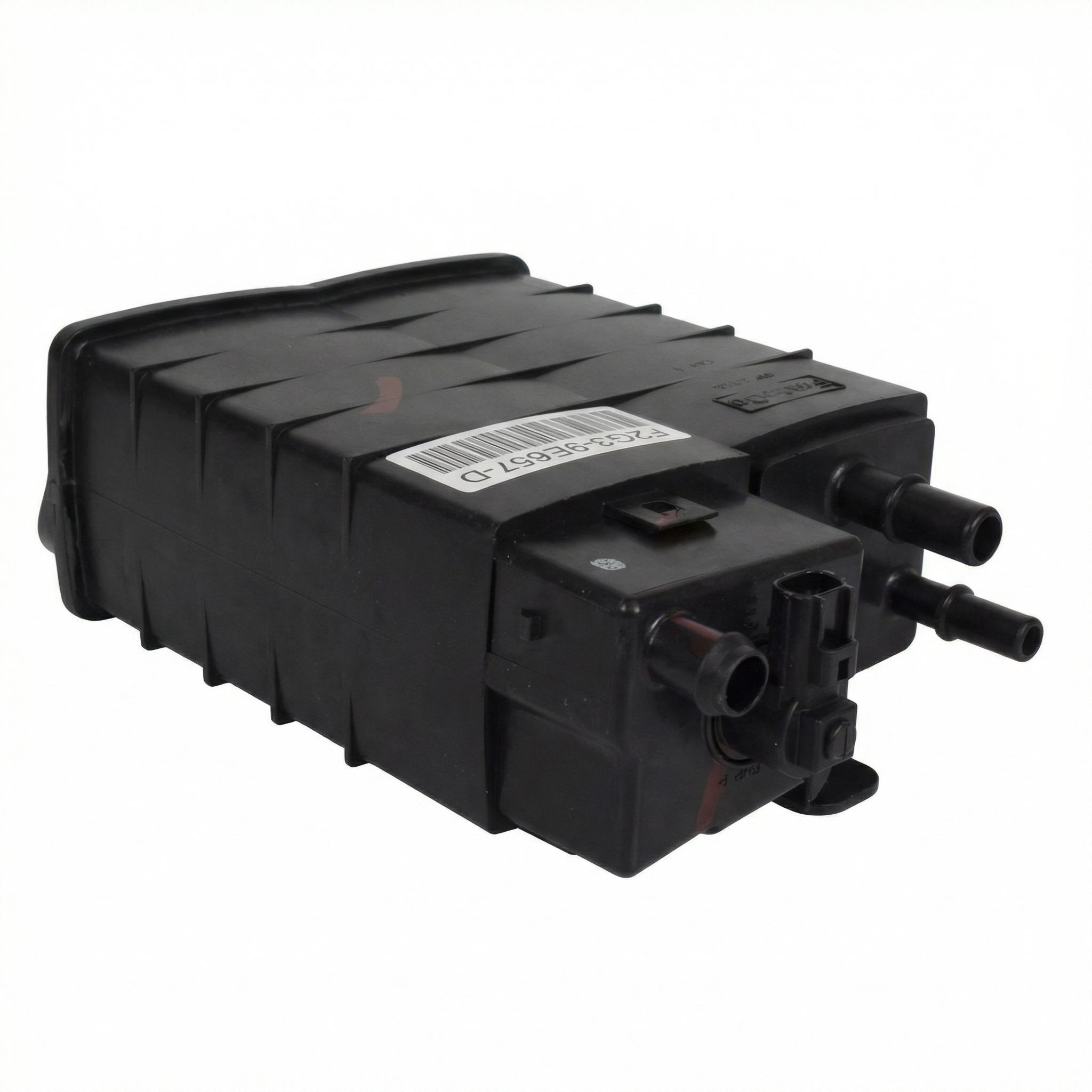
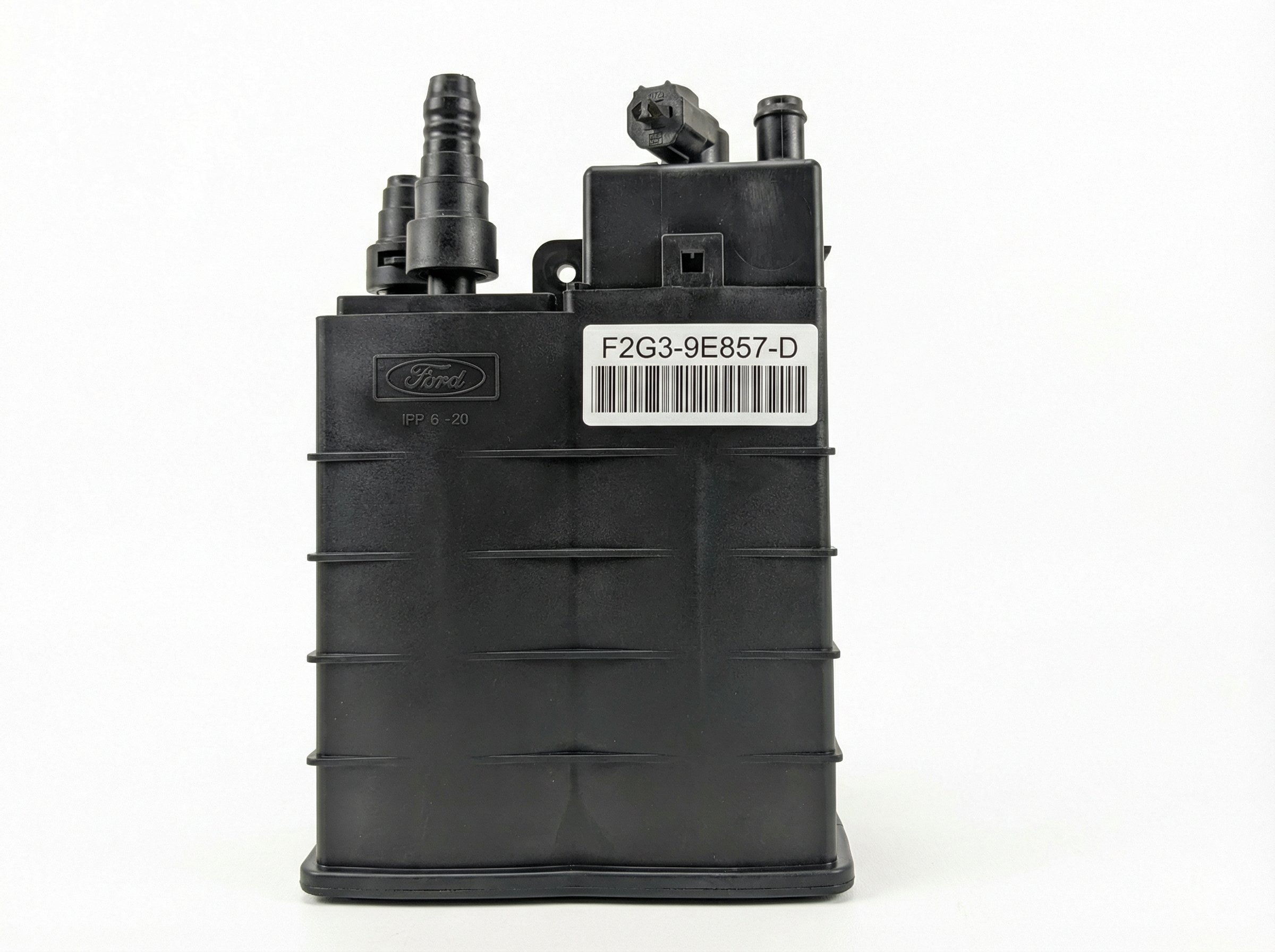
New Aftermarket Parts Available


The information in this article is provided for general reference and educational purposes only. Vehicle specifications, procedures, and part compatibility can vary by production date, trim level, and region. Always consult your vehicle's factory service manual and verify part numbers before purchasing or performing repairs. Safety-critical components such as airbags, seat belts, and braking systems should be installed by a qualified professional.
- Ford Edge:
- 🎬 Helpful Videos
- 🛍️ Shop This Part
- What's Unique About the 2015-2018 Ford Edge
- Symptoms You May Notice
- Most Likely Causes
- Rare But Worth Checking
- Diagnosis Steps
- Parts You'll Likely Need
- Related Codes That Often Appear With This One
- Technical Service Bulletins (TSBs) & Recalls
- Platform-Specific Known Issues
- Mechanic-Grade Diagnostic Values
- Hidden / Shadow Codes Worth Checking
- Scan Tool Commands That Help
- Wiring & Ground Locations
- Real Owner Repair Stories
- OEM Part Supersession History
- Diagnostic Flowchart
- Other Known Issues on This Vehicle
- Used vs. New Parts: Buying Guide for This Vehicle
- Real Owner Stories
- 2015 Ford Edge 2.7L
- 2020 Ford Edge
- 2018 Ford Edge 2.7L
- Related OBD-II Codes
- Frequently Asked Questions
- 🎟️ Get 5% Off