

P1440 on 1995-2004 BMW 5-Series (E39 540i): EVAP Purge Valve and DMTL Pump Faults
On a BMW E39 540i with the M62 V8, code P1440 almost always points to a problem in the evaporative emissions (EVAP) system. The most common fix is replacing the fuel tank breather valve (purge valve) located in the engine bay. A faulty DMTL pump is the second most likely cause, and less frequently, a cracked EVAP hose or a bad gas cap.
- P1440 on your E39 540i is an EVAP system code, not a cruise control issue.
- The most likely culprit is the Fuel Tank Breather (Purge) Valve, part number 13901433603, located on the engine.
- If the purge valve is not the issue, the next most likely cause is the DMTL pump, part number 16137193479, located in the rear wheel well.
- Always check that your gas cap is tight and its seal is intact as a first, simple step.
- A smoke test is the best way to find elusive leaks in old, brittle EVAP hoses.
What's Unique About the 1995-2004 BMW 5-Series
For the E39 5-Series with the M62 V8 engine, the EVAP system components are known to fail with age. The fuel tank breather valve (purge valve) is conveniently located on the top front of the engine, making it much easier to access and replace than on many other vehicles. While some generic code readers may confusingly list P1440 as a 'Cruise Control Signal Fault' for BMW, extensive owner reports and technical forums confirm it is almost exclusively an EVAP system issue on this platform.
Generation note: The 1995-2004 range covers the E39 generation (1996-2003) and the last year of the E34. This guide and the M62 4.4L V8 engine are specific to the E39 540i model. The causes and parts listed are confirmed for the E39 platform. The M62 engine was updated in 1998 to the M62TU, which included VANOS, but the EVAP components related to this code remained largely the same.
Symptoms You May Notice
- Check Engine Light is on
- A faint smell of fuel, particularly around the rear of the car or after refueling.
- Slightly reduced fuel economy.
- Difficulty starting immediately after refueling (rare).
- Audible buzzing or clicking from a stuck purge valve in the engine bay.
- Replacing the gas cap when the actual fault is the purge valve or DMTL pump. While a bad gas cap can cause other EVAP codes (like P0455), P1440 is more often tied to a specific component's electrical circuit or function.
- Replacing the DMTL pump without checking its wiring harness. The harness can chafe against the body in the wheel well, causing an open or short circuit that mimics a failed pump.
Most Likely Causes
- Faulty Fuel Tank Breather Valve (Purge Valve) 🔴 High Probability The valve is an electronic solenoid that cycles constantly. Over time, it can fail electrically, develop an internal short, or become stuck open or closed from age and heat cycles.
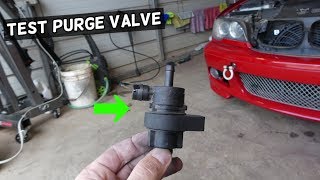
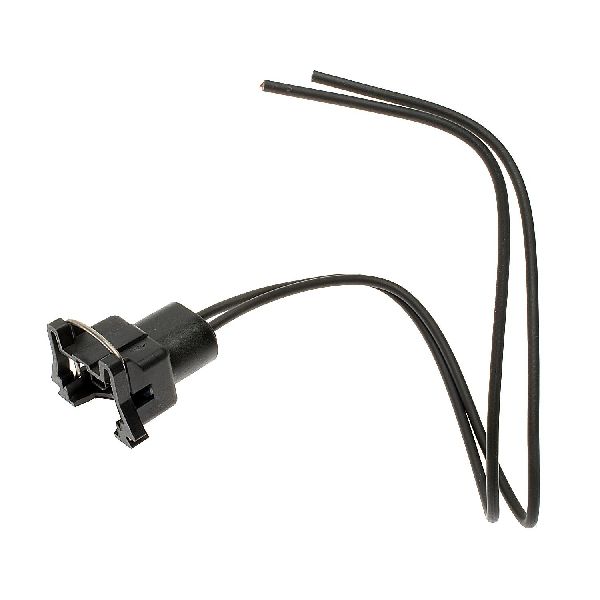
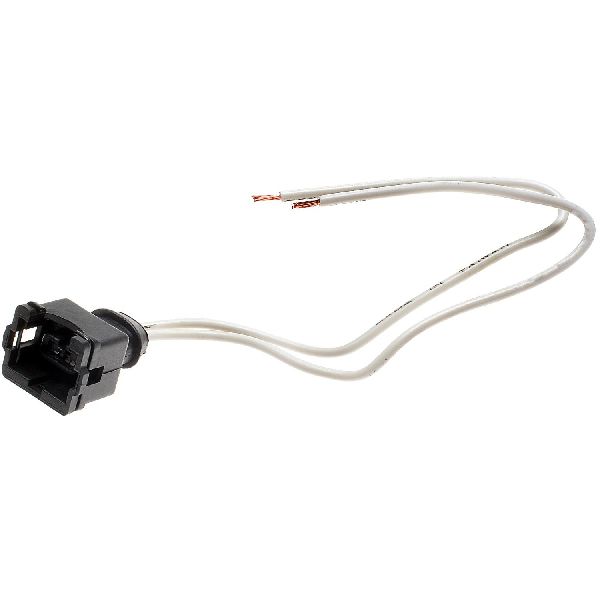
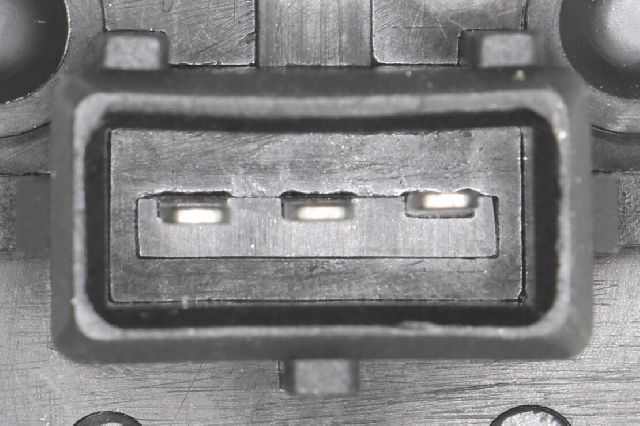
How to confirm: The valve is located on the front of the M62 engine, near the oil filter housing. You can test it by applying 12V to its electrical pins; a healthy valve will make an audible click. A BMW-specific scan tool can also actuate the valve to test its function. Another common failure is the plastic hoses connected to it become brittle and crack.
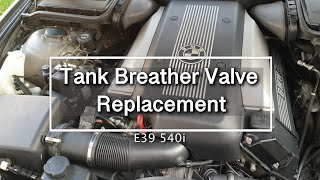
Typical fix: Replace the fuel tank breather valve. 🎬 Watch: Step-by-step M62 fuel tank breather valve replacement guide. It is held in place by a bracket and connected by two hoses and an electrical connector. It is highly recommended to replace the adjoining plastic hoses at the same time as they are prone to breaking during removal.
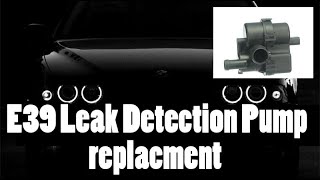
Est. part cost: $70-$120 - Faulty DMTL (Diagnostic Module Tank Leakage) Pump 🟡 Medium Probability The DMTL pump is a small electric air pump that pressurizes the fuel system to check for leaks. It's a common failure point on many BMW models from this era, often due to internal motor failure or corrosion of its electrical connector.
How to confirm: The DMTL pump is located in the right-rear wheel well area, attached to the charcoal canister. Diagnosis often requires a BMW-specific scan tool (like INPA) to run the EVAP leak test. If the pump does not run or the test fails, the pump is likely faulty. Visually inspect the wiring harness near the pump for chafing or corrosion, as this is also a common failure point.
Typical fix: Replace the DMTL pump. This involves raising the rear of the vehicle, removing the passenger-side rear wheel and wheel well liner to access the pump and its connections. The grommet for the pump should also be replaced.
Est. part cost: $100-$180 - Cracked or Disconnected EVAP Hoses 🟡 Medium Probability The plastic and rubber hoses in the EVAP system become brittle with age and exposure to engine heat, leading to cracks and vacuum leaks.
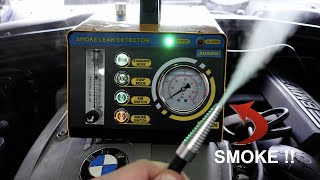
How to confirm: Visually inspect all accessible EVAP lines between the engine, charcoal canister, and fuel tank. The definitive method is to perform a smoke test, which involves injecting low-pressure smoke into the EVAP system and looking for where it escapes. 🎬 Watch: How to perform a smoke test for EVAP leaks.
Typical fix: Replace the cracked or broken section of hose. It is often recommended to replace related brittle hoses at the same time to prevent future failures.
Est. part cost: $20-$50 - Loose or Worn Gas Cap ⚪ Low Probability While a common cause for many general EVAP codes (like P0455), it's less specific to P1440, which often points to a component circuit failure. However, the rubber seal on the cap can degrade over time, preventing the system from holding pressure.
How to confirm: Ensure the gas cap is tightened until it clicks. Inspect the rubber O-ring seal for cracks, stiffness, or damage. If the seal is compromised, the cap needs replacement. An aftermarket cap can sometimes be the source of the problem if it doesn't seal to OEM specifications.
Typical fix: Replace the gas cap with a new, OEM-spec part.
Est. part cost: $25-$50
Rare But Worth Checking
- Saturated Charcoal Canister: If the fuel tank is repeatedly overfilled, liquid gasoline can enter the charcoal canister, saturating it and preventing it from properly storing fuel vapors.
- Faulty Fuel Tank Pressure Sensor: Though uncommon, the sensor that monitors system pressure can fail, sending incorrect data to the ECU and triggering a code even if there are no leaks.
Diagnosis Steps
- Read the code with a BMW-compatible OBD-II scanner to confirm P1440 is present and check for any other related EVAP codes.
- Inspect the gas cap. Ensure it is tight and the rubber O-ring seal is in good condition. If in doubt, it's an inexpensive first step to replace with an OEM part.
- Locate the Fuel Tank Breather Valve (Purge Valve) on the front of the engine. Visually inspect its electrical connector and the attached hoses for obvious cracks or damage.
- Test the Breather Valve. With the engine off, disconnect the electrical connector and apply 12V power to the valve's pins. You should hear a distinct click. If there is no click, the valve has failed and needs replacement.
- If the valve clicks, the issue may be the DMTL pump or a system leak. Locate the DMTL pump in the rear passenger-side wheel well. Inspect its wiring harness carefully for any signs of chafing, breaks, or corrosion before condemning the pump itself.
- Use a BMW-specific scan tool (like INPA/ISTA) to command the DMTL pump to run. If it fails to activate, and the wiring is confirmed to be good, the pump has failed.
- If the purge valve and DMTL pump appear functional, the most effective next step is a smoke test. A mechanic can inject smoke into the EVAP system to quickly identify any hard-to-see cracks in hoses, the charcoal canister, or other components.
- If no leaks are found, and both the purge valve and DMTL pump test good, consider the rarer possibility of a faulty fuel tank pressure sensor providing incorrect readings to the ECU.
Parts You'll Likely Need
- Fuel Tank Breather Valve (Purge Valve)
(OEM #13901433603)— This is the most common failure for code P1440 on the M62 engine, directly corresponding to the 'Purge Control Valve Circuit' fault definition.
Trusted brands: Genuine BMW, Bosch (OEM)
OEM price range: $90-$120
Aftermarket price range: $35-$90 - DMTL Pump
(OEM #16137193479)— The second most common cause for P1440, this pump is a known failure item and is responsible for the system's self-test function. This part number has superseded several older versions.
Trusted brands: Bosch (OEM), Genuine BMW
OEM price range: $120-$180
Aftermarket price range: $85-$130 - DMTL Pump Mounting Grommet
(OEM #16131183912)— The original rubber grommet often perishes and should be replaced with the DMTL pump to ensure a proper seal.
Trusted brands: Genuine BMW
OEM price range: $5-$15
Related Codes That Often Appear With This One
- P0440 — P0440 is a general EVAP System Malfunction code. It often appears alongside more specific codes like P1440 as the car's computer identifies both a general system issue and a specific component fault.
- P1447 — P1447 is another BMW-specific code for 'DMTL Pump Malfunction'. If you see P1440 and P1447 together, the DMTL pump is almost certainly the culprit.
- P0442 — Indicates a small leak in the EVAP system. This can appear with P1440 if the root cause is a cracked hose or a failing seal, rather than a purely electrical component failure.
Platform-Specific Known Issues
- Owner Experience: Purge Valve Replacement: An owner on Bimmerforums with a 2001 540i reported resolving their P1440 code by replacing the purge valve (PN 13901433603). They noted the job was simple, taking only 15 minutes, and emphasized being careful with the brittle plastic vacuum lines connected to it, which often break
Mechanic-Grade Diagnostic Values
- Fuel Tank Breather (Purge) Valve Resistance — expected: 27-29 Ohms. Failure: A significantly higher reading (e.g., over 100 Ohms) or an open circuit indicates an internal failure of the valve's solenoid.
- DMTL Pump Current Draw (during ISTA test) — expected: A specific amperage value is measured by the DME during the reference test through a known orifice size (e.g., 0.5mm or 1.0mm).. Failure: No amperage draw indicates a large leak or failed pump motor. A lower-than-expected change in amperage when pressurizing the system indicates a leak.
Hidden / Shadow Codes Worth Checking
- 189 (Hex): DMTL Module Fault (see via This is a BMW-specific fault code visible in diagnostic software like INPA or ISTA, often corresponding to a generic P1440. It points more directly to a fault within the DMTL pump assembly itself.)
- 98 (Hex): Tankentlueftungsventil Endstufe (Tank Ventilation Valve Final Stage) (see via This is a German-language fault visible in INPA that directly points to an electrical fault with the purge valve circuit.)
Scan Tool Commands That Help
- ISTA/INPA: DMTL Pump Activation / Fuel tank leakage diagnostic module DMTL — This service function is the primary diagnostic step for the DMTL system. It commands the pump to run, first performing a reference measurement with a known leak size, and then pressurizing the entire EVAP system to test for leaks. This test can confirm if the pump motor is functional and if the system can hold pressure.
- ISTA/INPA: Purge Valve Actuation — This allows the technician to command the fuel tank breather (purge) valve to open and close. It's used to verify the valve's electrical function and listen for the audible 'click' of the solenoid, confirming it's not seized.
Real Owner Repair Stories
- Bimmerforums user (2001 BMW 540i) — Check Engine Light with code P1440.
❌ Tried (didn't work) Replacing the DMTL pump
✅ What actually fixed it The user replaced the DMTL pump, but the code returned. Upon closer inspection of the wiring harness in the rear wheel well, they found a chafed wire that was shorting out. Repairing the wire and protecting the harness with conduit permanently resolved the code. - KhanHS Official on YouTube (BMW E39 540i (M62 engine)) — Check Engine Light with INPA code 98 'Tankentlueftungsventil Endstufe' (Purge Valve Fault).
❌ Tried (didn't work) Clearing the code, which would return immediately.
✅ What actually fixed it Replaced the fuel tank breather valve (purge valve), part number 13901433603. The replacement was shown to be a simple 15-minute job with basic tools. After replacement and clearing the code, the fault did not return.
OEM Part Supersession History
16136752551, 16136764191→16137193479— Standard part evolution, likely for improved reliability or manufacturing changes.
Heads up: The new part number (16137193479) is a direct replacement for the older numbers and is fully compatible.
Model Year Variations Within This Range
- 1998-2003: In September 1998, the M62 engine was updated to the M62TU, which added VANOS variable valve timing and electronic throttle control. While the core EVAP components like the purge valve and DMTL pump remained functionally the same for the P1440 code, the engine management system (DME) was updated from ME7.2 on the M62TU. This can affect the specific diagnostic paths or fault code descriptions in software like INPA/ISTA.
Diagnostic Flowchart
Other Known Issues on This Vehicle
Issues unrelated to this code that are worth knowing about as an owner of this generation:
- Timing Chain Guide Failure 🔴 High — Very common on engines over 100,000-150,000 miles. The plastic guides become brittle from heat and age, break apart, and can cause chain slap, jumped timing, or catastrophic engine failure if ingested by the oil pump.
- VANOS Seal Failure (M62TU models) 🟠 Medium — Extremely common on the updated M62TU (1998+). The original Buna rubber seals in the VANOS units degrade, causing a rattling noise (especially on cold start), loss of low-end torque, and rough idling.
- Valley Pan Gasket Leak 🟠 Medium — Common after 100,000 miles. The gasket under the intake manifold, known as the 'valley pan', fails and causes a coolant leak that pools in the 'V' of the engine. It often presents as a mysterious coolant loss with no visible drips on the ground.
- Oil Leaks (Valve Covers, Timing Covers) 🟠 Medium — Very common. The valve cover gaskets and front timing cover gaskets are notorious for becoming hard and brittle, leading to significant oil leaks down the sides and front of the engine.
- Cooling System Component Failure 🔴 High — Common with age. The radiator, expansion tank, water pump, and various plastic hoses are all prone to cracking and failure, which can lead to rapid overheating if not addressed proactively.
- Crankcase Ventilation (CCV) System Failure 🟠 Medium — The oil separator (CCV) on the back of the intake manifold and its associated hoses can clog or rupture, leading to high oil consumption, blue smoke from the exhaust, and rough idling.
Used vs. New Parts: Buying Guide for This Vehicle
When a used part is the smart pick: For this repair, sourcing used parts is generally not recommended. The primary failure components (purge valve, DMTL pump) are electro-mechanical parts with a finite lifespan. A used part from a donor vehicle of similar age is likely to have comparable wear and may fail soon after installation.
Donor-vehicle mileage cap: roughly under 40000 miles for the part to have meaningful remaining life.
What to inspect on the donor part:
- If considering a used part, look for one from a very low-mileage, rear-end collision vehicle to maximize remaining life.
- For the DMTL pump, inspect the electrical connector pins for any signs of green or white corrosion.
- For the purge valve, check the plastic housing for any hairline cracks, especially around the hose nipples.
OEM-only on this vehicle (don't cheap out):
- While not strictly 'OEM-only', using a high-quality OEM supplier like Bosch for the purge valve and DMTL pump is strongly recommended for longevity. Cheap, unbranded aftermarket versions are known to have high failure rates.
Aftermarket brands forum-validated for this vehicle:
- Bosch (This is the Original Equipment Manufacturer for both the purge valve and DMTL pump for this vehicle)
Brands owners have reported issues with on this vehicle:
- Unbranded, no-name parts sold on online marketplaces are a significant gamble and often fail prematurely, leading to repeat repairs.
Real Owner Stories
Aggregated from forums and TSBs cited above. Mileages and costs reflect what owners reported in those sources.
2001 BMW 540i M62TU
Symptoms: P1440 code present; owner noted the need to be careful with brittle plastic vacuum lines during the repair.
What fixed it: Replacement of the purge valve (PN 13901433603). The repair took approximately 15 minutes.
Source hint: Owner Experience: Purge Valve Replacement from Bimmerforums
2001 BMW 5-Series M62
Symptoms: P1440 code; discussion regarding the utility of BMW-specific scanners for EVAP diagnosis.
What fixed it: Diagnosis and replacement of a bad DMTL pump.
Source hint: Bimmerpost Forums
1995-2004 BMW 5-Series M62
Symptoms: Code P1440 appearing specifically after refueling.
What fixed it: Addressing issues with how the system seals and pressurizes after the gas cap has been opened.
Source hint: Maxima Forums thread on P1440
Related OBD-II Codes
Frequently Asked Questions
Where is the Fuel Tank Breather Valve located on my M62 engine?
Can I use a generic OBD-II scanner to diagnose the DMTL pump on my 540i?
Is there a specific part number for the purge valve that commonly fails on the 2001 540i?
Why does my 5-Series smell like fuel after I fill up the tank?
Should I replace the hoses when I change the breather valve?
Where is the DMTL pump located on the E39 chassis?
Helpful Videos
Used OEM Parts in Stock


New Aftermarket Parts Available


The information in this article is provided for general reference and educational purposes only. Vehicle specifications, procedures, and part compatibility can vary by production date, trim level, and region. Always consult your vehicle's factory service manual and verify part numbers before purchasing or performing repairs. Safety-critical components such as airbags, seat belts, and braking systems should be installed by a qualified professional.
- BMW 5-Series:
- 🎬 Helpful Videos
- 🛍️ Shop This Part
- What's Unique About the 1995-2004 BMW 5-Series
- Symptoms You May Notice
- Most Likely Causes
- Rare But Worth Checking
- Diagnosis Steps
- Parts You'll Likely Need
- Related Codes That Often Appear With This One
- Platform-Specific Known Issues
- Mechanic-Grade Diagnostic Values
- Hidden / Shadow Codes Worth Checking
- Scan Tool Commands That Help
- Real Owner Repair Stories
- OEM Part Supersession History
- Model Year Variations Within This Range
- Diagnostic Flowchart
- Other Known Issues on This Vehicle
- Used vs. New Parts: Buying Guide for This Vehicle
- Real Owner Stories
- 2001 BMW 540i M62TU
- 2001 BMW 5-Series M62
- 1995-2004 BMW 5-Series M62
- Related OBD-II Codes
- Frequently Asked Questions
- 🎟️ Get 5% Off