

P1404 on 2019-2024 Ram 3500 6.4L V8: EGR Closed Position Fault Causes and Fixes
On a 2019-2024 Ram 3500 with the 6.4L V8, code P1404 almost always indicates a faulty EGR valve that is not closing properly. This is a widely documented issue, confirmed by multiple Technical Service Bulletins (TSBs) that cite 'Internal EGR Valve Distortion' as the cause. Replacing the EGR valve assembly (OEM Part #4627465AG) is the definitive fix, with the part costing around $260-$360.
- P1404 on a 6.4L Ram means the EGR valve is not closing correctly when commanded by the engine computer.
- The most common and manufacturer-recommended fix is to replace the entire EGR valve assembly (part #4627465AG).
- Symptoms often include a rough or unstable idle and a 'tugging' or 'jolting' sensation while driving.
- While you can drive with the light on, it will cause an emissions test failure and may lead to other minor drivability issues.
- Always use new gaskets for the valve and tube during replacement to prevent leaks, as specified in TSBs.
What's Unique About the 2019-2024 Ram 3500
This is a well-documented issue on the 6.4L HEMI (ESB) engine across the Ram heavy-duty truck lineup. Ram has issued multiple Technical Service Bulletins (TSBs), including 09-007-25 and 09-017-24, specifically for this code, often pointing to an internal failure or distortion of the EGR valve itself. Unlike some vehicles where carbon buildup is the primary culprit, on this platform, the valve mechanism is a known weak point. Forum discussions frequently feature owners who attempted to clean the valve only for the code to return, confirming that replacement is the more reliable long-term solution.
Symptoms You May Notice
- Check Engine Light (Malfunction Indicator Lamp) is on
- Engine tugging or surging, sometimes described as a 'bucking' or 'jolting' sensation.
- Unstable or rough idle
- In some cases, particularly on Cab & Chassis models with PTO, this code can be associated with abrupt gear engagement or other PTO mode issues.
- Replacing spark plugs or ignition coils to fix a rough idle without first addressing the P1404 code.
- Replacing oxygen sensors, assuming the air/fuel mixture is incorrect, when the root cause is un-metered exhaust gas entering the intake at idle.
- Assuming the issue is only carbon buildup and performing a cleaning, only to have the code return because the valve itself has failed internally.
Most Likely Causes
- Faulty EGR Valve 🔴 High Probability Multiple TSBs, including #09-007-25, identify 'Internal EGR Valve Distortion' as the direct cause and explicitly state that the fix is to replace the valve. 🎬 Watch this guide on P1404 causes and fixes This indicates a design or material flaw rather than a simple maintenance issue.
How to confirm: Use a capable bidirectional scan tool to command the EGR valve closed. The position sensor data (often displayed as a percentage or voltage) should show 0% or a specific closed-state voltage (e.g., under 1.0V). If it hangs at a higher percentage or voltage, the valve is mechanically or electrically faulty. Visual inspection after removal may not show an obvious failure, as the distortion is internal.
Typical fix: Replace the EGR valve and the associated gaskets (mounting and tube gaskets). This is the manufacturer-prescribed repair.
Est. part cost: $260-$360 for an OEM Mopar valve. - Carbon Buildup ⚪ Low Probability While all EGR systems are susceptible to carbon (soot) buildup, on this specific platform and code, it is rarely the root cause. The TSBs point to internal valve failure, suggesting that even if carbon is present, the underlying issue is the valve itself failing.
How to confirm: Remove the EGR valve and inspect the valve's pintle and the port for heavy carbon deposits that could physically prevent it from seating completely.
Typical fix: Clean the carbon from the valve and passages. However, due to the high rate of internal valve failure on this platform, replacement is strongly recommended over cleaning for a lasting repair. Many owners report the code returning shortly after a cleaning attempt.
Est. part cost: $10-$30 for cleaning supplies - Damaged EGR Valve Wiring or Connector ⚪ Low Probability The EGR valve is located at the rear of the engine in a high-heat area, making the wiring susceptible to heat damage over time, though this is not a commonly reported failure mode for this specific code.
How to confirm: Visually inspect the wiring harness and 5-pin connector going to the EGR valve for any signs of melting, chafing, corrosion, or broken wires. Perform a 'wiggle test' on the connector while monitoring the EGR position sensor voltage on a scan tool to see if the reading becomes erratic.
Typical fix: Repair the damaged section of the wiring harness or replace the connector pigtail.
Est. part cost: $20-$50
Diagnosis Steps
- Read the trouble codes with an OBD-II scanner to confirm P1404 is the primary code.
- Check for any applicable Technical Service Bulletins (TSBs) for your vehicle's specific VIN. TSBs 09-007-25 and 18-004-26 are highly relevant and recommend replacing the EGR valve.
- Inspect the electrical connector and wiring harness attached to the EGR valve for any visible damage, such as burns, melting, or frayed wires.
- Using a bidirectional scan tool, command the EGR valve to close and watch the EGR position sensor percentage or voltage. It should read at or near 0% or a specified voltage like ~0.7V - 0.9V. If it hangs at a higher value, the valve is not closing.
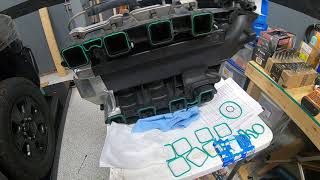
- If the scan tool test fails, the next step is replacement. The EGR valve is located on the back of the driver's side cylinder head, near the firewall. Access can be tight. 🎬 See an EGR pipe and intake installation walkthrough
- Remove the two 8mm bolts for the EGR tube and the two 10mm bolts holding the valve to the cylinder head.
- Inspect the valve and its port for heavy carbon buildup. While cleaning is an option, it is not the recommended long-term fix for this platform.
- The most reliable repair according to manufacturer TSBs is to replace the EGR valve with a new OEM part (4627465AG) and new gaskets (04627541AC and 05281349AA).
- After replacement, clear all diagnostic trouble codes from the PCM. Some sources suggest performing a hard reset by disconnecting the battery for at least 30 minutes to ensure the PCM relearns the new valve's closed position value.
Parts You'll Likely Need
- EGR Valve
(OEM #4627465AG)— This is the most common failure part for code P1404 on this engine, as documented in multiple manufacturer TSBs which call for its replacement due to internal faults. This part number supersedes previous versions like 4627465AC, 4627465AD, 4627465AE, and 4627465AF.
Trusted brands: Mopar
OEM price range: $260-$360
Aftermarket price range: $170-$250 - EGR Mounting Gasket
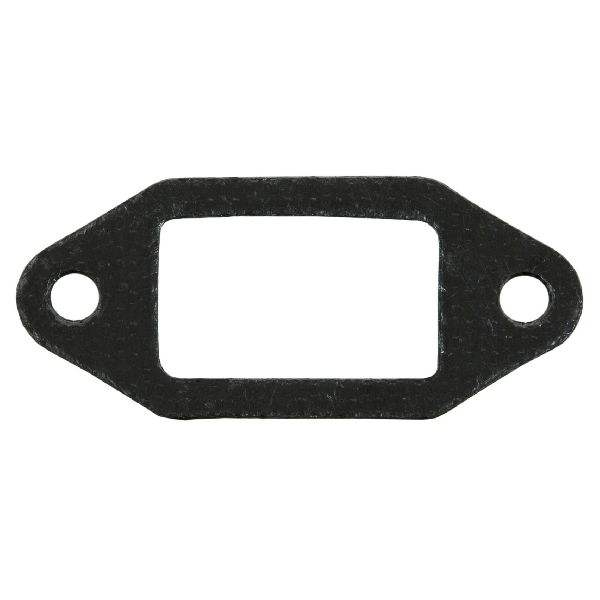
(OEM #04627541AC)— A new gasket is required to prevent exhaust leaks when replacing the EGR valve. It is explicitly listed as a required part in the TSBs.
Trusted brands: Mopar
OEM price range: $10-$20
Aftermarket price range: $5-$15 - EGR Tube Gasket
(OEM #05281349AA)— A new gasket is required for the tube that connects to the EGR valve to ensure a proper seal. It is also listed as a required part in the TSBs.
Trusted brands: Mopar
OEM price range: $10-$20
Aftermarket price range: $5-$15
Related Codes That Often Appear With This One
- P2457 — This code for 'Exhaust Gas Recirculation Cooling System Performance' can appear with P1404. TSB #18-068-23 (superseding #18-088-22) notes that P1404 can be erroneously set when P2457 is present, and a PCM software update may be required to correct the logic for 2020 models.
- P0456 — A TSB (#1807123) notes that P1404 may be seen alongside a code for a small EVAP system leak, though the root causes are typically unrelated. A PCM software update may address the sensitivity of these monitors.
Technical Service Bulletins (TSBs) & Recalls
- 18-004-26: Links P1404 to engine tugging and unstable idle.
- 1808922: Mentions P1404 with Active Noise Control (ANC) system issues.
- 1807123: Notes P1404 may appear with a P0456 EVAP leak code, potentially fixed with a PCM update.
- 09-007-25: Explicitly states to replace the EGR valve for P1404 due to internal distortion on 2024 models.
- 1808822: States P1404 can be set erroneously with P2457 and may require a PCM software update.
- 1809022: Links P1404 to issues in Power Take-Off (PTO) mode.
Platform-Specific Known Issues
- TSB #09-007-25 specifically addresses P1404 on 2024 models, citing 'Internal EGR Valve Distortion' as the cause and mandating valve replacement with part #4627465AG.
- TSB #18-004-26 links P1404 directly to customer complaints of engine tugging and unstable idle on 2024 models.
- TSB #18-068-23 (for 2020 models) notes that P1404 can be set incorrectly when a P2457 (EGR Cooler Performance) code is also present, and a PCM software update may be part of the fix.
Mechanic-Grade Diagnostic Values
- EGR Position Sensor Signal Voltage (Key-On, Engine-Off) — expected: ~0.7V to ~0.9V when valve is closed.. Failure: Voltage is significantly higher than 0.9V when the valve is commanded closed, indicating it is not fully seating.
- EGR Position Sensor Signal Voltage (Valve Commanded Fully Open) — expected: ~3.5V to ~4.5V. Failure: Voltage does not reach the expected range when commanded open, or is erratic.
- EGR Control Circuit Resistance — expected: Below 5.0 Ohms. Failure: Resistance is above 5.0 Ohms, indicating an open or high resistance in the wiring between the PCM and the EGR valve connector.
- EGR Valve Motor Winding Resistance — expected: ~8,000 to 14,000 Ohms (8-14 kOhms). Failure: A reading of near zero or half an ohm indicates a dead short within the motor, which can damage the PCM driver circuit.
Hidden / Shadow Codes Worth Checking
- P2457 - Exhaust Gas Recirculation Cooling System Performance: This is not a shadow code, but a standard DTC that can cause P1404 to be set erroneously on 2020 models. The PCM logic incorrectly flags the EGR position when the real fault lies with the cooler's performance. TSB #18-068-23 was issued to fix this with a software update. (see via Standard OBD-II scanner. If seen with P1404 on a 2020 model, address P2457 first and check for PCM updates before replacing the EGR valve.)
Scan Tool Commands That Help
- wiTECH or equivalent bidirectional scanner: EGR Valve Actuation Test / Bidirectional Control — This is a primary diagnostic step. Use this function to command the EGR valve to open and close while monitoring the position sensor voltage or percentage. This directly tests if the valve is physically stuck or if the sensor is reporting its position correctly.
- wiTECH or equivalent: EGR System Test — Some scan tools may have a guided routine that cycles the EGR valve and monitors the engine's response (e.g., change in MAP sensor reading or rough idle) to verify gas is flowing, which can help differentiate a stuck valve from a clogged passage.
Wiring & Ground Locations
- EGR Valve Connector — On the EGR valve itself, located at the rear of the driver's side cylinder head, near the firewall.. This 5-pin connector provides power to the motor and carries the position sensor signal. The three sensor wires are a 5V reference, a ground (signal return), and the signal wire itself. The two motor wires receive power from the PCM to open and close the valve.
- EGR-related Ground — While a specific ground point (e.g., G-XXX) for the EGR circuit is not explicitly documented in public sources, grounds for the engine harness are typically located on the cylinder heads or engine block. Poor engine grounds can cause erratic sensor readings.. A poor ground on the sensor return circuit can cause the signal voltage to be skewed, potentially tricking the PCM into thinking the valve is not closed when it is.
Real Owner Repair Stories
- YouTube Automotive Diagnostic Channel (2019 Ram 2500 6.7L Cummins (similar EGR control logic)) — EGR circuit performance code (P046C), No-start or rough run.
❌ Tried (didn't work) Initial diagnosis pointed to a bad EGR valve.
✅ What actually fixed it The EGR valve had an internal short (reading 0.5 ohm). This short circuit damaged the driver in the Powertrain Control Module (PCM). The final repair required replacing BOTH the EGR valve and the PCM. The technician noted that simply replacing the valve would not have fixed it, as the PCM was no longer able to control it. - RamForum.com (2015 Ram 2500 6.4L Hemi) — Bucking/jolting during acceleration after slowing to 15-20 mph, without downshifting smoothly.
❌ Tried (didn't work) Dealer could not replicate or identify the issue initially.
✅ What actually fixed it While not explicitly stated as a P1404 fix, this user's symptoms of 'bucking/jolting' are identical to those described in TSB #18-004-26 for P1404. Other users in the thread point to transmission shift logic, but the symptoms strongly align with a sticking EGR valve causing hesitation under light load.
When the Usual Fixes Don't Work
- While the vast majority of P1404 codes on this platform are fixed by replacing the EGR valve, there is a documented edge case where the fix is not that simple. If the original EGR valve fails by shorting out its internal motor, it can overload and destroy the driver circuit within the Powertrain Control Module (PCM). In this scenario, a technician could replace the EGR valve, clear the codes, and have the P1404 return immediately. The true root cause becomes the damaged PCM, which can no longer control the new, functioning valve. The final repair in this case is the replacement of both the EGR valve and the PCM, followed by programming the new module to the vehicle.
OEM Part Supersession History
4627465AC, 4627465AD, 4627465AE, 4627465AF→4627465AG— Likely internal design improvements to prevent the 'Internal EGR Valve Distortion' cited in TSBs.
Model Year Variations Within This Range
- 2020: TSB #18-068-23 identifies a software issue specific to 2020 models where a P2457 (EGR Cooler Performance) fault can cause a false P1404 code. The fix requires a PCM software update, not necessarily an EGR valve replacement.
Diagnostic Flowchart
Other Known Issues on This Vehicle
Issues unrelated to this code that are worth knowing about as an owner of this generation:
- Exhaust Manifold Bolt Failure ('Hemi Tick') 🔴 High — Very common, especially on rear-most bolts. Often presents as a ticking noise on cold starts that may disappear as the engine warms up and the manifold expands. (Ref: While no specific recall exists, numerous TSBs for related lean codes (like P2096/P2098) point to this as a root cause.)
- Camshaft/Lifter Failure 🔴 High — A significant and well-documented concern for HEMI engines, including the 6.4L. Often attributed to lack of lubrication on lifter rollers, especially with high idle hours. Failure rates are estimated by some technicians to be between 5-10% of vehicles. Typically occurs at higher mileage (100k+ miles). (Ref: No official recall or comprehensive TSB addresses the root cause, though some TSBs exist for very specific build dates or symptoms. It is a widely discussed owner and technician concern.)
- MDS Solenoid Failure 🟠 Medium — The Multi-Displacement System (MDS) solenoids, which deactivate cylinders to save fuel, can fail. This often triggers codes like P3426. The issue can sometimes be resolved with a PCM software update per TSBs. (Ref: Multiple TSBs exist, such as #18-036-20 and #18-082-16, which involve reprogramming the PCM to fix false codes before replacing hardware.)
- Oil Filter Adapter Leak 🟡 Low — Primarily affected early models (e.g., 2014) where the oil filter adapter bolts were not properly tightened from the factory, leading to oil leaks. (Ref: Customer Satisfaction Notification P30 (superseding TSB 09-004-14) was issued for 2014 models to inspect and properly torque the bolts and replace the seals.)
Used vs. New Parts: Buying Guide for This Vehicle
When a used part is the smart pick: For this specific fault (P1404) on this vehicle, buying a used EGR valve is NOT recommended. The primary cause of failure is an internal design/material flaw ('Internal EGR Valve Distortion') documented in manufacturer TSBs, not simple wear and tear. A used part from a salvage yard has a very high probability of having the same latent defect.
What to inspect on the donor part:
- Not applicable, as used parts are not advised for this repair.
OEM-only on this vehicle (don't cheap out):
- EGR Valve: Given the documented internal failures and TSBs mandating replacement, using the latest OEM Mopar part (4627465AG) is the most reliable path to a long-term fix.
Aftermarket brands forum-validated for this vehicle:
- While OEM is strongly recommended, brands like Standard Motor Products and Wells are established aftermarket manufacturers that offer alternatives. However, there is less data available on their long-term reliability compared to the OEM part for this specific 'internal distortion' issue.
Brands owners have reported issues with on this vehicle:
- Avoid unbranded, no-name parts from online marketplaces. The complexity of the integrated position sensor and motor makes quality control critical, and failure can potentially lead to PCM damage.
Real Owner Stories
Aggregated from forums and TSBs cited above. Mileages and costs reflect what owners reported in those sources.
2016 Ram 2500 6.4L V8
Symptoms: The vehicle experienced symptoms of bucking and jolting that remained unresolved after multiple dealer visits.
What fixed it: The issue was finally resolved by replacing the EGR valve.
Source hint: RamForum.com user description
2020 Ram 2500 6.4L V8
Symptoms: The owner encountered the P1404 code and inquired about cleaning the valve.
What fixed it: Users confirmed that replacing the EGR valve is the standard dealer fix and that cleaning is often ineffective.
Source hint: hdrams.com forum thread
2024 Ram 3500 6.4L V8
Symptoms: Engine tugging and unstable idle.
What fixed it: Replacement of the EGR valve due to internal distortion.
Source hint: TSB #18-004-26 and TSB #09-007-25
Related OBD-II Codes
Frequently Asked Questions
Does TSB #09-007-25 apply to my 2024 Ram 3500 with the 6.4L V8?
Can I just clean the EGR valve on my Ram 3500 to fix the P1404 code?
What specific parts do I need to fix P1404 on my 6.4L HEMI?
Why is my Ram 3500 bucking and surging while driving?
Is there a software update for P1404 on the 2020 Ram 3500?
Does the P1404 code affect the Power Take-Off (PTO) system on Cab & Chassis models?
Helpful Videos
We Have This Part in Stock

The information in this article is provided for general reference and educational purposes only. Vehicle specifications, procedures, and part compatibility can vary by production date, trim level, and region. Always consult your vehicle's factory service manual and verify part numbers before purchasing or performing repairs. Safety-critical components such as airbags, seat belts, and braking systems should be installed by a qualified professional.
- Ram 3500:
- 🎬 Helpful Videos
- 🛍️ Shop This Part
- What's Unique About the 2019-2024 Ram 3500
- Symptoms You May Notice
- Most Likely Causes
- Diagnosis Steps
- Parts You'll Likely Need
- Related Codes That Often Appear With This One
- Technical Service Bulletins (TSBs) & Recalls
- Platform-Specific Known Issues
- Mechanic-Grade Diagnostic Values
- Hidden / Shadow Codes Worth Checking
- Scan Tool Commands That Help
- Wiring & Ground Locations
- Real Owner Repair Stories
- When the Usual Fixes Don't Work
- OEM Part Supersession History
- Model Year Variations Within This Range
- Diagnostic Flowchart
- Other Known Issues on This Vehicle
- Used vs. New Parts: Buying Guide for This Vehicle
- Real Owner Stories
- 2016 Ram 2500 6.4L V8
- 2020 Ram 2500 6.4L V8
- 2024 Ram 3500 6.4L V8
- Related OBD-II Codes
- Frequently Asked Questions
- 🎟️ Get 5% Off