

P1326 on 2019 Kia Optima: KSDS Warning, Limp Mode, and Engine Failure Risk
P1326 on a 2019 Kia Optima is a critical alert from the Knock Sensor Detection System (KSDS) indicating a high probability of excessive engine bearing wear. The vehicle will enter a reduced-power 'limp mode.' This issue is often covered by a lifetime engine warranty from Kia, and the most common fix is a complete engine replacement performed by a dealer. Do not clear the code and tow the vehicle to a Kia dealership immediately.
- P1326 is a critical code on a 2019 Kia Optima that requires immediate attention.
- Do not clear the code and do not continue to drive. The vehicle should be towed to a Kia dealership.
- This issue is very likely covered by Kia's lifetime engine warranty, meaning the repair (usually a new engine) should be free, provided the KSDS update was previously completed.
- The root cause is almost always catastrophic internal engine bearing failure, not a simple sensor fault.
- Be prepared for a potentially lengthy repair process (1-3 months) and be proactive in securing a loaner/rental vehicle through the dealer or Kia corporate.
What's Unique About the 2019-2019 Kia OPTIMA

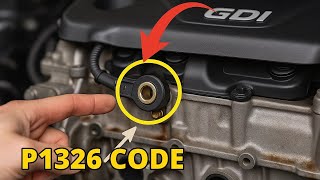
The 2019 Kia Optima, particularly models with the 2.0L and 2.4L GDI engines, is part of a large group of Kia/Hyundai vehicles known for premature engine bearing failure. 🎬 Watch: A deep dive into why these Theta II engines fail. This issue led to class-action lawsuits (like settlement SC147) and massive service campaigns. The P1326 code is not a typical knock sensor fault; it's a feature of the KSDS software (installed via campaigns like SC200/953) specifically designed to detect the vibrations of this known bearing failure. Therefore, seeing this code is a strong indication that the vehicle is experiencing the exact failure mode that prompted Kia to extend a lifetime engine warranty for this specific issue, provided the KSDS update was previously performed.
Diagnostic Flowchart

Tap your situation to follow the diagnostic path that matches what you're seeing on this vehicle.
Symptoms You May Notice

- Flashing Check Engine Light.
- Vehicle enters 'Limp Mode' (reduced power, slow acceleration, RPM limited to ~1800-2000).
- Audible engine knocking, rattling, or metallic noise, which may be faint initially.
- Sudden loss of power while driving, preceding limp mode activation.
- In some cases, the engine may fail to start or be seized.
- Excessive oil consumption may be a preceding symptom before the code appears.
- Replacing the knock sensor without performing an engine bearing clearance test. The sensor is usually not the root cause; it is accurately detecting a mechanical problem. Replacing it will not fix the underlying engine failure and the code will return.
Most Likely Causes

- Excessive Connecting Rod Bearing Wear 🔴 High Probability Manufacturing defects in certain Theta II GDI engines can leave metallic debris from the crankshaft manufacturing process, which can block oil passages to the connecting rod bearings, leading to oil starvation and premature failure. This is a well-documented issue across many Kia/Hyundai models.
How to confirm: A Kia dealer must perform a specific 'Bearing Clearance Test' as outlined in TSB PI1805Y/Z for the 2019 model. This test uses a special tool (SST KQ231-2T110QQK) that applies air and vacuum to a cylinder to measure bearing play without full engine disassembly. If the test fails, engine replacement is authorized. Checking the engine oil and filter for metallic particles is also a key indicator.
Typical fix: Engine long-block replacement, covered under Kia's lifetime warranty for this specific issue (DTC P1326) if the vehicle had the KSDS update performed prior to the failure.
Est. part cost: $0 (if covered by warranty) - $7000+ - Faulty Knock Sensor or Wiring Harness ⚪ Low Probability Some owner complaints to the NHTSA mention the code appearing after heavy rain or a car wash (ODI #11639763, #11471297), suggesting water intrusion into the wiring harness could be a trigger. Additionally, the knock sensor harness can pick up electrical interference from nearby fuel injector wiring, causing a false signal.
How to confirm: This is diagnosed only AFTER the engine bearing clearance test passes. A technician will perform a 'Wiring Signal Interference Check' per TSBs PI1802W/X or PI1803W/X to rule out a wiring fault. They will inspect the knock sensor and its sub-harness for damage, corrosion, or improper routing.
Typical fix: Repairing the wiring or replacing the knock sensor and/or its sub-harness. This is only done after internal engine damage has been definitively ruled out. The knock sensor harness must be routed away from the injector harness to prevent future interference.
Est. part cost: $50-$250 - Outdated ECU Software ⚪ Low Probability The KSDS system itself was delivered via a software update (Campaign SC200 or 953). If a vehicle somehow missed this update, it cannot generate the P1326 code and is not eligible for the lifetime warranty extension until the update is performed. In some rare cases, an early version of the KSDS software was overly sensitive and a subsequent update was needed to correct false positives.
How to confirm: A Kia dealer will check the vehicle's VIN to see if all required service campaigns (especially SC200/953) and software updates have been performed.
Typical fix: Updating the Engine Control Unit (ECU) with the latest software. This is often done as a first step if the KSDS update was missed.
Est. part cost: $0 - $150
Diagnosis Steps
- Confirm the presence of the P1326 code using an OBD-II scanner. The check engine light should be flashing. Do NOT clear the code, as the dealer needs to see it active for warranty claims. 🎬 Watch: Why you should never reset the P1326 code yourself.
- Immediately contact a Kia dealership and arrange for the vehicle to be towed. Do not take it to an independent mechanic first, as this can complicate the warranty process.
- The dealer will verify the vehicle's VIN to confirm it has had the KSDS software update (e.g., Campaign SC200/953) and is eligible for the lifetime engine warranty.
- The dealer will follow the procedure in TSB PI1805Y/Z. This starts with a full DTC scan and creating a Vehicle Diagnosis Number (VDN), which is required for the warranty claim.
- The primary diagnostic step is the 'Bearing Clearance Test' using the specific SST KQ231-2T110QQK tool.
- If the engine fails the test, or is already seized/audibly knocking, the dealer will initiate a claim with Kia for an engine replacement under warranty.
- If the engine passes the test, the focus will shift to diagnosing a faulty knock sensor or wiring harness, including a 'Wiring Signal Interference Check' using the Kia KDS/GDS scan tool. 🎬 See how technicians diagnose the P1326 code and wiring issues.
- Be prepared for a potentially long wait. Once approved, it can take several weeks to months for the replacement engine to arrive and be installed, depending on parts availability. Request a loaner or rental car, as reimbursement is often part of the warranty process.
Parts You'll Likely Need
- Engine Long Block Assembly
(OEM #Varies by specific model, e.g., 21101-2GK31QQH for some 2.4L models)— This is the standard, and often warranty-covered, solution when the P1326 code is confirmed to be caused by internal bearing failure.
Trusted brands: Kia (OEM Remanufactured)
OEM price range: $5000-$8000+
Aftermarket price range: N/A - Knock Sensor
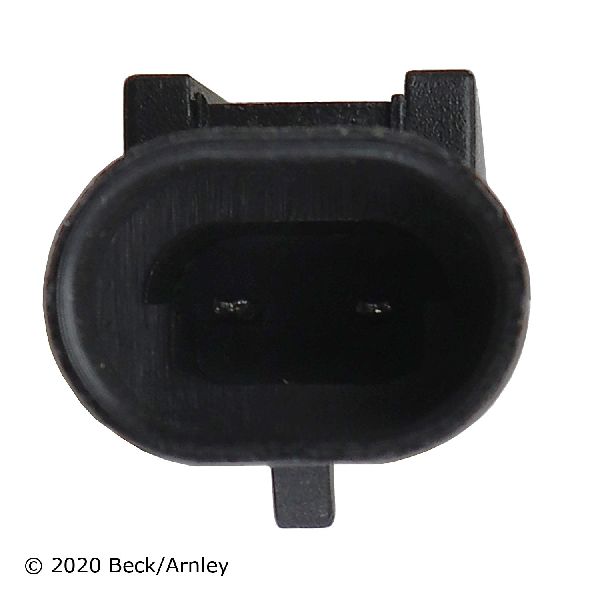
(OEM #39250-2G100 or 39180-2G000 (Verify by VIN))— In the rare case that internal engine damage is ruled out, the sensor itself may be faulty. It's critical to torque to spec (approx. 13.7–17.4 lb-ft) upon installation.
Trusted brands: Kia (OEM), Bosch
OEM price range: $80-$150
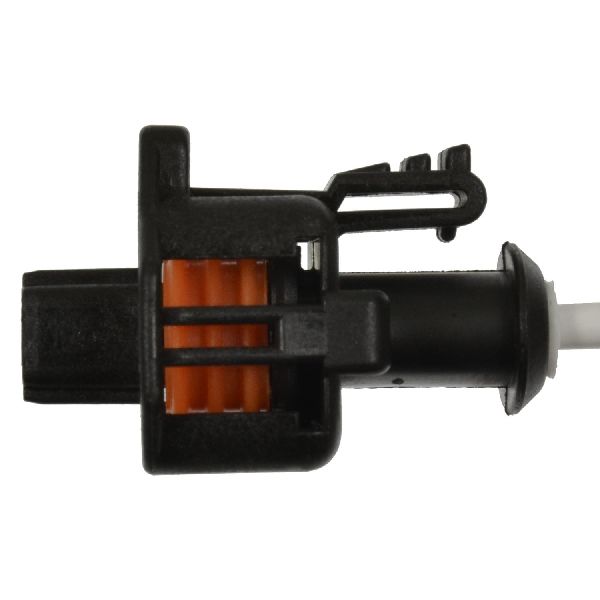
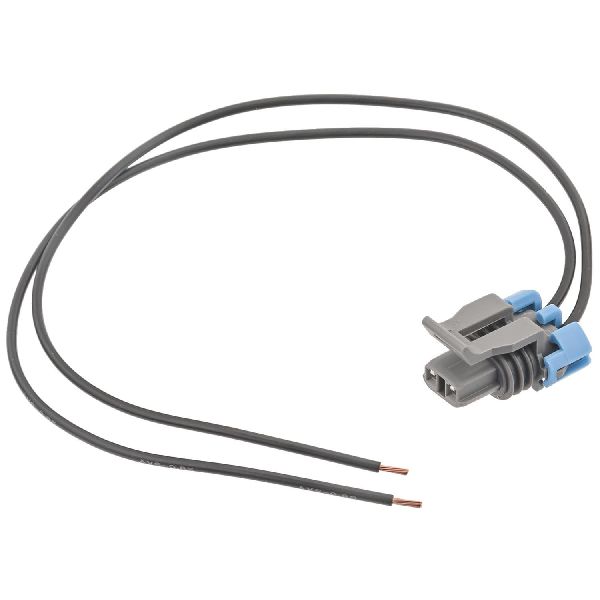
Aftermarket price range: $40-$90 - Knock Sensor Sub-Harness / Extension
(OEM #e.g., 91400-C2000QQH (Verify by VIN))— Often replaced as part of the 'Wiring Signal Interference Check' or if water intrusion is suspected. TSBs provide specific kits for this repair.
Trusted brands: Kia (OEM)
OEM price range: $30-$70
Aftermarket price range: N/A
Technical Service Bulletins (TSBs) & Recalls
- PI1805Y/Z: The primary TSB for 2019 Optima models. Instructs dealers to perform the bearing clearance test with SST KQ231-2T110QQK when DTC P1326 is present.
- PI1802W/X & PI1803W/X: Provides dealers instructions for how to proceed when a vehicle returns with DTC P1326, including performing a 'Wiring Signal Interference Check' before authorizing an engine replacement.
- SC200 / 953 / T3G: Service Campaign numbers for the initial KSDS software installation. A prerequisite for the lifetime warranty extension.
- TSB ENG190: General information regarding engine replacement best practices, referenced by other P1326-related TSBs.
Platform-Specific Known Issues
- This code is directly related to the widespread Theta II GDI engine failures that led to Kia Service Campaign SC200 (KSDS install) and a lifetime engine warranty extension for this specific failure mode (DTC P1326). An NHTSA complaint (ODI #11660558) explicitly mentions this recall campaign in relation to the P1326 code.
- NHTSA owner complaints confirm the link between P1326 and severe engine damage, such as 'excessive connecting rod bearing wear' (ODI #11478256) and 'metal contamination in the eng[ine]' (ODI #11709712).
- TSB PI1805Y/Z is the specific bulletin for dealers to follow for a 2019 Optima presenting with DTC P1326, detailing the use of the Engine Bearing Clearance Tester.
Mechanic-Grade Diagnostic Values
- Knock Sensor Tightening Torque — expected: 13.7 – 17.4 lb.ft (18.6 – 23.5 N.m). Failure: Incorrect torque can lead to improper vibration detection, causing either false codes or missed knock events.
- Engine Oil Temperature for 'Wiring Signal Interference Check' — expected: At or above 176°F (80°C). Failure: Test will not run or will be inaccurate if the engine is not at operating temperature.
- Engine Coolant Temperature for 'Engine Noise Inspection' — expected: Above 185°F (85°C). Failure: Test will not run or will be inaccurate if the engine is not at operating temperature.
- Knock Sensor Resistance/Continuity — expected: A known-good sensor should show continuity (a low resistance value).. Failure: An open circuit (infinite resistance or no continuity) indicates a failed sensor.
Scan Tool Commands That Help
- Kia KDS / Hyundai GDS: Wiring Signal Interference Check — This is a mandatory 3-minute automated test run after an engine passes the bearing clearance test. It is found under 'Engine Control' in 'S/W Management' and is used to rule out electrical noise from other components (like fuel injectors) causing a false P1326 code before replacing the knock sensor harness.
- Kia KDS / Hyundai GDS: Bearing Clearance Test (BCT) — This is the primary diagnostic function used with the special service tool (SST KQ231-2T110QQK) to definitively test for excessive connecting rod bearing wear without engine disassembly. A 'fail' result authorizes engine replacement under warranty.
- Kia KDS / Hyundai GDS: Reset Adaptive Values — This function, found in 'Software Management', should be used after replacing a knock sensor or performing other major engine repairs to clear the ECU's learned fuel and timing adjustments, ensuring a clean start with the new components.
- Kia KDS / Hyundai GDS: Actuation Test — While not specific to P1326, these tests can command components like fuel injectors or cooling fans to operate. A technician might use this for general health checks, but Kia warns that a 'success' result only confirms the signal was sent, not that the part functioned.
Wiring & Ground Locations
- Knock Sensor Harness Routing — The harness runs from the sensor (under the intake manifold) to the main engine harness.. TSBs PI1802W/X and PI1803W/X give explicit instructions for routing the replacement extension harness to prevent electrical interference. It must be routed *above* the harness protector and *UNDER* the Breather Hose and Camshaft Position Sensor. Improper routing near fuel injector wiring is a known cause of false P1326 codes.
- ECU Connector — Typically located in the engine bay, near the battery or firewall.. When installing the knock sensor extension harness, the technician must de-pin and insert new terminals directly into the main ECU connector, making a solid connection here critical.
- Engine Block Ground — A primary grounding point is bolted directly to the engine block.. The knock sensor is a piezoelectric sensor that relies on a solid ground through its mounting point on the engine block to function correctly. A poor or corroded engine ground could potentially cause erratic signals.
Real Owner Repair Stories
- Reddit user in r/kia (2016 Kia Optima, 165,000 miles) — Heard a knock, then flashing check engine light and limp mode (P1326).
❌ Tried (didn't work) N/A - Towed directly to dealer.
✅ What actually fixed it The engine passed the dealer's 'bearing clearance test'. The dealer then performed a software update which cleared the code. The owner reported driving 350 miles after the repair with no further issues or knocking sounds. - YouTube channel 'SES GUYS' (2017 Hyundai Sonata 2.4L (similar platform and procedure)) — Flashing check engine light with code P1326.
❌ Tried (didn't work) Initial diagnosis confirmed P1326 was active.
✅ What actually fixed it The engine passed the bearing clearance test. Following the TSB, the technician then replaced the knock sensor and its harness. Critically, the new sensor was torqued to exactly 15 ft-lbs and the 'adaptive values' were reset using the GDS scan tool. This resolved the code.
OEM Part Supersession History
39250-2G000→39250-2G100— Standard part revision, likely for improved durability or signal quality.
Heads up: While 39250-2G100 is the common replacement for the 2.4L engine, the 2019 Optima was available with multiple engines. Other sensors like 39250-2G700 (2.0L) or 39250-2B020 (1.6L) may be required. Always verify the correct part number by VIN.
Helpful Videos


Used OEM Parts in Stock

New Aftermarket Parts Available


The information in this article is provided for general reference and educational purposes only. Vehicle specifications, procedures, and part compatibility can vary by production date, trim level, and region. Always consult your vehicle's factory service manual and verify part numbers before purchasing or performing repairs. Safety-critical components such as airbags, seat belts, and braking systems should be installed by a qualified professional.
- Kia OPTIMA:
- 🎬 Helpful Videos
- 🛍️ Shop This Part
- What's Unique About the 2019-2019 Kia OPTIMA
- Diagnostic Flowchart
- Symptoms You May Notice
- Most Likely Causes
- Diagnosis Steps
- Parts You'll Likely Need
- Technical Service Bulletins (TSBs) & Recalls
- Platform-Specific Known Issues
- Mechanic-Grade Diagnostic Values
- Scan Tool Commands That Help
- Wiring & Ground Locations
- Real Owner Repair Stories
- OEM Part Supersession History
- 🎟️ Get 5% Off