

P1326 on 2011-2018 Kia Optima: Knock Sensor Warning, Limp Mode, and Engine Failure Risk
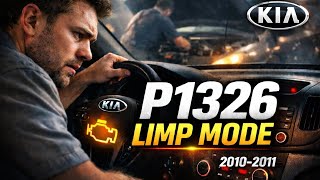
The P1326 code on a 2011-2018 Kia Optima indicates the Knock Sensor Detection System (KSDS) has detected vibrations consistent with internal engine damage, specifically connecting rod bearing failure. This is a critical warning that will put the car in 'limp mode,' limiting RPM to around 2000. The fix is almost always an engine inspection and potential replacement by a Kia dealer under an extended lifetime warranty, provided the KSDS software update was previously installed.
- P1326 is a critical code indicating a high likelihood of severe internal engine damage.
- Do not drive the vehicle. It will be in a low-power 'limp mode' and risks complete engine seizure.
- Immediately contact a Kia dealership. This issue is tied to a major lifetime warranty extension for the Theta II engine.
- Do not clear the code, as it is necessary evidence for the dealer to begin the warranty claim process.
- The most common outcome is an engine replacement, which may be covered free of charge if warranty conditions are met, specifically the prior installation of the KSDS software update.
What's Unique About the 2011-2018 Kia OPTIMA

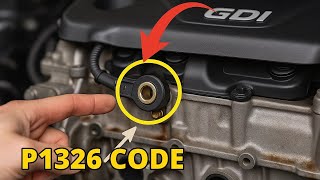
This code is directly tied to the widespread and well-documented issues with Kia's Theta II GDI engines, which suffered from premature connecting rod bearing failure due to manufacturing debris restricting oil flow. Following a massive class-action lawsuit, Kia initiated product improvement campaigns (like PI1802/PI1803) to install the KSDS via a software update. This system acts as an early-warning device for the known bearing failures. Therefore, P1326 is not a typical diagnostic code but a specific feature of this campaign. 🎬 Watch: Understanding the Theta II bearing failure and P1326 code. Its presence is the first step in a warranty claim process that can lead to a free engine replacement if the underlying mechanical failure is confirmed by a dealer.
Diagnostic Flowchart

Tap your situation to follow the diagnostic path that matches what you're seeing on this vehicle.
Generation note: This issue affects both the third generation (2011-2015, TF/QF) and fourth generation (2016-2018, JF) of the Kia Optima, as both were equipped with the affected 2.0L and 2.4L Theta II GDI engines.
Symptoms You May Notice
- Flashing or solid Check Engine Light.
- Vehicle enters 'limp mode,' limiting engine RPM to approximately 1800-2000 and reducing vehicle speed to around 65mph or less.
- Drastically reduced engine power and slow acceleration.
- Audible engine knocking, rattling, or shaking.
- Engine may stall or fail to start.
- In some cases, the A/C may stop working while in limp mode.
- Excessive oil consumption may be a preceding symptom.
- Replacing the knock sensor without performing the bearing clearance test. The P1326 code is a *result* of what the sensor detects, not usually a failure of the sensor itself. An owner on Reddit reported a dealer replaced the sensor after the car passed the bearing test, but the owner remained apprehensive.
Most Likely Causes

- Connecting Rod Bearing Failure 🔴 High Probability Manufacturing defects in the Theta II GDI engines left behind metallic debris from the crankshaft milling process, which can block oil passages. This leads to oil starvation, premature wear, and eventual failure of the connecting rod bearings.
How to confirm: A Kia dealership must perform a specific 'bearing clearance test' using a special service tool (SST) that applies pressure and vacuum to the cylinders to measure wear. This is a required step outlined in TSBs like PI1803 for any warranty claim.
Typical fix: If the bearing clearance test fails, the engine long block assembly is replaced under Kia's extended warranty program. The dealer must get prior authorization from Kia for the replacement.
Est. part cost: $0 (if covered by warranty) - Faulty Knock Sensor or Wiring Harness ⚪ Low Probability While less common, the sensor or its wiring can become damaged, fail, or suffer from signal interference, sending a false signal to the ECU. Some owners report this happening after events like driving in heavy rain. [NHTSA ODI #11471297]
How to confirm: If the engine passes the bearing clearance test, the technician will then perform a 'Wiring Signal Interference Check' using the dealer scan tool. If that test passes, they will inspect the knock sensor and its wiring harness for opens, shorts, or physical damage.
Typical fix: Replacement of the knock sensor and/or repair/replacement of the wiring harness. Some TSBs call for installing a new extension harness with improved shielding.
Est. part cost: $50-$150
Diagnosis Steps

- DO NOT clear the code. The active P1326 code is required for the dealer to initiate the warranty process.
- Safely pull over and have the vehicle towed to an authorized Kia dealership. Many owners report needing to have their vehicle towed.
- Inform the service advisor that the vehicle has a P1326 code and is in limp mode. Be prepared for potential pushback or diagnostic fees, which should be contested if the engine fails the test.
- The dealer must verify that the KSDS software update (part of campaigns like PI1802, PI1803, or Hyundai's 966) has been performed. This is a prerequisite for the lifetime warranty extension.
- The dealer will then perform an engine bearing clearance test as mandated by Kia's technical service bulletins (e.g., PI1803Y/Z). This involves removing spark plugs and using a special tool to measure clearances.
- If the test fails, the dealer will begin the process for an engine replacement under warranty. This can take weeks or months depending on parts availability and dealer backlog.
- If the test passes, the dealer will perform a 'Wiring Signal Interference Check' and may update the ECU software again or replace the knock sensor.
Parts You'll Likely Need
- Engine Long Block Assembly
(OEM #Varies by year/model, e.g., Hyundai P/N 21101-2GK33QQH for some 2017 Sonatas.)— This is the required fix if the underlying cause is confirmed connecting rod bearing failure, as is the case for the vast majority of P1326 codes.
Trusted brands: Kia (Genuine OEM New or Remanufactured)
OEM price range: $5000-$8000+
Aftermarket price range: N/A - Knock Sensor
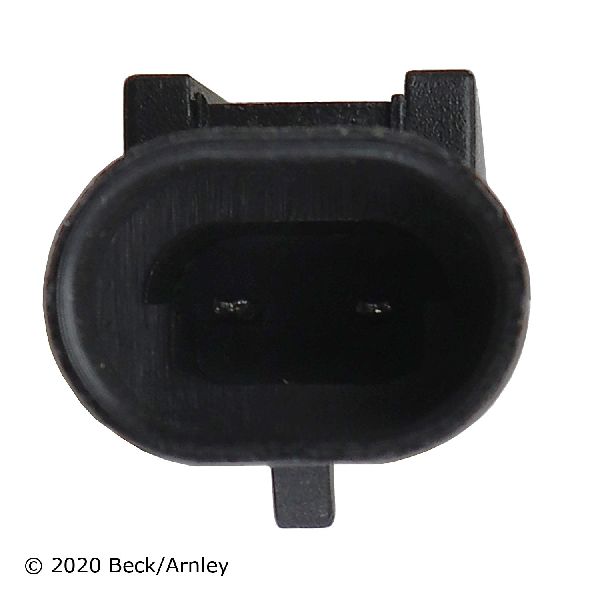
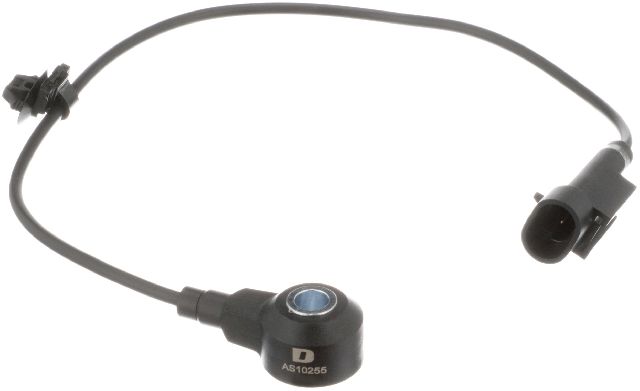
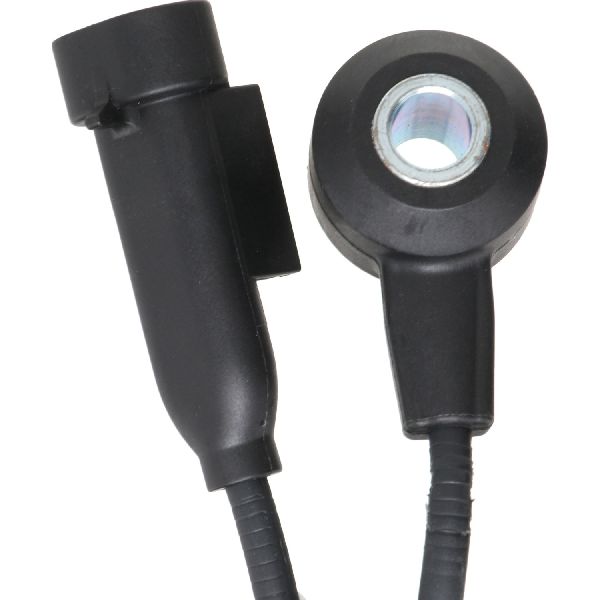
(OEM #39250-2G100)— In the rare event that the engine passes the bearing clearance test, the sensor itself may be faulty.
Trusted brands: Kia (Genuine OEM), Bosch, NGK
OEM price range: $70-$100
Aftermarket price range: $40-$80
Technical Service Bulletins (TSBs) & Recalls

- PI1803YZ_TSB_R7: 'PRODUCT IMPROVEMENT CAMPAIGN: ENGINE REPLACEMENT INSTRUCTIONS FOR DTC P1326'. This TSB confirms the direct link between the code and engine replacement, and details the bearing clearance test procedure.
- PI1802 / PI1803: 'Knock Sensor Detection System - ECU Logic Improvement'. These are the campaigns that installed the KSDS software designed to detect the failure and trigger code P1326.
- Hyundai TSB 19-01-004H / Service Campaign T3G: The Hyundai equivalent of the Kia TSB, outlining the same P1326 diagnostic procedure for affected Hyundai models.
- Hyundai Service Campaign 966: The campaign number for the KSDS update on many Hyundai vehicles, often referenced in forum discussions.
Platform-Specific Known Issues
- Theta II Engine Class Action Settlement: This code is central to a major class-action lawsuit regarding engine defects. As a result, Kia extended the powertrain warranty to a lifetime warranty for connecting rod bearing failures for original and subsequent owners, provided the KSDS software update was performed.
- KSDS Update Prerequisite: To be eligible for the extended warranty coverage for a P1326-related failure, the vehicle must have previously received the free KSDS software update from a Kia dealer. Owners can check their VIN on Kia's website or by calling a dealer. Some owners report not being notified of the update, especially second-hand owners.
- Engine Seizure: Multiple owner complaints confirm that this code is a direct precursor to the engine seizing, sometimes on the highway, creating a significant safety risk. [NHTSA ODI #11586678]
- Dealer Process Variability: Owner experiences vary widely by dealership. Some report smooth warranty processes, while others face long waits, demands for extensive maintenance records, and improper diagnostic charges.
Mechanic-Grade Diagnostic Values
- Knock Sensor Mounting Bolt Torque — expected: 15-17 ft-lbs. Failure: Improper torque can lead to incorrect vibration readings.
- Engine Oil Temperature for Dealer Tests — expected: At or above 176°F (80°C). Failure: Tests performed on a cold engine may not be valid. The KDS software will display a warning if the temperature condition is not met.
- Engine RPM for Dealer Noise Test — expected: Hold at 1,900-2,100 RPM (2.4L) or 1,900-2,200 RPM (2.0T). Failure: This specific RPM range is required for the KDS and special service tool to accurately measure engine noise levels for the bearing test.
- Knock Sensor Signal (Manual Test) — expected: Produces a small AC voltage signal when tapped.. Failure: If the sensor produces no voltage when lightly tapped, it is likely faulty. Resistance checks are often inconclusive on piezoelectric sensors.
Scan Tool Commands That Help
- Kia KDS (GDS): Wiring Signal Interference Check — This is a 3-minute automated test run after a P1326 is confirmed but before performing invasive mechanical tests. It checks for electrical noise in the knock sensor circuit. If the result is 'NOT OK', the TSB directs the tech to install a new wiring extension harness.
- Kia KDS (GDS): Engine Noise Inspection Procedure — This is a KDS-guided test performed if the Wiring Signal Interference Check is 'OK'. It uses a special microphone SST in the dipstick tube to listen for bearing noise at specific RPMs to confirm or deny the need for engine replacement.
- Kia KDS (GDS) or equivalent advanced scan tool: Reset Adaptive Values — After replacing a knock sensor, a technician noted it is a 'very important part of this repair' to reset the engine's learned adaptive values to ensure the ECU correctly interprets signals from the new sensor.
Wiring & Ground Locations
- Knock Sensor — On the back of the engine block (firewall side), underneath the intake manifold, typically near the cylinder 3 fuel injector.. This is the primary sensor that triggers the P1326 code. Access requires removing the intake manifold.
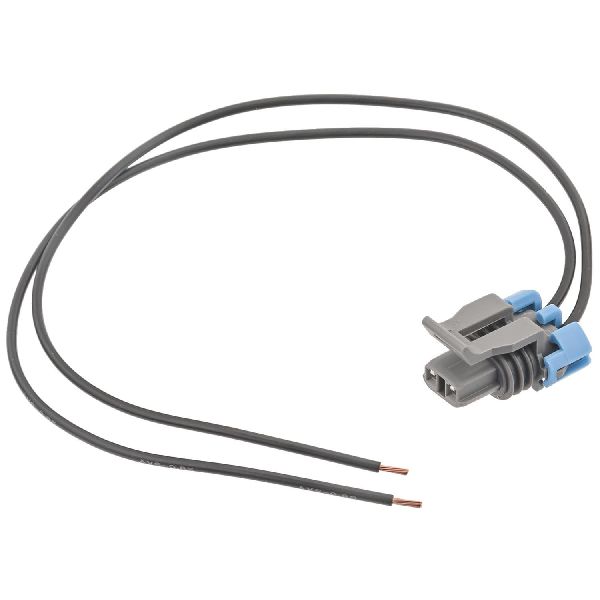
- Knock Sensor Extension Harness — An external harness that is cable-tied to the main engine harness, running along the intake manifold to the knock sensor.. Kia issued TSBs to install this shielded extension harness to prevent signal interference that could cause a false P1326. TSBs instruct technicians to check if it's already installed as a first step.
- ECU Connector — In the engine bay, typically near the air filter housing.. To install the knock sensor extension harness, a technician must de-pin the old knock sensor wires from this connector and insert the new terminals from the extension harness, as shown in TSB diagrams.
Real Owner Repair Stories
- YouTube channel 'Ultimate DIY Guy' (2013 Kia Optima 2.4L) — P1326 code, flashing check engine light, loss of power (limp mode).
❌ Tried (didn't work) The engine had already been replaced under warranty for a knocking sound, but the P1326 code returned on the new engine.
✅ What actually fixed it The owner chose to replace the knock sensor (P/N 39250-2G100) themselves rather than wait a month for another dealer appointment. This cleared the code and resolved the limp mode issue. - Reddit user 'zcomputerwiz' in r/KiaSoulClub (General Kia models with P1326) — P1326 code present.
❌ Tried (didn't work) Independent mechanics diagnosed likely engine failure based on the code alone.
✅ What actually fixed it If the dealer performs the mandatory rod bearing clearance test and it passes, the cause is a 'false positive'. The fix in this case is to replace the knock sensor. - Reddit user in r/kia (2016 Kia Optima, 165k miles) — Audible knock, flashing check engine light, P1326, limp mode.
❌ Tried (didn't work) The dealer performed the 'bearing clearance test' which the engine passed.
✅ What actually fixed it The dealer updated the software and performed a road test. The story is unresolved, but highlights the common scenario where the bearing test passes, leaving the owner in fear of future failure without the immediate warranty engine replacement.
"I Checked Everything" — The Actual Cause
- A common scenario for P1326 is the dealer's mandatory 'Bearing Clearance Test' passing, which denies the owner an immediate engine replacement under warranty. In these cases, where the engine is mechanically 'good' according to the test, the P1326 code is considered a false positive. The subsequent fix is often a software update, or if the code returns, a replacement of the knock sensor itself or its wiring harness.
When the Usual Fixes Don't Work
- While P1326 is overwhelmingly associated with terminal bearing failure, there are documented cases where the engine is not the root cause. In one instance, a vehicle that had already received a new engine under warranty threw the P1326 code again. The final fix was not another engine, but the replacement of the knock sensor itself, which resolved the limp mode and the code. This demonstrates that even after a catastrophic failure is addressed, a faulty sensor or wiring can still trigger this critical fault code.
OEM Part Supersession History
39250-2G000→39250-2G100— Likely an updated design for reliability or signal accuracy.
Heads up: The new part number (39250-2G100) is the correct direct replacement for the specified vehicle range.
Model Year Variations Within This Range
- 2014-2015: The KSDS software version installed on 2014-2015 Optimas before September 7, 2018, was found to have an error. These vehicles required a new, corrected software update under a separate campaign number (PI1802A1) to function correctly.
- 2011-2015 (Gen 3) vs 2016-2018 (Gen 4): While both generations use the Theta II engine family, later models received updates like piston cooling oil jets and an electronically controlled intake cam phaser (E-CVVT) starting in 2015. The transmission for the 2.0T and 2.4L GDI engines remained a conventional 6-speed automatic across the range.
Helpful Videos


Used OEM Parts in Stock

New Aftermarket Parts Available


The information in this article is provided for general reference and educational purposes only. Vehicle specifications, procedures, and part compatibility can vary by production date, trim level, and region. Always consult your vehicle's factory service manual and verify part numbers before purchasing or performing repairs. Safety-critical components such as airbags, seat belts, and braking systems should be installed by a qualified professional.
- Kia OPTIMA:
- 🎬 Helpful Videos
- 🛍️ Shop This Part
- What's Unique About the 2011-2018 Kia OPTIMA
- Diagnostic Flowchart
- Symptoms You May Notice
- Most Likely Causes
- Diagnosis Steps
- Parts You'll Likely Need
- Technical Service Bulletins (TSBs) & Recalls
- Platform-Specific Known Issues
- Mechanic-Grade Diagnostic Values
- Scan Tool Commands That Help
- Wiring & Ground Locations
- Real Owner Repair Stories
- "I Checked Everything" — The Actual Cause
- When the Usual Fixes Don't Work
- OEM Part Supersession History
- Model Year Variations Within This Range
- 🎟️ Get 5% Off