

P1326 on 2019 Hyundai Sonata: Knock Sensor Detection, Limp Mode, and Engine Fixes
P1326 on a 2019 Sonata means the engine computer has detected vibrations consistent with connecting rod bearing failure and has entered a protective limp mode. This is a critical warning. The most common fix is an engine replacement, which is often covered by a Hyundai warranty extension.
- P1326 is a critical code on a 2019 Sonata that signals a high probability of internal engine failure.
- Do not drive the vehicle. Tow it to a Hyundai dealership immediately.
- The repair is almost always a full engine replacement, which is frequently covered by an extended warranty if the vehicle qualifies.
- Do not replace the knock sensor as a first step; it is merely the messenger.
- Keep all oil change records, as they may be required for the warranty claim.
What's Unique About the 2019-2019 Hyundai SONATA

The 2019 Sonata, equipped with the Theta II GDI engine, is part of a widely documented issue concerning premature engine bearing failure. This failure is often attributed to manufacturing debris left in the engine, which can restrict oil flow and lead to bearing starvation. In response to class-action lawsuits and widespread failures, Hyundai implemented the KSDS via a software update (Service Campaign 953/966). This system's sole purpose is to detect the specific vibrations of this failure and trigger the P1326 code as an early warning. Therefore, unlike on other vehicles where a knock-related code might point to a simple sensor issue, on this Sonata, P1326 is a purpose-built indicator of a known, severe mechanical defect.
🎬 Watch: Understanding the Theta II engine failure and recall timeline.Diagnostic Flowchart
Tap your situation to follow the diagnostic path that matches what you're seeing on this vehicle.
Symptoms You May Notice
- Check Engine Light is on and may be flashing. A flashing light indicates an active and severe problem.
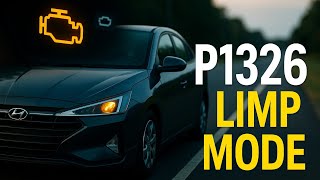
- Vehicle enters a low-power 'limp mode' with reduced acceleration and a speed limit (often around 1800-2000 RPM). 🎬 See why your Sonata enters limp mode and how it's fixed.
- An audible chime may sound when the code is triggered.
- Abnormal engine noise, such as knocking, rattling, or ticking that may get louder when the engine is hot. [Bulletin #22-01-033H, 45]
- Engine may be difficult to start, or may not crank at all (seized engine). [Bulletin #22-01-033H]
- Rough idle or stalling.
- Replacing the knock sensor without performing the engine bearing clearance test. The knock sensor is almost always just the messenger reporting a valid mechanical problem. Replacing it will not fix the underlying issue, and the P1326 code will return.
- Attributing the limp mode to a transmission problem. The sudden loss of power is a programmed engine response, not a gearbox failure.
Most Likely Causes

- Connecting Rod Bearing Failure 🔴 High Probability Manufacturing defects in some Theta II GDI engines can leave behind metallic debris, leading to restricted oil flow and premature bearing wear. Poor oil maintenance can accelerate this wear.
How to confirm: The vehicle must be taken to a Hyundai dealer for a specific Bearing Clearance Test (BCT) as outlined in technical service bulletins like TSB 22-01-033H. This test uses a special tool to measure play in the bearings.
Typical fix: Complete engine replacement. This is often covered under an extended warranty (Campaign T3G) or settlement program if the vehicle qualifies and has maintenance records. [Bulletin #22-01-033H, 7, 51]
Est. part cost: $0 - $10000+ - Faulty Knock Sensor or Wiring Harness ⚪ Low Probability While less common than engine failure, the wiring harness to the knock sensor can become damaged, corroded, or saturated with oil, sending false signals. In some instances, water intrusion from heavy rain or car washes has been reported to cause false triggers.
How to confirm: A technician would test the sensor's resistance and check the wiring harness for continuity, shorts, or physical damage. This is typically done only after the Bearing Clearance Test passes, ruling out mechanical failure.
Typical fix: Replace the knock sensor and/or repair the wiring harness. Some TSBs mention the installation of a wire harness extension kit. 🎬 Watch: How to diagnose and replace a faulty knock sensor.
Est. part cost: $70 - $250 - Outdated Engine Control Module (ECM) Software ⚪ Low Probability If the vehicle never received the initial KSDS software update (Service Campaign 953 or 966), it may require it. In some cases, a subsequent software update can refine the sensitivity of the detection system to prevent false positives.
How to confirm: A Hyundai dealer can check the vehicle's VIN to see if Service Campaign 953 or a subsequent update like TSB 22-01-033H has been performed.
Typical fix: Update the ECM software at a dealership, which is often done for free under the campaign.
Est. part cost: $0
Diagnosis Steps

- Confirm the presence of the P1326 code using an OBD-II scanner. Note if the Check Engine Light is flashing.
- DO NOT clear the code. The dealer must see the active code to begin the warranty or service campaign process.
- Safely pull over and stop driving the vehicle immediately. Arrange for it to be towed to a Hyundai dealership.
- Contact a Hyundai dealership, inform them you have code P1326, and schedule a diagnostic appointment. Be prepared for potential long wait times for service.
- The dealer will verify the code and check the vehicle's VIN for eligibility under warranty extensions and service campaigns (like T3G, 953, or TXXC).
- Following Hyundai's official procedure (TSB 22-01-033H), the technician will perform a Bearing Clearance Test (BCT) to confirm the mechanical state of the engine.
- If the test fails, a Prior Approval (PA) request is sent to Hyundai for an engine replacement under the applicable warranty. If it passes, they will investigate the knock sensor circuit or perform a software update. [Bulletin #20-01-004H-3, 52]
Parts You'll Likely Need

- Engine Assembly (Long Block)
(OEM #G4KJ-Gen2 (for 2.4L))— This is the required fix for the primary cause of code P1326: internal connecting rod bearing failure.
Trusted brands: Hyundai OE
OEM price range: $5000-$8000+
Aftermarket price range: $3,700-$7000 - Knock Sensor
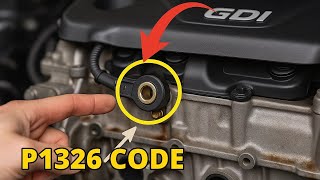
(OEM #39250-2G700)— Replaced only in the rare instance that the sensor itself or its wiring is diagnosed as faulty after the engine has been confirmed to be healthy.
Trusted brands: Hyundai OE
OEM price range: $70-$100
Aftermarket price range: $50-$150
Technical Service Bulletins (TSBs) & Recalls
- 22-01-033H: The primary TSB outlining the full diagnostic procedure, from code verification to the Bearing Clearance Test and engine replacement criteria.
- 20-01-004H-3: An earlier version of the TSB that instructs dealers to inspect the vehicle and either replace the engine or update ECU software based on findings.
- Campaign 953: The original Product Improvement Campaign that installed the KSDS software to detect bearing wear and trigger code P1326. It also extended the engine warranty.
- T3G / 22-01-023H-1: A service campaign specifically for vehicles that have code P1326 *after* the KSDS update was already performed, detailing the bearing inspection and engine replacement process.
- DBPT3G: Connects P1326 to connecting rod bearing wear and damage.
Platform-Specific Known Issues
- Theta II Engine Settlement: This vehicle falls under a major class-action lawsuit settlement regarding Theta II GDI engine failures. As a result, Hyundai extended the powertrain warranty for original and subsequent owners, often to 10 years/120,000 miles or even a lifetime warranty for certain conditions. Bulletin #Campaign 953 Dea notes an extension to 10 years and 120,000 miles.
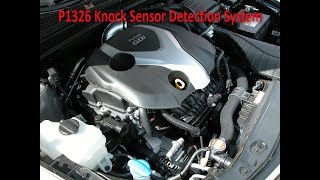
- Knock Sensor Detection System (KSDS): The P1326 code is a direct function of the KSDS, which was installed via service campaigns (like 953) to detect bearing wear before the engine seizes. Its activation is the primary qualifier for an engine inspection and potential replacement under the extended warranty. [Bulletin #T3GDBP20211103]
- Warranty Claim Process: Owners may be required to provide extensive oil change records to have the engine replacement covered under warranty. Denials can occur if maintenance is deemed insufficient or if the dealer's diagnosis points to a cause other than the covered bearing failure.
Mechanic-Grade Diagnostic Values
- Knock Sensor Mounting Bolt Torque — expected: 15 ft-lbs. Failure: Incorrect torque can affect the sensor's ability to properly detect vibrations.
- Bearing Clearance Tester (BCT) Air Pressure (AP) — expected: 0.1 ~ 0.11 MPa. Failure: Tool pressure outside this range may lead to an inaccurate BCT result. The tool may require calibration.
- Bearing Clearance Tester (BCT) Vacuum Pressure (VC) — expected: -73 ~ -83 Kpa. Failure: Tool pressure outside this range may lead to an inaccurate BCT result. The tool may require calibration.
Scan Tool Commands That Help
- Hyundai GDS (or equivalent professional scanner): Reset Adaptive Values — This function, found under 'Software Management', is a crucial final step after replacing the knock sensor to clear learned engine values and ensure the system operates correctly with the new component.
Wiring & Ground Locations
- G10 (CONTROL 2.0L/2.4L) — Engine control ground point, likely on or near the engine block/cylinder head.. A wiring diagram shows the shielded wire for the knock sensor circuit connects to this ground point. A poor connection at G10 could introduce electrical noise and potentially cause a false P1326 code.
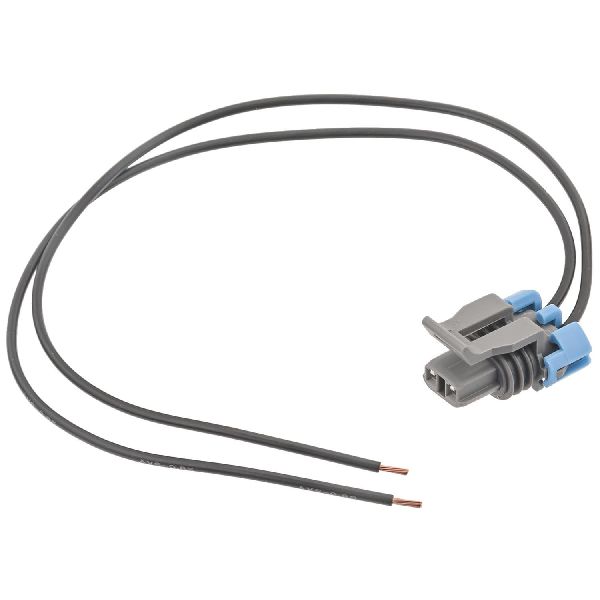
- Knock Sensor Harness Extension — Between the main engine harness and the knock sensor.. An early TSB for this issue, 19-01-006H-2, involved installing a wire harness extension kit as part of the repair procedure, indicating the original wiring or connector could be a point of failure.
Real Owner Repair Stories
- Reddit user 'Okidoky123' in r/Hyundai (Hyundai vehicle with over 100,000 km) — P1326 code triggered, vehicle went into limp mode.
❌ Tried (didn't work) The initial assumption was engine failure.
✅ What actually fixed it The vehicle was towed to a dealer. The Bearing Clearance Test (BCT) passed, ruling out imminent rod bearing failure. The dealer then replaced the knock sensor and updated the software under warranty. The owner was left uncertain if the car was truly safe to drive afterward. - Comment in a YouTube video discussion (2016 Kia Soul with 2.0L Nu engine) — Repeatedly throwing P1326 code, some engine noise noted.
❌ Tried (didn't work) Software updates., New knock sensor., Passed the Bearing Clearance Test (BCT) twice.
✅ What actually fixed it Despite passing the BCT, the dealer was able to get Hyundai/Kia engineering to approve an engine replacement. The user who bore-scoped the cylinders suspected the P1326 was being triggered by piston slap due to significant cylinder wall scoring, not the rod bearing issue the KSDS was designed to detect.
OEM Part Supersession History
39250-2G200→39250-2G700— Standard part evolution, likely for improved reliability or manufacturing consistency.
Heads up: None. The new part number is a direct replacement for the old one.
Helpful Videos
Used OEM Parts in Stock


New Aftermarket Parts Available


The information in this article is provided for general reference and educational purposes only. Vehicle specifications, procedures, and part compatibility can vary by production date, trim level, and region. Always consult your vehicle's factory service manual and verify part numbers before purchasing or performing repairs. Safety-critical components such as airbags, seat belts, and braking systems should be installed by a qualified professional.
- Hyundai SONATA:
- 🎬 Helpful Videos
- 🛍️ Shop This Part
- What's Unique About the 2019-2019 Hyundai SONATA
- Diagnostic Flowchart
- Symptoms You May Notice
- Most Likely Causes
- Diagnosis Steps
- Parts You'll Likely Need
- Technical Service Bulletins (TSBs) & Recalls
- Platform-Specific Known Issues
- Mechanic-Grade Diagnostic Values
- Scan Tool Commands That Help
- Wiring & Ground Locations
- Real Owner Repair Stories
- OEM Part Supersession History
- 🎟️ Get 5% Off