

P1326 on 2011-2018 Hyundai Sonata: Knock Sensor Signal, Limp Mode, and Engine Failure Guide
P1326 on a 2011-2018 Sonata indicates the Knock Sensor Detection System (KSDS) has detected vibrations consistent with severe internal engine wear. This is not a simple sensor fault; it's a warning of impending engine failure that requires immediate dealer diagnosis. The repair is often a free engine replacement under Hyundai's extended lifetime engine warranty, contingent on prior completion of the KSDS software update.
- P1326 on a 2011-2018 Sonata is a critical alert for impending engine failure due to a known defect.
- Do NOT clear the code or replace the knock sensor. The code is necessary evidence for a warranty claim.
- Immediately stop driving the vehicle and have it towed to a Hyundai dealer for diagnosis.
- The repair is very likely a free engine replacement under Hyundai's extended warranty, provided the vehicle has had the required KSDS software update.
- You can check your vehicle's VIN on Hyundai's website to see if the KSDS campaign was performed.
What's Unique About the 2011-2018 Hyundai SONATA

This code is intrinsically linked to the widespread and well-documented issues with Hyundai's Theta II GDI engines. Manufacturing defects could leave metallic debris in the engine, leading to restricted oil flow and premature connecting rod bearing failure. In response to class-action lawsuits and recalls, Hyundai released the KSDS software update (Campaign 953/T3G) as a product improvement campaign to detect the failure early. Therefore, P1326 on a Sonata is not a typical diagnostic event but a specific flag for a known, critical engine defect that may be covered by a lifetime warranty extension.
🎬 Watch: Understanding Theta II engine failures and recall historyDiagnostic Flowchart

Tap your situation to follow the diagnostic path that matches what you're seeing on this vehicle.
Generation note: The P1326 issue affects both the YF (2011-2014) and LF (2015-2018) generations of the Hyundai Sonata, as both were equipped with the problematic 2.0L and 2.4L Theta II GDI engines. The recall campaigns and warranty extensions apply to vehicles across both generations, including some Sonata Hybrid models.
Symptoms You May Notice

- Flashing Check Engine Light. [NHTSA ODI #11547720, #11418560, #11463316]
- Sudden, severe loss of power (Limp Home Mode), often limiting RPM to around 2000.
- Vehicle will not accelerate past a certain speed (e.g., 20-40 mph). [NHTSA ODI #11547720, 17]
- Engine stuttering or shaking, especially during acceleration. [NHTSA ODI #11463316]
- Audible metallic knocking, ticking, or tapping from the engine that may get louder with RPM.
- Excessive oil consumption. [NHTSA ODI #11708549]
- Some owners report the issue appears after heavy rain or a car wash, suggesting a potential wiring harness issue in some cases.
- Replacing the knock sensor. This is the most common misdiagnosis by owners or independent shops. The P1326 code is triggered by the KSDS *using* the knock sensor to detect a real mechanical problem. Replacing the sensor without addressing the underlying engine wear will not fix the issue, and the code will return. [NHTSA ODI #11418560, 26]
- Mistaking the code definition. Some generic OBD-II scanners may incorrectly define P1326 as 'Glow Relay Short Circuit,' which applies to diesel engines. For the gasoline-powered Sonata, P1326 is always related to the Knock Sensor Detection System.
Most Likely Causes
- Excessive Connecting Rod Bearing Wear 🔴 High Probability A known manufacturing defect in Theta II engines can cause metallic debris to restrict oil flow to the connecting rod bearings, causing them to overheat and wear out prematurely. This is the exact problem the KSDS and P1326 code are designed to detect.
How to confirm: A Hyundai dealer must perform a bearing clearance test (BCT) using a special service tool (SST #KQ231 2T110QQK). Do not clear the P1326 code, as the dealer must see it active to initiate the warranty process. The test results are often automatically sent to Hyundai for verification.
Typical fix: If the bearing clearance test fails, the engine assembly is replaced. This repair is typically covered under Hyundai's extended lifetime engine warranty, provided the KSDS software update (Campaign 953/T3G) was previously performed and maintenance records are reasonably complete.
Est. part cost: $0 (if under warranty) - $7000+
Rare But Worth Checking
- Faulty Knock Sensor or Wiring: While possible, this is far less common than actual engine failure. A complaint filed with the NHTSA notes that replacing the sensor did not resolve the issue, as the code returned weeks later. [NHTSA ODI #11418560] Some TSBs mention inspecting for wiring signal interference and even installing a harness extension kit (P/N 91400-C2000QQH for 2015 models) as a potential fix. A dealer will typically test the sensor and wiring as part of the TSB procedure before condemning the engine. In some cases where the BCT passes, a faulty knock sensor is replaced under warranty.
- Outdated Engine Control Module (ECM) Software: The vehicle may not have received the mandatory KSDS software update (part of Hyundai Service Campaign 953, 966, or T3G). If the update was missed, the vehicle may not be eligible for the warranty extension, though dealers are instructed to perform the update when the vehicle is in for service. A dealer can verify the vehicle's campaign history with the VIN.
Diagnosis Steps
- DO NOT CLEAR THE CODE. The active P1326 code is required for the dealer to begin the warranty claim process. Clearing the code may cause the dealer to send you away until it returns.
- Verify Symptoms: Confirm the presence of a flashing check engine light and that the vehicle is in limp mode (reduced power, won't exceed ~2000 RPM). Note any audible knocking sounds.
- Check VIN for Open Campaigns: Before contacting the dealer, you can check for open recalls and service campaigns on Hyundai's official website. This will confirm if the KSDS update (e.g., Campaign 953/T3G) applies to your vehicle.
- Contact a Hyundai Dealer: This is not a DIY-friendly repair. Schedule a service appointment and inform them the vehicle has a P1326 code and is in limp mode. Have it towed if necessary.
- Dealer Verification: The dealer will confirm the active P1326 code and check the vehicle's VIN to ensure the KSDS software update campaign was previously completed. They will also ask for oil change records.
- Bearing Clearance Test (BCT): The dealer will perform a mandatory bearing clearance test as outlined in Hyundai's technical service bulletins (e.g., TSB 19-01-006H, 20-01-004H, 21-EM-004H-1). This test determines if the engine's internal wear is beyond specification.
- Engine Replacement or Further Diagnosis: If the BCT fails, the dealer will submit a claim to Hyundai to replace the engine under the extended warranty. If the test passes, they will investigate the knock sensor circuit, potentially replacing the sensor or harness, or perform further software updates as per TSBs. Be aware that some owners have reported engine failure even after passing a BCT. [NHTSA ODI #11448255, 16]
Parts You'll Likely Need

- Engine Assembly (Long Block)
(OEM #21101-2GK70QQA (example, VIN specific, see TSB 20-01-024H-1 for others like 21101-2GK33QQH/21101-2GK34QQH))— This is the required fix when the P1326 code is confirmed to be caused by excessive connecting rod bearing wear, which is the most common reason for the code.
Trusted brands: Hyundai OE (New or Remanufactured)
OEM price range: $5000-$8000
Aftermarket price range: N/A - Knock Sensor
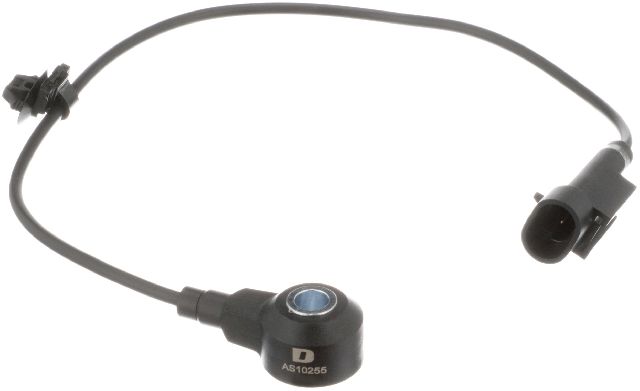
(OEM #39250-2G700 (replaces 39250-2G200) or 39250-2G100 (replaces 39250-2G000), VIN dependent)— Only needed in the rare case that the sensor itself has failed or its wiring is compromised, which is an uncommon cause for this code on this vehicle. It is often replaced mistakenly.
Trusted brands: Hyundai OE, Bosch, NGK
OEM price range: $70-$150
Aftermarket price range: $30-$70
Technical Service Bulletins (TSBs) & Recalls

- TSB 19-01-006H / TSB 20-01-004H / TSB 21-EM-004H-1: These and their subsequent revisions provide the dealer procedure for vehicles that return with DTC P1326. They outline the steps for the bearing clearance test and engine replacement.
- Service Campaign 953 / 966 / T3G: These are the product improvement campaigns that installed the KSDS software update. Completion of one of these is generally a prerequisite for warranty coverage.
- TSB 20-01-024H-1: Supersedes older TSBs and provides a comprehensive list of affected vehicles and part numbers for engine replacement under campaign T3G.
Platform-Specific Known Issues
- Theta II Engine Failures: The 2.0L and 2.4L GDI engines in this generation of Sonata are subject to recalls and warranty extensions due to premature connecting rod bearing failure from manufacturing debris.
- Knock Sensor Detection System (KSDS): Hyundai implemented a software update (Campaign 953/966/T3G) to detect the vibrations of a failing engine. P1326 is the specific code triggered by this system.
- Lifetime Engine Warranty: As part of a class-action settlement, Hyundai extended the engine warranty for the lifetime of the vehicle for original and subsequent owners of affected vehicles that have had the KSDS update performed. This often results in a free engine replacement when P1326 appears and the bearing test fails.
Mechanic-Grade Diagnostic Values
- Knock Sensor Bolt Torque — expected: 15 ft-lbs. Failure: Improper torque can lead to false signals or missed signals. This is a critical step if replacing the sensor.
- Intake Manifold Bolt Torque — expected: 17.4 ft-lbs. Failure: N/A - This is a reassembly specification.
- Knock Sensor Resistance — expected: 93 - 110 ohms. Failure: A reading outside this range suggests a faulty sensor. This is a basic electrical test.
- Bearing Clearance Tester (SST #KQ231-2T110QQH) Air Pressures — expected: Shop air supply: 50 psi minimum; AP (Pressure): 0.1 ~ 0.11MPa; VC (Vacuum): -73 ~ -83Kpa. Failure: Incorrect pressures will invalidate the Bearing Clearance Test, which is required for warranty engine replacement.
Scan Tool Commands That Help
- Hyundai GDS (Global Diagnostic System): Reset Adaptive Values — After replacing a knock sensor (in cases where the bearing test passed), it is critical to reset the engine's learned adaptive values to ensure the ECM correctly interprets signals from the new sensor.
- Hyundai GDS (Global Diagnostic System): Bearing Clearance Test (BCT) — This is the mandatory first step at the dealership when P1326 is present. The GDS controls a special service tool that applies pressure and vacuum to each cylinder to measure bearing play. The results (Pass/Fail/No BCT) are sent to Hyundai to determine if an engine replacement is authorized.
Wiring & Ground Locations
- Knock Sensor Location — On the engine block, underneath the intake manifold, near the fuel rail and cylinder #3 fuel injector.. Physical access requires removing the intake manifold. Its proximity to the fuel injector harness is why some TSBs recommend careful routing of the sensor wire to prevent signal interference.
- Main Engine Grounds (Example: 2014 Sonata) — Wiring diagrams show three main engine grounding points. One major ground point (MM01) is located on the chassis near the battery tray. Other grounds connect the engine harness to the cylinder head and transmission case.. A poor engine ground can introduce electrical noise into the system, potentially causing false signals. One technician noted a P1326 case where an ignition system ground strap was not secured after a previous repair, which was suspected as a cause.
- ECM Connector Pins — At the Engine Control Module (ECM). TSB 18-01-032-1 specifies removing 3 specific pins from the ECM connector to install the wire harness extension kit.. This is a dealer-level repair for specific 2015 models where signal interference was a known issue, requiring a new harness to be pinned directly at the ECM.
Real Owner Repair Stories
- Reddit user Okidoky123 (Hyundai with over 100,000 km) — P1326 code, vehicle went into limp mode.
❌ Tried (didn't work) N/A - Taken directly to dealer.
✅ What actually fixed it The dealer performed a Bearing Clearance Test (BCT), which passed. The knock sensor was then replaced under warranty, and the software was updated. The user was concerned about safety after hearing of another vehicle's engine failing after the same repair. - Reddit user with 2016 Sonata Hybrid (2016 Sonata Hybrid with 147,000 miles) — Audible engine knocking sound when warm and driving, followed by a P1326 code.
❌ Tried (didn't work) Initial dealer visits for the knocking sound yielded no action as there was no check engine light.
✅ What actually fixed it After the P1326 code appeared, the dealer performed a BCT which passed. They replaced the knock sensor. However, the owner reported the knocking sound was still present after the repair. - YouTube - S&E's Garage (2017 Hyundai Sonata) — Flashing check engine light, vehicle in reduced power/limp mode.
❌ Tried (didn't work) N/A - This was a professional diagnosis.
✅ What actually fixed it The technician performed the official Hyundai Bearing Clearance Test, which the vehicle passed. Following the TSB procedure for a passed test, the technician replaced the knock sensor. This involved removing the intake manifold and carefully routing the new sensor's harness away from the fuel injector harness to prevent signal interference. The repair was completed by resetting the adaptive values with the GDS scan tool.
When the Usual Fixes Don't Work
- While the overwhelming cause of P1326 is internal engine failure, a significant number of owner and technician reports confirm that passing the dealer's Bearing Clearance Test (BCT) is not a guarantee of a healthy engine. In NHTSA complaint #11448255, a 2016 Sonata passed the BCT in June 2021 only to have the engine catch fire in January 2022. [NHTSA ODI #11448255] Multiple forum users also report passing the BCT and having the knock sensor replaced, only to continue hearing engine knock or experience a failure later. This suggests that while the BCT is a required step for the warranty process, a 'pass' result should be treated with caution by the vehicle owner, especially if audible symptoms of engine knock persist.
OEM Part Supersession History
39250-2G200→39250-2G700— Part revision and update by manufacturer.39250-2G000→39250-2G100— Part revision and update by manufacturer.TSB 18-01-032→TSB 18-01-032-1— Modified the Part Information table in the technical service bulletin.
Model Year Variations Within This Range
- 2015: For the 2015 MY Sonata (LF), TSB 18-01-032-1 specifically addresses the potential for a wiring issue requiring the installation of a knock sensor harness extension kit (P/N 91400-C2000QQH) if a signal inspection fails, as an alternative to engine replacement.
- 2011-2014 vs 2015-2018: While both YF (2011-14) and LF (2015-18) generations use the Theta II engine, the specific engine assembly part numbers for warranty replacement differ. For example, TSB 18-01-032-1 lists 2.4L engine P/N 21101-2GK31QQH and 2.0T P/N 21101-2GK32QQH specifically for the 2015 MY. Later TSBs contain different part numbers for other years.
Helpful Videos
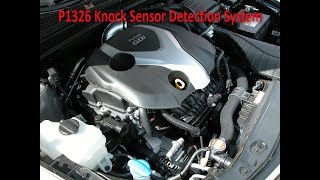
Used OEM Parts in Stock


New Aftermarket Parts Available

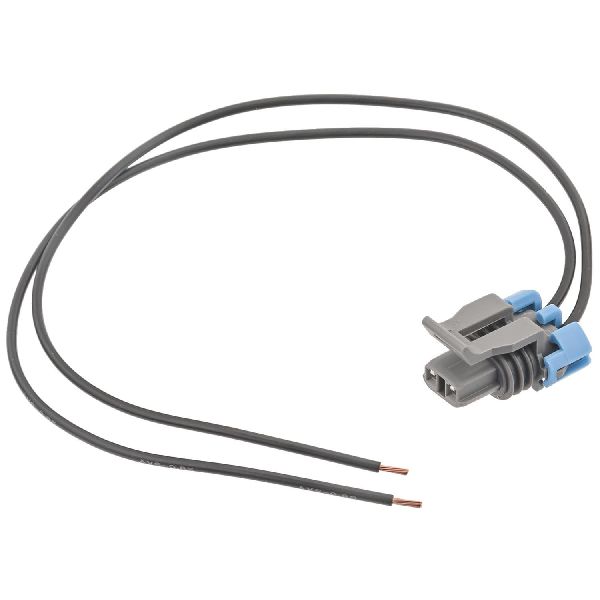
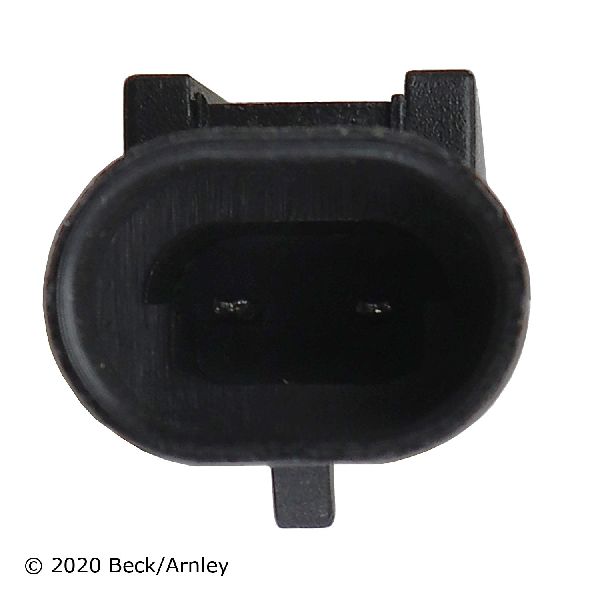

The information in this article is provided for general reference and educational purposes only. Vehicle specifications, procedures, and part compatibility can vary by production date, trim level, and region. Always consult your vehicle's factory service manual and verify part numbers before purchasing or performing repairs. Safety-critical components such as airbags, seat belts, and braking systems should be installed by a qualified professional.
- Hyundai SONATA:
- 🎬 Helpful Videos
- 🛍️ Shop This Part
- What's Unique About the 2011-2018 Hyundai SONATA
- Diagnostic Flowchart
- Symptoms You May Notice
- Most Likely Causes
- Rare But Worth Checking
- Diagnosis Steps
- Parts You'll Likely Need
- Technical Service Bulletins (TSBs) & Recalls
- Platform-Specific Known Issues
- Mechanic-Grade Diagnostic Values
- Scan Tool Commands That Help
- Wiring & Ground Locations
- Real Owner Repair Stories
- When the Usual Fixes Don't Work
- OEM Part Supersession History
- Model Year Variations Within This Range
- 🎟️ Get 5% Off