

P1299 on 2007-2015 Mazda CX-9: Cylinder Head Overtemperature Causes and Fixes
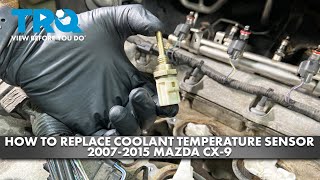
P1299 on a Mazda CX-9 means the engine's computer has detected a cylinder head over-temperature condition and has activated a protection mode. This is most often caused by a faulty Cylinder Head Temperature (CHT) sensor giving a false reading, but can also be triggered by a legitimate overheating issue like low coolant or a bad internal water pump. Replacing the CHT sensor is a common but labor-intensive fix due to its location under the intake manifold.
- P1299 means your CX-9's computer thinks the engine is dangerously hot and has entered a protective limp mode.
- DO NOT continue to drive. Pull over safely as soon as possible.
- The most common cause is a faulty Cylinder Head Temperature (CHT) sensor giving a false reading, especially if the temperature gauge maxes out instantly on a cold start.
- Before assuming a major repair, check live data with a scan tool. A bad sensor is a relatively inexpensive part, though labor can be involved as it is located under the intake manifold.
- Always check the coolant level (when cold) to rule out a simple leak as the cause of a real overheat.
What's Unique About the 2007-2015 Mazda CX-9
The 2007-2015 Mazda CX-9 uses the Ford Cyclone V6 engine, which relies on a Cylinder Head Temperature (CHT) sensor rather than a traditional Engine Coolant Temperature (ECT) sensor for its primary engine temperature management. This CHT sensor measures the metal temperature of the head directly. A common point of failure is the sensor itself, which can fail and send a false overheating signal even when the engine is cold. This can be confusing, as drivers may experience overheating symptoms (like a pegged temperature gauge and limp mode) without an actual cooling system failure. The sensor is located in the valley of the engine, under the intake manifold, making its replacement a significant labor effort.
Symptoms You May Notice
- Check Engine Light is on
- Temperature gauge reads full hot, often immediately after starting
- Sudden loss of engine power as the vehicle enters 'limp mode'
- Engine may run rough, vibrate, or stall due to cylinders being deactivated
- Cooling fans running on high speed constantly, even on a cold engine
- In case of an actual overheat, you may see steam from the engine bay or smell burning coolant
- A 'milky' or 'chocolate milk' appearance of the engine oil on the dipstick if the internal water pump has failed
- Replacing the thermostat or water pump when the issue is a faulty CHT sensor sending a false signal. Always check the live data from the CHT sensor on a cold engine first to differentiate between a sensor fault and a genuine overheat.
Most Likely Causes
- Faulty Cylinder Head Temperature (CHT) Sensor 🔴 High Probability The CHT sensor is a known failure point on the Ford Cyclone engine family. It can fail internally and send an incorrect, high-temperature reading to the PCM, even on a cold engine.
How to confirm: Use an OBD-II scanner to read live data. If the CHT reading is maxed out (e.g., 250°F+) moments after starting a cold engine, the sensor is almost certainly bad.
Typical fix: Replace the Cylinder Head Temperature sensor. This requires removing the upper and lower intake manifolds to access the sensor in the engine valley.
Est. part cost: $30-$80 - Low Engine Coolant Level 🟡 Medium Probability The 3.7L Cyclone engine's internal, timing-chain-driven water pump is a notorious failure point. When its seals fail, it can leak coolant into the crankcase, causing rapid coolant loss and mixing with engine oil. This is a catastrophic failure mode.
How to confirm: Visually inspect the coolant reservoir. Check the engine oil dipstick for a milky, frothy appearance, which indicates coolant contamination. A weep hole may also leak coolant externally near the alternator before a total failure.
Typical fix: Find and repair the source of the leak. If it is the internal water pump, it is a major, labor-intensive repair that also requires servicing the timing components. Then refill and bleed the cooling system.
Est. part cost: $20 (hose) - $2000+ (internal water pump replacement) - Stuck-Closed Thermostat 🟡 Medium Probability Thermostats are a common wear item that can fail and get stuck in the closed position, preventing coolant from circulating to the radiator and causing a rapid and genuine overheat condition.
How to confirm: After starting the engine, feel the upper radiator hose. If the engine temperature gauge climbs high but the hose remains cool to the touch, the thermostat is likely not opening.
Typical fix: Replace the thermostat and refill the coolant.
Est. part cost: $20-$60 - CHT Sensor Wiring or Connector Issue ⚪ Low Probability Engine vibration and heat, especially given the location under the intake manifold, can cause wiring to fray or the connector to become corroded or loose over time, leading to an incorrect signal.
How to confirm: Visually inspect the wiring harness and connector leading to the CHT sensor for any signs of damage, corrosion, or looseness during sensor replacement.
Typical fix: Repair the damaged wire or clean/replace the connector.
Est. part cost: $5-$50
Rare But Worth Checking
- Failed Water Pump: The water pump on this engine is internal and driven by the timing chain. A failure is a major, expensive job that is a well-documented, catastrophic weak point of this engine design. A common sign is coolant leaking into the engine oil, resulting in a 'milky' substance on the dipstick.
- Clogged Radiator or Cooling System: Internal blockages from sediment or using incorrect coolant can restrict flow and cause overheating.
- Faulty Powertrain Control Module (PCM): This is extremely rare, but the PCM could theoretically misinterpret the sensor data. This should only be considered after all other possibilities, including wiring, have been exhausted.
Diagnosis Steps
- Check the engine coolant level in the reservoir and radiator (only when the engine is completely cool). Top off if necessary with Mazda-specified FL-22 coolant.
- Check the engine oil. Pull the dipstick and check for a milky, frothy, or 'chocolate milk' consistency, which indicates a catastrophic internal water pump failure. If this is seen, do not run the engine further.
- Connect an OBD-II scanner and check for any other stored codes, especially P1285 or P0128.
- View the live data for the Cylinder Head Temperature (CHT) sensor. Start the cold engine. If the temperature immediately jumps to a very high value (e.g., 250°F / 121°C or higher), the CHT sensor is faulty and must be replaced.
- If the CHT reading appears normal on a cold start and climbs steadily, you may have a real overheating problem. Allow the engine to warm up and monitor the temperature.
- Check for genuine overheating: Are the cooling fans turning on? Is the upper radiator hose getting hot (indicating the thermostat is opening)? Are there any visible coolant leaks on the ground, especially below the alternator (from the water pump weep hole)?
- If the engine is genuinely overheating, diagnose the cooling system. Suspect a stuck thermostat, a failing water pump, or a clogged radiator.
- If the CHT sensor was identified as the problem, it is located under the intake manifold. Inspect its wiring and connector for damage during the replacement process.
Parts You'll Likely Need
- Cylinder Head Temperature (CHT) Sensor
(OEM #ZZC4-18-840C (Mazda), 9L8Z-6G004-C (Ford), Motorcraft DY-1144)— This is the most frequent cause of a false P1299 code on this engine. It fails and sends an incorrect high-temperature signal.
Trusted brands: Motorcraft, NGK/NTK, Standard Motor Products
OEM price range: $50-$100
Aftermarket price range: $30-$80 - Engine Thermostat
(OEM #L336-15-170)— If the engine is genuinely overheating, a thermostat stuck in the closed position is a common culprit.
Trusted brands: Motorcraft, Stant
OEM price range: $40-$70
Aftermarket price range: $20-$50 - Intake Manifold Gasket Set — Required when replacing the CHT sensor, as the upper and lower intake manifolds must be removed for access.
Trusted brands: Fel-Pro, Mahle
OEM price range: $60-$100
Aftermarket price range: $30-$60
Related Codes That Often Appear With This One
- P1285 — P1285 means 'Cylinder Head Over Temperature Sensed'. It is often set just before P1299, indicating the PCM has detected the high temperature, while P1299 indicates it has taken protective action (limp mode).
- P0128 — P0128 means 'Coolant Temperature Below Thermostat Regulating Temperature'. A Mazda TSB confirms that incorrect temperature reporting can trigger P1285, P1299, and/or P0128, further pointing to a sensor or data issue.
- P0217 — P0217 is a generic code for 'Engine Coolant Overtemperature Condition' and may appear alongside P1299 during a genuine overheating event.
Technical Service Bulletins (TSBs) & Recalls
- 01-005-20-3704: While for a different model (Tribute), this TSB shows a known issue pattern with Mazda vehicles exhibiting P1299 along with other temperature codes like P1285 and P0128 due to temperature reporting anomalies.
Platform-Specific Known Issues
- The provided TSB #01-005-20-3704 for other Mazda models indicates a known pattern of issues where DTCs P1285, P1299, and/or P0128 can be set due to temperature reporting problems, reinforcing the likelihood of a sensor-related fault.
- The water pump on the 3.7L V6 is driven by the timing chain and is located internally. A failure is one of the most common and catastrophic issues with this platform, often causing coolant to leak into the engine oil, leading to overheating and severe engine damage requiring engine replacement. This is a much more involved and expensive repair than an external water pump.
Mechanic-Grade Diagnostic Values
- Cylinder Head Temperature (CHT) Sensor Resistance — expected: The sensor is a thermistor; resistance is high when cold and low when hot. Example values: ~100,000 Ohms at -40°F (-40°C), ~2,750 Ohms at 194°F (90°C), ~70 Ohms at 266°F (130°C).. Failure: Infinite resistance (open circuit) or a resistance value that does not change as the engine temperature changes.
- Cylinder Head Temperature (CHT) Sensor Voltage (Live Data) — expected: Approximately 3.0V - 4.0V on a cold engine (~70°F / 21°C). Voltage will decrease as the engine warms up, typically to around 1.6V - 2.1V at normal operating temperature (~200°F / 93°C).. Failure: Voltage is stuck high, often above 4.6V, which the PCM interprets as an open circuit or a critical overheat. A reading that is illogical for the engine state (e.g., high voltage on a hot engine or low voltage on a cold one) also indicates a fault.
- PCM CHT Dual-Range Voltage Logic — expected: The PCM uses a dual switching resistor circuit for the CHT input. This means at certain temperatures, the voltage can correctly be in one of two ranges. For example, at 194°F, the voltage could be either ~0.60V (cold end) or ~3.71V (hot end).. Failure: This is not a failure indicator itself, but a critical piece of information for technicians. A sudden jump in voltage on a scan tool does not necessarily mean a faulty sensor, but could be the PCM switching between its internal resistor circuits. A fault is indicated when the voltage is outside of any expected range for a given temperature.
Scan Tool Commands That Help
- OBD-II Scanner with Live Data (e.g., Mazda IDS, FORScan, professional-grade scanners): Monitor Live PID Data for CHT (Cylinder Head Temperature) — This is the most crucial first diagnostic step. On a completely cold engine (e.g., sat overnight), compare the CHT value to the IAT (Intake Air Temp) and AAT (Ambient Air Temp). If the CHT reads a very high temperature (e.g., >250°F) while the others read ambient temp, the CHT sensor or its wiring is definitively faulty, preventing misdiagnosis of a mechanical cooling system failure.
Wiring & Ground Locations
- CHT Sensor Connector — In the engine valley, between the cylinder heads, underneath the lower intake manifold. The harness is often secured to the back of the intake manifold.. This connector is the most likely point of wiring failure due to extreme heat exposure, which can make the plastic brittle and compromise the connection. It should be inspected for damage any time the CHT sensor is replaced.
- G3 - Main Engine Compartment Ground — Located on the left side of the engine compartment.. A poor main ground for the engine systems can introduce electrical noise and incorrect reference voltages for sensors, including the CHT sensor, potentially causing erratic readings.
- Engine Block to Frame Ground Strap — A braided or heavy-gauge wire connecting the engine block directly to the vehicle's frame/chassis.. This is the primary path to ground for the engine block and all sensors mounted to it. Corrosion or a loose connection here can cause a host of sensor errors and electrical issues, including problems with the CHT circuit.
Real Owner Repair Stories
- DeMark Auto Repair & Parts service log (2007 Mazda CX-9) — Codes P1299, P1285, P0480, P0016. Low coolant level, poor oil condition, oil/water mixture on oil cap.
✅ What actually fixed it The diagnosis pointed directly to the internal, timing-chain-driven water pump failing and leaking coolant into the timing cover area and crankcase. A pressure test confirmed the leak as the oil level was observed to rise. The fix was a complete water pump and timing chain service. - Mazda Forum User (Mazda CX-9 (year not specified)) — Overheating, cooling fans not coming on correctly even with A/C on. Coolant flowing back into the overflow bottle.
❌ Tried (didn't work) Replaced thermostat, Replaced cylinder head temperature (CHT) sensor, Replaced fan control modules, Checked relays
✅ What actually fixed it The user was still diagnosing, but the symptoms (overheating at a stop, parts cannon already fired at common causes) and discussion pointed towards a more serious mechanical issue like a blockage, a failing internal water pump, or a head gasket issue. This highlights a common scenario where simple sensor replacement does not fix a genuine overheating condition.
"I Checked Everything" — The Actual Cause
- While not a smoke test, a similar pattern occurs with cooling system pressure tests. A user on a forum reported a recurring overheating issue on a 2017 CX-9 even after a dealer replaced the water pump. The issue returned with a 'sloshing' sound behind the dashboard, indicating air in the system. The likely cause, missed by initial diagnosis, was suspected to be a slow coolant leak from a cracked cylinder head or a failing head gasket that only leaks under combustion pressure, which a static coolant pressure test might not reveal.
OEM Part Supersession History
3L7Z-6G004-BA (Ford)→9L8Z-6G004-C (Ford / Motorcraft)— Part revision and update by the manufacturer.
Heads up: The new part number is the correct replacement for the original. No incompatibility is noted.
Model Year Variations Within This Range
- 2007 vs 2008-2015: The engine was updated from a 3.5L V6 in 2007 to a 3.7L V6 for 2008-2015. However, both engines are part of the same Ford Cyclone family and share the critical design elements related to this code: a CHT sensor located under the intake manifold and an internal, timing-chain-driven water pump. Therefore, the causes, symptoms, and repair procedures for P1299 are effectively identical across the entire 2007-2015 model year range.
Diagnostic Flowchart
Other Known Issues on This Vehicle
Issues unrelated to this code that are worth knowing about as an owner of this generation:
- Internal Water Pump Failure 🔴 High — Commonly occurs between 60,000 and 120,000 miles. A notorious design flaw of the transverse Cyclone engine.
- AWD Transfer Case (PTU) Failure 🔴 High — Widespread issue due to fluid breakdown from heat. Often fails before 100,000 miles, leading to loss of AWD and expensive repairs. (Ref: SSP 92 (Warranty Extension, now expired))
- Power Brake Booster Failure 🔴 High — Commonly reported failure causing a hard brake pedal and hissing noise. Most prevalent on 2010-2013 models. (Ref: SSP 93 (Warranty Extension, now expired))
- Front Suspension Noise/Wear 🟠 Medium — Squeaking and clunking noises from the front end are common, often due to worn strut mounts or other suspension components.
- Transmission Hard Shifting 🟠 Medium — Reports of jerky or delayed shifting, particularly when the transmission is warm, are common. Sometimes addressed with a PCM reprogram.
Used vs. New Parts: Buying Guide for This Vehicle
When a used part is the smart pick: For this repair, using a used part only makes sense for large, non-wear components like the intake manifolds if they were damaged during removal. For all other parts, new is strongly recommended.
Donor-vehicle mileage cap: roughly under 100000 miles for the part to have meaningful remaining life.
What to inspect on the donor part:
- For an intake manifold, check for cracks, especially around bolt holes and sealing surfaces.
- Ensure no broken vacuum nipples or sensor ports.
- Verify the donor vehicle did not suffer a catastrophic engine failure or fire.
OEM-only on this vehicle (don't cheap out):
- Cylinder Head Temperature (CHT) Sensor: Due to the extremely high labor cost to access this part, installing a used or cheap aftermarket sensor is a major risk. Forum consensus strongly advises using an OEM (Mazda/Motorcraft) or a premium OEM-supplier brand (like NGK/NTK) to ensure longevity and prevent a repeat repair.
- Internal Water Pump: If the water pump has failed, this is a catastrophic, high-labor repair. Using a used pump is not advisable. A new, high-quality OEM or equivalent part is mandatory.
Aftermarket brands forum-validated for this vehicle:
- Motorcraft (OEM for Ford)
- NGK/NTK
- Standard Motor Products (SMP)
- Fel-Pro (for gaskets)
- Mahle (for gaskets)
Brands owners have reported issues with on this vehicle:
- Generic/unbranded sensors from online marketplaces (e.g., Amazon, eBay) are frequently cited as unreliable.
- Some forum users have reported poor experiences and premature failures with store brands like BWD for critical sensors on Ford platforms.
Real Owner Stories
Aggregated from forums and TSBs cited above. Mileages and costs reflect what owners reported in those sources.
2011 Mazda CX-9 3.7L V6 — 150000 miles
Symptoms: The engine had to be rebuilt due to the infamous internal water pump failure.
What fixed it: Engine rebuild/replacement following internal water pump failure.
Cost: $2,400
Source hint: Reddit r/mazda - 'Faulty Transfer Case on all-wheel 2011 CX-9 - Repair it??'
2008 Ford Edge 3.5L V6
Symptoms: Owner received the P1299 trouble code; confirmed coolant was full and the belt was still on.
What fixed it: Diagnostic path focused on locating and replacing the CHT sensor.
Source hint: Ford Edge Forum - 'P1299 Trouble code - 3.5L'
2013 Mazda CX-9 — 29000 miles
Symptoms: Catastrophic failure at very low mileage (though context notes this owner was specifically reporting on the transfer case, it highlights the platform's reliability patterns).
What fixed it: Transfer case replacement.
Source hint: Edmunds Forums - '2013 Mazda CX-9 Transfer case failure, < 29000 miles'
Related OBD-II Codes
Frequently Asked Questions
Does TSB 01-005-20-3704 apply to my 2007-2015 Mazda CX-9?
Why is my CX-9's temperature gauge reading full hot immediately after a cold start?
I see 'chocolate milk' on my dipstick along with the P1299 code; what does this mean?
Where is the CHT sensor located on the 3.5L/3.7L Cyclone V6?
Can a bad transfer case cause the P1299 code on my CX-9?
How can I tell if my P1299 is a 'false' overheat or a real one?
Helpful Videos

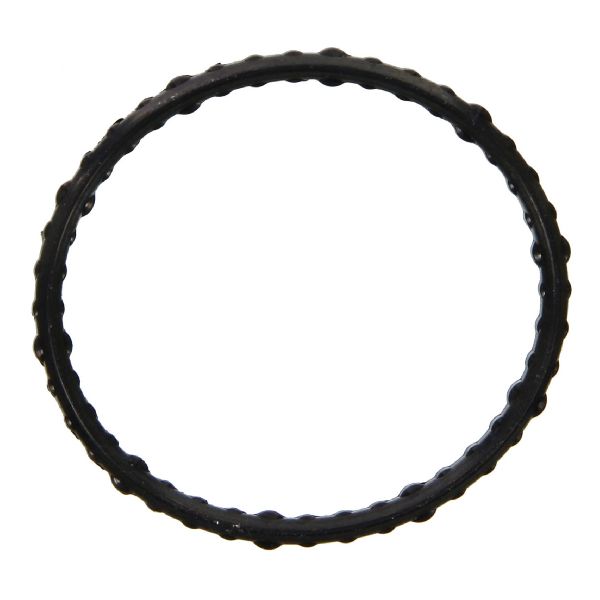
Used OEM Parts in Stock


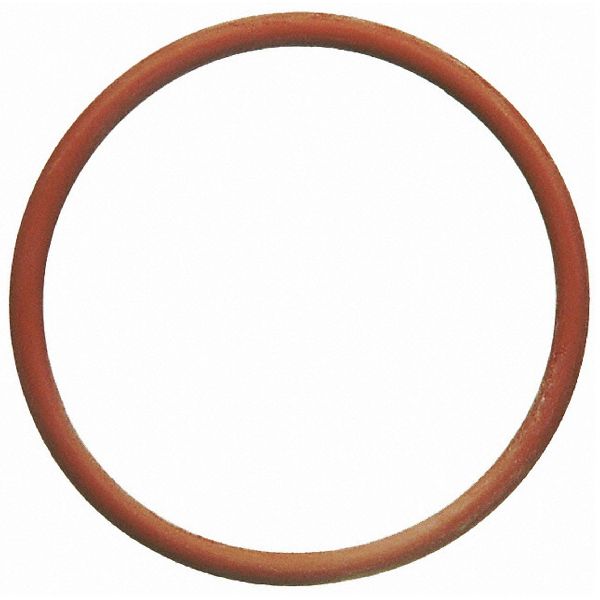
New Aftermarket Parts Available


The information in this article is provided for general reference and educational purposes only. Vehicle specifications, procedures, and part compatibility can vary by production date, trim level, and region. Always consult your vehicle's factory service manual and verify part numbers before purchasing or performing repairs. Safety-critical components such as airbags, seat belts, and braking systems should be installed by a qualified professional.
- Mazda CX-9:
- 🎬 Helpful Videos
- 🛍️ Shop This Part
- What's Unique About the 2007-2015 Mazda CX-9
- Symptoms You May Notice
- Most Likely Causes
- Rare But Worth Checking
- Diagnosis Steps
- Parts You'll Likely Need
- Related Codes That Often Appear With This One
- Technical Service Bulletins (TSBs) & Recalls
- Platform-Specific Known Issues
- Mechanic-Grade Diagnostic Values
- Scan Tool Commands That Help
- Wiring & Ground Locations
- Real Owner Repair Stories
- "I Checked Everything" — The Actual Cause
- OEM Part Supersession History
- Model Year Variations Within This Range
- Diagnostic Flowchart
- Other Known Issues on This Vehicle
- Used vs. New Parts: Buying Guide for This Vehicle
- Real Owner Stories
- 2011 Mazda CX-9 3.7L V6 — 150000 miles
- 2008 Ford Edge 3.5L V6
- 2013 Mazda CX-9 — 29000 miles
- Related OBD-II Codes
- Frequently Asked Questions
- 🎟️ Get 5% Off