

P1288 on 1997-2003 Ford F-150: CHT Sensor Self-Test Range Fault Causes and Fixes
This code means the Cylinder Head Temperature (CHT) sensor has failed its self-test. On the 4.6L and 5.4L V8s, this is almost always a failed CHT sensor. The part is inexpensive (~$25-$60), but it is located under the intake manifold, making replacement a labor-intensive job.
- P1288 on a 1997-2003 F-150 with a V8 engine points directly to a problem with the Cylinder Head Temperature (CHT) sensor circuit.
- The most likely cause is a failed CHT sensor, but wiring damage should also be considered.
- The repair is difficult for a DIYer because the sensor is located under the intake manifold, requiring significant disassembly.
- Do not ignore this code. It can cause the truck to enter a low-power limp mode and leaves the engine unprotected if a real overheating event occurs.
- When replacing the sensor, always use a high-quality part and new intake manifold gaskets to avoid having to repeat the labor-intensive job.
What's Unique About the 1997-2003 Ford F-150
Unlike many vehicles that use an Engine Coolant Temperature (ECT) sensor submerged in coolant, the 1997-2003 F-150 with the 4.6L or 5.4L V8 uses a 'dry' Cylinder Head Temperature (CHT) sensor. This sensor screws directly into the driver's side cylinder head metal, in the valley under the intake manifold. This design allows the PCM to detect an overheat condition and trigger a fail-safe mode even if all coolant is lost. However, its location under the intake manifold makes what would be a simple sensor swap on other vehicles a much more involved and labor-intensive repair on these trucks.
Symptoms You May Notice
- Check Engine Light is on
- Temperature gauge on the dashboard is erratic, reads zero, or is pegged at hot
- Engine enters a reduced power 'fail-safe' or 'limp' mode
- Engine runs rough, shudders, or misfires
- Cooling fans run constantly at high speed
- Difficulty starting the engine, especially in cold weather
- "Engine Coolant Over Temperature" message on the instrument cluster
- Replacing ignition coils or fuel injectors due to the rough running symptom without first checking for cooling system codes.
- Replacing the thermostat when the actual fault is the sensor or wiring.
- Assuming the engine is actually overheating without verifying with a scan tool or resistance test, leading to unnecessary replacement of other cooling system parts.
Most Likely Causes
- Faulty Cylinder Head Temperature (CHT) Sensor 🔴 High Probability The sensor is the primary electronic component for measuring engine temperature and is subject to failure from millions of heat cycles over its lifespan. It is the most common cause for P1288.
How to confirm: Test the sensor's resistance with a multimeter. A known good sensor should have a resistance of approximately 30-40k ohms at room temperature (~70°F/21°C) and should drop to around 2-3k ohms at operating temperature (~212°F/100°C). An open circuit (infinite resistance) or a reading far out of this range indicates a bad sensor.
Typical fix: Replace the CHT sensor. Due to its location, this requires removing the intake manifold. It is highly recommended to replace the intake manifold gaskets, thermostat, and fuel injector O-rings at the same time.
Est. part cost: $25-$60 - Damaged Wiring or Connector 🟡 Medium Probability The wiring harness runs in a high-heat area of the engine bay. Over time, the plastic loom and wire insulation can become brittle and crack. Rodents are also known to chew on these wires. In one documented case, the CHT sensor wiring was pinched between the intake manifold and the cylinder head during a previous repair, eventually shorting out. In another, the connector near the sensor had corroded.
How to confirm: Visually inspect the wiring harness leading to the CHT sensor for any signs of breaks, chafing, melting, or corrosion. The connector is under the intake manifold, but the harness can be traced back toward the firewall. Check for a secure connection at the sensor and at the PCM. Perform a continuity test on the two wires (typically a Gray/Red wire and a Yellow/Red wire) between the PCM connector and the sensor pigtail.
Typical fix: Repair the damaged section of wire or replace the CHT sensor connector pigtail.
Est. part cost: $10-$30 - Low Engine Coolant Level or Air in System ⚪ Low Probability While the sensor is in a dry hole, a low coolant level can cause the engine to run hot, pushing the cylinder head temperature outside the normal self-test range. This generation of F-150 is prone to coolant leaks from the plastic intake manifold's front crossover channel. Air trapped in the system after a coolant service can also cause localized hot spots that trigger the code.
How to confirm: Check the coolant level in the degas bottle (reservoir) when the engine is cool. If low, inspect the cooling system for leaks, paying close attention to the front of the intake manifold, radiator, hoses, and water pump. If coolant was recently serviced, the system may need to be 'burped' to remove trapped air.
Typical fix: Top off the coolant and bleed the system of any air. Repair any leaks found. If the intake manifold is cracked, it must be replaced.
Est. part cost: $20-$50 for coolant - Stuck-Open Thermostat ⚪ Low Probability If the thermostat is stuck open, the engine may not warm up to its proper operating temperature within the time allotted for the PCM's self-test, causing the CHT reading to be too low and triggering the code.
How to confirm: Monitor the temperature gauge or live data on a scan tool. If the engine warms up very slowly or never reaches the middle of the gauge (approx. 195-220°F) during normal driving, the thermostat is likely stuck open. This is often accompanied by code P0128.
Typical fix: Replace the thermostat and gasket.
Est. part cost: $20-$50
Rare But Worth Checking
- Faulty Powertrain Control Module (PCM): This is extremely rare. The PCM should only be considered after all other possibilities, including the sensor, wiring, and cooling system, have been thoroughly tested and ruled out. A P0606 code (PCM Processor Fault) alongside P1288 might point towards a faulty PCM.
Diagnosis Steps
- Scan for all DTCs. Note if P1288 is present alone or with other codes like P1299 or P0128.
- Check the engine coolant level in the degas bottle when the engine is cold. A low level can cause an actual overheat condition.
- With a scan tool, observe the CHT sensor reading (PID) from a cold start. The reading should be close to the ambient air temperature and rise steadily as the engine warms up to about 195-220°F. If the reading is erratic, stuck at an extreme value (-40°F or 250°F+), or doesn't change, the sensor or circuit is likely faulty.
- If the reading seems plausible but the code persists, inspect the CHT sensor wiring harness for damage. The sensor is located under the intake manifold, so tracing the wires back from the PCM may be easier initially. The wires are typically Gray/Red (Signal Return) and Yellow/Red (CHT Signal).
- If wiring appears intact, test the sensor itself. Disconnect the sensor and measure its resistance with a multimeter. Compare the reading to a temperature/resistance chart. For example: ~37kΩ at 68°F, ~14.5kΩ at 104°F, ~2.75kΩ at 194°F. If the resistance is out of specification, the sensor is bad.
- If the sensor tests good, check for voltage and ground at the connector pigtail. With the key on, you should have a 5-volt reference on one wire and a good ground on the other, supplied by the PCM.
- If all tests pass, consider the possibility of a mechanical issue like a stuck thermostat (especially if code P0128 is also present) or a failing water pump.
- Some experienced mechanics have reported success replacing the sensor without removing the intake manifold by first removing the alternator and using a 19mm crow's foot or flex-head wrench, but this method is extremely difficult due to tight access.
Parts You'll Likely Need
- Cylinder Head Temperature (CHT) Sensor
(OEM #Motorcraft DY-1144 (replaces 8L3Z-6G004-A))— This is the most common component to fail, causing the P1288 code.
Trusted brands: Motorcraft, Standard Motor Products (SMP), Walker Products
OEM price range: $40-$70
Aftermarket price range: $25-$50 - Intake Manifold Gasket Set
(OEM #Fel-Pro MS98005T (for 4.6L), Fel-Pro MS98010T-1 (for 5.4L))— These gaskets must be replaced when the intake manifold is removed to access the CHT sensor. Reusing old gaskets will almost certainly cause vacuum or coolant leaks. The original plastic intake manifolds are also prone to cracking and leaking coolant.
Trusted brands: Fel-Pro, Motorcraft, Mahle
OEM price range: $50-$90
Aftermarket price range: $30-$60 - CHT Sensor Connector Pigtail
(OEM #Motorcraft WPT-115)— The original connector often becomes brittle from heat and can break during sensor replacement. It's wise to have one on hand.
Trusted brands: Motorcraft, Dorman
OEM price range: $20-$40
Aftermarket price range: $10-$25
Related Codes That Often Appear With This One
- P1299 — P1299 ('Cylinder Head Over Temperature Protection Active') is triggered when the PCM believes the engine is overheating based on the CHT sensor reading and activates the fail-safe cooling mode. A faulty CHT sensor can send a false high reading, triggering both P1288 and P1299.
- P0128 — P0128 ('Coolant Temperature Below Thermostat Regulating Temperature') indicates the engine isn't warming up properly. This code often points to a stuck-open thermostat, which can also cause the CHT self-test to fail and trigger P1288.
- P0117 / P0118 — P0117 (Sensor Circuit Low Input) and P0118 (Sensor Circuit High Input) are more specific electrical fault codes for the CHT circuit. P1288 is a range/performance code. Seeing these together strongly points to a sensor or wiring failure.
Technical Service Bulletins (TSBs) & Recalls
- While no TSBs directly address code P1288, several are related to issues that can cause it or present similar symptoms. TSB 02-2-2 and TSB 01-20-5 address the known issue of cracking plastic intake manifolds and resulting coolant or vacuum leaks, which can affect engine temperature.
Platform-Specific Known Issues
- The primary issue for this platform is the labor-intensive location of the CHT sensor under the intake manifold, which significantly increases the cost and complexity of the repair.
- A user on Ford-Trucks.com described their experience: after getting P1288 and a pegged temperature gauge, they confirmed the sensor was bad via resistance test. The repair involved removing the intake manifold, and while 'in there,' they also replaced the intake gaskets, thermostat, and cleaned the throttle body. The total job took them about 5 hours as a DIYer.
- Another owner on FordExpeditionForum.com shared a story of the CHT wiring being pinched between the intake manifold and cylinder head by a previous owner, which eventually wore through and caused intermittent temperature issues and codes 150,000 miles later.
Mechanic-Grade Diagnostic Values
- CHT Sensor Resistance — expected: ~37kΩ at 68°F (20°C), ~14.5kΩ at 104°F (40°C), ~2.75kΩ at 194°F (90°C). Failure: Infinite resistance (open circuit), zero resistance (short circuit), or readings significantly outside the expected temperature/resistance curve.
- CHT Sensor Live Data (Scan Tool) - Cold Soak — expected: CHT reading should be within 5-10°F of the Intake Air Temperature (IAT) sensor reading before starting the engine after it has sat overnight.. Failure: A large discrepancy between CHT and IAT on a cold engine points to a faulty CHT sensor or circuit.
Wiring & Ground Locations
- G100 — Typically located at or near the starter motor, providing the main ground from the battery.. A poor main engine ground can cause floating voltages and erratic sensor readings throughout the engine management system, including the CHT sensor.
- G101 — On the firewall, often behind the PCM. Also described as being on the passenger side cylinder head on some models.. This is a critical ground point for the PCM and many of its sensors. Corrosion or looseness at G101 can directly cause sensor signal faults like P1288.
- CHT Sensor Connector — Under the intake manifold, screwed into the driver's side cylinder head. The harness connector is a short pigtail from the main harness.. The connector itself can corrode or break. One owner found the fix was not the sensor, but replacing a corroded connector located about 6 inches from the sensor itself.
Real Owner Repair Stories
- Ford Truck Enthusiasts Forums (2000 F-150 5.4L) — Temperature gauge jumping around, engine pinging badly.
❌ Tried (didn't work) Initially suspected the CHT sensor itself.
✅ What actually fixed it The problem was a corroded electrical connector located about 6 inches away from the CHT sensor. Cleaning or replacing this connector resolved the issue. - F150online Forums (2001 F-150 4.6L) — Pending P1288 code, misfiring, rough running after the engine warms up.
❌ Tried (didn't work) Replacing the #3 spark plug and Coil-On-Plug (COP).
✅ What actually fixed it The user was advised that the symptoms pointed directly to a CHT sensor failure causing the engine to enter a fail-safe mode, and that the sensor or its wiring should be the primary focus, not the ignition system. The thread implies this was the correct path, as the symptoms matched fail-safe mode operation.
OEM Part Supersession History
F65Z-6G004-AB→8L3Z-6G004-A— Part number consolidation and potential design update over the years.
Heads up: The new part number (8L3Z-6G004-A, often sold as Motorcraft DY-1144) is the correct replacement for the entire 1997-2003 generation.
Model Year Variations Within This Range
- 1997-1998: Some early models in this generation (particularly 1997-1998) may have used a combination of a CHT sensor and a traditional Engine Coolant Temperature (ECT) sensor. Later models (approx. 1999+) rely solely on the CHT sensor for temperature data for the PCM.
Diagnostic Flowchart
Other Known Issues on This Vehicle
Issues unrelated to this code that are worth knowing about as an owner of this generation:
- Spark Plug Ejection 🔴 High — Common on 2-valve 4.6L, 5.4L, and 6.8L engines. The aluminum cylinder heads have too few threads, and plugs can be ejected under pressure, often damaging the coil and requiring a thread insert (Heli-coil) repair.
- Cracked Plastic Intake Manifold 🔴 High — Very common on 1996-2001 models. The all-plastic intake manifold develops cracks in the front coolant crossover passage, causing a sudden and major coolant leak. Later models with an aluminum crossover can still leak from the gaskets. (Ref: TSB 02-2-2)
- Ignition Coil-on-Plug (COP) Failure 🟠 Medium — Individual ignition coils are prone to failure, causing a misfire (often codes P0301-P0308). Failures can be caused by age, heat, or moisture intrusion into the spark plug wells.
- Cracked/Leaking Exhaust Manifolds 🟠 Medium — The factory cast iron exhaust manifolds are prone to cracking or the mounting studs breaking, causing an exhaust leak and a ticking noise, especially when cold.
- Vacuum Leaks (PCV Elbow) 🟡 Low — A rubber PCV elbow located on the back of the intake manifold is notorious for deteriorating and splitting, causing a significant vacuum leak. This leads to a rough idle and lean codes (P0171, P0174). The part is cheap but difficult to access.
Used vs. New Parts: Buying Guide for This Vehicle
When a used part is the smart pick: For this specific repair, using used parts is generally not recommended for the electronic components. However, a used intake manifold from a later model year could be a viable option if your original plastic manifold has cracked, as later designs were improved.
Donor-vehicle mileage cap: roughly under 80000 miles for the part to have meaningful remaining life.
What to inspect on the donor part:
- For an intake manifold: Inspect carefully for any cracks, especially around the front coolant crossover and thermostat housing.
- Ensure all threaded inserts are intact and not stripped.
- Verify it is the updated design with a metal coolant crossover if possible.
OEM-only on this vehicle (don't cheap out):
- Cylinder Head Temperature (CHT) Sensor: The labor to replace this sensor is very high. Using a used sensor with unknown life remaining is a significant risk. A new, quality OEM (Motorcraft) or top-tier aftermarket part is strongly advised to avoid a repeat job.
Aftermarket brands forum-validated for this vehicle:
- Intake Manifold Gaskets: Fel-Pro is a highly regarded brand for gaskets.
- CHT Sensor: Standard Motor Products (SMP), NTK, and Walker Products are reputable aftermarket alternatives to Motorcraft.
Brands owners have reported issues with on this vehicle:
- Unbranded, 'white-box' sensors from online marketplaces. Given the labor involved, the small cost savings are not worth the risk of premature failure.
Real Owner Stories
Aggregated from forums and TSBs cited above. Mileages and costs reflect what owners reported in those sources.
Ford F-150
Symptoms: P1288 code and a pegged temperature gauge.
What fixed it: Confirmed the sensor was bad via a resistance test, then removed the intake manifold to replace the CHT sensor. Also replaced the intake gaskets, thermostat, and cleaned the throttle body at the same time.
Source hint: A user story described in the vehicle_specific_issues section, originally from Ford-Trucks.com
Ford Expedition — ~150000 miles
Symptoms: Intermittent temperature issues and codes.
What fixed it: The CHT sensor wiring had been pinched between the intake manifold and cylinder head during a previous repair. Fixing the damaged wiring resolved the issue.
Source hint: A user story described in the vehicle_specific_issues section, originally from FordExpeditionForum.com
2001 Ford F-150 4.6L
Symptoms: Engine misfires and a P1288 code.
What fixed it: The issue was identified as a failed CHT sensor that had put the truck into 'Fail Safe Mode'. Replacing the sensor resolved the problem.
Source hint: f150online.com thread titled 'p1288'
2002 Ford F-150 4.6L
Symptoms: A fluctuating temperature gauge on the dashboard.
What fixed it: The symptoms were identified as classic signs of a failing CHT sensor. The fix was to test and replace the faulty sensor.
Source hint: ford-trucks.com thread titled 'CHT Sensor values'
Related OBD-II Codes
Frequently Asked Questions
Where is the Cylinder Head Temperature (CHT) sensor located on my 1997-2003 F-150?
Can I replace the CHT sensor without removing the entire intake manifold?
What other parts should I replace at the same time as the CHT sensor?
Are there any Ford TSBs that directly address code P1288?
My temperature gauge is pegged on hot and the truck is in 'limp mode', but it doesn't seem to be actually overheating. Is this P1288?
What resistance reading should I get from a good CHT sensor on my F-150?
Why are my cooling fans running constantly and the engine is misfiring?
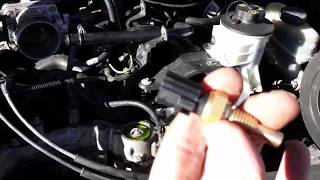
Helpful Videos

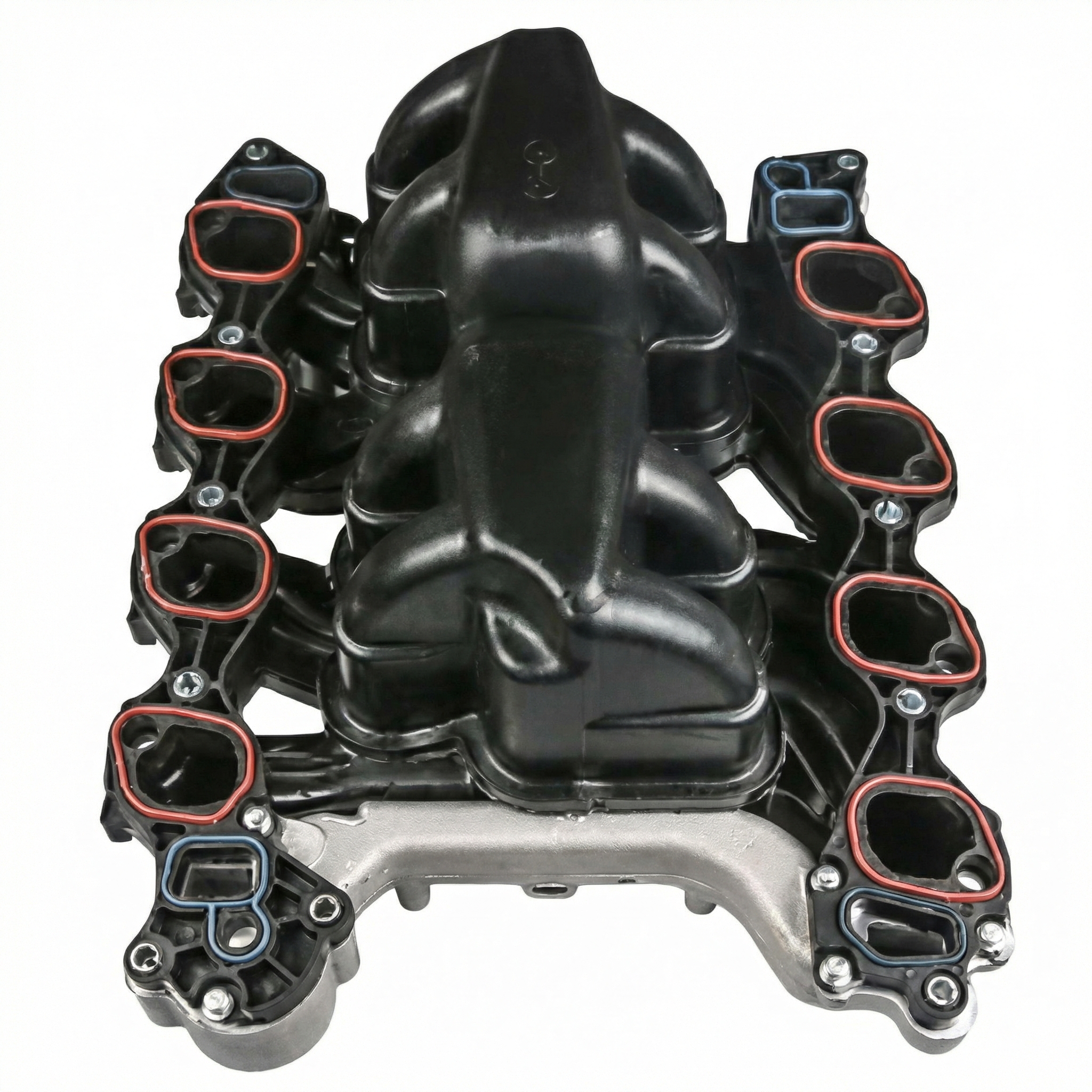
Used OEM Parts in Stock



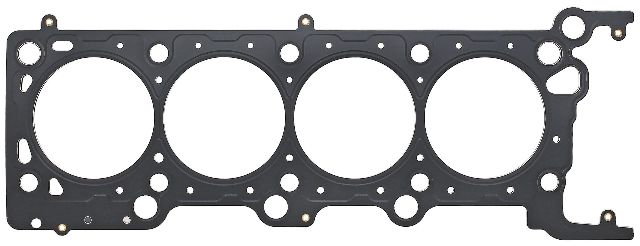
New Aftermarket Parts Available



The information in this article is provided for general reference and educational purposes only. Vehicle specifications, procedures, and part compatibility can vary by production date, trim level, and region. Always consult your vehicle's factory service manual and verify part numbers before purchasing or performing repairs. Safety-critical components such as airbags, seat belts, and braking systems should be installed by a qualified professional.
- Ford F-150:
- 🎬 Helpful Videos
- 🛍️ Shop This Part
- What's Unique About the 1997-2003 Ford F-150
- Symptoms You May Notice
- Most Likely Causes
- Rare But Worth Checking
- Diagnosis Steps
- Parts You'll Likely Need
- Related Codes That Often Appear With This One
- Technical Service Bulletins (TSBs) & Recalls
- Platform-Specific Known Issues
- Mechanic-Grade Diagnostic Values
- Wiring & Ground Locations
- Real Owner Repair Stories
- OEM Part Supersession History
- Model Year Variations Within This Range
- Diagnostic Flowchart
- Other Known Issues on This Vehicle
- Used vs. New Parts: Buying Guide for This Vehicle
- Real Owner Stories
- Ford F-150
- Ford Expedition — ~150000 miles
- 2001 Ford F-150 4.6L
- 2002 Ford F-150 4.6L
- Related OBD-II Codes
- Frequently Asked Questions
- 🎟️ Get 5% Off