

P1285 on 2014-2021 Ram ProMaster: Engine Overheat Warning Causes and Fixes
P1285 on a Ram ProMaster should be treated as a critical engine overheat warning. Stop driving immediately. The most likely causes are a failed radiator fan, a coolant leak from the plastic oil filter housing or thermostat housing, or a stuck thermostat. Repairs can range from $250 to over $1200, with the radiator fan and oil filter housing being the most common culprits.
- P1285 is a critical code that almost certainly means your ProMaster's engine is dangerously hot. Pull over and shut off the engine immediately.
- Do not continue to drive, as you risk causing thousands of dollars in engine damage, such as warped cylinder heads or a complete seizure.
- The most likely culprits are a failed radiator fan, a coolant leak (from the oil cooler or thermostat housing), or a stuck thermostat.
- Start your diagnosis by checking the coolant level (when cool) and verifying if the radiator fan runs when the engine is hot.
- Due to the high failure rate of plastic parts, consider using upgraded aluminum replacement parts for the thermostat housing if a replacement is needed.
What's Unique About the 2014-2021 Ram ProMaster
The 3.6L Pentastar V6 in the ProMaster has several known cooling system vulnerabilities that can lead to an overheat condition like the one P1285 indicates. The radiator cooling fan is a notorious failure point, with some model years being recalled for fire risk due to the fan motor seizing. Additionally, key components like the thermostat housing and the engine oil cooler assembly are made of plastic and are common sources of coolant leaks that can quickly lead to overheating if not caught early. The use of the non-standard P1285 code (instead of a generic SAE code) may be due to the ProMaster's unique electronics, which are a blend of Chrysler engine management and a Fiat Ducato-based chassis and body control system.
Symptoms You May Notice
- Temperature gauge reading 'HOT' or in the red zone
- Check engine light and/or a high-temperature warning light is on
- Steam coming from the engine bay
- Sweet smell of burning coolant around the vehicle
- Reduced engine power as the PCM enters 'limp mode' to protect the engine
- Loud boiling or gurgling sounds from the engine or coolant reservoir
- Radiator fan running on high speed long after the engine is turned off, or not running at all when the engine is hot.
- Replacing only the coolant temperature sensor. While a sensor can fail, it's unlikely to be the root cause of a genuine overheat event. The code is typically reporting a real high-temperature condition, not a false reading.
- Mistaking a leaking oil cooler housing for a rear main seal leak. Coolant and oil from the failed housing often drip from the bellhousing area, mimicking a more severe engine or transmission seal failure.
Most Likely Causes
- Failing Radiator Cooling Fan Assembly 🔴 High Probability The cooling fan assembly is a well-documented weak point on the ProMaster platform, with recalls issued for fan motors seizing or overheating, which can also pose a fire risk. Sometimes the fan resistor explodes or corrodes, preventing low-speed operation. Other times, the fan control module or relay fails.
How to confirm: With the engine warm and the A/C turned on, the radiator fan should be spinning. If the temperature gauge is climbing while idling and the fan is not running, the fan assembly, relay, or wiring is suspect. Conversely, if the fan runs continuously on high speed and short-cycles, it often points to a failed fan speed resistor.
Typical fix: Replace the entire radiator cooling fan assembly. It is also wise to check the associated fuses (F6/F7) and relays in the underhood fuse box (TIPM). Due to the high failure rate, using an OEM or high-quality aftermarket assembly is recommended.
Est. part cost: $200-$450 - Coolant Leak from Oil Filter / Cooler Housing 🔴 High Probability The 3.6L Pentastar engine uses a plastic oil filter/cooler housing mounted in the 'V' of the engine. Heat cycles cause the plastic to become brittle, crack, and leak coolant (or oil). This is a notorious failure point across all vehicles with this engine.
How to confirm: Visually inspect the top of the engine valley (under the intake manifold) for signs of pink/orange coolant residue or pooling. A cooling system pressure test will confirm the location of any leak. This leak is often misdiagnosed as a rear main seal leak because the coolant and/or oil runs down the back of the engine and drips from the bellhousing.
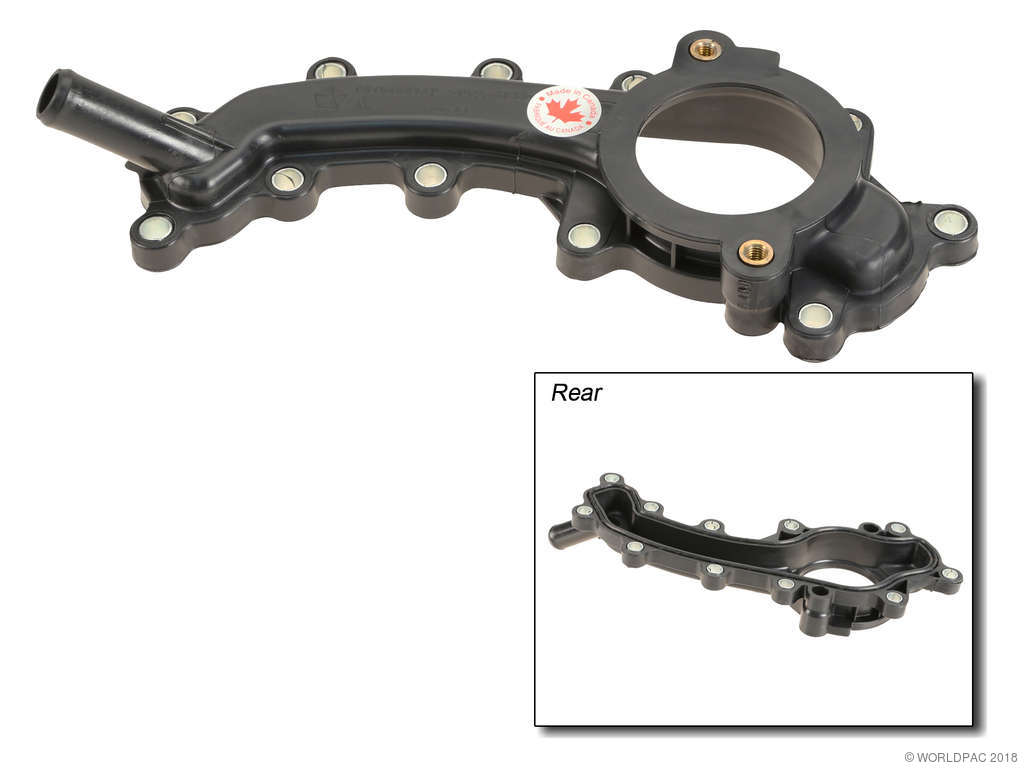
Typical fix: Replace the entire oil cooler housing assembly. This is a labor-intensive job requiring removal of the intake manifold. Many owners opt for a more durable, permanent fix by installing an aftermarket aluminum housing, such as the Dorman OE FIX 926-959.
Est. part cost: $80-$250 for the oil cooler housing; $50-$150 for the thermostat housing. - Stuck-Closed Thermostat 🟡 Medium Probability The original equipment thermostat is integrated into a plastic housing that can degrade, causing the thermostat to fail or the housing itself to crack and leak.
How to confirm: After the engine has run for several minutes, carefully feel the upper and lower radiator hoses. If the upper hose is hot and the lower hose is cool or lukewarm, coolant is not circulating through the radiator, indicating a stuck-closed thermostat.
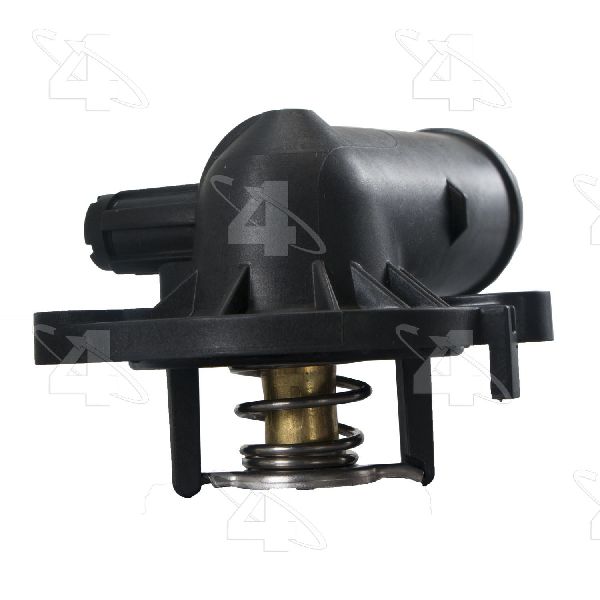
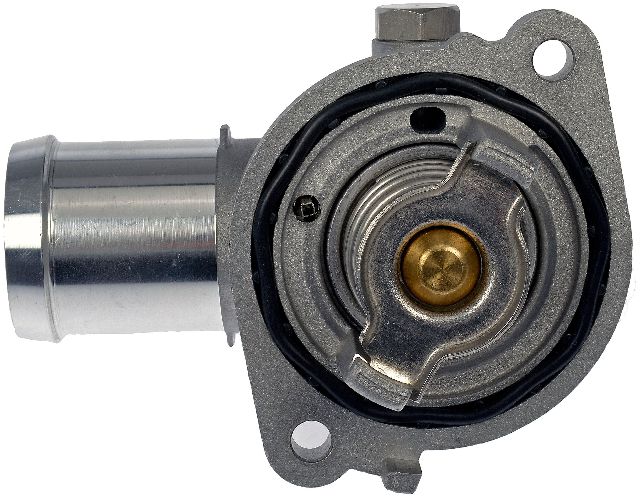
Typical fix: Replace the entire thermostat and housing assembly. Aftermarket aluminum housings are available and recommended to prevent future cracking of the plastic.
Est. part cost: $50-$150
Rare But Worth Checking
- Failed Water Pump: While less common than the other items, a water pump with a failed bearing or a corroded impeller can fail to circulate coolant, leading to a rapid overheat.
- Blown Head Gasket: This is often the result of an overheat rather than the initial cause, but a pre-existing failure can allow hot combustion gases to enter the cooling system, causing it to pressurize and overheat. A chemical block test can detect combustion gases in the coolant.
- Clogged Radiator: Internal or external blockages in the radiator can prevent proper heat dissipation. Check for debris (leaves, plastic bags) blocking the front of the radiator. In a documented case, the fan resistor exploded and punctured the radiator from the inside.
Diagnosis Steps
- SAFE-T FIRST: Do not open the coolant reservoir or radiator cap when the engine is hot. The system is under pressure and can cause severe burns.
- Check Coolant Level: Once the engine is completely cool, check the level in the coolant reservoir. If it is low, you have a leak.
- Visual Inspection: Look for obvious signs of coolant leaks around the engine bay, focusing on the radiator, hoses, water pump, thermostat housing, and the area under the intake manifold for the oil cooler housing.
- Verify Radiator Fan Operation: Start the engine and turn the A/C to its coldest setting. This should command the radiator fan(s) to turn on (likely on low speed). If they do not, investigate the fan motor, relays, fuses (F6/F7), and fan speed resistors.
- Check for Flow: If the fan works, let the engine warm up. If the temperature climbs past the halfway mark, carefully check the radiator hoses. A hot upper hose and a cool lower hose points to a stuck thermostat.
- Pressure Test: If a leak is suspected but not visible, use a cooling system pressure tester to pressurize the system and reveal the source of the leak. Pay close attention to the valley of the engine under the intake.
- Scan Tool Data: Monitor the live coolant temperature data on a scan tool. If it rises uncontrollably past 226°F (108°C) without the high-speed fan kicking on, it confirms a fan or control system issue.
Parts You'll Likely Need
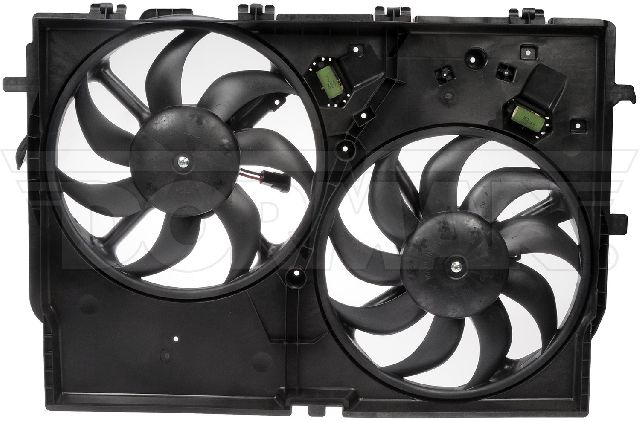
- Radiator Cooling Fan Assembly
(OEM #68209721AC)— This is a very common failure item on the ProMaster and a primary cause of overheating, especially in stop-and-go traffic. The entire assembly is often replaced due to motor or control module failure.
Trusted brands: Mopar, Dorman, TYC
OEM price range: $350-$500
Aftermarket price range: $200-$450 - Engine Oil Cooler / Filter Housing Assembly
(OEM #68596317AB (latest plastic version), Dorman 926-959 (aluminum upgrade))— This plastic assembly is a notorious source of both oil and coolant leaks on the 3.6L Pentastar, leading to coolant loss and overheating. The aluminum upgrade is a popular permanent fix.
Trusted brands: Mopar (Plastic), Dorman (Plastic and Aluminum versions)
OEM price range: $200-$300
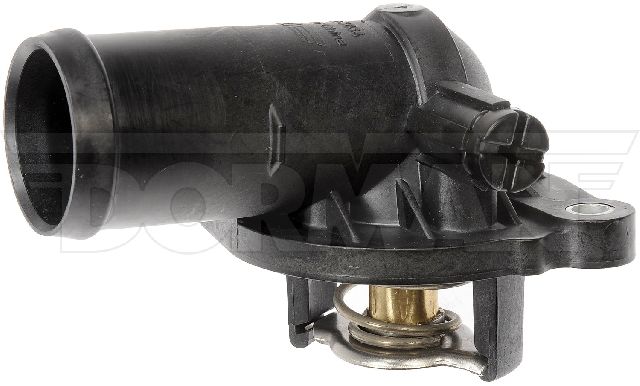
Aftermarket price range: $80-$200 - Engine Coolant Thermostat Housing Assembly
(OEM #68217305AH)— The original plastic housing is prone to cracking and leaking, and the thermostat itself can get stuck closed, preventing coolant circulation.
Trusted brands: Mopar, Dorman (including aluminum upgrade versions), Gates
OEM price range: $80-$150
Aftermarket price range: $50-$120
Related Codes That Often Appear With This One
- P0217 — This is a generic SAE code for 'Engine Coolant Over-Temperature Condition'. It is very likely to appear alongside a manufacturer-specific overheat code like P1285.
- P1299 — On other makes, this code means 'Cylinder Head Over-Temperature Protection Active' and indicates the PCM is taking action (like cutting fuel injectors) to protect the engine. It may appear with P1285.
Technical Service Bulletins (TSBs) & Recalls
- NHTSA 19V-818: Cooling Fan Motor may overheat.
Platform-Specific Known Issues
- There have been multiple safety recalls related to the radiator cooling fan. NHTSA campaign 19V-818 (FCA recall VB2) is a key example for 2015-2018 models, where the fan motor could seize and overheat, increasing the risk of a vehicle fire. Owners should check their VIN with a Ram dealer to see if their vehicle is affected and if the recall work has been performed.
Mechanic-Grade Diagnostic Values
- Low Speed Cooling Fan Activation — expected: Commanded ON at or above 103° C (217° F). Failure: Temperature exceeds this value on a scan tool with no fan activation.
- Low Speed Cooling Fan Deactivation — expected: Commanded OFF at or below 101° C (214° F). Failure: Fan continues to run below this temperature (unless A/C is on).
- High Speed Cooling Fan Activation — expected: Commanded ON at or above 108° C (226° F). Failure: Temperature exceeds this value on a scan tool with no high-speed fan activation.
- High Speed Cooling Fan Deactivation — expected: Commanded OFF at or below 105° C (221° F). Failure: Fan continues to run below this temperature.
Scan Tool Commands That Help
- wiTECH or equivalent professional scan tool: Low Speed Rad Fan Control State — To manually command the low-speed fan relay on to verify the integrity of the relay, wiring, fan resistor, and fan motor.
- wiTECH or equivalent professional scan tool: High Speed Rad Fan Control State — To manually command the high-speed fan relay on to verify the integrity of the relay, wiring, and fan motor, bypassing the low-speed resistor.
Wiring & Ground Locations
- Main Engine Ground Strap — A braided cable connecting the transmission case to the driver's side frame rail, near the transmission mount. Often accessed by removing the driver's side headlight assembly.. A poor engine ground can cause erratic behavior in all electronic modules and sensors, including the PCM and fan control circuits, leading to incorrect operation or failure to activate the fans.
- Cooling Fan Fuses (F6, F7) — In the underhood fuse box / Totally Integrated Power Module (TIPM), located near the battery.. These fuses provide the main power to the fan motors. A blown fuse will prevent a fan from running. A failing fan motor drawing excess current can cause these fuses to blow.
- Cooling Fan Relays — Pluggable relays located in the underhood fuse box / TIPM.. These relays are the switches that the PCM uses to turn the fans on and off. A failed relay will prevent the fan from activating. The relay socket in the TIPM can also burn and fail.
- Fan Speed Resistors — Two resistors mounted directly on the front of the radiator fan shroud, accessible from under the hood.. These resistors control the low-speed fan operation. When one or both fail (often due to corrosion or breaking apart), the low-speed setting stops working. This causes the fans to only come on at high speed when the engine is already very hot, or causes A/C performance issues.
Real Owner Repair Stories
- YouTube channel 'ProMasters Only' (Ram ProMaster, unspecified year within range) — Loud noise from the front of the engine, like 'an airplane landing'. Fan blade was physically loose when wiggled by hand.
❌ Tried (didn't work) The diagnosis was direct, no other parts were tried.
✅ What actually fixed it The entire radiator fan module (assembly) was replaced. The root cause was a failed bearing in one of the fan motors, which causes noise and draws excess current, eventually leading to resistor or fuse failure. - YouTube channel 'Normal Guy DIY' (2014-2021 Ram ProMaster) — Cooling fan would not run at low speed. When the engine got hot enough, the fan would kick on to high speed for about 30 seconds and then shut off. This also caused poor A/C performance at idle.
❌ Tried (didn't work) The dealer suggested replacing relays and the harness, which would have been expensive and unnecessary.
✅ What actually fixed it Replaced the two fan speed control resistors located on the fan shroud. One was visibly broken in half and the other was heavily corroded. Replacing both with new Mopar parts restored normal low-speed and high-speed fan operation. The repair was done in 10 minutes with no tools.
"I Checked Everything" — The Actual Cause
- The cooling system equivalent of a 'smoke test clean' scenario is when a cooling system pressure test passes (holds pressure), yet the vehicle still overheats. This points to a circulation problem, not a leak. The most common causes are a water pump with a corroded or slipping impeller that fails to move coolant, or a radiator that is internally clogged with scale or sediment, preventing heat exchange.
OEM Part Supersession History
68105583AA→68596317AB (and at least 15 other revisions in between)— Material and design changes to the plastic housing to improve durability and sealing against leaks. The Dorman aluminum version (926-959) was created to solve the inherent problem of plastic degradation.
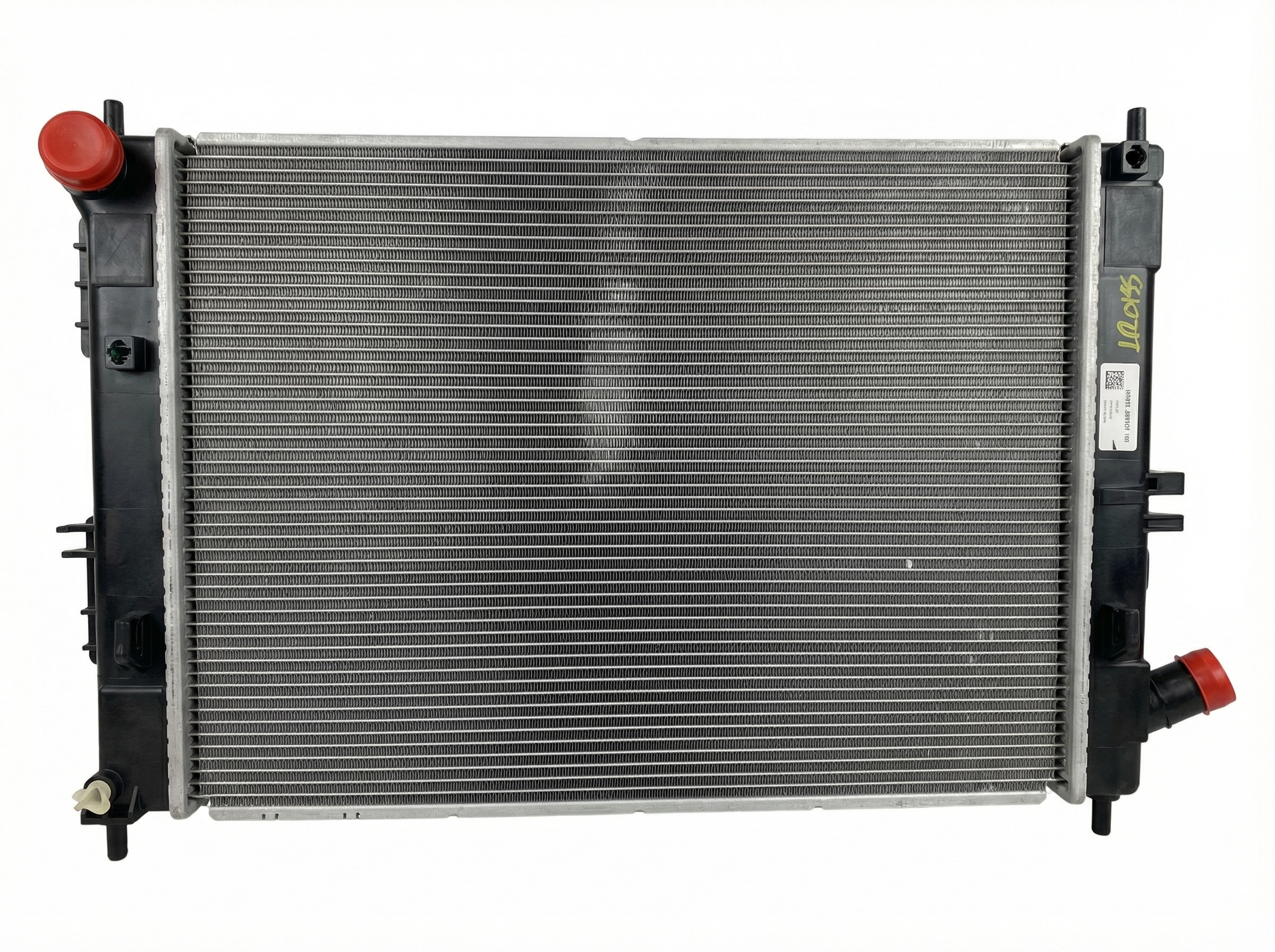
Heads up: The latest Mopar service part (68596317AB) may not include the oil pressure and temperature sensors; you may be required to transfer them from your old housing.68188992AA→68621199AA— Revisions to the radiator, likely to improve the durability of the plastic end tanks or core design.
Model Year Variations Within This Range
- 2015-2018: These model years were the subject of NHTSA recall 19V-818 for cooling fan motors that could seize, overload the circuit, and pose a fire risk. This suggests parts used in these years were particularly failure-prone compared to earlier or later models.
Diagnostic Flowchart
Other Known Issues on This Vehicle
Issues unrelated to this code that are worth knowing about as an owner of this generation:
- Premature Transmission Failure (62TE) 🔴 High — Very common across all model years. The 62TE transmission, originally from lighter minivans, is considered undersized for the ProMaster's weight and payload, leading to frequent torque converter and internal component failure. (Ref: Recall 44A (NHTSA 23V-298) for 2019-2021 models addresses a rollaway risk due to debris in the transmission.)
- Rocker Arm / Lifter Failure ('Pentastar Tick') 🟠 Medium — A well-known issue across the 3.6L Pentastar engine family, often appearing after 60,000 miles. A distinct ticking noise from the top of the engine is the primary symptom, which can eventually lead to misfires and camshaft damage if ignored. (Ref: No specific recall, but subject of class-action lawsuits.)
- Transmission Mount Failure 🔴 High — Particularly noted on earlier models (e.g., 2014). The lower transmission mounts can fail, causing the transmission to shift or, in catastrophic cases, fall from the vehicle. (Ref: No recall, but Dodge has released several redesigned mount kits.)
- Suspension Wear 🟠 Medium — Owners frequently report premature wear of front struts, shock absorbers, and sway bar links, leading to poor handling and ride comfort.
- Electrical Problems / Burnt Fuse Box 🟠 Medium — Multiple owner reports describe strange electrical behavior, such as fans running continuously or wipers failing, sometimes traced back to a burnt or melted Power Distribution Center (fuse box) due to suspected water intrusion.
Used vs. New Parts: Buying Guide for This Vehicle
When a used part is the smart pick: For this specific repair, buying used parts is highly discouraged for the primary failure components. The only potentially safe used part would be a structural component like a fan shroud if the original is physically broken, but not the motors, resistors, or plastic housings.
Donor-vehicle mileage cap: roughly under 50000 miles for the part to have meaningful remaining life.
What to inspect on the donor part:
- For a fan assembly: Manually wiggle each fan blade. There should be zero side-to-side play. Any looseness indicates a worn bearing and imminent failure.
- For any plastic part: Inspect for chalky appearance, brittleness, or hairline cracks, especially around seams and hose connections.
- Check electrical connectors for corrosion, melted plastic, or pushed-out pins.
OEM-only on this vehicle (don't cheap out):
- Fan Speed Resistors: While aftermarket is available, forum-trusted sources recommend using genuine Mopar/Fiat resistors to ensure correct operation and longevity.
Aftermarket brands forum-validated for this vehicle:
- Dorman OE FIX (926-959) for the aluminum oil filter/cooler housing is widely regarded as a permanent upgrade over the OEM plastic part.
- Fel-Pro for gaskets, which some users prefer over the gaskets included with the Dorman housing kit.
Brands owners have reported issues with on this vehicle:
- Unnamed, low-cost plastic oil filter housings from online marketplaces. They are likely to have the same design flaw as the original and fail prematurely.
- Generic, unbranded fan assemblies that do not have reviews specifically mentioning the ProMaster.
Real Owner Stories
Aggregated from forums and TSBs cited above. Mileages and costs reflect what owners reported in those sources.
2015-2018 Ram ProMaster 3.6L
Symptoms: The radiator fan motor seized and overheated, creating a potential fire risk.
What fixed it: Recall service performed by dealer (FCA recall VB2 / NHTSA 19V-818).
Source hint: NHTSA 19V-818: Cooling Fan Motor may overheat.
Ram ProMaster 3.6L Pentastar V6
Symptoms: The radiator fan was running continuously even with the engine turned off, eventually draining the battery.
What fixed it: Investigation of the T07 relay and the underhood fuse box for burnt components.
Source hint: Reddit r/promaster - Radiator fan keeps spinning
2014-2021 Ram ProMaster 3.6L
Symptoms: Chronic coolant leaks from the plastic oil filter housing located in the engine valley.
What fixed it: Installed a Dorman aluminum oil filter housing upgrade (926-959) as a permanent solution.
Source hint: Reddit r/Justrolledintotheshop - Chrysler 3.6 Pentastar, trying a Dorman aluminum filter housing.
Ram ProMaster 3.6L
Symptoms: A massive coolant leak and overheat condition occurred after the radiator fan resistor exploded.
What fixed it: Replacement of the radiator and the fan resistor assembly.
Source hint: YouTube - Ram Promaster Radiator Problem
Related OBD-II Codes
Frequently Asked Questions
Is there a recall for the radiator fan on my 2015-2018 Ram ProMaster?
My ProMaster's fan runs on high speed even after I turn the engine off. Is this related to P1285?
I see pink residue in the 'V' of my 3.6L Pentastar engine. What is the recommended fix?
Which fuses should I check if my cooling fans aren't turning on?
Can a cooling system issue cause my ProMaster to lose power?
Why is my ProMaster throwing P1285 while other Pentastar vehicles like the Jeep Wrangler show P0217?
Used OEM Parts in Stock


New Aftermarket Parts Available


The information in this article is provided for general reference and educational purposes only. Vehicle specifications, procedures, and part compatibility can vary by production date, trim level, and region. Always consult your vehicle's factory service manual and verify part numbers before purchasing or performing repairs. Safety-critical components such as airbags, seat belts, and braking systems should be installed by a qualified professional.
- Ram ProMaster:
- 🛍️ Shop This Part
- What's Unique About the 2014-2021 Ram ProMaster
- Symptoms You May Notice
- Most Likely Causes
- Rare But Worth Checking
- Diagnosis Steps
- Parts You'll Likely Need
- Related Codes That Often Appear With This One
- Technical Service Bulletins (TSBs) & Recalls
- Platform-Specific Known Issues
- Mechanic-Grade Diagnostic Values
- Scan Tool Commands That Help
- Wiring & Ground Locations
- Real Owner Repair Stories
- "I Checked Everything" — The Actual Cause
- OEM Part Supersession History
- Model Year Variations Within This Range
- Diagnostic Flowchart
- Other Known Issues on This Vehicle
- Used vs. New Parts: Buying Guide for This Vehicle
- Real Owner Stories
- 2015-2018 Ram ProMaster 3.6L
- Ram ProMaster 3.6L Pentastar V6
- 2014-2021 Ram ProMaster 3.6L
- Ram ProMaster 3.6L
- Related OBD-II Codes
- Frequently Asked Questions
- 🎟️ Get 5% Off