

P1285 on 2015-2019 Lincoln MKC: Cylinder Head Overheating and Engine Failure Guide
P1285 on a 2015-2019 Lincoln MKC with the 2.0L EcoBoost engine indicates a critical cylinder head overheat condition. This is most often caused by a known engine block defect leading to coolant leaking into the cylinders. The only permanent repair is a complete long block engine replacement with a redesigned part, costing between $7,000 and $11,500.
- P1285 on a 2015-2019 Lincoln MKC is a critical code that signals a severe engine overheat, and you should stop driving the vehicle immediately.
- The most probable cause is not a simple failed part but a major engine defect where coolant leaks into the cylinders, as outlined in Ford/Lincoln TSB 22-2229.
- Diagnosis requires a cooling system pressure test and a borescope inspection to confirm coolant in the cylinders.
- The only reliable, long-term fix is a complete engine long block replacement, which is a very expensive repair.
- Do not misdiagnose the issue by replacing the CHT sensor or thermostat without first ruling out the coolant intrusion problem.
What's Unique About the 2015-2019 Lincoln MKC
For the 2015-2019 Lincoln MKC with the 2.0L EcoBoost engine, P1285 is not just a generic overheating code. It is strongly associated with a well-documented engine design flaw. The 'open-deck' design of the engine block has a slot machined between the cylinders that creates a weak point. This can lead to a breach, allowing coolant to leak directly into the combustion chamber. This internal leak causes misfires, rapid coolant loss, and the specific overheating condition that triggers P1285. Ford and Lincoln have issued multiple Technical Service Bulletins (TSBs), including the most recent TSB 22-2229, acknowledging this failure mode and recommending a long block engine replacement with a redesigned part as the definitive fix.
Diagnostic Flowchart
Tap your situation to follow the diagnostic path that matches what you're seeing on this vehicle.
Symptoms You May Notice
- Check Engine Light (Malfunction Indicator Lamp) is on
- Engine temperature gauge reads high or spikes into the red zone
- "Engine Coolant Over Temperature" warning message on the dashboard
- Engine runs rough, misfires, or idles poorly, especially when cold
- Significant loss of engine power as the PCM enters limp mode
- White, sweet-smelling smoke from the exhaust, which is a sign of coolant being burned in the cylinders
- Constantly needing to add coolant with no visible external leaks
- Gurgling sounds from the engine or cooling system
- Replacing the Cylinder Head Temperature (CHT) sensor. The sensor is almost always reporting the high temperature correctly; it is not the cause of the problem. Replacing it will not fix the overheating.
- Replacing the thermostat or water pump without proper diagnosis. While these can cause overheating, they are less likely to be the root cause of P1285 on this specific engine compared to the known coolant intrusion issue.
- Assuming it is only a head gasket failure. The root cause on the 2.0L EcoBoost is often a crack in the engine block itself, making a head gasket replacement an insufficient and ineffective long-term repair.
Most Likely Causes
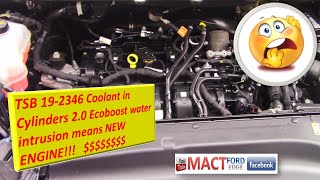
- Coolant Intrusion into Cylinders (Engine Block Defect) 🔴 High Probability A known design defect in some 2.0L EcoBoost engine blocks creates a weak point between the cylinder wall and coolant passages, leading to cracks and internal coolant leaks. The open-deck design is susceptible to failure at the thin wall between cylinders. This is documented in multiple TSBs, including 19-2346, 19-2172, and 22-2229.
How to confirm: A technician will perform a cooling system pressure test. Per TSB 19-2208, a pressure drop of more than 4 psi over 5 hours indicates a significant leak. A borescope inspection through the spark plug holes is then used to visually confirm the presence of coolant inside the cylinders, which may appear as liquid or a 'steam-cleaned' piston top.
Typical fix: The only manufacturer-sanctioned permanent repair is the replacement of the engine long block with an updated version that corrects the design flaw. The redesigned block is said to use cross-drilled holes instead of a slot between the cylinders for better structural integrity.
Est. part cost: $4000-$7000
Rare But Worth Checking
- Failed Water Pump: While less common than coolant intrusion on this specific platform, a seized or leaking water pump can stop coolant circulation and cause a legitimate overheating event. This should be inspected after coolant intrusion is ruled out.
- Stuck Thermostat: A thermostat stuck in the closed position will prevent coolant from flowing to the radiator, causing a rapid overheat. This is a possible cause on any vehicle but should be investigated after ruling out coolant intrusion.
- Cooling Fan Failure: If the electric cooling fans fail to activate, the engine will overheat, especially in stop-and-go traffic. This is a general overheating cause.
- Clogged Radiator: Internal or external blockages in the radiator can restrict airflow or coolant flow, leading to reduced cooling efficiency and overheating.
Diagnosis Steps
- Verify the code with an OBD-II scanner and document any other codes present. Check the freeze frame data to see the conditions when the code was set.
- Immediately check the coolant level in the overflow reservoir and the radiator (when the engine is completely cool). A low level with no visible external leaks is a major red flag for this engine.
- Perform a cooling system pressure test. The system should hold pressure (typically 20-21 psi). A steady drop in pressure points to a leak. A loss of more than 4 psi in 5 hours is a strong indicator of an internal leak per Ford's TSBs.
- If the pressure test fails with no external leak found, use a borescope to inspect the inside of each cylinder through the spark plug hole. Look for signs of coolant, such as an unusually clean 'steam-cleaned' piston top, visible liquid, or green/orange residue.
- A chemical block test can also be used to detect combustion gases in the coolant, which confirms an internal leak.
- If coolant intrusion is confirmed, the diagnosis is complete. The engine long block needs to be replaced according to TSB 22-2229.
- If no coolant intrusion is found, proceed with diagnosing other potential overheating causes: test the water pump, thermostat, cooling fans, and check for radiator blockages.
Parts You'll Likely Need
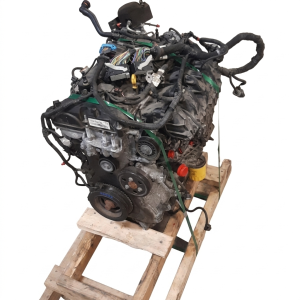
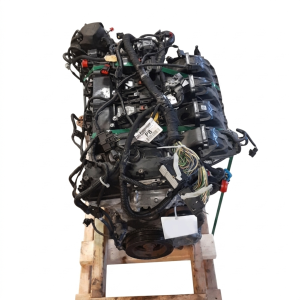
- Engine Long Block Assembly
(OEM #J2GZ-6006-E (Supersedes previous versions, but always verify with VIN))— This is the official manufacturer-recommended repair according to TSB 22-2229 to correct the engine block design flaw that causes coolant intrusion. It replaces the entire core of the engine with a redesigned part.
Trusted brands: Motorcraft
OEM price range: $4500-$7000
Aftermarket price range: $3500-$5500 - Engine Long Block Service Kit
(OEM #J2GZ-6079-C (or newer J2GZ-6079-D))— This kit contains the necessary gaskets, seals, and one-time-use hardware required when replacing the long block, as specified by the TSB.
Trusted brands: Motorcraft
OEM price range: $200-$400
Related Codes That Often Appear With This One
- P1299 — This code, 'Cylinder Head Overtemperature Protection Active,' is often set alongside P1285, indicating the PCM is actively taking steps to protect the engine by shutting down injectors.
- P0300, P0301, P0302, P0303, P0304 — These are misfire codes. Coolant entering the combustion chamber fouls the spark plugs and disrupts combustion, causing the engine to run rough and trigger these codes.
- P0316 — Misfire Detected on Startup (First 1000 Revolutions). This is common when coolant has pooled in a cylinder overnight, causing a misfire upon starting.
- P0217 — Engine Overtemperature Condition. This is a more general overheating code that frequently accompanies the more specific P1285.
Technical Service Bulletins (TSBs) & Recalls
- TSB 22-2229: Supersedes previous versions. Addresses coolant intrusion into the cylinders on 2.0L EcoBoost engines, listing P1285 as a potential DTC and recommending long block replacement as the fix. It covers 2017-2019 MKC built on or before 18-Apr-2019.
- TSB 19-2346 / 19-2208: Earlier versions of the bulletin describing the same coolant intrusion issue, symptoms, and repair procedure.
- TSB 19-2172: An even earlier TSB confirming the problem, affected vehicles, and repair, specifically mentioning the 2015-2019 MKC.
Platform-Specific Known Issues
- The 2.0L EcoBoost engine in 2017-2019 Lincoln MKCs (built on or before April 18, 2019) is subject to a serious design flaw where a crack can form between the cylinder wall and an internal coolant passage. This allows coolant to leak directly into the cylinder, causing the symptoms and trouble codes described. Ford has acknowledged this with TSB 22-2229 and other related bulletins. This defect is the subject of multiple class-action lawsuits alleging Ford knowingly sold vehicles with this defect.
Mechanic-Grade Diagnostic Values
- Cylinder Head Temperature (CHT) Sensor Resistance — expected: Approximately 2,000-3,000 Ω at 20°C (68°F), dropping to 200-300 Ω at 90°C (194°F).. Failure: Resistance is infinite (open circuit), near zero (short circuit), or does not change smoothly as the engine warms up.
- Cylinder Head Temperature (CHT) Sensor Voltage (at PCM) — expected: Approximately 2.0V - 3.0V on a cold engine (KOEO), dropping to around 0.5V - 0.6V at normal operating temperature (approx. 90°C / 194°F).. Failure: Voltage is stuck near 5V (indicating an open circuit or unplugged sensor) or near 0V (indicating a short to ground).
Wiring & Ground Locations
- PCM Location — In the engine compartment, on the front left (driver's) side.. The PCM receives the signal from the CHT sensor and makes all decisions regarding the fail-safe cooling strategy. Its location is necessary for any circuit testing.
- G101 — Typically located in the engine compartment, near the PCM or on the cylinder head.. This is a primary ground point for the Powertrain Control Module (PCM). A loose or corroded connection at G101 can cause erratic sensor readings, potentially leading to false P1285 codes.
- G105 — Typically located on or near the radiator support in the engine compartment.. This point grounds the electric cooling fan motor. A poor connection here can prevent the cooling fan from activating correctly, leading to a genuine engine overheat condition that will trigger a valid P1285 code.
Real Owner Repair Stories
- YouTube channel 'Automotive Service Excellence' (2009 Ford Escape 3.0L (demonstrates same P1285/P1299 fail-safe logic)) — Engine dies after driving for a while, then restarts after cooling down, CEL is on. Temperature gauge rises very fast after starting.
❌ Tried (didn't work) The video warns against simply replacing the CHT sensor without proper diagnosis, as it is often correctly reporting a real problem.
✅ What actually fixed it The water pump had seized and was not circulating coolant, causing a rapid and genuine overheat condition. The fix was replacing the failed water pump.
OEM Part Supersession History
JJ7Z-6006-B, JS7Z-6006-A, JS7Z-6006-C→J2GZ-6006-E— The J2GZ-6006-E long block is the updated design intended to correct the coolant intrusion flaw. It is the part specified by TSB 22-2229 for the permanent repair.
Heads up: Using an older part number, even if new-old-stock, will re-introduce the original design flaw and is likely to fail again from coolant intrusion.
Model Year Variations Within This Range
- 2017-2019 (built on or before April 18, 2019): These model years used an engine block design with a machined slot between the cylinders for coolant flow. This created a weak point prone to cracking, leading to coolant intrusion.
- Post-April 2019 (Model Year 2020+): The engine block was redesigned to eliminate the slot between the cylinders, replacing it with drilled passages. This revised design is not prone to the coolant intrusion issue covered in TSB 22-2229.
Helpful Videos
We Have This Part in Stock

The information in this article is provided for general reference and educational purposes only. Vehicle specifications, procedures, and part compatibility can vary by production date, trim level, and region. Always consult your vehicle's factory service manual and verify part numbers before purchasing or performing repairs. Safety-critical components such as airbags, seat belts, and braking systems should be installed by a qualified professional.
- Lincoln MKC:
- 🎬 Helpful Videos
- 🛍️ Shop This Part
- What's Unique About the 2015-2019 Lincoln MKC
- Diagnostic Flowchart
- Symptoms You May Notice
- Most Likely Causes
- Rare But Worth Checking
- Diagnosis Steps
- Parts You'll Likely Need
- Related Codes That Often Appear With This One
- Technical Service Bulletins (TSBs) & Recalls
- Platform-Specific Known Issues
- Mechanic-Grade Diagnostic Values
- Wiring & Ground Locations
- Real Owner Repair Stories
- OEM Part Supersession History
- Model Year Variations Within This Range
- 🎟️ Get 5% Off