

P1285 on 1997-2004 Ford F-150: Cylinder Head Over Temperature Causes and Fixes
P1285 indicates an engine overheat. On the 1997-2004 F-150, this is often caused by a faulty Cylinder Head Temperature (CHT) sensor giving a false reading, or a genuine overheat from a stuck thermostat. The CHT sensor is the most likely part to fail, but it is very difficult to access, being located under the intake manifold.
- P1285 is a critical overheat warning. Stop driving immediately to prevent engine damage.
- First, determine if the engine is truly overheating (steam, boiling) or if it's a false alarm (gauge pegs hot instantly).
- If it's a false alarm, the CHT sensor is the most likely cause. If it's a real overheat, a stuck thermostat is a high probability.
- On V8 engines, replacing the CHT sensor is a difficult, labor-intensive job because it is located under the intake manifold.
- Be aware that on 1999 and newer F-150s, there is likely no separate coolant temperature sensor; the CHT sensor does everything.
What's Unique About the 1997-2004 Ford F-150

Unlike cars that use a sensor to measure coolant temperature, most F-150s in this era (specifically 1999 and newer models) rely exclusively on a Cylinder Head Temperature (CHT) sensor. This sensor reads the engine's metal temperature directly, which allows the PCM to trigger a 'Fail-Safe Cooling' mode even if all coolant is lost. This strategy can shut down alternating fuel injectors to use those cylinders as air pumps to cool the engine, preventing catastrophic damage. However, it also means a single faulty sensor can incorrectly trigger this emergency mode, causing a loss of power and other symptoms without a true overheat.
🎬 Watch: Understanding Ford's fail-safe cooling strategy and sensor logicGeneration note: This range covers the 10th generation (1997-2003, plus 2004 'Heritage') and the first year of the 11th generation (2004 new body style). A key difference is that 1997-1998 V8 models used both an Engine Coolant Temperature (ECT) sensor and a CHT sensor, while 1999 and newer models typically use only the CHT sensor for all temperature readings. This can cause confusion when ordering parts.
Symptoms You May Notice

- Temperature gauge reading at maximum (HOT), sometimes instantly after a cold start
- Check Engine Light is on
- Engine may enter a reduced power 'limp mode' (Fail-Safe Cooling)
- Audible chimes or warnings from the dashboard
- Engine running rough or misfiring
- Visible steam or coolant leaking from the engine bay (in a true overheat scenario)
- A/C compressor may be disabled by the PCM
- Cooling fans running at maximum speed
- Replacing the thermostat when the CHT sensor is faulty. If the gauge pegs hot immediately on a cold start, it's almost certainly an electrical/sensor issue, not a mechanical thermostat problem.
- Searching for a traditional 'Engine Coolant Temperature Sensor' on 1999+ models. Many parts stores and owners get confused, but these trucks often only have the CHT sensor.
- Replacing the CHT sensor when the wiring is the actual problem. Always inspect the harness and connector for damage before undertaking the difficult sensor replacement.
Most Likely Causes

- Faulty Cylinder Head Temperature (CHT) Sensor 🔴 High Probability This is a very common failure point. The sensor can fail internally, sending a false 'hot' signal to the PCM. If the temperature gauge pegs hot instantly on a cold start or there are no other signs of overheating (like steam or boiling coolant), the sensor itself is the most likely culprit.
How to confirm: With a scan tool, monitor the CHT sensor reading (PID). If it shows an extremely high temperature (e.g., 250°F+) on a cold engine, the sensor is bad. You can also test the sensor's resistance with a multimeter. A good sensor should have high resistance when cold (e.g., ~30,000-50,000 ohms at 70°F) and low resistance when hot. An open or shorted sensor is faulty.
Typical fix: Replace the CHT sensor. This is labor-intensive due to its location under the intake manifold. 🎬 See how to replace the CHT sensor without removing the intake
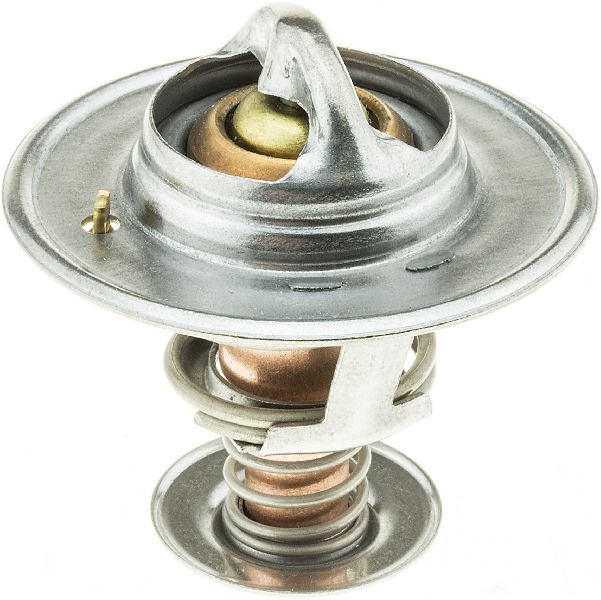
Est. part cost: $25-$50 - Stuck-Closed Thermostat 🟡 Medium Probability Thermostats are a common wear item. On the 4.6L and 5.4L engines, they are known to fail in the closed position, preventing coolant circulation and causing a rapid, genuine overheat.
How to confirm: After the engine has warmed up, carefully feel the upper and lower radiator hoses. If the upper hose is hot and the lower hose is cool or lukewarm, the thermostat is likely stuck closed and not allowing coolant to flow to the radiator.
Typical fix: Replace the thermostat and gasket/O-ring. It is recommended to use an OEM Motorcraft thermostat. 🎬 Watch: Step-by-step guide to replacing your F-150 thermostat
Est. part cost: $15-$40 - Low Engine Coolant Level 🟡 Medium Probability
How to confirm: Visually inspect the coolant level in the degas bottle (coolant reservoir) when the engine is cold. If it is below the 'MIN' line, there is a leak in the system that must be found and repaired.
Typical fix: Find and repair the source of the coolant leak (e.g., cracked hose, leaking radiator, cracked intake manifold, bad water pump gasket) and refill the system with the correct type of coolant (Ford Gold or equivalent).
Est. part cost: $10-$500+ depending on the leak source - Damaged CHT Sensor Wiring or Connector ⚪ Low Probability
How to confirm: Visually inspect the wiring harness leading to the CHT sensor for any signs of damage, melting, corrosion, or rodent activity. The harness runs through the hot engine valley and can become brittle. A common failure point is the connector itself. Check for continuity on the two wires (typically Yellow/Light Green and Gray/Red) from the sensor connector to the PCM.
Typical fix: Repair the damaged section of the wiring harness or replace the connector pigtail.
Est. part cost: $15-$30
Rare But Worth Checking
- Ejected Spark Plug (Triton V8): A known issue on 2-valve 4.6L and 5.4L Triton engines is the spark plugs being ejected from the cylinder head due to insufficient thread engagement. This will cause a loud pop, a severe misfire, and the rush of hot combustion gas past the CHT sensor can trigger a P1285 code.
- Failing Water Pump: If the water pump impeller is damaged or the bearing fails, it will not circulate coolant effectively, leading to a true overheat condition. Often, a failing water pump will leak coolant from its weep hole. A report on a different Ford model, NHTSA ODI #11639979, noted that P1285 and P0217 were retrieved after a coolant leak was found at the water pump weep hole.
- Blown Head Gasket: A failed head gasket can introduce hot combustion gases into the cooling system, causing a rapid overheat. This can be checked with a chemical block tester that detects exhaust gases in the coolant. In a related Ford case, NHTSA ODI #11520798, a misfire and P1285 were linked to coolant found in a cylinder.
- Cracked Plastic Intake Manifold: On early 4.6L V8 engines, the all-plastic intake manifold was prone to cracking at the front coolant crossover passage, causing a major coolant leak that can lead to overheating. Later models used a design with an aluminum crossover to fix this.
Diagnosis Steps

- Verify if the engine is actually overheating. Check for physical signs like steam, the smell of hot coolant, or boiling sounds from the reservoir. Use an infrared thermometer to check the temperature of the cylinder heads and radiator hoses. A truly overheating engine will show temperatures well above 212°F (100°C).
- If not actually overheating, suspect a faulty CHT sensor or wiring. Check the live data on a scan tool. A CHT reading of 250°F+ on a cold engine confirms a bad sensor or circuit.
- If the engine IS overheating, check the coolant level. If low, pressure test the cooling system to find the leak. Common leak points include the radiator, hoses, water pump, and intake manifold gaskets.
- If the coolant level is full but the engine overheats, check for a stuck thermostat. Feel the radiator hoses; a hot upper hose and cold lower hose points to a stuck thermostat.
- Inspect the CHT sensor wiring harness for any visible damage, especially where it runs through the hot engine valley and near the back of the engine. Check the connector for corrosion or loose pins.
- If a wiring fault is suspected, check for continuity and shorts. Unplug the CHT and PCM connectors. Check for continuity between the CHT connector and the corresponding PCM pins (e.g., pin 66 for the Y/LG wire and pin 91 for the GY/R wire on some models). Check for shorts to ground and power.
- If all else fails, consider rare causes like a failing water pump or a blown head gasket (use a block tester).
Parts You'll Likely Need
- Cylinder Head Temperature (CHT) Sensor
(OEM #XL3Z-6G004-AA)— This sensor is the most common point of failure for false overheat signals (P1285 without actual overheating). This part number is widely cited for this application.
Trusted brands: Motorcraft, Standard Motor Products (TX130), NTK (EJ0008), Walker Products
OEM price range: $40-$125
Aftermarket price range: $25-$50 - Thermostat and Gasket
(OEM #F7LZ-8575-AA (Motorcraft RT1107 - 192°F))— This is the most common cause of a true overheating condition that triggers a P1285 code. Using a quality Motorcraft part is recommended.
Related Codes That Often Appear With This One
- P1299 — P1299 ('Cylinder Head Overtemperature Protection Active') is the next stage in Ford's fail-safe cooling strategy. It often appears with P1285, indicating the PCM has started shutting down fuel injectors to protect the engine.
- P0125 — P0125 ('Insufficient Coolant Temperature for Closed Loop Fuel Control') can sometimes appear if the CHT sensor is providing erratic or incorrect readings, preventing the PCM from confirming the engine is at operating temperature.
- P1289 — P1289 ('Cylinder Head Temperature Sensor Circuit High Input') often accompanies P1285 and points more specifically to an electrical fault, like an open circuit in the sensor or wiring.
- P1290 — P1290 ('Cylinder Head Temperature Sensor Circuit Low Input') points to a short circuit in the sensor or wiring.
- P05A1 — In some Ford vehicles, P1285 has been documented alongside P05A1 (Active Grille Shutter failure), as seen in NHTSA ODI #11703132.
Technical Service Bulletins (TSBs) & Recalls
- TSB 07-21-2014: Acknowledges the issue of stripped or missing spark plug threads in the aluminum cylinder heads on 4.6L, 5.4L, and 6.8L 2-valve engines, which can lead to spark plug ejection.
- Bulletin #TSB 26-2060: Notes that a loss of engine coolant at the heater hose assembly near the engine cooling fan can cause P1299 and/or P1285 to be stored in the PCM.
Platform-Specific Known Issues
- The location of the CHT sensor on V8 models is under the intake manifold, making replacement a labor-intensive job that requires significant disassembly including the intake manifold itself. While some mechanics have managed to replace it by only removing the alternator, this is extremely difficult and requires special tools like flex-head ratcheting wrenches. This shortcut is not officially recommended.
- A user on F150forum.com confirmed the difficulty, stating 'The intake manifold has to be removed' because the manifold's resonance chamber fills the entire valley, blocking access.
Mechanic-Grade Diagnostic Values
- CHT Sensor Resistance (Cold Engine) — expected: ~90,000 - 100,000 Ω at -40°C/F; ~37,000 Ω at 21°C/70°F; ~8,000 - 10,000 Ω at 0°C/32°F. Failure: An open circuit (infinite resistance) or short circuit (zero resistance) indicates a failed sensor. Readings far outside the expected range for a known temperature also indicate failure.
- CHT Sensor Resistance (Hot Engine) — expected: ~2,000 - 3,000 Ω at 80°C/176°F; ~180 - 250 Ω at 100°C/212°F. Failure: Resistance that does not decrease smoothly as the engine warms up, or values that remain very high when the engine is hot.
- CHT Sensor Connector Voltage (Key On, Engine Off, Sensor Unplugged) — expected: One pin should have a 5-volt reference signal (VREF) from the PCM. The other pin is the signal return (ground).. Failure: Absence of the 5V reference signal points to a wiring issue or a problem with the PCM, not the sensor itself.
- Fail-Safe Cooling Activation Temperature — expected: Stage 1 (alternating 4-injector shutdown) activates around 126°C (258°F) for the 5.4L or 130°C (265°F) for the 4.6L.. Failure: This is a PCM-controlled event, not a failure indicator itself, but confirms the PCM is receiving a critical high-temp signal.
- Full Engine Shutdown Temperature — expected: Stage 2 (all injectors disabled) activates around 154°C (310°F) for the 5.4L or 166°C (330°F) for the 4.6L.. Failure: This is the final engine protection step before catastrophic failure.
Scan Tool Commands That Help
- Ford IDS (Integrated Diagnostic System): Datalogger > Powertrain > Engine PID Selection — This is the dealer-level tool used to monitor the CHT sensor PID (Parameter ID) in real-time. It allows a technician to graph the temperature reading from a cold start to operating temperature to check for erratic behavior, spikes, or dropouts that might not be obvious with a simple multimeter test.
- Ford IDS (Integrated Diagnostic System): Self-Test > Retrieve CMDTCs (Continuous Memory Diagnostic Trouble Codes) — Used to pull all stored codes, including history codes that may not currently be triggering the Check Engine Light but are relevant to the diagnosis. This can show if the P1285 code has been set intermittently in the past.
Wiring & Ground Locations

- CHT Sensor Wires — Running from the CHT sensor (under the intake manifold, between cylinder 2 & 3) to the PCM.. The two wires are typically Yellow/Light Green (signal) and Gray/Red (signal return/ground). On 2000-2001 models, these correspond to Pin 66 (YEL/LT GRN) and Pin 91 (GRY/RED) on the PCM connector. Damage to this harness in the hot engine valley is a common cause of false P1285 codes.
- G101 — On the right side (passenger side) fender apron, near the battery.. This is a primary power ground for the engine control system. A corroded or loose G101 can cause erratic behavior in multiple sensors, including the CHT, leading to false readings and codes.
- G104 — On the left side (driver side) fender apron, near the hood hinge and EEC test connector.. This is a case ground and is also critical for the proper operation of the PCM and its associated sensors. Poor connection here can lead to unpredictable electrical issues.
- Passenger Footwell Grounds (G200) — Located in the right-hand (passenger side) front footwell, typically behind the kick panel.. These grounds are known to corrode due to water leaks from the windshield or cowl. A bad ground here can cause a wide range of issues, including no-start conditions and erratic sensor readings, as it can affect the PCM's reference points.
Real Owner Repair Stories
- Ford Truck Enthusiasts Forums, user 'hugger94' (1997 Ford F-150 5.4L 4x4) — Loud noise while driving, followed by engine missing and a sound like a serious exhaust leak. The only code present was P1285.
❌ Tried (didn't work) Initial diagnosis considered a blown head gasket or other base engine failure.
✅ What actually fixed it An ejected spark plug from cylinder #4 was found. The rush of hot gas past the CHT sensor triggered the overheat code. Replacing the spark plug and the broken Coil-On-Plug (COP) resolved all symptoms and the code. - F150online Forums (2001 Ford F-150 SuperCrew 5.4L 4x4, 120k miles) — Check Engine Light on with codes P1285 and P1299. No obvious signs of overheating, fluid levels normal.
❌ Tried (didn't work) Checking fluid levels., Considering head gasket failure (pressure test on upper radiator hose was negative).
✅ What actually fixed it The user was advised that if there is no actual overheat and no significant coolant loss, the most likely cause is a bad CHT sensor. The resolution path pointed towards replacing the CHT sensor as the next logical step. - NHTSA ODI #11062287 — An owner reported that after their vehicle was towed to a dealer, fault code P1285 was pulled. The dealer replaced the radiator fan and the head temperature sensor, which resolved the issue.
OEM Part Supersession History
XL3Z-6G004-AA→This part number remains the primary OEM number for many applications in this range. However, some parts catalogs may cross-reference it to Motorcraft part DY-1144.— Standard part lifecycle and supplier changes.
Heads up: Be cautious. While DY-1144 is a Motorcraft temperature sensor, it is listed for many different applications, including as a traditional coolant temp sensor. Always verify the specific application for your VIN. Using the wrong sensor can result in incorrect temperature readings even if it physically fits. XL3Z-6G004-AA is the most reliably correct part number for the CHT application.
Model Year Variations Within This Range
- 1997-1998: V8 models in these years often used both a Cylinder Head Temperature (CHT) sensor for fail-safe mode and a separate, traditional Engine Coolant Temperature (ECT) sensor for the gauge and some PCM calculations. This can lead to confusion, as a failure of either could present temperature-related issues.
- 1999-2004: Most V8 models from 1999 onward eliminated the separate ECT sensor and rely exclusively on the CHT sensor for all temperature-related data (gauge, PCM calculations, fail-safe cooling). A failure of the CHT sensor on these models will cause all temperature-related symptoms simultaneously.
Diagnostic Flowchart
Other Known Issues on This Vehicle
Issues unrelated to this code that are worth knowing about as an owner of this generation:
- Spark Plug Ejection (2-Valve V8) 🔴 High — Common on 4.6L & 5.4L 2-valve engines, especially after 100,000 miles. Caused by insufficient threads in the aluminum heads. (Ref: TSB 07-21-2014)
- Cracked Plastic Intake Manifold (4.6L V8) 🟠 Medium — Common on early (pre-2002) 4.6L engines. The plastic coolant crossover at the front of the manifold cracks, causing a major coolant leak.
- Frame and Body Rust 🔴 High — Very common in regions that use road salt. Critical areas to check are the frame rails, cab corners, rocker panels, and bed supports.
- Faulty DPFE Sensor 🟡 Low — The Differential Pressure Feedback (DPFE) sensor for the EGR system is prone to failure, often due to melting from a clogged catalytic converter, causing EGR-related codes.
- Leaking Exhaust Manifolds 🟠 Medium — The cast iron exhaust manifolds are prone to warping or cracking, and the mounting studs often break, causing an exhaust leak and a ticking noise.
- Faulty Blend Door Actuator 🟡 Low — A common interior problem where the actuator for the HVAC blend door fails, resulting in an inability to control cabin temperature (e.g., no heat).
Used vs. New Parts: Buying Guide for This Vehicle
When a used part is the smart pick: For this repair, using a used part is generally not recommended. The primary failure parts are the CHT sensor and thermostat, which are inexpensive, high-wear items. The labor to access the CHT sensor is significant, so installing a used sensor with unknown remaining life is a major risk. A used intake manifold from a later model year (with the aluminum crossover) could be a sensible choice if yours has cracked.
Donor-vehicle mileage cap: roughly under 80000 miles for the part to have meaningful remaining life.
What to inspect on the donor part:
- For an intake manifold: Check for any cracks, especially around the coolant crossover and thermostat housing.
- Ensure all threaded inserts are intact and not stripped.
- Verify it comes from a vehicle that was not in a front-end collision.
OEM-only on this vehicle (don't cheap out):
- Thermostat: Aftermarket thermostats for this platform have a higher reported failure rate. Using an OEM Motorcraft 192°F thermostat is strongly recommended by forum veterans to ensure proper engine operating temperature and longevity.
Aftermarket brands forum-validated for this vehicle:
- CHT Sensor: Standard Motor Products (SMP), NTK, Walker Products are generally considered reliable alternatives to OEM Motorcraft.
Brands owners have reported issues with on this vehicle:
- Avoid no-name, unbranded 'white box' sensors from online marketplaces. The cost savings are minimal compared to the high labor cost of a repeat repair if the part fails prematurely.
Real Owner Stories
Aggregated from forums and TSBs cited above. Mileages and costs reflect what owners reported in those sources.
2004 5.4L F-150
Symptoms: The truck triggered a false overheat condition, setting code P1285.
What fixed it: The problem was confirmed to be the Cylinder Head Temperature (CHT) sensor, which required replacement.
Source hint: f150forum.com - Thread 'P1285- CHT sensor' (https://www.f150forum.com/f6/p1285-cht-sensor-312494/)
2000 Ford Excursion V10
Symptoms: Experienced a genuine overheat scenario while towing, which triggered both P1285 and P1299 codes.
What fixed it: The source details the diagnostic process from a Ford manual but does not state the specific part that was replaced to fix the overheat.
Source hint: ford-trucks.com - Thread 'P1285/P1299' (https://www.ford-trucks.com/forums/1633633-p1285-p1299.html)
Related OBD-II Codes
Frequently Asked Questions
Where is the CHT sensor on my 5.4L F-150, and is it hard to replace?
My temperature gauge shot to HOT instantly after a cold start. Is my engine actually overheating?
How can I tell if my truck is actually overheating or if it's just a bad sensor?
Can I replace the CHT sensor without removing the intake manifold?
What kind of coolant should I use if I have a leak on my 1997-2004 F-150?
What other Ford vehicles experience this same P1285 issue?
Helpful Videos

![F150 Thermostat Replacement 5.4L [How To]](https://img.youtube.com/vi/HQGd4-AKptQ/mqdefault.jpg)

Used OEM Parts in Stock


New Aftermarket Parts Available


The information in this article is provided for general reference and educational purposes only. Vehicle specifications, procedures, and part compatibility can vary by production date, trim level, and region. Always consult your vehicle's factory service manual and verify part numbers before purchasing or performing repairs. Safety-critical components such as airbags, seat belts, and braking systems should be installed by a qualified professional.
- Ford F-150:
- 🎬 Helpful Videos
- 🛍️ Shop This Part
- What's Unique About the 1997-2004 Ford F-150
- Symptoms You May Notice
- Most Likely Causes
- Rare But Worth Checking
- Diagnosis Steps
- Parts You'll Likely Need
- Related Codes That Often Appear With This One
- Technical Service Bulletins (TSBs) & Recalls
- Platform-Specific Known Issues
- Mechanic-Grade Diagnostic Values
- Scan Tool Commands That Help
- Wiring & Ground Locations
- Real Owner Repair Stories
- OEM Part Supersession History
- Model Year Variations Within This Range
- Diagnostic Flowchart
- Other Known Issues on This Vehicle
- Used vs. New Parts: Buying Guide for This Vehicle
- Real Owner Stories
- 2004 5.4L F-150
- 2000 Ford Excursion V10
- Related OBD-II Codes
- Frequently Asked Questions
- 🎟️ Get 5% Off