

P1247 on 2015-2023 Ford Mustang 2.3L EcoBoost: Low Boost Pressure Causes and Fixes
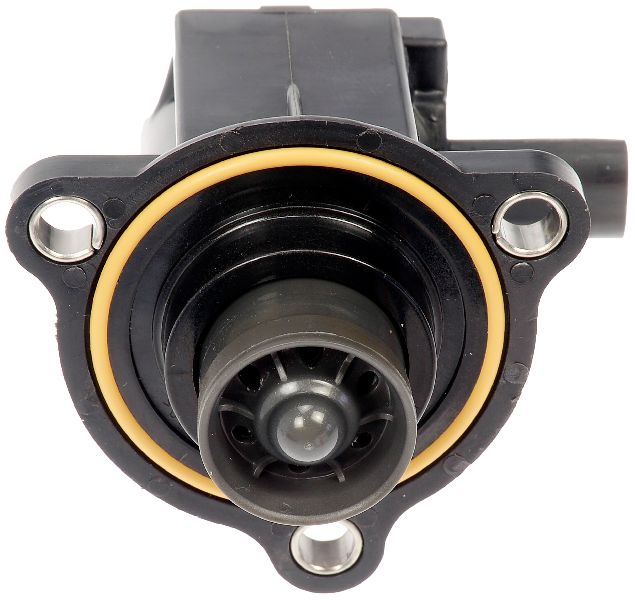
On a 2.3L EcoBoost Mustang, P1247 means the turbo isn't making enough boost. This is most often caused by a torn rubber diaphragm in the turbo's bypass valve (a ~$70 part) or a loose clamp on an intercooler pipe. Check these simple, cheap items before suspecting the turbo itself.
- P1247 means your EcoBoost Mustang is not producing the commanded amount of turbo boost.
- Do not immediately assume the turbo has failed. The most likely cause is a cheap and simple-to-fix boost leak.
- Your first check should be the turbo's bypass valve (BPV) for a torn diaphragm, followed by a thorough inspection of all charge pipe connections for loose clamps.
- A pressurized smoke test is the best way to find hidden leaks if a visual inspection reveals nothing.
- For 2015-2016 models, specifically check that the wastegate actuator rod is still attached to the turbo.
What's Unique About the 2015-2023 Ford Mustang
While P1247 is used across many Ford turbo engines, on the 2.3L EcoBoost Mustang, the issue is rarely the expensive turbocharger itself. The platform is particularly susceptible to boost leaks from specific, inexpensive components. The most frequent failure point is the rubber diaphragm in the electronically controlled bypass valve, which is known to tear. Additionally, the factory charge pipes and their connections are common sources for leaks, especially on tuned or aggressively driven vehicles, sometimes due to clamps not being sufficiently tightened from the factory. Another known issue, particularly on early models, is the e-clip for the wastegate actuator rod falling off, which was addressed by Ford in service messages.
Symptoms You May Notice
- Significant loss of engine power and sluggish acceleration
- Check Engine Light illuminated
- Audible 'whoosh', hissing, or whistling sound from the engine bay when the turbo should be building boost
- Vehicle may enter 'limp mode' with power severely restricted
- Poor fuel economy
- Fluttering sound on deceleration as air escapes through a torn bypass valve diaphragm
- Replacing the entire turbocharger without first checking for simple boost leaks from the bypass valve or charge pipes.
- Replacing boost pressure sensors when the issue is a mechanical leak.
- Assuming a tune is 'bad' when a mechanical fault like a boost leak is the real cause of poor performance.
Most Likely Causes
- Torn Turbocharger Bypass Valve (BPV) Diaphragm 🔴 High Probability The factory BPV uses a rubber diaphragm that is constantly exposed to boost pressure and heat cycles, causing it to fatigue and tear over time. This is a very common failure point, with many owner experiences confirming this is the first part to check.
How to confirm: Remove the BPV from the turbocharger (typically three small bolts). The valve is located on the compressor housing of the turbo. Once removed, inspect the internal rubber diaphragm for any rips, tears, or pinholes. A torn diaphragm will allow boost pressure to leak back into the intake pre-turbo, preventing it from reaching the engine.
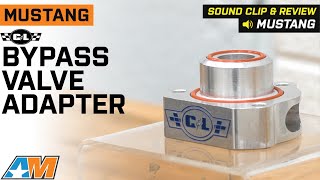
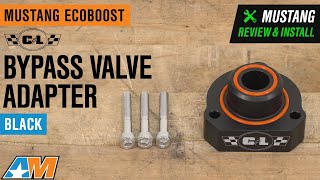
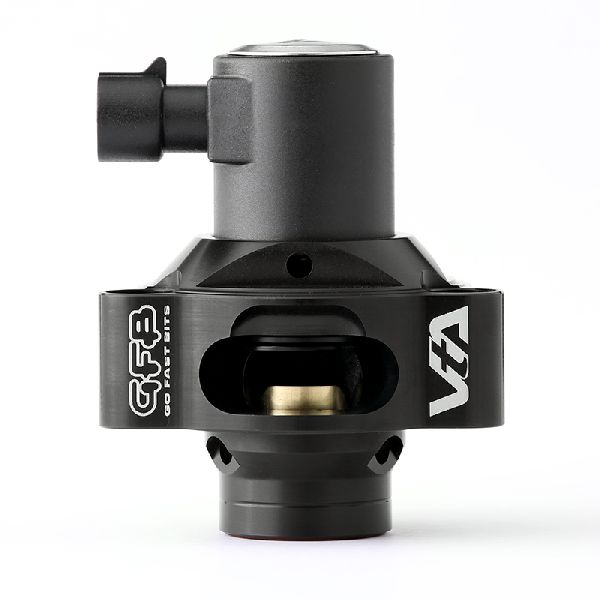
Typical fix: Replace the bypass valve. Upgraded aftermarket valves that use a more durable piston design (like those from Turbosmart or GFB) instead of a diaphragm are a popular, permanent solution. 🎬 Watch: How to install an upgraded bypass valve adapter
Est. part cost: $50-$150 - Boost Leak (Cracked or Loose Charge Pipes) 🔴 High Probability The factory charge pipes are made of plastic and can become brittle with heat and age, leading to cracks. More commonly, the hose clamps can loosen over time or may not have been sufficiently tightened from the factory, allowing a connection to pop off under boost.
How to confirm: Visually inspect all piping between the turbo outlet, intercooler, and throttle body for loose clamps, disconnected hoses, or obvious cracks. Pay close attention to the connection points. The most reliable method is to perform a pressurized smoke test to reveal small, hard-to-see leaks.
Typical fix: Tighten any loose clamps. Replace any cracked or damaged sections of pipe. Many owners upgrade to more durable aluminum charge pipes from brands like CVF, Mishimoto, or Cobb Tuning to prevent future issues.
Est. part cost: $20-$400 - Disconnected Wastegate Actuator Rod 🟡 Medium Probability On 2015-2016 models, the small e-clip holding the electronic wastegate actuator rod to the wastegate arm on the turbo could fail or pop off. This leaves the wastegate open, preventing boost from building. Ford addressed this with Special Service Message (SSM) 46085 and later TSB 16-0122 for the Explorer with the same engine.
How to confirm: Visually inspect the turbocharger's wastegate actuator, located on the hot side of the turbo. Confirm the actuator rod is securely connected to the wastegate arm with a clip. If it's disconnected, the arm will move freely.
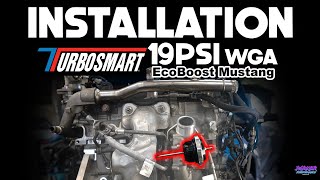
Typical fix: Reconnect the rod and install a new, secure e-clip. The Ford part number for the retaining clip is W790436-S900. 🎬 See this step-by-step wastegate actuator installation guide
Est. part cost: $5-$150 - Faulty Boost Pressure Sensor (MAP Sensor) ⚪ Low Probability
How to confirm: Use a scan tool to monitor the Manifold Absolute Pressure (MAP) reading with the key on, engine off (it should read atmospheric pressure, ~4.5-4.6V at sea level). Watch the reading under boost; it should rise smoothly. If the readings are erratic, stuck, or do not change, the sensor may be faulty.
Typical fix: Replace the boost pressure/MAP sensor. There are multiple pressure sensors; the one most relevant is on the intake manifold.
Est. part cost: $40-$80
Rare But Worth Checking
- Failed Turbocharger: While this is what many fear, it is one of the least likely causes for this code. A failed turbo is usually accompanied by loud grinding, siren-like whining noises, or excessive blue/grey smoke from the exhaust. Only consider this after all possible boost leaks have been ruled out.
- Clogged Catalytic Converter: A clogged catalytic converter can create excessive exhaust backpressure, preventing the turbo from spooling up effectively. This is usually accompanied by other symptoms like a rotten egg smell from the exhaust and a more severe, progressive loss of power that gets worse with RPM.
- Faulty Wastegate Solenoid/Actuator: Beyond the mechanical linkage clip, the electronic solenoid or the actuator motor itself can fail, causing it to hold the wastegate open. This may be accompanied by other specific wastegate-related fault codes. A fuse for the wastegate actuator can also be checked in the engine bay fuse box.
Diagnosis Steps
- Read the code with an OBD-II scanner to confirm P1247 is present. Note any other codes, especially P0299.
- Listen for audible hissing or 'whooshing' noises from the engine bay during acceleration to help pinpoint a potential leak.
- Perform a thorough visual inspection. Check all charge pipes and their connections between the turbo, intercooler, and throttle body. Look for loose clamps or hoses that have popped off.
- Remove and inspect the turbocharger bypass valve (BPV). It is held by three bolts on the turbo's compressor housing. Check its internal rubber diaphragm for any tears or holes. This is a very common failure point.
- For 2015-2016 models, inspect the wastegate actuator rod on the turbocharger to ensure it is securely connected to the wastegate arm with its e-clip.
- If no visual faults are found, perform a pressurized smoke test on the entire intake and charge pipe system. This is the most effective way to find small cracks or leaks in hoses and pipes that are not visible to the naked eye.
- If no leaks are found, use a scan tool to monitor the MAP sensor reading to ensure it is responding correctly to changes in pressure. With the key on and engine off, it should read atmospheric pressure (~4.5V).
- Only after ruling out all possible leaks and sensor issues should a clogged catalytic converter or a faulty turbocharger be considered.
Parts You'll Likely Need
- Turbocharger Bypass Valve (Diverter Valve)
(OEM #FR3Z-9U465-A)— The rubber diaphragm inside the factory valve is a known weak point and is the most common cause of boost leaks that trigger this code.
Trusted brands: Motorcraft, Turbosmart (Komapct EM Series), GFB (Go Fast Bits) DV+
OEM price range: $70-$100
Aftermarket price range: $70-$200 - Intercooler Charge Pipe Kit — The factory plastic pipes can crack or their connections can come loose. Upgrading to aluminum pipes is a common and permanent fix for owners, especially those with tuned vehicles.
Trusted brands: CVF, Mishimoto, Cobb Tuning, Steeda
OEM price range: $150-$250
Aftermarket price range: $200-$500 - Wastegate Actuator E-Clip
(OEM #W790436-S900)— On early S550 models (2015-2016), this clip can fail, causing the wastegate to stay open and preventing boost generation. This was addressed in TSB 16-0122 for the Explorer, which uses the same clip.
Trusted brands: Ford
OEM price range: $1-$5
Aftermarket price range: $1-$5
Related Codes That Often Appear With This One
- P0299 — P0299 is the generic SAE code for 'Turbocharger Underboost Condition'. P1247 is the Ford-specific code for the same fault, and they may appear together.
Technical Service Bulletins (TSBs) & Recalls
- SSM 46085 - 2015-2016 Mustang 2.3L - Low/No Turbo Boost Due to Disconnected Wastegate Actuator Rod
- TSB 16-0122 (for Ford Explorer, but relevant) - Lack of power and DTC P0299 due to disconnected wastegate actuator rod, provides part number for the clip.
Platform-Specific Known Issues
- SSM 46085: Disconnected Wastegate Actuator Rod: Ford issued this Special Service Message for 2015-2016 models regarding the wastegate actuator rod e-clip that may become disconnected, causing a low boost condition and P1247/P0299 codes.
- Owner Experience: Bypass Valve Failure: A common repair story on forums like mustang6g.com involves an owner experiencing a sudden loss of power and a P1247/P0299 code, with the final fix being the replacement of the factory electronic bypass valve due to a torn internal diaphragm.
Mechanic-Grade Diagnostic Values
- MAP Sensor 5V Reference Wire Voltage — expected: Approximately 5.0 Volts DC with Key On, Engine Off (KOEO).. Failure: Significantly lower or no voltage indicates a wiring or PCM issue, not a bad sensor.
- MAP Sensor Signal Wire Voltage (KOEO) — expected: Around 4.5 - 4.6 Volts at sea level (atmospheric pressure).. Failure: A reading that is stuck high, low, or at 0V suggests a faulty sensor or wiring issue. A signal voltage below 0.5V can trigger a related fault code.
- MAP Sensor Signal Wire Voltage (Engine Idling) — expected: 2.0V to 2.5V for turbocharged models at sea level.. Failure: Voltage should drop from the KOEO reading as vacuum is created at idle. If voltage is static or incorrect, the sensor or its connection is faulty.
- Wastegate Control Solenoid Coil Resistance — expected: 10 - 30 Ohms.. Failure: An open circuit (infinite resistance) or short circuit (near-zero resistance) indicates a failed solenoid coil.
- Scan Tool PID: Desired vs. Actual Boost — expected: Actual boost should closely track desired boost under load.. Failure: If Actual Boost is consistently more than 4-5 PSI below Desired Boost for several seconds while the wastegate duty cycle is high, it confirms an underboost condition.
Scan Tool Commands That Help
- FORScan / Ford IDS: Live Data Monitoring (PIDs) — Use to monitor 'TCBP_A' (Actual Boost Pressure) vs. 'TCBP_DES' (Desired Boost Pressure) and 'TCB_WG_DC' (Wastegate Duty Cycle). This is the primary method to confirm the PCM is commanding boost but the mechanical system is failing to produce it.
- FORScan / Ford IDS: PCM Adaptive Memory Reset — After replacing a component like a MAP sensor or fixing a significant leak, resetting the adaptive tables can help the PCM relearn the engine's airflow characteristics more quickly.
Wiring & Ground Locations
- Fuse F32 (Engine Bay Fuse Box) — In the under-hood fuse box.. This 10A fuse provides power to the turbocharger bypass valve circuit. A blown fuse here will cause a loss of BPV function.
- Fuse F42 (Engine Bay Fuse Box) — In the under-hood fuse box.. This 15A fuse is sometimes labeled as a 'power fuse' and is associated with the turbocharger bypass valve.
- G104 — In the engine bay, on the driver's side near the battery.. This is a primary ground point that provides ground for the Data Link Connector (DLC), which is essential for reliable scan tool communication. A poor ground here can corrupt diagnostic data.
- G105 — On the lower part of the engine, near the starter motor.. This is a major engine ground. A loose or corroded connection here can cause a variety of sensor and actuator issues due to unstable ground reference.
- MAP Sensor Connector — On the intake manifold.. This connector has three pins: a 5-volt reference, a ground, and the signal wire. Testing voltage at these pins is a key step to differentiate a sensor failure from a wiring or PCM issue.
Real Owner Repair Stories
- Ford Truck Enthusiasts Forum User (1999 Ford F350 7.3L (Note: Different vehicle, but same P1247 code and principle)) — Check Engine Light with code P1247 after major engine-out service for an oil pan gasket.
❌ Tried (didn't work) The owner had already cleaned the EBP tube and replaced the sensor during the service.
✅ What actually fixed it The issue was traced to a boost leak. The recommendation was to build a boost leak detector and test the system, paying close attention to the 6 boots and 12 clamps in the charge air system, as one had likely come loose or was not properly tightened during reassembly.
"I Checked Everything" — The Actual Cause
- In some cases with EcoBoost engines, a smoke test may not reveal a leak, but the actual cause can be a clogged catalytic converter. The restriction in the exhaust prevents the turbo from spooling effectively, which mimics the symptoms of a boost leak. This can be confirmed by measuring exhaust backpressure or visually inspecting the catalyst material after separating it from the turbo.
OEM Part Supersession History
FL3E-9U465-BA→FR3Z-9U465-A / FL3Z-9U465-A— Part number evolution and application updates across different EcoBoost platforms.
Heads up: While FR3Z-9U465-A is specific to the Mustang, the FL3Z-9U465-A is used on many other EcoBoost vehicles like the F-150 and Expedition. They are functionally similar electronic bypass valves. Always verify fitment with a VIN.
Model Year Variations Within This Range
- 2015-2017: These early S550 models were more prone to the wastegate actuator rod e-clip falling off, as addressed in SSM 46085. They also came standard with a 6-speed automatic transmission (6R80).
- 2018-2023: The 2018 facelift introduced a retooled 2.3L engine with a slight increase in torque (350 lb-ft vs 320 lb-ft) and a new 10-speed automatic transmission (10R80). While the fundamental turbo system is the same, some part numbers for sensors and actuators may differ from the earlier models.
Diagnostic Flowchart
Other Known Issues on This Vehicle
Issues unrelated to this code that are worth knowing about as an owner of this generation:
- Head Gasket Failure ('Ecoboom') 🔴 High — More common on 2015-2019 models due to an engine block design with a narrow sealing surface between cylinders. Can occur at low mileage, sometimes under 40,000 miles.
- Faulty EVAP/Purge Valve 🟠 Medium — Common across many Ford models. The valve can stick open or closed, causing rough idle, difficulty starting after refueling, and codes like P0496 or P1450. (Ref: Multiple TSBs exist for various Ford platforms, though not always specific to the Mustang.)
- Low-Pressure Fuel Sensor (LPFS) Failure 🔴 High — The sensor can fail, causing it to send incorrect readings to the ECU. This can lead to a lean air-fuel mixture under boost, potentially causing engine damage. Owners often replace it proactively.
- Carbon Buildup on Intake Valves 🟠 Medium — A common side effect of direct injection engines. Over 50,000-80,000 miles, buildup can restrict airflow, causing misfires and reduced performance. Requires manual cleaning (walnut blasting).
Used vs. New Parts: Buying Guide for This Vehicle
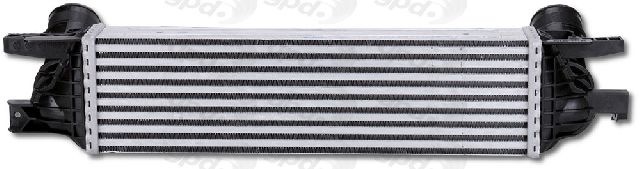
When a used part is the smart pick: Used parts make sense for purely mechanical, non-wear items. A set of factory charge pipes from a low-mileage donor car can be a cost-effective replacement for a single cracked pipe. A used intercooler is also a viable option if it's confirmed to be free of leaks.
Donor-vehicle mileage cap: roughly under 50000 miles for the part to have meaningful remaining life.
What to inspect on the donor part:
- For charge pipes, inspect for any hairline cracks, especially around the connection points and plastic welds.
- For an intercooler, check for bent fins (minor is okay, major damage is not) and any signs of oily residue inside the inlet/outlet, which might suggest a major engine issue on the donor car.
- Avoid any plastic or rubber parts that look discolored, brittle, or excessively heat-cycled.
OEM-only on this vehicle (don't cheap out):
- Turbocharger Bypass Valve (BPV): Given that the OEM rubber diaphragm is a known failure point, buying a used one is a major gamble. It's better to buy a new OEM part or a superior aftermarket piston-style valve.
- MAP/Boost Pressure Sensors: These are sensitive electronic components. The risk of getting a faulty or near-failure used sensor is high, and the cost of a new one is low enough to justify buying new.
- Wastegate Actuator: This is a high-wear electronic and mechanical part. A used one carries a high risk of failure. Buy new OEM or a reputable aftermarket replacement.
Aftermarket brands forum-validated for this vehicle:
- Bypass/Diverter Valves: GFB (Go Fast Bits), Turbosmart
- Charge Pipes: CVF (CV Fabrication), Mishimoto, Cobb Tuning, Steeda
Brands owners have reported issues with on this vehicle:
- Unnamed, no-brand 'eBay special' bypass valves and charge pipes often have poor fitment, use low-quality materials, and can cause more problems than they solve.
Real Owner Stories
Aggregated from forums and TSBs cited above. Mileages and costs reflect what owners reported in those sources.
2015-2016 Ford Mustang 2.3L EcoBoost
Symptoms: Low or no turbo boost and a P1247/P0299 code.
What fixed it: Reconnecting the wastegate actuator rod to the wastegate arm using a new e-clip.
Source hint: SSM 46085 - 2015-2016 Mustang 2.3L - Low/No Turbo Boost Due to Disconnected Wastegate Actuator Rod
2015-2023 Ford Mustang 2.3L EcoBoost
Symptoms: Sudden loss of power, Check Engine Light with P1247/P0299, and a fluttering sound on deceleration.
What fixed it: Replacement of the factory electronic bypass valve due to a torn internal diaphragm.
Source hint: Owner Experience: Bypass Valve Failure (mustang6g.com)
2015-2023 Ford Mustang 2.3L EcoBoost
Symptoms: Underboost code P0299 and loss of power.
What fixed it: Checking and tightening all hose clamps on the charge pipes; users noted loose clamps are a primary cause.
Source hint: mustang6g.com - Thread: 'P0299 code'
Related OBD-II Codes
Frequently Asked Questions
My 2015 Mustang 2.3L is losing boost; does SSM 46085 apply to my vehicle?
What is the specific Ford part number for the wastegate actuator retaining clip?
I hear a fluttering sound when I let off the gas in my EcoBoost Mustang. What is causing this?
Are there any TSBs from other Ford models that help diagnose P1247 on my Mustang?
Is there a more permanent fix for the frequent bypass valve diaphragm failures?
How can I check if my Mustang's charge pipes are the cause of the P1247 code?
Helpful Videos

Used OEM Parts in Stock


New Aftermarket Parts Available

The information in this article is provided for general reference and educational purposes only. Vehicle specifications, procedures, and part compatibility can vary by production date, trim level, and region. Always consult your vehicle's factory service manual and verify part numbers before purchasing or performing repairs. Safety-critical components such as airbags, seat belts, and braking systems should be installed by a qualified professional.
- Ford Mustang:
- 🎬 Helpful Videos
- 🛍️ Shop This Part
- What's Unique About the 2015-2023 Ford Mustang
- Symptoms You May Notice
- Most Likely Causes
- Rare But Worth Checking
- Diagnosis Steps
- Parts You'll Likely Need
- Related Codes That Often Appear With This One
- Technical Service Bulletins (TSBs) & Recalls
- Platform-Specific Known Issues
- Mechanic-Grade Diagnostic Values
- Scan Tool Commands That Help
- Wiring & Ground Locations
- Real Owner Repair Stories
- "I Checked Everything" — The Actual Cause
- OEM Part Supersession History
- Model Year Variations Within This Range
- Diagnostic Flowchart
- Other Known Issues on This Vehicle
- Used vs. New Parts: Buying Guide for This Vehicle
- Real Owner Stories
- 2015-2016 Ford Mustang 2.3L EcoBoost
- 2015-2023 Ford Mustang 2.3L EcoBoost
- 2015-2023 Ford Mustang 2.3L EcoBoost
- Related OBD-II Codes
- Frequently Asked Questions
- 🎟️ Get 5% Off