

P1247 on 2015-2017 Ford F-150 2.7L EcoBoost: Low Turbo Boost Causes and Fixes
P1247 means the turbochargers are not producing enough boost. The most common causes are air leaks from cracked or disconnected charge pipes, a failed turbocharger bypass valve (BOV), or a faulty turbocharger wastegate control solenoid. Expect a significant loss of power and the vehicle may enter 'limp mode'.
- P1247 means your truck's turbos aren't making enough power, resulting in a 'limp mode' condition.
- Do not assume the turbochargers need replacement. The problem is most often a much cheaper part.
- Start your diagnosis by checking for a blown fuse, then look for air leaks in the intake plumbing.
- A pressurized smoke test is the most reliable way to find hidden boost leaks.
- The wastegate control solenoid and the bypass valve are two of the most common parts to fail and should be inspected carefully.
What's Unique About the 2015-2017 Ford F-150
On the 2.7L EcoBoost, the twin-turbo system relies on a complex network of plastic and rubber tubing, electronic solenoids, and vacuum-operated actuators to control boost. These components are packed into a hot engine bay, making them prone to heat degradation over time. While the code P1247 specifically points to low boost, it often shares causes with the more generic P0299 underboost code, and owners frequently report P0299 for the same symptoms. Owners frequently find the issue is not the expensive turbochargers themselves, but a much cheaper supporting component like a cracked hose, a loose clamp, or a faulty solenoid.
Symptoms You May Notice
- Significant loss of engine power and acceleration
- Vehicle enters 'limp mode', often indicated by an orange wrench light on the dash
- Check Engine Light is illuminated
- Poor fuel economy
- Audible hissing or 'rushing air' sound from the engine bay during acceleration (if a boost leak is present)
- Inability to hear the turbochargers spool or the blow-off valve actuate
- Replacing the turbochargers immediately without diagnosing cheaper components first. The issue is very often a leak or a failed solenoid, not the turbos themselves.
Most Likely Causes
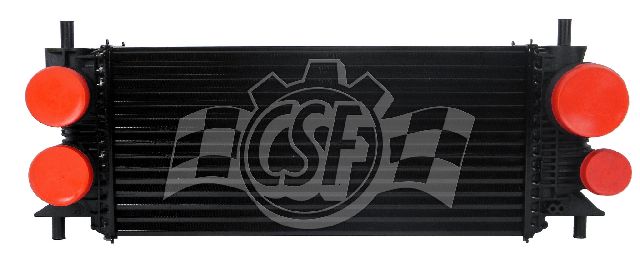
- Leaking Charge Air Cooler (Intercooler) or Hoses 🔴 High Probability The charge pipes and intercooler use plastic and rubber components that can become brittle and crack from heat cycles and vibration. Clamps can also loosen over time, allowing pressurized hoses to pop off, which is a very common failure point.
How to confirm: Visually inspect all hoses and the intercooler for obvious cracks or loose connections. A common failure is the large cold-side boot coming off the intercooler pipe. The most effective method is to perform a pressurized smoke test on the entire charge air system, which can reveal leaks that are not visible to the naked eye.
Typical fix: Tighten any loose clamps or replace the cracked hose, pipe, or intercooler assembly. Ensure all connections are fully seated.
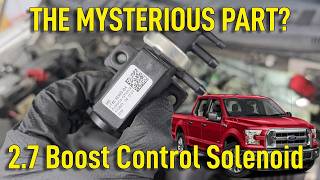
Est. part cost: $50-$400 - Faulty Turbocharger Wastegate Control Solenoid 🔴 High Probability This solenoid is located in a high-heat area of the engine bay, which can cause it to fail electrically or for its plastic housing to become brittle. It is a very common failure point and is often misidentified in parts catalogs as an 'EGR Solenoid' or 'Emission Check Valve', causing confusion.
How to confirm: Test the solenoid's function using a handheld vacuum pump to see if it correctly holds and releases vacuum when commanded. Check for voltage at the electrical connector. A faulty solenoid can cause erratic boost or a complete loss of boost control. Disconnect the solenoid and measure the resistance across its two pins; a typical reading should be between 10-40 Ohms.
Typical fix: Replace the wastegate control solenoid. The solenoid itself is relatively inexpensive, but Ford sometimes only lists it as part of a much more expensive vacuum hose assembly.
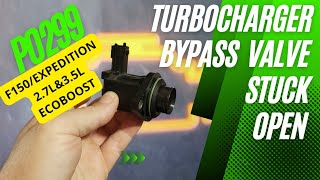
Est. part cost: $40-$100 for the solenoid, up to $1100+ for the full hose assembly. - Faulty Turbocharger Bypass Valve (BPV) 🟡 Medium Probability The BPV (also called a blow-off or diverter valve) uses a rubber diaphragm that can tear, or its internal piston can get stuck open due to debris or wear. This creates a constant path for boost pressure to escape when it should be sealed, directly causing an underboost condition.
How to confirm: Remove the valve from the intercooler (typically held by two small bolts). Inspect the orange diaphragm for tears or holes. Check if the piston is stuck in the open position. A torn diaphragm is a very common finding when diagnosing P0299/P1247. 🎬 Watch: How to diagnose and replace a faulty bypass valve
Typical fix: Replace the bypass valve assembly. Upgraded aftermarket valves are available.
Est. part cost: $50-$120 - Failed Turbocharger Wastegate Actuator(s) ⚪ Low Probability The vacuum diaphragms inside the actuators can rupture, preventing them from holding vacuum and keeping the wastegate closed to build boost. The linkage can also become disconnected or worn.
How to confirm: Apply vacuum to the actuator port with a handheld pump. It should hold vacuum and you should see the actuator rod move smoothly without binding. Check for excessive play in the linkage.
Typical fix: Replace the faulty wastegate actuator. On some models, this may only be serviceable by replacing the entire turbocharger assembly.
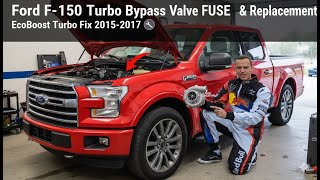
Est. part cost: $100-$500 - Blown Fuse ⚪ Low Probability An electrical short in the wastegate control circuit can blow the corresponding fuse, disabling boost control.
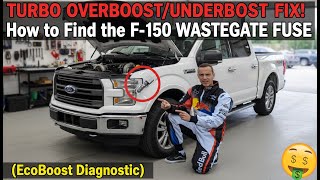
How to confirm: Locate the fuse for the wastegate control solenoid in the under-hood fuse box and check for continuity. A video guide suggests it is a 10-amp fuse. 🎬 Watch: How to locate and check the wastegate fuse
Typical fix: Replace the blown fuse. If it blows again, diagnose the circuit for a short to ground.
Est. part cost: $1-$5
Rare But Worth Checking
- Restricted Exhaust System: A clogged catalytic converter can create excessive backpressure, preventing the turbos from spooling up effectively. This is more likely on higher-mileage vehicles.
- Faulty Manifold Absolute Pressure (MAP) Sensor: The sensor itself can fail and send incorrect pressure readings to the PCM. While possible, it's less common than a mechanical or vacuum-related failure. One owner reported a bad boost pressure sensor (a type of MAP sensor) was the ultimate cause after intermittent issues.
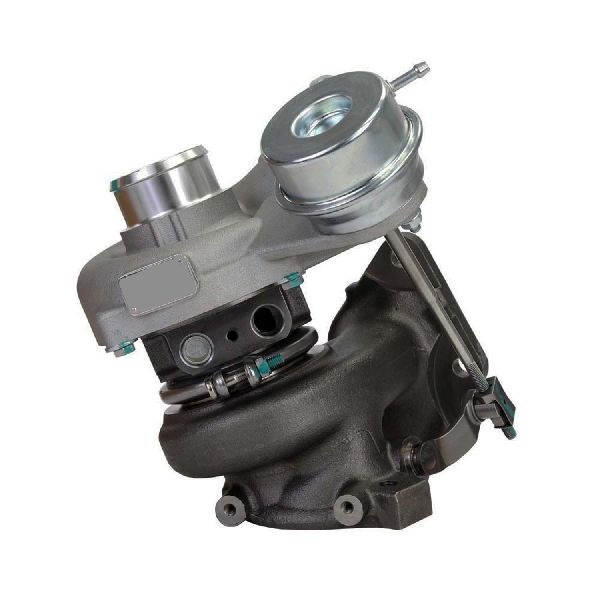
- Internal Turbocharger Failure: In some cases, the turbocharger itself may have failed internally, such as with damaged turbine fins or worn bearings. This is usually accompanied by noises like grinding or whining and should be considered only after all other possibilities are exhausted.
Diagnosis Steps
- Scan for any other accompanying trouble codes to get more context.
- Check the 10-amp fuse for the wastegate control circuit in the under-hood fuse box.
- Perform a thorough visual inspection of the entire air intake system. Look for disconnected hoses, loose clamps, or obvious cracks in the plastic and rubber pipes between the air filter, turbos, intercooler, and throttle body. Pay close attention to the large boot on the cold side of the intercooler.
- If no visual leaks are found, perform a pressurized smoke test on the charge air system to pinpoint hard-to-see leaks.
- Remove and inspect the turbocharger bypass valve (BPV) on the intercooler for a torn orange diaphragm or a stuck-open piston.
- Test the wastegate control solenoid (Part No. JT4Z-9E882-A). Disconnect its vacuum lines and use a vacuum pump to ensure it holds vacuum and then releases it when energized. Check for ~12V at the connector with the key on. Measure the solenoid's internal resistance; it should be between 10-40 Ohms.
- Test both turbocharger wastegate actuators. Apply vacuum directly to each actuator and verify that they hold vacuum and that the actuator rod moves its full range of motion without sticking.
- If all control components and plumbing are intact, inspect the turbochargers for excessive shaft play or physical damage to the compressor/turbine wheels.
- As a final step, consider testing the MAP/boost pressure sensors and checking for a restriction in the exhaust system, such as a clogged catalytic converter.
Parts You'll Likely Need
- Turbocharger Wastegate Control Solenoid
(OEM #JT4Z-9E882-A)— This is a very common failure point due to heat exposure. It controls the entire wastegate system, and its failure directly leads to a low boost condition. It is frequently mislabeled as an 'EGR Solenoid' in parts catalogs.
Trusted brands: Motorcraft, Dorman
OEM price range: $60-$100
Aftermarket price range: $30-$70 - Turbocharger Bypass Valve
(OEM #FL3Z-9U465-A)— The diaphragm inside this valve is prone to tearing, creating a significant boost leak. This is a well-documented cause for P0299/P1247 codes.
Trusted brands: Motorcraft, GFB (Go Fast Bits)
OEM price range: $70-$110
Aftermarket price range: $40-$90 - Charge Air Cooler Hose/Clamps — Hoses can pop off under boost if clamps are loose, or the plastic/rubber material can crack with age, causing a major leak and an immediate P1247 or P0299 code.
Related Codes That Often Appear With This One
- P0299 — P0299 is the generic SAE code for 'Turbocharger Underboost Condition'. P1247 is the Ford-specific equivalent, and they often point to the same set of underlying problems. Owners frequently report P0299 for this issue.
- P1015 / P1016 — These codes relate to 'Wastegate Control Pressure' being higher or lower than expected and point directly to issues with the wastegate control solenoid, vacuum lines, or actuators.
Technical Service Bulletins (TSBs) & Recalls
- TSB 23-2083 (supersedes 19-2205): Details the procedure for replacing the leaking RTV-sealed oil pan on 2015-2017 F-150s with an updated design.
- TSB 19-2188: Addresses excessive white or blue exhaust smoke at startup on 2015-2017 2.7L models, potentially due to oil entering the turbocharger.
- TSB 19-2219: Pertains to oil pan leaks on platform mates like the 2015-2017 Edge and 2016-2017 MKX with the 2.7L engine.
- TSB 24-2345: Also addresses oil pan leaks on the 2.7L/3.0L engines in the Edge, MKX, Fusion, and Continental.
Platform-Specific Known Issues
- TSB 19-2188 addresses excessive white or blue smoke from the exhaust on 2015-2017 models with the 2.7L engine, which may be caused by oil entering the left-hand turbocharger. This indicates a potential for turbo seal failure which can affect performance.
Mechanic-Grade Diagnostic Values
- Turbocharger Wastegate Control Solenoid Resistance — expected: 10 - 40 Ohms. Failure: A reading of 'OL' (Over Limit/infinite resistance) or near-zero Ohms indicates a failed solenoid.
- Manifold Gauge Pressure (MGP) PID via Scan Tool (e.g., FORScan) — expected: Should closely track the 'Desired Boost' PID under acceleration.. Failure: If MGP is consistently 4 psi or more below the desired value for over 5 seconds under load, it confirms the underboost condition the PCM is detecting.
- Wastegate Control Solenoid Connector Voltage (Key On, Engine Off) — expected: Approximately 12V (Battery Voltage) at the power supply pin.. Failure: No voltage or significantly low voltage points to a wiring harness, fuse, or PCM power supply issue, not the solenoid itself.
Scan Tool Commands That Help
- FORScan / Ford IDS: Monitor PIDs: 'TCBP' (Turbocharger Boost Pressure), 'TCBP_DSD' (Desired Boost Pressure), and 'TCWG' (Turbocharger Wastegate Solenoid %) — During a test drive, monitoring these values in real-time is the most effective way to confirm an underboost condition. Comparing the actual boost (TCBP) to the desired boost (TCBP_DSD) will show the performance gap. The wastegate duty cycle (TCWG) will show if the PCM is commanding the wastegate closed (high percentage) to build boost, helping differentiate a control problem from a mechanical leak.
- Ford IDS (or advanced bidirectional scanner): Wastegate Solenoid On/Off Command — When the vehicle is stationary (engine off, key on), this command allows the technician to manually energize and de-energize the wastegate control solenoid. You should hear an audible click from the solenoid, and if vacuum gauges are connected, you can verify it is correctly routing vacuum. This directly tests the solenoid's electrical and mechanical function.
Wiring & Ground Locations
- PCM Grounds — On the firewall in the engine compartment. There may be one or two ground studs depending on the specific model year and engine configuration.. The Powertrain Control Module (PCM) controls the wastegate solenoid. A poor ground connection at the PCM can cause erratic behavior in its output drivers, potentially leading to incorrect wastegate control and underboost codes.
- Main Battery Ground — In the engine bay, just in front of the washer fluid reservoir.. While less direct, a compromised main ground can introduce electrical noise and voltage drops throughout the vehicle's systems, potentially affecting sensor readings and actuator performance related to the turbo system.
- BCM Ground — Inside the cab, on the passenger side, near the Body Control Module (BCM) and fuse panel.. This is a primary grounding point inside the cab. While not directly tied to the engine controller for this code, it's a known location that owners often use for accessories. Ensuring it is clean and tight is good practice to prevent unrelated electrical issues.
Real Owner Repair Stories
- YouTube user 'Truck Stuff' (2015-2017 (exact year not specified) Ford F-150 2.7L EcoBoost) — Sudden loss of power, orange wrench light, Check Engine Light with code P0299 (functionally identical to P1247), and an audible 'rushing air' sound.
❌ Tried (didn't work) Visual inspection of the turbochargers and upper engine bay hoses revealed no obvious issues.
✅ What actually fixed it Upon inspecting the intercooler, the large hose on the driver's side was found to be almost completely disconnected from the intercooler pipe. The hose clamp was noted to be very loose. The fix was to reposition the hose and securely tighten the clamp. - Ford F150 Forum user 'Barry_Vee' (2011 3.5L EcoBoost (similar system, relevant diagnosis)) — Intermittent underboost soft code, which eventually became a hard fault.
❌ Tried (didn't work) Initial dealership diagnosis could not find the problem when the issue was intermittent.
✅ What actually fixed it The issue was a failed boost pressure sensor (MAP sensor) and its wiring connector. The wiring harness had a tight bend at the connector, likely contributing to the failure. Replacing the sensor and connector resolved the underboost code. - Ford F150 Forum user (2016 2.7L EcoBoost) — P0299 code, wrench light, and limp mode, particularly when going uphill under load. The problem could be temporarily cleared by performing a throttle calibration reset.
❌ Tried (didn't work) Dealer diagnosed a possible sticking wastegate and recommended replacing both turbos for over $4,000., Visually checked all hoses., Manually moved the wastegate arm to check for binding.
✅ What actually fixed it The user suspected an electrical issue, like a bad throttle body or wastegate solenoid, because resetting the throttle calibration temporarily fixed the issue. While the final fix was not posted, this story is a classic example of misdiagnosing an electrical or control issue as a major mechanical failure.
"I Checked Everything" — The Actual Cause
- In some cases, a smoke test may not reveal a leak if the leak only opens under high boost pressure. A more common scenario for a 'clean' test result followed by a fix is a faulty electronic component. For example, a failing boost pressure (MAP) sensor can report low pressure to the PCM even when the mechanical system is holding pressure perfectly. Another possibility is a failing wastegate control solenoid that passes a static resistance test but fails intermittently under heat and load, or a wastegate actuator diaphragm that holds vacuum at rest but leaks under the dynamic stresses of engine operation.
OEM Part Supersession History
FL3Z-9E882-B→JT4Z-9E882-A— Standard part revision by the manufacturer, likely for improved durability or material changes.
Heads up: The new part number (JT4Z-9E882-A) is the correct service replacement for the original. No incompatibility is noted.
Model Year Variations Within This Range
- 2015-2017: This entire range uses the first-generation 2.7L EcoBoost engine, which features direct injection only. The second-generation engine, introduced in 2018, added a port fuel injection system and made other changes, but the fundamental vacuum-controlled twin-turbo architecture relevant to P1247 remains similar.
Diagnostic Flowchart
Other Known Issues on This Vehicle
Issues unrelated to this code that are worth knowing about as an owner of this generation:
- Leaking Composite Oil Pan 🔴 High — Very common on 2015-2017 models. The original plastic/composite pan and RTV sealant are prone to leaking over time due to heat cycles. (Ref: TSB 23-2083 (supersedes TSB 19-2205) outlines the repair, which involves replacing the original pan with an updated version.)
- Intake Valve Carbon Buildup 🟠 Medium — Common to all direct-injection engines, including the first-generation 2.7L EcoBoost. Can lead to reduced performance and misfires over 80,000-100,000 miles. The 2nd-gen (2018+) engine added port injection to mitigate this.
- Valve Guide Defects / Excessive Oil Consumption 🔴 High — Affects a specific range of engines built from April 2016 to January 2017. Defective valve guides can lead to significant oil consumption (e.g., a quart every 3,000 miles). (Ref: TSB 19-2188 addresses symptoms of oil entering the turbocharger, which can be related to this issue.)
- White/Blue Smoke on Cold Start 🟠 Medium — Reported by numerous owners of 2015-2017 models. Often caused by oil pooling in the turbocharger housing and burning off at startup. (Ref: TSB 19-2188 specifically addresses this symptom, noting that oil may be entering the left-hand turbocharger turbine housing.)
Used vs. New Parts: Buying Guide for This Vehicle
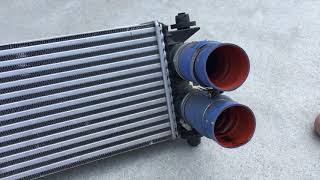
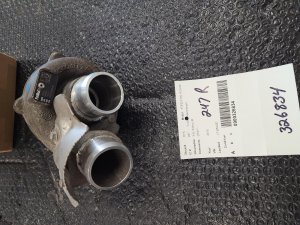
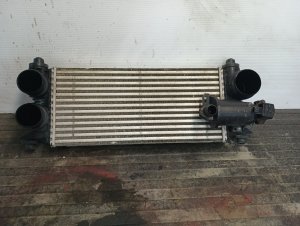
When a used part is the smart pick: For larger, more expensive hard parts like a complete intercooler assembly or potentially the turbocharger assemblies themselves, a used part from a low-mileage, reputable salvage yard can offer significant savings. These parts are generally robust unless physically damaged.
Donor-vehicle mileage cap: roughly under 60000 miles for the part to have meaningful remaining life.
What to inspect on the donor part:
- For an intercooler: Inspect for any bent fins, cracks in the plastic end tanks, or signs of oil saturation inside, which could indicate a major engine issue on the donor vehicle.
- For a turbocharger: Check for zero in-and-out (axial) shaft play and minimal side-to-side (radial) play. Spin the compressor wheel by hand; it should spin freely with no grinding or scraping noises. Inspect the compressor and turbine wheels for any chipped or bent fins.
- Verify the donor vehicle was not in a severe front-end collision that could have damaged these components.
OEM-only on this vehicle (don't cheap out):
- Sensors (MAP/Boost Sensor): Aftermarket sensors can have different voltage scaling, leading to incorrect readings and persistent codes. Using Motorcraft sensors is highly recommended.
- Wastegate Control Solenoid: While some aftermarket brands work, the OEM Motorcraft part (JT4Z-9E882-A) is proven reliable and not significantly more expensive, making it a safer bet to avoid repeat repairs.
Aftermarket brands forum-validated for this vehicle:
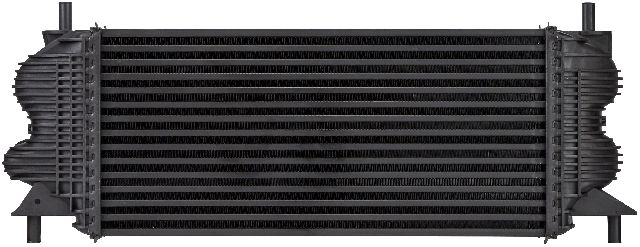
- GFB (Go Fast Bits): Offers an upgraded replacement for the factory electronic bypass valve (BPV), known as the DV+, which is popular in the enthusiast community for its durability compared to the stock diaphragm-based valve.
Brands owners have reported issues with on this vehicle:
- Unbranded/white-box charge pipes and hoses from online marketplaces. These often use inferior materials and poor-quality clamps that can fail under boost, leading to a repeat of the original problem.
Real Owner Stories
Aggregated from forums and TSBs cited above. Mileages and costs reflect what owners reported in those sources.
2015 Ford F-150 2.7L EcoBoost
Symptoms: Experienced a 'rushing air' sound and significant power loss during acceleration.
What fixed it: The issue was a disconnected cold-side intercooler boot.
Source hint: https://www.f150forum.com/f118/p0299-under-boost-2-7l-fix-486340/
2015 Ford F-150 2.7L EcoBoost
Symptoms: Underboost condition occurring specifically while towing.
What fixed it: Replacing a faulty boost pressure sensor.
Source hint: https://www.f150forum.com/f118/2015-2-7-p0299-underboost-while-towing-527508/
2017 Ford F-150 2.7L EcoBoost
Symptoms: Difficulty identifying the correct replacement part for a turbo control issue due to mislabeling in the parts system.
What fixed it: Confirmed the correct part is the wastegate control solenoid, often mislabeled as an 'EGR solenoid'.
Source hint: https://www.f150forum.com/f118/2017-2-7-turbo-bypass-solenoid-needed-538600/
Related OBD-II Codes
Frequently Asked Questions
I'm seeing white or blue smoke from my 2015-2017 F-150 2.7L at startup; is this related to my turbo issues?
I can't find the 'Wastegate Control Solenoid' in the Ford parts catalog for my 2.7L EcoBoost. What should I look for?
Is there a specific fuse I should check for boost control issues on my F-150?
My 2016 F-150 2.7L has an oil leak; could this be related to the TSBs mentioned for the Edge or MKX?
What is the most common physical failure point for a 'rushing air' sound during acceleration on the 2.7L?
Can I test the Turbocharger Bypass Valve (BPV) myself?
Helpful Videos
Used OEM Parts in Stock



New Aftermarket Parts Available


The information in this article is provided for general reference and educational purposes only. Vehicle specifications, procedures, and part compatibility can vary by production date, trim level, and region. Always consult your vehicle's factory service manual and verify part numbers before purchasing or performing repairs. Safety-critical components such as airbags, seat belts, and braking systems should be installed by a qualified professional.
- Ford F-150:
- 🎬 Helpful Videos
- 🛍️ Shop This Part
- What's Unique About the 2015-2017 Ford F-150
- Symptoms You May Notice
- Most Likely Causes
- Rare But Worth Checking
- Diagnosis Steps
- Parts You'll Likely Need
- Related Codes That Often Appear With This One
- Technical Service Bulletins (TSBs) & Recalls
- Platform-Specific Known Issues
- Mechanic-Grade Diagnostic Values
- Scan Tool Commands That Help
- Wiring & Ground Locations
- Real Owner Repair Stories
- "I Checked Everything" — The Actual Cause
- OEM Part Supersession History
- Model Year Variations Within This Range
- Diagnostic Flowchart
- Other Known Issues on This Vehicle
- Used vs. New Parts: Buying Guide for This Vehicle
- Real Owner Stories
- 2015 Ford F-150 2.7L EcoBoost
- 2015 Ford F-150 2.7L EcoBoost
- 2017 Ford F-150 2.7L EcoBoost
- Related OBD-II Codes
- Frequently Asked Questions
- 🎟️ Get 5% Off