

P1115 on 2014 Chrysler 300: Understanding General Temperature Rationality
On a 2014 Chrysler 300, code P1115 is most often caused by a software glitch in the engine's computer (PCM). The official fix is a software update performed by a dealer, as outlined in Technical Service Bulletin #18-094-16. This code is often accompanied by EVAP system codes P0456 and P0441, which are also symptoms of the same software issue and should not be diagnosed separately.
- P1115 on a 2014 Chrysler 300 means the engine computer sees a conflict between its temperature sensors.
- The most probable cause is a software glitch in the PCM, especially if codes P0456, P0441, and P2610 are also present.
- The official fix is a dealer-installed software update outlined in TSB #18-094-16.
- Do not replace temperature sensors or EVAP system parts before confirming the TSB has been performed, as this is a common and costly misdiagnosis.
What's Unique About the 2014-2014 Chrysler 300
For this specific vehicle and its platform mates (Dodge Charger, Challenger), the P1115 code is strongly linked to a known software issue rather than a failed hardware component. Chrysler issued Technical Service Bulletin #18-094-16 acknowledging that the PCM's software could incorrectly trigger this code, along with several unrelated EVAP system codes (P0456, P0441) and a timer performance code (P2610). This is a key distinction, as owners might otherwise waste money replacing sensors or EVAP components that are working perfectly.
Diagnostic Flowchart
Tap your situation to follow the diagnostic path that matches what you're seeing on this vehicle.
Symptoms You May Notice
- Check Engine Light illuminated
- Multiple codes stored simultaneously (P1115, P0456, P0441, P2610)
- Possible incorrect readings on the engine temperature gauge
- Potential for cooling fans to run continuously or not at all
- May fail an emissions test
- Replacing temperature sensors when the actual root cause is the PCM software needing an update.
- Addressing the accompanying EVAP codes (P0456, P0441) by replacing the purge valve, gas cap, or leak detection pump, without realizing they are also symptoms of the PCM software issue mentioned in TSB 18-094-16.
Most Likely Causes
- Powertrain Control Module (PCM) Software Requires Update 🔴 High Probability Manufacturer TSB #18-094-16 explicitly identifies a software logic issue that causes this code to be set erroneously, often with other codes like P0456, P0441, and P2610.
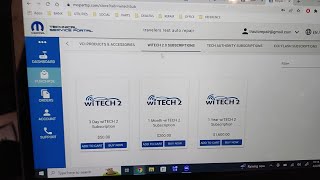
How to confirm: A Chrysler dealer or a properly equipped independent shop can check the vehicle's VIN against open service bulletins. They can also connect a wiTECH tool to see the current software calibration ID and determine if the update from TSB 18-094-16 has been applied.
Typical fix: Reprogramming the PCM with the updated software using a wiTECH scan tool. 🎬 Watch: See how a technician programs a Chrysler PCM using wiTECH. This is a service that typically takes less than one hour of labor.
Est. part cost: $0 - Faulty Engine Coolant Temperature (ECT) Sensor 🟡 Medium Probability While less likely than the software issue for this specific group of codes, sensors can fail over time, providing incorrect data that triggers the rationality check. A sensor failure would typically set a sensor-specific code (like P0117 or P0118) but can sometimes trigger the P1115 rationality code first.
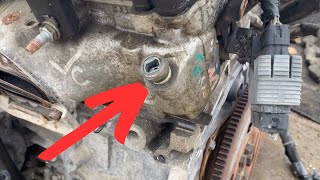
How to confirm: Use a scan tool to monitor live data from the ECT sensor. On a cold engine, its reading should be very close to the Intake and Ambient Air Temperature readings. If it's significantly different, the sensor is likely faulty. The ECT sensor on the 3.6L V6 is located on the passenger side, at the front of the cylinder head. 🎬 See this walkthrough for locating and replacing the ECT sensor.
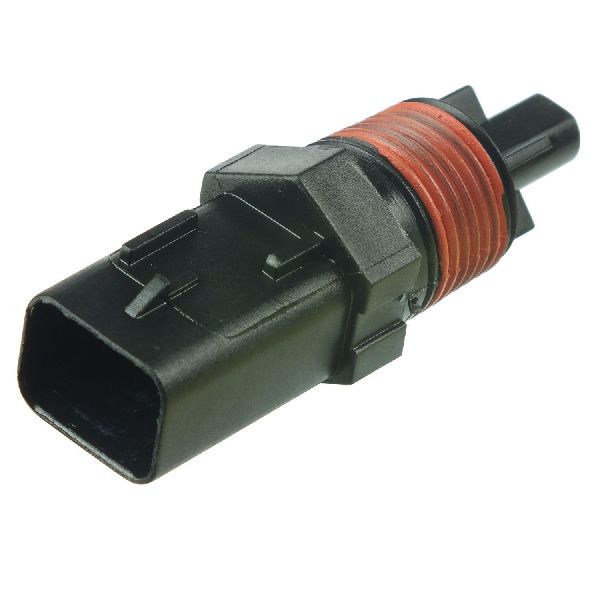
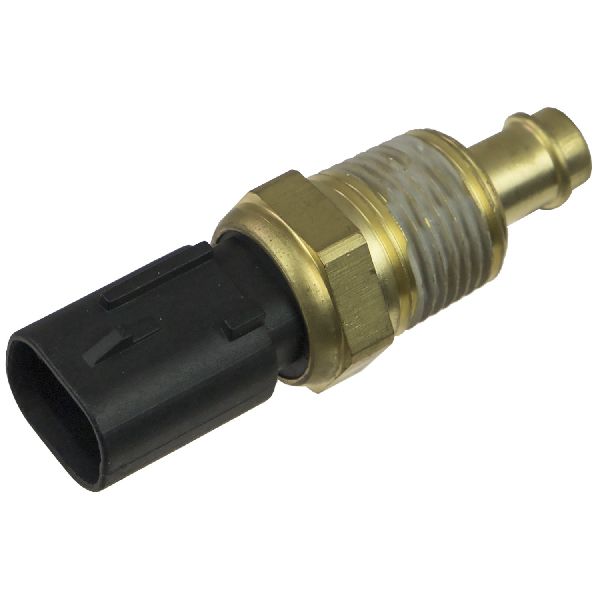
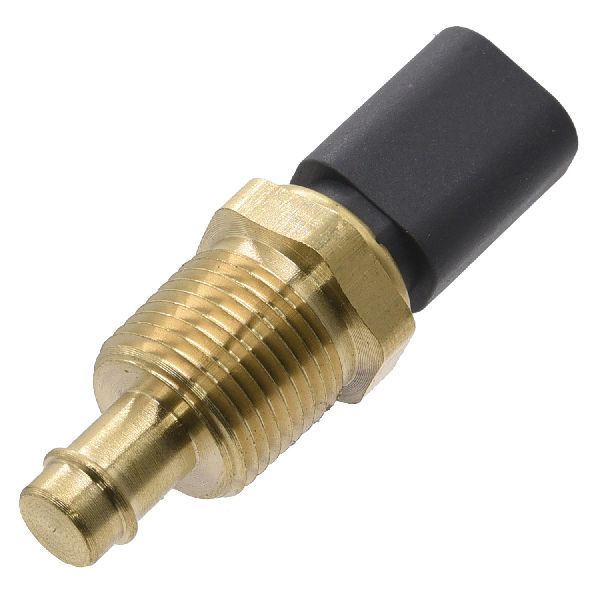
Typical fix: Replace the ECT sensor and top off any lost coolant. The Mopar OEM part number is 5149077AB (which supersedes 5149096ab).
Est. part cost: $20-$50 - Faulty Ambient Air Temperature (AAT) Sensor ⚪ Low Probability The AAT sensor is located at the front of the vehicle, making it susceptible to damage from road debris or minor front-end impacts. Its failure is less common than the ECT sensor or the TSB issue.
How to confirm: Check live data with a scan tool. The AAT reading should match the actual outside temperature displayed on the dashboard or a weather app. If it's stuck on an erroneous value (e.g., -40°F), the sensor or its wiring is the problem.
Typical fix: Replace the Ambient Air Temperature sensor.
Est. part cost: $15-$40 - Wiring or Connector Issue ⚪ Low Probability Engine bay heat and vibrations can cause wiring to become brittle or connectors to loosen over time, particularly at the ECT sensor connector.
How to confirm: Visually inspect the wiring and connectors for the ECT, IAT, and AAT sensors for any signs of corrosion, damage, or loose pins. A 'wiggle test' on the harness while watching live sensor data can help identify intermittent connections.
Typical fix: Repair the damaged section of the wiring harness or clean/replace the faulty connector.
Est. part cost: $5-$100
Diagnosis Steps
- Check for Technical Service Bulletins (TSBs). The absolute first step for this specific code on this vehicle is to determine if TSB #18-094-16 applies and has been performed. This can save significant time and money.
- Connect a capable OBD-II scanner and check for any other stored codes. Note the presence of P0456, P0441, or P2610, as this strongly points to the TSB being the root cause.
- With the engine completely cold (off for several hours), view the live data streams for the Engine Coolant Temperature (ECT), Intake Air Temperature (IAT), and Ambient Air Temperature (AAT) sensors. All three should read within a few degrees of each other.
- If one sensor provides a reading that is drastically different from the other two, that sensor's circuit is the primary suspect. For example, if IAT and AAT are 75°F and ECT is 180°F on a cold engine, the ECT circuit is faulty.
- Visually inspect the wiring and connector for the suspect sensor. For the 3.6L V6, the ECT sensor is at the front of the engine on the passenger side cylinder head. Check for any signs of damage, corrosion, or looseness.
- If the wiring appears intact, test the sensor itself, typically by measuring its resistance and comparing it to the manufacturer's specifications for a given temperature.
- If all sensors and wiring test correctly, the cause is almost certainly the PCM software. The vehicle should be taken to a dealer or qualified shop for the software update per TSB #18-094-16.
Parts You'll Likely Need
- PCM Software Update (Service)
(OEM #TSB 18-094-16)— This is not a physical part, but a service to correct the faulty logic in the PCM, which is the most common cause documented by the manufacturer for the simultaneous appearance of P1115, P0456, and P0441.
Trusted brands: Chrysler/Mopar Dealer Service
OEM price range: $150-$250
Aftermarket price range: N/A - Engine Coolant Temperature Sensor
(OEM #5149077AB)— If a physical part has failed and the TSB does not apply or has already been performed, the ECT sensor is a common culprit for temperature-related codes.
Trusted brands: Mopar, Delphi, Standard Motor Products (SMP)
OEM price range: $35-$60
Aftermarket price range: $20-$40
Related Codes That Often Appear With This One
- P0456 — EVAP System Small Leak - TSB #18-094-16 indicates this code is often set in error along with P1115 due to the same PCM software glitch.
- P0441 — EVAP Purge System Performance - Also mentioned in TSB #18-094-16 as being falsely triggered by the PCM software issue.
- P2610 — PCM Internal Engine Off Timer Performance - Another code identified in TSB #18-094-16 that can be caused by the software problem.
Technical Service Bulletins (TSBs) & Recalls
- 18-094-16: Addresses a Malfunction Indicator Lamp (MIL) illumination where P1115, P0456, P0441, and P2610 may be set. The fix is a PCM software update. This TSB applies to 2014 Chrysler 300, Dodge Charger, and Dodge Challenger models.
Platform-Specific Known Issues
- TSB #18-094-16 documents an issue where the PCM software can incorrectly set P1115 along with EVAP codes P0456 and P0441, and timer code P2610. The prescribed fix is a PCM reflash.
- Owner experiences shared on forums for the Chrysler 300 and its platform mate, the Dodge Charger, confirm this pattern. A common story involves owners first replacing the gas cap or purge valve for the EVAP codes, only to find the issue persists until the PCM is updated by the dealer.
Mechanic-Grade Diagnostic Values
- Engine Coolant Temperature (ECT) Sensor Resistance — expected: As a Negative Temperature Coefficient (NTC) sensor, resistance is high when cold and low when hot. Typical values are: ~2000-3000 Ω at 20°C (68°F) and ~200-300 Ω at 90°C (194°F).. Failure: A reading that is open (infinite resistance), shorted (zero resistance), or does not change smoothly as the sensor is heated/cooled indicates a faulty sensor.
- ECT Sensor Voltage (Signal Wire) — expected: With key-on, engine-off, the voltage should be high when the engine is cold (typically 2.0V - 3.0V) and decrease as the engine warms up to operating temperature (typically around 0.5V).. Failure: Voltage that is stuck high (e.g., 5V) or low (0V), or does not correspond to the actual engine temperature, points to a wiring or sensor issue.
Hidden / Shadow Codes Worth Checking
- Mode $06 Data: While not a specific 'shadow code', Mode $06 provides access to the raw results of the PCM's self-tests for non-continuous monitors before a fault matures into a code like P1115. A technician can view the test values for temperature sensor rationality checks to see if a component is borderline failing, even if the Check Engine Light is not yet on for that specific test. (see via A professional scan tool with Mode $06 capability is required. The technician would navigate to the on-board monitor test results and look for Test IDs (TIDs) and Component IDs (CIDs) related to the temperature monitoring systems.)
Scan Tool Commands That Help
- wiTECH: PCM Reprogram/Flash — This is the primary repair procedure when P1115 is present with P0456, P0441, and P2610, as specified by TSB #18-094-16. It updates the faulty software logic in the Powertrain Control Module.
- wiTECH or capable professional scanner: Cooling Fan Actuator Test — If there are symptoms of cooling fans running constantly or not at all, this bidirectional command allows the technician to manually turn the fans on and off. This isolates the problem: if the fans respond to the command, the fan, relay, and wiring are likely good, pointing the diagnosis back towards the sensor inputs or the PCM.
Wiring & Ground Locations
- ECT Sensor Connector — Connects to the ECT sensor. It is a 2-terminal oval-shaped connector. One pin is the 5-volt reference from the PCM, the other is the signal return to the PCM.. This connector is a common failure point due to engine heat and vibration. Corrosion, backed-out pins, or damaged wires here will cause incorrect temperature readings, directly leading to a P1115 code.
- G901a — A primary ground point located in the left front of the engine compartment.. A poor engine or chassis ground can create a floating reference for sensors, causing erratic voltage readings. Ensuring this and other main grounds are clean and tight is a crucial step in diagnosing any electrical fault, including sensor rationality codes.
- G703 — A ground point located in the right rear of the engine compartment.. Similar to other grounds, this point provides a reference for various electronic components. A compromised connection here can lead to unpredictable sensor behavior that the PCM may interpret as a rationality failure.
Real Owner Repair Stories
- Common pattern reported on forums like 300cforums.com and chargerforums.com (2014 Chrysler 300 or Dodge Charger with 3.6L V6) — Check Engine Light on with codes P1115, P0456 (EVAP Small Leak), and often P0441 and P2610.
❌ Tried (didn't work) Replacing the gas cap to fix the P0456 code., Replacing the EVAP purge valve solenoid., Performing a smoke test on the EVAP system, which showed no leaks.
✅ What actually fixed it The owner took the vehicle to a Chrysler dealership, where the technician performed the software update for the Powertrain Control Module (PCM) as specified in TSB #18-094-16. This single action cleared all the codes permanently.
"I Checked Everything" — The Actual Cause
- A very common scenario for this vehicle is the appearance of P1115 alongside the EVAP code P0456. Mechanics following standard procedure for P0456 will perform a smoke test to find the 'small leak'. The test often comes back clean, with no leaks found in the EVAP system. The actual root cause is not an EVAP leak, but the PCM software glitch described in TSB #18-094-16, which falsely triggers both the P0456 and P1115 codes simultaneously.
OEM Part Supersession History
5149096ab→5149077AB— Standard part revision and consolidation by the manufacturer.
Heads up: None. Part 5149077AB is the correct and current replacement for the ECT sensor and is used across a wide range of FCA vehicles.
Helpful Videos
Used OEM Parts in Stock


New Aftermarket Parts Available


The information in this article is provided for general reference and educational purposes only. Vehicle specifications, procedures, and part compatibility can vary by production date, trim level, and region. Always consult your vehicle's factory service manual and verify part numbers before purchasing or performing repairs. Safety-critical components such as airbags, seat belts, and braking systems should be installed by a qualified professional.
- Chrysler 300:
- 🎬 Helpful Videos
- 🛍️ Shop This Part
- What's Unique About the 2014-2014 Chrysler 300
- Diagnostic Flowchart
- Symptoms You May Notice
- Most Likely Causes
- Diagnosis Steps
- Parts You'll Likely Need
- Related Codes That Often Appear With This One
- Technical Service Bulletins (TSBs) & Recalls
- Platform-Specific Known Issues
- Mechanic-Grade Diagnostic Values
- Hidden / Shadow Codes Worth Checking
- Scan Tool Commands That Help
- Wiring & Ground Locations
- Real Owner Repair Stories
- "I Checked Everything" — The Actual Cause
- OEM Part Supersession History
- 🎟️ Get 5% Off