

P1107 on 2017-2020 Hyundai Elantra 2.0L: MAP Sensor Circuit Low Fixes
This code almost always points to a faulty Manifold Absolute Pressure (MAP) sensor. It's a simple, DIY-friendly fix that usually takes less than 30 minutes. Expect to pay between $40 for an aftermarket sensor and $90 for an OEM part.
- P1107 on your 2017-2020 Elantra points directly to a problem with the MAP sensor or its wiring.
- The most likely fix is replacing the MAP sensor, a task most DIYers can complete in under 30 minutes with a 10mm socket.
- Before buying a new sensor, always check its electrical connector and nearby wiring for any visible damage.
- Ignoring this code can lead to poor performance, bad gas mileage, and potential long-term damage to your catalytic converter.
What's Unique About the 2017-2020 Hyundai Elantra
For the sixth-generation (AD) Elantra with the 2.0L Nu engine, the P1107 code is a straightforward issue. This powertrain is shared with other Hyundai/Kia models, and the MAP sensor is a common failure point due to normal electronic wear over time. Unlike some other manufacturers where this code points to complex wiring issues or internal computer faults, on this Elantra, the problem is overwhelmingly the sensor itself. A key feature of this platform is that the Intake Air Temperature (IAT) sensor is integrated into the MAP sensor assembly, so a failure of one component requires replacing the entire unit.
Symptoms You May Notice
- Check Engine Light is on
- Rough or erratic idle
- Poor fuel economy
- Hesitation or lack of power during acceleration
- Black smoke from the exhaust, indicating a rich fuel mixture
- Possible engine stalling, especially when coming to a stop
- Engine knocking or pinging
- Replacing spark plugs or ignition coils to fix a rough idle without first checking for diagnostic trouble codes.
- Cleaning the throttle body, which is unlikely to resolve a specific MAP sensor circuit voltage code.
Most Likely Causes
- Faulty Manifold Absolute Pressure (MAP) Sensor 🔴 High Probability The sensor is a common electronic failure item on this and related Hyundai/Kia powertrains. The integrated IAT/MAP design means a failure in either the pressure sensor or the temperature thermistor will condemn the entire unit.
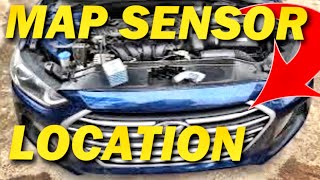
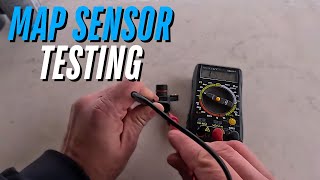
How to confirm: Using a scan tool, check the MAP sensor voltage with the Key On, Engine Off (KOEO). It should be around 4.5-5.0V, reflecting atmospheric pressure. At idle, it should drop to 1.0-2.0V. If the voltage is stuck below 0.5V in either state, the sensor has failed. 🎬 Watch: How to test a MAP sensor with a multimeter Visually, the sensor is located on the front of the plastic intake manifold and can be accessed by reaching under the upper radiator hose. 🎬 See this video to locate the MAP sensor on your engine
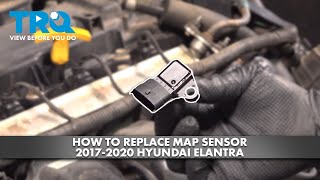
Typical fix: Replace the MAP sensor. It is located on the intake manifold and secured with a single 10mm bolt. 🎬 Watch: How to replace the MAP sensor on your Elantra
Est. part cost: $40-$90 - Damaged Wiring or Loose Connector 🟡 Medium Probability Engine vibration and heat can cause wires to fray or pins in the connector to become loose over time. The connector (C414) is a 4-pin connector providing 5V reference, ground, MAP signal, and IAT signal.
How to confirm: Visually inspect the wiring harness and connector going to the MAP sensor for any signs of damage, corrosion, or pushed-out pins. The connector tab can be stiff and may require a pick tool to release. With the engine running, gently wiggle the connector and wiring to see if it causes a change in engine behavior or the live data reading on a scan tool. With the key on and connector unplugged, use a multimeter to verify you have a 5V reference and a good ground at the connector pins.
Typical fix: Repair the damaged section of wiring or replace the connector pigtail.
Est. part cost: $15-$30
Rare But Worth Checking
- Vacuum Leak: A significant vacuum leak from a cracked hose connected to the intake manifold could potentially cause erratic pressure readings, though it would typically be accompanied by other codes.
- Faulty Powertrain Control Module (PCM): This is extremely rare. The PCM should only be considered after all other possibilities, including the sensor and its entire circuit, have been exhaustively tested and ruled out.
- Clogged or Dirty MAP Sensor Port: In some cases, oil vapor or carbon buildup can clog the small port on the intake manifold where the sensor reads pressure. Before replacing the sensor, it's worth checking if the port is clear. Some owners have had success cleaning the sensor itself with Mass Air Flow sensor cleaner.
Diagnosis Steps
- Connect an OBD-II scanner and confirm P1107 is the primary code. Note any other codes present, especially P0107, P0106, or IAT-related codes like P0113.
- Using the scanner's live data function, monitor the MAP sensor voltage with the Key On, Engine Off (KOEO). The reading should be high, approximately 4.5-5.0 volts (reflecting atmospheric pressure).
- Start the engine. At a stable idle, the MAP sensor voltage should drop significantly, typically to between 1.0 and 2.0 volts.
- If the voltage is stuck below 0.5V in both KOEO and idle states, the sensor or its circuit is faulty.
- Turn the engine off. Locate the MAP sensor on the top of the intake manifold.
- Visually inspect the sensor's electrical connector and wiring harness for any obvious damage, corrosion, loose pins, or signs of melting. Use a pick tool if needed to release the stubborn connector tab.
- If wiring looks good, disconnect the sensor. With the key on, use a multimeter to probe the connector terminals. Confirm you have a 5-volt reference and a good ground.
- If the wiring and power/ground are confirmed good and the live data points to a sensor failure, replace the MAP sensor.
- After replacement, clear the code with the scanner and take the vehicle for a test drive to ensure the code does not return.
Parts You'll Likely Need
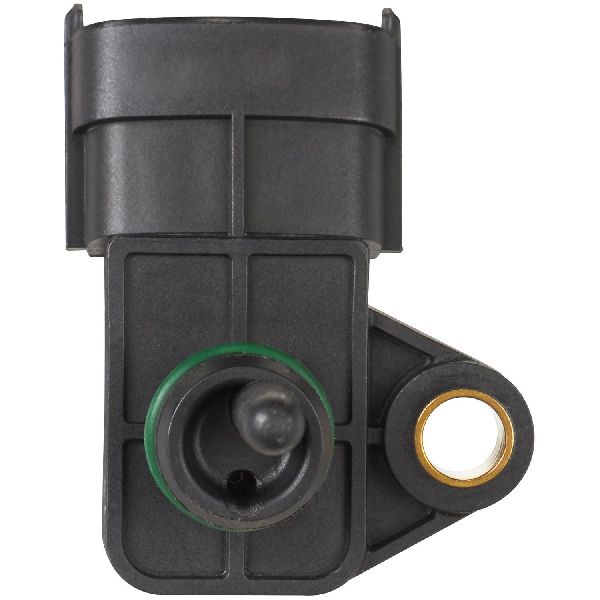
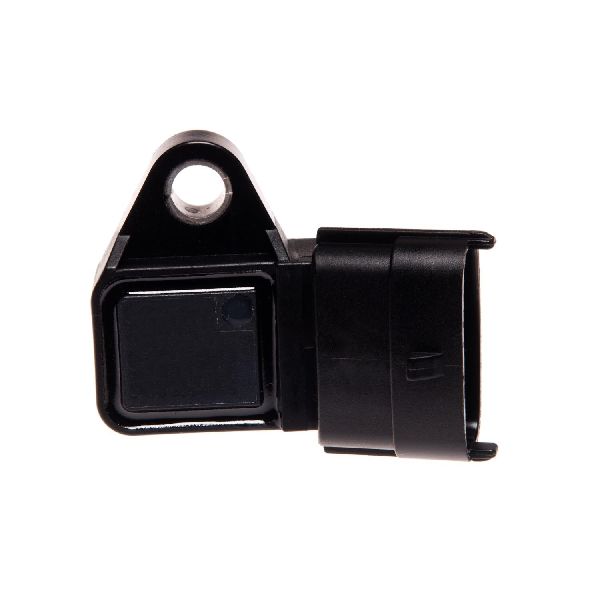
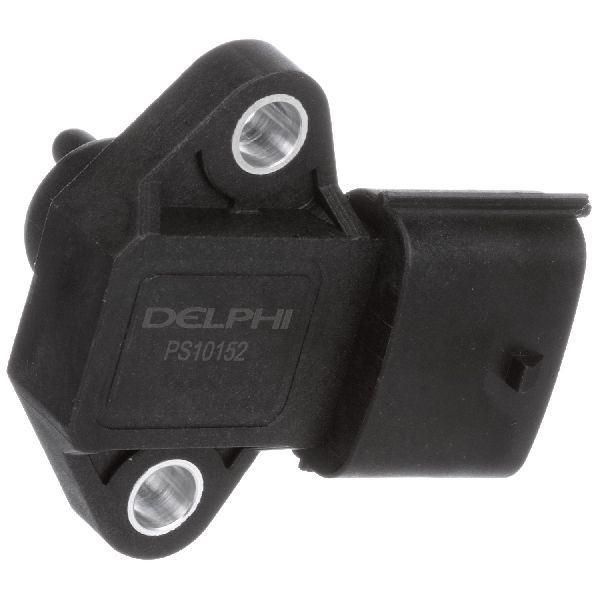
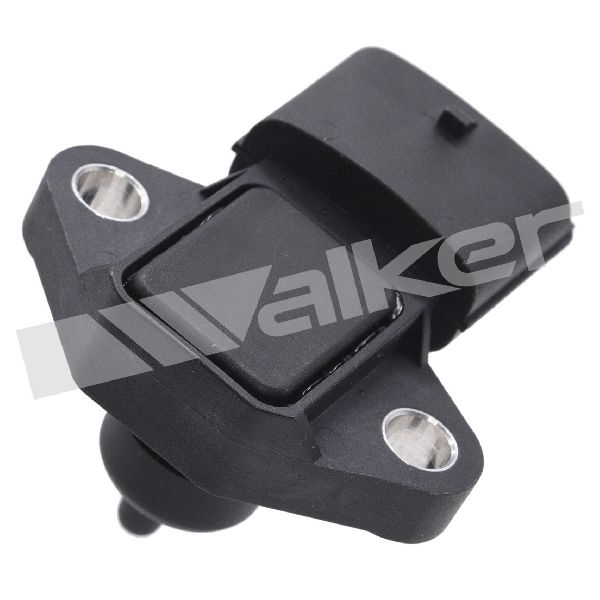
- Manifold Absolute Pressure (MAP) Sensor
(OEM #39300-2B100)— This sensor is the most common failure point for code P1107 on this vehicle. This part number is shared across many Hyundai and Kia models with the Nu 2.0L engine.
Trusted brands: Hyundai (OEM), Bosch, Delphi, Standard Motor Products, TRQ
OEM price range: $70-$90
Aftermarket price range: $40-$65
Related Codes That Often Appear With This One
- P0106 — P0106 indicates a MAP sensor performance/range issue. The codes can appear together if the sensor is failing and providing both erratic and intermittently low signals.
- P0107 — P0107 is the generic code for 'MAP Sensor Circuit Low Input'. P1107 is the manufacturer-specific, intermittent version. Seeing both points strongly to a MAP sensor or circuit fault.
- P0113 — Because the Intake Air Temperature (IAT) sensor is integrated into the MAP sensor assembly on this engine, a total failure of the unit can trigger P0113 (IAT Sensor Circuit High) along with P1107/P0107.
Platform-Specific Known Issues
- Some owners have reported that using non-OEM (aftermarket) MAP sensors can lead to premature failure or persistent issues. Using a genuine Hyundai part is often recommended for this repair.
- The location of the sensor on the front of the intake manifold, under the upper radiator hose, can make access slightly tight but is still manageable for a DIY repair.
Mechanic-Grade Diagnostic Values
- MAP Sensor Signal Voltage (Key On, Engine Off) — expected: ~4.5V - 5.0V (at sea level). Failure: Voltage is stuck below 0.5V
- MAP Sensor Signal Voltage (Engine at Idle) — expected: 1.0V - 2.0V. Failure: Voltage is stuck below 0.5V or does not drop from KOEO reading
- 5V Reference Wire at Sensor Connector (Key On, Engine Off) — expected: ~5.0V. Failure: No voltage or significantly low voltage, indicating a PCM or wiring fault
- Ground Wire Resistance at Sensor Connector — expected: < 10 Ω (measured between the ground pin and chassis ground). Failure: Resistance above 10 Ω, indicating a poor ground connection
- DTC P1107 Trigger Threshold — expected: Signal voltage > 0.25V. Failure: Signal voltage intermittently drops below 0.25V for more than 2.5 seconds
Scan Tool Commands That Help
- Hyundai GDS: Live Data / Current Data Analysis (MAP Sensor) — Used to monitor the real-time voltage output of the MAP sensor during KOEO, idle, and acceleration to confirm if the readings are within the expected ranges specified in 'specific_diagnostic_values'. This is the primary diagnostic step before performing physical wiring tests.
Wiring & Ground Locations
- PCM Connector CGGA-K, Pin 10 — At the Powertrain Control Module (PCM), which is typically located in the engine bay near the battery.. This is the MAP sensor signal input pin at the PCM. A technician can back-probe this pin to verify if the low voltage signal from the sensor is reaching the PCM, which helps differentiate a wiring problem from an internal PCM fault.
- PCM Connector CGGA-K, Pin 8 — At the Powertrain Control Module (PCM).. This is the dedicated sensor ground pin for the MAP sensor. Testing for continuity from this pin to the ground pin at the sensor connector verifies the integrity of the ground circuit, a common failure point for sensor codes.
Real Owner Repair Stories
- Reddit user Helllionlod in r/Hyundai (2017 Hyundai Elantra) — Check engine light on, repeatedly setting MAP sensor codes.
❌ Tried (didn't work) Replacing the MAP sensor three times (on the fourth sensor)
✅ What actually fixed it The user discovered a post mentioning the PCV valve. A faulty PCV valve can fail to vent crankcase pressure, forcing oil vapor back into the intake and contaminating the MAP sensor. Replacing the $15 PCV valve resolved the issue, and the code did not return for over a month.
Diagnostic Flowchart
Other Known Issues on This Vehicle
Issues unrelated to this code that are worth knowing about as an owner of this generation:
- Excessive Oil Consumption 🔴 High — Commonly reported after 60,000 miles. Some owners report needing to add a quart of oil every 1,000-2,000 miles. (Ref: TSB 23-EM-008H provides guidelines for oil consumption testing.)
- Piston Oil Ring Defects 🔴 High — Affects 2019-2020 models. Improperly heat-treated piston rings can lead to engine damage, oil leaks, stalling, and risk of fire. (Ref: NHTSA Recall 21V-301 (Hyundai Campaign 203))
- Ignition Coil Failure 🟠 Medium — Owners report premature failure of ignition coils, leading to misfires (e.g., P030x codes) and rough running, sometimes as early as 50,000-60,000 miles.
- Engine Knocking / Piston Slap 🔴 High — A knocking or ticking noise from the engine, particularly on startup, can be a symptom of internal engine wear, sometimes related to the piston issues in this engine family. (Ref: Related to recalls for engine defects and warranty extensions for connecting rod bearing wear on other Hyundai engines.)
Used vs. New Parts: Buying Guide for This Vehicle
When a used part is the smart pick: For this specific repair, a used OEM MAP sensor from a low-mileage donor vehicle is a viable option if on a tight budget. However, given the relatively low cost of new aftermarket parts and the critical function of the sensor, a new part is generally recommended.
Donor-vehicle mileage cap: roughly under 60000 miles for the part to have meaningful remaining life.
What to inspect on the donor part:
- Ensure the donor vehicle was not in a front-end collision.
- Inspect the sensor's plastic housing for cracks or heat damage.
- Check the electrical connector pins for any signs of corrosion or being bent.
- If possible, check the port for heavy oil or carbon buildup, which might suggest issues with the donor engine.
OEM-only on this vehicle (don't cheap out):
- While not strictly 'OEM-only', many owners and mechanics report that Hyundai vehicles can be sensitive to aftermarket electronic sensors. Using a genuine Hyundai (OEM) MAP sensor is strongly recommended to avoid premature failure or persistent codes.
Aftermarket brands forum-validated for this vehicle:
- Delphi
- NGK/NTK
- Standard Motor Products (SMP)
Brands owners have reported issues with on this vehicle:
- Unbranded, no-name sensors from online marketplaces should be avoided as their quality and calibration can be inconsistent, leading to a repeat failure.
Real Owner Stories
Aggregated from forums and TSBs cited above. Mileages and costs reflect what owners reported in those sources.
2017-2020 Hyundai Elantra 6th Gen
Symptoms: Owners on Reddit discussed various problems including engine issues and general reliability concerns for this generation.
What fixed it: Using a genuine Hyundai (OEM) MAP sensor is recommended by owners to avoid premature failure or persistent codes often seen with non-OEM parts.
Source hint: Reddit r/Hyundai - "What are all the different problems you've had with your 6th gen Hyundai Elantra's? (2017-2020)"
Related OBD-II Codes
Frequently Asked Questions
Is there a recall for the 2019-2020 Hyundai Elantra engine issues that might be related to my stalling and oil consumption?
My 2017 Elantra is consuming a lot of oil; is there an official test for this?
Can I use an aftermarket MAP sensor to fix the P1107 code on my Elantra Nu 2.0L?
Where is the MAP sensor located on the 2017-2020 Elantra, and is it hard to reach?
Does the P1107 code on my Elantra also affect the intake air temperature reading?
What should the MAP sensor voltage be on my Elantra when the engine is off?
Helpful Videos

We Have This Part in Stock


The information in this article is provided for general reference and educational purposes only. Vehicle specifications, procedures, and part compatibility can vary by production date, trim level, and region. Always consult your vehicle's factory service manual and verify part numbers before purchasing or performing repairs. Safety-critical components such as airbags, seat belts, and braking systems should be installed by a qualified professional.
- Hyundai Elantra:
- 🎬 Helpful Videos
- 🛍️ Shop This Part
- What's Unique About the 2017-2020 Hyundai Elantra
- Symptoms You May Notice
- Most Likely Causes
- Rare But Worth Checking
- Diagnosis Steps
- Parts You'll Likely Need
- Related Codes That Often Appear With This One
- Platform-Specific Known Issues
- Mechanic-Grade Diagnostic Values
- Scan Tool Commands That Help
- Wiring & Ground Locations
- Real Owner Repair Stories
- Diagnostic Flowchart
- Other Known Issues on This Vehicle
- Used vs. New Parts: Buying Guide for This Vehicle
- Real Owner Stories
- 2017-2020 Hyundai Elantra 6th Gen
- Related OBD-II Codes
- Frequently Asked Questions
- 🎟️ Get 5% Off