

P1107 on 2004-2011 Chevrolet Aveo: MAP Sensor Circuit Causes and Fixes
Code P1107 on a Chevy Aveo most often means there is an intermittent electrical problem with the Manifold Absolute Pressure (MAP) sensor circuit. Before replacing the sensor, check for broken wires near the connector and cracked vacuum hoses, as these are very common and inexpensive fixes. The wiring fault is a well-known issue on many GM vehicles from this era.
- P1107 on an Aveo is almost always a wiring, vacuum, or sensor issue related to the MAP sensor.
- Always perform a 'wiggle test' on the MAP sensor wiring harness before buying parts.
- A broken wire near the connector is more common than a failed sensor.
- Check the small vacuum hoses and elbows for cracks, as this is a simple and cheap fix.
- This issue is shared with platform mates like the Pontiac G3.
What's Unique About the 2004-2011 Chevrolet Aveo
The Chevrolet Aveo uses a speed-density fuel injection system that relies heavily on the MAP sensor for engine load calculations, as it does not have a Mass Airflow (MAF) sensor. While no specific TSB for the Aveo is widely documented for this code, many GM vehicles from this era are known to suffer from broken wires within the harness near the MAP sensor connector due to engine vibration and heat. This is acknowledged in GM TSB #PIP4409F for other models, which describes the exact same failure mode of wires breaking inside the insulation. Therefore, a wiring fault is a very high-probability cause on the Aveo, often more likely than the sensor itself failing.
Generation note: The 2004-2011 year range covers the entire first generation of the Chevrolet Aveo, including the initial T200 platform (2004-2006) and the heavily facelifted T250 platform (2007-2011). The E-TEC II engine and its MAP sensor system are fundamentally the same across these versions, so the causes and fixes described here apply to the entire date range. These vehicles were originally designed by Daewoo.
Symptoms You May Notice
- Check Engine Light illuminated
- Rough or unstable idle
- Hesitation or stumbling when accelerating
- Reduced engine power
- Poor fuel economy
- Occasional stalling
- Black smoke from exhaust
- Replacing the MAP sensor without first performing a 'wiggle test' on the wiring harness. The wiring is a more frequent failure point on these vehicles, and a new sensor will not fix a broken wire.
Most Likely Causes
- Broken or Damaged Wiring at MAP Sensor Connector 🔴 High Probability On many GM vehicles of this vintage, engine vibration and heat cycles can cause the copper wires to fracture inside the insulation, typically within a few inches of the sensor connector. The exterior may look fine, but the connection is intermittent. This is a well-documented failure pattern on GM trucks in TSB #PIP4409F.
How to confirm: With the engine running, carefully wiggle the wiring harness leading to the MAP sensor. If the engine's idle changes, stumbles, or stalls, it's a strong sign of a wiring fault. A visual inspection may not be enough as the break is often internal.
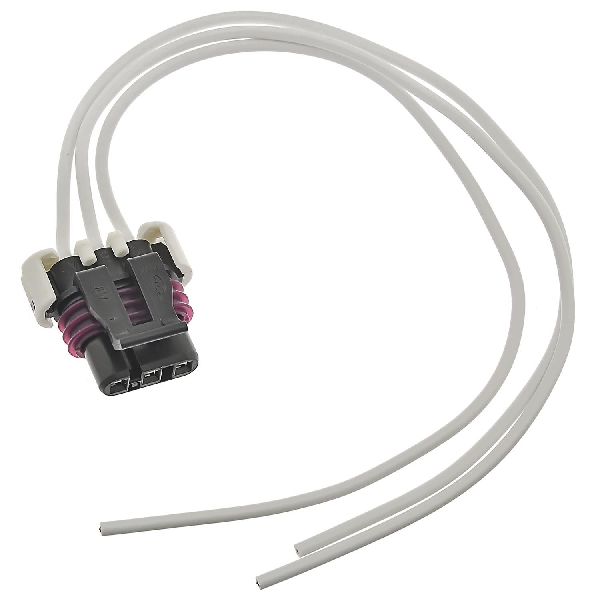
Typical fix: The damaged section of the harness must be repaired. This is most reliably done by splicing in a new MAP sensor connector pigtail. Common pigtails include Dorman 645-203 or ACDelco PT2187.
Est. part cost: $15-$40 - Cracked or Disconnected Vacuum Hose 🟡 Medium Probability The small rubber or plastic vacuum hoses connected to the intake manifold and the MAP sensor can become brittle and crack over time, causing a vacuum leak. Owners have reported the small rubber elbow connecting directly to the sensor is a common failure point.
How to confirm: Visually inspect all vacuum lines connected to the intake manifold and the MAP sensor itself for any visible cracks, brittleness, or loose connections. You can also spray a small amount of brake cleaner or starting fluid around the hoses with the engine running; a change in engine RPM indicates a leak.
Typical fix: Replace the cracked or broken vacuum hose.
Est. part cost: $5-$20 - Faulty Manifold Absolute Pressure (MAP) Sensor 🟡 Medium Probability
How to confirm: If the wiring and vacuum lines are confirmed to be in good condition, the sensor itself is the next likely culprit. It can be tested with a multimeter or by observing its voltage on a scan tool. At idle, voltage should be steady around 1.0-2.0V. If the voltage is erratic or stuck, the sensor has likely failed.
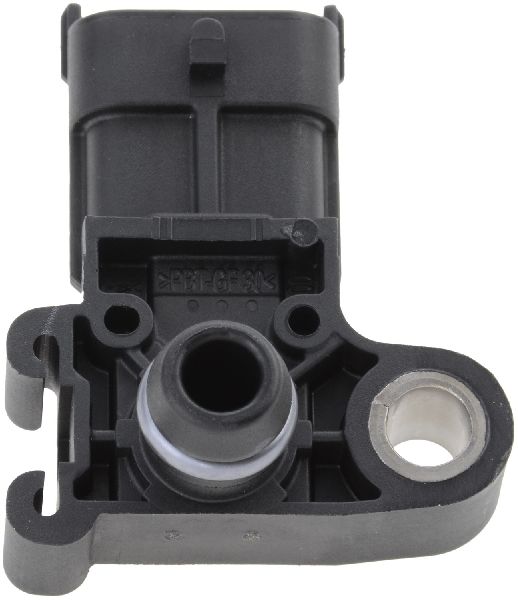
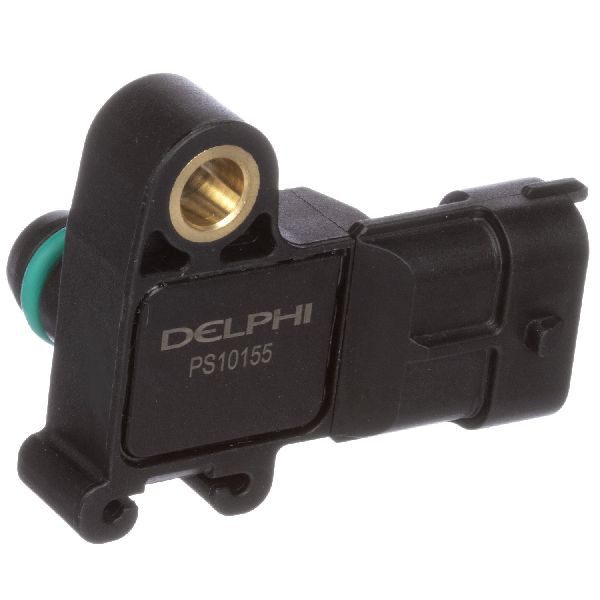
Typical fix: Replace the MAP sensor. It is typically mounted directly on the intake manifold with one screw.
Est. part cost: $40-$100 - Corroded or Loose Connector Pins ⚪ Low Probability
How to confirm: Unplug the MAP sensor connector and visually inspect the pins on both the sensor and the harness side for any green or white corrosion, or for pins that look pushed back or loose.
Typical fix: Clean the connector pins with an electrical contact cleaner. If pins are damaged, the connector pigtail will need to be replaced.
Est. part cost: $5-$40
Rare But Worth Checking
- Faulty Powertrain Control Module (PCM): This is very rare. The PCM should only be considered after all other possibilities (wiring, vacuum leaks, sensor) have been exhaustively ruled out. Some early Aveos had ECMs replaced under warranty for other issues.
Diagnosis Steps
- Retrieve all stored trouble codes with an OBD-II scanner.
- Visually inspect the MAP sensor, which is located on the top of the intake manifold. Check for any obvious damage.
- Inspect the vacuum hose and rubber elbow connected to the MAP sensor and nearby hoses for cracks, brittleness, or loose connections.
- Start the engine. Carefully wiggle the wiring harness connected to the MAP sensor while listening for any change in the engine's idle. If it stumbles or stalls, the wiring is faulty.
- If the wiggle test shows no issue, use a scan tool to monitor the MAP sensor voltage (V) or pressure (kPa) data live. The reading should be steady at idle (approx. 1.0-2.0V) and change smoothly as you press and release the throttle.
- If the signal drops out or is erratic, and the wiggle test pointed to a wiring issue, replace the connector pigtail.
- If the signal is erratic but the wiring seems okay, unplug the sensor and check for 5-volt reference and a good ground at the connector with a multimeter. The 5V reference should be steady with the key on.
- If wiring, ground, and reference voltage are all good, the MAP sensor itself is the most likely cause of the problem and should be replaced.
Parts You'll Likely Need
- MAP Sensor Connector Pigtail
(OEM #ACDelco PT2187 (GM 88988963))— This is the most common fix when the wires break near the connector, which is a frequent issue on GM vehicles of this era. The Dorman 645-203 is a common aftermarket alternative, though it is listed as a 2-wire pigtail in some catalogs and may not be correct for the 3-wire MAP sensor.
Trusted brands: ACDelco, Dorman, Standard Motor Products
OEM price range: $30-$50
Aftermarket price range: $15-$30 - Manifold Absolute Pressure (MAP) Sensor
(OEM #ACDelco 213-4678 (GM 96325870))— If the wiring and vacuum lines are intact, the sensor itself may have failed internally. This part number is cited for the Aveo. Another potential OEM number is 55573248 (ACDelco 213-4681). Always verify the part with your vehicle's VIN.
Trusted brands: ACDelco, Delphi, Bosch
OEM price range: $70-$120
Aftermarket price range: $40-$80
Related Codes That Often Appear With This One
- P0107 — P0107 is the generic code for 'MAP Circuit Low Input'. The intermittent fault of P1107 can eventually cause the constant fault code P0107 to be stored as well.
- P0300 — This code for 'Random/Multiple Cylinder Misfire' is a direct symptom of the rough running condition caused by the faulty MAP signal leading to an incorrect air/fuel mixture.
- P0106 — This code for 'MAP/Barometric Pressure Circuit Range/Performance' can also be triggered by the erratic signal from the intermittent wiring fault that causes P1107.
Technical Service Bulletins (TSBs) & Recalls
- While no TSB is specific to the Aveo for P1107, GM Technical Service Bulletin #PIP4409F describes the identical failure mode (wires breaking inside the insulation near the MAP connector) for other GM trucks. This strongly suggests a similar weakness exists in the Aveo harness. According to TSB #PIP4409F, technicians should inspect all MAP sensor circuits for being broken inside the insulation near the manifold, which can cause the Malfunction Indicator Lamp to illuminate and the engine to run rough.
Platform-Specific Known Issues
- Real-World Repair Story from Opinautos: An owner of a 2009 Aveo reported codes P1107 and P0107, with symptoms of stalling at idle and hesitation while driving. After replacing the MAP sensor and checking the wiring with no success, the issue was finally traced to a cracked rubber elbow (vacuum hose) connected to the MAP sensor. Replacing the hose resolved the stalling and codes.
Mechanic-Grade Diagnostic Values
- MAP Sensor 5V Reference — expected: 4.8V - 5.2V DC with key on, engine off (KOEO).. Failure: Voltage is below 4.8V or is intermittent, indicating a problem with the PCM or wiring.
- MAP Sensor Signal Voltage (KOEO) — expected: ~3.8V - 4.5V DC, depending on altitude.. Failure: Voltage is significantly lower, indicating a sensor or wiring issue.
- MAP Sensor Signal Voltage (at idle) — expected: 1.0V - 1.8V DC.. Failure: Voltage is erratic, stuck high, or drops below ~0.5V, which triggers the P1107 code.
- MAP Sensor Ground Circuit Resistance — expected: Less than 5 Ohms to a known good chassis ground.. Failure: Resistance is higher than 5 Ohms, indicating a poor ground connection which can cause low voltage readings.
- Live Data - MAP Pressure (at idle) — expected: Around 47 kPa with the engine running.. Failure: Reading is stuck at atmospheric pressure (around 98 kPa) even with the engine running, indicating a dead sensor or complete signal loss.
Wiring & Ground Locations
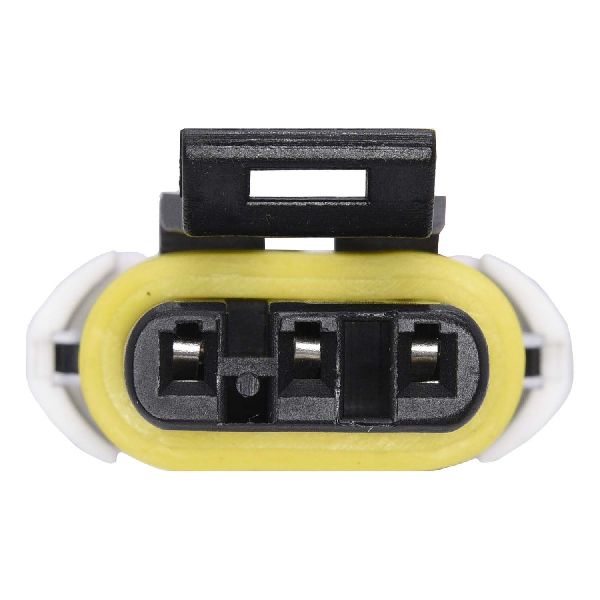
- MAP Sensor Connector Pinout — On the MAP sensor, located on the intake manifold.. Knowing the function of each pin is critical for testing. Pin 1: +5V Reference from ECM. Pin 2: MAP Signal to ECM. Pin 3: Ground. On some Aveo harnesses, the right-most wire is 5V power, the middle is signal, and the left-most is ground when looking at the connector.
- G102 — Left side of the engine compartment, near the battery.. This is a primary engine bay ground. A poor connection here can cause various sensor issues, including erratic readings from the MAP sensor.
- G103 — Located below the Engine Control Module (ECM).. This ground is critical for the ECM itself. A fault at G103 can cause unstable reference voltages and faulty ground paths for multiple sensors, including the MAP sensor, leading to intermittent low voltage codes like P1107.
- Harness Chafe Point — The engine wiring harness section that runs over the top of the engine and connects to the MAP sensor.. As mentioned in the common causes, the wires for the MAP sensor are known to break internally within a few inches of the connector due to constant engine vibration and heat cycles. This is the most likely location for the intermittent fault.
Real Owner Repair Stories
- AveoForum.com user 'drewd' (2004 Chevrolet Aveo Automatic) — Stalling only on hot restarts. Car starts fine, but upon acceleration, it would hesitate, feel like it had no power, and then stall. This was worse in the summer.
❌ Tried (didn't work) Changed spark plugs, Cleaned throttle body, Cleaned IAC valve, Replaced air filter
✅ What actually fixed it The problem was ultimately solved by replacing the upstream O2 sensor. The old sensor was not heating up or responding correctly during closed-loop fuel trim adjustments after a hot restart, causing the stalling.
OEM Part Supersession History
96325870→25184083— Standard part number update and consolidation by GM.
Heads up: Part number 96325870 is the key identifier for the sensor calibrated for the Aveo's E-TEC II engine. While other sensors may look physically similar, using a different part number can lead to incorrect ECU calculations, poor performance, and persistent check engine lights.
Diagnostic Flowchart
Other Known Issues on This Vehicle
Issues unrelated to this code that are worth knowing about as an owner of this generation:
- Premature Timing Belt Failure 🔴 High — Very common on 2004-2008 models. The recommended replacement interval is only 60,000 miles, and failures have been reported even before this point. The E-TEC II is an interference engine, so a belt failure will cause catastrophic engine damage.
- Leaking Valve Cover Gasket 🟠 Medium — Extremely common across all years. The gasket hardens and begins to leak oil externally and, more critically, into the spark plug wells, which can cause misfires. Many owners report having to replace it annually, even with OEM parts.
- Cracked Plastic Thermostat Housing 🔴 High — The original plastic thermostat housing is known to become brittle and crack, leading to a sudden and complete loss of coolant. If not noticed immediately, this will cause the engine to overheat, potentially leading to head gasket failure or a seized engine. Aftermarket metal housings are a common and recommended upgrade.
- Delayed Acceleration / Throttle Lag 🟡 Low — A common complaint is a noticeable delay between pressing the accelerator pedal and the engine responding. This is related to the electronic throttle control system and can sometimes be improved by cleaning the throttle body.
Used vs. New Parts: Buying Guide for This Vehicle
When a used part is the smart pick: A used MAP sensor from a junkyard is a reasonable choice for this repair, as they are not a high-wear item and failures are often electronic rather than age-related. Given the low cost of new aftermarket sensors, a used part is primarily for immediate availability or minimal budget.
Donor-vehicle mileage cap: roughly under 80000 miles for the part to have meaningful remaining life.
What to inspect on the donor part:
- Ensure the plastic housing is not cracked or damaged.
- Check that the vacuum port is clear and free of debris.
- Inspect the connector pins for corrosion or damage.
- If possible, get the pigtail connector from the donor car as well, as it may be in better condition than your current one.
Aftermarket brands forum-validated for this vehicle:
- Delphi
- Bosch
- Standard Motor Products (SMP)
Brands owners have reported issues with on this vehicle:
- No-name, unbranded sensors from online marketplaces should be avoided, as their calibration and reliability can be questionable, potentially causing performance issues without setting a code.
Real Owner Stories
Aggregated from forums and TSBs cited above. Mileages and costs reflect what owners reported in those sources.
2009 Chevrolet Aveo 1.6L I4
Symptoms: The car was stalling at idle and hesitating while driving, with codes P1107 and P0107 present.
What fixed it: After replacing the MAP sensor and checking the wiring with no success, the problem was finally solved by replacing a cracked rubber vacuum elbow connected to the MAP sensor.
Source hint: Opinautos.com: A user with a 2009 Aveo detailed their experience with both P1107 and P0107.
Related OBD-II Codes
Frequently Asked Questions
Is there a specific TSB for the P1107 wiring issue on my 2004-2011 Aveo?
How can I check if the wiring to the MAP sensor is bad without special tools?
I replaced the MAP sensor, but the P1107 code came back. What should I check next?
What is the recommended way to repair the damaged MAP sensor wiring?
My Pontiac G3 has a MAP sensor code. Does this article apply to my car?
What symptoms, other than a Check Engine Light, are common with code P1107 on an Aveo?
We Have This Part in Stock


The information in this article is provided for general reference and educational purposes only. Vehicle specifications, procedures, and part compatibility can vary by production date, trim level, and region. Always consult your vehicle's factory service manual and verify part numbers before purchasing or performing repairs. Safety-critical components such as airbags, seat belts, and braking systems should be installed by a qualified professional.
- Chevrolet Aveo:
- 🛍️ Shop This Part
- What's Unique About the 2004-2011 Chevrolet Aveo
- Symptoms You May Notice
- Most Likely Causes
- Rare But Worth Checking
- Diagnosis Steps
- Parts You'll Likely Need
- Related Codes That Often Appear With This One
- Technical Service Bulletins (TSBs) & Recalls
- Platform-Specific Known Issues
- Mechanic-Grade Diagnostic Values
- Wiring & Ground Locations
- Real Owner Repair Stories
- OEM Part Supersession History
- Diagnostic Flowchart
- Other Known Issues on This Vehicle
- Used vs. New Parts: Buying Guide for This Vehicle
- Real Owner Stories
- 2009 Chevrolet Aveo 1.6L I4
- Related OBD-II Codes
- Frequently Asked Questions
- 🎟️ Get 5% Off