

P1101 on 2014-2019 Cadillac CTS 2.0L Turbo: Intake Airflow Causes and Fixes
On a 2014-2019 Cadillac CTS with the 2.0L turbo, code P1101 is almost always caused by an unmetered air leak from a missing or damaged O-ring on the charge air cooler (CAC) pipe, typically on the passenger side. This is a well-known issue documented in GM TSB #PIP5402E and its subsequent revisions. The fix is an inexpensive seal, making inspection of this specific part the critical first step before considering any other repairs.
- For a P1101 code on a 2014-2019 Cadillac CTS 2.0L, immediately suspect an air leak at the charge air cooler pipe O-ring before considering any other cause.
- Do not replace the MAF sensor until you have cleaned it with dedicated cleaner and performed a smoke test to rule out any and all air leaks.
- The most likely fix is replacing an inexpensive O-ring (GM Part #12640401), not an expensive sensor.
- This code will cause noticeable performance issues and should be addressed to prevent poor fuel economy and potential long-term stress on other components.
What's Unique About the 2014-2019 Cadillac CTS
The 2.0L LTG turbo engine used in the 2014-2019 Cadillac CTS has a well-documented weakness that directly causes the P1101 code. General Motors issued Technical Service Bulletin #PIP5402E, which identifies a missing, dislodged, or damaged O-ring seal on the charge air cooler (CAC) coupler as the primary culprit. This specific leak point, located on the passenger side where the air duct connects to the intercooler, is so common that it should be the very first place you inspect. This often makes the diagnosis much faster than on other vehicles where the cause might be more generic. This issue is prevalent across many GM vehicles using the same LTG engine.
🎬 Watch: A breakdown of common 2.0L turbo engine failures.Symptoms You May Notice
- Check Engine Light is on
- Reduced engine power or entering "limp mode"
- Sluggish or hesitant acceleration
- Rough or unstable idle
- Decreased fuel economy
- Audible hissing or whooshing sound from the engine bay, especially under acceleration
- Replacing the MAF sensor without first cleaning it.
- Replacing the MAF sensor before thoroughly checking for intake air leaks, especially the specific charge air cooler O-ring issue. Forum posts are filled with owners who made this mistake only for the code to return.
Most Likely Causes
- Missing or Damaged Charge Air Cooler (CAC) Coupler O-Ring 🔴 High Probability This is a known issue documented by GM in Technical Service Bulletin #PIP5402E and its revisions (A, B, C, D, E). The seal can be easily dislodged during routine service like an oil or air filter change, or it can become brittle and fail over time. The leak is almost always at the passenger side charge pipe connection.
How to confirm: Visually inspect the charge air cooler inlet duct coupler on the passenger side of the engine bay. Disconnect the pipe and check if the O-ring is present, seated correctly, and not torn. A smoke test of the intake system is the most definitive way to confirm this leak, as recommended by the TSB.
Typical fix: Replace the O-ring seal. The original GM part number was 12640401, which may have been superseded. An updated green seal is often recommended over the original orange or black one. Ensure the coupler and duct are clean before installing the new seal.
Est. part cost: $10-$30 - Dirty Mass Airflow (MAF) Sensor 🟡 Medium Probability Oil vapor from the PCV system and fine dust, sometimes from over-oiled aftermarket air filters, can coat the sensor's delicate elements over time, causing it to read airflow inaccurately. This leads the ECM to calculate an incorrect air/fuel mixture.
How to confirm: Remove the MAF sensor from the intake tube (usually located right after the air filter box) and visually inspect the small wires or elements inside. If they appear dirty or coated, they need cleaning.
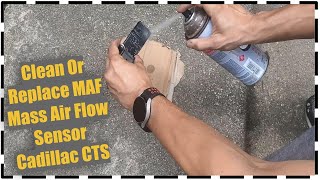
Typical fix: Clean the sensor using only a dedicated Mass Airflow Sensor cleaner spray. Do not touch the sensor elements. Let it dry completely before reinstalling. 🎬 See this walkthrough on cleaning or replacing your MAF sensor.
Est. part cost: $10-$15 for a can of cleaner - Air Leak Elsewhere in the Intake System ⚪ Low Probability Turbocharged engines have complex plumbing with many connection points (hoses, clamps, gaskets) that can loosen or crack over time. A cracked PCV pipe or failed valve cover (which contains the PCV system) can also introduce unmetered air.
How to confirm: Perform a smoke test to force low-pressure smoke through the intake system. Smoke will visibly exit from any leak point. Pay close attention to all charge pipes, the throttle body gasket, and PCV hoses.
Typical fix: Tighten the loose clamp or replace the cracked hose or failed gasket that is causing the leak.
Est. part cost: $5-$100 depending on the part - Clogged or Improperly Installed Engine Air Filter ⚪ Low Probability
How to confirm: Visually inspect the engine air filter. If it is excessively dirty and clogged with debris, it can restrict airflow enough to trigger the code. An improperly installed or cheap aftermarket filter can also cause a poor seal at the housing, creating turbulence and inaccurate MAF readings.
Typical fix: Replace the engine air filter with a quality OEM or equivalent part.
Est. part cost: $20-$50
Rare But Worth Checking
- Failed Mass Airflow (MAF) Sensor: While possible, outright failure is less common than the sensor simply being dirty or an air leak being present. Only replace the sensor after cleaning it and confirming there are no air leaks. Many owners replace this part unnecessarily.
- Dirty Throttle Body: Significant carbon buildup around the throttle plate can disrupt airflow, especially at idle, contributing to the calculation error that sets P1101. A ScannerDanner video on a 2014 Malibu with the same engine demonstrated this exact cause.
- Faulty MAF Sensor Wiring or Connector: Corroded pins or a damaged wire can cause an intermittent or incorrect signal from the sensor. This should be checked if a new or clean sensor does not resolve the issue.
Diagnosis Steps
- Scan the vehicle for any other stored trouble codes. Note them and clear the codes.
- CRITICAL FIRST STEP: Visually inspect the charge air cooler inlet coupler on the passenger side for a missing, dislodged, or damaged O-ring, as specified in TSB #PIP5402E. This is the most common cause.
- Inspect the entire air intake tract, from the air filter box to the throttle body, for any obvious cracks, loose hoses, or disconnected lines.
- Remove and inspect the engine air filter. Ensure it is clean and installed correctly. Replace if dirty or clogged.
- Carefully remove the MAF sensor. Inspect its sensing elements for contamination. If dirty, clean it with dedicated MAF sensor cleaner spray and let it dry completely before reinstalling.
- If the code returns after a test drive, perform a smoke test on the intake system to definitively identify any hard-to-see leaks. The TSB recommends a tool like the GE-52250 Power Smoke for this.
- If no leaks are found and the sensor is clean, use a scan tool to monitor the MAF sensor's data (in grams/second) at idle and while revving the engine. The reading should be stable at idle and increase smoothly with engine RPM.
- If the MAF sensor readings are erratic, zero, or do not change with RPM, test the sensor's wiring for proper power, ground, and signal voltage.
- If the wiring is confirmed to be good and all other causes have been ruled out, the MAF sensor itself has likely failed and should be replaced.
Parts You'll Likely Need
- Charge Air Cooler Inlet Duct Seal (O-Ring)
(OEM #12640401)— This is the most common failure point for this code on this specific engine, as documented in a GM TSB. Note: Part number 12640401 is listed for the 3.6L engine in some catalogs, causing confusion. Another potential number for the 2.0L is 12654059. It is critical to verify the correct part for your VIN.
Trusted brands: ACDelco (GM Genuine)
OEM price range: $10-$30
Aftermarket price range: $5-$20 - Mass Airflow Sensor Cleaner — Often, the MAF sensor is just dirty, not broken. Cleaning is a cheap and effective diagnostic and repair step.
Trusted brands: CRC, Liqui Moly
Aftermarket price range: $10-$15 - Mass Airflow (MAF) Sensor
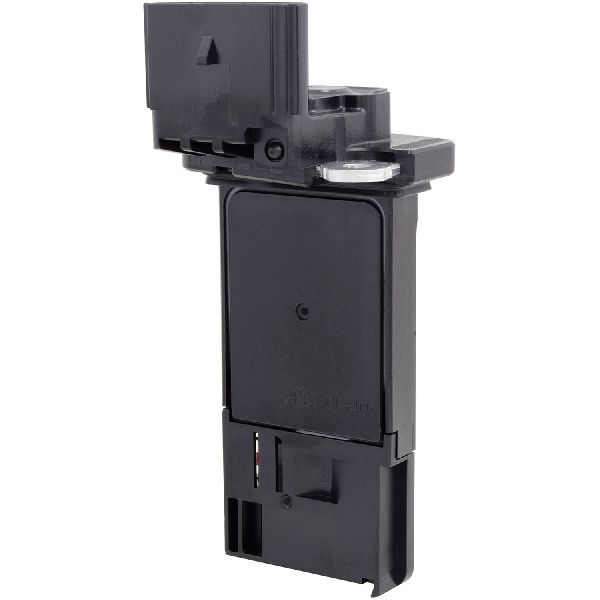
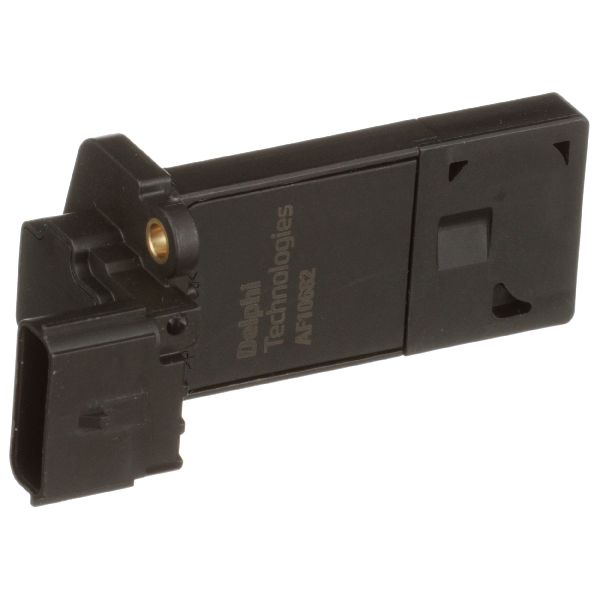
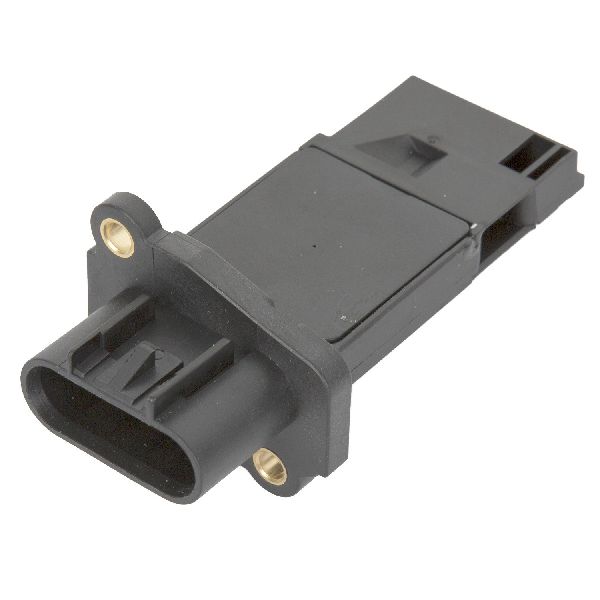
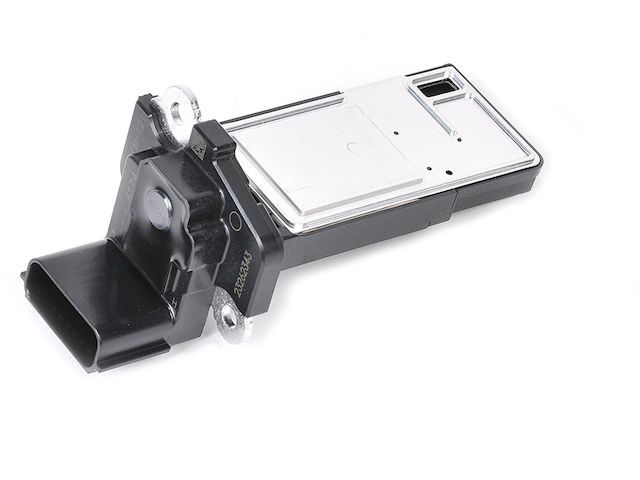
(OEM #23262343)— If the sensor is confirmed to be faulty after cleaning and ruling out air leaks, it will need to be replaced. This is a common misdiagnosis, so ensure all other steps are completed first.
Trusted brands: ACDelco, Bosch, Delphi
OEM price range: $150-$250
Aftermarket price range: $70-$150
Related Codes That Often Appear With This One
- P0101 — This is a more generic MAF Sensor Performance code. Both codes relate to the MAF sensor's readings being out of the expected range and are often caused by the same faults. TSB PIP5402E explicitly lists both codes together.
- P0171 — This code means "System Too Lean (Bank 1)." An unmetered air leak allows air into the engine that the MAF sensor didn't measure, leading to a lean air/fuel mixture that triggers both P1101 and P0171.
- P015B — This code for "O2 Sensor Delayed Response" is also mentioned in TSB PIP5402E. The unmetered air from the leak causes a lean condition, and the ECM flags the oxygen sensor for not responding as expected to the incorrect air/fuel mixture.
Technical Service Bulletins (TSBs) & Recalls
- PIP5402E: Recommends inspecting for a missing or damaged O-ring on the charge air cooler duct in response to a P1101, P0101, or P015B code. It covers a wide range of GM vehicles with the 2.0L LTG engine.
- PIP5402F: A later revision of the same bulletin, confirming the issue persists across model years.
Platform-Specific Known Issues
- GM Technical Service Bulletin #PIP5402E (and its revisions A, B, C, D, E) specifically calls out a missing or damaged O-ring on the charge air cooler pipe as the primary cause of P1101 on the 2.0L LTG engine.
- GM Technical Service Bulletin #20-NA-047 (superseding PIP5417C) points to a plugged PCV orifice inside the camshaft cover causing excessive crankcase pressure, which can also set a P1101 code.
Mechanic-Grade Diagnostic Values
- Mass Air Flow Rate (Scan Tool) — expected: 3.0 - 6.0 g/s at warm idle.. Failure: A reading that is erratic, significantly outside the range, or does not increase smoothly with RPM. A reading that rises too slowly can indicate a dirty sensor or a downstream air leak.
- Mass Air Flow Rate at 2500 RPM (Scan Tool) — expected: 15 - 25 g/s.. Failure: Reading is not linear or does not rise smoothly from idle.
- MAF Sensor Frequency (Scan Tool or Multimeter) — expected: Approximately 3.0 - 4.0 KHz at idle.. Failure: A frequency signal that is stuck, erratic, or does not correspond to engine RPM changes.
- MAF Sensor Signal Voltage (KOER) — expected: 0.46V to 2.44V during self-test.. Failure: Voltage reading below 0.46V during the Key On Engine Running (KOER) self-test will trigger the code.
- Throttle Position Angle at Idle (Scan Tool) — expected: 8-12% with engine warm and A/C off.. Failure: A reading less than 7% indicates unmetered air is entering the intake system, forcing the throttle plate to close more than expected to maintain idle speed.
- Crankcase Pressure (EEST Tool) — expected: -1 to -5 inches of water at hot idle.. Failure: Pressure outside this range (especially positive pressure) indicates a plugged PCV orifice, which can cause code P1101.
Scan Tool Commands That Help
- GDS2 (or similar professional scan tool): Idle Learn / Throttle Relearn — After cleaning or replacing the throttle body, or after disconnecting the battery. The ECM needs to relearn the closed throttle position to ensure correct idle speed and airflow calculations. An incorrect idle position can contribute to airflow correlation codes like P1101.
Wiring & Ground Locations
- MAF Sensor Connector — On the air intake tube, just after the air filter box on the driver's side of the engine bay.. The 5-wire connector provides power, ground, and signal paths for the MAF sensor. Damage, corrosion, or a poor connection at the Pink (12V Power), Black/White (Ground), or Yellow (Signal) wires can cause a total loss of signal or erratic readings, directly triggering P1101.
- G104 (example ground point) — On other GM platforms with the LTG engine, G104 is a key engine ground. The specific location on the CTS should be verified, but engine block grounds near the firewall are critical.. A poor engine ground can cause a voltage differential between the sensor's ground reference and the chassis, leading to noisy or incorrect sensor readings that the ECM misinterprets as an airflow fault.
Real Owner Repair Stories
- Reddit user with a platform-mate vehicle (2.0L Camaro) (2016 Camaro 2.0T) — P1101 code appearing only under heavy acceleration.
❌ Tried (didn't work) Cleaning the throttle body, Replacing sensors
✅ What actually fixed it The user was directed to TSB PIP5402E, inspected the passenger side intercooler seal, and confirmed that fixing the seal resolved the issue completely. - User comment on KBB.com (Unspecified GM vehicle, likely Chevy Cruze) — P1101 code, whistling noise coming from the valve cover.
✅ What actually fixed it Replaced the valve cover and intake manifold. The whistling noise indicated a faulty PCV valve integrated into the valve cover, which was the root cause of the P1101 code.
"I Checked Everything" — The Actual Cause
- A critical cause for P1101 that will not be found with a standard intake smoke test is a plugged Positive Crankcase Ventilation (PCV) orifice located inside the camshaft cover. GM TSB 20-NA-047 describes this failure, which leads to excessive crankcase pressure that the engine management system interprets as an airflow fault. Diagnosis requires checking crankcase pressure with a manometer, not a smoke machine.
- A severely dirty throttle body can cause airflow correlation issues and trigger P1101, but it is not a 'leak' that a smoke test would identify. The buildup disrupts the predicted airflow at certain throttle angles, particularly near idle.
OEM Part Supersession History
20787043, 23118170→23262343— Standard part evolution and consolidation.
Heads up: Part number 23262343 is the current GM Genuine part for the MAF sensor. Using older stock or unverified aftermarket parts may cause calibration issues.12640401 (Charge Air Cooler Seal)→N/A— N/A
Heads up: This part number is frequently cited for the 2.0L LTG engine fix, but some official GM parts catalogs list it exclusively for the 3.6L Twin-Turbo engine. This causes significant confusion. It is critical to verify the correct seal part number with a dealer using the vehicle's VIN to avoid purchasing the wrong part, even if it looks similar.
Diagnostic Flowchart
Real Owner Stories
Aggregated from forums and TSBs cited above. Mileages and costs reflect what owners reported in those sources.
2016 Chevrolet Camaro 2.0L LTG
Symptoms: Owner experienced a P1101 code and initially replaced both the MAF and MAP sensors, but the code remained and the vehicle continued to run poorly.
What fixed it: Inspecting and addressing the charge air cooler O-ring as outlined in TSB PIP5402E. The owner confirmed this specific fix 'did the trick' and restored the car's performance.
Source hint: Reddit - r/AskAMechanic - 'Help with 2.0 GM LTG Engine P1101 Code'
2014 Cadillac CTS 2.0T
Symptoms: Owner reported intermittent P1101, P0101, and P0171 codes appearing simultaneously.
What fixed it: The codes were traced back to unmetered air leaks introduced after the owner performed recent work on the PCV system and valve cover.
Source hint: Reddit - r/Cadillac - 'HELP NEEDED!! CTS 2.0t 2014'
2018 Cadillac ATS 2.0L LTG
Symptoms: Triggered a P1101 code and attempted to fix it by replacing the MAF sensor and engine air filter.
What fixed it: Replacing the MAF and air filter failed to resolve the issue, serving as a classic example of misdiagnosis before checking for the TSB-documented charge pipe air leak.
Source hint: Reddit - r/AskMechanics - '2018 Cadillac ATS DTC P1101'
Related OBD-II Codes
Frequently Asked Questions
Does TSB PIP5402E apply to my 2014-2019 Cadillac CTS 2.0L?
I have a P1101 code on my CTS 2.0T. Should I replace the MAF sensor first?
What part number do I need to fix the charge air cooler leak on my LTG engine?
Can a bad PCV valve or valve cover cause a P1101 on my Cadillac CTS?
Why do I hear a hissing sound under acceleration with the P1101 code?
What is the best way to find an intake leak on the CTS 2.0L Turbo?
Helpful Videos

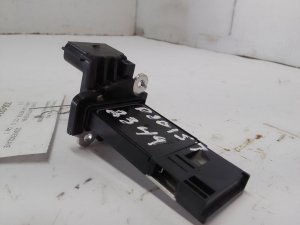
Used OEM Parts in Stock


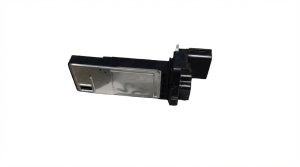
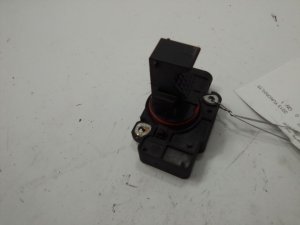

New Aftermarket Parts Available


The information in this article is provided for general reference and educational purposes only. Vehicle specifications, procedures, and part compatibility can vary by production date, trim level, and region. Always consult your vehicle's factory service manual and verify part numbers before purchasing or performing repairs. Safety-critical components such as airbags, seat belts, and braking systems should be installed by a qualified professional.
- Cadillac CTS:
- 🎬 Helpful Videos
- 🛍️ Shop This Part
- What's Unique About the 2014-2019 Cadillac CTS
- Symptoms You May Notice
- Most Likely Causes
- Rare But Worth Checking
- Diagnosis Steps
- Parts You'll Likely Need
- Related Codes That Often Appear With This One
- Technical Service Bulletins (TSBs) & Recalls
- Platform-Specific Known Issues
- Mechanic-Grade Diagnostic Values
- Scan Tool Commands That Help
- Wiring & Ground Locations
- Real Owner Repair Stories
- "I Checked Everything" — The Actual Cause
- OEM Part Supersession History
- Diagnostic Flowchart
- Real Owner Stories
- 2016 Chevrolet Camaro 2.0L LTG
- 2014 Cadillac CTS 2.0T
- 2018 Cadillac ATS 2.0L LTG
- Related OBD-II Codes
- Frequently Asked Questions
- 🎟️ Get 5% Off