

P1101 on 2016-2019 Cadillac CT6 2.0L Turbo: Intake Air Flow System Performance Causes and Fixes
On a 2016-2019 Cadillac CT6 with the 2.0L turbo engine, code P1101 is almost always caused by a missing or damaged O-ring seal in the charge air cooler (intercooler) piping. This is a well-documented issue covered by GM Technical Service Bulletin PIP5402E. The fix is an inexpensive seal (OEM Part No. 12654059), but diagnosis requires a smoke test to confirm the leak. This issue is common across all GM vehicles using the 2.0L LTG engine.
- For a P1101 code on a 2016-2019 Cadillac CT6 2.0T, the first thing to check is the charge air cooler piping for a missing or damaged O-ring seal, per GM TSB PIP5402E.
- Do not immediately replace the expensive Mass Airflow (MAF) sensor. The problem is far more likely to be a cheap seal or a dirty sensor.
- A smoke test is the most reliable diagnostic tool to find the exact location of an air leak in the intake system if it's not visually obvious.
- Symptoms typically include reduced engine power and poor acceleration, so address the issue promptly for safety and to prevent potential long-term damage.
What's Unique About the 2016-2019 Cadillac CT6
The 2.0L LTG turbo engine used in the Cadillac CT6 and many other GM vehicles has a known weakness that directly leads to the P1101 code. The intake system is pressurized by the turbo, and the flexible couplers connecting the charge air cooler (intercooler) are prone to leaks. GM has released a specific Technical Service Bulletin (PIP5402, with multiple revisions) that identifies a small, inexpensive O-ring seal in the charge air cooler ducting as the most common failure point. This makes the diagnosis for P1101 on this engine more direct than on many other vehicles, where the causes can be more varied.
Symptoms You May Notice
- Check Engine Light is on
- Reduced engine power or entering 'limp mode'
- Poor, sluggish, or hesitant acceleration
- Increased fuel consumption
- Rough or erratic idle
- Audible whooshing or hissing sound from the engine bay during acceleration
- Replacing the Mass Airflow (MAF) sensor without first confirming an air leak. The P1101 code on this engine is most often caused by an unmetered air leak, not a faulty sensor.
Most Likely Causes
- Missing or Damaged Charge Air Cooler (CAC) Coupler O-Ring Seal 🔴 High Probability This is a known issue documented by GM in Technical Service Bulletin #PIP5402E 🎬 Watch: A quick walkthrough of this common O-ring fix. for the 2.0L LTG engine. The seal can be dislodged during previous service or fail over time. This affects a wide range of GM vehicles with this engine.
How to confirm: Visually inspect the charge air cooler couplers, particularly on the passenger side, for a missing or damaged O-ring. A smoke test of the intake system is the most definitive way to confirm a leak at this location.
Typical fix: Replace the faulty O-ring seal (OEM Part #12654059) in the charge air cooler duct.
Est. part cost: $5-$20 - Dirty or Contaminated Mass Airflow (MAF) Sensor 🟡 Medium Probability Oil vapors from the PCV system or fine dust that gets past the air filter can coat the MAF sensor's delicate sensing elements, causing it to under-report airflow. Over-oiled aftermarket air filters are a common contributor.
How to confirm: Remove the MAF sensor and visually inspect the wires for contamination. An inaccurate reading can also be observed with a capable scan tool by comparing actual vs. calculated airflow.
Typical fix: Clean the sensor with a dedicated MAF sensor cleaner spray. 🎬 See how to safely clean your MAF sensor in seconds. Do not touch the sensor wires. If cleaning does not resolve the issue, the sensor may need to be replaced.
Est. part cost: $10-$15 for cleaner - Improperly Installed or Poorly Fitting Engine Air Filter ⚪ Low Probability Aftermarket air filters that do not seal correctly in the airbox can cause turbulent, unmetered air to bypass the filter and hit the MAF sensor, leading to inaccurate readings and triggering P1101.
How to confirm: Inspect the engine air filter to ensure it is seated correctly and that the airbox lid is fully secured. Check for any gaps or damage to the filter's sealing surfaces.
Typical fix: Reinstall the air filter correctly or replace a cheap/damaged aftermarket filter with a quality OEM or equivalent filter.
Est. part cost: $20-$50 - Loose or Cracked Intake Air Duct ⚪ Low Probability The plastic and rubber components of the intake system can become brittle over time with exposure to engine heat, leading to cracks or loose connections.
How to confirm: Perform a thorough visual inspection of all intake ducting between the MAF sensor and the throttle body. A smoke test is the most effective method for finding hidden cracks or leaks.
Typical fix: Tighten any loose clamps or replace the cracked duct section.
Est. part cost: $50-$250 depending on the specific duct
Rare But Worth Checking
- Dirty Throttle Body: Heavy carbon buildup can restrict airflow at idle and low speeds. The ECM commands a certain throttle angle but the actual airflow (measured by MAF) is lower than expected due to the blockage, triggering the P1101 rationality check failure.
- PCV System Failure: On the 2.0L LTG engine, a clogged PCV orifice inside the valve cover (GM TSB 20-NA-047) or cracked PCV lines can create an unmetered vacuum leak or improper crankcase pressure, triggering P1101. The orifice itself is a replaceable part (OEM #12641875).
- Cracked Charge Air Cooler (Intercooler): Less common than a coupler leak, but the intercooler itself can be damaged by road debris, causing a boost leak that sets P1101. This is usually found with a smoke test.
Diagnosis Steps
- Read the code with an OBD-II scanner and confirm P1101 is present. Note any other codes like P0101, P0171, or P0299.
- Thoroughly inspect the charge air cooler (intercooler) ducts and couplers for any signs of damage, looseness, or oil residue which can indicate a leak.
- Specifically inspect the O-ring seal at the passenger side charge air cooler connection, as detailed in GM TSB PIP5402E. Check if it is missing, damaged, or dislodged.
- Inspect the engine air filter. Ensure it is clean and, more importantly, that it is seated correctly in the airbox with no gaps, especially if it is an aftermarket filter.
- If no visual fault is found, perform a smoke test on the entire intake and charge air system to pinpoint any leaks.
- If no leaks are found, remove and inspect the Mass Airflow (MAF) sensor. Clean it using dedicated MAF sensor cleaner if it appears dirty.
- Inspect the throttle body for heavy carbon buildup and clean if necessary.
- Check PCV hoses for cracks or brittleness. If no external leaks are found, consider checking crankcase pressure to diagnose a potential clogged internal PCV orifice per TSB 20-NA-047.
- After any repairs, clear the codes and perform a test drive to ensure the issue is resolved.
Parts You'll Likely Need
- Charge Air Cooler Duct Seal (O-Ring)
(OEM #12654059)— This is the most common failure point for code P1101 on this engine, as documented in GM TSB PIP5402E.
Trusted brands: ACDelco (OEM)
OEM price range: $5-$20
Aftermarket price range: $5-$15 - Mass Airflow Sensor Cleaner — If the MAF sensor is contaminated, cleaning it is a low-cost diagnostic and repair step before considering replacement.
Trusted brands: CRC, Liqui Moly
OEM price range: N/A
Aftermarket price range: $10-$15 - PCV Valve Orifice
(OEM #12641875)— A potential cause for P1101 if no intake leaks are found. A clogged orifice inside the camshaft cover can cause incorrect crankcase pressure, per TSB 20-NA-047.
Trusted brands: ACDelco (OEM)
OEM price range: $10-$25
Aftermarket price range: N/A
Related Codes That Often Appear With This One
- P0101 — This is a more generic MAF Sensor Performance code. They often appear together as they both relate to the MAF sensor's readings being out of the expected range, often from the same CAC leak.
- P0171 — This 'System Too Lean' code can be triggered by the same unmetered air leak that causes P1101, as the extra air leans out the air-fuel mixture. 🎬 Watch: Diagnosing lean codes and boost leaks with a scan tool.
- P0299 — This 'Turbo Underboost' code can appear if the air leak in the charge piping is large enough to cause a significant loss of boost pressure.
Technical Service Bulletins (TSBs) & Recalls
- PIP5402 (A, B, C, D, E): Recommends inspecting for a missing or damaged O-ring seal in the charge air cooler coupler for code P1101. Bulletin #PIP5402E specifically notes that a reduced engine power message may accompany this code.
- 20-NA-047 (replaces PIP5417C): Details diagnosis of P1101 caused by a plugged PCV orifice within the camshaft cover, leading to incorrect crankcase pressure.
Platform-Specific Known Issues
- A recurring issue with the charge air cooler coupler O-ring seal is well-documented by GM in TSB PIP5402E, which applies to the 2016-2019 CT6 and a wide array of other GM vehicles that use the 2.0L LTG engine, indicating this is an engine-specific problem, not a chassis-specific one.
Mechanic-Grade Diagnostic Values
- Mass Air Flow (MAF) Rate at Idle — expected: 2.0 - 4.0 grams/second (g/s) at warm idle with no load. The g/s value should roughly match the engine displacement in liters.. Failure: A reading significantly lower than 2.0 g/s suggests an unmetered air leak after the sensor. A reading that is stuck, erratic, or does not increase smoothly with RPM can indicate a faulty sensor.
- Mass Air Flow (MAF) Rate at 2500 RPM — expected: 15 - 25 grams/second (g/s).. Failure: A reading that rises too slowly can indicate a dirty sensor or an air leak. A reading that rises too quickly or behaves erratically can indicate a failing sensor.
- MAF Sensor Signal Frequency at Idle — expected: Approximately 3.0 - 4.0 KHz (3000-4000 Hz).. Failure: An unstable frequency, or one that does not increase smoothly as engine RPM rises, points to a sensor or wiring issue.
- MAF Sensor Power Supply Voltage — expected: 10 - 12 Volts DC at the power wire (often pink) with Key On, Engine Off.. Failure: No voltage or low voltage indicates a wiring issue, blown fuse, or problem with the ECM's power supply.
- MAF Sensor Ground Circuit — expected: Near 0 Volts DC when testing the ground wire at the connector.. Failure: Any significant voltage reading on the ground wire indicates a poor ground connection, which can cause erratic sensor readings.
Scan Tool Commands That Help
- GDS2 / Professional Scan Tool: KOER (Key-On Engine-Run) Verification Test — The P1101 code specifically means the MAF sensor is out of its self-test range, or the KOER test was aborted. Running this function forces the ECM to repeat the self-test. A failure confirms the abort condition and helps differentiate between a hard fault and an intermittent issue.
- GDS2 / Professional Scan Tool: Graphing MAF Sensor Data (g/s and Hz) — Graphing the MAF sensor's output while performing a snap throttle test is a key diagnostic step. A healthy sensor will show a smooth, rapid increase in frequency and g/s. A dirty sensor may show a lazy response, while a faulty sensor can have sharp dropouts or glitches that are easily seen on a graph.
Wiring & Ground Locations
- MAF Sensor Connector — On the air intake tube, immediately after the air filter housing.. This 8-pin connector provides power, ground, and signal lines for the integrated MAF, IAT, and humidity sensors. Corrosion, moisture intrusion (per TSB 24-NA-158), or loose pins can directly cause P1101 and related codes. The signal wire is often yellow on GM vehicles.
- G103 / G105 — Common engine compartment grounds. G103 is often on the cowl near the brake booster, and G105 can be on the left front of the engine compartment or frame rail.. The ECM and its sensors rely on clean ground connections to provide accurate signals. A corroded or loose ground at G103 or G105 can introduce electrical noise or a voltage offset into the MAF sensor circuit, causing incorrect readings and triggering a P1101 code even if the sensor itself is good.
Real Owner Repair Stories
- Reddit user in r/AskAMechanic (2016 Chevrolet Camaro 2.0L LTG (same engine and likely issue)) — P1101 code, Check Engine Light only comes on when accelerating hard.
❌ Tried (didn't work) Cleaned throttle body, Replaced MAF sensor, Replaced MAP sensor, Confirmed air filter is clean, Confirmed PCV valve is good
✅ What actually fixed it The user was directed to GM TSB PIP5402 regarding the charge air cooler seal. After inspecting, they found and replaced the faulty seal, which resolved the issue. The user confirmed: "this did the trick and my car is running great now."
OEM Part Supersession History
13505433→12671624— Standard part number update by GM.
Heads up: The new part number 12671624 is the direct replacement for 13505433 and is fully compatible.
Diagnostic Flowchart
Real Owner Stories
Aggregated from forums and TSBs cited above. Mileages and costs reflect what owners reported in those sources.
2014 Chevy Malibu 2.0L LTG
Symptoms: Vehicle triggered a P1101 code due to an airflow calculation error, despite having no vacuum leaks.
What fixed it: Cleaned a dirty throttle body to restore proper airflow calculations.
Source hint: YouTube - ScannerDanner: '2014 Chevy Malibu 2.0L P1101 Caused by a Dirty Throttle Body'
GM Vehicle with 2.0L Engine
Symptoms: Inaccurate MAF sensor readings triggering the P1101 code due to turbulent air entering the intake.
What fixed it: Replaced a cheap, poorly-fitting aftermarket air filter that was failing to seal correctly in the airbox.
Source hint: YouTube - DadsGarage Diagnostic Specialist: 'INFAMOUS P1101 code… an easy fix this time…'
Cadillac ATS 2.0t LTG
Symptoms: System running too lean (P0171) caused by unmetered air leaks from the PCV system.
What fixed it: Replaced brittle and cracked PCV hoses that were allowing unmetered air into the engine.
Source hint: YouTube - Backyard CHEVY: 'P0171 System Too Lean Fix - PCV Hose Replacement 2.0t Cadillac ATS'
Related OBD-II Codes
Frequently Asked Questions
Does TSB PIP5402E apply to my 2016-2019 Cadillac CT6 2.0L?
What exact part do I need to fix the charge air cooler leak on my CT6?
Can a dirty throttle body cause a P1101 on the 2.0L LTG engine?
I have a P1101 code and hear a hissing sound under acceleration. What does this mean?
Is there a TSB for PCV issues causing this code on the 2.0L Turbo?
Could my aftermarket air filter be causing the P1101 code?
Helpful Videos

Used OEM Parts in Stock
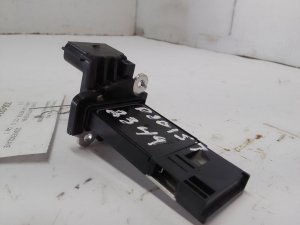

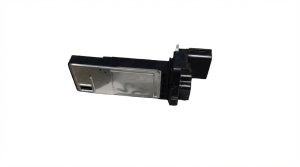


New Aftermarket Parts Available
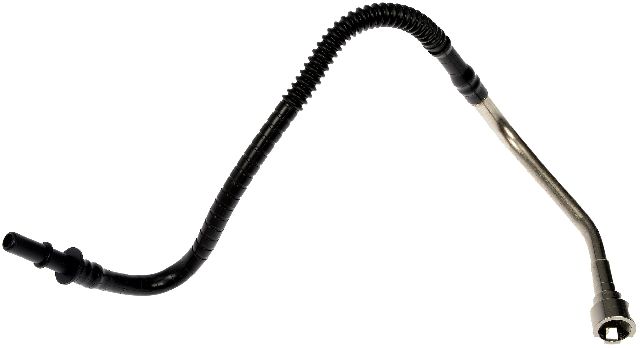


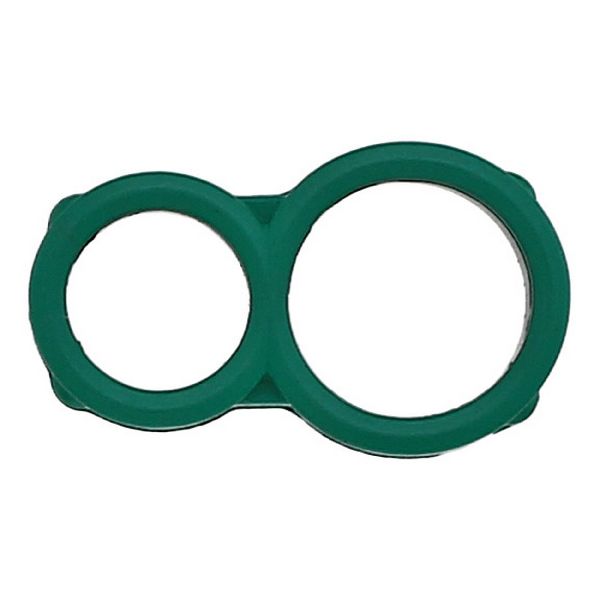

The information in this article is provided for general reference and educational purposes only. Vehicle specifications, procedures, and part compatibility can vary by production date, trim level, and region. Always consult your vehicle's factory service manual and verify part numbers before purchasing or performing repairs. Safety-critical components such as airbags, seat belts, and braking systems should be installed by a qualified professional.
- Cadillac CT6:
- 🎬 Helpful Videos
- 🛍️ Shop This Part
- What's Unique About the 2016-2019 Cadillac CT6
- Symptoms You May Notice
- Most Likely Causes
- Rare But Worth Checking
- Diagnosis Steps
- Parts You'll Likely Need
- Related Codes That Often Appear With This One
- Technical Service Bulletins (TSBs) & Recalls
- Platform-Specific Known Issues
- Mechanic-Grade Diagnostic Values
- Scan Tool Commands That Help
- Wiring & Ground Locations
- Real Owner Repair Stories
- OEM Part Supersession History
- Diagnostic Flowchart
- Real Owner Stories
- 2014 Chevy Malibu 2.0L LTG
- GM Vehicle with 2.0L Engine
- Cadillac ATS 2.0t LTG
- Related OBD-II Codes
- Frequently Asked Questions
- 🎟️ Get 5% Off