

P1101 on 2013-2019 Buick Regal: Intake Airflow Performance Causes and Fixes
On a 2013-2019 Buick Regal, code P1101 is most often caused by an unmetered air leak in the intake system, specifically from a damaged or missing O-ring in the charge air cooler (CAC) coupler, as noted in GM Technical Service Bulletin PIP5402F. Other common causes include a loose hose at the throttle body, a dirty Mass Airflow (MAF) sensor, or a cracked charge air cooler. The repair can be as simple as replacing a seal or cleaning a sensor.
- P1101 on a 2013-2019 Regal is an intake airflow performance code, often triggering a 'Reduced Engine Power' warning.
- The most probable cause is an air leak from a faulty O-ring in the charge air cooler coupler, as per GM TSB PIP5402E.
- Diagnosis should start with a visual inspection of the intake system for leaks, especially the charge pipe connections, before replacing any parts.
- Other common causes include a dirty MAF sensor, a clogged air filter, or other vacuum leaks.
- Do not immediately replace the MAF sensor; it is often misdiagnosed when the real problem is a simple air leak.
What's Unique About the 2013-2019 Buick REGAL

The Buick Regal, especially models with the 2.0L turbocharged engine (LTG/LHU), is particularly sensitive to air leaks in the pressurized intake tract after the turbo. General Motors issued a specific Technical Service Bulletin, PIP5402 🎬 Watch: Common causes and fixes for the P1101 code. (now on revision F), for this platform, pointing directly to a faulty O-ring seal on the charge air cooler as a primary cause for the P1101 code. Another TSB, 16-NA-011, also highlights issues with the CAC outlet hose at the throttle body being improperly installed. This makes the entire charge air system the primary suspect, distinguishing it from naturally aspirated vehicles where a dirty MAF sensor might be the first and only check.
Diagnostic Flowchart

Tap your situation to follow the diagnostic path that matches what you're seeing on this vehicle.
Generation note: The 2013-2019 year range covers two generations of the Buick Regal: the fifth generation (2013-2017) and the sixth generation (2018-2019). The primary cause identified in TSB PIP5402F applies to the 2.0L engines used across this entire range. While the principle is the same, the exact location and appearance of intake components may vary slightly between generations.
Symptoms You May Notice
- "Reduced Engine Power" message on the dashboard.
- Illuminated Check Engine Light.
- Surging or hesitation during acceleration.
- Rough or unstable idle.
- Poor acceleration and overall lack of power.
- Whistle-like noise from the engine bay, especially on startup.
- Audible 'whoosh' or hissing sound from the engine bay during acceleration, indicating a boost leak.
- Replacing the MAF sensor without first checking for air leaks. An air leak is a very common cause, especially on this turbocharged platform, and a new MAF sensor will not fix it.
Most Likely Causes

- Missing or Damaged Charge Air Cooler (CAC) Coupler O-Ring Seal 🔴 High Probability This is a well-known issue documented by General Motors in TSB PIP5402F for the 2.0L engine. The seal on the inlet or outlet duct of the charge air cooler can be damaged, improperly seated, or missing from a previous repair, creating a significant air leak after the MAF sensor.
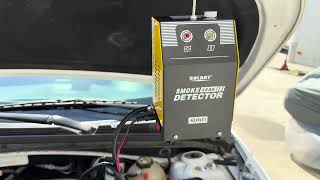
How to confirm: Visually inspect the charge air cooler couplers, located on the driver's and passenger's side of the CAC, where the air ducts connect. A smoke test of the intake system is the most effective way to confirm this or any other hard-to-see leak.
Typical fix: Replace the damaged or missing O-ring seal and ensure the coupler is properly seated and clamped.
Est. part cost: $10-$30 - Other Intake System Leaks (Boost Leak) 🟡 Medium Probability Plastic and rubber components in the pressurized intake system can fail. A common failure point is the CAC outlet hose at the throttle body coming loose or being improperly installed, as noted in TSB 16-NA-011. Additionally, the plastic end tanks of the charge air cooler itself can develop cracks from stress and heat cycles.
How to confirm: Perform a smoke test on the intake system to see if smoke escapes from any hoses, gaskets, or connections between the MAF sensor and the engine. Pay close attention to the throttle body connection and the seams of the charge air cooler end tanks.
Typical fix: Reconnect and clamp the loose hose, or replace the cracked charge air cooler.
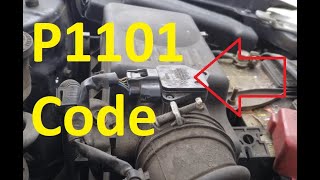
Est. part cost: $20-$100 for a hose/clamp, $200-$400 for a new charge air cooler - Dirty or Faulty Mass Airflow (MAF) Sensor 🟡 Medium Probability Oil vapor from the PCV system or over-oiled aftermarket air filters can contaminate the MAF sensor's delicate sensing element, causing inaccurate readings.
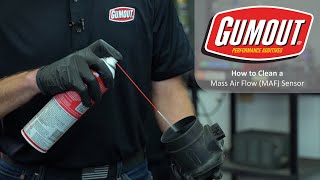
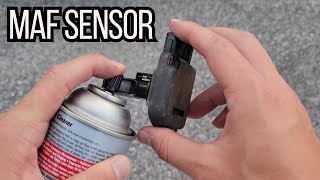
How to confirm: Remove the MAF sensor and visually inspect it for dirt, oil, or debris. The sensor can also be tested using a scan tool to observe its readings (g/s) at idle and under load. Do not use brake or carburetor cleaner, only dedicated MAF sensor cleaner.
Typical fix: Clean the sensor using a dedicated MAF sensor cleaner spray. If cleaning does not resolve the issue, the sensor must be replaced.
Est. part cost: $10-$15 for cleaner, $70-$150 for a new sensor - Clogged or Poorly-Fitting Engine Air Filter ⚪ Low Probability
How to confirm: Visually inspect the engine air filter. If it is visibly dirty or clogged with debris, it is restricting airflow. Also check for poor fitment of aftermarket filters, which can cause turbulence.
Typical fix: Replace the engine air filter, preferably with an OEM part to ensure proper fit.
Est. part cost: $20-$50
Rare But Worth Checking
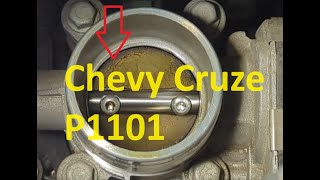
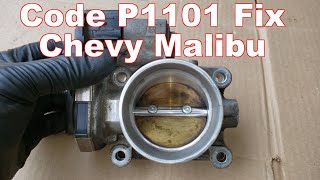
- Dirty Throttle Body: Carbon and oil buildup around the throttle plate can restrict airflow and cause erratic readings, contributing to this code. Cleaning the throttle body is a common fix on many GM platforms.
- Faulty PCV System / Valve Cover: On the 2.0L LTG engine, the PCV system is integrated into the valve cover. A failed internal check valve can cause excessive crankcase pressure or vacuum, disrupting the airflow balance the ECM expects to see. GM TSB 20-NA-047 (superseding PIP5417) suggests checking crankcase pressure when diagnosing P1101. Often, the entire valve cover must be replaced.
Diagnosis Steps
- Read the codes with an OBD-II scanner to confirm P1101 and check for any other related codes like P0101, P0171, or P0299.
- Inspect the engine air filter. Replace if it's dirty, clogged, or a poorly-fitting aftermarket filter.
- Visually inspect all accessible intake hoses and clamps between the air filter box and the throttle body for obvious cracks, damage, or loose connections.
- Specifically inspect the charge air cooler (CAC) couplers on both sides for a missing or damaged O-ring, as detailed in TSB PIP5402F.
- Check the CAC outlet hose connection at the throttle body to ensure it is fully seated and clamped, per TSB 16-NA-011.
- If no visible leaks are found, perform a smoke test on the entire intake system to identify any hard-to-see leaks from hoses, gaskets, or the CAC end tanks.
- If no leaks are present, check crankcase pressure using a manometer at the oil dipstick tube, per TSB 20-NA-047. Pressure should be -1 to -5 inches of water at hot idle. Positive pressure suggests a PCV issue.
- If no leaks or pressure issues are found, remove and inspect the MAF sensor. Clean it with dedicated MAF sensor cleaner.
- Using a scan tool, monitor the MAF sensor reading in grams/second (g/s) at idle. It should be roughly 3.4-4.2 g/s for a 2.0L engine at operating temperature. The reading should increase smoothly with RPM.
- Inspect and clean the throttle body if significant carbon buildup is present.
- After any repairs, clear the codes, reset fuel trims if possible, and perform a test drive to see if the code returns.
Parts You'll Likely Need
- Charge Air Cooler Coupler O-Ring Seal
(OEM #12633576, 12644913 (Verify with VIN))— This is the most likely culprit according to GM's own Technical Service Bulletin (PIP5402F) for this specific code and vehicle.
Trusted brands: ACDelco, GM Genuine
OEM price range: $15-$30
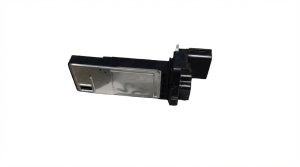
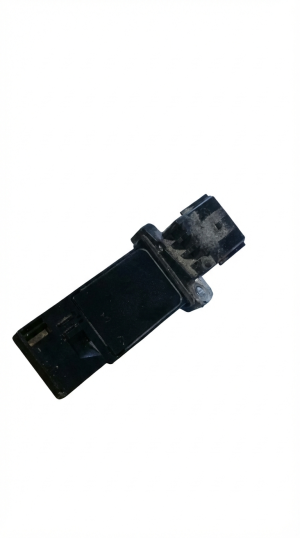
Aftermarket price range: $10-$20 - Mass Airflow (MAF) Sensor
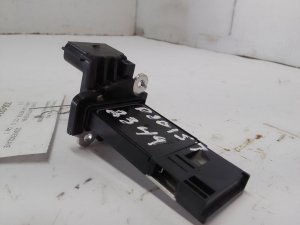
(OEM #12671624 (Verify with VIN))— If the sensor is contaminated beyond cleaning or has failed electronically, it will need to be replaced.
Trusted brands: ACDelco, Bosch, Delphi
OEM price range: $120-$180
Aftermarket price range: $70-$120 - Engine Air Filter — A clogged or poorly-fitting air filter can restrict or disrupt airflow and is a simple, inexpensive maintenance item to rule out as a cause.
Trusted brands: ACDelco, Wix, Fram
OEM price range: $30-$50
Aftermarket price range: $20-$40
Related Codes That Often Appear With This One
- P0101 — This code specifically indicates 'Mass Air Flow (MAF) Sensor Performance'. It often appears with P1101 because both relate to the MAF sensor's readings being out of the expected range. The NHTSA complaint ODI #10918054 and TSB PIP5402E both cite these codes together.
- P0171 — This code means 'System Too Lean (Bank 1)'. An unmetered air leak, a primary cause of P1101, allows extra air into the engine that the MAF sensor didn't measure. This creates a lean condition (too much air, not enough fuel), triggering P0171.
- P0299 — This code indicates 'Engine Underboost'. A significant leak in the charge air system will prevent the turbo from building the target boost pressure, triggering both P1101 (due to the airflow mismatch) and P0299 (due to the low boost).
Technical Service Bulletins (TSBs) & Recalls

- PIP5402F: Advises technicians to inspect for a missing or damaged O-ring in the charge air cooler coupler.
- 16-NA-011: Notes issues with the charge air cooler outlet hose at the throttle body being improperly installed or blowing off.
- 20-NA-047 (supersedes PIP5417C): Provides procedure for testing crankcase pressure when P1101 is present, pointing to a clogged PCV orifice as a possible cause.
Platform-Specific Known Issues
- A known issue documented in TSB PIP5402F involves a missing or damaged O-ring seal in the charge air cooler coupler, leading directly to code P1101 and a Reduced Engine Power message.
- An owner of a 2013 Regal reported experiencing P1101 along with P0101, reduced power, and surging during acceleration, which aligns perfectly with the symptoms of an intake air leak. [NHTSA ODI #10918054]
- A 2014 Regal GS owner on buickforums.com reported a P1101 code with a 'whooshing' sound; the cause was the charge air cooler hose blowing off the throttle body connection, a fix also referenced in TSB 16-NA-011.
Mechanic-Grade Diagnostic Values
- Mass Airflow (MAF) Rate at Hot Idle — expected: 3.4 - 4.2 g/s. Failure: Significantly higher or lower readings suggest a sensor fault or a large air leak.
- Long Term Fuel Trim at Idle — expected: -10% to +10%. Failure: A high positive value (e.g., > +20%) strongly indicates an unmetered air leak downstream of the MAF sensor.
- Crankcase Pressure at Hot Idle — expected: -1 to -5 inches of water. Failure: Pressure above 0 inches of water (positive pressure) points to a clogged PCV orifice. Pressure below -16 inches of water (excessive vacuum) points to a different PCV system restriction.
Hidden / Shadow Codes Worth Checking
- P1101-00: This is the standard P1101 code. The '-00' suffix is a GM identifier indicating it is the primary fault code with no additional sub-type information. (see via Most standard OBD-II scanners.)
Scan Tool Commands That Help
- GDS2 / Tech2 (or advanced scan tool): Fuel Injector Balance Test — If P1101 is accompanied by a misfire code (e.g., P0300, P0304), this test can help determine if a fuel injector is malfunctioning, which can be a consequence of other repairs or a separate issue causing the airflow rationality code.
- Any scan tool with live data: Observe Fuel Trims after MAF Disconnect — As a quick test for a faulty MAF sensor. With the engine running, disconnect the MAF sensor electrical connector. If the long-term fuel trims quickly move toward 0%, it indicates the MAF was reading inaccurately (typically too high), and the ECM is now running on a default map that is closer to correct.
Wiring & Ground Locations
- G103 / G106 — Located on the driver's side of the engine compartment, near the battery tray and underhood fuse block.. These are primary engine and control module ground points. A poor connection at these locations can cause erratic voltage and faulty readings from sensors like the MAF, potentially triggering a P1101 code.
Real Owner Repair Stories
- YouTube channel 'DadsGarage Diagnostic Specialist' (GM vehicle with Ecotec engine (similar MAF setup)) — P1101 code, MAF reading higher than calculated airflow.
❌ Tried (didn't work) Initial inspection for obvious air leaks.
✅ What actually fixed it The vehicle had a cheap, deformed aftermarket air filter that was not sealing correctly in the airbox. This caused air turbulence across the MAF sensor, leading to inaccurate readings. Replacing the filter with a proper-fitting GM OEM air filter resolved the code. - YouTube channel 'DadsGarage Diagnostic Specialist' (Chevy Equinox with 1.5L Turbo (shares PCV design principles with LTG)) — P1101 and P0171 codes, extremely high crankcase vacuum.
❌ Tried (didn't work) A standard intake smoke test would not have found this issue.
✅ What actually fixed it The internal PCV valve, located in the valve cover, had physically broken. A small brass piece fell out of the valve assembly, causing it to be stuck open and create extreme vacuum in the crankcase. This threw off the engine's entire air metering system. The fix was to replace the PCV valve assembly.
"I Checked Everything" — The Actual Cause
- In cases involving a faulty internal PCV system, a standard intake smoke test will often show no leaks. The problem is not an external leak but rather an internal one, where the crankcase is being subjected to improper vacuum or pressure. The definitive test is not a smoke test, but a crankcase pressure test with a manometer as described in GM TSB 20-NA-047. A reading outside the -1 to -5 inches of water range points to the PCV system, even with a 'clean' smoke test.
OEM Part Supersession History
13432262, 13505433→12671624— Standard part revision and consolidation by the manufacturer.
Heads up: The new part number (12671624) is the correct service replacement for the older numbers on this platform.
Model Year Variations Within This Range
- 2018-2019: The high-performance Regal GS model switched from the 2.0L Turbo (LTG) engine to a 3.6L V6 (LGX) engine starting in model year 2018. Diagnostic procedures for a P1101 on a 2018+ GS would differ significantly from the 2.0L turbo models.
- 2018-2019: The 2.0L LTG engine in the 6th generation Regal (2018+) was paired with a 9-speed 9T50 automatic transmission, replacing the 6-speed automatic from the previous generation. This does not directly impact the cause of P1101 but is a major platform difference.
Helpful Videos
We Have This Part in Stock




The information in this article is provided for general reference and educational purposes only. Vehicle specifications, procedures, and part compatibility can vary by production date, trim level, and region. Always consult your vehicle's factory service manual and verify part numbers before purchasing or performing repairs. Safety-critical components such as airbags, seat belts, and braking systems should be installed by a qualified professional.
- Buick REGAL:
- 🎬 Helpful Videos
- 🛍️ Shop This Part
- What's Unique About the 2013-2019 Buick REGAL
- Diagnostic Flowchart
- Symptoms You May Notice
- Most Likely Causes
- Rare But Worth Checking
- Diagnosis Steps
- Parts You'll Likely Need
- Related Codes That Often Appear With This One
- Technical Service Bulletins (TSBs) & Recalls
- Platform-Specific Known Issues
- Mechanic-Grade Diagnostic Values
- Hidden / Shadow Codes Worth Checking
- Scan Tool Commands That Help
- Wiring & Ground Locations
- Real Owner Repair Stories
- "I Checked Everything" — The Actual Cause
- OEM Part Supersession History
- Model Year Variations Within This Range
- 🎟️ Get 5% Off