

P1098 on 2005-2019 Subaru Impreza: Tumble Generator Valve Sensor Causes and Fixes
P1098 on a Subaru Impreza means the passenger-side Tumble Generator Valve (TGV) position sensor has failed. This is very common on turbo (WRX/STI) models due to heat from the nearby turbocharger. The fix is usually to replace just the sensor, which can often be purchased as a more common throttle position sensor (Part No. 22633AA210) for under $75, saving hundreds over a full TGV assembly replacement.
- P1098 points directly to a problem with the passenger-side (Bank 2) Tumble Generator Valve (TGV) position sensor or its circuit.
- The most likely cause, especially on turbo WRX/STI models, is a failed sensor due to engine heat. Check its wiring and connector before replacing.
- For many Imprezas (especially pre-2015 turbo models), you can save significant money by replacing only the sensor (part #22633AA210), not the entire TGV assembly.
- Driving with this code will result in 'limp mode' with drastically reduced engine power and should be addressed promptly.
- This code applies to both turbo and non-turbo Impreza models within the 2005-2019 year range.
What's Unique About the 2005-2019 Subaru Impreza
Unlike many other manufacturers where this code number points to different systems, on Subarus it consistently refers to the Tumble Generator Valve. This system is present on both turbo (WRX/STI) and non-turbo Impreza engines across these model years, including the EJ, FB, and FA engine families. On turbocharged EJ engines, the Bank 2 sensor is notoriously prone to failure due to its close proximity to the hot turbocharger, which causes heat soak and leads to premature failure of the electronic component. A key money-saving tip for owners of older models with the 3-pin sensor is that the TGV sensor is often identical to the more widely available throttle position sensor (TPS) and can be replaced separately from the main TGV housing. Newer models (approx. 2007+) may use a 5-pin integrated motor and sensor assembly, making separate sensor replacement impossible.
Generation note: This code applies across multiple Impreza generations, as both turbo and non-turbo engines used TGV systems. - 2005-2011 (GD/GG, GE/GH): Includes non-turbo EJ253 and turbo EJ255/EJ257 engines. These typically use a separate 3-pin TGV position sensor that is a common failure point and can be replaced independently. - 2012-2016 (GJ/GP): Base models switched to the FB20 engine, which has TGVs. The WRX switched to the FA20DIT engine in 2015, which also has TGVs, but the sensor and motor are often an integrated 5-pin assembly, requiring replacement of the whole unit. - 2017-2019 (GK/GT): Base models use the updated FB20D engine with TGVs. The STI continues with the EJ257 engine, which may still use the older separate sensor design depending on the year.
Symptoms You May Notice
- Check Engine Light is on
- Flashing cruise control light
- Engine running in 'limp mode' with severely reduced power and acceleration
- Engine RPM is limited and will not rev past a certain point (e.g., 3,000-4,000 RPM)
- Rough or unstable idle, especially on a cold start
- Poor fuel economy
- No turbo boost on WRX/STI models
- Replacing the entire TGV housing assembly when only the inexpensive sensor has failed. Dealers often quote this repair for over $700.
- Replacing the wrong sensor. P1098 is for Bank 2 (passenger side). The driver's side (Bank 1) will trigger different codes, such as P1086 or P1088.
- Performing a 'TGV delete' modification. While a common performance upgrade for a marginal power gain, it is not required to fix this code, requires a professional ECU tune to prevent other codes, and may not be emissions-legal.
Most Likely Causes
- Failed TGV Position Sensor (Bank 2) 🔴 High Probability On turbocharged EJ-series engines (WRX/STI), the Bank 2 sensor is located very close to the turbocharger, and prolonged heat exposure leads to premature failure. It is a small electronic sensor that wears out over time on all models.
How to confirm: Check the sensor's electrical connector for damage or corrosion first. A disconnected plug is a common cause of a 'Circuit High' code. With a multimeter, test the sensor's output voltage. A reading that is stuck high (near 5V) regardless of key position points to a failed sensor. Expected readings are approximately 4.2V when the valve is closed (key on, engine off) and 0.4V when open (engine warm).
Typical fix: Replace the TGV position sensor on the passenger-side TGV assembly. On many EJ engines, this can be done without removing the TGV housing. The new sensor must be 'clocked' on installation: install it rotated 90 degrees, then twist it into its final position to preload the internal spring before inserting the screws.
Est. part cost: $40-$100 - Damaged Wiring or Connector 🟡 Medium Probability The engine bay heat, especially near the turbo on WRX/STI models, can make the plastic connector and wire insulation brittle and prone to cracking or breaking. The locking tab on the connector often breaks off.
How to confirm: Visually inspect the wiring harness and connector going to the Bank 2 TGV sensor. Look for any signs of melted plastic, cracked insulation, corrosion in the pins, or broken wires. Wiggle the connector with the engine running to see if it affects idle.
Typical fix: Repair the damaged section of wire or replace the connector pigtail. iWire is a known brand that sells replacement pigtails specifically for this application, offering color-matched wires for easier installation.
Est. part cost: $15-$40 - Sticking TGV Butterfly Valve ⚪ Low Probability Carbon buildup can accumulate in the intake runners over time, causing the butterfly valve to bind or stick. This is more common on higher-mileage engines and can be exacerbated by issues with the PCV system.
How to confirm: This is harder to confirm without disassembly. If a new sensor doesn't fix the code, the TGV assembly may need to be removed and inspected. You may hear a faint clicking or binding noise from the TGV motor as it tries to move the valve when the ignition is turned on.
Typical fix: Remove the TGV assembly and clean the carbon buildup from the housing and butterfly valve. In severe cases, the entire TGV assembly may need replacement. This is often done as part of a 'TGV delete' on modified cars, but that requires an ECU tune.
Est. part cost: $0 (if cleaning) or $200-$400 for a replacement assembly
Rare But Worth Checking
- Failed TGV Motor: The electric motor that drives the butterfly valve can fail. This is less common than a sensor failure but can prevent the valve from moving, which may cause the sensor to report an out-of-range value. On newer models with 5-pin connectors, the motor and sensor are one integrated unit.
- Poor Engine Grounding: The ECU's grounding path on some EJ engines runs through the intake manifold. If the main engine grounds are corroded or TGV delete spacers are installed without a proper grounding strap, it can cause erratic sensor readings, potentially triggering a P1098 code.
- Faulty Engine Control Unit (ECU): In very rare cases, the ECU itself may have a fault in the 5V reference circuit or the signal input channel. This should only be considered after all other possibilities have been exhaustively ruled out.
Diagnosis Steps
- Verify the code with an OBD-II scanner. Confirm P1098 is present.
- Locate the Bank 2 (passenger side) TGV assembly. On turbo EJ engines, it is situated between the red intake manifold and the cylinder head, very close to the turbocharger.
- Inspect the electrical connector and wiring going to the TGV position sensor. A disconnected plug is a very common cause for a 'Circuit High' code. Check for a broken locking tab, melted plastic, or chafed wires.
- If wiring appears intact, test the sensor. Using a multimeter set to DC Volts, back-probe the signal wire. A 'Circuit High' code often means the voltage is stuck near 5V. The voltage should be ~4.2V with the key on, engine off (valve closed) and drop to ~0.4V when the engine is warm and the valve is open.
- If the sensor and wiring are good, the issue may be mechanical. Listen for the TGV motor actuating when the key is turned to the 'ON' position (engine off). A lack of sound or a clicking/binding noise could indicate a failed motor or a stuck butterfly valve.
- If the valve is suspected to be stuck, the TGV assembly must be removed for inspection and cleaning. This is a labor-intensive job.
- Replace the faulty component. If replacing the sensor, remember to 'clock' it during installation by inserting it at a 90-degree offset and rotating it into place before tightening the screws. Clear the codes and perform a test drive.
- A helpful tip for the bottom 7mm bolt, which is hard to reach, is to put a small piece of electrical tape in the socket to hold the bolt securely for reinstallation.
Parts You'll Likely Need
- Tumble Generator Valve (TGV) Position Sensor
(OEM #22633AA210)— This sensor is the most common failure point for code P1098, especially on turbo models where it is exposed to high heat. It is often sold as a Throttle Position Sensor (TPS) but is identical for many EJ engines.
Trusted brands: Subaru, Denso, Hitachi
Related Codes That Often Appear With This One
- P1086 — This is the equivalent code for a 'Circuit Low' fault on the Bank 1 (driver's side) TGV sensor. Seeing both could indicate a systemic issue or a shared wiring problem.
- P2005 — This code means 'Intake Manifold Runner Control Stuck Open Bank 2'. It points to a mechanical problem (a stuck valve) in the same TGV assembly where the P1098 sensor is located, suggesting the cause may be binding rather than purely electrical.
- P1099 — This is for 'TGV Position Sensor Circuit Low Input (Bank 2)'. Seeing both P1098 and P1099 might suggest an intermittent wiring issue or a completely failed sensor with erratic readings.
Technical Service Bulletins (TSBs) & Recalls
- TSB 09-72-20: While not for P1098 specifically, this TSB applies to 2017-2020 Impreza/Crosstrek models and addresses other TGV codes (P2004, P2005, etc.) caused by lubricant leaking from the TGV actuator. It announces a redesigned intake manifold with an improved TGV assembly, acknowledging that TGV operational issues are a known problem. The TGV component is not serviced separately, requiring manifold replacement.
Platform-Specific Known Issues
- Extreme Difficulty of Access on Turbo Passenger Side: On WRX/STI models, the Bank 2 (passenger side) TGV sensor is wedged between the intake manifold, the turbo inlet, and the turbocharger itself. Access is extremely limited. Many owners report needing to use a combination of swivels, long extensions, and cut-down wrenches to access the two 7mm bolts holding the sensor. A YouTube video by user 'billwinterberg' shows a detailed process for the easier driver's side, while another user details the passenger side struggle, recommending prying gently on components and using tape in the socket to hold the bolt.
- 3-pin vs 5-pin TGV Assemblies: Older models (pre-~2007) use a separate 3-pin sensor and 2-pin motor. Newer models (post-~2007) integrate these into a single 5-pin connector and assembly. It is critical to identify which version your vehicle has. A 5-pin assembly cannot be repaired by replacing just the sensor; the entire TGV housing must be replaced.
Mechanic-Grade Diagnostic Values
- TGV Position Sensor (Bank 2) Signal Wire Voltage — expected: Approximately 4.2V with Key On, Engine Off (valve closed). Approximately 0.4V when engine is warm and valve is open.. Failure: A 'Circuit High' fault is indicated by the voltage being stuck near the 5V reference, regardless of valve position. This often happens if the connector is unplugged or the sensor has failed internally.
Scan Tool Commands That Help
- Subaru Select Monitor (SSM): Current Data Display / Data Display — To view the live voltage reading from the 'TGV Position Sensor R' without needing to physically back-probe the sensor connector. This allows a technician to safely monitor the sensor's reported voltage as the ECU commands the valve to open or close, confirming if the voltage is stuck high.
Wiring & Ground Locations
- Bank 2 TGV Sensor Connector (B23) — On the passenger side TGV assembly, which is located between the intake manifold runner and the cylinder head. On turbo models, it is very close to the turbocharger. It is a 3-pin connector on applicable models.. This is the direct connector for the sensor. A 'Circuit High' code is frequently caused by this connector being unplugged or damaged, as the open signal wire will float to the 5V reference voltage.
- Intake Manifold Ground — The main ECU grounds are established through the intake manifold being bolted to the engine block/heads. A dedicated ground strap often runs from the manifold or a nearby point to the chassis/firewall.. The ECU uses this ground as a reference for its sensors. If the manifold ground is poor (due to corrosion, loose bolts, or installing non-conductive TGV spacers without a bypass ground strap), the sensor's ground reference can 'float', causing its signal voltage to read incorrectly high and trigger a P1098 code.
Real Owner Repair Stories
- Reddit user on r/subaru (2016 Subaru STI) — Multiple strange CELs, including TGV codes where valves would stick open or closed randomly, and a feeling of misfiring.
❌ Tried (didn't work) Initial diagnosis pointed towards faulty TGV units.
✅ What actually fixed it The owner had recently installed an aftermarket exhaust header and forgot to reconnect a grounding cable between the chassis and the engine. After measuring high resistance between the engine and chassis, they re-attached the grounding strap, which instantly resolved all TGV-related problems. - LegacyGT.com forum user 'carnutsx2' (2005 Subaru Legacy GT (EJ25 engine)) — Check Engine Light with a TGV code appeared after a turbo failure.
❌ Tried (didn't work) Replacing the TGV sensor with a cheap aftermarket (eBay) unit did not fix the code.
✅ What actually fixed it The user concluded the aftermarket sensor was not within Subaru's required specifications. The strong implication is that an OEM or high-quality OEM-equivalent sensor was required to finally resolve the code.
"I Checked Everything" — The Actual Cause
- A common scenario that fools diagnostics is when the P1098 code is caused by a poor engine ground. Standard tests like checking the sensor, wiring continuity, and even a smoke test for vacuum leaks will show no faults. The root cause is that the entire intake manifold, where the ECU gets its ground reference, is not properly grounded to the chassis. This causes the sensor's 0V reference to 'float' higher than actual ground, making the signal voltage appear artificially high to the ECU. This is often seen after engine work where a ground strap was forgotten, or when TGV deletes with phenolic spacers are installed without adding a dedicated grounding wire.
When the Usual Fixes Don't Work
- While the most common cause of P1098 is a failed sensor, a significant number of owners on forums have fixed the code only after addressing grounding issues. In one documented case on a 2016 STI, persistent and strange TGV codes were not resolved by component checks but disappeared instantly once a forgotten engine-to-chassis ground strap was reinstalled. This highlights that before replacing parts, especially if other odd electrical symptoms are present, verifying all major engine ground connections is a critical, and often overlooked, diagnostic step.
OEM Part Supersession History
22633AA140→22633AA210— Standard part revision and consolidation by Subaru.
Heads up: For many EJ-series engines, this sensor (22633AA210) is identical for both the Tumble Generator Valve and the Throttle Position Sensor, making it easier to source.
Model Year Variations Within This Range
- Approx. 2002-2007 WRX, 2004-2006 STI, and other similar-era turbo models.: These models use a 3-pin position sensor that is separate from the 2-pin TGV motor. This allows the sensor to be replaced independently, which is a much cheaper repair.
- Approx. 2008+ WRX, 2007+ STI, and later-generation turbo models.: These models use an integrated 5-pin assembly that combines the position sensor and the drive motor into a single, non-serviceable unit. If the sensor fails, the entire motor assembly must be replaced. The voltage polarity for sensor and motor signals is also reversed compared to the 3-pin setup, making them electrically incompatible.
Diagnostic Flowchart
Other Known Issues on This Vehicle
Issues unrelated to this code that are worth knowing about as an owner of this generation:
- Head Gasket Failure (EJ Engines) 🔴 High — Very common on naturally aspirated EJ25 engines from ~1999-2011, typically occurring between 60,000 and 100,000 miles. Turbo EJ engines are less prone but can still fail. The failure is usually an external oil/coolant leak.
- Excessive Oil Consumption (FB Engines) 🟠 Medium — Affects 2012+ models with the FB series engine. Caused by issues with the oil control piston rings. Subaru initiated a class-action lawsuit settlement and an oil consumption test protocol for dealers to follow. Some owners require a new short block. (Ref: Technical Service Bulletin exists for dealer oil consumption test.)
- Ringland Failure (Turbo EJ Engines) 🔴 High — A known weakness in the stock pistons of the EJ255/EJ257 engines, particularly in the WRX and STI. The ringlands (the piston material between the piston rings) can crack, leading to loss of compression, oil consumption, and smoke. Often triggered by detonation (engine knock).
- AVCS / Turbo Oil Line Banjo Bolt Filter Clogging 🔴 High — Small mesh filters inside the banjo bolts that supply oil to the turbo and AVCS solenoids can clog with debris, starving the component of oil and leading to catastrophic turbo failure or AVCS malfunction. Many owners proactively remove these filters during maintenance.
Used vs. New Parts: Buying Guide for This Vehicle
When a used part is the smart pick: A used TGV housing assembly can be a good value if the goal is to replace a unit with a mechanically stuck valve, provided you clean it thoroughly. A used TGV motor (for 3-pin systems) is also a reasonable choice.
Donor-vehicle mileage cap: roughly under 80000 miles for the part to have meaningful remaining life.
What to inspect on the donor part:
- Check for corrosion on all electrical pins.
- Ensure the butterfly valve shaft rotates smoothly without binding.
- Inspect the plastic sensor housing for cracks or signs of melting from excessive heat.
- Avoid parts from engines that show signs of heavy oil leaks or coolant contamination.
OEM-only on this vehicle (don't cheap out):
- TGV Position Sensor
Aftermarket brands forum-validated for this vehicle:
- Denso (for sensors)
- Hitachi (for sensors)
- iWire (for replacement connector pigtails and grounding kits)
Brands owners have reported issues with on this vehicle:
- Unbranded, low-cost sensors from marketplaces like eBay or Amazon are frequently reported by forum users to be out of specification, not resolving the code, or failing prematurely.
Real Owner Stories
Aggregated from forums and TSBs cited above. Mileages and costs reflect what owners reported in those sources.
2005 Subaru Legacy GT (EJ255) — 75000 miles
Symptoms: Tumble generator valve problem resulting in a dealer quote for a full assembly replacement.
What fixed it: The source discusses the high cost of dealer repairs and the common misdiagnosis of replacing the entire assembly when a sensor swap might suffice.
Cost: $700-$700
Source hint: LegacyGT.com - 'Tumble generator valve problem'
2004 Subaru Impreza WRX (EJ205/EJ255)
Symptoms: P1088 Error Code (driver side equivalent of P1098), check engine light.
What fixed it: Swapping the TGV position sensor (noting interchangeability with the TPS sensor) and ensuring the sensor was 'clocked' 90 degrees during installation to preload the spring.
Source hint: YouTube - 'Subaru P1088 Error Code: How to swap the TGV position sensor in a 2004 Impreza'
2005 Subaru Forester XT (EJ255) — ~120000 miles
Symptoms: Intermittent TGV codes and engine sluggishness; owner suspected either a failing sensor or carbon buildup in the intake runners.
What fixed it: Diagnostic investigation into the TGV sensor and PCV system to determine if carbon buildup was causing the butterfly valve to stick.
Source hint: Reddit r/SubaruForester - 'PCV and TGV issues.'
Subaru Impreza WRX/STI (EJ Engine)
Symptoms: Difficulty accessing the passenger side TGV sensor due to it being wedged between the intake manifold and turbocharger.
What fixed it: Replacement of the passenger-side TGV sensor using swivels, extensions, and gently prying on components to gain clearance.
Source hint: YouTube - 'Subaru TGV Passenger side fixed. P1088'
Related OBD-II Codes
Frequently Asked Questions
Does TSB 09-72-20 apply to my 2017-2020 Impreza regarding TGV issues?
Can I just replace the sensor on my post-2007 Subaru Impreza TGV assembly?
Is there a specific trick to installing the TGV position sensor on my EJ-series engine?
Why is the Bank 2 TGV sensor failing so often on my WRX/STI?
I'm struggling to reach the bottom bolt on the passenger side TGV sensor; any tips?
Helpful Videos


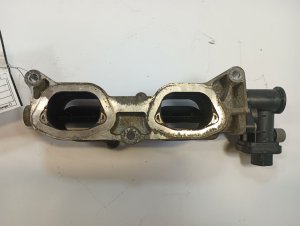
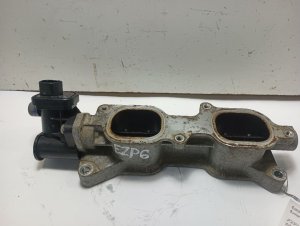
We Have This Part in Stock



The information in this article is provided for general reference and educational purposes only. Vehicle specifications, procedures, and part compatibility can vary by production date, trim level, and region. Always consult your vehicle's factory service manual and verify part numbers before purchasing or performing repairs. Safety-critical components such as airbags, seat belts, and braking systems should be installed by a qualified professional.
- Subaru Impreza:
- 🎬 Helpful Videos
- 🛍️ Shop This Part
- What's Unique About the 2005-2019 Subaru Impreza
- Symptoms You May Notice
- Most Likely Causes
- Rare But Worth Checking
- Diagnosis Steps
- Parts You'll Likely Need
- Related Codes That Often Appear With This One
- Technical Service Bulletins (TSBs) & Recalls
- Platform-Specific Known Issues
- Mechanic-Grade Diagnostic Values
- Scan Tool Commands That Help
- Wiring & Ground Locations
- Real Owner Repair Stories
- "I Checked Everything" — The Actual Cause
- When the Usual Fixes Don't Work
- OEM Part Supersession History
- Model Year Variations Within This Range
- Diagnostic Flowchart
- Other Known Issues on This Vehicle
- Used vs. New Parts: Buying Guide for This Vehicle
- Real Owner Stories
- 2005 Subaru Legacy GT (EJ255) — 75000 miles
- 2004 Subaru Impreza WRX (EJ205/EJ255)
- 2005 Subaru Forester XT (EJ255) — ~120000 miles
- Subaru Impreza WRX/STI (EJ Engine)
- Related OBD-II Codes
- Frequently Asked Questions
- 🎟️ Get 5% Off