

P1098 on 2019-2020 Cadillac XT4: Coolant Control Valve Faults and Fixes
On a 2019-2020 Cadillac XT4, code P1098 almost always points to a problem with the Engine Coolant Control Valve (CCV). The issue could be a software anomaly requiring a dealer update per TSB #PIP5675G, or a physical failure of the valve itself, which is a common issue on this platform. Diagnosis should always start with checking for software updates before replacing the expensive valve assembly.
- P1098 on a 2019-2020 Cadillac XT4 is almost certainly related to the Engine Coolant Control Valve (CCV).
- Your first step should be to contact a GM dealer to check if a software update (per TSB #PIP5675G) is available for your vehicle. This could be a simple, no-parts-needed fix, especially if it's the first time the code has appeared.
- If software is not the issue or the code returns, the CCV assembly itself has likely failed. This is a known weak point on this engine.
- Replacement of the CCV is a complex and expensive job (estimated $1310-$1634 at a shop) and is not recommended for most DIY mechanics.
- Do not ignore this code, as it can lead to reduced engine power and potential overheating.
What's Unique About the 2019-2020 Cadillac XT4

The 2019-2020 Cadillac XT4 uses a complex, multi-port Engine Coolant Control Valve that is a known high-failure item across many GM vehicles using the LSY engine and other platforms. What makes this platform's situation notable is the official recognition by GM of both software and hardware issues. A Technical Service Bulletin (TSB PIP5675 series) points to a "software anomaly" as a potential cause, while widespread owner reports and mechanic experiences confirm that the valve assembly itself is prone to mechanical and electrical failure.
Diagnostic Flowchart

Tap your situation to follow the diagnostic path that matches what you're seeing on this vehicle.
Symptoms You May Notice

- Check Engine Light (MIL) illuminated
- Cooling fans running continuously at high speed, even after the engine is off
- "Reduced Acceleration, Drive with Caution" or similar message in the driver information center
- Engine temperature gauge fluctuating, reading incorrectly, or showing high temperatures
- Potential for engine overheating
- Transmission temperature reading higher than normal
- Replacing the Engine Coolant Control Valve without first checking for required software updates. TSB #PIP5675G explicitly advises checking for software updates first, as this can be a cheaper and simpler fix, especially on the first occurrence of the code.
Most Likely Causes

- Software Anomaly 🔴 High Probability GM issued TSB #PIP5675G specifically for this issue, indicating a known software glitch can falsely trigger this code, often along with P26BB.
How to confirm: A GM dealer must check the vehicle's VIN against their service records to see if a software update is available and applicable. For 2019 models, TSB 19-NA-022 is a prerequisite update.
Typical fix: The dealer reflashes the Engine Control Module (ECM) with updated software. Per the TSB, if this is the first time the code has appeared and diagnostics find no other fault, the code should be cleared and the vehicle returned to the customer.
Est. part cost: $0 - Failed Engine Coolant Control Valve (CCV) 🔴 High Probability The internal plastic gears and motor assemblies are known to fail. Grease can break down or become contaminated with plastic shavings from the worm gear, causing the valve's motors to bind or the position sensor to fail.
How to confirm: This is the presumed cause if a software update doesn't fix the issue or if the code returns a second time. A bi-directional scan tool can command the valve's motors to check for a response; a lack of response or incorrect position reading confirms failure.
Typical fix: Replacement of the entire Engine Coolant Control Valve assembly. This is a labor-intensive job as the valve is located under the intake manifold. After replacement, a relearn procedure must be performed.
Est. part cost: $450-$550
Rare But Worth Checking
- Low Coolant Level / Air Pockets:
Diagnosis Steps
- Scan the ECM for trouble codes. Note if P1098 is present alone or with P26BB.
- Check the coolant level to rule out low coolant or air pockets as a cause.
- Contact a GM dealership with your VIN to check for applicable software updates related to TSB #PIP5675G (or its later revisions like PIP5675E) and 19-NA-022 for 2019 models.
- If a software update is available and this is the first time the code has set, have the dealer perform the reflash. Clear the codes and test drive.
- If no software update is available, or if the code returns after the update (a second occurrence), the Engine Coolant Control Valve is the primary suspect.
- Confirm the failure using a bi-directional scan tool to command the valve's motors and observe the position sensor feedback. If the valve fails to respond or reports an incorrect position, it must be replaced.
- After replacement, a scan tool must be used to perform the 'Engine Coolant Control Valve Mode' relearn procedure to calibrate the new part.
Parts You'll Likely Need
- Engine Coolant Control Valve
(OEM #24001355)— This is the primary hardware failure point for code P1098. The internal motors and gears fail, causing the valve to get stuck. This part has been superseded by newer numbers.
Trusted brands: ACDelco, GM Genuine Parts
OEM price range: $375-$550
Aftermarket price range: $350-$450 - Engine Coolant / Antifreeze — The cooling system must be drained to replace the valve, requiring a refill and bleed procedure afterward.
Trusted brands: ACDelco DEX-COOL
OEM price range: $25-$40
Aftermarket price range: $20-$30
Related Codes That Often Appear With This One
- P26BB — This code, for 'Engine Coolant Bypass Valve 'C' Control Circuit,' is part of the same CCV assembly. TSB #PIP5675G and its revisions mention that P1098 and P26BB often appear together for the same software and hardware reasons.
Technical Service Bulletins (TSBs) & Recalls
- PIP5675G: Details the initial diagnostic path for P1098/P26BB, pointing to a potential software anomaly and advising against immediate parts replacement on the first occurrence.
- 19-NA-022: A prerequisite software update for 2019 model year vehicles mentioned within TSB PIP5675A.
Platform-Specific Known Issues
- TSB #PIP5675G: GM explicitly acknowledges that a 'software anomaly' can cause P1098 and/or P26BB. The TSB directs technicians to check the vehicle's history; if the code has appeared before, replace the valve. If it's the first time, update the software, clear the code, and return to the customer.
- High Failure Rate & Parts Backorder: The CCV is a widely reported failure item on vehicles with the 2.0L LSY and 3.0L LM2/LZ0 engines. At times, the part has been on national backorder for months due to high demand, leaving owners waiting for repairs.
Mechanic-Grade Diagnostic Values
- LIN Bus Voltage at CCV Connector — expected: ~11-12 volts at rest (ignition on, not communicating). Failure: Voltage toggling as the master module tries to wake a non-responsive slave device, or no voltage.
- Engine Coolant Temperature (ECT) Sensor #1 vs. Other ECT Sensor Readings — expected: All ECT sensor readings should be relatively close to each other.. Failure: ECT Sensor #1 reading noticeably cooler than other temperature sensors can cause the ECM to command the CCV to an incorrect, more closed position, leading to a hot-running engine without a direct CCV fault.
Hidden / Shadow Codes Worth Checking
- P117A, P118A, P11C9, P26C0, P26C2: A set of related codes for the Engine Block Coolant Valve (part of the CCV assembly) that can be caused by a missing internal shaft seal from the factory. (see via Standard OBD-II scan tool. These are not hidden but are specific to a known manufacturing defect detailed in TSB 19-NA-045 for certain 2019 XT4 VINs.)
Scan Tool Commands That Help
- GM GDS2 (or equivalent high-level bidirectional scanner): Engine Coolant Control Valve Bidirectional Test — During diagnosis, to command the valve's internal motors to open and close. This verifies if the valve is physically stuck or if its position sensors are failing to report movement, confirming hardware failure.
- GM GDS2 (or equivalent high-level bidirectional scanner): Engine Coolant Control Valve Mode / Coolant Control Valve Learn — This is a mandatory calibration/relearn procedure that must be performed after replacing the Engine Coolant Control Valve. It allows the ECM to learn the end-stop positions of the new valve's motors. Skipping this step can result in improper coolant flow.
Wiring & Ground Locations
- Fuse F75 — Underhood Fuse Block. This fuse supplies power to the Coolant Flow Control Valve. A blown fuse would cause a complete loss of function and likely set a fault code.
- CCV Electrical Connectors — On the Coolant Control Valve assembly, located under the intake manifold.. The valve has three separate electrical connectors. Checking for corrosion, damage, or a loose connection at all three points is a necessary step before condemning the valve.
Real Owner Repair Stories
- Reddit user on r/gmcsierra (2021 GMC Sierra with 3.0L LM2 engine, failure at 63k miles) — P1098 code, cooling fans running at 100%
❌ Tried (didn't work) Waiting for a replacement part which was on a 5+ month backorder.
✅ What actually fixed it Owner performed a DIY repair. They removed the valve assembly, disassembled the motor gearbox that was 'gummed up,' cleaned out the old, dried grease from the worm gears, re-lubricated with fresh white lithium grease, and reinstalled the valve. This resolved the code without replacing the part. - Reddit user on r/gmcsierra (2023 GM truck with LZO engine, failure at ~28k miles) — P1098 code
❌ Tried (didn't work) The first brand-new replacement Coolant Control Valve installed by the dealer.
✅ What actually fixed it The first new valve failed its post-installation 'relearn' procedure and failed diagnostics right out of the box. A second new replacement valve had to be installed, which then functioned correctly. This highlights potential quality control issues with the replacement parts.
When the Usual Fixes Don't Work
- While the standard fix is software update or valve replacement, multiple owners have successfully resolved code P1098 by disassembling the valve and cleaning old, hardened grease from the internal motor gearboxes, then re-lubricating them. This indicates the root cause is often a mechanical binding due to lubricant failure, not necessarily an electronic failure, and can be repaired by a skilled DIYer if the part is unavailable or out of warranty.
OEM Part Supersession History
24001355→40009179— Part revision by manufacturer.40009179→40009644— Part revision by manufacturer. 40009644 is the most current number as of early 2026.
Heads up: Some owner reports indicate that even brand-new replacement valves can fail the post-installation 'relearn' procedure, suggesting potential quality control or compatibility issues that require a second replacement.55514504→24001355 or later numbers— Appears to be an earlier part number in the supersession chain.
Model Year Variations Within This Range
- 2019 only: A specific batch of early 2019 XT4s may have a CCV that is missing an internal shaft seal from the factory, as detailed in TSB 19-NA-045. This defect applies to a specific list of VINs and can cause a range of CCV-related codes.
- 2019 only: TSB PIP5675A notes that software update 19-NA-022 is a prerequisite before addressing the P1098 software anomaly on 2019 models. This is not required for 2020 models.
Helpful Videos
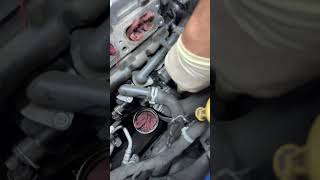
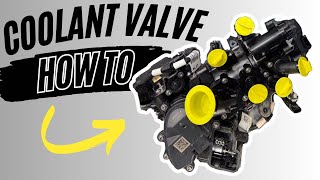
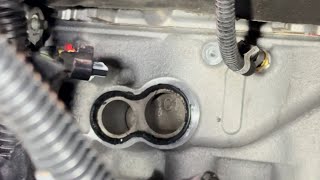
We Have This Part in Stock


The information in this article is provided for general reference and educational purposes only. Vehicle specifications, procedures, and part compatibility can vary by production date, trim level, and region. Always consult your vehicle's factory service manual and verify part numbers before purchasing or performing repairs. Safety-critical components such as airbags, seat belts, and braking systems should be installed by a qualified professional.
- Cadillac XT4:
- 🎬 Helpful Videos
- 🛍️ Shop This Part
- What's Unique About the 2019-2020 Cadillac XT4
- Diagnostic Flowchart
- Symptoms You May Notice
- Most Likely Causes
- Rare But Worth Checking
- Diagnosis Steps
- Parts You'll Likely Need
- Related Codes That Often Appear With This One
- Technical Service Bulletins (TSBs) & Recalls
- Platform-Specific Known Issues
- Mechanic-Grade Diagnostic Values
- Hidden / Shadow Codes Worth Checking
- Scan Tool Commands That Help
- Wiring & Ground Locations
- Real Owner Repair Stories
- When the Usual Fixes Don't Work
- OEM Part Supersession History
- Model Year Variations Within This Range
- 🎟️ Get 5% Off